Alberobello Walking Tour with Audio and Written Guide by a Local
Active
2h - 3h
For a full refund, cancel at least 24 hours before the scheduled departure time.
Instant confirmation
Mobile or paper ticket accepted
About this experience
If you're looking for a fun and curious way to visit Alberobello, you've come to the right place! With this digital guide created with the support of a local, you will be able to visit all the most important monuments at your own pace.
You'll get to know the stories and curiosities of Alberobello! But also you will discover everything about local foods, Italian Aperitivo in authentic local restaurants, and much more!
Available options
Alberobello Walking Tour with Audio and Written Guide by a Local
What's included
Text in different laguages (Eng, Deu, Esp, Ita)
Best advices for local restaurant with authentic food
Tips for monuments, history and curiosities
Digital guide to visit the city by yourself
Audio-guide in multiple languages (Eng, Esp, Ita, Ger)
Detailed itinerary
1
The Church of Sant’Antonio, also known as the Trullo Church, was built in 1926, during a period in which Alberobello was undergoing a phase of modernization, but the design was strongly inspired by the tradition of the trulli. The church was built to serve the growing population of the town, which until then depended on the Mother Church of Alberobello, located in the upper part of the town.
2
Stop 2
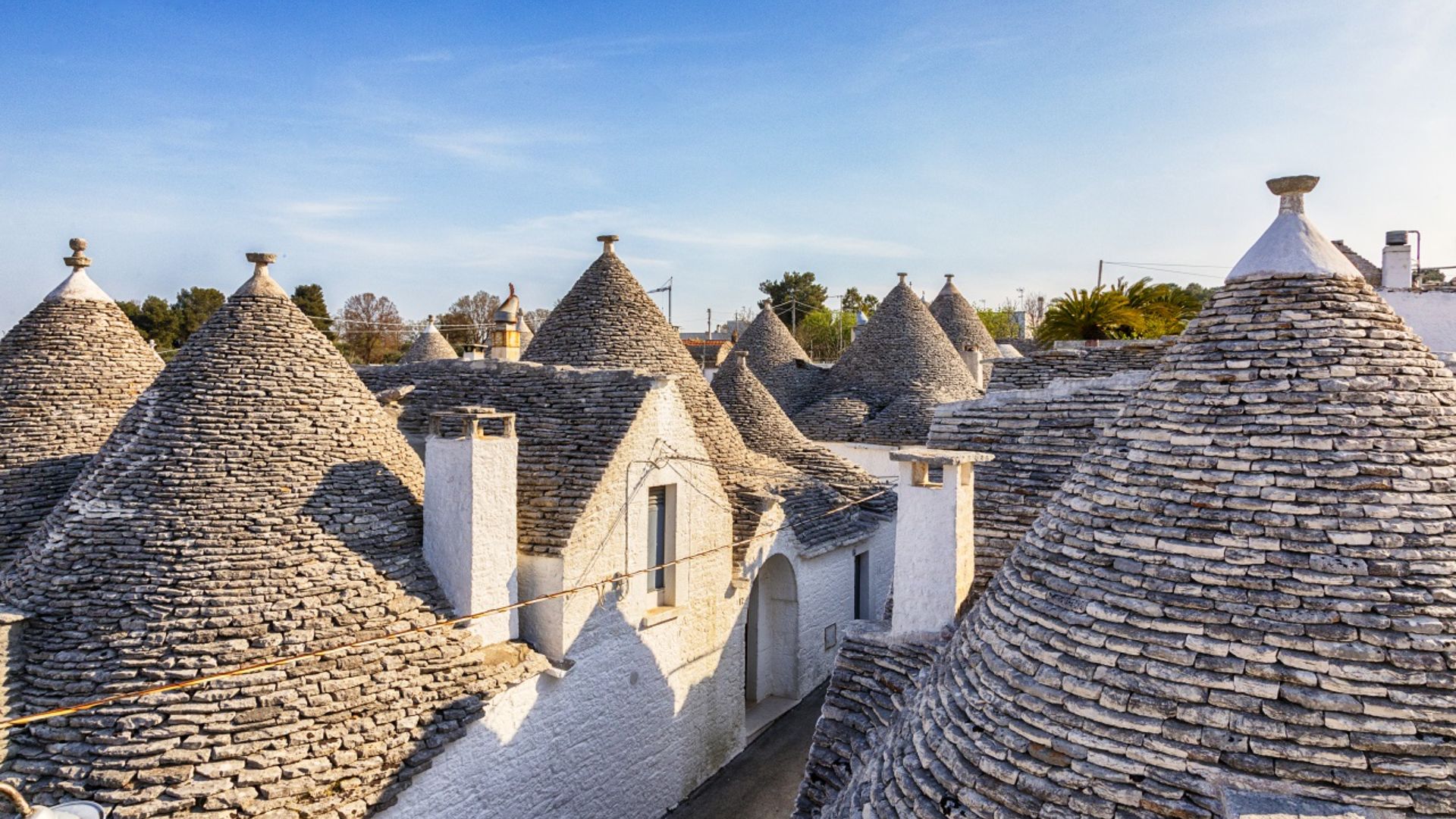
Trulli are one of the first examples of insulating architecture. Their structure guarantees freshness during the summer and warmth in the winter, thanks to walls and roofs built dry with limestone blocks. Air chambers are created between the stones that regulate the internal temperature. The conical roof, built without supports, is composed of “chiancarelle” arranged in brackets in increasingly narrow circles, until they form a central opening.
3
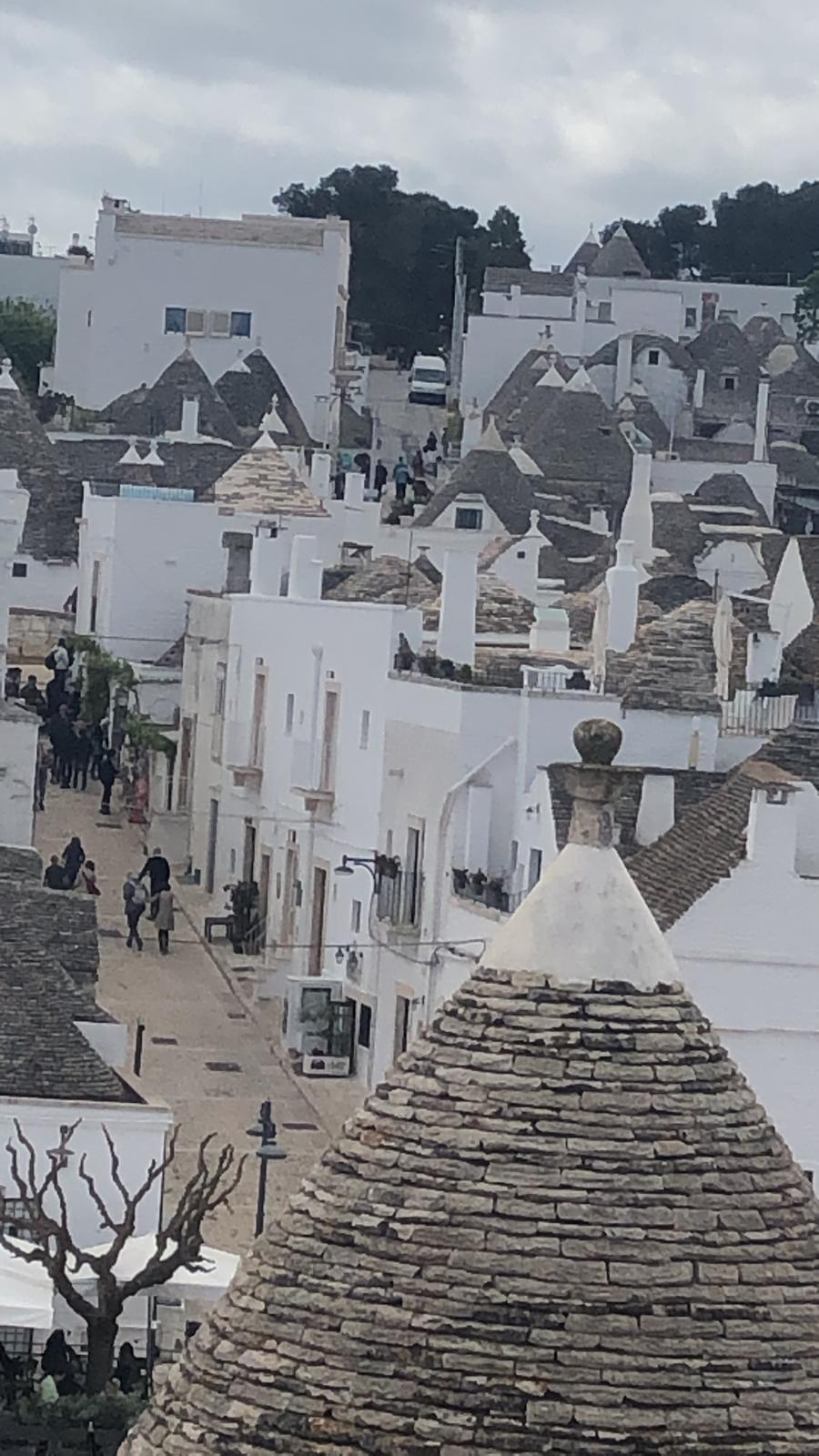
The Rione Monti district, recognized as a UNESCO World Heritage Site, is located on the southern hill of Alberobello and is home to over a thousand trulli. The area is crossed by fifteen streets and is located near Largo Martellotta, so called because of the three cisterns dug into the Eight hundred to collect rainwater.
4
This building, probably one of the oldest in Alberobello, stands out for its unique continuous double cone roof. The Trullo Siamese is composed of two interconnected cones, which share a central wall. This peculiarity makes it different from other trulli, which usually have a single dome. The recess between the two cones, visible from the outside, was skillfully filled by the master trullo maker who built it, giving the building a unique shape.
5
The oldest and most authentic neighborhood of Alberobello is Aia Piccola, so called because it once constituted the ancient and industrious area dedicated to the agricultural work of the town. Let's discover this area!
6
The ancient residence of the doctor and intellectual Giacomo Pezzolla houses the Civic Museum of Alberobello, which focuses on the culture and history of the local area. If you want to know history of this city, this is your place!
7
Casa D’Amore, built in 1797 by citizen Francesco D’Amore, is the first house in Alberobello made entirely of terracotta, using mortar for its construction, following a royal decree that allowed the inhabitants to build houses in this way.
8
The Mother Church of the Saints Cosma and Damiano is one of the most important religious buildings in Alberobello, located in the heart of the historic center. Dedicated to the patron saints of the city, Cosma and Damiano, it dates back to 1784. The church was designed to replace a smaller chapel that was no longer sufficient to accommodate the faithful.
9
Stop 9
The Trullo Sovrano is the only two-story trullo in the city, a rare example of the construction skill and innovation of local 18th-century artisans. The Trullo Sovrano represents an evolution of traditional rural trulli, with a more complex and spacious structure, designed to accommodate a wealthy family.
What's not included
Headphones not included. You'll use your smarpthone and eventually your headphone!
A guide in person. The visit will be via digital guide
Available languages
Audio guide
DE
EN
IT
ES
Written guide
DE
EN
IT
FR
ES
Reviews breakdown
Viator
3.8
6 reviews
5★
1
4★
3
3★
2
2★
0
1★
0
Tripadvisor
4.5
17 reviews
5★
11
4★
5
3★
0
2★
0
1★
1
Important information
Wheelchair accessible
Infants and small children can ride in a pram or stroller
Service animals allowed
Public transportation options are available nearby
Suitable for all physical fitness levels
You will need a smartphone with internet connection to use the digital guide (details to activate the digital guide will be in your voucher, read it carefully!)
You'll be able to hear the audio through your speakers or, if you have them, through your headphones
Meeting point
We are going to start here! However, you can access your digital guide even before getting there!
Important notes
TO ACTIVATE YOUR TOUR you can click here:
https://walkingcap.com/alberobellodigitalguide
(If you can't click on the link, just copy/paste it in your browser)
Password: 14769852411
If you need some support, check the FAQ here: https://walkingcap.com/faq-eng/
Or contact me on whatsapp here: +390350311698
or with this link: https://wa.me/message/JSWUDT7IX3WTA1
About Alberobello & Locorotondo
Alberobello and Locorotondo are charming hilltop towns in Puglia, famous for their unique trulli houses with conical roofs. These UNESCO World Heritage Sites offer a glimpse into traditional Apulian architecture and lifestyle, surrounded by beautiful olive groves and vineyards.
Top Attractions
Rione Monti
The historic center of Alberobello, famous for its trulli houses with conical roofs.
Historical
2-3 hours
Free
Rione Aia Piccola
Another historic area in Alberobello with a mix of trulli and modern buildings.
Historical
1-2 hours
Free
Locorotondo Centro Storico
The charming historic center of Locorotondo, known for its circular layout and whitewashed buildings.
Historical
1-2 hours
Free
Trullo Sovrano
The only two-story trullo open to the public, featuring a museum and a small garden.
Historical
30-45 minutes
€5
Casa d'Amore
A historic trullo with a museum showcasing traditional Apulian life and furniture.
Historical
30-45 minutes
€4
Palazzo Morelli
A historic palace in Locorotondo with a museum showcasing local art and history.
Historical
30-45 minutes
€3
Must-Try Local Dishes
Orecchiette
A type of pasta shaped like small ears, typically served with broccoli rabe or tomatoes.
Main Dish
Vegetarian
Burrata
A creamy cheese made from mozzarella and cream, typically served with bread and tomatoes.
Dish
Contains dairy
Focaccia
A type of flatbread topped with olive oil, salt, and sometimes herbs or vegetables.
Bread
Vegetarian (can be vegan if no cheese is added)
Panzerotti
Deep-fried pastries filled with tomato sauce, mozzarella, and sometimes other ingredients.
Snack
Contains dairy (can be vegetarian or vegan with different fillings)
Popular Activities
Hiking in Valle d'Itria
Cave tours in Castellana Grotte
Beach day in Polignano a Mare
Wine tasting in Masseria Montelauro
Exploring the historic centers of Alberobello and Locorotondo
Visiting local museums and churches
Swimming and sunbathing in Polignano a Mare
Exploring indoor museums and churches
Best Time to Visit
May to September
This is the best time to visit for warm weather and outdoor activities. The towns are vibrant, and many festivals take place during these months.
20°C to 35°C
68°F to 95°F
Practical Information
Language
- Official: Italian
- Widely spoken: English (in tourist areas)
- English: Moderately spoken
Currency
Euro (EUR)
Time Zone
CET (UTC +1), CEST (UTC +2 during daylight saving time)
Electricity
230VV, 50HzHz
Safety Information
Overall Safety Rating: Generally safe
Alberobello and Locorotondo are generally safe for travelers, with low crime rates. However, petty theft and pickpocketing can occur in tourist areas.
Important Precautions:
- • Keep valuables secure
- • Use licensed taxis
- • Be cautious of strangers offering services
Getting there
By air
- Bari Karol Wojtyła Airport • 60 km (37 miles) from Alberobello
- Brindisi Airport • 90 km (56 miles) from Alberobello
By train
Alberobello Station, Locorotondo Station
By bus
Alberobello Bus Station, Locorotondo Bus Station
Getting around
Public transport
Buses are the primary mode of public transport, connecting towns and villages.
Taxis
Available • Apps: Uber, FreeNow
Rentals
Car, Bike, Scooter
Neighborhoods
Rione Monti
Rione Aia Piccola
Centro Storico
Day trips
Polignano a Mare
30 km (19 miles) from Alberobello • Half-day to full-day
A picturesque coastal town known for its beautiful beaches, cliffs, and historic center.
Matera
60 km (37 miles) from Alberobello • Full-day
A historic town known for its unique Sassi district, a UNESCO World Heritage Site.
Ostuni
50 km (31 miles) from Alberobello • Half-day to full-day
A whitewashed hilltop town known for its beautiful architecture and historic center.
Festivals
Festa di San Rocco • August 16th
Sagra del Fungo Porcino • October
Fiera del Levante • September
Pro tips
- Visit the trulli houses early in the morning or late in the afternoon to avoid crowds and enjoy the best lighting for photos.
- Try local specialties like orecchiette, burrata, and Primitivo wine for an authentic taste of Apulian cuisine.
- Explore the countryside by renting a car or joining a guided tour to discover the beautiful olive groves and vineyards.
- Stay in a trullo house for a unique and authentic experience of Apulian culture and architecture.
- Visit the local markets for fresh produce, handmade crafts, and souvenirs.
From $25
per person
Price varies by option
Secure booking
Free cancellation available
Instant confirmation