Brindisi Walking Tour with Audio and Written Guide by a Local
Active
2h - 3h
For a full refund, cancel at least 24 hours before the scheduled departure time.
Instant confirmation
Mobile or paper ticket accepted
About this experience
If you're looking for a fun and curious way to visit Brindisi, you've come to the right place!
With this digital guide created with the support of a local, you will be able to visit all the most important monuments at your own pace.
You'll get to know the stories and curiosities of Brindisi! But also you will discover everything about local foods, Italian Aperitivo in authentic local restaurants, and much more!
Available options
Brindisi Walking Tour with Audio and Written Guide by a Local
What's included
Best advices for local restaurant with authentic food
Audio-guide and text in multiple languages (Eng, Esp, Ita, De, Fr)
Tips for monuments, history and curiosities
Digital guide to visit the city by yourself
Detailed itinerary
1
The bastion is dedicated to St. James, the patron saint of Spain and has been used for various purposes over the centuries. After losing its military function, it was used as a public slaughterhouse, oil depot and customs house.
2
It was built by order of Emperor Frederick II, who created the original nucleus. This building, also called “earth castle”, is the second in chronological order of the four historic castles of Brindisi.
3
The church of San Giovanni al Sepolcro, or church of the Holy Sepulchre, was built by the religious order of the Canons Regular of the Holy Sepulchre before 1128, the year in which the first document mentioning its existence appears.
4
The name of the archaeological area derives from the presence, starting from the mid-fifteenth century, of a community of Slavs, mainly Greeks and Albanians, who settled in this area since the sixteenth century and founded a settlement with the church of San Pietro at its centre, of which today no material traces remain.
5
The construction of the Cathedral symbolized the rebirth of the city, supported by the Normans as part of their expansion towards the east. Brindisi quickly recovered its role as an important commercial hub towards the east, becoming an essential transit point for those traveling from Rome to Jerusalem.
6
The Provincial Archaeological Museum of Brindisi, named after Francesco Ribezzo, a scholar of the Messapian civilization of the territory, was part of the Library-Museum Center of Brindisi, administered by the Puglia Region and was founded in 1884. The collections on display cover various thematic sections, including antiquarian, epigraphic and statuary, prehistoric, Messapian, Roman and underwater archaeology.
7
The Roman columns of Brindisi are considered one of the symbols of the city. The origins of the Roman columns of Brindisi are the subject of three main hypotheses. The most accredited theory suggests that they were erected around 110 AD at the behest of the emperor Trajan and that they represented the terminals of the historic Appian Way.
8
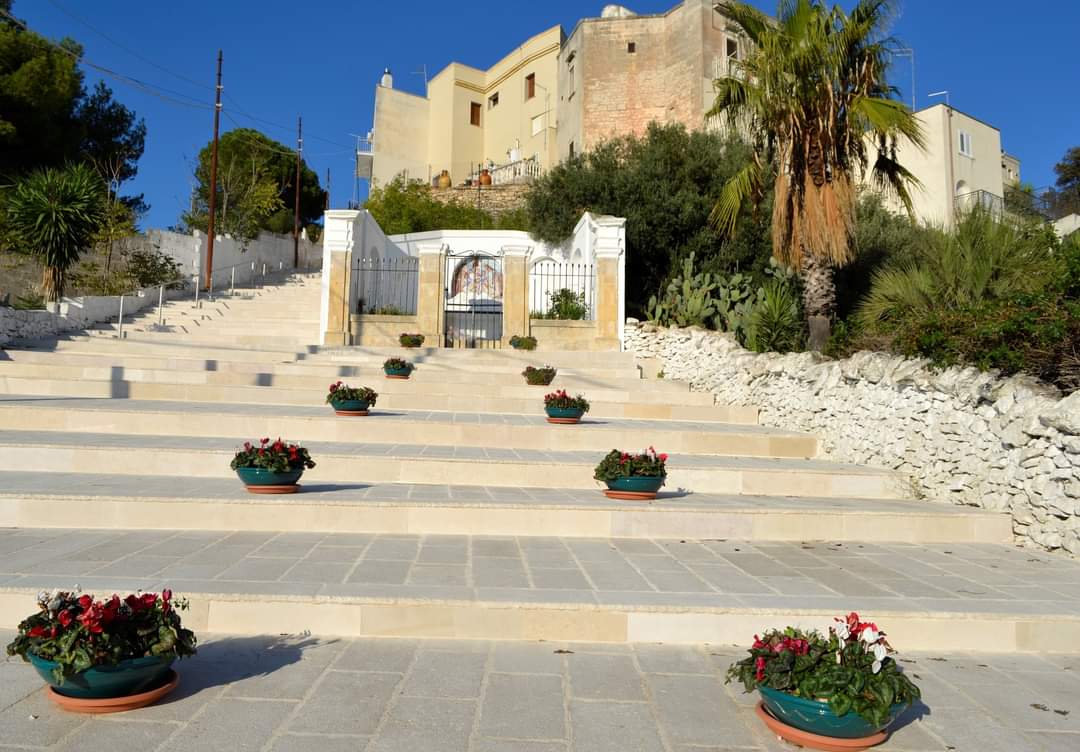
This staircase that connects the historic center of the city with the seafront was named after the famous poet Virgil of the 1st century BC. We'll discover the connection between the city and the poet!
9
The Lungomare Regina Margherita in Brindisi is one of the areas, in my opinion, most beautiful for a walk in the city, offering a panoramic view of the sea and the port.
10
After the end of the First World War, many Italian cities built monuments to commemorate the fallen soldiers. A monumental celebration was also planned for the sailors, with several cities such as La Spezia, Trieste and Venice that applied to host the work. And what about Brindisi? Let's discover it!
What's not included
Monumento del Marinaio ticket: 3€
Headphones not included. You'll use your smarpthone and eventually your headphone!
A guide in person. The visit will be via digital guide
Available languages
Audio guide
DE
EN
IT
FR
ES
Written guide
DE
EN
IT
FR
ES
Reviews breakdown
Viator
3.7
7 reviews
5★
3
4★
1
3★
1
2★
2
1★
0
Tripadvisor
4.4
16 reviews
5★
10
4★
4
3★
1
2★
1
1★
0
Important information
Wheelchair accessible
Infants and small children can ride in a pram or stroller
Service animals allowed
Public transportation options are available nearby
Suitable for all physical fitness levels
You will need a smartphone with internet connection to use the digital guide (details to activate the digital guide will be in your voucher, read it carefully!)
You'll be able to hear the audio through your speakers or, if you have them, through your headphones
Meeting point
We are going to start from here! However, you can access to the digital guide even before getting to this place!
Important notes
⚠️TO ACTIVATE YOUR TOUR⚠️ you can click here: https://walkingcap.com/brindisidigitalguide/
(If you can't click on the link, just copy/paste it in your browser)
Password: 819021739
If you need some support (or you can't login) check the FAQ here: https://walkingcap.com/faq
Or contact me on whatsapp here: +390350311698
or with this link: https://wa.me/message/JSWUDT7IX3WTA1
About Brindisi
Brindisi, a historic port city in the Puglia region of southern Italy, is known for its rich maritime heritage and strategic location on the Adriatic Sea. The city offers a blend of ancient Roman ruins, beautiful beaches, and a vibrant local culture, making it a unique and appealing destination for travelers.
Top Attractions
Castello Svevo
A 13th-century castle built by Emperor Frederick II, offering stunning views of the Adriatic Sea and hosting cultural events.
Historical/Architecture
1-2 hours
€5
Duomo di Brindisi
A beautiful cathedral with a mix of Romanesque and Baroque architecture, featuring a stunning rose window and historic artifacts.
Religious/Architecture
30-45 minutes
Free (donations welcome)
Colonna Romana
A 22-meter-tall Roman column dating back to the 2nd century AD, standing as a symbol of the city's ancient history.
Historical
15-20 minutes
Free
Ponte Viadotto
A striking modern bridge designed by Santiago Calatrava, offering a unique architectural contrast to the historic city.
Architecture
30 minutes
Free
Beaches of Brindisi
Brindisi offers several beautiful beaches with clear waters and sandy shores, perfect for relaxation and water activities.
Beach
Half-day to full-day
Free to moderate (for beach clubs)
Must-Try Local Dishes
Orecchiette con le Cime di Rapa
A traditional Puglian pasta dish with orecchiette pasta and turnip greens, often served with anchovies.
Main dish
Vegetarian if anchovies are omitted
Riso, Patate e Cozze
A hearty dish of rice, potatoes, and mussels, cooked in a savory broth.
Main dish
Contains seafood
Burrata
A creamy, fresh cheese made from mozzarella and cream, often served with bread and tomatoes.
Dish
Vegetarian
Frisella
A type of dry bread soaked in water and topped with tomatoes, onions, and olive oil.
Snack
Vegetarian
Popular Activities
Hiking in nearby nature reserves
Scuba diving in the Adriatic Sea
Beach relaxation
Spa treatments
Visiting museums and historical sites
Attending local festivals
Swimming
Boat tours
Best Time to Visit
June to August
This is the best time to visit Brindisi for beach activities and outdoor events. The weather is warm, and the city is lively with festivals and tourists.
25°C to 35°C
77°F to 95°F
Practical Information
Language
- Official: Italian
- Widely spoken: English, French
- English: Moderately spoken
Currency
Euro (EUR)
Time Zone
GMT+1 (CET), GMT+2 (CEST during daylight saving time)
Electricity
230VV, 50HzHz
Safety Information
Overall Safety Rating: Generally safe
Brindisi is generally safe for tourists, with low crime rates. However, petty theft and pickpocketing can occur in crowded areas.
Important Precautions:
- • Keep valuables secure and out of sight
- • Be cautious of pickpockets in crowded areas
- • Use licensed taxis or ride-sharing services
Getting there
By air
- Brindisi Airport • 6 km from city center
By train
Brindisi Station
By bus
Brindisi Bus Terminal
Getting around
Public transport
The bus system covers the city and surrounding areas. Buses are affordable and frequent.
Taxis
Available • Apps:
Rentals
Car, Bike, Scooter
Neighborhoods
Rione Casale
Piazza della Vittoria
Rione Boschetto
Day trips
Lecce
50 km • Full day
Known as the 'Florence of the South' for its stunning Baroque architecture and rich history.
Alberobello
100 km • Full day
Famous for its unique Trulli houses, a UNESCO World Heritage Site.
Ostuni
70 km • Full day
A beautiful hilltop town with whitewashed buildings and stunning views of the Adriatic Sea.
Festivals
Festa di San Rocco • August 16
Fiera del Levante • September
Sagra del Mare • July
Pro tips
- Visit the local markets for fresh produce and unique souvenirs.
- Try the local wine, particularly Primitivo and Negroamaro.
- Explore the city's historic sites early in the morning or late in the afternoon to avoid crowds.
- Take a boat tour to see the city from the water.
- Learn a few basic Italian phrases to enhance your interaction with locals.
From $25
per person
Price varies by option
Secure booking
Free cancellation available
Instant confirmation