Kumano Kodo Half Day Daimonzaka and Nachi Taisha Tour
Active
4h - 6h
All sales are final. No refund is available for cancellations.
Manual confirmation
Mobile or paper ticket accepted
About this experience
①If you plan to depart from Osaka, please meet your assistant at Shin-Osaka Station (Shinkansen central gate). Please note that the assistant will not board the JR train with you. Your guide will be waiting for you at Kii Katsuura Station.
②If you plan to depart from Kii Katsuura Station, you can customize your departure time.
Available options
From Shin-Osaka Station
From Kii Katsu Ura Station
What's included
English speaking guide
Air-conditioned vehicle
Round trip Shinkansen ticket ( If you choose From Shin-Osaka Station plan)
Detailed itinerary
1
Meet your assistant at Shin-Osaka station (Shinkansen central gate).
※If you choose the From Shin-Osaka Station Plan.
※Please note that the assistant will not board the JR train with you. Your guide will be waiting for you at Kii Katsuura station.
2
Kii-Katsuura Station (紀伊勝浦駅, Kii-Katsuura-eki) is a passenger railway station in located in the town of Nachikatsuura.
Tour departure from Kii-Katsuura station (Meet to guide)
Visit Daimon Zaka by local bus./
3
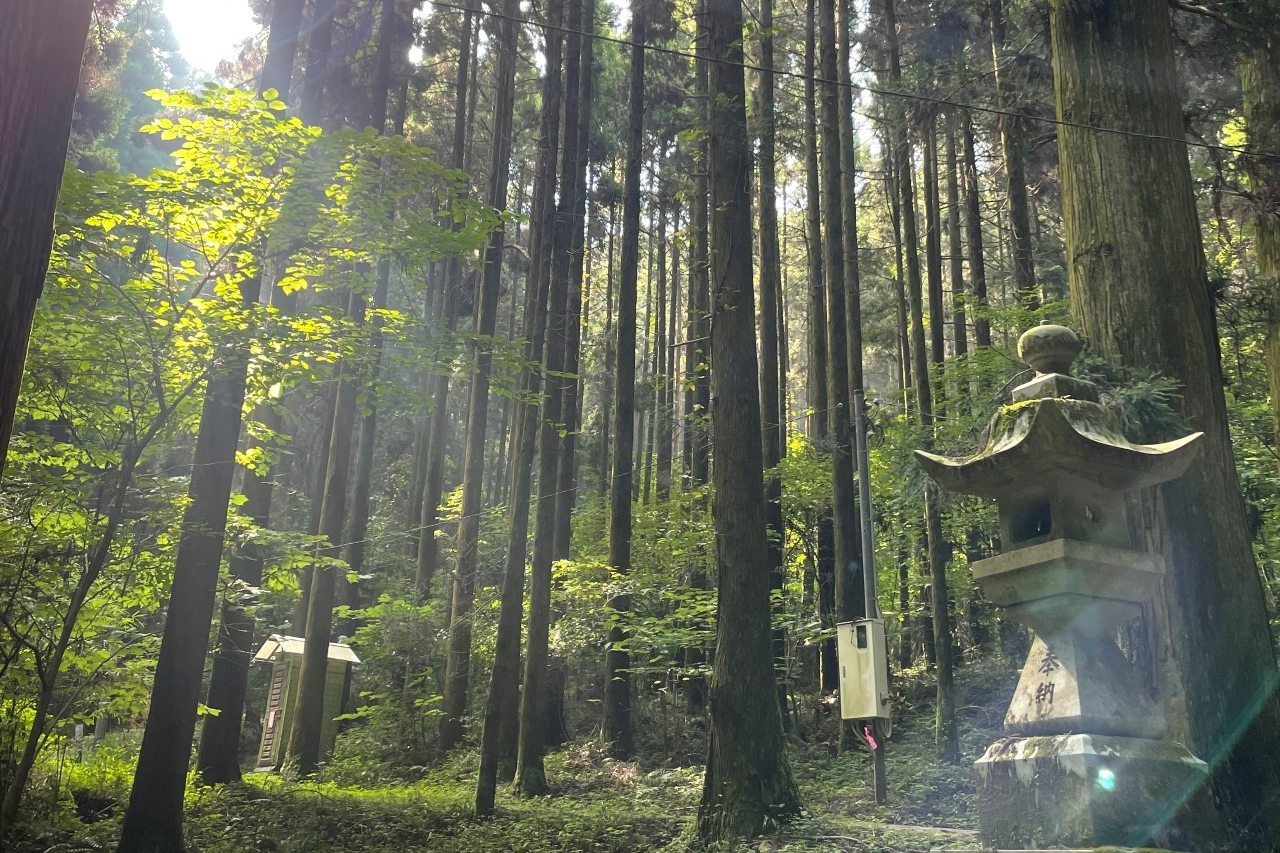
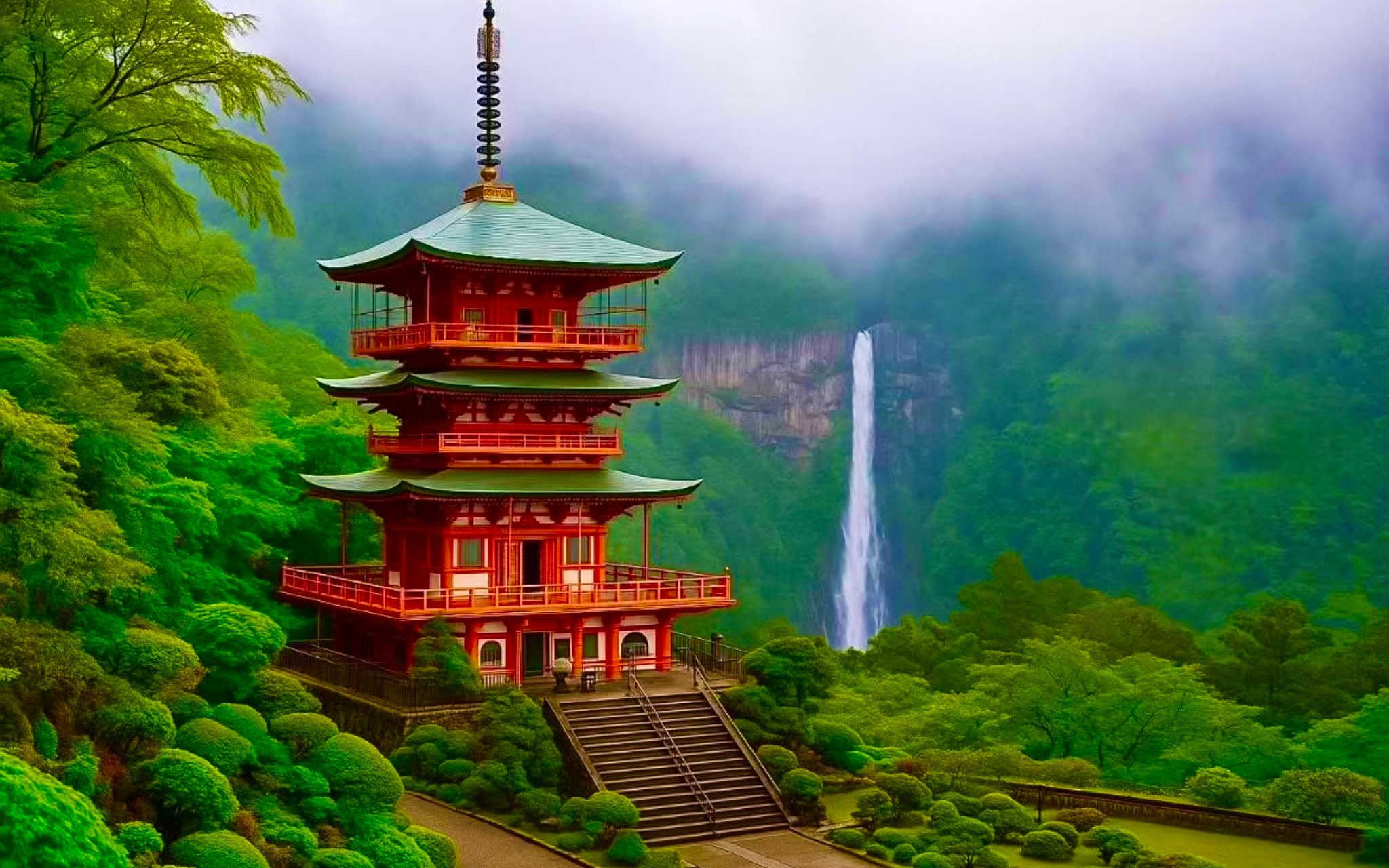
Daimon-zaka is an impressive cobblestone staircase slope which runs from the base of the valley to Kumano Nachi Taisha, Seiganto-ji Temple and Nachi waterfall. It is lined with centuries-old Japanese cedars (cryptomeria), cypress, camphor trees and bamboo groves. Daimon-zaka means “large gate slope” referring to a gate that once stood nearby. This is an excellent short walk on the Kumano Kodo pilgrimage route.
4
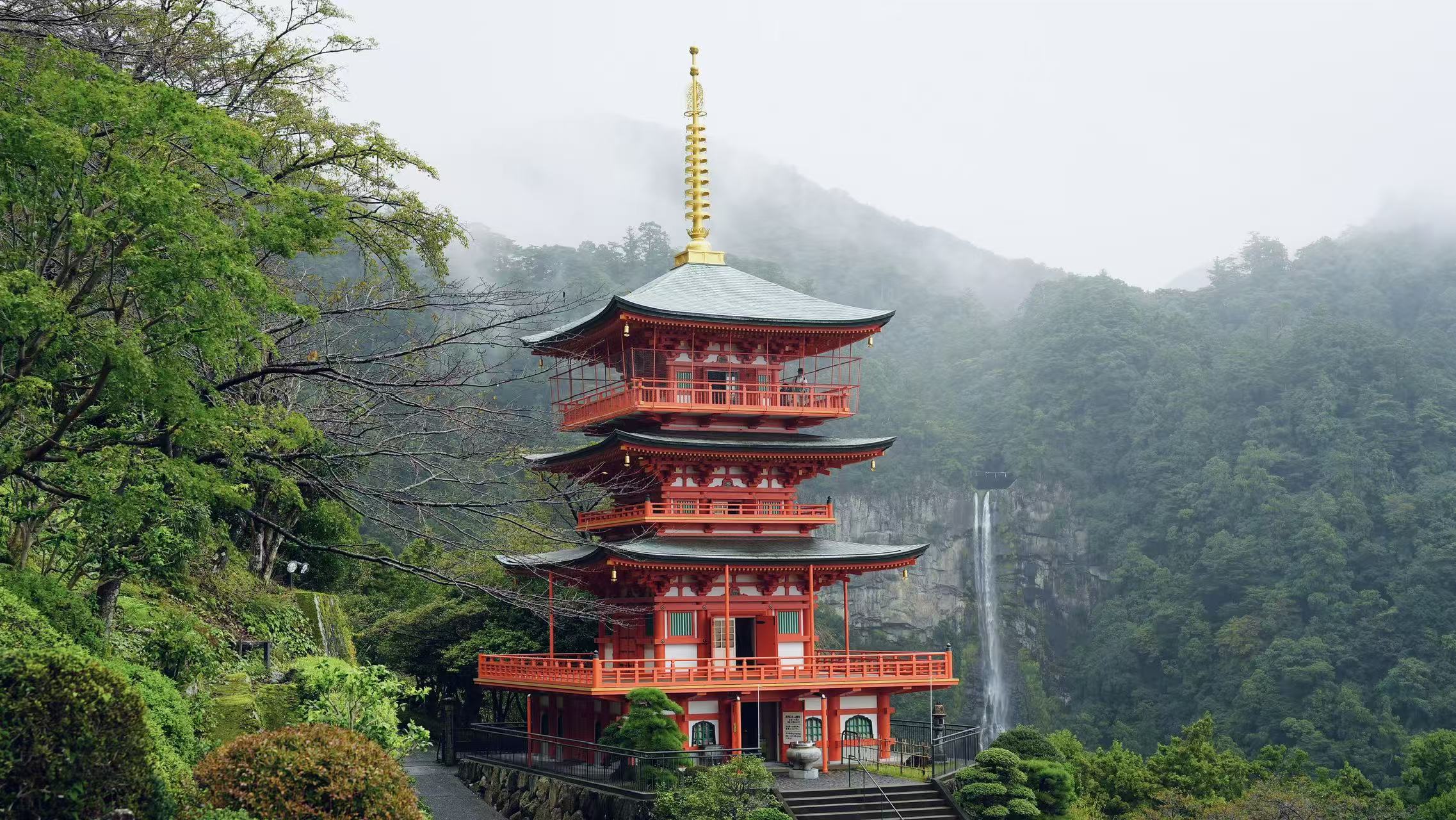
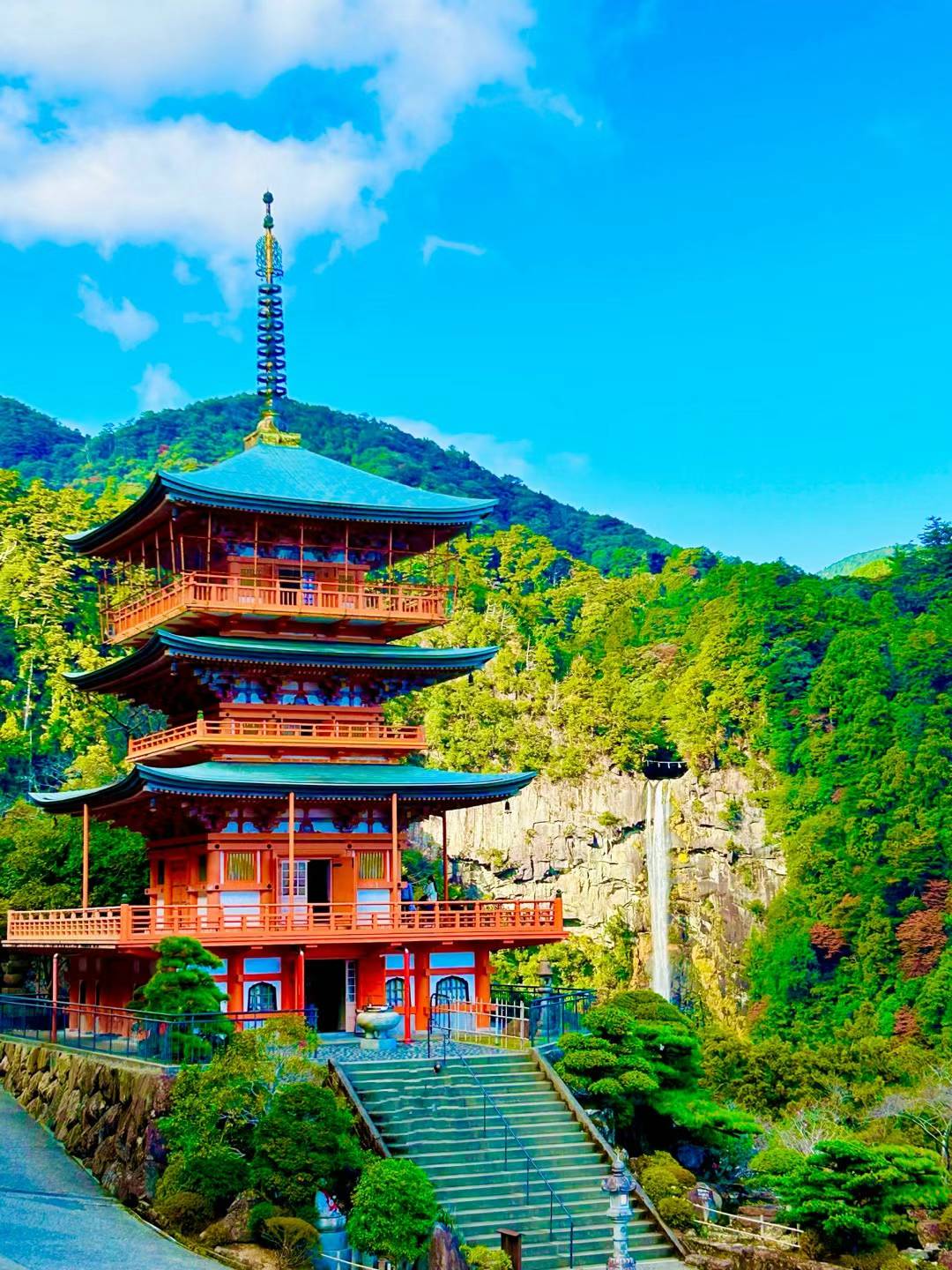
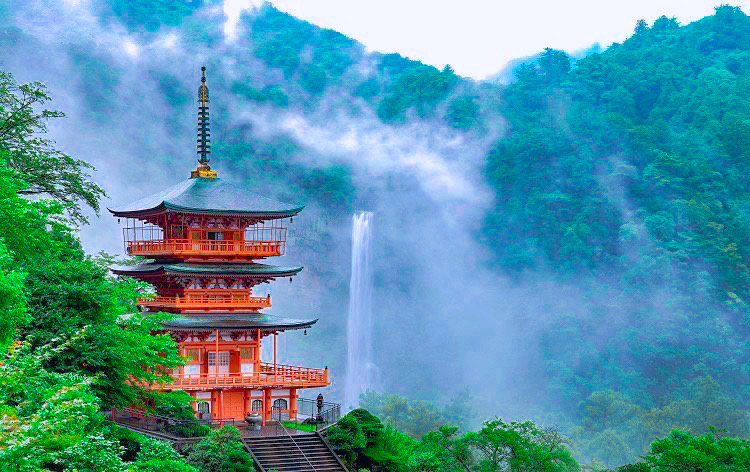
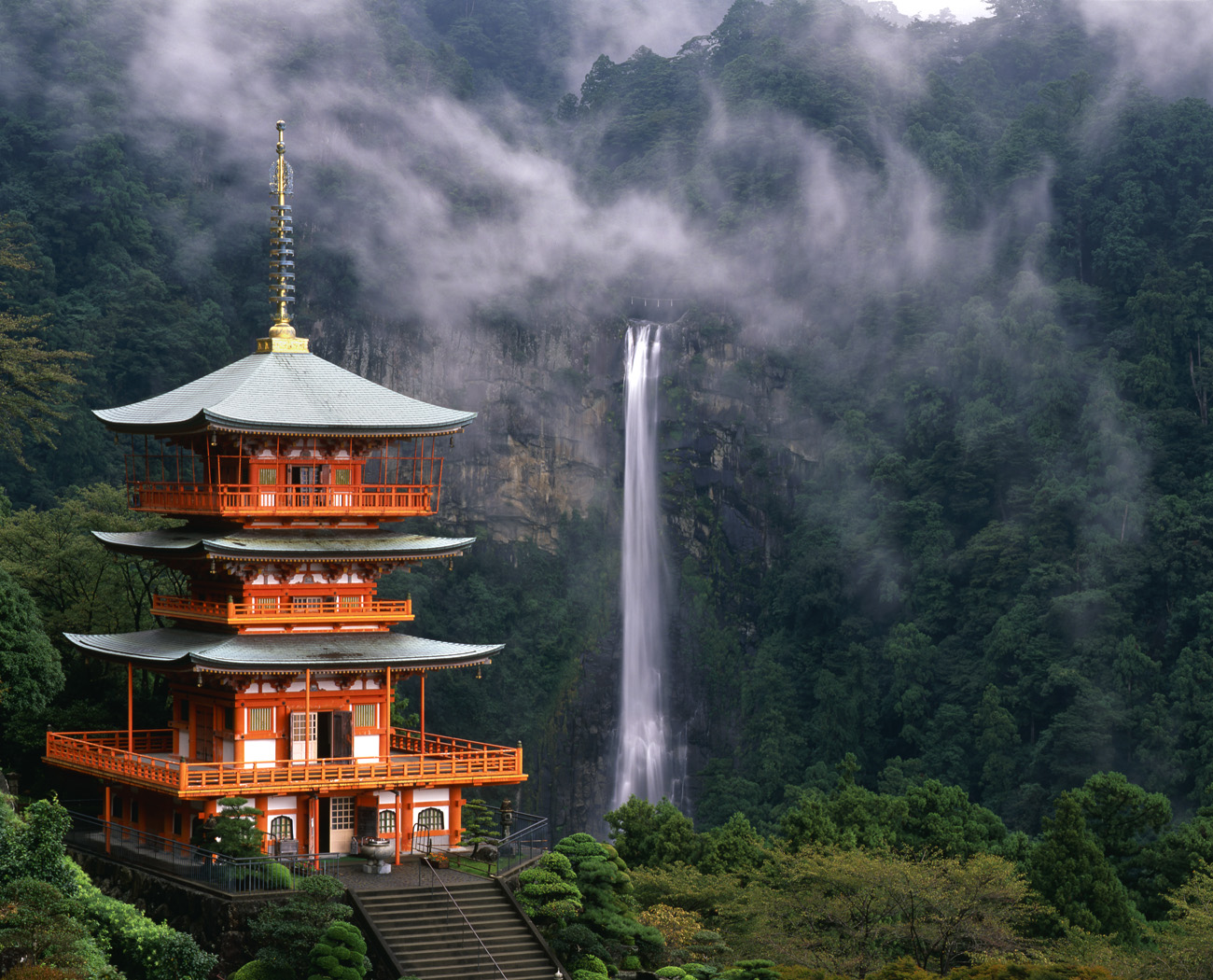
Kumano Nachi Taisha is a Shinto shrine located halfway up Nachi Mountain, about 350 meters above sea level. It has its religious origin in the ancient nature worship of Nachi-no-Otaki. This grand shrine is part of the Kumano Sanzan and major pilgrimage destination.
5
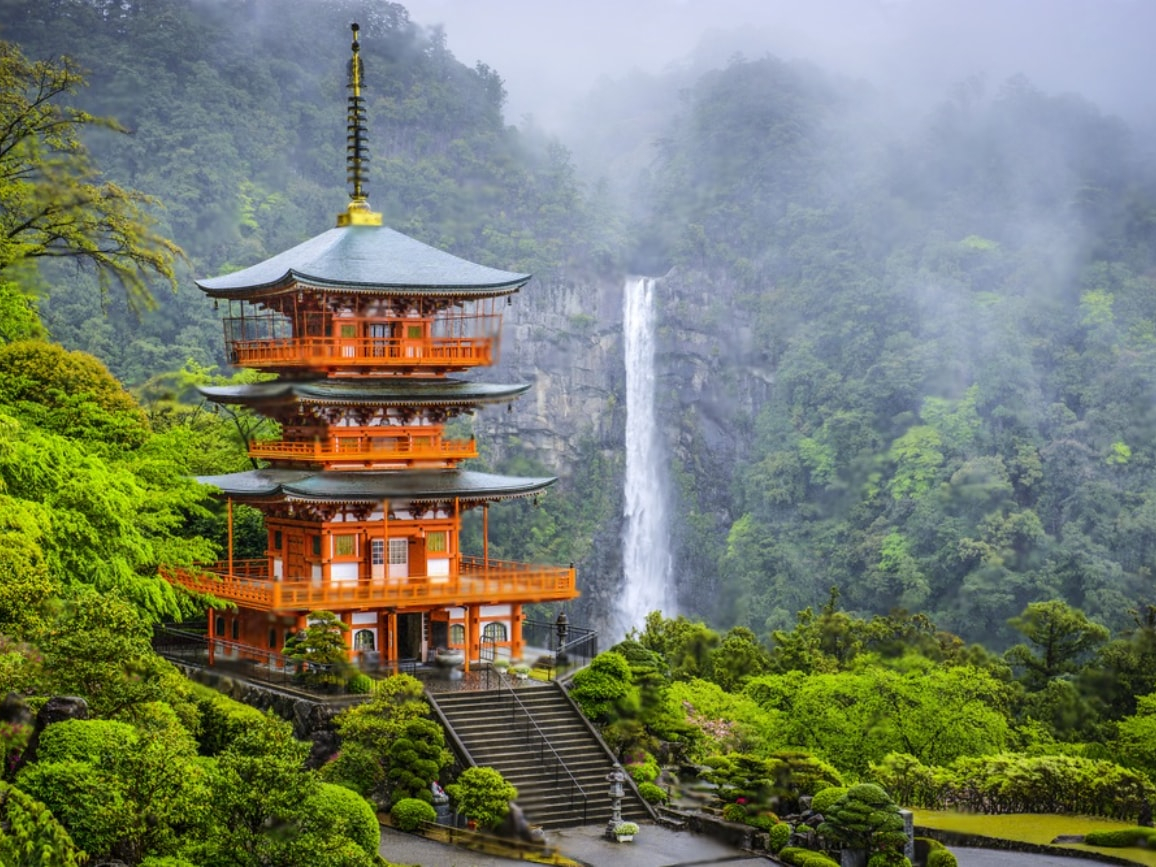
Seiganto-ji (青岸渡寺), Temple of Crossing the Blue Shore, is a Tendai Buddhist temple in Wakayama Prefecture, Japan. In 2004, it was listed as a UNESCO World Heritage Site along with other locations, under the name "Sacred Sites and Pilgrimage Routes in the Kii Mountain Range". According to a legend, it was founded by the priest Ragyō Shōnin, a monk from India. The temple was purposely built near Nachi Falls, where it may have previously been a site of nature worship. Seiganto-ji is part of the Kumano Sanzan shrine complex, and as such can be considered one of the few jingū-ji (shrine temples, see article Shinbutsu shūgō) still in existence after the forcible separation of Shinto and Buddhism operated by the Japanese government during the Meiji restoration.[1][2]
6
The actual stone staircase is about 600 meters long with 267 stairs. At the base of the slope is the impressive Meitosugi – “husband and wife cedar trees,” whose roots are entwined beneath the path. Close by is the Daimon-zaka-chaya where you can rent Heian period kimonos, great for some memorial photos. Near the top of the slope you can catch your first glimpse of the awe-inspiring Nachi falls.
What's not included
Meals
Available languages
Guide guide
EN
Reviews breakdown
Viator
4.0
1 reviews
5★
0
4★
1
3★
0
2★
0
1★
0
Important information
Public transportation options are available nearby
Not recommended for travelers with spinal injuries
Not recommended for pregnant travelers
Not recommended for travelers with poor cardiovascular health
Suitable for all physical fitness levels
Customers cannot join bringing suitcases.
Luggage delivery service is not available.
Your suitcases must be pre-deposited in Osaka by yourself.
There are no lockers at all on the Kumano Kodo.
If you bring a suitcase, you may not be allowed to participate in the tour.
Meeting point
Meet your assistant at Shin-Osaka station (Shinkansen central gate) if you choose the [From Shin-Osaka Station] plan.
5 Nishinakajima Yodogawa-ku Osaka-city Osaka Japan 532-0011
About Wakayama Prefecture
Wakayama Prefecture, located in the Kansai region of Japan, is known for its stunning natural beauty, historic temples, and the famous Koyasan (Mount Koya) pilgrimage site. With its rugged mountains, scenic coastlines, and rich cultural heritage, Wakayama offers a unique blend of traditional and natural experiences.
Top Attractions
Koyasan (Mount Koya)
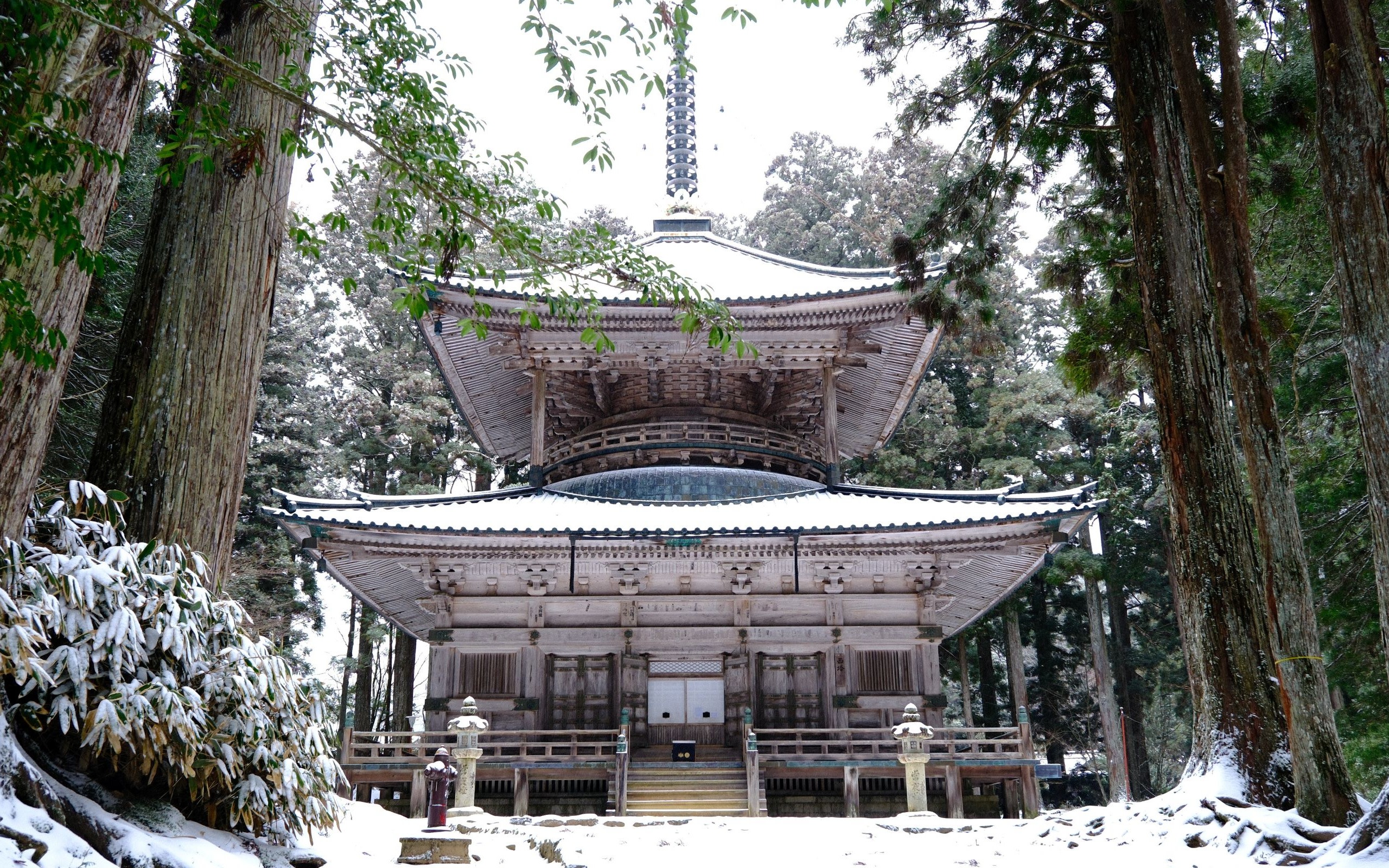
A sacred Buddhist monastery town and UNESCO World Heritage site, known for its temples, graveyards, and pilgrimage routes.
Historical/Religious
Full day to overnight
Moderate to Expensive
Nachi Falls
One of Japan's tallest waterfalls, located near the Kumano Nachi Taisha shrine.
Nature
Half day
Free to view, fees for shrine and museum
Shirahama Beach
A popular beach resort area with white sand beaches, hot springs, and a scenic coastline.
Beach
Full day
Budget to Moderate
Kimii-dera Temple
A historic temple with beautiful gardens and panoramic views of Wakayama City.
Historical/Religious
1-2 hours
Budget
Wakayama Castle
A reconstructed castle with a museum and beautiful gardens, offering insights into Wakayama's samurai history.
Historical
1-2 hours
Budget
Must-Try Local Dishes
Wakayama Beef
Tender and flavorful beef, often served as sukiyaki or grilled.
Dinner
Contains meat, not suitable for vegetarians or vegans.
Katsuobushi
Fermented, smoked, and dried bonito fish, used to make dashi (stock) and eaten as a topping for various dishes.
Snack/Dish
Contains fish, not suitable for vegetarians or vegans.
Meharizushi
A traditional sushi dish from the Kii Peninsula, made with vinegared rice and fresh seafood or vegetables.
Lunch/Dinner
Can be vegetarian if made with vegetables.
Koyasan Shojin Ryori
Buddhist vegetarian cuisine served in Koyasan, made with seasonal vegetables and tofu.
Lunch/Dinner
Vegetarian and vegan options available.
Popular Activities
Hiking in Kumano
Beach activities in Shirahama
Adventure World amusement park
Hot spring baths in Shirahama
Temple lodgings in Koyasan
Beach relaxation in Shirahama
Temple visits in Koyasan
Shrine visits in Kumano
Best Time to Visit
Spring (March to May) and Autumn (October to November)
These seasons offer pleasant weather and are ideal for outdoor activities and sightseeing. Spring brings cherry blossoms, while autumn offers beautiful foliage.
15°C to 25°C
59°F to 77°F
Practical Information
Language
- Official: Japanese
- Widely spoken: English (limited)
- English: Limited
Currency
Japanese Yen (JPY)
Time Zone
GMT+9
Electricity
100VV, 50/60HzHz
Safety Information
Overall Safety Rating: Very safe
Wakayama is a very safe destination with low crime rates. Violent crime is rare, and petty crime is uncommon.
Important Precautions:
- • Be cautious when hiking or exploring remote areas, as weather conditions can change quickly.
- • Carry a map or use a reliable navigation app, as some areas may have limited signage.
- • Be aware of your surroundings, especially in crowded areas and tourist spots.
Getting there
By air
- Kansai International Airport • 80 km from Wakayama City
By train
Wakayama Station
By bus
Wakayama Station Bus Terminal, Osaka Station Bus Terminal
Getting around
Public transport
Trains are efficient and punctual, with frequent services. The IC card (Suica, Icoca) can be used for seamless travel.
Taxis
Available • Apps: JapanTaxi
Rentals
Car, Bike, Scooter
Neighborhoods
Wakayama City
Koyasan (Mount Koya)
Shirahama
Kumano
Day trips
Kumano Nachi Taisha and Nachi Falls
80 km from Wakayama City • Full day
A UNESCO World Heritage site featuring a stunning waterfall and an ancient Shinto shrine.
Shirahama Beach and Adventure World
100 km from Wakayama City • Full day
A popular beach resort area with white sand beaches, hot springs, and an amusement park.
Koyasan (Mount Koya)
50 km from Wakayama City • Full day to overnight
A sacred Buddhist monastery town with temples, graveyards, and pilgrimage routes.
Festivals
Koyasan Fire Festival (Goman-no-Otaki) • March 12-15
Shirahama Summer Festival • July to August
Wakayama Castle Festival • April 1-30
Pro tips
- Stay overnight in a temple lodging (shukubo) in Koyasan for a unique cultural experience.
- Visit Nachi Falls early in the morning to avoid crowds and enjoy the serene atmosphere.
- Try the local seafood in Shirahama, especially the fresh sushi and grilled fish.
- Use an IC card (Suica, Icoca) for seamless travel on trains and buses in Wakayama and the Kansai region.
- Learn a few basic Japanese phrases to enhance your interactions with locals and show respect for their culture.
From $25
per person
Price varies by option
Secure booking
Free cancellation available