3-hour private tour of Rome aboard a Vintage VolksWagen T1
Active
3h
For a full refund, cancel at least 24 hours before the scheduled departure time.
Instant_then_manual confirmation
Mobile or paper ticket accepted
About this experience
Welcome to your 3-hour tour of Rome aboard our Volkswagen T1s; a unique experience that will take you through the streets of the Eternal City using an incredible original hippie bus from the 60s!
Get ready to immerse yourself in Rome's thousand-year history as you travel aboard this colorful mini-bus.
Your journey begins with a meeting with your driver and your Volkswagen T1, with its retro style and a thousand accessories for an unforgettable traveling party on 4 wheels, including a fantastic PhotoBooth!
Here are some of the possible stops on your tour: Colosseum, Circus Maximus, Orange Garden, Trastevere, Janiculum Hill, San Pietro, Campidoglio, etc (the tour stops may change based on traffic and road conditions)
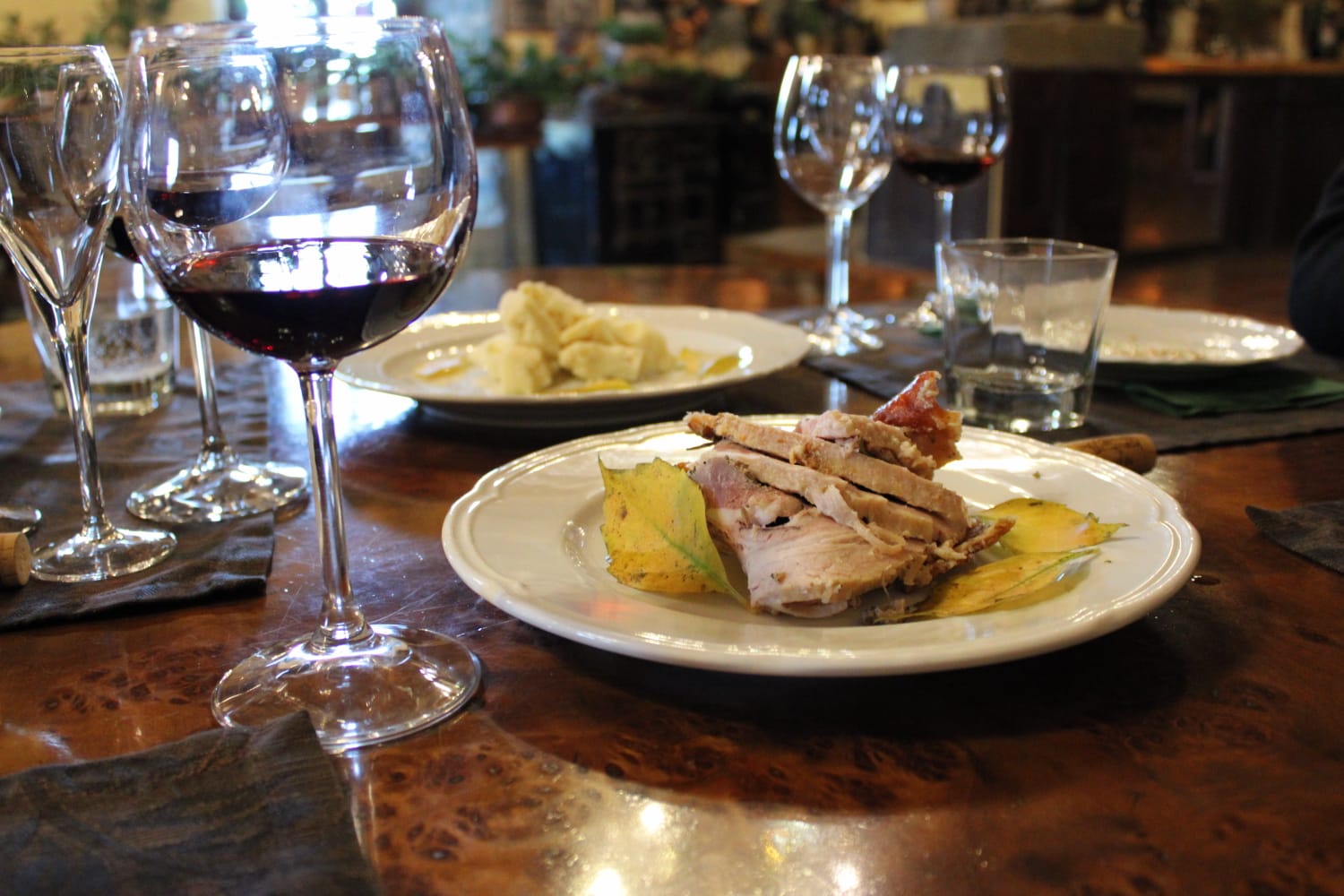
Throughout the journey, your driver will be happy to share with you interesting anecdotes, historical curiosities and advice on where to find the best Roman cuisine!
Available options
3-hour private tour of Rome aboard a Vintage VolksWagen T1
What's included
Italian espresso coffee for everyone!
ice-cream
Detailed itinerary
1
Stop 1
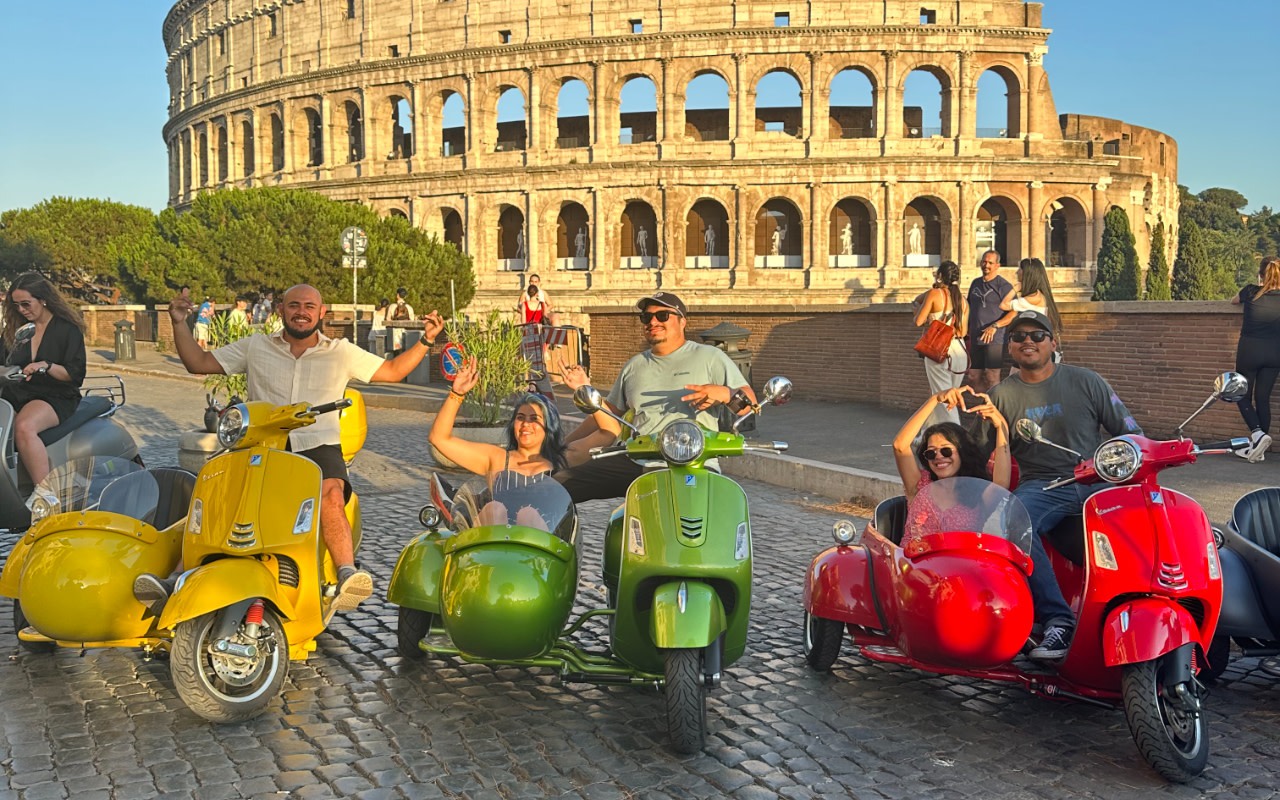
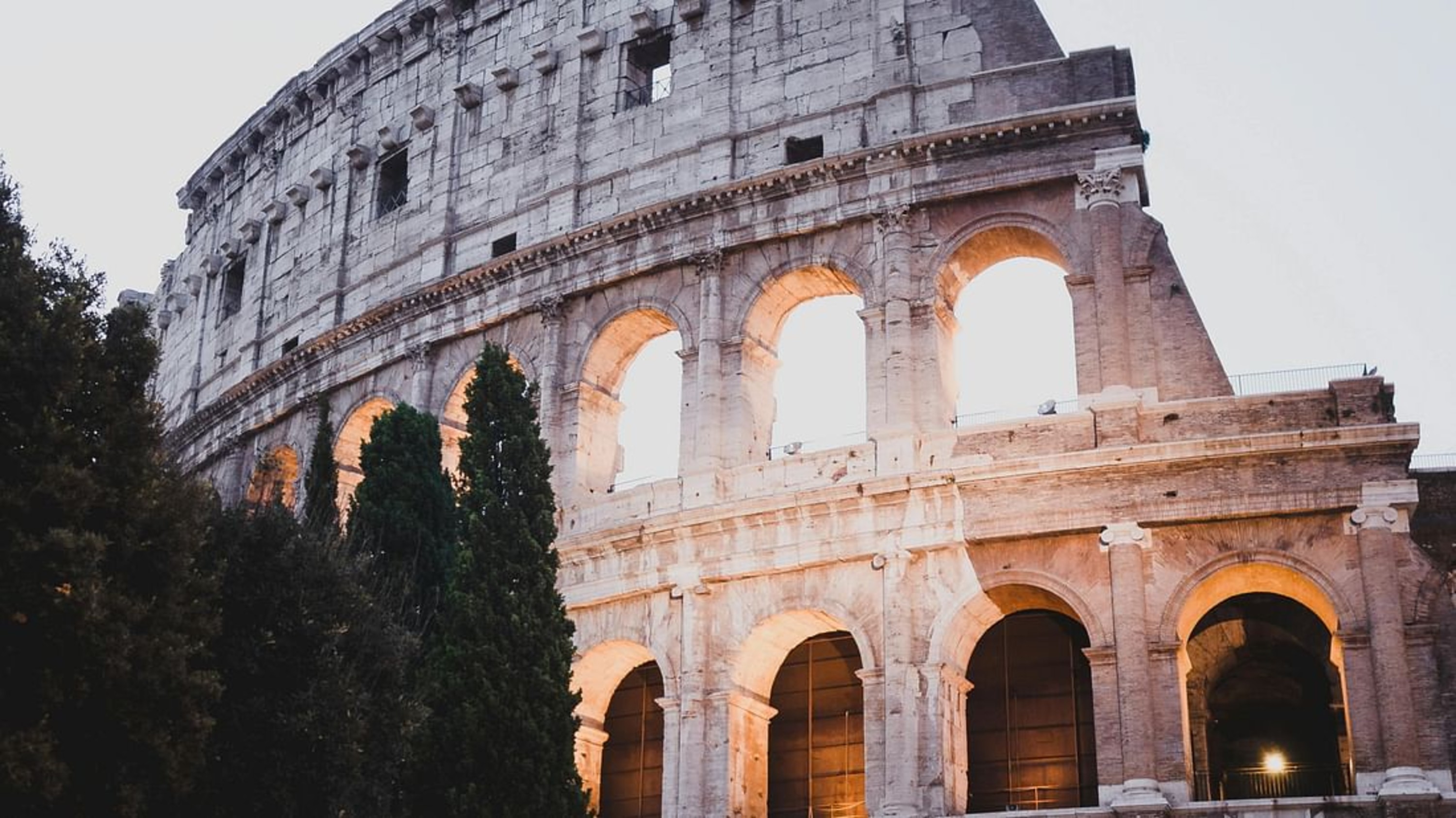
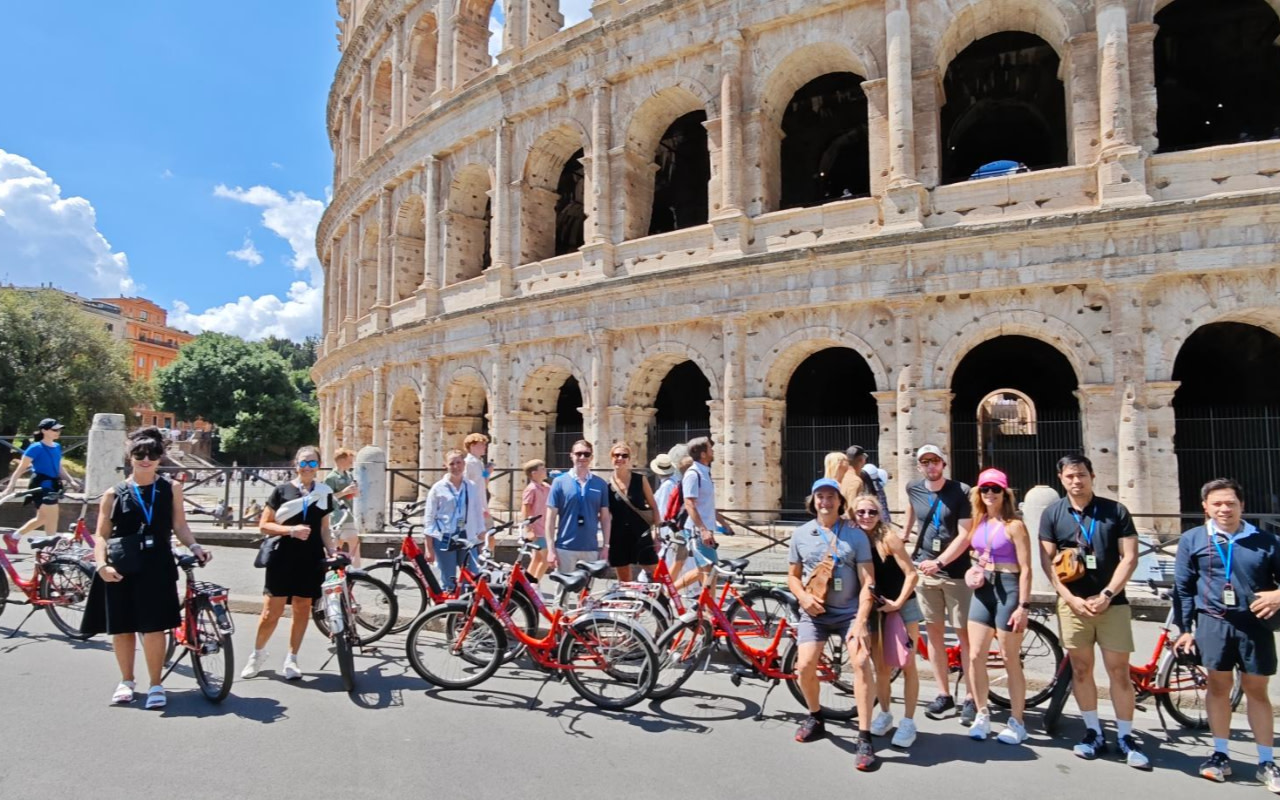
The Colosseum is one of the most iconic and recognizable monuments in the world, a symbol of Rome and the greatness of the Roman Empire. Also known as the Flavian Amphitheatre, it was built between 70 and 80 AD. under the emperors Vespasian and Titus. This enormous amphitheater could seat up to 50,000 spectators and was used for a variety of public spectacles, including gladiator fights, wild animal hunts, executions, and dramatic enactments of famous battles.
The Colosseum is famous not only for its imposing size, but also for the sophistication of its architecture and engineering. Equipped with a complex system of dungeons, elevators and traps, the arena could be quickly transformed to host different types of events.
The amphitheater is located in the heart of the city, close to other important archaeological sites such as the Roman Forum and the Palatine, making it an essential stop for anyone visiting Rome.
2
Stop 2
The Circus Maximus is one of the most impressive and historically significant archaeological sites in Rome. Located between the Palatine and the Aventine, it was the largest stadium in ancient Rome, used mainly for chariot racing. With an estimated capacity of over 250,000 spectators, it was the primary entertainment venue for the Romans.
Today, the Circus Maximus is a vast public park where traces of the oval track can still be seen. It is often used for concerts, public events and demonstrations. Walking along the site, visitors can imagine the grandeur of the events that took place there and appreciate the historical importance of this place. Furthermore, its central location makes it an ideal starting point for exploring other historical attractions of Rome, such as the Roman Forum and the Colosseum.
3
Stop 3
Piazza del Campidoglio is one of the most beautiful and historically significant squares in Rome, located on the top of the Capitoline Hill, one of the seven hills on which the ancient city was founded. The square is a Renaissance masterpiece, designed by Michelangelo Buonarroti in 1538 on behalf of Pope Paul III. Michelangelo completely redesigned the square, creating a harmonious composition that integrates the new with the old. The square is famous for its star-shaped geometric paving and the elegant staircase, the Cordonata, which leads to the square from below.
From the Campidoglio you can enjoy a spectacular view of the Roman Forum, allowing visitors to appreciate the vastness and historical richness of the heart of ancient Rome.
4
The Orange Garden, officially known as Parco Savello, is one of the most evocative and panoramic places in Rome. Located on the Aventine Hill, this peaceful public garden offers spectacular views of the city, with a particular perspective on the dome of St. Peter and many of Rome's main attractions.
The garden is known for its orange trees, which contribute to creating a peaceful and relaxing atmosphere. It was built in 1932 by the architect Raffaele De Vico and occupies the area of an ancient fortress of the Savelli, a noble Roman family.
One of the most famous attractions of the Orange Garden is the "keyhole" gate of the Priory of the Knights of Malta, located nearby. Looking through this keyhole, visitors can see a perfectly aligned view of St. Peter's dome framed by a tunnel of hedges, an image that has fascinated and continues to enchant tourists and Romans.
5
Stop 5
Trastevere is one of the most picturesque and lively neighborhoods in Rome. Located on the western bank of the Tiber River, Trastevere is renowned for its narrow cobbled streets, colorful medieval buildings and bohemian atmosphere. During the day, you can stroll through its narrow streets and discover ancient churches, such as Santa Maria in Trastevere, or go shopping in the artisan shops. At night, the neighborhood comes alive with trendy restaurants, bars and clubs, where you can enjoy authentic Roman cuisine and immerse yourself in Roman nightlife. Trastevere is also famous for its authentic spirit and local identity, making it a place loved by visitors and residents alike.
6
Stop 6
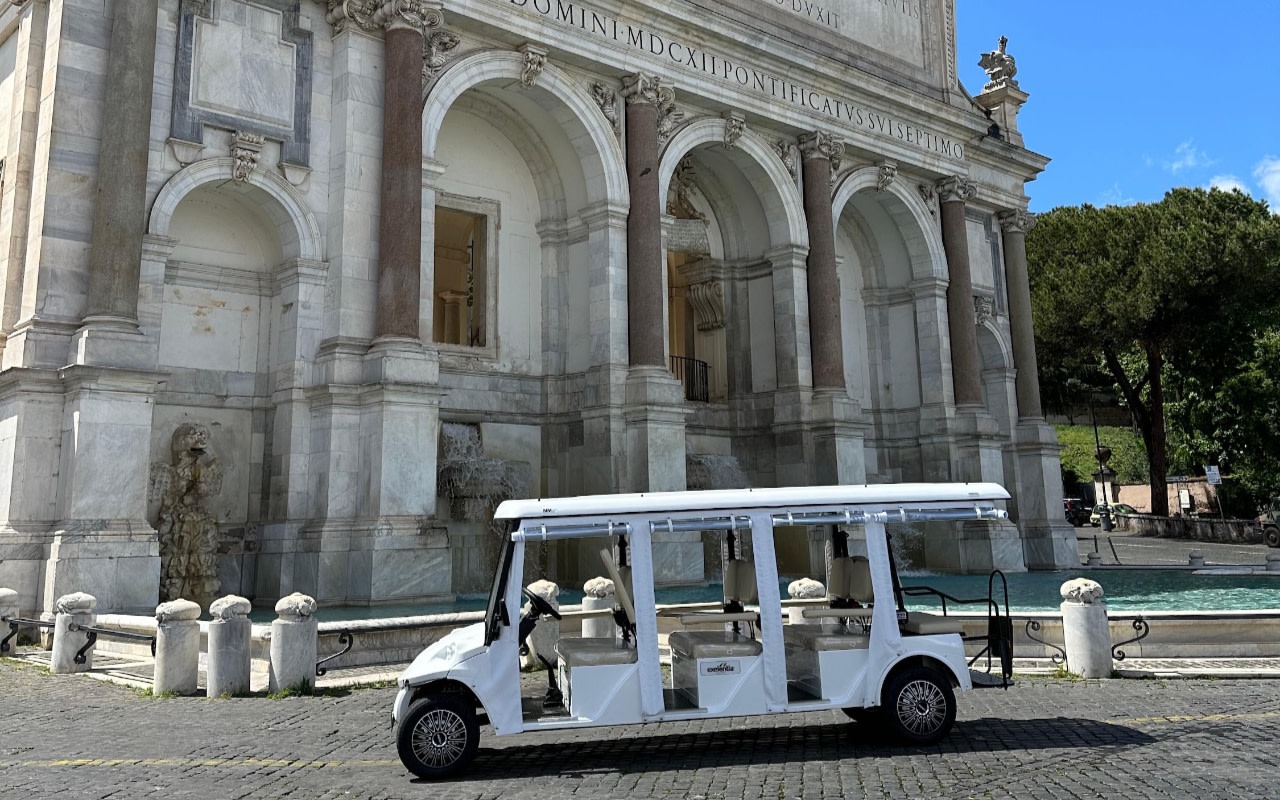
The Fontana dell'Acqua Paola, also known as the Fontanone del Gianicolo, is one of the most famous monumental fountains in Rome. Located on the Janiculum Hill, it offers a panoramic view of the city and represents an extraordinary work of hydraulic engineering and baroque art. The Acqua Paola Fountain is not only a marvel of Baroque engineering and art, but also a place of great beauty and tranquility, offering visitors an unforgettable experience in the eternal city.
7
Stop 7
The Janiculum Hill is one of the most fascinating hills in Rome. Located just outside the historic center, it offers breathtaking views of the eternal city. In addition to the splendid panoramic view, the Janiculum is also known for the equestrian statue of Garibaldi, an icon of the Italian Risorgimento, and for the particular acoustics of the Acqua Paola Fountain. Many visitors enjoy walking along its tree-lined streets and enjoying the sunset over the city. It is a place that combines history, natural beauty and romantic atmosphere.
8
Via Piccolomini is a street located in the residential area of Rome, famous for a spectacular optical illusion linked to the view of the dome of St. Peter's Basilica. The street is a privileged observation point that offers a unique perspective on one of Rome's most iconic symbols. The most famous feature of Via Piccolomini is the optical illusion that occurs when you walk along the street in the opposite direction to the dome of St. Peter's. As you move away from the basilica, the dome seems to get bigger and closer. On the contrary, as you approach the basilica, the dome seems to shrink and move away.
This phenomenon is due to a particular play of perspectives and angles, which creates a surprising and fascinating effect for anyone who visits the street. Via Piccolomini is a hidden gem of Rome, known mostly by locals and those looking to discover lesser-known corners of the city.
9
Borgo Pio is a picturesque neighborhood located in Rome, near the Vatican City. This charming neighborhood is characterized by narrow streets, historic buildings and a peaceful atmosphere, making it an ideal place for those who want to explore an authentic and less touristy part of the city. The Borgo Pio neighborhood was developed during the Renaissance. The streets of Borgo Pio still maintain their historical appearance today with colorful houses, flowered balconies and ancient signs. Today, Borgo Pio is an area that attracts both tourists and residents thanks to its combination of tranquility, historical beauty and proximity to Rome's main attractions. It is a place where you can enjoy an authentic Roman experience, away from the chaos of the busier areas of the city.
Visiting Borgo Pio means immersing yourself in a fascinating part of Rome's history, enjoying its delicious cuisine and discovering the hidden beauty of this quiet and evocative neighborhood.
10
Stop 10
The Tiber Island is a small river island located in the Tiber River, in the heart of Rome. Approximately 270 meters long and 67 meters wide, the island is rich in history, legends and symbolic meanings.
According to legend, the island was formed in 510 BC, when the Romans threw the grain of the newly deposed King Tarquinius Superbus into the Tiber. Debris and sediment accumulated around the grain, creating the island. In 291 BC, during a plague, the Romans invoked the help of the god of medicine, Aesculapius. A sacred serpent, symbol of the god, is said to have descended from the ship at the point where the island stands today, indicating the place where a temple dedicated to the god of healing would be built. The Tiber Island is a place of great charm and an oasis of tranquility in the heart of Rome. It is a meeting point for Romans and tourists, with restaurants, cafes and green spaces to relax.
11
Stop 11
The Jewish Quarter of Rome, also known as the Jewish Ghetto, is one of the oldest and most fascinating neighborhoods in the city. Located in the Sant'Angelo district, near the Tiber River, the Jewish Ghetto is a place rich in history, culture and traditions, which offers a unique overview of Jewish life in Rome through the centuries. Today, Rome's Jewish Ghetto is a lively and dynamic neighborhood, attracting tourists for its rich history, vibrant culture and delicious cuisine. It is a place where past and present meet, offering a unique window into the long and fascinating history of Rome's Jewish community.
Visiting the Jewish Quarter is an enriching experience that offers a deep understanding of the resilience and traditions of one of Rome's oldest and most important communities.
What's not included
Dinner
Lunch
Available languages
Guide guide
DE
EN
IT
FR
ES
Important information
Infants are required to sit on an adult’s lap
Not recommended for travelers with poor cardiovascular health
Service animals allowed
Public transportation options are available nearby
Infants and small children can ride in a pram or stroller
Suitable for all physical fitness levels
Meeting point
It will be very easy to notice the bright colors of our Volkswagen T1s, but if necessary we will have a sign with your name!
About Rome
Rome, the capital of Italy, is a city of ancient ruins, artistic masterpieces, and vibrant culture. Known as the Eternal City, it is a living museum where every corner tells a story of its rich history spanning over 2,500 years.
Top Attractions
Colosseum
The Colosseum is an iconic symbol of Rome and one of the most famous ancient amphitheaters in the world. It was used for gladiatorial contests and public spectacles.
Historical
1-2 hours
€16 (combined ticket with Roman Forum and Palatine Hill)
Vatican City
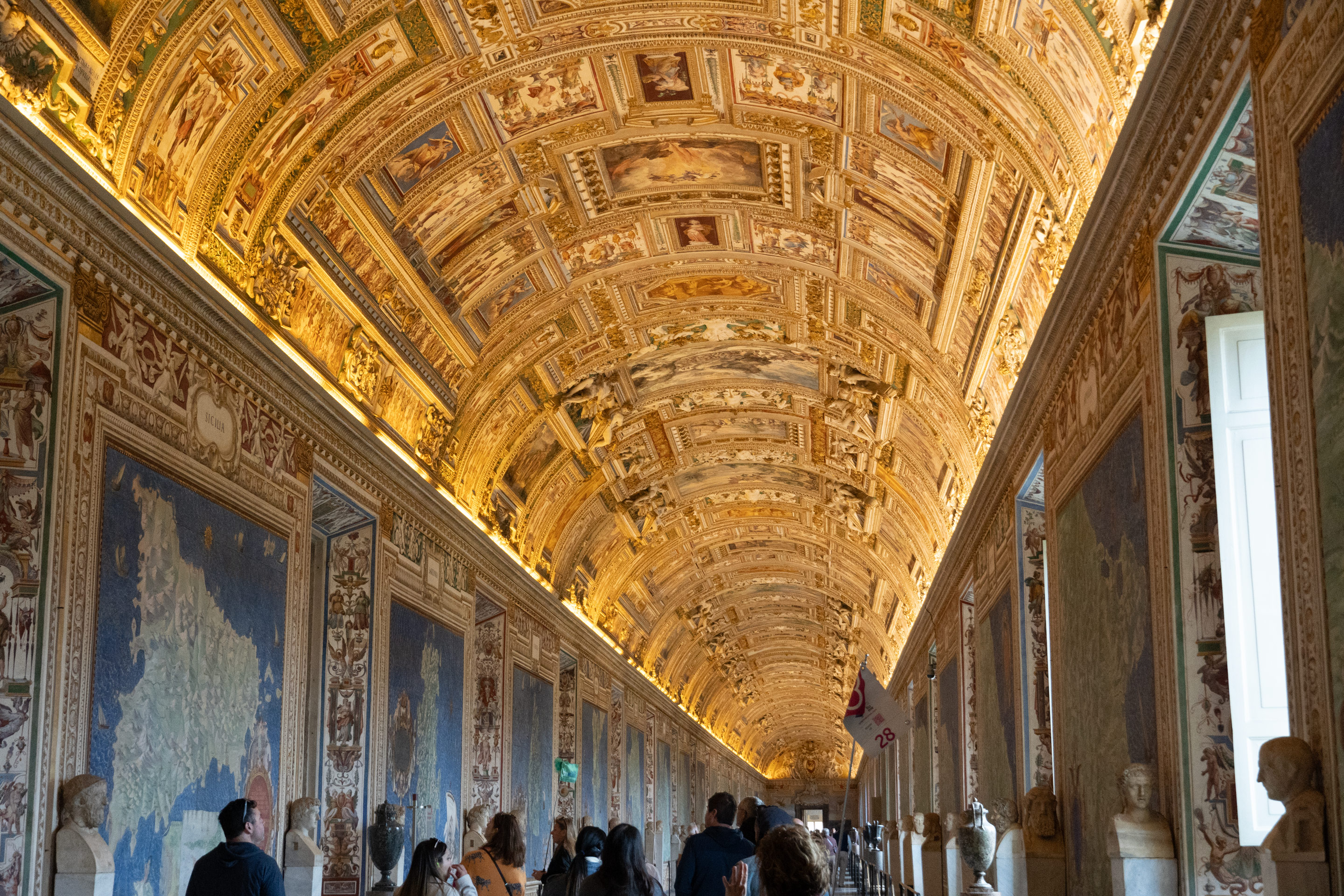
Vatican City is an independent city-state enclaved within Rome. It is the spiritual and administrative center of the Roman Catholic Church.
Religious
Half day
€17 (Vatican Museums and Sistine Chapel), Free (St. Peter's Basilica)
Roman Forum
The Roman Forum was the political, commercial, and legal hub of the Roman Republic and Empire. It is a sprawling ruin of temples, basilicas, and arches.
Historical
1-2 hours
€16 (combined ticket with Colosseum and Palatine Hill)
Pantheon
The Pantheon is a former Roman temple, now a church, known for its large dome and oculus. It is one of the best-preserved ancient buildings in Rome.
Historical
30 minutes to 1 hour
Free
Trevi Fountain
The Trevi Fountain is a Baroque masterpiece and the largest fountain in Rome. It is a popular spot for visitors to throw coins and make wishes.
Architecture
15-30 minutes
Free
Must-Try Local Dishes
Cacio e Pepe
A simple yet delicious pasta dish made with Pecorino Romano cheese and black pepper.
Pasta
Vegetarian
Carbonara
A rich pasta dish made with eggs, Pecorino Romano, guanciale (cured pork cheek), and black pepper.
Pasta
Contains pork and eggs
Supplì
Fried rice balls filled with mozzarella and tomato sauce.
Snack
Vegetarian (some variations may contain meat)
Carciofi alla Romana
Artichokes braised with garlic, mint, and olive oil.
Vegetable
Vegetarian
Popular Activities
Hiking in the Appian Way Regional Park
Biking along the Tiber River
Rock climbing in the nearby mountains
Picnicking in Villa Borghese Gardens
Boating on Lake Albano
Enjoying a spa day at a luxury hotel
Visiting the Vatican Museums
Attending an opera at the Teatro dell'Opera di Roma
Best Time to Visit
April to June, September to October
Spring and fall offer pleasant weather and fewer crowds compared to the summer peak. Ideal for sightseeing and outdoor activities.
15-30°C
59-86°F
Practical Information
Language
- Official: Italian
- Widely spoken: English, Spanish, French
- English: Moderately spoken
Currency
Euro (EUR)
Time Zone
GMT+1 (CET), GMT+2 (CEST during daylight saving time)
Electricity
230VV, 50HzHz
Safety Information
Overall Safety Rating: Generally safe
Rome is generally safe for tourists, but pickpocketing and scams can be a problem in crowded areas. Be aware of your surroundings and take precautions to protect your belongings.
Important Precautions:
- • Keep valuables secure and out of sight
- • Use official taxis or ride-sharing services
- • Be cautious of strangers approaching you with petitions or bracelets
Getting there
By air
- Leonardo da Vinci International Airport • 35 km from city center
- Ciampino Airport • 15 km from city center
By train
Roma Termini, Roma Tiburtina
By bus
Tiburtina Bus Station, Roma Termini
Getting around
Public transport
The metro system is efficient and covers major tourist areas. It operates from 5:30 AM to 11:30 PM.
Taxis
Available • Apps: Uber, FreeNow
Rentals
Car, Bike, Scooter
Neighborhoods
Trastevere
Monti
Prancipio
Testaccio
Day trips
Ostia Antica
30 km from Rome • Half day
An ancient Roman port city with well-preserved ruins, including a theater, baths, and mosaics. It offers a glimpse into daily life in ancient Rome.
Tivoli
30 km from Rome • Full day
A picturesque town known for its stunning villas and gardens, including the famous Villa d'Este with its elaborate fountains and gardens.
Orvieto
120 km from Rome • Full day
A charming hilltop town known for its stunning cathedral, underground caves, and local wine. It offers a mix of history, culture, and scenic views.
Festivals
Natale di Roma • April 21
Festa de' Noantri • July
Rome Film Festival • October
Pro tips
- Visit major attractions early in the morning or late in the afternoon to avoid crowds
- Use public transport or walk instead of taking taxis to save money and experience the city like a local
- Try local specialties and ask for recommendations from locals and restaurant staff
- Dress modestly when visiting religious sites and be respectful of local customs and traditions
- Be aware of pickpockets and scams, especially in crowded areas and tourist hotspots
From $25
per person
Price varies by option
Secure booking
Free cancellation available