Rome Golf Cart Tour: Discover the Pinnacle Experience
Active
3h
For a full refund, cancel at least 24 hours before the scheduled departure time.
Instant confirmation
Mobile or paper ticket accepted
About this experience
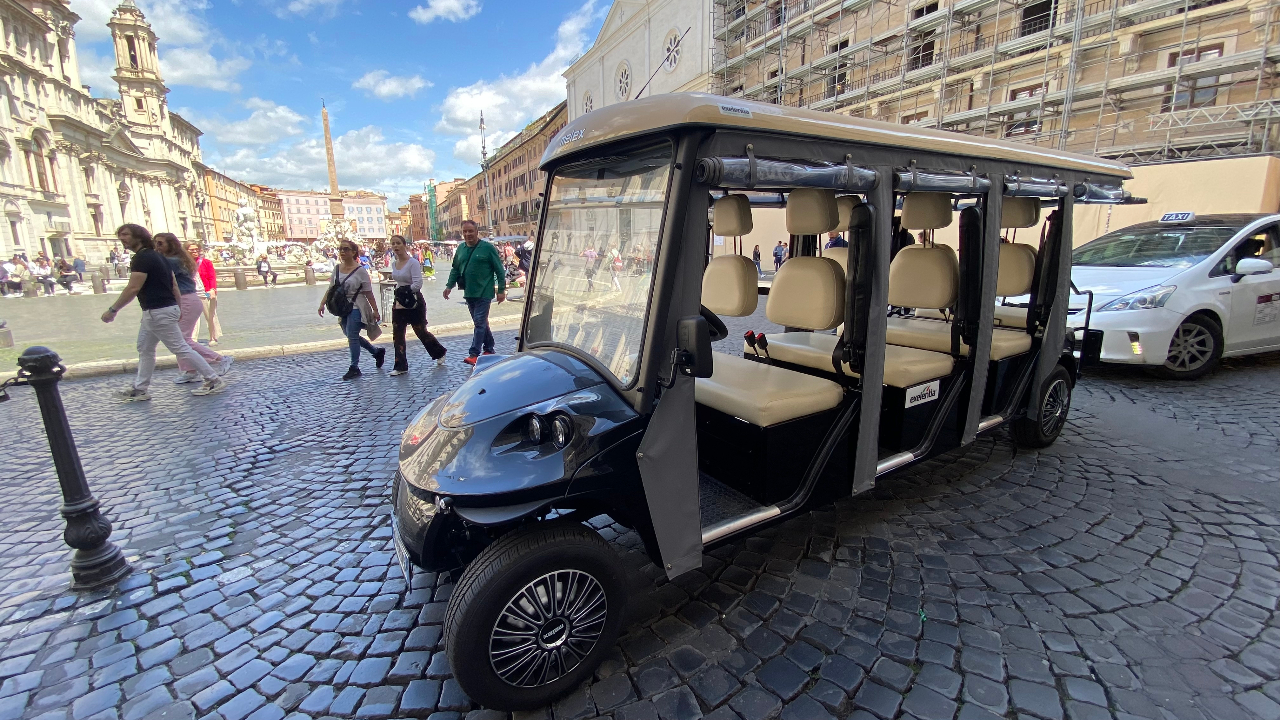
Introducing our Rome Golf Cart Tour, a unique experience for all travelers. Whether you're new and eager to see iconic sites like the Pantheon, Trevi Fountain, and Spanish Steps, or a return visitor looking for fresh perspectives, we've got you covered.
If you're new, we ensure must-see sights are part of your journey. For seasoned explorers, we unveil hidden gems like the Keyhole, Orange Garden on Aventine Hill, and much more. We venture to Campo di Fiori and more, steering clear of tourists crowds.
Our tour goes beyond the usual. We pause at each location, giving you time to absorb beauty and history. Unlike typical routes, we lead you through charming alleys, away from noise. This lets you truly connect with Rome.
Flexibility is key. Your interests shape the journey. If something captivates, we'll stop and explore.
In essence, the Rome Golf Cart Tour lets you uncover the city's heart, whether famous landmarks or hidden gems call to you. Join us for an unforgettable exploration.
Available options
Dolce Vita Tour with eFiat 500
Classic Electric Fiat Cabriole<br/>Pickup included
Rome Golf Cart Tour: Discover the Pinnacle Experience
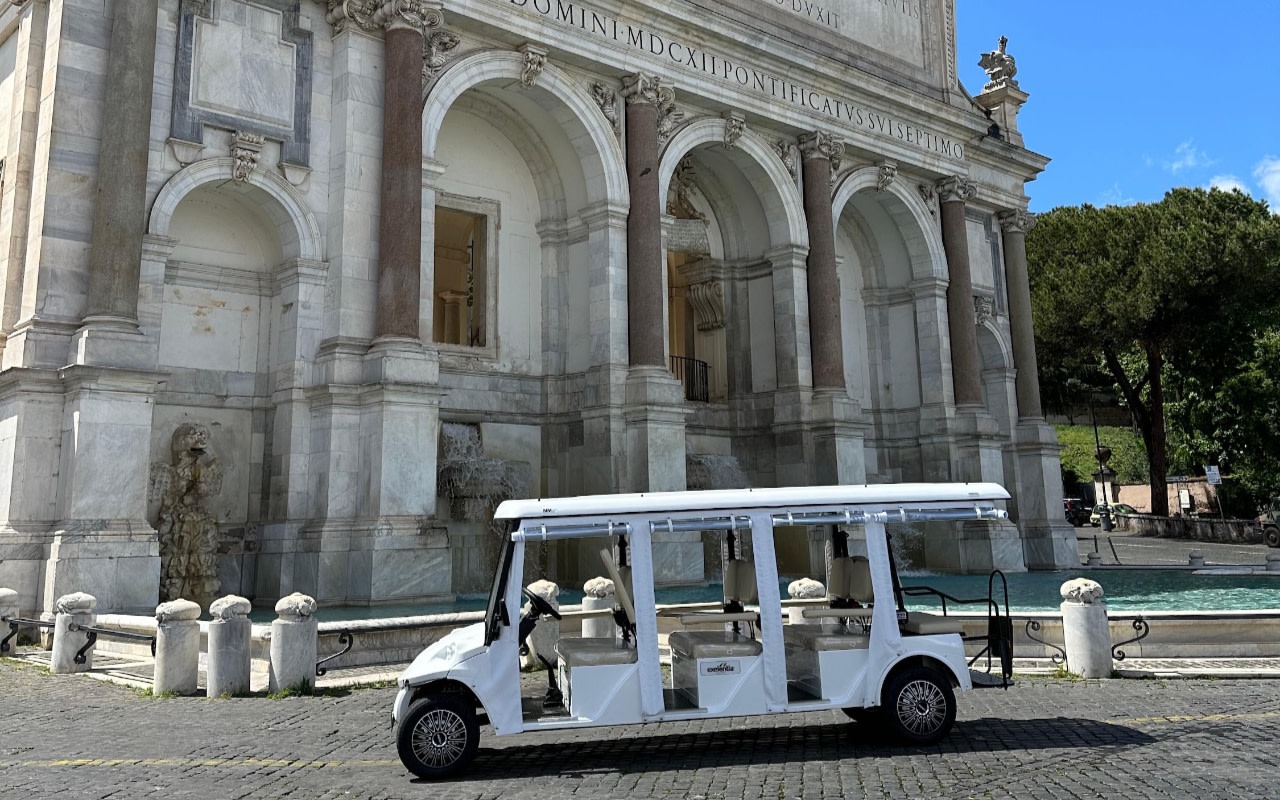
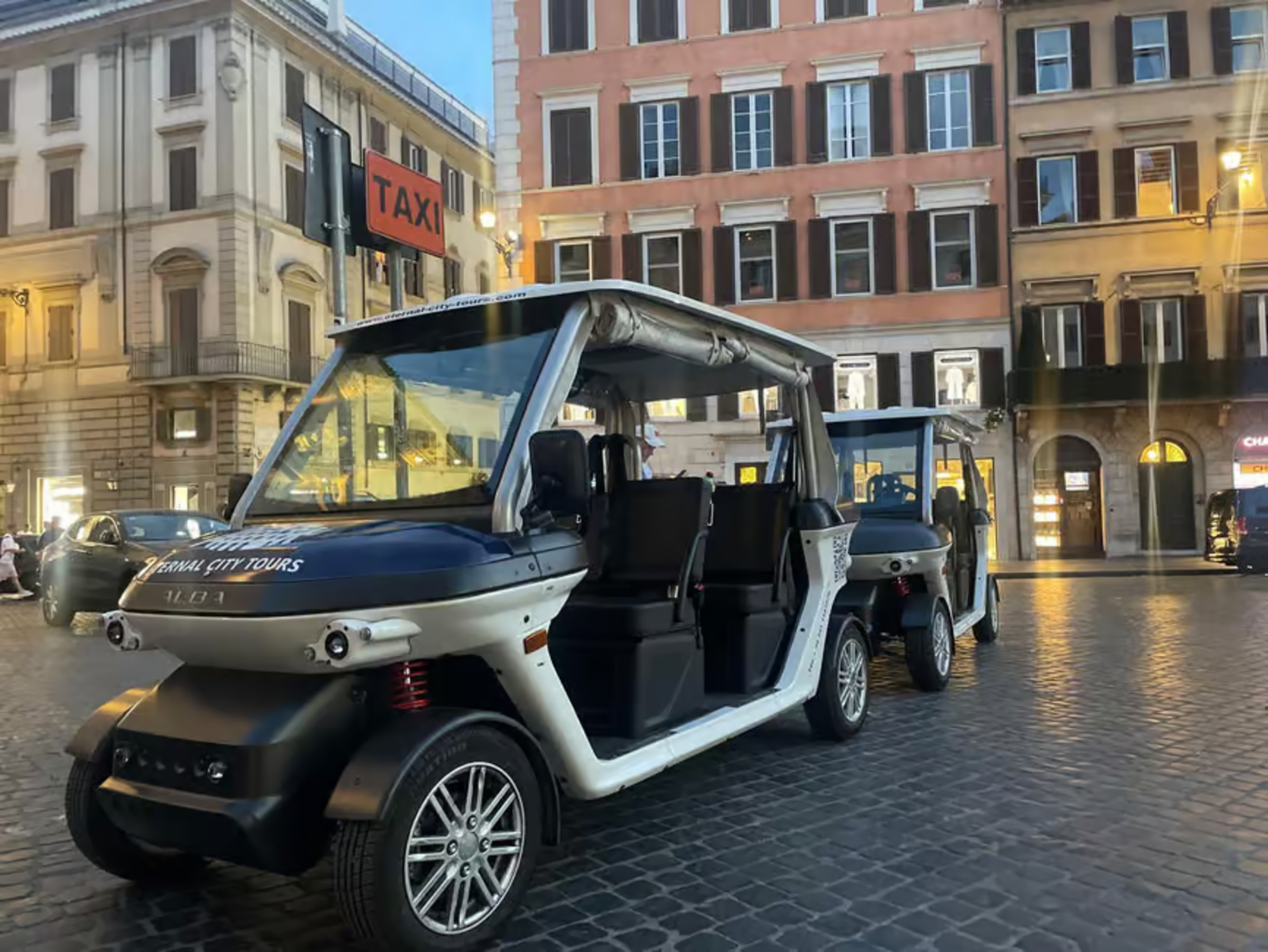
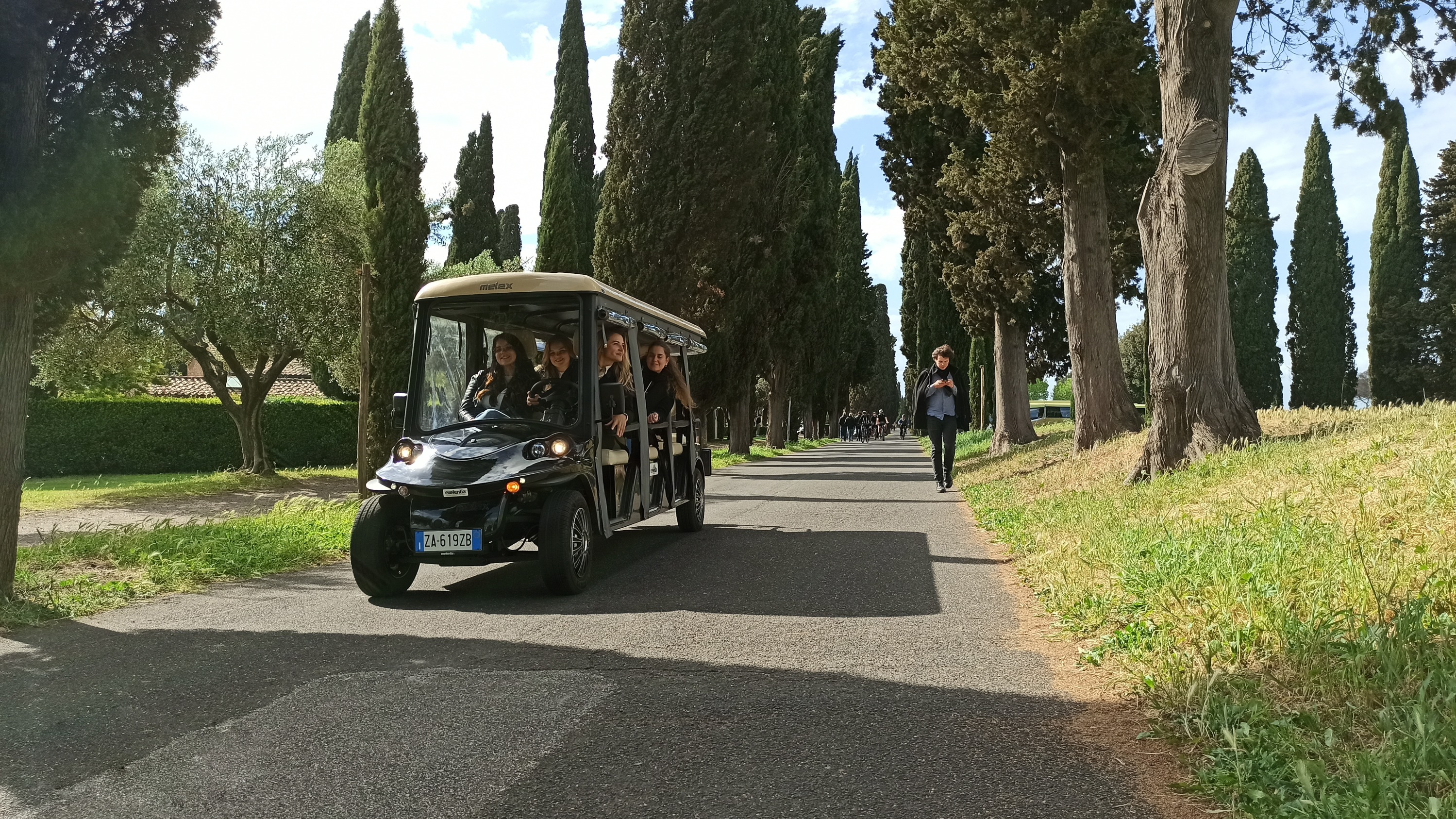
Regular Golf Cart<br/>Pickup included
What's included
English speaking driver
Complimentary Hotel Pickup in Central Rome for the Private Experience
Detailed itinerary
1
Stop 1
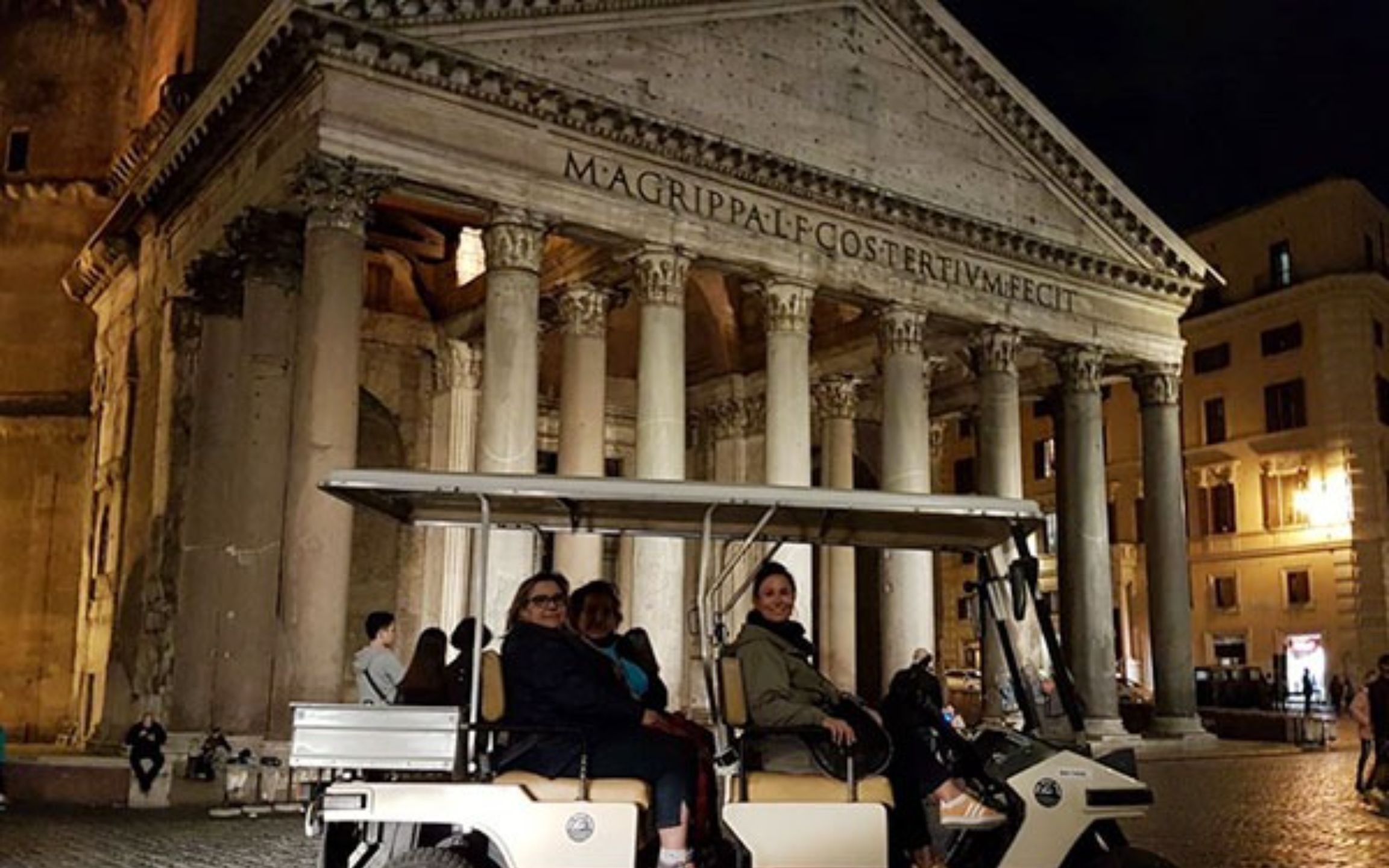
The Pantheon is a former Roman temple and, since 609 AD, a Catholic church in Rome, Italy, on the site of an earlier temple commissioned by Marcus Agrippa during the reign of Augustus.
2
Stop 2
Navona Square is one of the most spectacular and characteristic squares of Baroque Rome, built on the remains of the Stadium of Domitian.
3
Stop 3
The Trevi Fountain is an 18th-century fountain in the Trevi district in Rome, Italy, designed by Italian architect Nicola Salvi and completed by Giuseppe Pannini and several others.
4
Stop 4
The Spanish Steps in Rome, Italy, climb a steep slope between the Piazza di Spagna at the base and Piazza Trinità dei Monti, dominated by the Trinità dei Monti church, at the top.
5
Stop 5
Pass by
Rich in colours and sounds, Piazza Campo dè Fiori is one of the souls of Rome; in the center overlooks the statue of philosopher Giordano Bruno burned alive in the center of the piazza.
6
Stop 6
Pass by
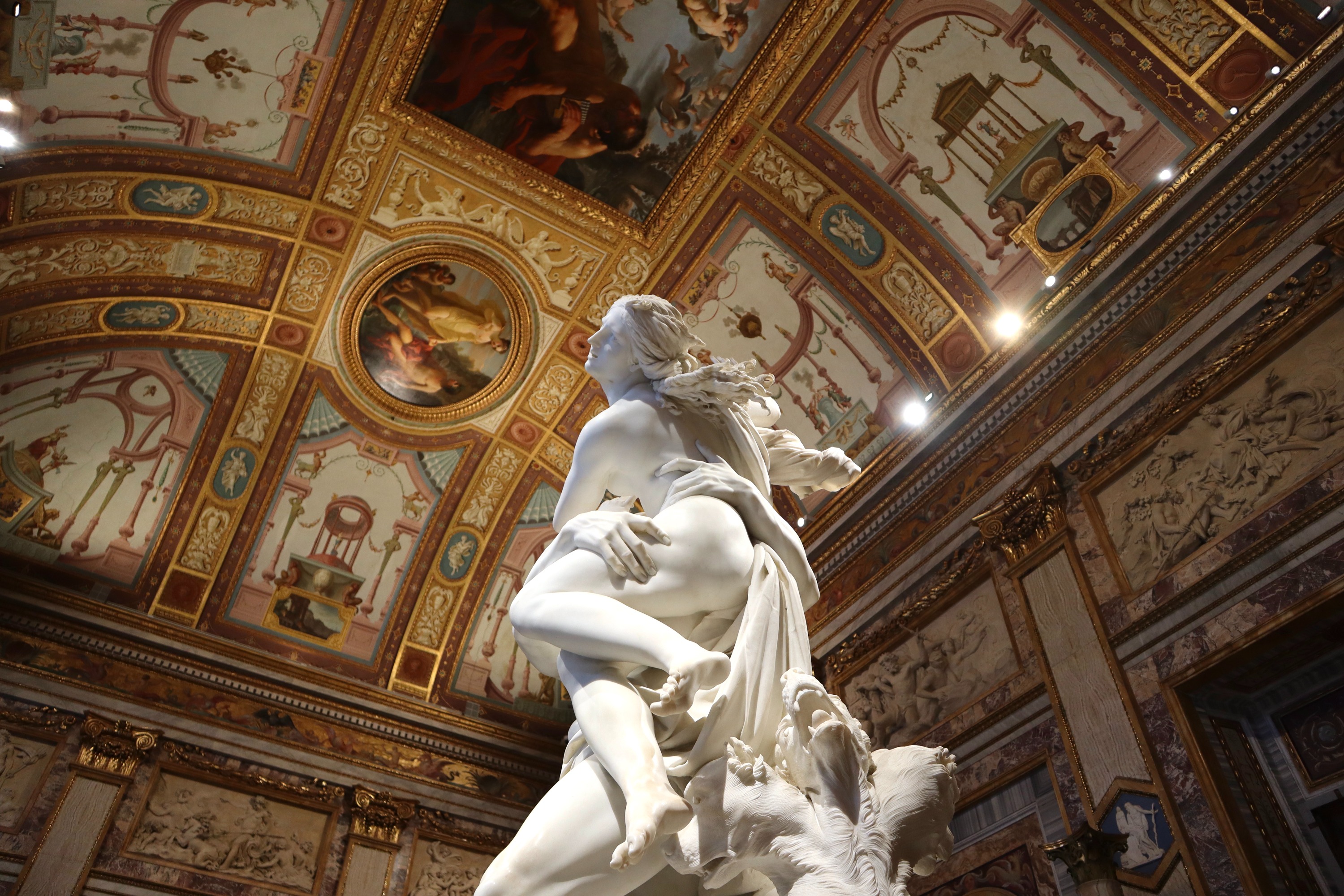
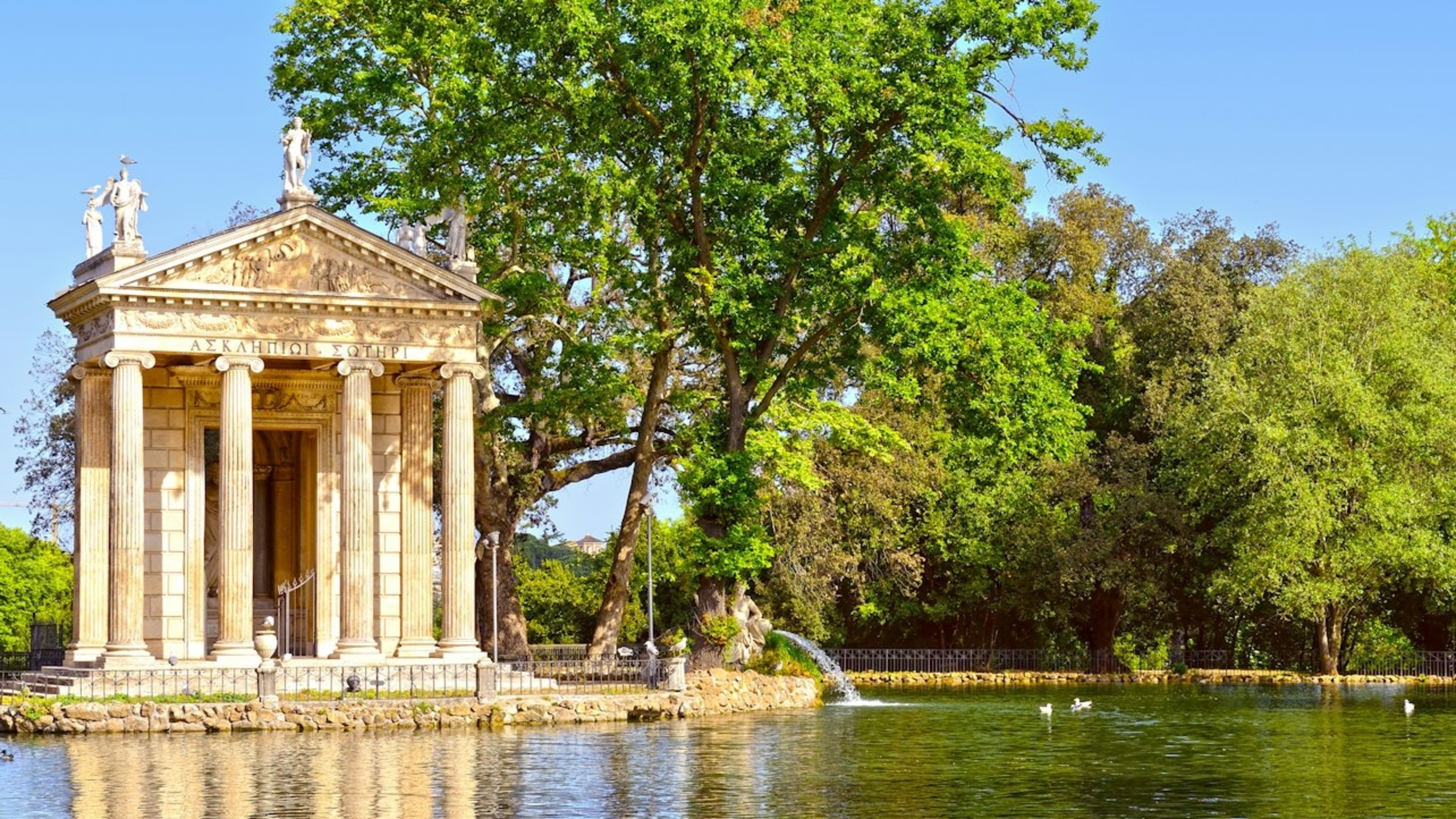
Villa Borghese is a landscape garden in Rome, containing a number of buildings, museums and attractions. It is the third largest public park in Rome.
7
Stop 7
Pass by
The Palatine Hill, which relative to the seven hills of Rome is the centre most, is one of the most ancient parts of the city and has been called "the first nucleus of the Roman Empire."
8
Stop 8
Pass by
The Circus Maximus is an ancient Roman chariot-racing stadium and mass entertainment venue in Rome. It was the first and largest stadium in ancient Rome and its later Empire.
9
The Aventine Hill is one of the Seven Hills on which ancient Rome was built. It belongs to Ripa, the modern twelfth rione, or ward, of Rome.
10
Stop 10
Pass by
The Piazza del Popolo (meaning The People's Square) is located inside the northern gate of the city, which was once called Porta Flaminia.
11
Stop 11
The church of Sant'Ignazio di Loyola was built on a design by the Jesuit mathematician Orazio Grassi, based on the plans of Carlo Maderno and others, and at the expense of Cardinal Ludovico Ludovisi, nephew of Gregorio XV, as the inscription on the facade recalls; this is inspired by that of the nearby church of Gesù, with two orders of pilasters and Corinthian columns, enriched by large windows, niches with tympanum and folders.
12
The Mausoleum of Augustus in Rome, a large circular tomb is a key monument for exploring the reuse, reinterpretation, and rediscovery of antiquities over time, and it has a long, complex history that continues to resonate today.
13
Stop 13
Pass by
The Column of Marcus Aurelius and Faustina which stands in Piazza Colonna in Rome is thought to have been erected by Commodus in memory of his father and mother sometime around 180 CE.
14
Located between Via del Corso and Via dei Fori Imperiali, Piazza Venezia derives its shape from the remaking of the area, which took place at the turn of the 19th and 20th centuries, for the construction of the Monumento a Vittorio Emanuele II.
15
Stop 15
Pass by
This striking museum showcases the Mercati di Traiano (Trajan's Markets), the emperor Trajan's towering 2nd-century complex, while also providing a fascinating introduction to the Imperial Forums with multimedia displays, explanatory panels and a smattering of archaeological artefacts.
16
In the Aventine hill, the Orange Garden of Rome is one of the city’s most beloved natural areas. This beautiful park covers almost 8,000 square meters and offers a panorama over Rome; if there is time we will stop also the the KeyHole of Rome.
17
Stop 17
LONG BEFORE THE MODERN LIE detector and its harmlessly jittering graphs and wires were invented, the superstitious and untruthful faced a much more severe fate between the jaws of the Bocca della Verità, or Mouth of Truth, an ancient carving which is said to bite the hands off of liars.
18
LOCATED IN THE ANCIENT FORUM Boarium near the Tiber River, the Temple of Hercules and Portunus is a well-preserved example of ancient Roman architecture. The temple overlooked the fluvial port of Rome, watching over the goods entering the city.
19
Stop 19
Pass by
The theatre of Marcellus was the largest and most important theatre in Rome and completed in the late 1st century BCE during the reign of Augustus. The architecture of the theatre would become a standard feature of theatres across the empire and influence the façades of such iconic buildings as the Colosseum.
What's not included
Access to Attractions
Available languages
Guide guide
EN
IT
Reviews breakdown
Viator
4.8
40 reviews
5★
37
4★
0
3★
2
2★
0
1★
1
Tripadvisor
5.0
1 reviews
5★
1
4★
0
3★
0
2★
0
1★
0
Important information
Infants and small children can ride in a pram or stroller
Service animals allowed
Public transportation options are available nearby
Specialized infant seats are available
Suitable for all physical fitness levels
Meeting point
The Piazzale delle Canestre is located within the Villa Borghese Gardens in Rome. It can be easily accessed via taxi or private driver.
About Rome
Rome, the capital of Italy, is a city of ancient ruins, artistic masterpieces, and vibrant culture. Known as the Eternal City, it is a living museum where every corner tells a story of its rich history spanning over 2,500 years.
Top Attractions
Colosseum
The Colosseum is an iconic symbol of Rome and one of the most famous ancient amphitheaters in the world. It was used for gladiatorial contests and public spectacles.
Historical
1-2 hours
€16 (combined ticket with Roman Forum and Palatine Hill)
Vatican City
Vatican City is an independent city-state enclaved within Rome. It is the spiritual and administrative center of the Roman Catholic Church.
Religious
Half day
€17 (Vatican Museums and Sistine Chapel), Free (St. Peter's Basilica)
Roman Forum
The Roman Forum was the political, commercial, and legal hub of the Roman Republic and Empire. It is a sprawling ruin of temples, basilicas, and arches.
Historical
1-2 hours
€16 (combined ticket with Colosseum and Palatine Hill)
Pantheon
The Pantheon is a former Roman temple, now a church, known for its large dome and oculus. It is one of the best-preserved ancient buildings in Rome.
Historical
30 minutes to 1 hour
Free
Trevi Fountain
The Trevi Fountain is a Baroque masterpiece and the largest fountain in Rome. It is a popular spot for visitors to throw coins and make wishes.
Architecture
15-30 minutes
Free
Must-Try Local Dishes
Cacio e Pepe
A simple yet delicious pasta dish made with Pecorino Romano cheese and black pepper.
Pasta
Vegetarian
Carbonara
A rich pasta dish made with eggs, Pecorino Romano, guanciale (cured pork cheek), and black pepper.
Pasta
Contains pork and eggs
Supplì
Fried rice balls filled with mozzarella and tomato sauce.
Snack
Vegetarian (some variations may contain meat)
Carciofi alla Romana
Artichokes braised with garlic, mint, and olive oil.
Vegetable
Vegetarian
Popular Activities
Hiking in the Appian Way Regional Park
Biking along the Tiber River
Rock climbing in the nearby mountains
Picnicking in Villa Borghese Gardens
Boating on Lake Albano
Enjoying a spa day at a luxury hotel
Visiting the Vatican Museums
Attending an opera at the Teatro dell'Opera di Roma
Best Time to Visit
April to June, September to October
Spring and fall offer pleasant weather and fewer crowds compared to the summer peak. Ideal for sightseeing and outdoor activities.
15-30°C
59-86°F
Practical Information
Language
- Official: Italian
- Widely spoken: English, Spanish, French
- English: Moderately spoken
Currency
Euro (EUR)
Time Zone
GMT+1 (CET), GMT+2 (CEST during daylight saving time)
Electricity
230VV, 50HzHz
Safety Information
Overall Safety Rating: Generally safe
Rome is generally safe for tourists, but pickpocketing and scams can be a problem in crowded areas. Be aware of your surroundings and take precautions to protect your belongings.
Important Precautions:
- • Keep valuables secure and out of sight
- • Use official taxis or ride-sharing services
- • Be cautious of strangers approaching you with petitions or bracelets
Getting there
By air
- Leonardo da Vinci International Airport • 35 km from city center
- Ciampino Airport • 15 km from city center
By train
Roma Termini, Roma Tiburtina
By bus
Tiburtina Bus Station, Roma Termini
Getting around
Public transport
The metro system is efficient and covers major tourist areas. It operates from 5:30 AM to 11:30 PM.
Taxis
Available • Apps: Uber, FreeNow
Rentals
Car, Bike, Scooter
Neighborhoods
Trastevere
Monti
Prancipio
Testaccio
Day trips
Ostia Antica
30 km from Rome • Half day
An ancient Roman port city with well-preserved ruins, including a theater, baths, and mosaics. It offers a glimpse into daily life in ancient Rome.
Tivoli
30 km from Rome • Full day
A picturesque town known for its stunning villas and gardens, including the famous Villa d'Este with its elaborate fountains and gardens.
Orvieto
120 km from Rome • Full day
A charming hilltop town known for its stunning cathedral, underground caves, and local wine. It offers a mix of history, culture, and scenic views.
Festivals
Natale di Roma • April 21
Festa de' Noantri • July
Rome Film Festival • October
Pro tips
- Visit major attractions early in the morning or late in the afternoon to avoid crowds
- Use public transport or walk instead of taking taxis to save money and experience the city like a local
- Try local specialties and ask for recommendations from locals and restaurant staff
- Dress modestly when visiting religious sites and be respectful of local customs and traditions
- Be aware of pickpockets and scams, especially in crowded areas and tourist hotspots
From $25
per person
Price varies by option
Secure booking
Free cancellation available
Instant confirmation