Marrakech Highlights: Guided Day Tour from Agadir
Active
12h
For a full refund, cancel at least 24 hours before the scheduled departure time.
Instant confirmation
Mobile or paper ticket accepted
About this experience
Marrakech, the pearl of the South, is a mythical city at the foot of the High Atlas. Founded in 1070 by the Almoravide Youssef Ben Tachfine, the city has witnessed a succession of wealthy civilizations and dynasties, all of which have left behind sumptuous palaces, mosques, and gardens. From the Jemâa Al Fna square to the souk alleys, Marrakech is the perfect expression of a never-ending cultural amalgam
Available options
Marrakech Highlights: Guided Day Tour from Agadir
Pickup included
What's included
Private tour
Driver/guide
Transport by private vehicle
Detailed itinerary
1
Stop 1
One of the most impressive monuments in Marrakech and one of the most beautiful mosques in the Western Muslim world. Marked by a complex history; it is actually a double sanctuary with a minaret. The first Koutoubia was inaugurated in 1157 and the second and the minaret were built a year later by order of Abdelmoumen. The two sanctuaries are distinguished by their innovative plan giving you a capital importance to the wall of the qibla (orientation of the prayer).
Marking the landscape of its presence, the minaret erected in stone, with a height of 77 m, allows the use of a ramp to reach its summit. A sober decoration composed of carved reliefs and registers of white and green ceramic tiles punctuating the upper parts of the facades and the pinnacle.
2
Formerly allowing entry into the medina, the 10 gates piercing the wall, named in Arabic Bab, are often impressive. Some of them will be a source of inspiration for the other cities of the kingdom. Bab Agnaou: door of the "ram without horns", so named after having lost the two towers which composed it. It was built in Guéliz stone, a gray blue, which has now become rather red due to the action of the winds bringing sand from the desert. It is the main entrance to the Kasbah. Bab Er-Robb: ocher-red in color, this door called "grape juice" was used as a control at the entrance of alcoholic beverages. Bab El Khemis: giving access to the souk of the same name (meaning Thursday due to market day at the time)
3
The Marrakech mellah was built in 1558, under the reign of the Saadian sovereign Moulay Abdallah with two entrance doors. You will discover the spice souk with its various colors and scents, the jewelry souk with an auction at 16 pm, the fabric souk with all kinds of fabrics. A historical atmosphere recounted by the old wooden buildings, the tinsmiths square where craftsmen produce atypical tin objects, and especially the two synagogues Neguidim and Alazma. The culture and Jewish footprints are intact, a warm atmosphere, to discover over the shops.
From 2014, a restoration program was launched to restore the Jewish quarter of Marrakech to its full splendor, thus making it an important tourist destination. This will involve the restoration of various souks or the renovation of houses and walls. During your visit to Marrakech, let us discover the main tourist sites not to be missed in the Mellah.
4
Stop 4
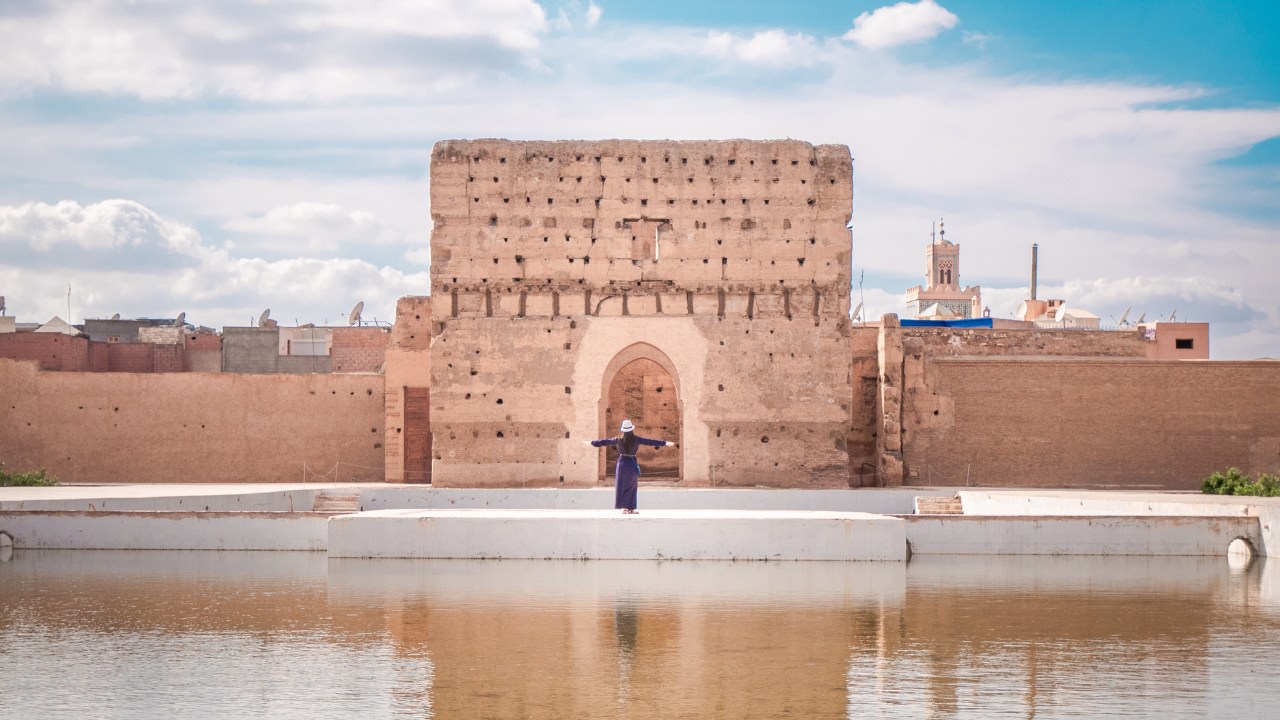
The Bahia Palace was built in the 1860s by Si Moussa, the grand vizier of the Sultan, as a personal residence. It was later expanded and embellished by his son, Ba Ahmed, who was also a grand vizier, in the late 1890s. The name “Bahia,” which translates to “brilliance,” reflects the palace’s beauty and the ambition behind its creation.
Design and Artistry:
The palace showcases a blend of Islamic and Moroccan architectural styles, featuring intricate marquetry, stunning zellij (tile work), and ornate ceilings. Its design includes several riads (traditional Moroccan houses with interior gardens), a harem section, and a grand courtyard, which was used for entertaining distinguished guests.
5
Stop 5
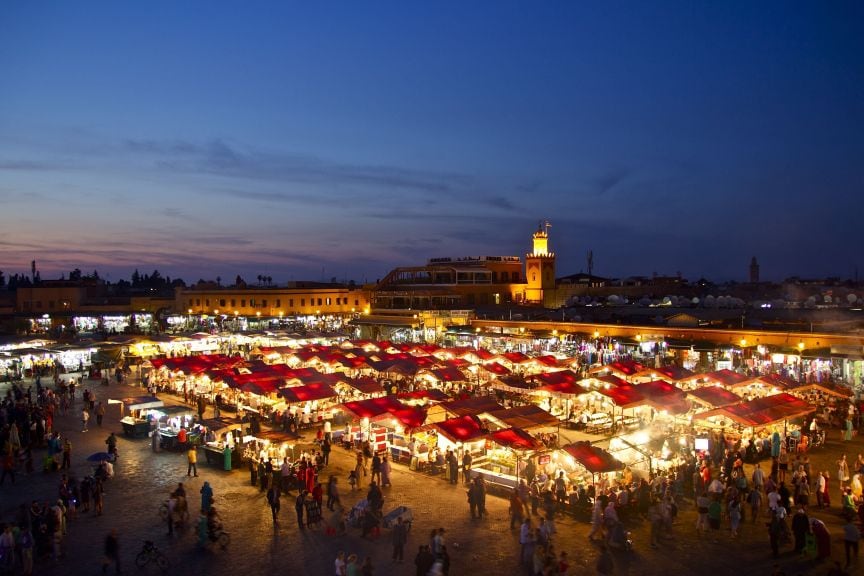
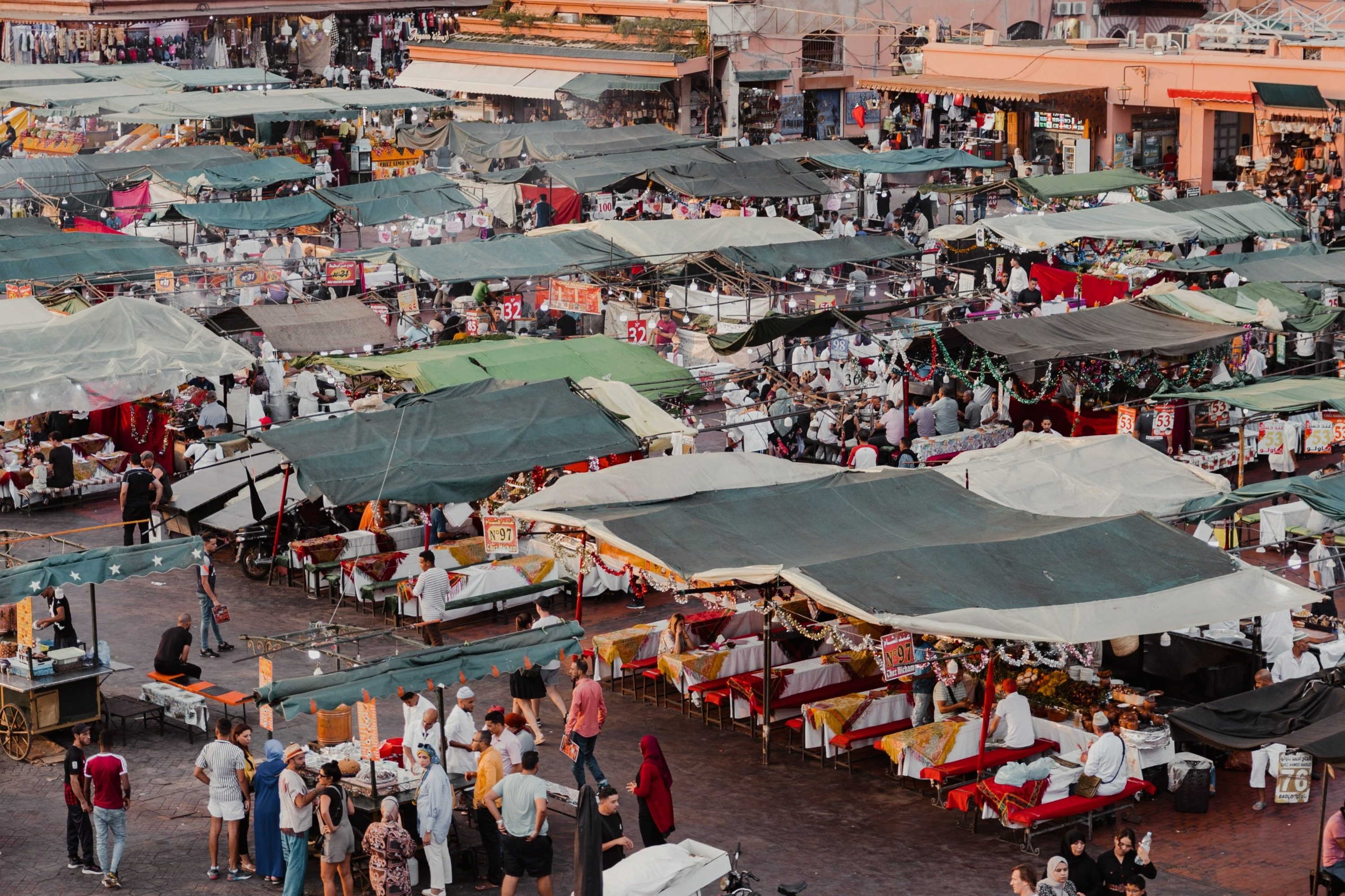
Jemaa el-Fna Square sits at the very heart of Marrakech, pulsating with life and culture. This iconic public square is the center of the city’s daily hustle and bustle, offering a rich sensory experience filled with sights, sounds, and flavors that have attracted visitors from all over the world for centuries. Recognized as a UNESCO World Heritage site, Jemaa el-Fna Square is not just a place—it’s an experience. Whether you’re a first-time visitor or a seasoned traveler, a stop here is essential to fully understand the soul of Marrakech.
6
ourselves in the very essence of this dynamic city by exploring the most fascinating souks, where Moroccan history and culture come to life.
1. Semmarine Souk
Start your journey at Souk Semmarine, the beating heart of Marrakech's souks. The atmosphere here is electric, with stalls overflowing with colorful rugs, sumptuous textiles and handcrafted items. Get lost in the maze of alleys and let yourself be captivated by the richness of the products on offer.
7
Nearby, explore Rahba Quedima and Souk Lghzal, where the bustle of merchants creates a vivid picture. Discover vibrant spices, exquisite leather products and sparkling jewelry, displaying local artisanal skill.
8
The ramparts of Marrakech
Symbol of the ocher city, the ramparts, whose construction began in 1126 at the initiative of the ruler Ali Ben Youssef, today surround the ancient city: the medina. Their construction will extend over several decades until the mud wall of clay and lime reaches more than 10 km. It will be punctuated by 202 square towers and breakthrough 10 prestigious doors allowing access to the city. Crowned with a walkway, 8's high wall at 10 meters served as protection against enemy attacks.
It is proposed to you to discover the ramparts a carriage ride which lasts 4 hours, including some small displacements on foot. The itinerary begins at Liberty Square, west of the medina.
9
The Ben Youssef Medersa, an architectural treasure nestled in the heart of the ancient Medina of Marrakech, resonates with the echo of a glorious past and embodies an invaluable historical significance. It transports visitors to a fascinating era where art, knowledge, and culture flourished. The medersa was erected by Sultan Abdullah Al-Ghaleb Assaadi between the years 1564 and 1565 and remained for four centuries a bastion for scholars, a goal and a destination for students eager for knowledge in various disciplines, especially religious ones.
The Ben Youssef Medersa has been an intellectual hub in Morocco for centuries. Students from distant horizons converged on this prestigious institution to deepen their knowledge in religious sciences, philosophy, medicine, and mathematics.
Upon crossing the threshold, the architectural splendor of the Medersa enchants. Refined Zellige tiles with sumptuous geometric and floral motifs adorn the walls, bearing witness to the accomplish.
What's not included
Food and drinks
Lunch
Gratuities
Available languages
Guide guide
DE
EN
FR
Reviews breakdown
Viator
3.0
6 reviews
5★
3
4★
0
3★
0
2★
0
1★
3
Tripadvisor
5.0
1 reviews
5★
1
4★
0
3★
0
2★
0
1★
0
Important information
Infants and small children can ride in a pram or stroller
Public transportation options are available nearby
Specialized infant seats are available
Suitable for all physical fitness levels
May be operated by a multi-lingual guide
About Agadir
Agadir is a vibrant coastal city on Morocco's Atlantic coast, known for its beautiful beaches, historic sites, and modern amenities. It's a popular destination for both relaxation and adventure, offering a blend of Moroccan culture and Mediterranean charm.
Top Attractions
Agadir Beach
Agadir Beach is one of the most famous beaches in Morocco, known for its long stretch of golden sand and calm waters. It's perfect for swimming, sunbathing, and water sports.
Beach
Half day to full day
Free
Kasbah Agadir Oufella
The ruins of Kasbah Agadir Oufella sit atop a hill overlooking the city, offering panoramic views and a glimpse into Agadir's history. The kasbah was originally built in the 16th century and was destroyed in the 1960 earthquake.
Historical
1-2 hours
Free
Valley of the Birds
Valley of the Birds is a beautiful park and aviary located near the beach. It's home to a variety of bird species and offers a peaceful escape from the bustling city.
Nature
1-2 hours
Free
Agadir Oufella Museum
The Agadir Oufella Museum is located within the ruins of the old kasbah and offers exhibits on the history and culture of Agadir, including traditional crafts, photography, and artifacts.
Museum
1 hour
Moderate (around 20-30 MAD)
Souk El Had
Souk El Had is the main market in Agadir, offering a vibrant and colorful shopping experience. Visitors can find everything from fresh produce and spices to traditional crafts and souvenirs.
Market
1-2 hours
Budget to Moderate (depends on what you buy)
Must-Try Local Dishes
Tagine
A traditional Moroccan stew cooked and served in a clay pot, with various ingredients like meat, vegetables, and spices.
Dinner
Can be vegetarian or vegan with plant-based ingredients.
Couscous
Steamed semolina grains served with vegetables and meat, often seasoned with spices and sauces.
Lunch or Dinner
Can be vegetarian or vegan with plant-based ingredients.
Harira
A hearty soup made with tomatoes, lentils, chickpeas, and lamb or beef, often served during Ramadan.
Soup
Contains meat, but vegetarian versions are available.
M'semen
A type of Moroccan pancake made with flour, water, and yeast, often served with honey or jam.
Breakfast
Vegetarian.
Popular Activities
Surfing
Hiking
Quad biking
Paragliding
Beach relaxation
Spa treatments
Yoga and meditation
Exploring the medina
Best Time to Visit
March to May, and September to November
The best time to visit Agadir is during the spring and fall when the weather is pleasant, and the crowds are manageable. These months offer ideal conditions for beach activities and sightseeing.
20°C to 28°C
68°F to 82°F
Practical Information
Language
- Official: Arabic
- Widely spoken: French, Berber (Tamazight), Spanish
- English: Moderately spoken in tourist areas, limited elsewhere
Currency
Moroccan Dirham (MAD)
Time Zone
GMT+1
Electricity
220VV, 50HzHz
Safety Information
Overall Safety Rating: Generally safe
Agadir is generally safe for travelers, with a low crime rate and a welcoming atmosphere. However, as with any destination, it's important to take basic precautions to ensure a safe and enjoyable trip.
Important Precautions:
- • Keep valuables secure and out of sight
- • Use reputable tour operators and taxis
- • Be cautious when withdrawing money from ATMs
Getting there
By air
- Al Massira Airport • 25 km from city center
By train
Available
By bus
Agadir Bus Station
Getting around
Public transport
The Alsa bus system is the primary public transport in Agadir. Buses are affordable and connect major areas of the city.
Taxis
Available • Apps: Careem
Rentals
Car, Bike, Scooter
Neighborhoods
Anza
Talborjt
Founti
Day trips
Paradise Valley
25 km • Half day
A stunning valley with palm trees, waterfalls, and natural pools, offering a peaceful escape from the city.
Taghazout
20 km • Half day to full day
A charming surf town with beautiful beaches, offering a range of water sports and a relaxed atmosphere.
Immouzer des Ida Outanane
50 km • Full day
A picturesque mountain village known for its waterfalls, hikes, and stunning views.
Festivals
Timitar Festival • July
Agadir International Film Festival • December
Moussem of Agadir • August
Pro tips
- Visit the beach early in the morning or late in the afternoon to avoid the heat and crowds
- Bargain politely in markets and shops, but be prepared to walk away if the price is too high
- Try local street food for an authentic and affordable culinary experience
- Explore the medina and local neighborhoods for a more authentic and less touristy experience
- Learn a few basic phrases in Arabic or French to enhance your interactions with locals
From $25
per person
Price varies by option
Secure booking
Free cancellation available
Instant confirmation