Private day tour to Graz, history and culture
Active
12h - 13h
For a full refund, cancel at least 24 hours before the scheduled departure time.
Instant confirmation
Mobile or paper ticket accepted
About this experience
Let us introduce you to GRAZ in a private, individual tour, where we take enough time to see all the sights according to your wishes.
Graz is the capital of the southern Austrian state of Styria and the second largest city in Austria. The main square is the heart of the medieval old town. The surrounding narrow streets with buildings in the Renaissance and Baroque style are lined with shops and restaurants. A cable car leads up the Schlossberg, the city's local mountain, to the centuries-old clock tower. On the banks of the Mur, the futuristic Kunsthaus Graz presents contemporary art and the Murinsel invites you to linger over coffee and cake in the middle of the river MUR.
The 4 towers of Eggenberg Castle, the construction of which began in 1625, symbolize the seasons, 12 gates the months and 365 windows the days. The Landeszeughaus, with an impressive 32,000 exhibits, is the most important historical weapons collection in the world.
Available options
Daytrip up to 4 Passengers
automobile<br/>Duration: 12 hours: With this option, all transfers during the tour are carried out in an upper middle class car with a panoramic glass roof<br/>Vienna - Graz - Vienna: Day tour of sightseeing in Graz, individual, with a stop for coffee and food<br/>Mercedes Vito or similar<br/>Pickup included
Day trip, up to 7 passengers
Mercedes Vito or similar<br/>Pickup included
What's included
Private transportation
Soda/Pop
Bottled water
WiFi on board
Air-conditioned vehicle
Detailed itinerary
1
2 hours drive from Vienna. The clock tower was first mentioned in the 13th century. During the re-fortification of the Schlossberg from the middle of the 16th century, the tower received its current appearance.
The hands on the mighty clock faces often cause confusion. Do the clocks run differently in Graz? No. The fact that there were originally only large hands for the hours that were visible from afar and those for the minutes were only added later resulted in the hands being mixed up. The clock mechanism still works today, but has been electrically operated since the middle of the 20th century.
When there were fires in the city, the fire station on the clock tower rang the fire bell. The oldest bell in Graz, cast in 1382, strikes the hours.
The "poor sinner's bell" (around 1450) was rung during executions and later warned night owls, which also earned it the nickname "rag bell".
At three corners of the tower there are coats of arms that once adorned the fortifications of the castle hill.
2
When Graz became the European Capital of Culture in 2003, the New York artist Vito Acconci designed a walk-in island project, a 47 m long net-like steel structure reminiscent of a half-open shell. In its open part, wave-shaped blue benches form an arena for events of all kinds. Under the arched, water-cooled glass roof, a blue and white café offers the opportunity to enjoy the feeling of being close to the Mur - a new experience even for the people of Graz. Between the café and the arena, a three-dimensional labyrinth made of ropes and a slide promise an island adventure for children.
What is called an island is actually a ship. It hangs from an anchor and is additionally stabilized by the footbridges to both banks. The object is even equipped with navigation lights. As a warning - in case another ship strayed onto the Mur. But the Mur Island is so bright blue at night that no one can miss it anyway.
3
Stop 3
Due to its geographical location south of the Alps and as the capital of Inner Austria, Graz developed into an important centre of defence against invading peoples from the east. From the end of the 15th century, the advance of the Ottoman Turks in particular forced the Styrian Estates to increase their stocks of weapons as part of an organised defence. From 1642 onwards, Antonio Solar built an "armoury" next to the Landhaus for the growing arsenal. The State Armoury was to be closed as part of Maria Theresa's military reforms. However, the Styrian Estates managed to avert closure and to preserve the arsenal as a testament to the bravery of the Styrians in the fight against the "hereditary enemy of Christianity". The only original armoury in the world still has around 32,000 exhibits today. Historical weapons and military equipment from the end of the 15th to the beginning of the 19th century.
4
The cathedral is still a reminder of the time when Graz was an imperial city. Emperor Frederick III built it together with his new residence in Graz. Since 1786, the cathedral has served as the bishop's church and the main baroque church of the Catholics in Styria. The interior of the cathedral impresses with its harmony of Gothic and baroque architecture. The church's frescoes date from the time of Emperor Frederick III, including a depiction of Saint Christopher, who bears Frederick's facial features and the ducal hat of Styria. It is the dome landscape of the mausoleum that visually crowns the city.
In 1614, Ferdinand commissioned his Italian court architect Giovanni Pietro de Pomis to build a mausoleum and the structurally connected St. Catherine's Church next to the cathedral. One of the most architecturally significant building complexes of the early 17th century in Austria was created. The oval dome above the crypt chapel is the first of its kind outside Italy.
5
The centuries have changed a lot in the Habsburg residence in Graz, which was built in 1438 and is now the official residence of the Governor of Styria. Wings were added, others destroyed. But you can still find many impressive testimonies of times gone by. From the Biedermeier period to the Renaissance and back to the Gothic period. The famous double spiral staircase dates from this period. And these inscriptions - A.E.I.O.U. According to the German historian Konstantin Moritz Langmaier, A.E.I.O.U. stands for "Amor Electis Iniustis Ordinor Ultor". The phrase means something like "Loved by the chosen, feared by the unjust" - and can be found in contemporary documents about Frederick III. In 1438, as Duke of Styria, Frederick decided to build a new residence in Graz. He built the court church and today's cathedral of Saint Aegydius and had it structurally connected to his residential wing in the castle, which no longer exists today.
6
Stop 6
365 windows, 31 rooms per floor, 24 state rooms with 52 doors and a total of 60 windows, 4 corner towers. All allusions to the seasons, weeks, days, hours, minutes. This number game, influenced by the then new Gregorian calendar, is the basis of the palace. The image program of the Planet Hall, which was decorated in 1678, is also entirely dedicated to astronomy. In the ceiling paintings, the painter Hans Adam Weissenkircher assigned the seven celestial bodies known at the time to the days of the week, Roman gods, metals and Eggenberg family members. On the side walls, twelve signs of the zodiac complete the astronomical number program. The palace is inseparably linked to its park, a landscape garden created in the middle of the 19th century. The majestically striding peacocks and a newly designed section of the park - the Planet Garden, a natural continuation of the palace concept - are particularly attractive. - Time including return journey to Vienna
What's not included
Gratuities
Breakfast
Lunch
Dinner
Available languages
Guide guide
DE
EN
Important information
Infants and small children can ride in a pram or stroller
Service animals allowed
Specialized infant seats are available
Travelers should have at least a moderate level of physical fitness
Child seat up to 4 years and seat cover available upon reservation
For people with reduced mobility, this day tour may be subject to some restrictions or modifications
Meeting point
Please wait for your driver in Hanuschgasse, next to the snack stand
About Vienna
Vienna, the capital of Austria, is renowned for its rich imperial history, vibrant arts scene, and stunning architecture. Known as the 'City of Music', it has been home to legendary composers like Mozart, Beethoven, and Strauss. The city's elegant cafes, grand palaces, and world-class museums make it a cultural treasure trove.
Top Attractions
Schönbrunn Palace
A former imperial summer residence, Schönbrunn Palace is a stunning example of Baroque architecture. The palace and its gardens are a UNESCO World Heritage site.
Historical/Architecture
2-3 hours
€18 for Imperial Tour, €24 for Grand Tour
St. Stephen's Cathedral
A masterpiece of Gothic architecture, St. Stephen's Cathedral is a symbol of Vienna. The cathedral's multi-colored tile roof is iconic.
Religious/Architecture
1-2 hours
Free entry, €6 for tower climb, €7 for treasury
Belvedere Palace
A historic building complex with two Baroque palaces, the Belvedere houses the largest collection of Gustav Klimt paintings, including 'The Kiss'.
Historical/Art/Museum
2-3 hours
€16 for Upper Belvedere, €14 for Lower Belvedere
Vienna State Opera
One of the world's leading opera houses, the Vienna State Opera offers performances of opera, ballet, and concerts.
Cultural/Entertainment
2-4 hours (performance length)
€10-200 depending on performance and seat
Hofburg Palace
The former imperial palace, Hofburg Palace is now home to several museums, the Austrian National Library, and the Spanish Riding School.
Historical/Museum
2-3 hours
€14 for Sisi Museum and Imperial Apartments, €20 for Silver Collection
Must-Try Local Dishes
Wiener Schnitzel
A thin, breaded, and fried veal cutlet, traditionally served with lemon and potato salad or dumplings.
Dinner
Contains gluten and dairy
Tafelspitz
Boiled beef, usually served with root vegetables, apple sauce, and horseradish.
Dinner
Gluten-free, dairy-free
Sachertorte
A famous chocolate cake with a thin layer of apricot jam, covered in dark chocolate glaze.
Dessert
Contains gluten and dairy
Apfelstrudel
A thin pastry filled with spiced apples, raisins, and sugar, often served with vanilla sauce or ice cream.
Dessert
Contains gluten
Popular Activities
Hiking in the Vienna Woods
Cycling along the Danube
Kayaking on the Danube
Coffee house hopping
Spa day at a luxury hotel
Strolling through Schönbrunn Palace Gardens
Visiting museums and galleries
Attending opera or concert performances
Best Time to Visit
May to September
This is the best time to visit Vienna for pleasant weather and outdoor activities. The city hosts numerous festivals and cultural events during these months.
15°C to 30°C
59°F to 86°F
Practical Information
Language
- Official: German
- Widely spoken: English, Austro-Bavarian dialect
- English: Widely spoken in tourist areas, moderately spoken elsewhere
Currency
Euro (EUR)
Time Zone
GMT+1 (CET), GMT+2 (CEST during daylight saving time)
Electricity
230VV, 50HzHz
Safety Information
Overall Safety Rating: Generally safe
Vienna is a safe city with low crime rates. However, as with any major city, petty crime and pickpocketing can occur in tourist areas.
Important Precautions:
- • Keep valuables secure and out of sight
- • Use licensed taxis or ride-sharing apps
- • Be cautious of strangers offering help or services
Getting there
By air
- Vienna International Airport • 18 km from city center
By train
Vienna Hauptbahnhof (Main Station), Vienna Westbahnhof
By bus
Vienna International Bus Terminal, Erdberg Bus Station
Getting around
Public transport
Vienna's metro system is efficient and user-friendly, with four lines (U1, U2, U3, U4).
Taxis
Available • Apps: Bolt, FreeNow
Rentals
Car, Bike, Scooter
Neighborhoods
Innere Stadt
Leopoldstadt
Wieden
Hietzing
Day trips
Bratislava
80 km (50 miles) • Full day
The capital of Slovakia, Bratislava is a charming city with a rich history, beautiful architecture, and a vibrant cultural scene.
Salzburg
300 km (186 miles) • Full day or overnight
The birthplace of Mozart, Salzburg is a beautiful city with a rich musical heritage, stunning architecture, and scenic surroundings.
Hallstatt
200 km (124 miles) • Full day or overnight
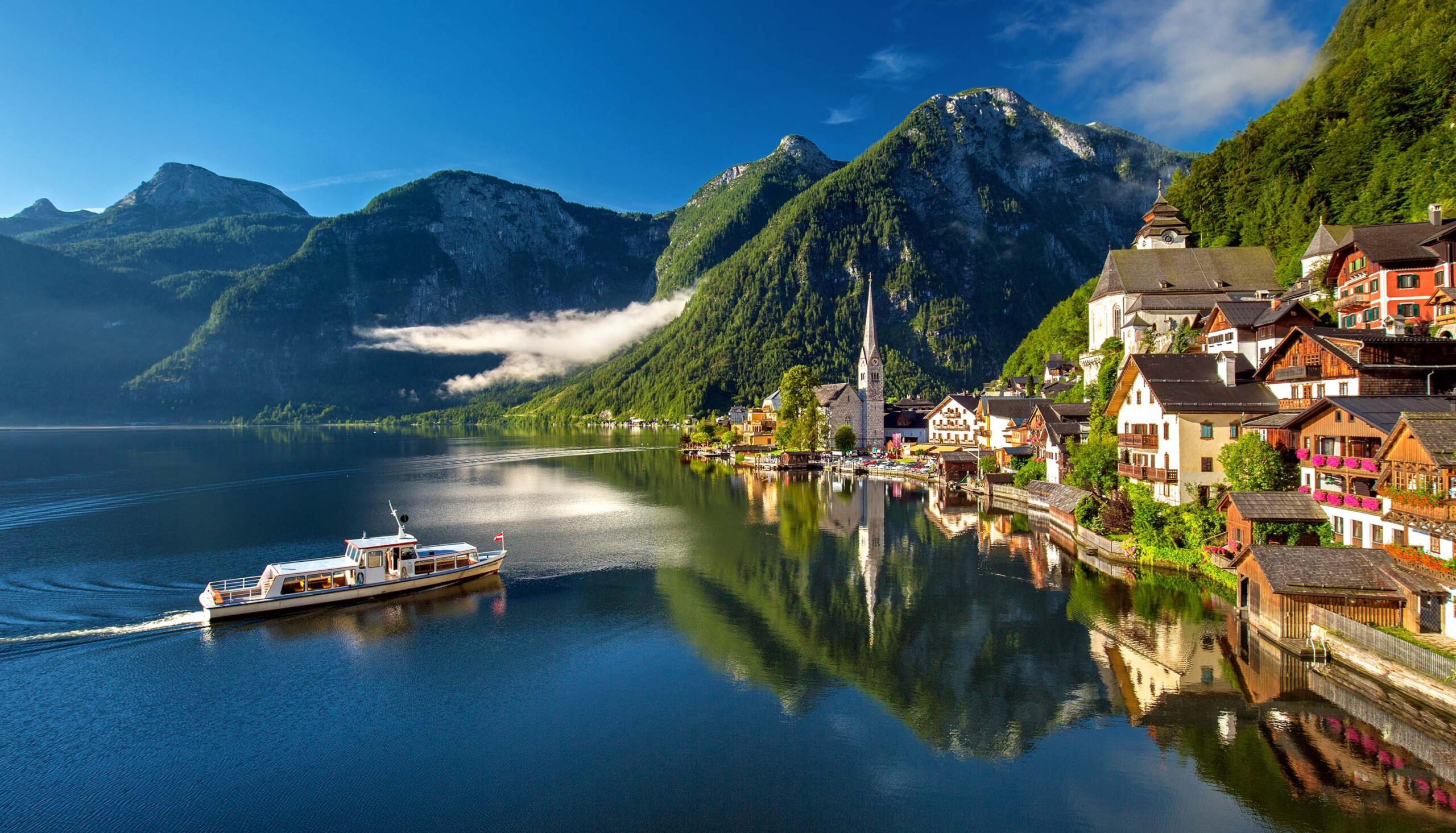
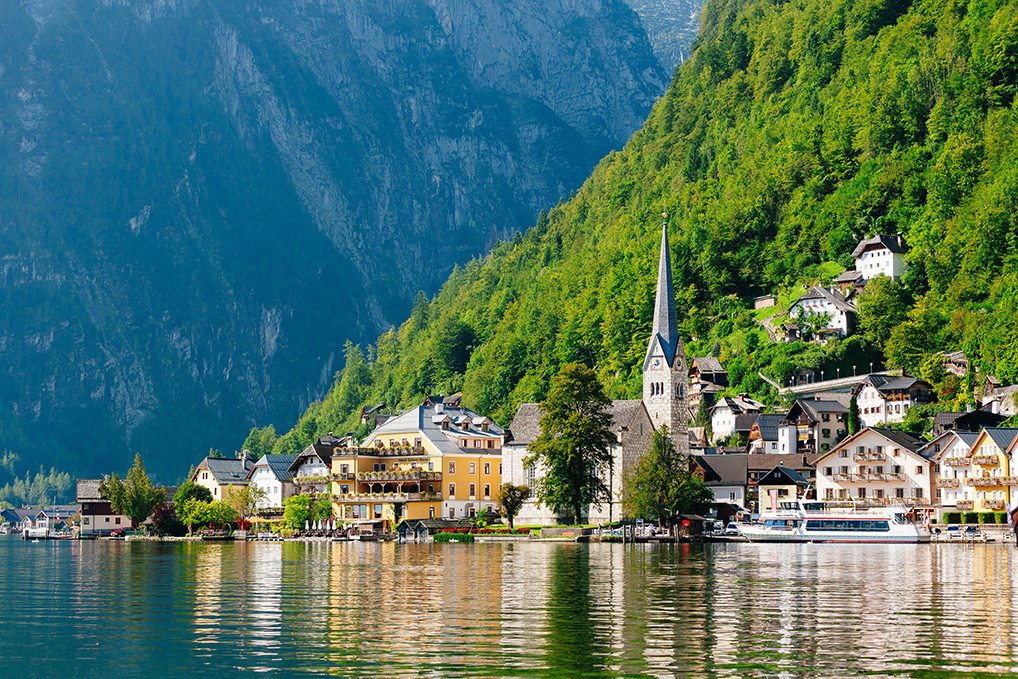
A picturesque lakeside village in the Austrian Alps, Hallstatt is known for its stunning natural beauty and historic salt mines.
Festivals
Vienna Festival (Wiener Festwochen) • May to June
Vienna Opera Ball (Wiener Opernball) • Late February or early March
Vienna Christmas Markets (Wiener Christkindlmarkt) • Late November to December 26
Pro tips
- Visit major attractions early in the morning or late in the afternoon to avoid crowds
- Purchase a Vienna Pass for unlimited transport and attractions, saving time and money
- Explore the city's coffee house culture and try traditional pastries like Sachertorte and Apfelstrudel
- Take a day trip to nearby cities like Bratislava or Salzburg for a change of pace
- Use public transport or walk to explore the city, as driving can be challenging and expensive
From $25
per person
Price varies by option
Secure booking
Free cancellation available
Instant confirmation