Master Builder Plečnik Tour of Ljubljana
Active
3h
For a full refund, cancel at least 24 hours before the scheduled departure time.
Instant confirmation
Mobile or paper ticket accepted
About this experience
The Master Plečnik experience provides insight into the heritage of Jože Plečnik's soul. In small groups, you will explore the places and objects that formed an important part of the master architect's everyday life, from the playful streetlamps, his favorite coffee, and a private lesson in his office, to the room in which he worked and slept.
This is a comprehensive journey along the traces of Plečnik's plans and visions, both on land and water. On foot and accompanied by your guide, you’ll get to know, piece by piece, one of Europe's greatest twentieth-century architects who bestowed eternal beauty and charm on Ljubljana.
Available options
Master Builder Plečnik
What's included
Entrance fee
Lunch
Coffee and/or Tea
Detailed itinerary
1
Stop 1
The center of the three bridges forming the Triple Bridge has stood in its place since 1842 when it replaced an old, strategically important medieval wooden bridge connecting the north-western European lands with south-eastern Europe and the Balkans. Between 1929 and 1932, the side bridges, intended for pedestrians, were added to the original stone bridge to a design by the architect Jože Plečnik, who thus created a unique architectural gem of Ljubljana.
2
Gimnazija Jožeta Plečnika Ljubljana is a renowned secondary school located in the heart of Slovenia's capital, at Šubičeva ulica 1. Named after the esteemed Slovenian architect Jože Plečnik, the school has occupied a building designed by him since 1997 . Its central location offers students easy access to museums, galleries, and other cultural institutions, enriching their educational experience.
You will head up to the terrace and admire the nearby works created by Plečnik’s students.
3
Stop 3
Jože Plečnik, the great Slovenian architect, played a key role in shaping the square’s modern identity. In the first half of the 20th century, he redesigned parts of the square and its surroundings as part of his broader vision for Ljubljana. His interventions emphasized harmony between the city’s historical layers and green, open spaces, such as the nearby Zvezda Park. Plečnik’s influence helped transform Kongresni trg into a refined urban space that still reflects his architectural philosophy of blending classical elements with local tradition.
4
Jože Plečnik left a strong mark on Vegova ulica through several key interventions. He redesigned the street as part of his broader plan to beautify and modernize Ljubljana, emphasizing harmony, order, and cultural identity. Most notably, he created a series of classical column-like trees leading toward NUK, reinforcing the ceremonial atmosphere of the space. His design of the library’s monumental façade also dominates the street, turning Vegova ulica into a symbolic urban axis that blends functionality with architectural elegance.
5
Stop 5
Plečnik envisioned NUK as a "temple of knowledge," blending classical architectural elements with his distinctive personal style. The building's monumental façade, made of brick and stone, reflects Renaissance influences, while the grand central staircase symbolizes the intellectual ascent from darkness to light. Every detail—from the handcrafted door handles to the carefully chosen materials—embodies Plečnik’s philosophy of meaningful, human-centered architecture. Today, NUK stands not only as a vital academic hub but also as a lasting testament to Plečnik’s vision and legacy.
6
Stop 6
The Križanke Summer Theatre is one of Ljubljana's principal architectural attractions. Between 1952 and 1956, the architect Jože Plečnik converted this former monastery of the Teutonic Order, originally built in the thirteenth century, into one of the city’s main cultural venues.
The conversion of the Križanke complex was Plečnik’s last project. It also marked the completion of his extensive restyling of French Revolution Square (Trg francoske revolucije) and nearby Vegova Ulica. A monument to Napoleon’s Illyrian Provinces, designed by the sculptor Lojze Dolinar, was erected in the square next to Križanke in 1929.
Plečnik followed Renaissance principles in his approach to the Križanke complex. A row of windows in the monastery wall offered a view into the interior. Other solutions include an original paving design and numerous lights on the courtyard walls.
7
The Faculty of Architecture (Fakulteta za arhitekturo) at the University of Ljubljana is one of Slovenia’s leading institutions for architectural education and research. Located near the city center, it plays a key role in shaping future generations of architects and urban planners.
Jože Plečnik, one of Slovenia’s most influential architects, was a professor at the faculty from 1921 to 1957. His teaching left a lasting legacy on Slovenian architecture, as he inspired a generation of students with his unique blend of classical principles and modern innovation. Many of his students went on to become prominent architects themselves, and his influence is still deeply felt in the curriculum and philosophy of the faculty today. Through both his teaching and architectural works, Plečnik helped define the identity of 20th-century Slovenian architecture.
8
Trnovo Bridge, built between 1929 and 1932, was at the heart of Jože Plečnik's project of the Gradaščica channel embankments' reconstruction. It was designed with respect to the features of the Trnovo Church (Trnovska cerkev) across the way from it: the Bridge forms an extension to the church square and the pyramids adorning it imitates the shape of the Church's spires.
Trnovo Bridge's other adornments include massive balustrades, two rows of short columns, and Nikolaj Pirnat's stone statue of St. John the Baptist, the patron of the Trnovo Church. The Bridge's most remarkable decorative element are two rows of birch trees planted into the bridge. At the sides, the Bridge is covered with roughly finished stone blocks. On the end facing the suburb of Krakovo, there is a stone plaque carrying the name "Krakovo", and on the end facing the suburb of Trnovo a plaque saying "Trnovo"
9
Plečnik House comprises a complex of two neighboring houses and an adjacent garden with a lapidary, which, along with Plečnik's original furniture, library, drawing tools, personal belongings, and a large archive of sketches, plans, photographs, and models all form part of the Plečnik Collection.
When Plečnik returned to Ljubljana in 1921, he and his two brothers and a sister decided to live together, so the architect built a cylindrical annex to the house (1925). Later he added a glassed porch and, after purchasing an older suburban house next door, a conservatory (1930). Despite the agreement between the siblings to live together, only the architect's brother Janez lived in the house for a while. When he moved out, Plečnik refurbished the house to make it suit his own requirements. The refurbishment and extension work to the two houses were often done using leftover materials from Plečnik's other projects.
Available languages
Guide guide
EN
Important information
Public transportation options are available nearby
Travelers should have at least a moderate level of physical fitness
Meeting point
Next to the Triple bridge.
About Ljubljana
Ljubljana, the charming capital of Slovenia, is known for its vibrant cultural scene, stunning architecture, and eco-friendly initiatives. The city is compact, walkable, and filled with green spaces, making it a unique and appealing destination for all types of travelers.
Top Attractions
Ljubljana Castle
A medieval castle offering panoramic views of the city. It houses a museum, a chapel, and a puppet theater.
Historical/Architecture
1-2 hours
€10 (includes funicular ride)
Ljubljana Cathedral
A stunning Baroque church with a green dome, dedicated to St. Nicholas, the patron saint of Ljubljana.
Religious/Architecture
30 minutes
Free (donations welcome)
Tivoli City Park
The largest park in Ljubljana, offering a peaceful retreat with walking paths, sports facilities, and cultural events.
Nature
1-2 hours
Free
Metelkova Art District
A vibrant and alternative arts district featuring street art, galleries, and nightlife.
Cultural/Art
1-2 hours
Free (some events may have admission fees)
Triple Bridge
A unique architectural ensemble consisting of three bridges connecting the city center and the castle area.
Architecture/Landmark
15-30 minutes
Free
Must-Try Local Dishes
Štruklji
Rolled dumplings filled with various ingredients like walnuts, tarragon, or sweet cottage cheese.
Dish
Can be vegetarian or with meat fillings.
Potica
A traditional Slovenian rolled cake filled with walnuts, honey, and spices.
Dessert
Vegetarian.
Kranjska Klobasa
Carnelian sausage, a type of Slovenian sausage made from pork and flavored with garlic and spices.
Main Course
Contains pork.
Burek
A flaky pastry filled with minced meat, cheese, or spinach.
Snack
Can be vegetarian or with meat fillings.
Popular Activities
Hiking in the nearby mountains
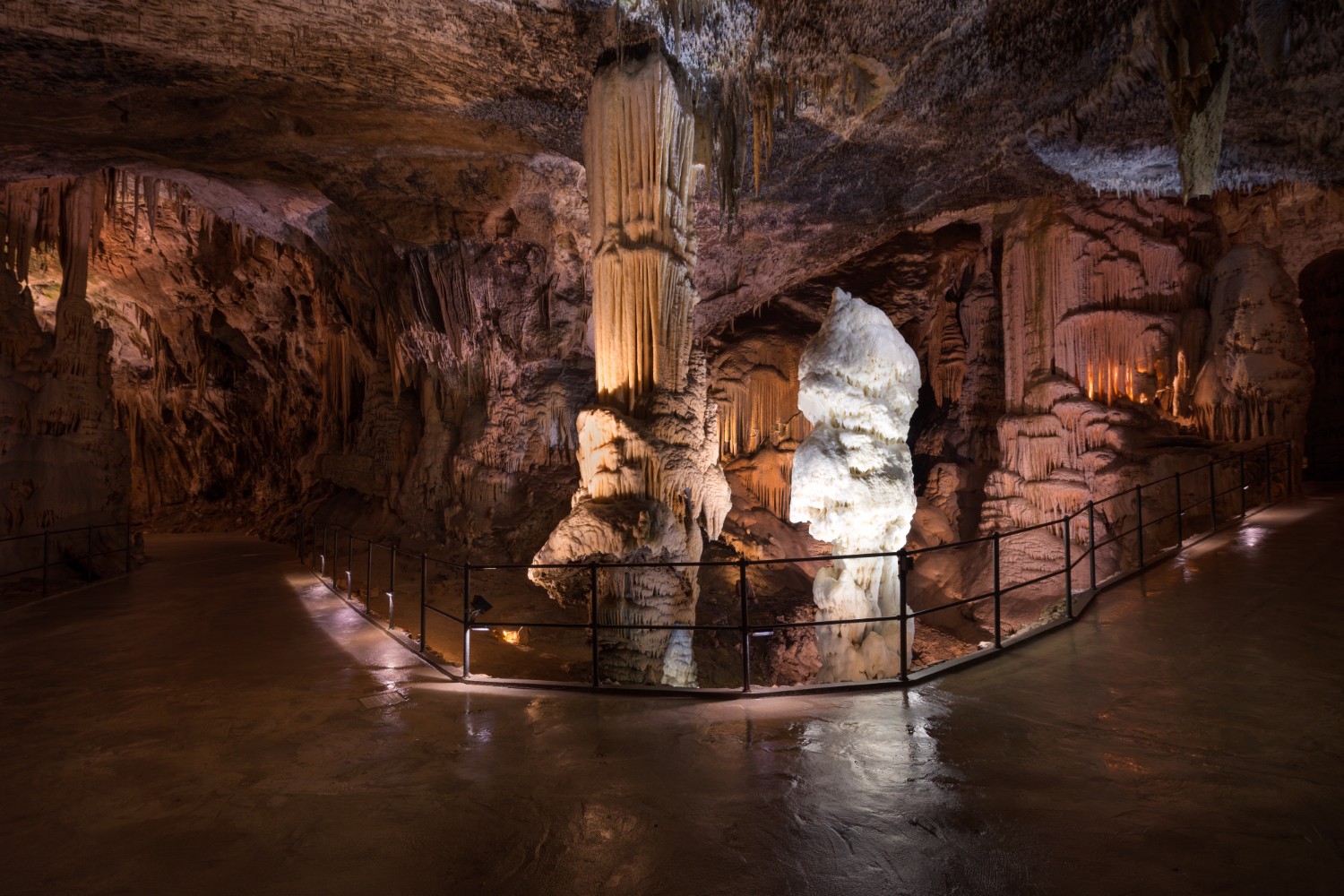
Caving in Postojna Cave
Canyoning and rafting in the Soča River
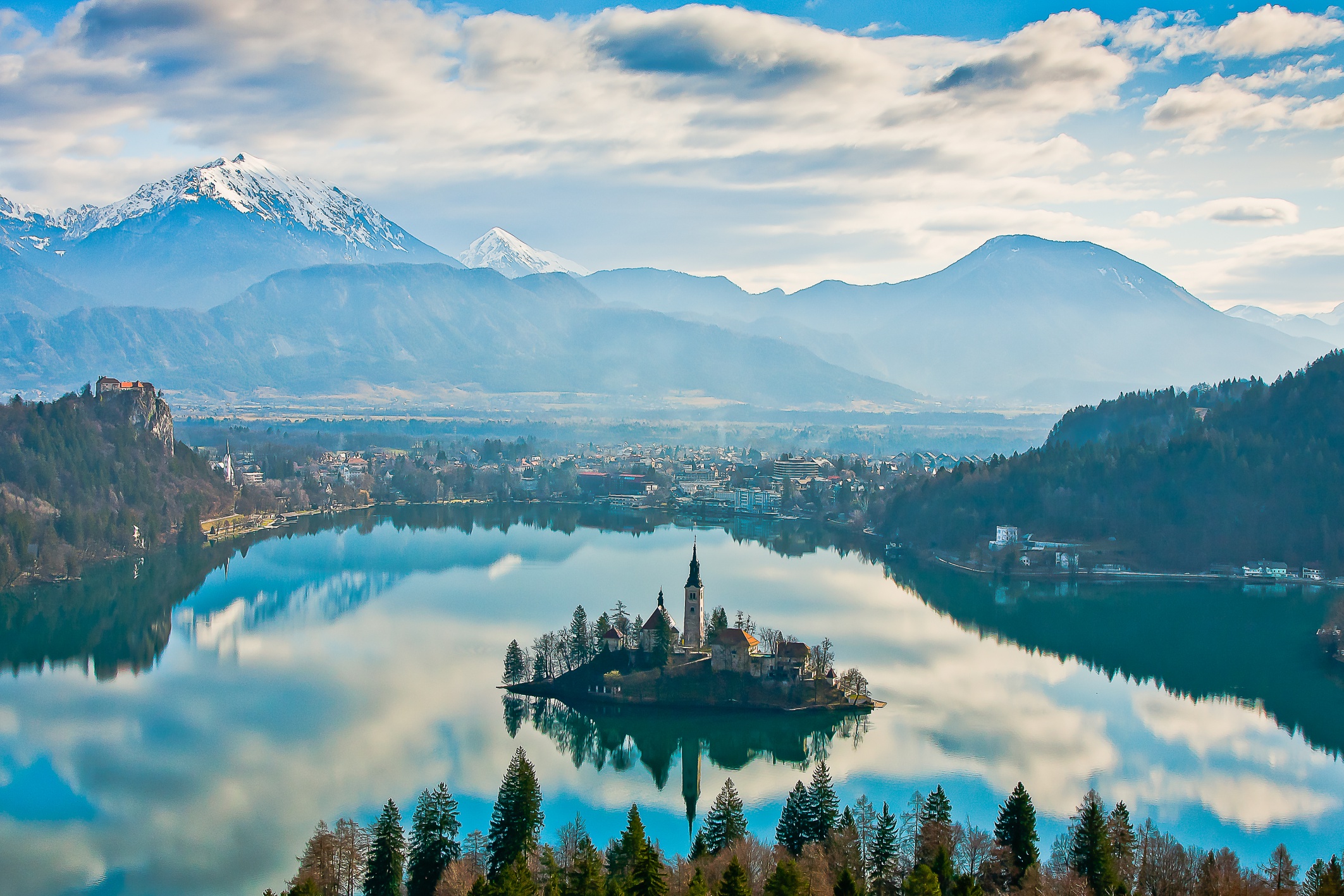
Boat rides on Lake Bled
Spa and wellness treatments
Picnicking in Tivoli Park
Visiting museums and galleries
Attending cultural events and festivals
Best Time to Visit
June to August
Summer is the peak tourist season with warm weather, outdoor festivals, and long daylight hours. However, it can be crowded and more expensive.
20°C to 30°C
68°F to 86°F
Practical Information
Language
- Official: Slovene
- Widely spoken: English, German, Italian
- English: Widely spoken in tourist areas
Currency
Euro (EUR)
Time Zone
GMT+1 (Central European Time, CET)
Electricity
230VV, 50HzHz
Safety Information
Overall Safety Rating: Very safe
Ljubljana is a very safe city with low crime rates. Violent crime is rare, and petty crime is minimal. However, as with any tourist destination, it's important to be aware of your surroundings and take basic precautions.
Important Precautions:
- • Keep valuables secure
- • Use licensed taxis or ride-sharing apps
- • Be cautious of strangers approaching you with unusual requests
Getting there
By air
- Ljubljana Jože Pučnik Airport • 26 km (16 miles) from city center
By train
Ljubljana Railway Station
By bus
Ljubljana Bus Station
Getting around
Public transport
The bus system is efficient and affordable, with frequent services and easy-to-use tickets.
Taxis
Available • Apps: Taxi Slovenija, UBER
Rentals
Car, Bike, Scooter
Neighborhoods
Old Town
Krnica
Šiška
Day trips
Lake Bled
55 km (34 miles) from Ljubljana • Full day recommended
A picturesque lake surrounded by mountains, featuring a castle, a church on an island, and stunning natural beauty.
Postojna Cave
50 km (31 miles) from Ljubljana • Half day to full day recommended
One of the largest and most visited cave systems in Europe, featuring stunning stalactites, stalagmites, and underground rivers.
Piran
100 km (62 miles) from Ljubljana • Full day recommended
A charming coastal town with Venetian architecture, narrow streets, and beautiful beaches.
Festivals
Ljubljana Summer Festival • June to July
Ljubljana Dragon Carnival • February
Ljubljana Jazz Festival • November
Pro tips
- Visit the Central Market for fresh produce, local crafts, and traditional Slovenian products
- Take a boat ride on the Ljubljanica River for a unique perspective of the city
- Explore the Metelkova Art District for a taste of Ljubljana's alternative arts and nightlife scene
- Try traditional Slovenian dishes like štruklji, potica, and kranjska klobasa
- Visit Ljubljana Castle for stunning panoramic views of the city and a glimpse into its history
From $25
per person
Price varies by option
Secure booking
Free cancellation available
Instant confirmation