Moustache Tour
Active
3h
For a full refund, cancel at least 24 hours before the scheduled departure time.
Instant confirmation
Mobile or paper ticket accepted
About this experience
The three mighty moustachioed men and a tour guide hold the key to the secret of Ljubljana, which will be shared with you on this unusual Moustache Tour. Cycle through the most beautiful streets of Ljubljana and feel the lifestyle of an Architect, Writer and a Painter.
Available options
Moustache Tour
What's included
Snacks
Coffee and/or Tea
Detailed itinerary
1
Novi trg (New Square) is a refined public space in the historic center of Ljubljana, located between the Ljubljanica River and the National and University Library (NUK). Though called “new,” the square has deep historical roots and has been revitalized in recent years into a vibrant urban plaza.
Surrounded by important cultural and academic institutions—such as NUK, the City Museum of Ljubljana, and the Slovenian Academy of Sciences and Arts (SAZU)—Novi trg offers a unique blend of history, architecture, and everyday life. From the square, you can admire the majestic façade of Jože Plečnik’s library, elegant Baroque and Renaissance buildings, and views toward Ljubljana Castle.
2
Križevniška ulica is a charming, cobbled street in the heart of Ljubljana’s old town, just steps away from the Ljubljanica River and tucked behind the Križanke complex. Known for its artistic flair and peaceful atmosphere, the street is lined with galleries, cultural institutions, and cozy cafés, making it a hidden gem for those exploring the city’s more intimate corners.
A unique local character tied to Križevniška ulica is barber Robert, a beloved figure known not just for his traditional barbershop but also for his role in shaping the street’s identity. More than just a place for a haircut, Robert’s shop became a cultural meeting point, filled with stories, music, and artistic touches. His creative spirit contributed to the street’s revival and charm, helping transform it into one of the most atmospheric and personalized spots in Ljubljana.
3
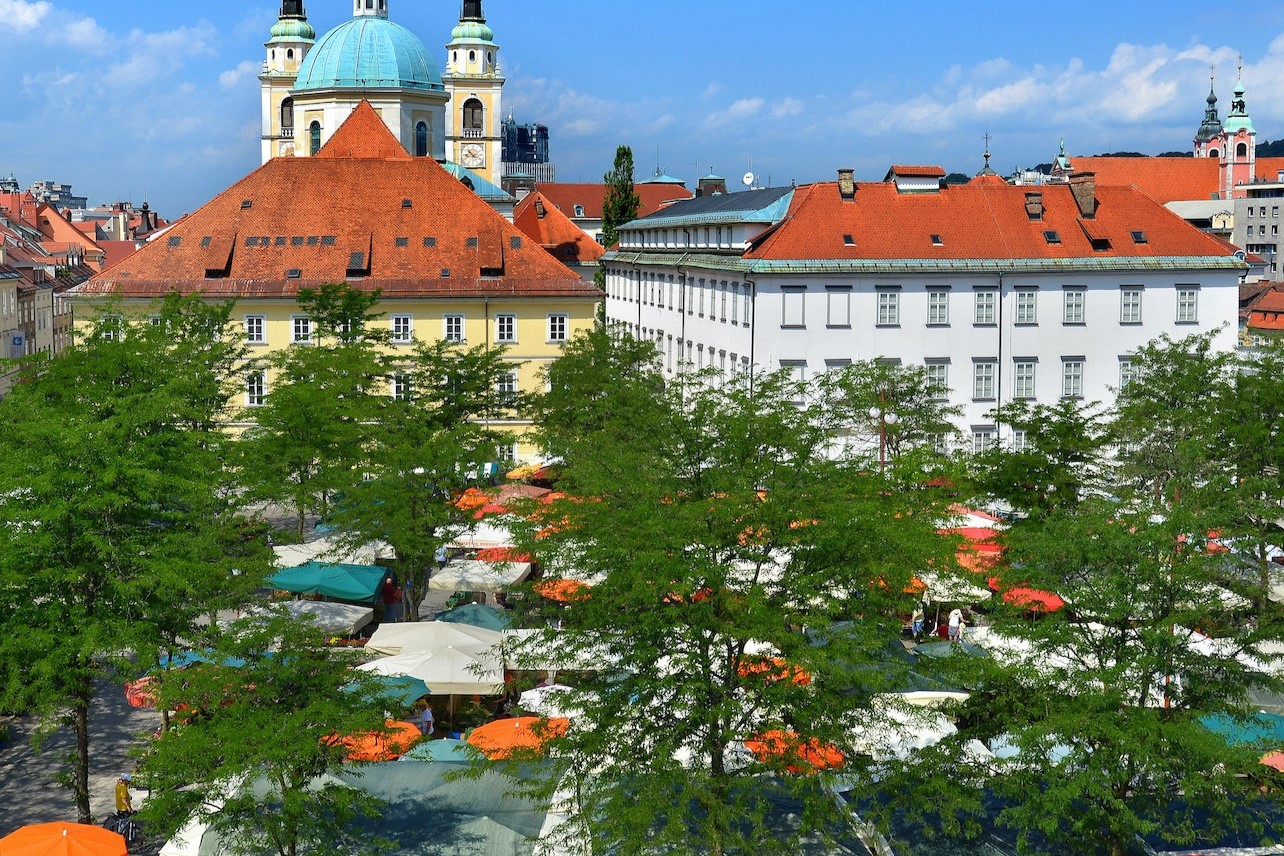
Plečnik House, located at Karunova 4–6 in the Trnovo district of Ljubljana, is the former residence and studio of Jože Plečnik, Slovenia’s most celebrated architect. Plečnik lived and worked here from 1921 until his death in 1957, transforming the property into a unique architectural ensemble that reflects his personal style and design philosophy. The house, now a museum, offers visitors an intimate glimpse into Plečnik's life, showcasing his original furniture, personal belongings, architectural plans, and models. The tour provides insights into his creative process and the profound impact he had on Ljubljana's urban landscape. The museum also features a permanent exhibition detailing Plečnik's major works, including the National and University Library, Ljubljana Central Market, and his unrealized vision for the Slovenian Parliament, the Cathedral of Freedom. Plečnik House stands as a testament to his enduring legacy in shaping Slovenia's architectural heritage.
4
Stop 4
Cankarjev dom is Slovenia’s largest cultural and congress center, located in the heart of Ljubljana. Opened in 1980, it hosts a wide range of events—from concerts, theater performances, and exhibitions to international conferences—serving as a central hub for the country’s cultural and intellectual life.
The center is named after Ivan Cankar, one of Slovenia’s greatest writers, playwrights, and social critics. As a pioneer of modern Slovenian literature, Cankar’s legacy is deeply connected to themes of national identity, social justice, and artistic expression. Naming the institution after him honors his profound influence on Slovenian culture and underlines the center’s mission to promote creativity, dialogue, and critical thought in the spirit of Cankar’s enduring work.
5
The National Gallery of Slovenia (Narodna galerija) in Ljubljana is the country’s leading museum of historical art, dedicated to preserving and showcasing Slovenian artistic heritage. One of its most celebrated exhibitions focused on the Slovenian Impressionists, with special attention given to Rihard Jakopič—one of the movement’s central figures and a pioneer of modern Slovenian painting.
Jakopič played a key role in introducing Impressionism to Slovenia and was instrumental in establishing a national artistic identity. His works, known for their expressive use of color and light, are prominently featured in the gallery’s permanent collection. Through his paintings and efforts to promote Slovenian art—including founding the Jakopič Pavilion in 1909—he helped lay the foundation for the country’s cultural development. The National Gallery continues to honor his legacy, offering visitors a chance to experience the depth and beauty of his contribution to Slovenian Impressionism.
6
Švicarija, located next to Tivoli Park in Ljubljana, is a historic villa and cultural hub with a rich artistic past. Originally built as a hotel and later serving as a residence for artists, it has long been a place of creativity, dialogue, and expression.
One of its most famous early residents was the renowned Slovenian writer Ivan Cankar, who lived there in 1907. During his time at Švicarija, Cankar wrote several important works and drew inspiration from the peaceful, wooded surroundings of Tivoli. Today, Švicarija is part of the International Centre of Graphic Arts (MGLC) and continues to support artists through residencies, exhibitions, and cultural events—keeping alive the spirit of creativity and reflection that once inspired Cankar himself.
7
Caffe Bienale, nestled within the International Centre of Graphic Arts (MGLC) at Švicarija in Ljubljana’s Tivoli Park, offers a delightful blend of art and culinary comfort. This charming café is a favorite among locals and visitors alike, providing a warm and inviting atmosphere to relax and indulge.
A standout feature of Caffe Bienale is its exceptional coffee, crafted with care to satisfy even the most discerning coffee enthusiasts. Complementing the rich flavors of the coffee is their homemade štrudelj (strudel), a traditional Slovenian pastry that adds a touch of local flavor to your visit.
What's not included
Hotel pickup and drop-off
Available languages
Guide guide
EN
Important information
Public transportation options are available nearby
Suitable for all physical fitness levels
Minimum age is 18 years
In case of rain the tour is cancelled.
Meeting point
About Ljubljana
Ljubljana, the charming capital of Slovenia, is known for its vibrant cultural scene, stunning architecture, and eco-friendly initiatives. The city is compact, walkable, and filled with green spaces, making it a unique and appealing destination for all types of travelers.
Top Attractions
Ljubljana Castle
A medieval castle offering panoramic views of the city. It houses a museum, a chapel, and a puppet theater.
Historical/Architecture
1-2 hours
€10 (includes funicular ride)
Ljubljana Cathedral
A stunning Baroque church with a green dome, dedicated to St. Nicholas, the patron saint of Ljubljana.
Religious/Architecture
30 minutes
Free (donations welcome)
Tivoli City Park
The largest park in Ljubljana, offering a peaceful retreat with walking paths, sports facilities, and cultural events.
Nature
1-2 hours
Free
Metelkova Art District
A vibrant and alternative arts district featuring street art, galleries, and nightlife.
Cultural/Art
1-2 hours
Free (some events may have admission fees)
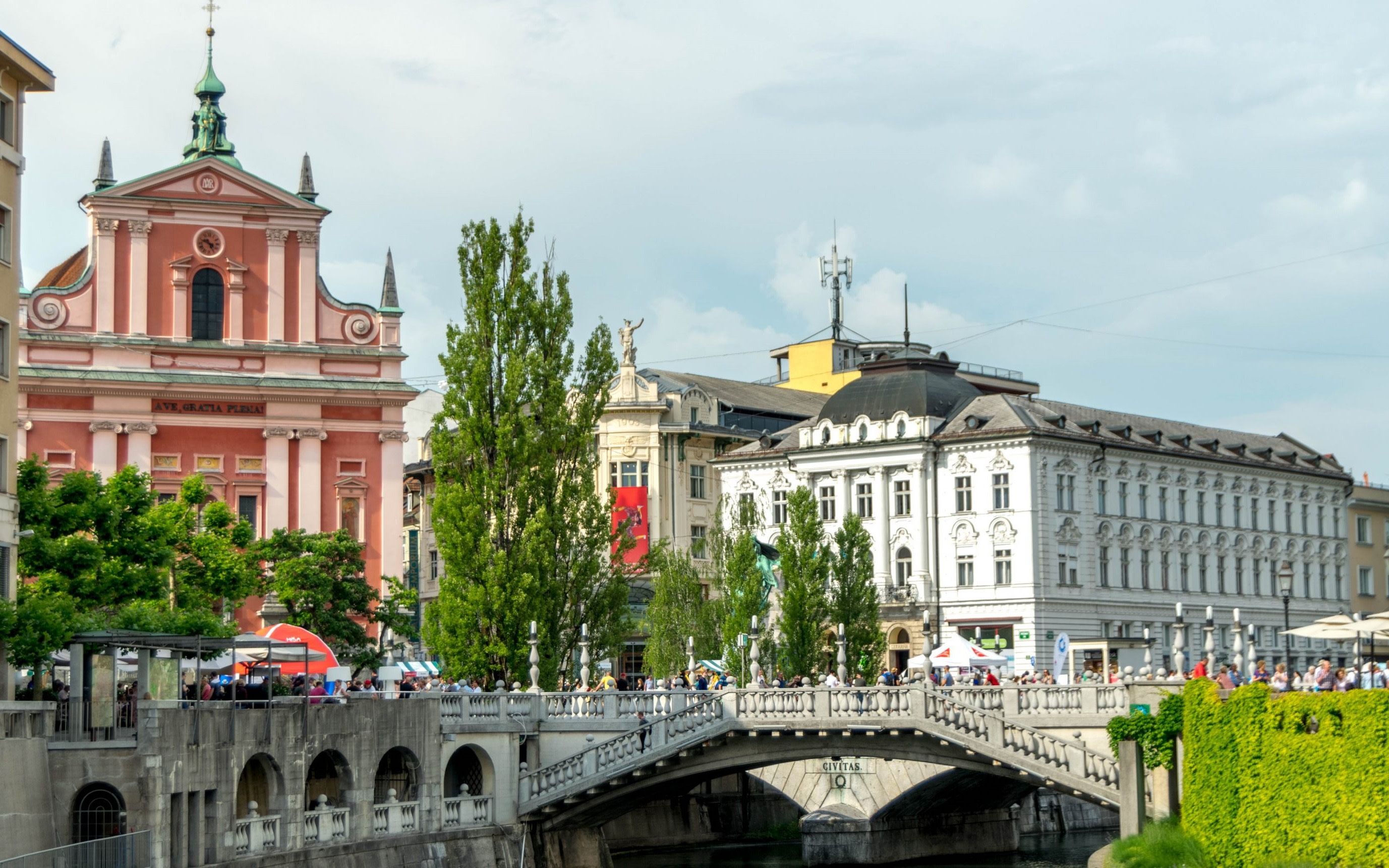
Triple Bridge
A unique architectural ensemble consisting of three bridges connecting the city center and the castle area.
Architecture/Landmark
15-30 minutes
Free
Must-Try Local Dishes
Štruklji
Rolled dumplings filled with various ingredients like walnuts, tarragon, or sweet cottage cheese.
Dish
Can be vegetarian or with meat fillings.
Potica
A traditional Slovenian rolled cake filled with walnuts, honey, and spices.
Dessert
Vegetarian.
Kranjska Klobasa
Carnelian sausage, a type of Slovenian sausage made from pork and flavored with garlic and spices.
Main Course
Contains pork.
Burek
A flaky pastry filled with minced meat, cheese, or spinach.
Snack
Can be vegetarian or with meat fillings.
Popular Activities
Hiking in the nearby mountains
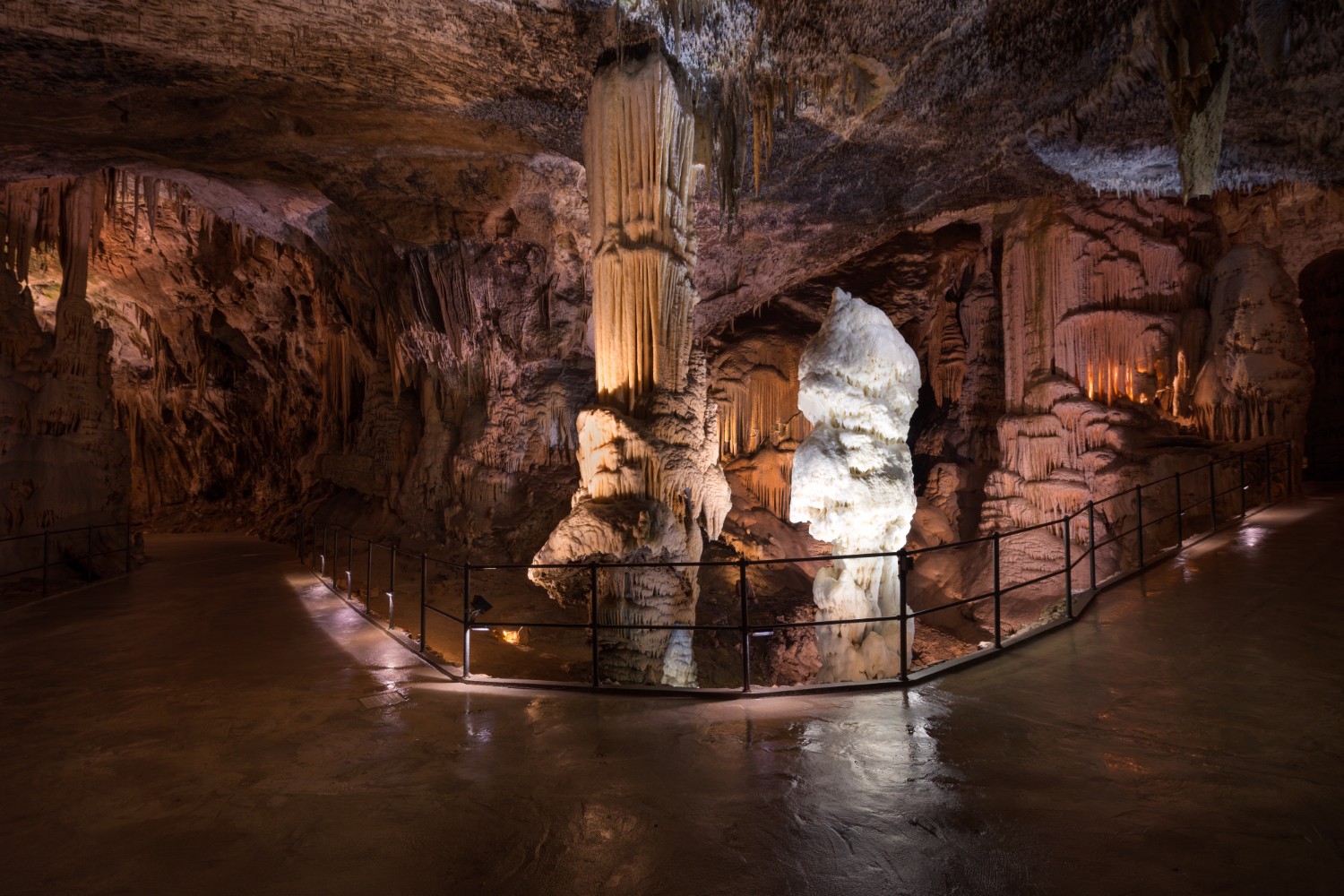
Caving in Postojna Cave
Canyoning and rafting in the Soča River
Boat rides on Lake Bled
Spa and wellness treatments
Picnicking in Tivoli Park
Visiting museums and galleries
Attending cultural events and festivals
Best Time to Visit
June to August
Summer is the peak tourist season with warm weather, outdoor festivals, and long daylight hours. However, it can be crowded and more expensive.
20°C to 30°C
68°F to 86°F
Practical Information
Language
- Official: Slovene
- Widely spoken: English, German, Italian
- English: Widely spoken in tourist areas
Currency
Euro (EUR)
Time Zone
GMT+1 (Central European Time, CET)
Electricity
230VV, 50HzHz
Safety Information
Overall Safety Rating: Very safe
Ljubljana is a very safe city with low crime rates. Violent crime is rare, and petty crime is minimal. However, as with any tourist destination, it's important to be aware of your surroundings and take basic precautions.
Important Precautions:
- • Keep valuables secure
- • Use licensed taxis or ride-sharing apps
- • Be cautious of strangers approaching you with unusual requests
Getting there
By air
- Ljubljana Jože Pučnik Airport • 26 km (16 miles) from city center
By train
Ljubljana Railway Station
By bus
Ljubljana Bus Station
Getting around
Public transport
The bus system is efficient and affordable, with frequent services and easy-to-use tickets.
Taxis
Available • Apps: Taxi Slovenija, UBER
Rentals
Car, Bike, Scooter
Neighborhoods
Old Town
Krnica
Šiška
Day trips
Lake Bled
55 km (34 miles) from Ljubljana • Full day recommended
A picturesque lake surrounded by mountains, featuring a castle, a church on an island, and stunning natural beauty.
Postojna Cave
50 km (31 miles) from Ljubljana • Half day to full day recommended
One of the largest and most visited cave systems in Europe, featuring stunning stalactites, stalagmites, and underground rivers.
Piran
100 km (62 miles) from Ljubljana • Full day recommended
A charming coastal town with Venetian architecture, narrow streets, and beautiful beaches.
Festivals
Ljubljana Summer Festival • June to July
Ljubljana Dragon Carnival • February
Ljubljana Jazz Festival • November
Pro tips
- Visit the Central Market for fresh produce, local crafts, and traditional Slovenian products
- Take a boat ride on the Ljubljanica River for a unique perspective of the city
- Explore the Metelkova Art District for a taste of Ljubljana's alternative arts and nightlife scene
- Try traditional Slovenian dishes like štruklji, potica, and kranjska klobasa
- Visit Ljubljana Castle for stunning panoramic views of the city and a glimpse into its history
From $25
per person
Price varies by option
Secure booking
Free cancellation available
Instant confirmation