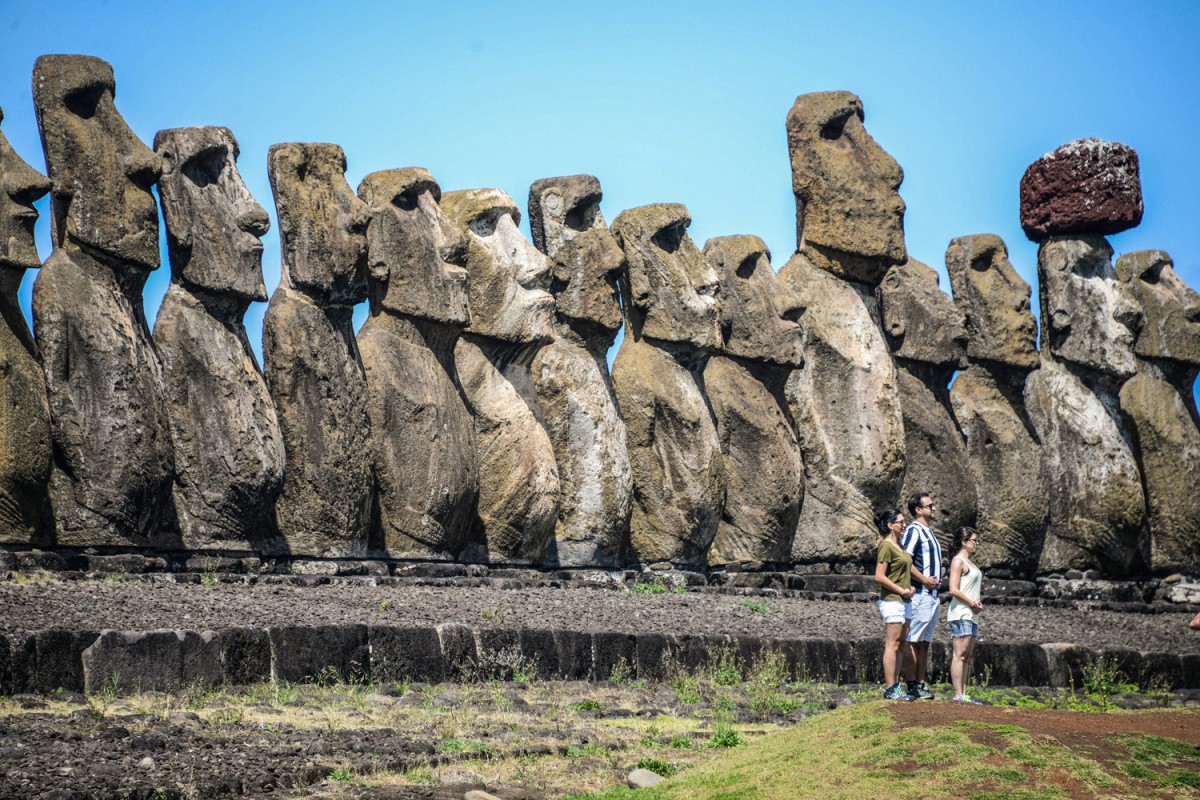
Full Day Tour to the Emblematic Sites in Rapa Nui
Active
7h - 8h
For a full refund, cancel at least 24 hours before the scheduled departure time.
Instant confirmation
Mobile or paper ticket accepted
About this experience
If you are looking to visit the most renowned tourist sites of Rapa Nui in a single day, this tour is for you.
Incredible landscapes and knowledge about a town and its living culture will remain in your memory.
Without a doubt you cannot leave Rapa Nui without knowing these sites along with their history.
We have professional guides and leaders in positive experiences who guide participation in the parks with the least possible environmental impact, respecting the limits of each archaeological site, protecting the special territory of Rapa Nui.
Available options
PRIVATE Full Day Tour
Private<br/>Lunch<br/>Pickup included
OPEN Full Day Tour
Pickup included
What's included
Food restrictions and allergies must be notified in advance.
Detailed itinerary
1
Stop 1
Archaeological site and ceremonial village located on the top of Rano Kau, where the Tangata Manu competition was formerly held
2
It is the largest volcano and one of the most impressive natural settings to be found in Rapa Nui. The feeling of immensity and silence, interrupted only by the wind, the distant noise of the waves and the occasional squawk of the seabirds, makes Rano Kau one of the favorite and unmissable places of this island.
3
Stop 3
Moai factory with 400 unfinished specimens approx.
4
Stop 4
The largest platform (ahu) in Polynesia in which there are 15 upright moai with their backs to the ocean.
5
Stop 5
Akivi is an Ahu with seven Moai facing the ocean somewhere in the Polynesian triangle. They originally called him Ahu Atiu and he is over 500 years old.
What's not included
Ticket to the National Park value Chileans
National Park Entrance Ticket value Foreigners
Available languages
Guide guide
EN
ES
Reviews breakdown
Viator
5.0
1 reviews
5★
1
4★
0
3★
0
2★
0
1★
0
Tripadvisor
5.0
1 reviews
5★
1
4★
0
3★
0
2★
0
1★
0
Important information
Infants are required to sit on an adult’s lap
Not recommended for travelers with spinal injuries
Not recommended for travelers with poor cardiovascular health
Not recommended for pregnant travelers
Infants and small children can ride in a pram or stroller
Travelers should have at least a moderate level of physical fitness
Before starting the first day of the excursion, travelers must have their ticket to the national park. This can be purchased in person at the Ma'u Henua offices or at the following link https://www.rapanuinationalpark.com/pages/compra-de-tickets
Meeting point
Next to the Catholic church, behind the square, there is a hostel called "MATA NUI" as a reference point.
About Easter Island
Easter Island, known as Rapa Nui to its native inhabitants, is a remote volcanic island in the Pacific Ocean. It is famous for its nearly 1,000 extant monumental statues called moai, created by the early Rapa Nui people. This UNESCO World Heritage site offers a unique blend of Polynesian culture, archaeological wonders, and breathtaking natural landscapes.
Top Attractions
Ahu Tongariki
This is the largest ahu (ceremonial platform) on Easter Island, featuring 15 restored moai statues. It's a must-visit for its impressive size and historical significance.
Historical
1-2 hours
Free (included in national park entry fee)
Rano Raraku
Rano Raraku is the quarry where most of the moai statues were carved. It's an archaeological site with numerous moai in various stages of completion.
Historical
1-2 hours
Free (included in national park entry fee)
Ahu Akivi
This ahu is unique because it faces the ocean, unlike most others that face inland. It features seven moai statues and is one of the few ahus not restored by archaeologists.
Historical
1 hour
Free (included in national park entry fee)
Orongo
Orongo is a ceremonial village with stone houses and petroglyphs. It was used for the annual Tangata Manu (Bird Man) cult ceremony.
Historical
1-2 hours
Free (included in national park entry fee)
Ana Kai Tangata
This sea cave is known for its ancient petroglyphs and was used by the Rapa Nui people for shelter and ceremonial purposes.
Historical
1 hour
Free (included in national park entry fee)
Must-Try Local Dishes
Umu Rapa Nui
A traditional Rapa Nui feast cooked in an underground oven, featuring a variety of meats, fish, and vegetables.
Dinner
Contains meat and seafood, may not be suitable for vegetarians or vegans.
Po'e
A sweet pudding made from banana, pumpkin, or breadfruit, cooked with sugar and coconut milk.
Dessert
Vegetarian, may contain dairy.
Ika Mata
A raw fish salad marinated in lime juice, coconut milk, and spices, similar to ceviche.
Appetizer
Contains seafood, may not be suitable for those with seafood allergies.
Popular Activities
Hiking
Snorkeling
Scuba diving
ATV tours
Beach relaxation
Sunset watching
Yoga
Traditional umu feasts
Best Time to Visit
December to March
This is the summer season, with warm temperatures and the highest rainfall. It's the best time for beach activities and outdoor exploration.
20°C to 28°C
68°F to 82°F
Practical Information
Language
- Official: Spanish
- Widely spoken: Rapa Nui (local language)
- English: Limited
Currency
Chilean Peso (CLP)
Time Zone
CLT (Chile Standard Time, GMT-4)
Electricity
220VV, 50HzHz
Safety Information
Overall Safety Rating: Generally safe
Easter Island is generally safe with low crime rates. However, petty theft can occur, so it's important to take precautions.
Important Precautions:
- • Keep valuables secure and out of sight.
- • Use reputable tour operators and taxis.
- • Be cautious when walking alone at night.
Getting there
By air
- Matairi International Airport • 1.5 km from Hanga Roa
Getting around
Public transport
Buses are available but not extensive. They are a budget-friendly option for getting around the island.
Taxis
Available • Apps: None
Rentals
Car, Bike, Scooter
Neighborhoods
Hanga Roa
Day trips
Motu Nui
30 km from Hanga Roa • Full day
A small island known for its birdlife and historical significance. It was a key location in the Bird Man cult ceremonies.
Motu Iti
25 km from Hanga Roa • Full day
A small island known for its beautiful beaches and snorkeling opportunities.
Rano Kau
15 km from Hanga Roa • Half day
A volcanic crater offering stunning views of the island and the Pacific Ocean. It's also home to the ceremonial village of Orongo.
Festivals
Tapati Festival • January or February (dates vary)
Pro tips
- Book your accommodations and tours well in advance, especially during peak season.
- Rent a car or bike to explore the island at your own pace.
- Try the local cuisine, including traditional umu feasts.
- Respect the moai statues and other cultural sites by not touching or climbing on them.
- Bring enough cash for small purchases and remote areas, as ATMs may not be readily available.
From $25
per person
Price varies by option
Secure booking
Free cancellation available
Instant confirmation