Rapa Nui Private Full Day Tour
Active
5h - 7h
For a full refund, cancel at least 24 hours before the scheduled departure time.
Instant confirmation
Mobile or paper ticket accepted
About this experience
This tour is designed for those who wish to make the most of their stay on the island. In a single day you will tour the most emblematic sites of Rapa Nui, from the sacred quarry of Rano Raraku and the imposing platform of Ahu Tongariki, to the paradise beach of Anakena, through places full of history such as Akahanga and Orongo.
What makes this tour unique is that it allows you to live a complete experience in a short time, without neglecting the legends, spirituality and natural beauty that make Rapa Nui an incomparable place. With certified local guide, comfortable transportation and small groups, you will have the opportunity to immerse yourself in the culture, discover unforgettable landscapes and take the essence of the island in one day.
Available options
Rapa Nui Private Full Day Tour
Pickup included
What's included
Transport
Native and certified guide
Detailed itinerary
1
Akahanga is one of the most enigmatic sites on the southern coast of Rapa Nui. Here you will explore the remains of an ancestral village where the foundations of boat-shaped houses, vestiges of ceremonial platforms and fallen moai that were never restored are still preserved.
This is said to be the place where Hotu Matu’a, the first king of the island, was buried. Our guide will share with you the stories linked to this sacred place, as you walk among the vestiges of a powerful past that coexists with the sound of the ocean.
It is an ideal stop to feel the connection between the sea, the ancestors and the origins of the Rapa Nui civilization.
2
Stop 2
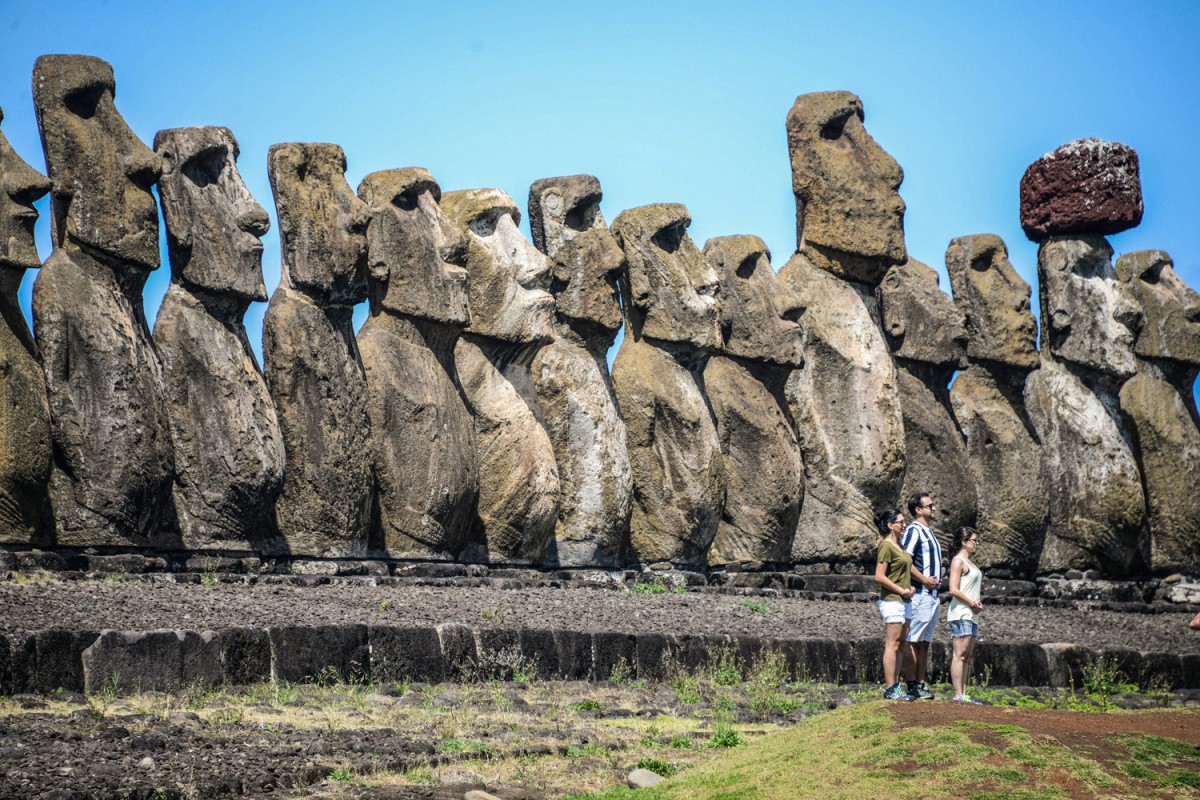
With its towering 15 moai lined up in front of the ocean, Ahu Tongariki is the largest and most majestic ceremonial site on the island. This place is a symbol of power, unity and spirituality for the Rapa Nui people.
During the visit, you can admire these gigantic restored statues, learn about their history, their destruction during ancient conflicts, and their subsequent reconstruction with international support.
It is also one of the best spots on the island to take unforgettable pictures, especially if you visit at dawn, when the sun rises behind the statues creating a magical spectacle.
A must-see stop for those who wish to experience the greatness of Rapa Nui culture at its finest.
3
Stop 3
Explore the volcanic crater of Rano Raraku, the place where almost all the Rapa Nui moai were born. This archaeological site is a real open-air museum: you will see dozens of statues in different stages of carving, some still embedded in the rock, others emerging from the ground as if they were waking up.
As you walk along its paths surrounded by vegetation and natural formations, our guide will reveal the secrets of how these giant figures were carved and transported. The atmosphere here is unique: every moai seems to tell a story stopped in time.
An essential place to understand the art, engineering and spirituality of the Rapa Nui people.
4
Stop 4
Anakena is the most famous beach in Rapa Nui and one of the most special places on the island. White coral sand, turquoise waters and palm trees welcome you in this paradise setting where, according to legend, Hotu Matu’a, the first ariki (king) of Rapa Nui, landed.
In addition to enjoying its natural beauty, here you will visit the impressive Ahu Nau Nau, with restored moai that retain unique details in its carvings. Our guide will explain the ceremonial importance of this place, which was a political and spiritual center in ancient times.
You will have time to walk, take pictures, or even take a swim in the sea if you wish. Anakena is the perfect brooch to close an unforgettable day.
5
Stop 5
Explore one of Rapa Nui’s most iconic landmarks, where nature, spirituality and history intertwine. We start at the top of the Rano Kau volcano, with its immense crater and inner lagoon covered with totora, surrounded by imposing cliffs overlooking the Pacific.
Then we visited Orongo, the ancient ceremonial village of the Birdman (Tangata Manu), built with perfectly assembled stone houses and petroglyphs that narrate ancient rituals. From there, you will see the islands Motu Nui, Motu Iti and Kao Kao, protagonists of the most important spiritual challenge of the island.
A deep, visually striking and culturally essential experience.
6
The magnificent view of the volcano of Rano Kau will be an ideal place to look at the grandeur and nature that Rapa Nui offers.
7
Stop 7
At Ahu Akivi, travelers will see one of Rapa Nui’s most unique ceremonial platforms: seven moai lined up facing the ocean, something unique throughout the island. According to tradition, they represent the explorers sent by the first king, Hotu Matu’a. In addition to its historical value, this site stands out for its astronomical alignment, as moai are precisely oriented towards the sun during equinoxes
8
Stop 8
In Puna Pau, travelers will visit the red slag quarry where the pukao, the large cylindrical headdresses that crowned many moai, were carved. As you tour this site, you will see several unfinished pukao scattered on the ground, allowing you to imagine how they were extracted and transported to the ceremonial platforms. Also, from the top of the hill you can enjoy panoramic views over the valleys and the village of Hanga Roa.
Available languages
Guide guide
EN
FR
ES
Important information
Infants and small children can ride in a pram or stroller
Service animals allowed
Specialized infant seats are available
Suitable for all physical fitness levels
About Easter Island
Easter Island, known as Rapa Nui to its native inhabitants, is a remote volcanic island in the Pacific Ocean. It is famous for its nearly 1,000 extant monumental statues called moai, created by the early Rapa Nui people. This UNESCO World Heritage site offers a unique blend of Polynesian culture, archaeological wonders, and breathtaking natural landscapes.
Top Attractions
Ahu Tongariki
This is the largest ahu (ceremonial platform) on Easter Island, featuring 15 restored moai statues. It's a must-visit for its impressive size and historical significance.
Historical
1-2 hours
Free (included in national park entry fee)
Rano Raraku
Rano Raraku is the quarry where most of the moai statues were carved. It's an archaeological site with numerous moai in various stages of completion.
Historical
1-2 hours
Free (included in national park entry fee)
Ahu Akivi
This ahu is unique because it faces the ocean, unlike most others that face inland. It features seven moai statues and is one of the few ahus not restored by archaeologists.
Historical
1 hour
Free (included in national park entry fee)
Orongo
Orongo is a ceremonial village with stone houses and petroglyphs. It was used for the annual Tangata Manu (Bird Man) cult ceremony.
Historical
1-2 hours
Free (included in national park entry fee)
Ana Kai Tangata
This sea cave is known for its ancient petroglyphs and was used by the Rapa Nui people for shelter and ceremonial purposes.
Historical
1 hour
Free (included in national park entry fee)
Must-Try Local Dishes
Umu Rapa Nui
A traditional Rapa Nui feast cooked in an underground oven, featuring a variety of meats, fish, and vegetables.
Dinner
Contains meat and seafood, may not be suitable for vegetarians or vegans.
Po'e
A sweet pudding made from banana, pumpkin, or breadfruit, cooked with sugar and coconut milk.
Dessert
Vegetarian, may contain dairy.
Ika Mata
A raw fish salad marinated in lime juice, coconut milk, and spices, similar to ceviche.
Appetizer
Contains seafood, may not be suitable for those with seafood allergies.
Popular Activities
Hiking
Snorkeling
Scuba diving
ATV tours
Beach relaxation
Sunset watching
Yoga
Traditional umu feasts
Best Time to Visit
December to March
This is the summer season, with warm temperatures and the highest rainfall. It's the best time for beach activities and outdoor exploration.
20°C to 28°C
68°F to 82°F
Practical Information
Language
- Official: Spanish
- Widely spoken: Rapa Nui (local language)
- English: Limited
Currency
Chilean Peso (CLP)
Time Zone
CLT (Chile Standard Time, GMT-4)
Electricity
220VV, 50HzHz
Safety Information
Overall Safety Rating: Generally safe
Easter Island is generally safe with low crime rates. However, petty theft can occur, so it's important to take precautions.
Important Precautions:
- • Keep valuables secure and out of sight.
- • Use reputable tour operators and taxis.
- • Be cautious when walking alone at night.
Getting there
By air
- Matairi International Airport • 1.5 km from Hanga Roa
Getting around
Public transport
Buses are available but not extensive. They are a budget-friendly option for getting around the island.
Taxis
Available • Apps: None
Rentals
Car, Bike, Scooter
Neighborhoods
Hanga Roa
Day trips
Motu Nui
30 km from Hanga Roa • Full day
A small island known for its birdlife and historical significance. It was a key location in the Bird Man cult ceremonies.
Motu Iti
25 km from Hanga Roa • Full day
A small island known for its beautiful beaches and snorkeling opportunities.
Rano Kau
15 km from Hanga Roa • Half day
A volcanic crater offering stunning views of the island and the Pacific Ocean. It's also home to the ceremonial village of Orongo.
Festivals
Tapati Festival • January or February (dates vary)
Pro tips
- Book your accommodations and tours well in advance, especially during peak season.
- Rent a car or bike to explore the island at your own pace.
- Try the local cuisine, including traditional umu feasts.
- Respect the moai statues and other cultural sites by not touching or climbing on them.
- Bring enough cash for small purchases and remote areas, as ATMs may not be readily available.
From $25
per person
Price varies by option
Secure booking
Free cancellation available
Instant confirmation