Sorrento, Positano and Amalfi Coast in One Day From Naples
Active
8h - 9h
For a full refund, cancel at least 24 hours before the scheduled departure time.
Instant confirmation
Mobile or paper ticket accepted
About this experience
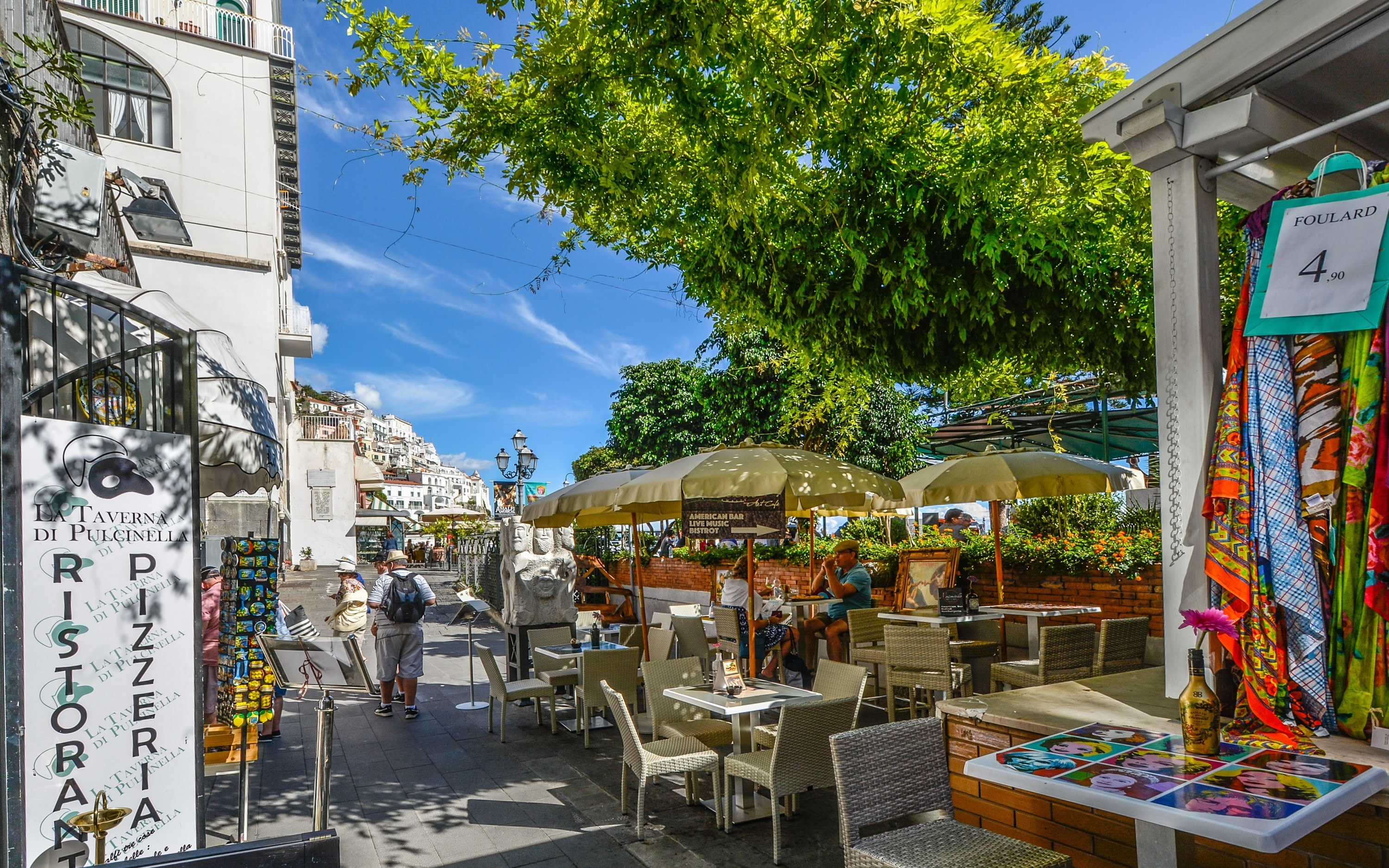
Your tour will take you to the refined Sorrento, the pearl of the Sorrento peninsula. Visit the historic center and discover its hidden treasures, such as Sorrento Cathedral, Baroque churches and the suggestive Cloister of San Francesco. Don't forget to taste limoncello, a local liqueur made with local lemons.
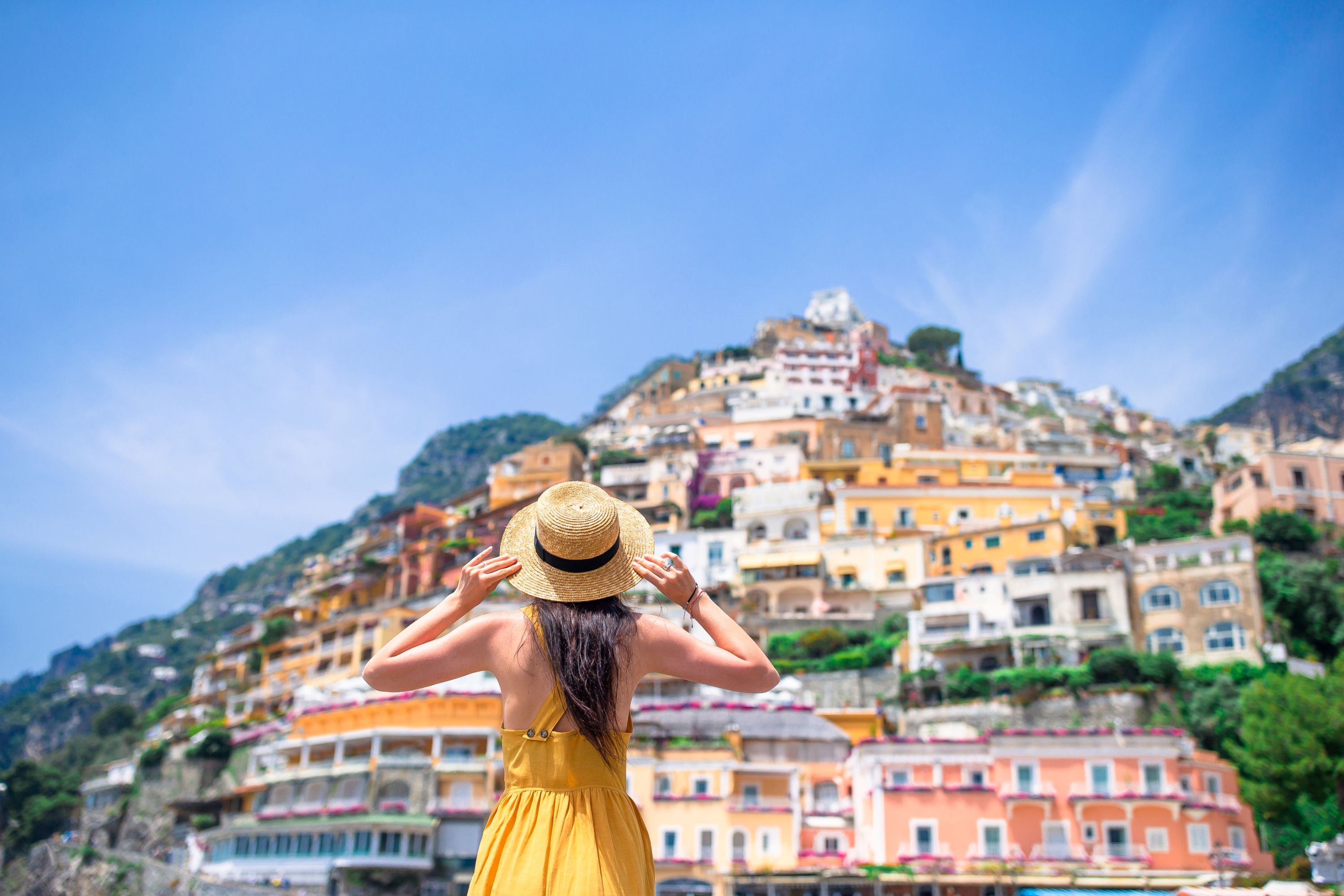
Later in the picturesque Positano, a city nestled between the hills and the crystal clear sea of the Amalfi Coast. Here you can admire the view from the surrounding mountain and stroll through the narrow streets of the old town dotted with fashion shops and local crafts. Taste the local cuisine, famous for its dishes of fresh fish and Mediterranean vegetables.
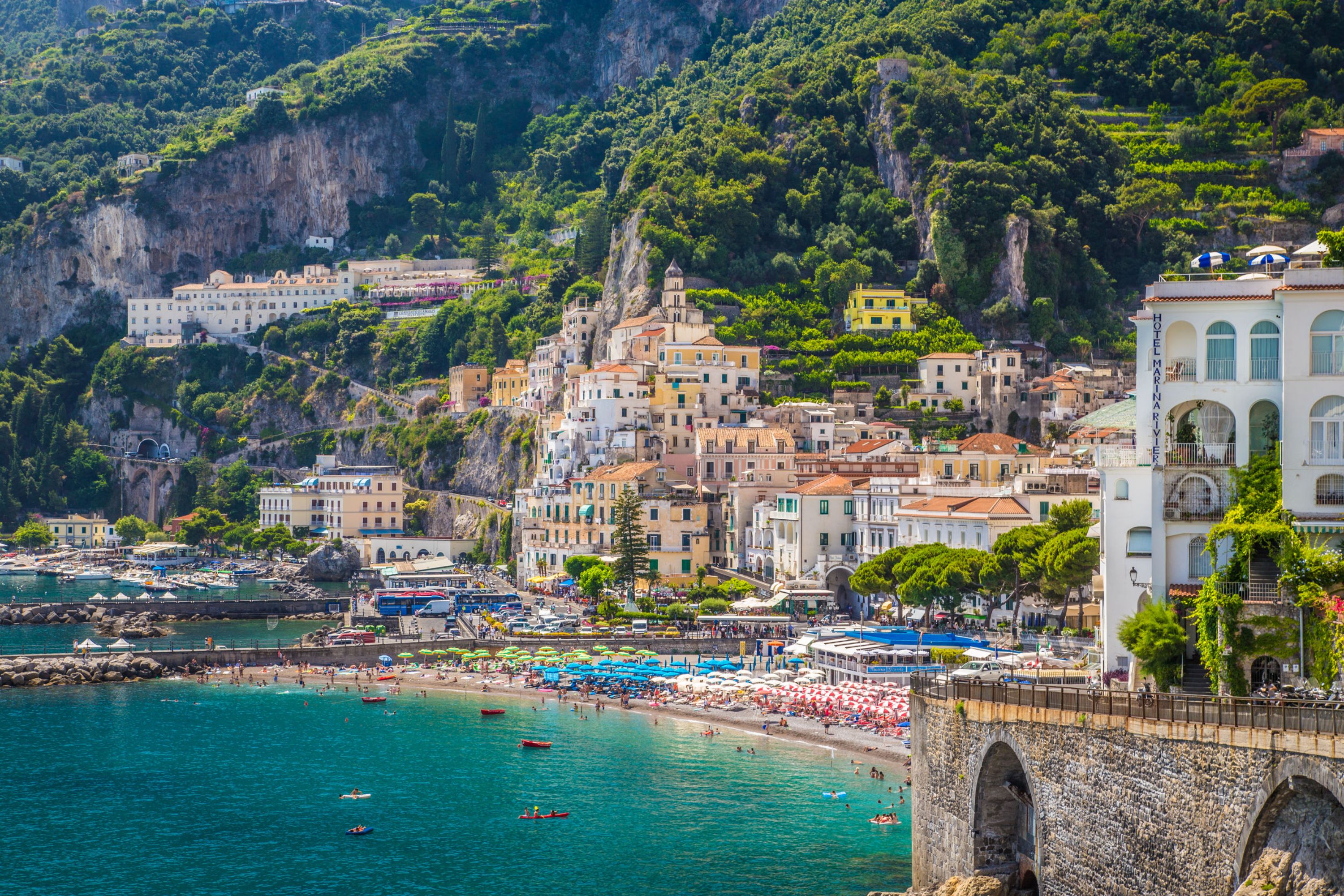
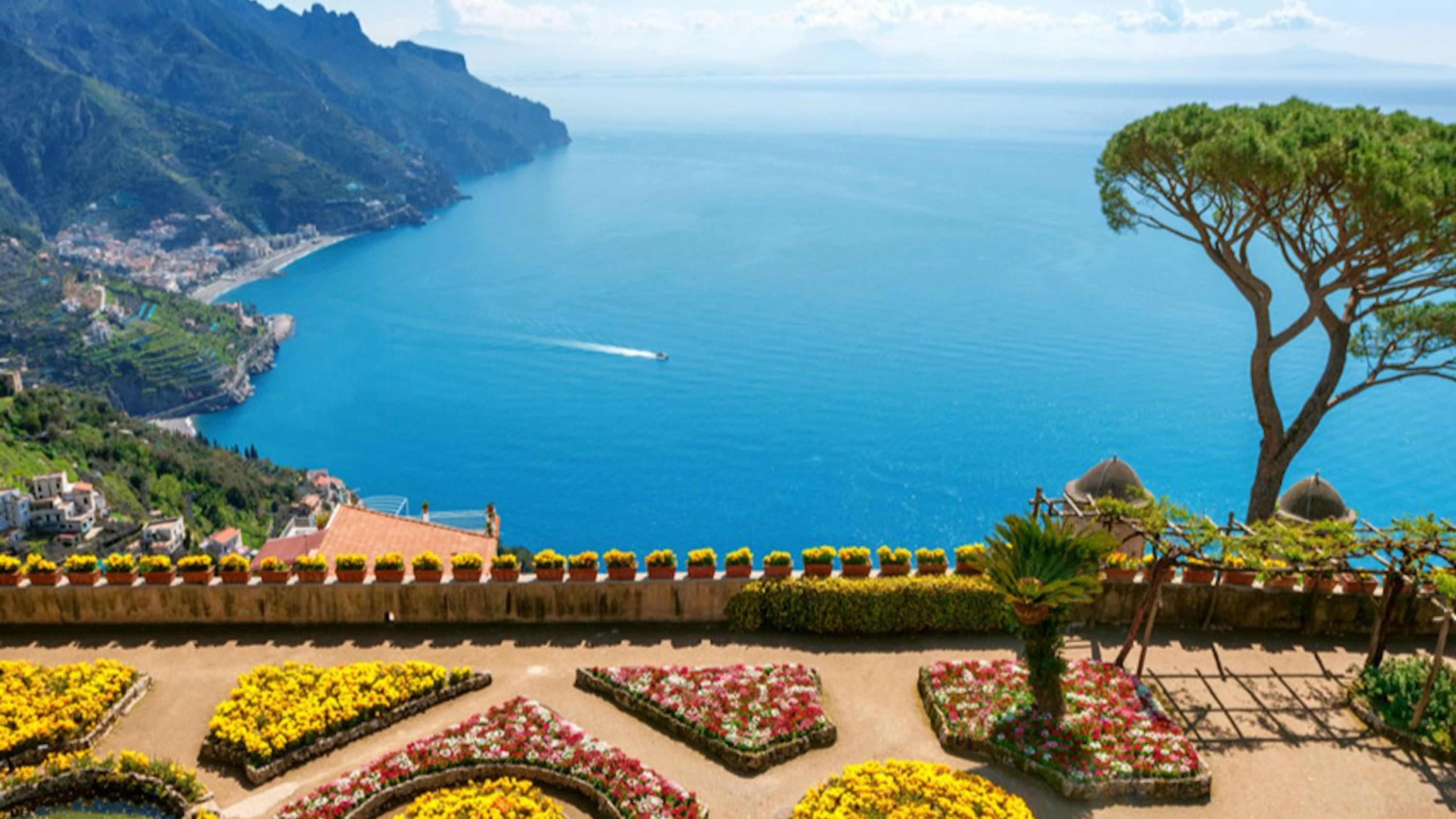
Finally Amalfi lemon gardens, which all year round dot yellow the dark green of the foliage on the sides of the mountain that plunges towards the sea and blends with the colors of the water, which along this coast constantly change between turquoise, indigo, emerald.
Available options
Ramada Hotel Group Tour
Withdrawal Available<br/>Starting point:<br/>Ramada by Wyndham Naples, Via Galileo Ferraris, 40, 80146 Napoli NA, Italy
Tour Maritime Station
Shore excursion: Pickup available from your Cruise Ship
(Please provide your cruise data)<br/>Starting point:<br/>Stazione Marittima, 80133 Napoli NA, Italy
What's included
Private transportation
All Fees and Taxes
Air-conditioned vehicle
Live commentary on board
Detailed itinerary
1
The municipality of Meta is located in the Sorrento peninsula along with the municipalities of Vico Equense, Piano di Sorrento, Sant'Agnello, Sorrento and Massa Lubrense. It is the second country on the peninsula coming from Naples, after Vico Equense, it overlooks only the Gulf of Naples.
Meta rises about 111 meters above sea level and covers an area of about 2.5 km2, which include both coastal areas, with over 800 meters of coastline, and mountainous areas, with the hamlet of Alberi, Monte Vico Alvano in the South East, 642 meters, and part of the Lattari Mountains.
Although there are no real political divisions within the municipality, popular tradition sees Meta divided into two distinct parts: Meta "above" and Meta "below"; the first includes Trees and the inner area of the country; the second is instead composed of the area in front of the coast.
2
The city of Sorrento, from which the whole territory that, perched on the Lattari Mountains, separates the Gulf of Naples from that of Salerno, takes its name, is a renowned destination for international tourism: lying on a large tufa terrace overlooking the sea, it is a small and quiet holiday resort famous for its villas, hotels, parks and gardens, as well as for the beautiful views and characteristic citrus groves.
Of Greek origin, and then raised under Roman domination, Sorrento gravitates today around Piazza Tasso and Corso Italia (on which the Duomo stands), from which you can reach the sea view through a maze of narrow streets full of characteristic and lively shops. The most impressive view is that observable from the viewpoint of the Villa Comunale, which opens onto the port and the entire Gulf of Naples.
3
Stop 3
Pass by
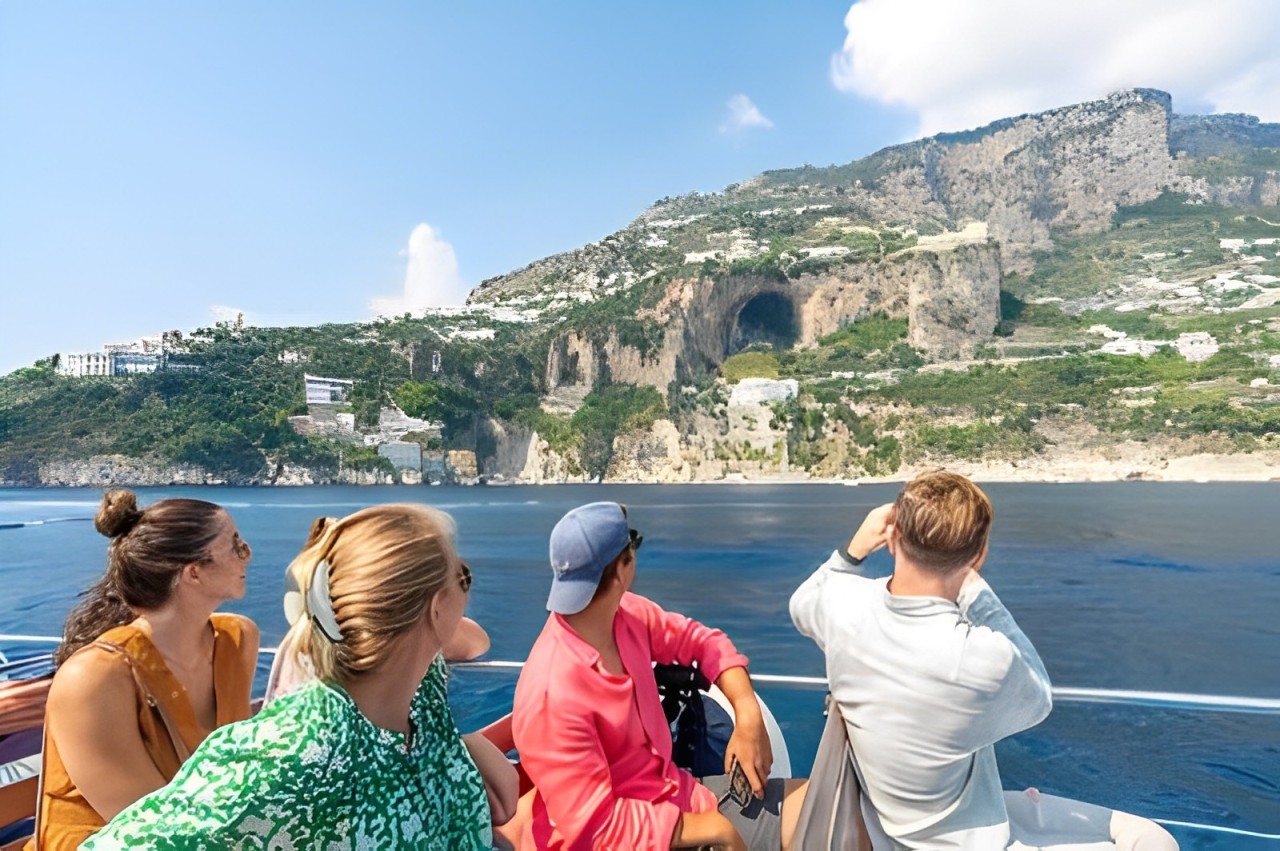
Gallo Lungo is the largest of the three and is the only one to have been inhabited since Roman times: it has an elongated shape that extends for about 400 m with a variable width that towards the center is about 100 m and towards the "head" is about 200 m.
To the west of Gallo Lungo are La Rotonda and Dei Briganti to the north of the Rotonda, the latter denomination reported on the website of the municipality of Positano,[1] although more commonly the island is referred to on texts as La Castelluccia.
The islets are covered with grass and shrubs, with a great abundance of daffodils.
4
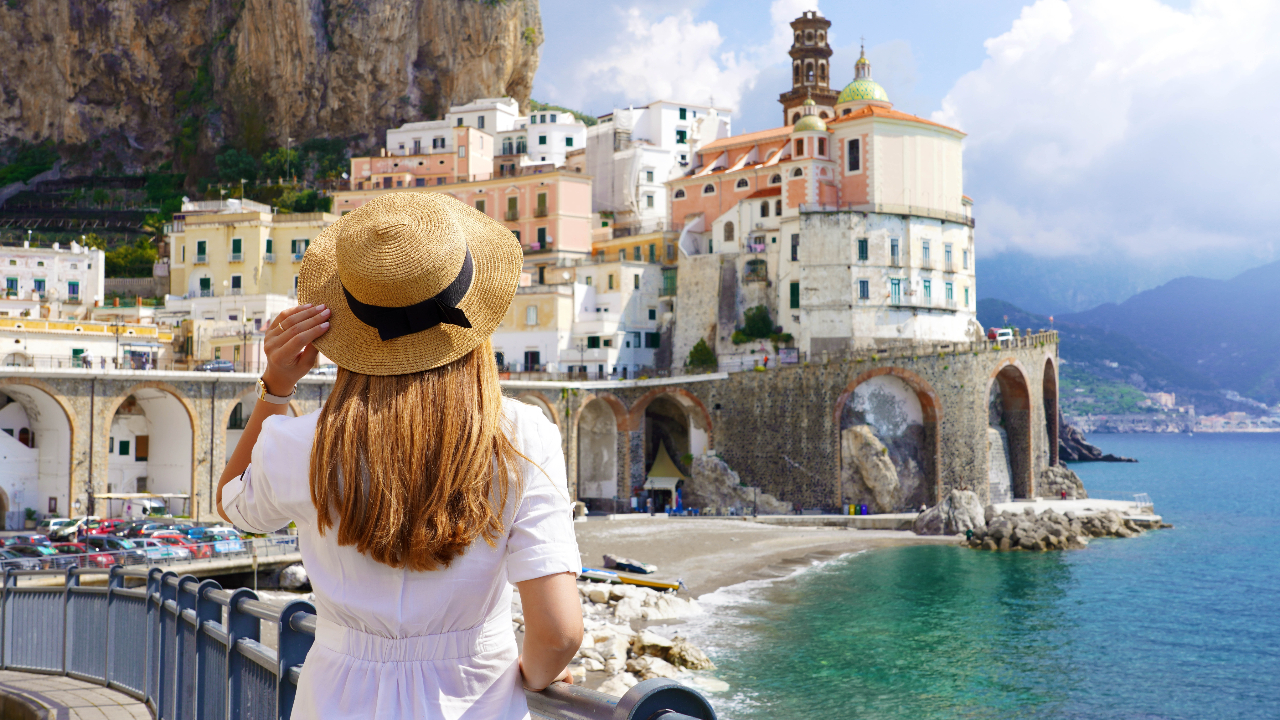
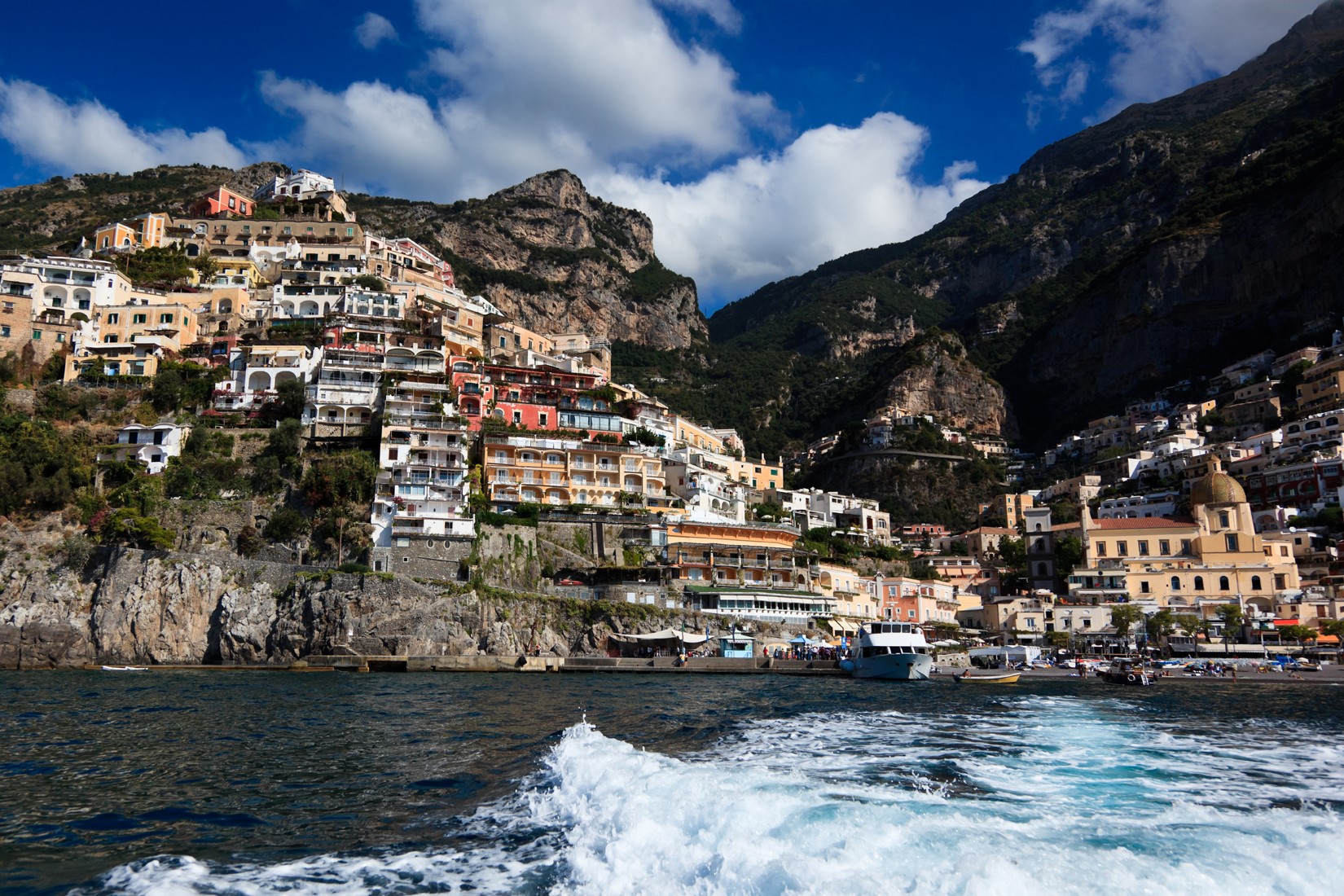
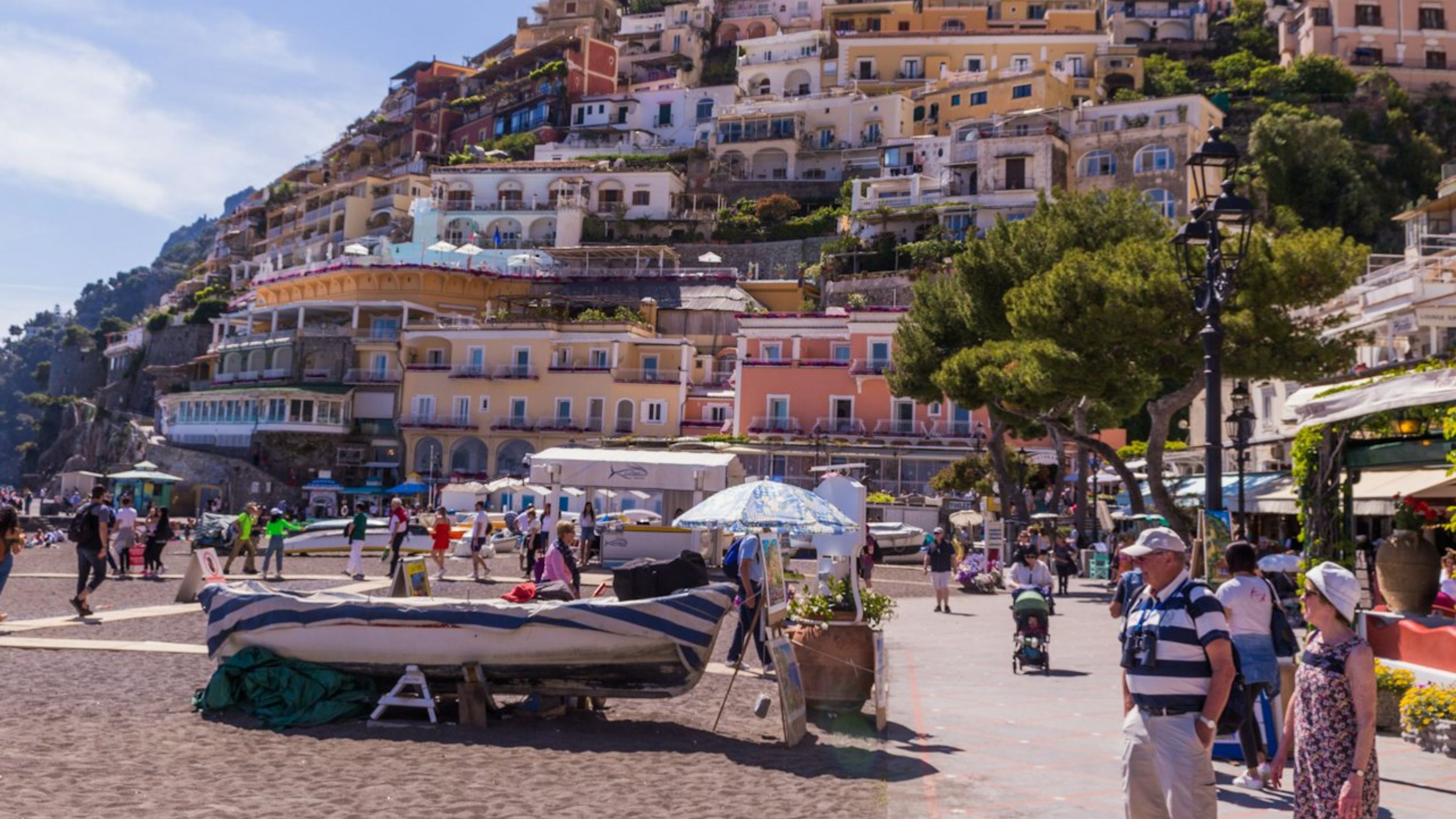
Positano is perhaps a unique place in the world! It is a jewel of spontaneous architecture, set on the rock overlooking the sea. Clusters of colorful houses, sometimes cubic in appearance, are built on often very steep steps, which descend to the beach, connected by alleys and long staircases.
If arriving in Positano along the coastal road, from Amalfi or Sorrento, offers sudden panoramic views from above over the small town, disembarking from the sea is truly a unique experience that fills the eyes and soul with beauty!
And it is precisely from the sea, that around the first century AD.The Romans arrived first, intent on building sumptuous maritime villas in Positano and along the Amalfi Coast ‘for the exercise of their refined idleness’. The villa of Positano would have belonged to Posides Claudi Cesaris, freedman of Emperor Claudius, hence the name of Posidianum extended from the villa to the entire place.
5
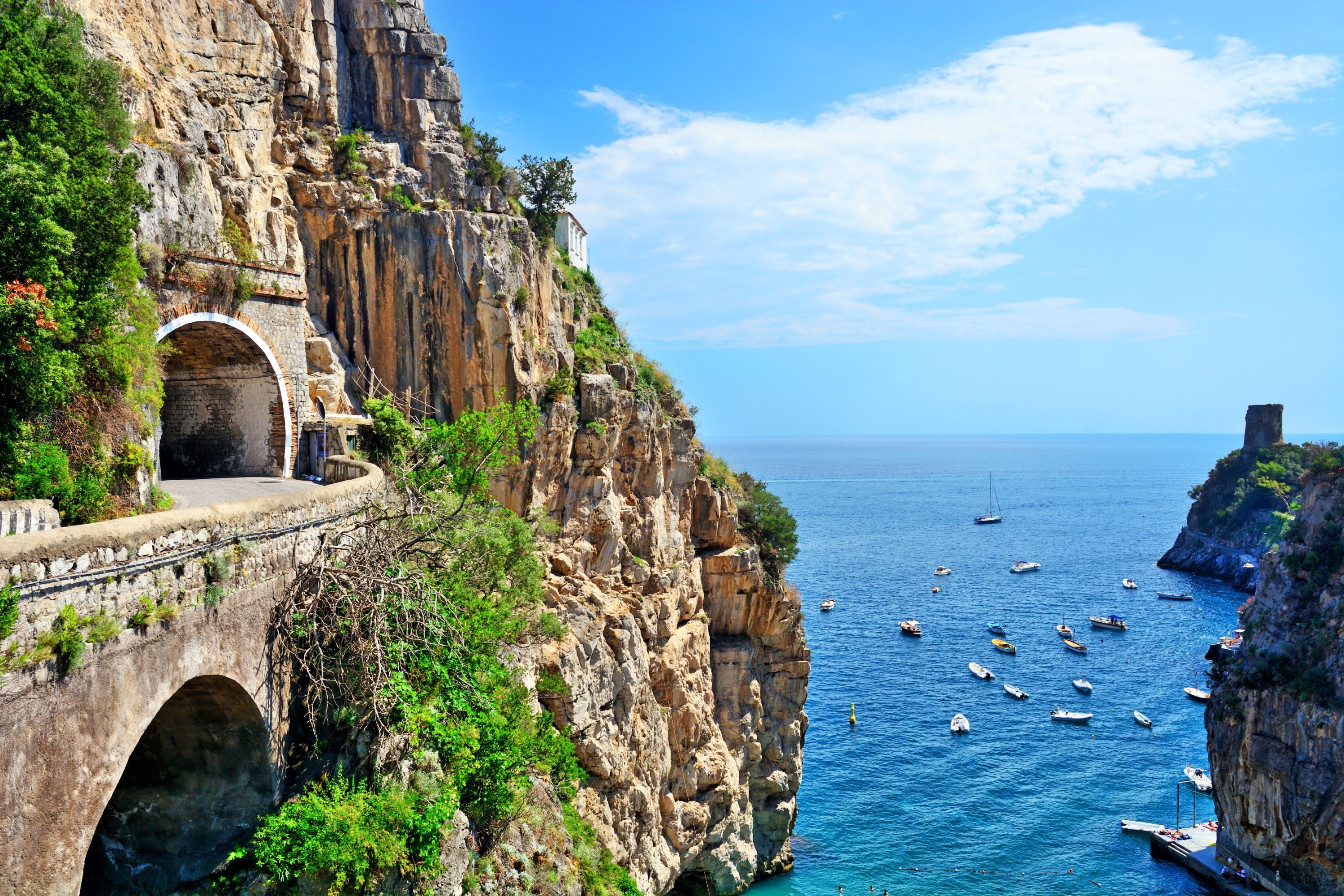
Furore is one of the most picturesque villages on the Amalfi Coast. It is a UNESCO World Heritage Site and is one of the most beautiful villages in Italy. Best known for its striking fjord, it is also the home of Fiorduva, one of the most appreciated wines in the world.
A small reality with great riches to discover. Furore will captivate you especially for its landscape appearance.
It appears, in fact, as a charming village set in a deep valley: a nativity scene of houses clinging to the slopes of the Lattari Mountains, remained intact over time, wedged between overhanging rocks and rich vegetation climbed on rock walls.
6
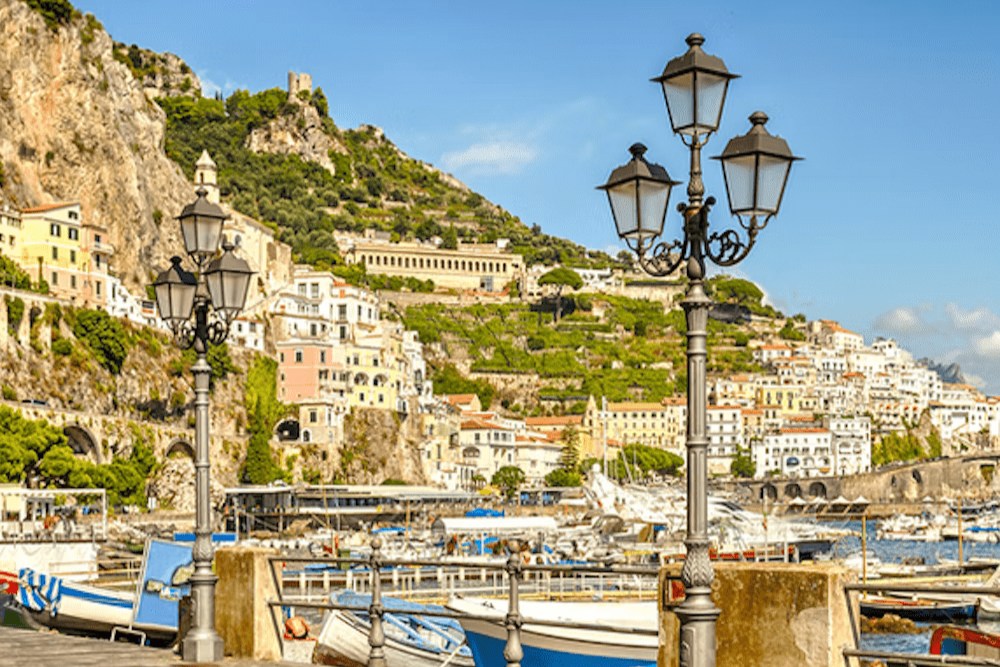
The origins of Amalfi are shrouded in the clouds of legend. In fact, there are many legends about the founding of the city: however, all have in common the Roman origin. This is also demonstrated by the findings of archaeological remains of the imperial age, including the nymphaeum of a villa probably built at the time of Emperor Tiberius.
The toponym “Amalfi” is, moreover, of certain Latin extraction: it, according to the main origin saga, derives from Melfi, a Lucanian maritime village abandoned by some Roman refugees in the IV d.C.; or it could correspond to the surname of a Roman gens of the first century AD.C. (Amarfia).
the remaining time is for the round trip and the time spent between attractions
What's not included
Lunch
Tips
Available languages
Guide guide
EN
IT
Reviews breakdown
Viator
5.0
1 reviews
5★
1
4★
0
3★
0
2★
0
1★
0
Tripadvisor
5.0
4 reviews
5★
4
4★
0
3★
0
2★
0
1★
0
Important information
Infants and small children can ride in a pram or stroller
Specialized infant seats are available
Suitable for all physical fitness levels
This tour requires at least 4 people
Meeting point
The driver will be waiting for you at the meeting point with a sign with your name on it.
For anything else feel free to contact me!
About Naples
Naples, Italy's third-largest city, is a vibrant and chaotic metropolis known for its rich history, incredible food, and vibrant street life. As the birthplace of pizza, Naples offers a unique blend of ancient ruins, stunning coastal views, and a bustling urban atmosphere.
Top Attractions
Naples National Archaeological Museum
One of the most important archaeological museums in the world, housing a vast collection of artifacts from the Roman era, including those from Pompeii and Herculaneum.
Museum
2-3 hours
€15
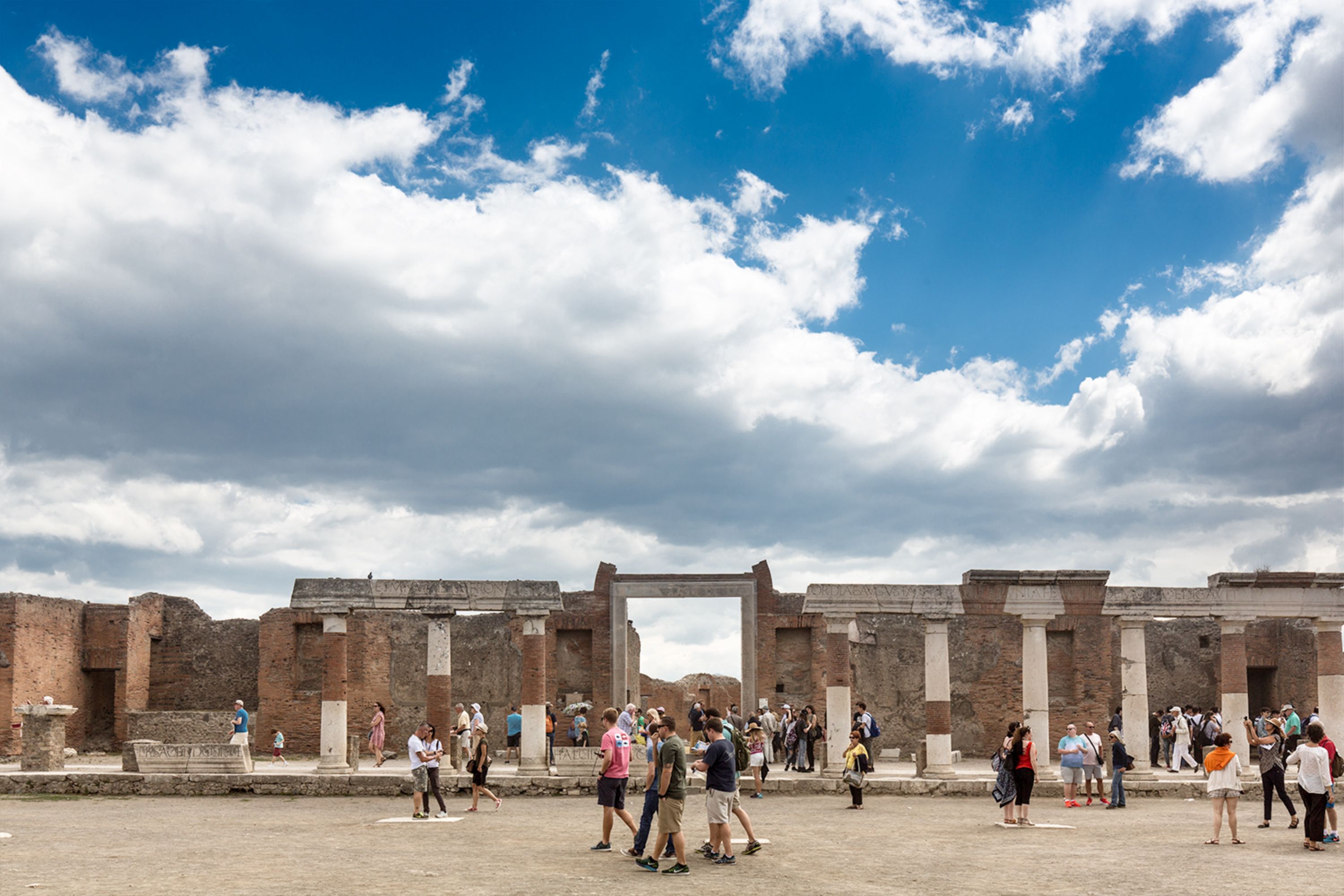
Pompeii
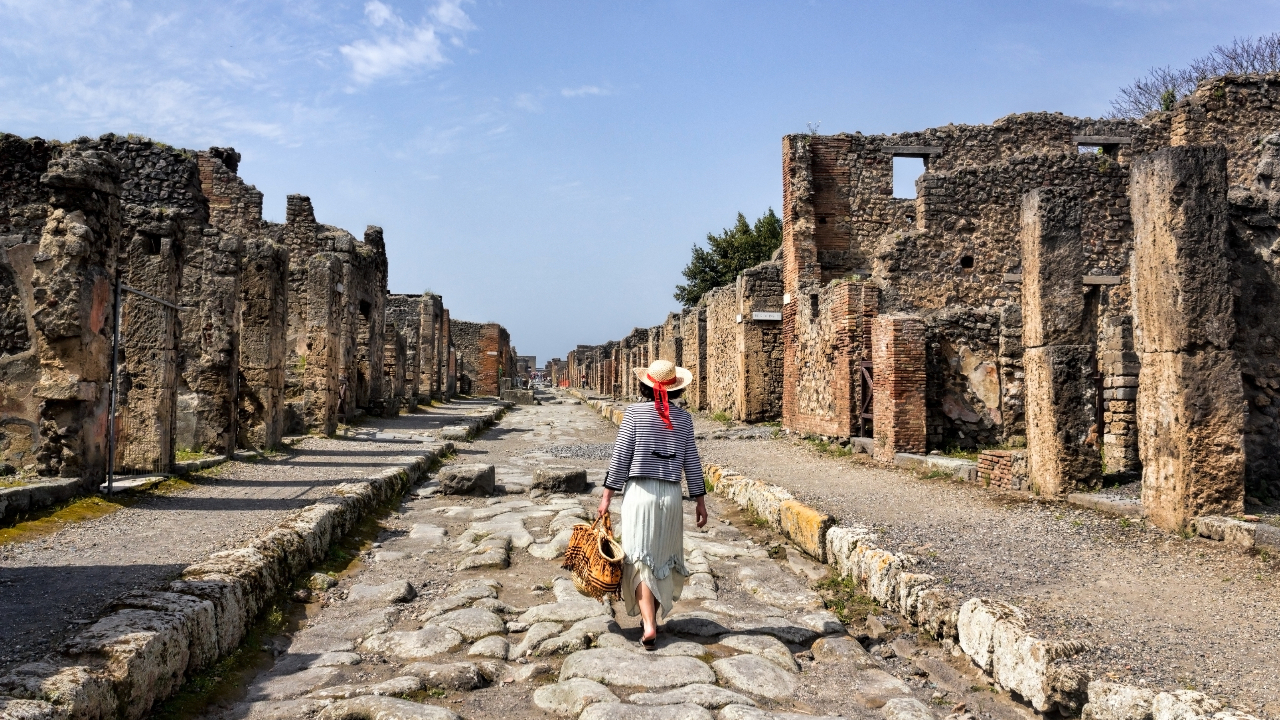
The ancient Roman city of Pompeii, preserved by volcanic ash from the eruption of Mount Vesuvius in 79 AD. It's a UNESCO World Heritage site and one of the most famous archaeological sites in the world.
Historical
Half day to full day
€15
Castel dell'Ovo
A medieval castle located on the former island of Megaride, connected to the mainland by a causeway. It offers stunning views of the Bay of Naples and a rich history.
Historical
1-2 hours
Free
Mount Vesuvius
The famous volcano that erupted in 79 AD, destroying Pompeii and Herculaneum. It's an active volcano and offers a unique hiking experience with breathtaking views.
Nature
Half day
€10
Galleria Umberto I
A beautiful 19th-century shopping gallery with a stunning glass and iron roof, elegant shops, and cafes. It's a great place to experience the city's vibrant atmosphere.
Architecture
1-2 hours
Free to enter
Must-Try Local Dishes
Pizza Margherita
The original Neapolitan pizza, made with simple ingredients: tomatoes, mozzarella, basil, and olive oil. It's a UNESCO Intangible Cultural Heritage and a must-try in Naples.
Dinner
Contains gluten and dairy.
Spaghetti alle Vongole
A classic Neapolitan dish made with spaghetti, clams, garlic, white wine, and parsley. It's a delicious and simple representation of the local seafood cuisine.
Dinner
Contains gluten and seafood.
Sfogliatella
A traditional Neapolitan pastry made with layers of crispy, flaky dough filled with sweet ricotta cheese and semolina. It's a popular breakfast or snack item.
Dessert
Contains gluten and dairy.
Babà al Rhum
A small, rum-soaked cake that's a popular dessert or afternoon snack in Naples. It's often served with whipped cream or pastry cream.
Dessert
Contains gluten and dairy.
Popular Activities
Hiking Mount Vesuvius
Boat tours to nearby islands
Scuba diving in the Bay of Naples
Beach relaxation on the Amalfi Coast
Spas and wellness centers
Coffee and pastry at historic cafes
Visiting museums and historical sites
Attending local festivals and events
Best Time to Visit
April to June, September to October
The peak season offers the best weather for exploring the city's attractions and enjoying outdoor activities. The weather is warm but not too hot, and the crowds are manageable.
15-28°C
59-82°F
Practical Information
Language
- Official: Italian
- Widely spoken: English, Napolitan (local dialect)
- English: Moderately spoken
Currency
Euro (EUR)
Time Zone
GMT+1 (CET), GMT+2 (CEST) during daylight saving time
Electricity
230VV, 50HzHz
Safety Information
Overall Safety Rating: Exercise caution
Naples is a vibrant and exciting city, but it can also be chaotic and overwhelming. While violent crime is relatively low, petty crime such as pickpocketing and scams is common, especially in tourist areas. It's important to be aware of your surroundings and take precautions to protect yourself and your belongings.
Important Precautions:
- • Keep your valuables secure and out of sight.
- • Be cautious of your surroundings, especially in crowded areas and on public transportation.
- • Use licensed taxis or ride-sharing services, and always ensure the meter is running.
Getting there
By air
- Naples International Airport • 5 km from city center
By train
Napoli Centrale, Napoli Garibaldi
By bus
Napoli Centrale, Napoli Garibaldi
Getting around
Public transport
The metro system is clean and efficient but has limited coverage. It's useful for reaching major attractions and connecting to other public transport.
Taxis
Available • Apps: MyTaxi, FreeNow
Rentals
Car, Bike, Scooter
Neighborhoods
Historic Center (Centro Storico)
Chiaia
Posillipo
Quartieri Spagnoli
Day trips
Pompeii
25 km • Half day to full day
The ancient Roman city of Pompeii, preserved by volcanic ash from the eruption of Mount Vesuvius in 79 AD. It's a UNESCO World Heritage site and one of the most famous archaeological sites in the world.
Herculaneum
15 km • Half day
An ancient Roman town, also preserved by the eruption of Mount Vesuvius in 79 AD. Herculaneum is smaller and less crowded than Pompeii, offering a more intimate and well-preserved look at Roman life.
Sorrento
50 km • Full day
A charming coastal town known for its stunning views of the Bay of Naples, lemon groves, and historic center. It's a popular destination for day trips from Naples.
Festivals
Festa di San Gennaro • September 19
Pizzafest • June
Napoli Teatro Festival • June to July
Pro tips
- Learn a few basic Italian phrases to communicate with locals and enhance your experience.
- Try the local specialties, such as pizza, seafood, and pastries, and support local businesses.
- Be cautious of your surroundings, especially in crowded areas and on public transportation, and take precautions to protect yourself and your belongings.
- Visit the historic center and other attractions early in the morning or late in the afternoon to avoid crowds and the heat.
- Use public transportation, walk, or bike instead of driving to reduce your environmental impact and experience the city like a local.
From $25
per person
Price varies by option
Secure booking
Free cancellation available
Instant confirmation