Private City Tour with a friend in Buenos Aires
Active
4h
For a full refund, cancel at least 24 hours before the scheduled departure time.
Instant confirmation
Mobile or paper ticket accepted
About this experience
Experience the best of Buenos Aires with Argentina Highlights! Join us for a 4-hour private tour to discover the city's captivating sights.
*Stay connected on Instagram @argentinahighlights or +5491132745520 to secure your spot. Discover our other tours, including Tigre Delta navegation and authentic tango shows with discounts*.
Be witness to the rich culture found in every street, neighborhood, and corner of Buenos Aires. From iconic districts like La Boca to upscale areas such as Recoleta and Palermo, there's something for everyone.
Indulge in authentic markets, cozy cafes, lively stadiums, and chic boutiques. Experience the passion of tango, a quintessential part of Buenos Aires' identity.
Discover the enchanting of Buenos Aires with Argentina Highlights and make unforgettable memories in this remarkable city!
Available options
Full Day City y Delta Tigre
Full Day City y Delta Tigre: 9-hour tour that combines the city and sailing in Tigre.<br/>Pickup included
Full-day City Tour
6-hour City Tour: Extended 6-hour City Tour with tickets included.<br/>Pickup included
City Tour + Tango
4-hour tour+Tango Dinner Show<br/>Pickup included
Private Tour With a Friend
Private CityTour with a Friend: 4-hour private tour of the main points of Buenos Aires. <br/>Duration: 4 hours<br/>Pickup included
What's included
Private transportation
Bilingual guide throughout the tour providing information
Cashmere factory
Air-conditioned vehicle
Leather Factory
Detailed itinerary
1
Stop 1
Floralis Genérica is a metal sculpture located in the Plaza de las Naciones Unidas, Avenida Figueroa Alcorta, in the Autonomous City of Buenos Aires, presented to the city by the Argentine architect Eduardo Catalano (1917-2010). The structure was inaugurated on April 13, 2002 with materials provided by the aircraft company Lockheed Martin Aircraft Argentina.
The sculpture is located in the center of a park of four hectares of wooded boundaries, surrounded by paths that approach and distance providing different perspectives of the monument and located above a mirror of water, which apart from fulfilling its aesthetic function, protects it. It represents a large flower made of stainless steel, with aluminum skeleton and reinforced concrete, which looks towards the sky, extending towards it its six petals. It weighs 18 tons and is 23 meters high.
2
Stop 2
The Recoleta Cemetery is a famous cemetery in the city of Buenos Aires, Argentina. It is located in the neighborhood of Recoleta and contains the graves of well-known people.
It is one of the most popular tourist attractions in the city, famous for its numerous and imposing mausoleums and vaults adorned with marbles and sculptures. Its architectural value is a sample of the times when Argentina was an emerging economic power at the end of the 19th century, and the more affluent families of the city began to move to the area of Recoleta and build splendid pantheons in the cemetery. Many of its mausoleums and vaults are the work of important architects and more than 90 have been declared a National Historic Monument. The cemetery itself has been considered a National Historical Museum since 1946.
3
Ateneo Grand Splendid is a bookstore located in the Recoleta neighborhood of Buenos Aires. It stands out for being where the Grand Splendid Theatre did, having preserved the original architecture of that theater, but being in turn readapted to function as a bookshop. In 2008, it was chosen by the British newspaper The Guardian as the second most beautiful bookstore in the world, and in 2019, National Geographic declared it the most beautiful in the world
4
Stop 4
It is a palace located in front of the Plaza de Mayo that functions as the seat of the National Government. This imposing pink building occupies the site where the Fort of Buenos Aires was erected in 1580. It was the residence of Spanish viceroys and then housed, with some reforms, the authorities of the successive national governments. The current building is the product of the merger of two previous constructions: the presidential headquarters and the Palacio de Correos (on the corner of Hipólito Yrigoyen and Balcarce).
5
Stop 5
In the building worked the Cabildo of the City of the Holy Trinity and Port of Our Lady of Buen Ayre, an institution that was initially a colonial chapter founded by Juan de Garay in 1580 during the second foundation of the city of Buenos Aires and that after the May Revolution of 1810. Since November 1939 the building works as a museum.
6
Stop 6
The Puente de la Mujer, one of the emblems of the Puerto Madero neighborhood, is the first work in Latin America by the renowned Spanish architect Santiago Calatrava and represents another example of the City permanently seeking to position itself at the forefront of art and architecture in the entire region. It is a revolving pedestrian bridge with one of the largest turning mechanisms in the world, designed to allow the passage of sailing vessels that navigate the docks of Puerto Madero. The work, made in Spain and donated to the City by a private individual, represents the image of a couple dancing tango, where the white pole symbolizes the man and the curved silhouette of the bridge is the woman.
7
The market was inaugurated in February 1897 with the aim of supplying the necessary food to the new wave of immigrants arriving in the city from the Old Continent. The building retains its original internal structure, formed by beams, arches and metal columns with veneer and glass ceilings. In the center stands a large dome.
The project is by Juan Antonio Buschiazzo (1845-1917), the second architect to obtain his degree in Buenos Aires. Buschiazzo came from Italy at the age of four and during the intendence of Torcuato de Alvear he served as Director of Public Works of the City. He designed banks, hospitals, residences and government buildings, and was one of the main people responsible for the Avenida de Mayo project. In 2000, the market was declared a National Historic Monument by the Ministry of Culture of the Government of the City of Buenos Aires.
8
Stop 8
The Bombonera is the heart of Boca Juniors, and one of the most famous stadiums in the world. It became a kind of football monument. Before reaching this building, inaugurated in 1940, the club was local in a with wooden grandstands.
It has a horseshoe-shaped structure, with three overlapping trays and a steep angle of inclination that resembles a box of chocolates, hence its popular name. The few meters that separate the playing field from the stands allow a great proximity between spectators and teams, which makes the experience of going to see a game indescribable.
9
Stop 9
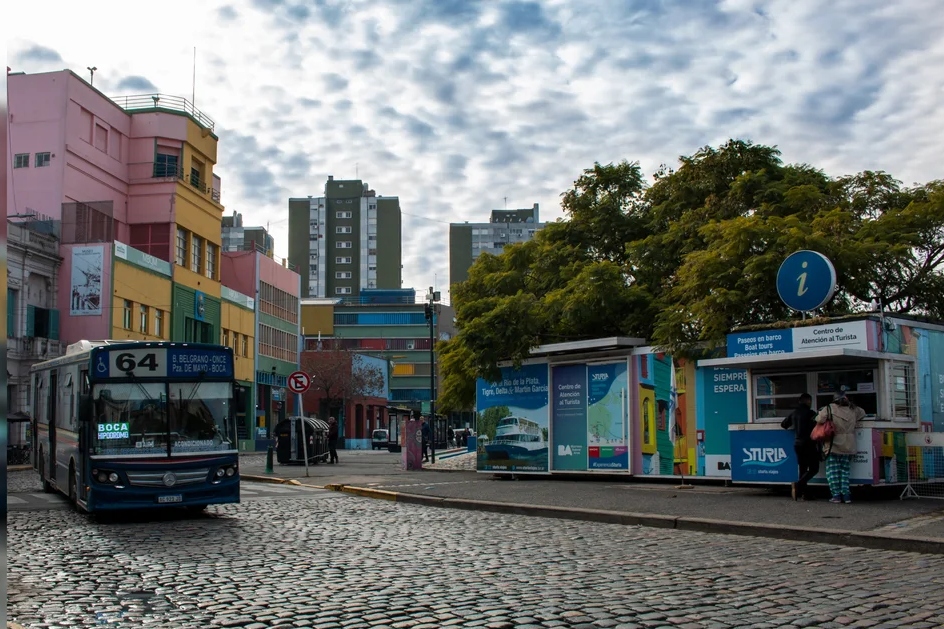
Caminito is the most famous pedestrian street in Buenos Aires. It is one of the most popular tourist attractions in the city due to its colorful houses and its deep historical and cultural significance. Caminito is located in the popular La Boca neighborhood, on the coast of the Riachuelo River and just 400 meters from La Bombonera, the Boca Juniors stadium. It is a 150 meter long curved pedestrian walkway where important artistic works can be seen.
What's not included
Lunch
Tickets de entrada a eventos
Tips
Available languages
Audio guide
PT
EN
ES
Guide guide
PT
EN
ES
Written guide
PT
EN
ES
Reviews breakdown
Viator
4.7
110 reviews
5★
97
4★
3
3★
3
2★
2
1★
5
Tripadvisor
4.9
230 reviews
5★
219
4★
4
3★
2
2★
3
1★
2
Important information
Wheelchair accessible
Infants and small children can ride in a pram or stroller
Service animals allowed
Public transportation options are available nearby
Infants are required to sit on an adult’s lap
Transportation options are wheelchair accessible
Suitable for all physical fitness levels
About Buenos Aires and The Pampas
Buenos Aires, the vibrant capital of Argentina, is known for its European-influenced architecture, rich cultural scene, and passionate tango. The Pampas, a vast fertile plain, offers a glimpse into Argentina's gaucho (cowboy) culture and stunning landscapes. Together, they provide a unique blend of urban sophistication and rural charm.
Top Attractions
Recoleta Cemetery
A famous cemetery where Eva Perón is buried, featuring ornate mausoleums and a rich history.
Historical
1-2 hours
Free
La Boca
A colorful neighborhood known for its vibrant street art, tango performances, and the famous Caminito street.
Cultural
2-3 hours
Free to explore, paid shows
The Pampas
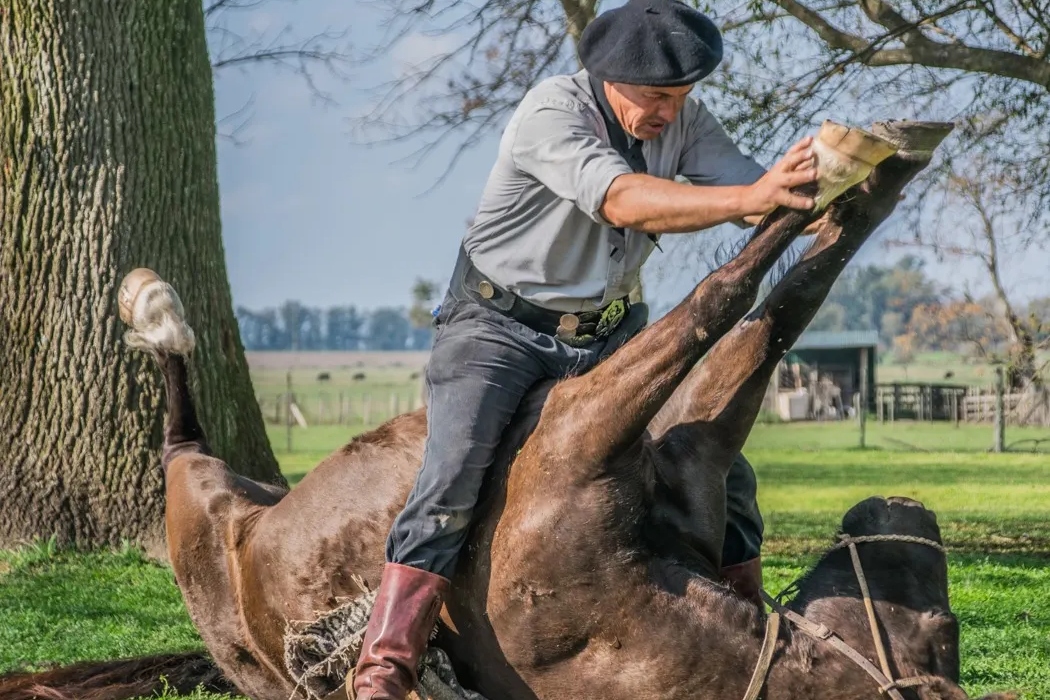
A vast fertile plain offering a glimpse into Argentina's gaucho culture, with estancias (ranches) and beautiful landscapes.
Nature
Full day or overnight
Varies by estancia (ARS 1,000-5,000 approx. USD 13-65)
Teatro Colón
One of the world's most famous opera houses, known for its stunning architecture and acoustics.
Cultural
1-2 hours (tour), longer for performances
Tour: ARS 1,200 (approx. USD 16), Performances: ARS 500-5,000 (approx. USD 6.50-65)
San Telmo Market
A historic market offering antiques, collectibles, and local crafts, with a lively Sunday market atmosphere.
Market
1-3 hours
Free to explore, varies for purchases
Must-Try Local Dishes
Asado
Argentine barbecue featuring various cuts of beef, sausages, and other meats, cooked over an open fire.
Dinner
Not vegetarian or vegan
Empanadas
Savory pastries filled with various ingredients like beef, chicken, or cheese.
Snack or Lunch
Can be vegetarian or vegan
Milanesa
Breaded and fried meat cutlet, similar to schnitzel, often served with mashed potatoes or salad.
Lunch or Dinner
Not vegetarian or vegan
Dulce de Leche
A sweet, caramel-like spread made from milk and sugar, used in various desserts.
Dessert
Vegetarian
Popular Activities
Horseback riding in The Pampas
Kayaking in Tigre Delta
Hiking in Sierra de la Ventana
Wine tasting in Palermo
Spa day in Recoleta
Strolling through Bosques de Palermo
Tango shows in La Boca
Visiting museums in Recoleta
Best Time to Visit
Spring (September to November) and Fall (March to May)
Pleasant weather, fewer crowds, and vibrant city life. Ideal for outdoor activities and exploring both the city and the Pampas.
15-25°C
59-77°F
Practical Information
Language
- Official: Spanish
- Widely spoken: English, Italian, French
- English: Moderately spoken in tourist areas, limited elsewhere
Currency
Argentine Peso (ARS)
Time Zone
GMT-3
Electricity
220VV, 50HzHz
Safety Information
Overall Safety Rating: Exercise caution
Buenos Aires is generally safe for tourists, but petty crime like pickpocketing and scams can occur, especially in crowded areas. Be aware of your surroundings and take precautions.
Important Precautions:
- • Keep valuables secure
- • Avoid flashing expensive items
- • Use reputable taxi services or app-based taxis
Getting there
By air
- Ministro Pistarini International Airport • 35 km from city center
- Aeroparque Jorge Newbery • 4 km from city center
By train
Retiro Station
By bus
Retiro Bus Terminal, Constitución Bus Terminal
Getting around
Public transport
Efficient and affordable, with six lines connecting major neighborhoods.
Taxis
Available • Apps: Uber, Cabify
Rentals
Car, Bike, Scooter
Neighborhoods
Palermo
Recoleta
La Boca
San Telmo
Day trips
Estancia Santa Susana
100 km from Buenos Aires • Full day
A traditional estancia offering horseback riding, gaucho shows, and authentic Argentine asado.
Colonia del Sacramento
100 km from Buenos Aires (by ferry) • Full day
A charming colonial town in Uruguay with cobblestone streets, historic buildings, and a relaxed atmosphere.
Tigre Delta
35 km from Buenos Aires • Half day to full day
A network of islands and waterways offering boat tours, kayaking, and nature walks.
Festivals
Carnaval de Buenos Aires • February or March (dates vary)
Festival Internacional de Cine Independiente de Buenos Aires (BAFICI) • April (dates vary)
La Noche de los Museos • November (dates vary)
Pro tips
- Use the SUBE card for convenient and discounted public transport
- Learn a few basic Spanish phrases to enhance your experience and connect with locals
- Explore beyond the tourist hotspots to discover the city's hidden gems
- Try local specialties like empanadas, milanesa, and dulce de leche
- Visit during the shoulder seasons (spring and fall) for pleasant weather and fewer crowds
From $25
per person
Price varies by option
Secure booking
Free cancellation available
Instant confirmation