Private 6-Day Golden Triangle Tour: Delhi, Agra, Jaipur by Car
Active
6d
For a full refund, cancel at least 24 hours before the scheduled departure time.
Instant confirmation
Mobile or paper ticket accepted
About this experience
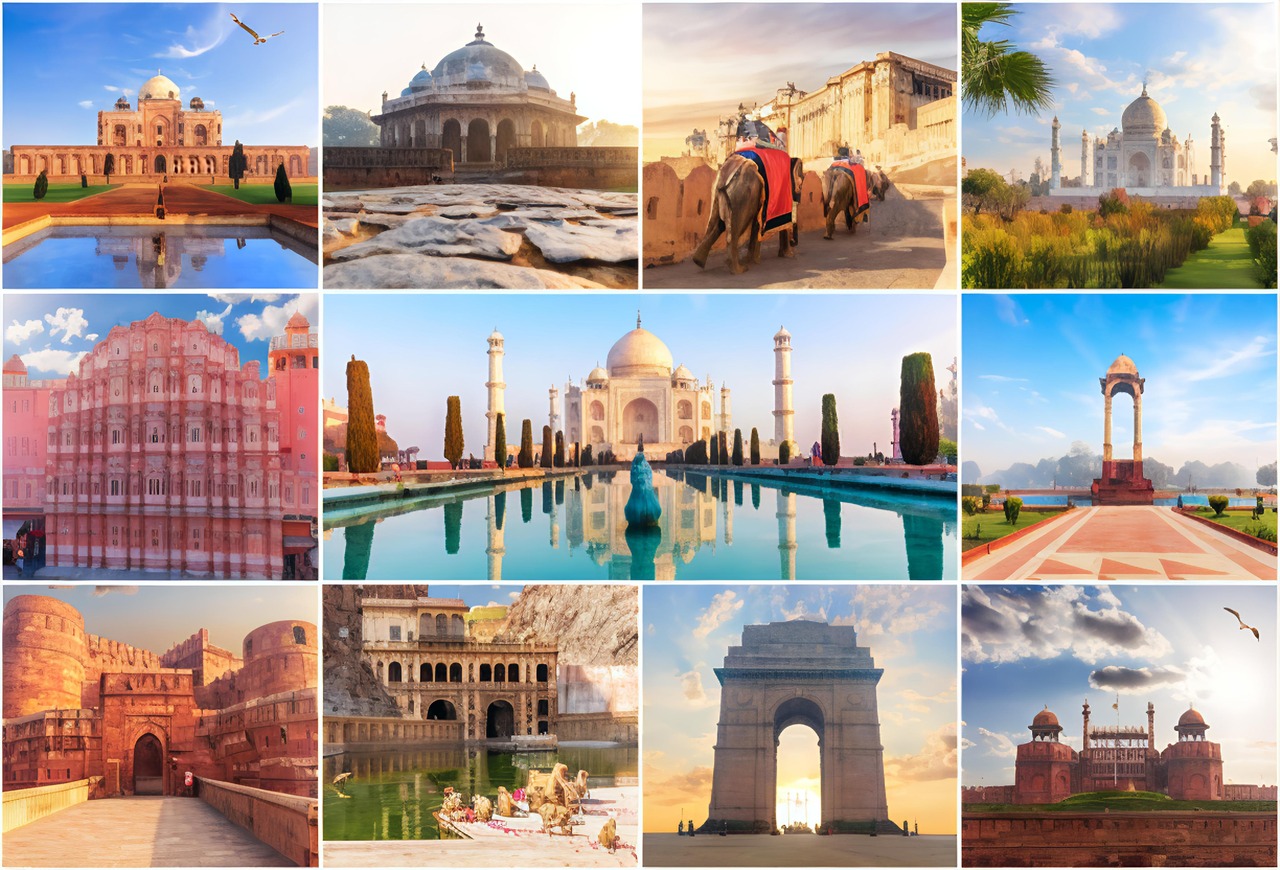
Embark on a captivating journey through India's cultural heartland with our Golden Triangle India Tour to Agra & Jaipur from Delhi. This enchanting expedition promises a kaleidoscope of experiences as you explore the iconic cities of Agra and Jaipur, along with the bustling metropolis of Delhi.
Your adventure begins in Delhi, where you'll be whisked away on a scenic drive to Agra, home to the breathtaking Taj Mahal and majestic Agra Fort, an imposing stronghold that offers panoramic views of the city and the Yamuna River.
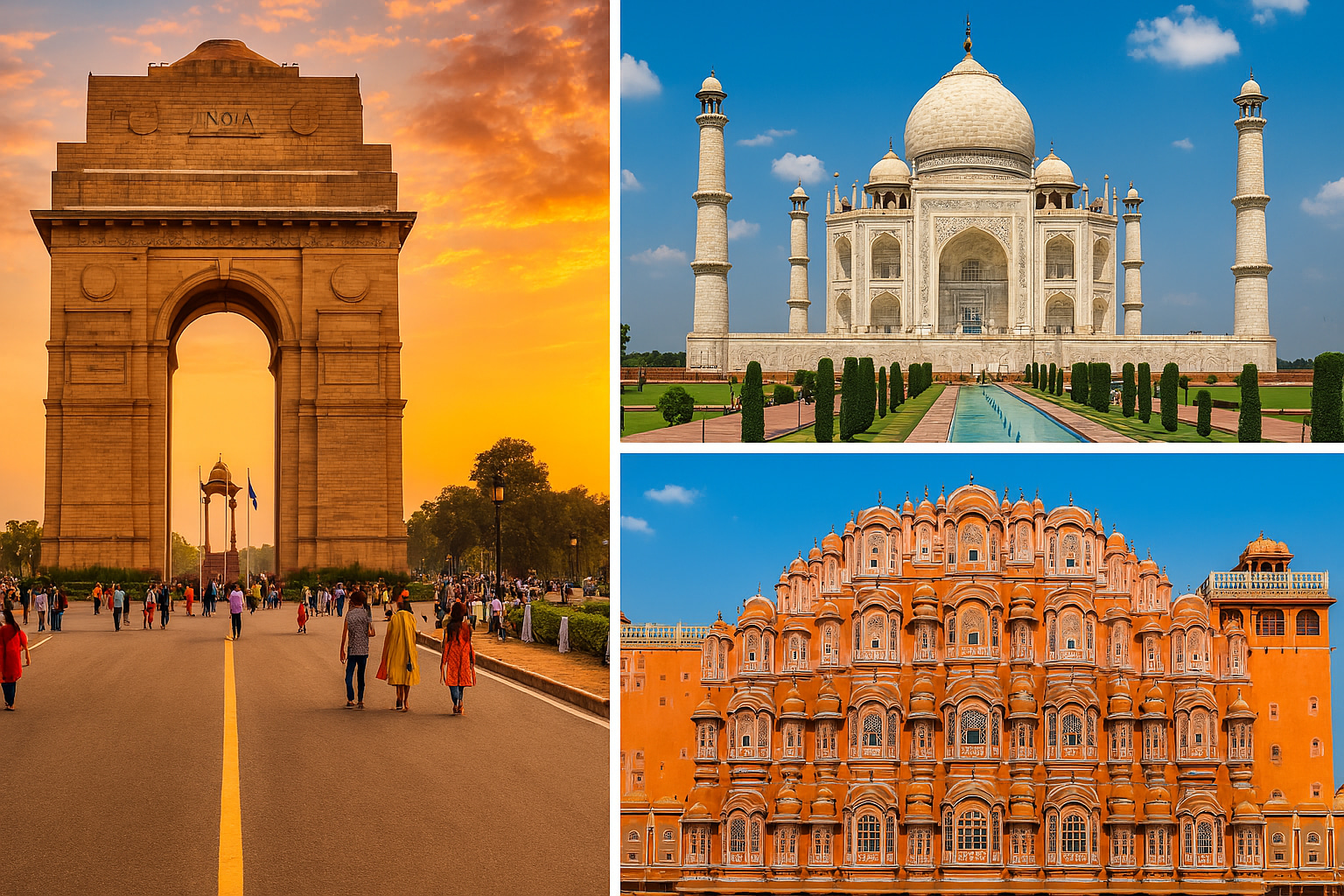
Next stop, Jaipur, Visit the iconic Amber Fort, a magnificent blend of Rajput and Mughal architecture, and discover the grandeur of the City Palace and the awe-inspiring Hawa Mahal (Palace of Winds).
Indulge in authentic Rajasthani cuisine and shop for exquisite handicrafts, textiles, and jewelry in Jaipur's bustling markets, before returning to Delhi, brimming with memories of an unforgettable journey through India's Golden Triangle.
Available options
Private 6-Day Golden Triangle Tour: Delhi, Agra, Jaipur by Car
Pickup included
What's included
Water bottle
Private air-conditioned car for sightseeing and hotel pick up, drop off
All Fees and Taxes
Professional tour guide in Delhi, Agra, and Jaipur
Air-conditioned vehicle
Detailed itinerary
1
Arrive Delhi - India’s capital and major gateway to the country, contemporary is a bustling metropolis which successfully combines in its folds both the ancient and the modern. The division between New Delhi and Old Delhi is the division between the capitals of the British and the Mughals respectively. The walled city (Old Delhi) is all traditional and culture where one shall be able to glimpse a past lifestyle. New Delhi on the contrary is a city trying to live up to the 21st century standards.
Arrive New Delhi International Airport Meeting & Assistance with representative of our company with car and driver and directly transferred to hotel.
2
Stop 2
Start your journey in Delhi, the capital city of India.
Explore historical sites such as the Red Fort, Jama Masjid, Humayun's Tomb, and Qutub Minar.
Take a rickshaw ride through the bustling streets of Old Delhi and savor the local street food.
Visit modern landmarks like India Gate, Rashtrapati Bhavan (Presidential Palace), and the Lotus Temple.
3
Stop 3
The Red Fort, also known as Lal Qila, is an iconic historical fort located in Delhi, India. It was commissioned by the Mughal Emperor Shah Jahan and completed in 1648. Made of red sandstone, the fort is known for its impressive Mughal architecture and is a UNESCO World Heritage Site.
The Red Fort served as the main residence of the Mughal emperors for about two centuries until the capital was shifted to Agra. Its design is an irregular octagon, with two prominent entrances - the Lahore Gate and the Delhi Gate. Inside the fort, you'll find various structures, including the Diwan-i-Aam (Hall of Public Audience), Diwan-i-Khas (Hall of Private Audience), Rang Mahal, Mumtaz Mahal, and royal baths called hammams.
The Red Fort remains a significant symbol of India's historical and cultural heritage, attracting tourists from around the world. It is a must-visit destination for history enthusiasts and anyone interested in the grandeur of the Mughal era.
4
Stop 4
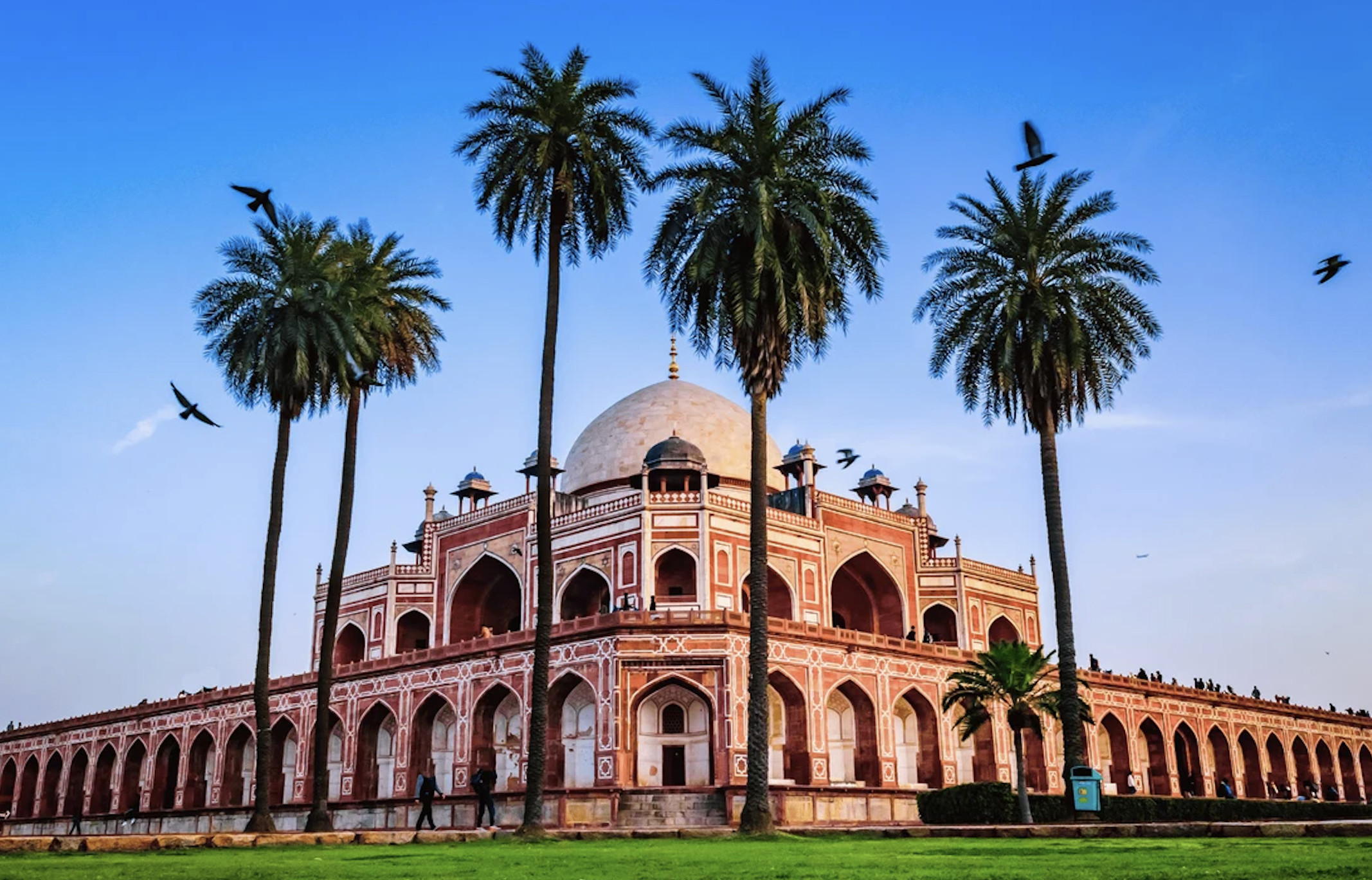
Humayun's Tomb is a magnificent historical monument located in Delhi, India. It is a UNESCO World Heritage Site and is considered to be one of the finest examples of Mughal architecture.
The tomb was built in the mid-16th century in memory of the Mughal Emperor Humayun, who ruled over the Indian subcontinent. It was commissioned by his widow, Empress Bega Begum, and designed by the Persian architect Mirak Mirza Ghiyas. Construction began in 1565 and was completed in 1572.
The structure is a combination of Persian and Indian architectural styles, featuring a grand dome, intricate marble lattice work, and beautiful gardens surrounding the tomb. The tomb itself is made of red sandstone and white marble, symbolizing the opulence and splendor of the Mughal dynasty.
Humayun's Tomb served as an inspiration for the iconic Taj Mahal, which was built later and is also a symbol of eternal love.
5
Stop 5
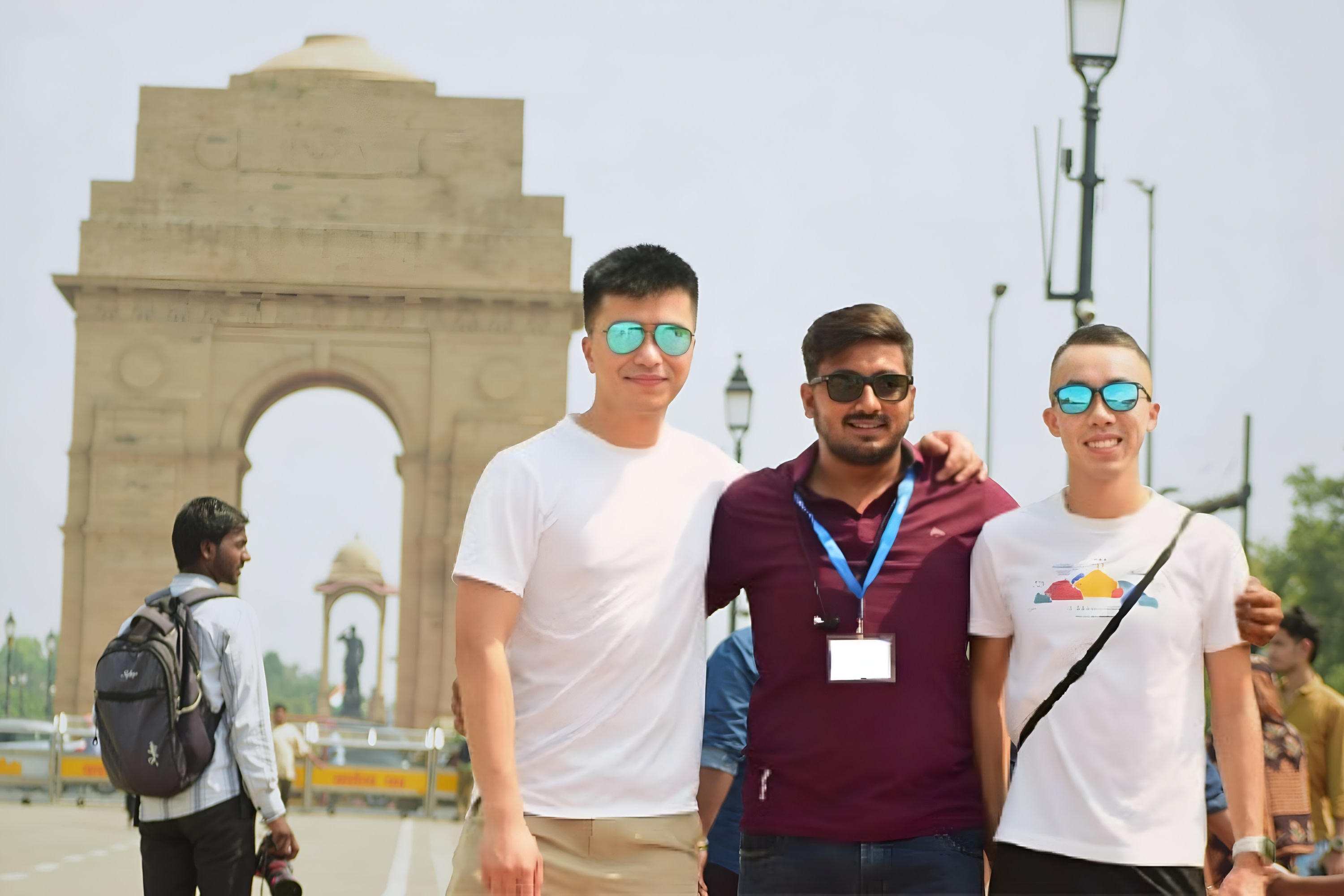
India Gate is an iconic war memorial located in New Delhi, the capital city of India. It is one of the most famous landmarks in the country and holds significant historical and national importance. The monument was designed by Sir Edwin Lutyens and was built in the early 20th century to honor the soldiers of the British Indian Army who lost their lives during World War I and the Third Anglo-Afghan War.
The India Gate stands at approximately 42 meters (138 feet) tall and is a massive archway made of red sandstone. Its architecture is a blend of both British and Indian styles. The arch is adorned with intricate carvings and inscriptions of the names of over 13,000 soldiers who died in various conflicts during the early 20th century.
6
Stop 6
Akshardham Temple, also known as Swaminarayan Akshardham, is a magnificent Hindu temple complex located in Delhi, India. It is one of the largest and most spectacular temples in the world. The temple was officially opened to the public on November 6, 2005
Architecture: The temple complex is built in the traditional architectural style of ancient Indian temples, showcasing exquisite craftsmanship and intricate stone carvings. It follows the principles of Vastu Shastra and showcases a blend of architectural styles from different regions of India.
Main Monument: The central monument of the temple complex is dedicated to Bhagwan Swaminarayan, the founder of the Swaminarayan tradition of Hinduism. It houses a 3.5-meter-tall gilded statue of Bhagwan Swaminarayan as the main deity.
Exhibitions: Akshardham Temple is renowned for its exhibitions that depict various aspects of Indian culture, spirituality, and history.
7
Depart from Delhi to Agra, which is approximately a 4-hour drive.
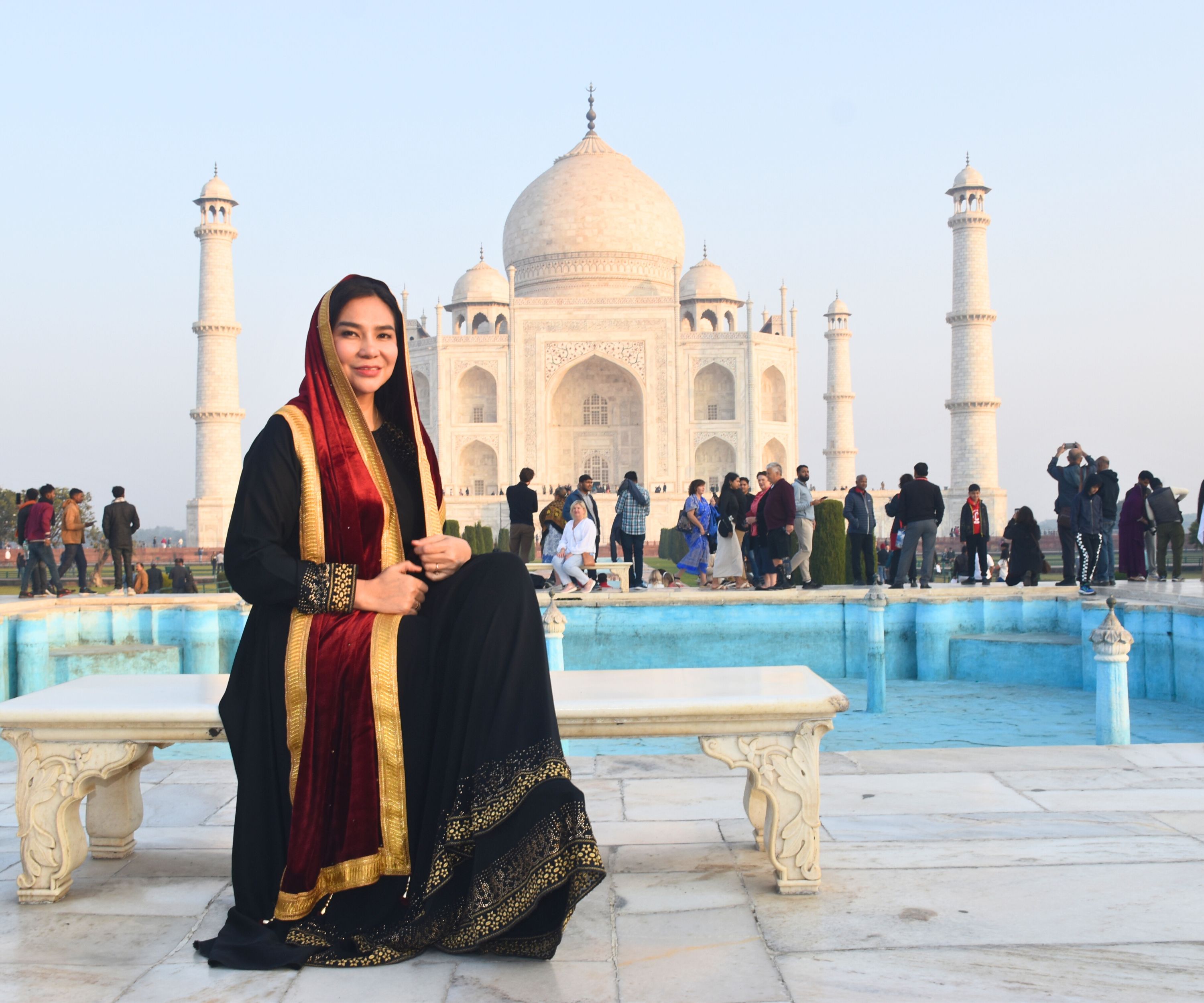
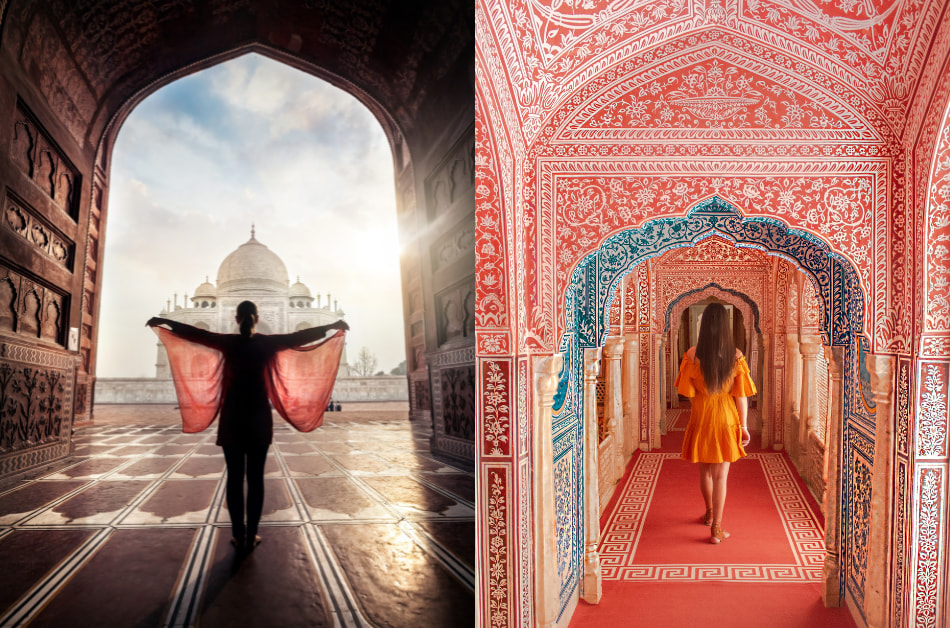
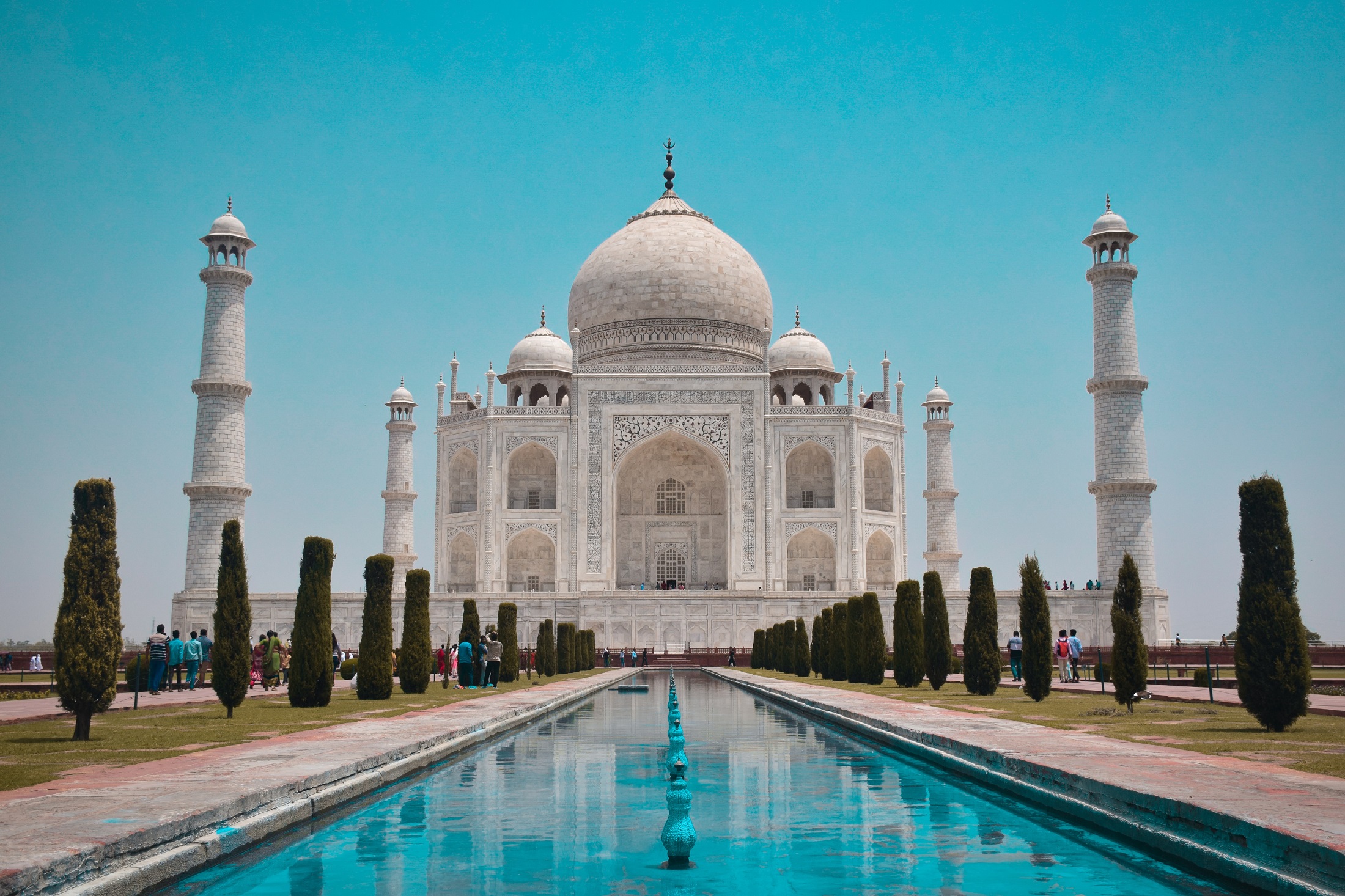
Visit the iconic Taj Mahal, a UNESCO World Heritage site and one of the Seven Wonders of the World.
The Taj Mahal's timeless beauty and romantic history continue to captivate people, making it a symbol of India's rich cultural heritage and an enduring testament to the power of love. It is an awe-inspiring monument that remains a must-visit destination for travelers and history enthusiasts alike.
Explore the Agra Fort, a massive red sandstone fort offering stunning views of the Taj Mahal. The fort is a UNESCO World Heritage Site and is renowned for its impressive architecture.
If time permits, visit Itmad-ud-Daulah's Tomb, also known as the "Baby Taj."
Also In evening Visiting Mehtab Bagh is a unique and memorable experience, offering an alternative perspective of the Taj Mahal and a tranquil escape from the hustle and bustle of Agra city. It is an excellent spot for photography enthusiasts and nature lovers.
8
Stop 8
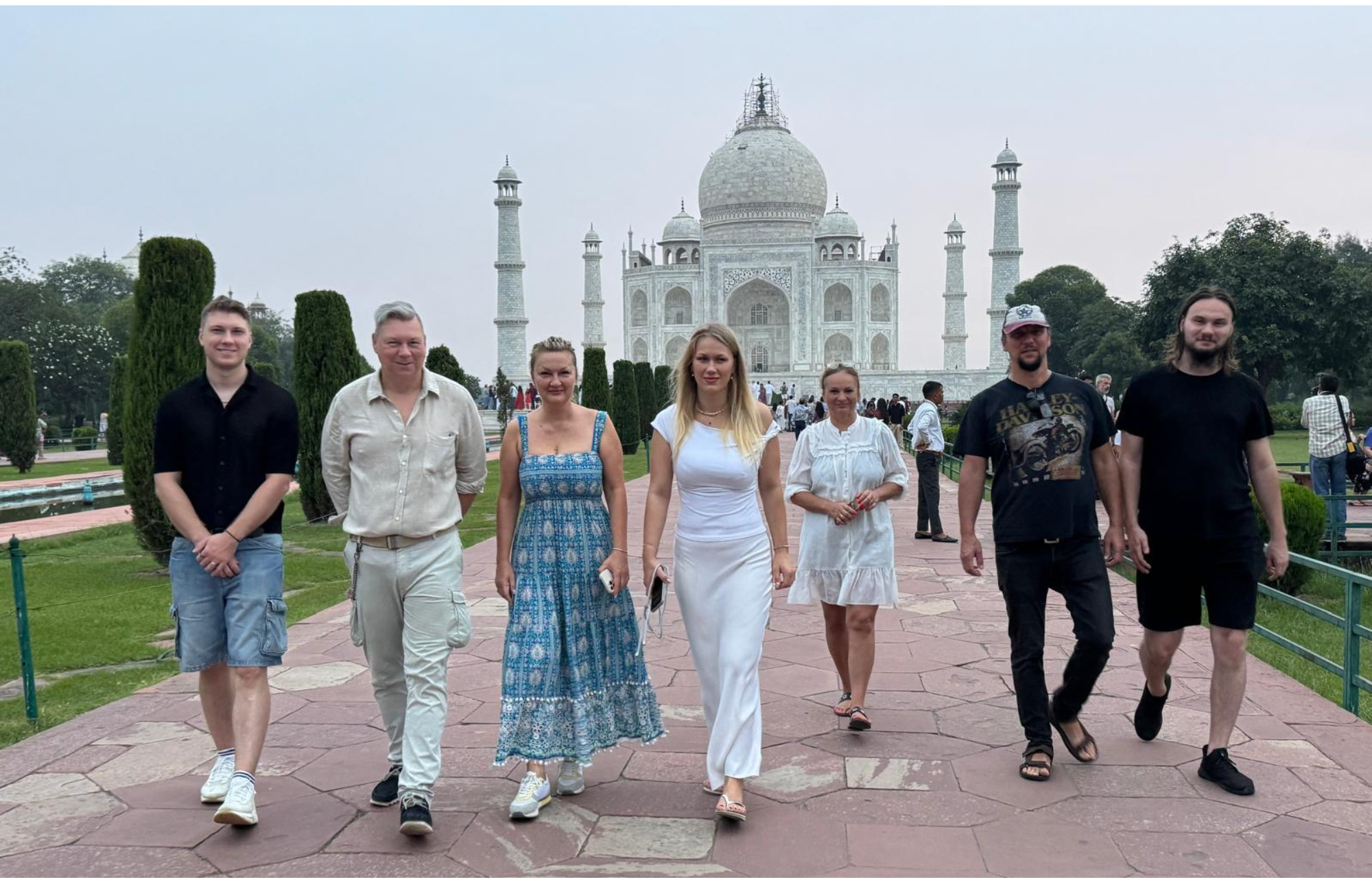
The Taj Mahal is an iconic white marble mausoleum located in Agra, India. It was built by the Mughal Emperor Shah Jahan in memory of his beloved wife, Mumtaz Mahal, who passed away in 1631. Completed in 1653, the Taj Mahal is a masterpiece of Mughal architecture, known for its symmetrical design, intricate carvings, and exquisite beauty. It is a symbol of eternal love and is recognized as one of the world's most stunning and famous monuments.
9
Stop 9
Agra Fort is a historic fortress located in Agra, Uttar Pradesh, India. It was built by the Mughal Emperor Akbar in the mid-16th century and served as the main residence of the Mughal emperors until the capital was shifted to Delhi. The fort is a UNESCO World Heritage Site and is renowned for its impressive architecture and historical significance.
10
Stop 10
Itmad-ud-Daula, also known as the "Baby Taj," is a Mughal mausoleum located in Agra, India. It was built by Empress Nur Jahan, the wife of Emperor Jahangir, for her father, Mirza Ghiyas Beg, who held the title "Itmad-ud-Daula," meaning "Pillar of the State."
Construction of the mausoleum began in 1622 and was completed in 1628. It is renowned for its intricate marble inlay work and delicate carvings, foreshadowing the design elements later seen in the Taj Mahal.
The tomb stands on a raised platform and features a square-shaped structure topped with a dome. The exterior is adorned with intricate floral patterns, geometric designs, and Persian inscriptions.
Inside, the main chamber houses the cenotaphs of Mirza Ghiyas Beg and his wife, Asmat Begum. The walls are adorned with exquisite pietra dura (marble inlay) work, creating a visually stunning effect
11
Stop 11
Mehtab Bagh, also known as the Moonlight Garden, is a historical garden complex located on the opposite bank of the Taj Mahal in Agra, India.
Mehtab Bagh is a serene Mughal garden situated on the northern side of the Yamuna River, just across from the iconic Taj Mahal. The garden was built by Emperor Babur in the early 16th century and later restored during the reign of Emperor Shah Jahan, who commissioned the construction of the Taj Mahal.
The primary purpose of Mehtab Bagh was to provide a breathtaking view of the Taj Mahal from across the river. It was designed as a charbagh, a typical Persian-style garden with a quadrilateral layout divided into four parts by walkways or waterways. The garden is symmetrically aligned with the Taj Mahal, and it is said that it was intended to serve as the moonlit pleasure garden for the emperor and his family during the full moon nights, hence the name "Moonlight Garden."
12
Agra is a treasure trove of handicraft art, with skilled artisans adept in various crafts. One of the notable handicrafts is the intricate Zardozi embroidery, where metallic threads, particularly gold and silver, are used to embellish fabrics, textiles, and clothing. This art form has been cherished for centuries and adorns garments, accessories, and home furnishings. The city's leatherwork is also highly regarded, producing fine leather shoes known as "Mojari" or "Juti." These shoes are often embellished with embroidery and come in a wide array of designs and colors.
Agra's artisans are also known for their brassware, creating stunning decorative items using traditional methods like casting and metalwork. Brass vases, candle holders, and figurines showcase the artisans' skills and creativity.
Moreover, Agra's handicraft tradition includes exceptional woodwork, textiles with block printing and tie-dye techniques, and various forms of artwork reflecting the city's cultural heritage.
13
Stop 13
Fatehpur Sikri sightseeing
On your way to Jaipur, make a detour to Abhaneri, which is around a 2-hour drive from Agra.
Explore the ancient village of Abhaneri and visit Chand Baori, an impressive stepwell known for its intricate architecture.
After visiting Abhaneri, continue your journey to Jaipur, which is approximately a 3-hour drive from there.
14
Discover the "Pink City" of Jaipur, known for its rich history and vibrant culture.
Visit the magnificent Amber Fort, located on a hilltop, and enjoy an elephant or jeep ride up the fort's ramparts.
Explore the City Palace, which houses several palatial structures and a museum displaying royal artifacts.
Visit the Hawa Mahal (Palace of Winds), an iconic landmark known for its unique architecture.
Jantar Mantar is an astronomical observatory with fascinating instruments.
Indulge in some shopping at Jaipur's bustling markets, famous for textiles, jewelry, and handicrafts.
15
Amber Fort, also known as Amer Fort, is a majestic historical fortress located in Amer, a town near Jaipur, the capital city of the Indian state of Rajasthan. The fort is situated on a hilltop, overlooking the Maota Lake. It is one of the most famous and well-preserved forts in Rajasthan, and it holds great historical and architectural significance.
Architecture: The fort's architecture is a stunning blend of Rajput and Mughal styles, reflecting the cultural and artistic influences of both periods. The intricate carvings, decorative elements, and beautiful marble and red sandstone structures make it a remarkable sight to behold.
Elephant Rides: Visitors to Amber Fort often have the opportunity to enjoy elephant rides that take them up to the main entrance of the fort.
16
Stop 16
The City Palace Jaipur is a magnificent palace complex located in the heart of the Pink City (Jaipur). It was built in the early 18th century and served as the seat of the Maharaja of Jaipur, the head of the Kachwaha Rajput clan. The palace is a remarkable blend of Rajput, Mughal, and European architectural styles.
Architecture: The palace boasts impressive courtyards, gardens, and a series of palatial structures with intricate artwork and designs.
Chandra Mahal: This is one of the most prominent buildings within the complex. It is a seven-storied structure, with each floor having a distinct name and purpose. The top floor, Mukut Mahal, offers breathtaking views of the city.
Diwan-i-Khas and Diwan-i-Aam: These are the audience halls where the Maharaja used to address the public and hold meetings.
17
Stop 17
Hawa Mahal, also known as the "Palace of Winds," is a famous landmark and architectural marvel located in the heart of Jaipur, Rajasthan, India. It is one of the most iconic structures in the Pink City and a must-visit attraction for tourists.
Architecture: Built-in 1799 by Maharaja Sawai Pratap Singh, the Hawa Mahal is a five-story high, red and pink sandstone structure. Its unique architecture is designed to resemble the shape of Lord Krishna's crown or the crown of the Hindu god Vishnu. The facade of the palace features 953 small windows, called jharokhas, which are intricately designed with latticework to allow cool air to circulate through the building, hence the name "Palace of Winds."
the Hawa Mahal is a magnificent architectural gem that showcases the rich history and culture of Jaipur and Rajasthan. It continues to be a major draw for tourists and history enthusiasts, offering a glimpse into the royal past and the unique lifestyle of the bygone era.
18
Stop 18
Jantar Mantar is an astronomical observatory located in Jaipur, Rajasthan, India. It was built in the early 18th century by Maharaja Sawai Jai Singh II, a keen astronomer and mathematician. Jantar Mantar is one of the five similar observatories constructed by Jai Singh II in different cities across North India during that era.
The observatory features a collection of nineteen large-scale architectural instruments designed to observe and measure various celestial phenomena such as time, the position of stars, planets, and the sun's movement. These instruments are made predominantly of stone and marble and display a remarkable fusion of Indian, Islamic, and European architectural styles.
The most prominent instrument at Jantar Mantar is the Samrat Yantra, a massive sundial that stands 27 meters (89 feet) tall. It is considered the world's largest sundial and can accurately measure time to an impressive precision of two seconds.
19
The gems market involves the buying and selling of various gemstones, including diamonds, rubies, emeralds, sapphires, and many others. The global gems market is influenced by factors such as demand and supply dynamics, economic conditions, consumer preferences, and changes in fashion and design trends. High-quality gemstones, especially rare and unique ones, tend to command premium prices.
In recent years, the gems market has been impacted by ethical sourcing concerns, as consumers show increased interest in knowing the origin of gemstones to ensure they are responsibly and sustainably mined. This has led to the rise of initiatives promoting transparency in the supply chain.
20
Stop 20
Pass by
Early in the morning , you will be transferred back to Delhi, From where you will be transferred to the International Airport for your departure.
What's not included
Gratuities
Accommodation
Food: Lunch, Breakfast and Dinner
Paid entry tickets for monuments
Available languages
Guide guide
DE
CMN
JA
EN
ZH-CN
IT
FR
ES
Reviews breakdown
Viator
5.0
2 reviews
5★
2
4★
0
3★
0
2★
0
1★
0
Tripadvisor
4.9
58 reviews
5★
55
4★
3
3★
0
2★
0
1★
0
Important information
Wheelchair accessible
Public transportation options are available nearby
Infants are required to sit on an adult’s lap
Transportation options are wheelchair accessible
All areas and surfaces are wheelchair accessible
Not recommended for travelers with spinal injuries
Not recommended for pregnant travelers
Not recommended for travelers with poor cardiovascular health
Suitable for all physical fitness levels
About Jaipur
Jaipur, the capital of Rajasthan, is a vibrant city known for its rich history, stunning architecture, and colorful culture. As the first planned city of India, it offers a unique blend of traditional Rajasthani heritage and modern amenities, making it a must-visit destination for travelers.
Top Attractions
Amber Fort
Amber Fort is a majestic fort located on a hilltop overlooking Maota Lake. It is known for its stunning architecture, intricate carvings, and historical significance.
Historical
2-3 hours
INR 250 (foreigners), INR 50 (Indians)
Hawa Mahal
Hawa Mahal, or the Palace of Winds, is a five-story pyramidal structure made of red and pink sandstone. It is famous for its intricate latticework and unique architecture.
Architectural
1 hour
INR 50 (foreigners), INR 10 (Indians)
City Palace
City Palace is a complex of courtyards, gardens, and buildings that served as the seat of the Maharaja of Jaipur. It is known for its stunning architecture and rich history.
Historical
2-3 hours
INR 700 (foreigners), INR 70 (Indians)
Jantar Mantar
Jantar Mantar is a collection of architectural astronomical instruments built by Maharaja Sawai Jai Singh II. It is a UNESCO World Heritage Site and a testament to India's rich scientific heritage.
Historical
1-2 hours
INR 50 (foreigners), INR 10 (Indians)
Nahargarh Fort
Nahargarh Fort is a majestic fort located on the edge of the Aravalli Hills. It offers panoramic views of the city and is known for its historical significance and architectural beauty.
Historical
1-2 hours
INR 50 (foreigners), INR 10 (Indians)
Must-Try Local Dishes
Dal Baati Churma
A traditional Rajasthani dish made of lentils (dal), baked wheat balls (baati), and sweet crumbled wheat (churma).
Main Course
Vegetarian
Laal Maas
A spicy meat curry made with mutton or goat, cooked in a rich gravy made with red chilies and spices.
Main Course
Non-vegetarian
Ghewar
A traditional Rajasthani sweet made of flour, ghee, and sugar, deep-fried to a golden brown color and soaked in sugar syrup.
Dessert
Vegetarian
Popular Activities
Hot air ballooning
Trekking in the Aravalli Mountains
Wildlife safaris in Ranthambore National Park
Spa and wellness treatments
Yoga and meditation retreats
Leisurely walks in the Pink City
Visiting historic forts and palaces
Exploring local markets and bazaars
Best Time to Visit
October to March
This is the best time to visit Jaipur as the weather is pleasant and ideal for sightseeing. The cool temperatures make it comfortable to explore the city's attractions.
15°C to 30°C
59°F to 86°F
Practical Information
Language
- Official: Hindi
- Widely spoken: English, Rajasthani
- English: Moderately spoken
Currency
Indian Rupee (INR)
Time Zone
IST (GMT+5:30)
Electricity
230VV, 50HzHz
Safety Information
Overall Safety Rating: Generally safe
Jaipur is generally safe for travelers, with a low crime rate and friendly locals. However, as with any destination, it is important to take precautions and be aware of your surroundings.
Important Precautions:
- • Use trusted transportation options
- • Be cautious of your belongings in crowded areas
- • Avoid drawing unnecessary attention to yourself
Getting there
By air
- Jaipur International Airport • 13 km from city center
By train
Jaipur Junction
By bus
Sindhi Camp Bus Stand, Narayan Singh Circle Bus Stand
Getting around
Public transport
Buses are the most common mode of public transport in Jaipur. They are affordable but can be crowded.
Taxis
Available • Apps: Ola, Uber
Rentals
Car, Bike, Scooter
Neighborhoods
Pink City
Civil Lines
Bani Park
Day trips
Abu Road
270 km from Jaipur • Full day
Abu Road is a picturesque town nestled in the Aravalli Mountains. It is known for its scenic beauty, lush greenery, and the famous Dilwara Temples.
Ranthambore National Park
180 km from Jaipur • Full day
Ranthambore National Park is a renowned wildlife sanctuary known for its tiger population and diverse flora and fauna. It is a popular destination for wildlife enthusiasts and nature lovers.
Pushkar
150 km from Jaipur • Full day
Pushkar is a sacred town known for its ancient temples, holy lake, and vibrant markets. It is a popular pilgrimage site and a hub for spiritual seekers and travelers.
Festivals
Jaipur Literature Festival • January
Elephant Festival • March
Gangaur Festival • March/April
Pro tips
- Hire a local guide for a more enriching and personalized experience
- Visit major attractions early in the morning or late in the afternoon to avoid crowds and the heat
- Bargain when shopping at local markets and bazaars, but do so respectfully and politely
- Carry small denominations of cash for local shopping and transportation
- Use app-based transportation services for transparency and convenience
From $25
per person
Price varies by option
Secure booking
Free cancellation available
Instant confirmation