Private Day Tour Gyeongju UNESCO World Heritage From Busan City
Active
8h - 9h
For a full refund, cancel at least 24 hours before the scheduled departure time.
Instant confirmation
Mobile or paper ticket accepted
About this experience
You can feel the history and lifestyle of Korea while looking around cultural heritage, and you can have time to drink tea and take a walk and reflect.
Seokguram Grotto, built in the mid-8th century during the golden age of Unified Silla culture, was completed with advanced architectural techniques based on Buddhist thought and highly developed mathematical principles, and with an excellent sense of form. The grandeur and sublimity we feel from Seokguram Grotto is in this foundation and the harmony inherent within it. Seokguram Grotto is a visible architectural and sculptural reproduction of the moment when Sakyamuni attained enlightenment, and in terms of sculpture, it is full of vitality without artificial techniques or unnaturalness, and it stands out with mature techniques and outstanding artistry. Through the absolute state of enlightenment, the human Sakyamuni becomes the metaphysical being Sakyamuni Buddha, and the secular world becomes an ideal world called the Dharma Realm.
Available options
5 upnto 7 person Tour
Duration: 8 hours<br/>Jumbontaxi tour <br/>5 up to 7 person tour : With Jumbo taxi best Driver<br/>Pickup included
1person Gyeongju Tour
Duration: 8 hours<br/>Regular taxi <br/>1 person Gyeongju Tour : With Local taxi driver<br/>Pickup included
4 person Gyeongju Tour
With Local Taxi driver<br/>Duration: 8 hours<br/>Regular taxi or Jumbo taxi : Big space taxi or staria mini van <br/>Pickup included
13 up to 15 person Bus tour
Duration: 8 hours: From busan + Gyeongju Tour +Return to Busan city <br/>Big Bus : 18 person seater ~ 43 person seater bus <br/>13 up to 15 person tour: Big bus + driver + Licensed English tour guide <br/>Pickup included
3person Gyeongju Tour
With Local Taxi Driver <br/>Duration: 8 hours<br/>Regular taxi <br/>Pickup included
8~12person Gyeongju Tour
Duration: 8 hours: Relax in round-trip transportation from Busan<br/>Solati Taxi Mini Bus : 12 person seater mini Bus <br/>From 8 up to 12 perso Tour : From busan Gyeongju tour
And Return to Busan city <br/>Pickup included
2 person Gyeongju Tour
With Locar taxi driver <br/>Duration: 8 hours<br/>Regular taxi <br/>Pickup included
What's included
The taxi driver has a lot of foreign tour experience and speaks simple English.
Insurance included
All admission fees are included
Air-conditioned vehicle and parking fee and fuel fee are included
Relax in round-trip transportation from Busan(Busan and Gyeongju Area only )
pick you up from your stay (or airport)& drop you off at your stay or near by after the tour ends
We always provide taxis registered in south of Korea.(All taxis include transportation insurance.)
Detailed itinerary
1
Stop 1
For customers in Busan, we will pick you up 10 minutes before departure and set off on a tour to Gyeongju.
2
Stop 2
Bulguksa Temple Information
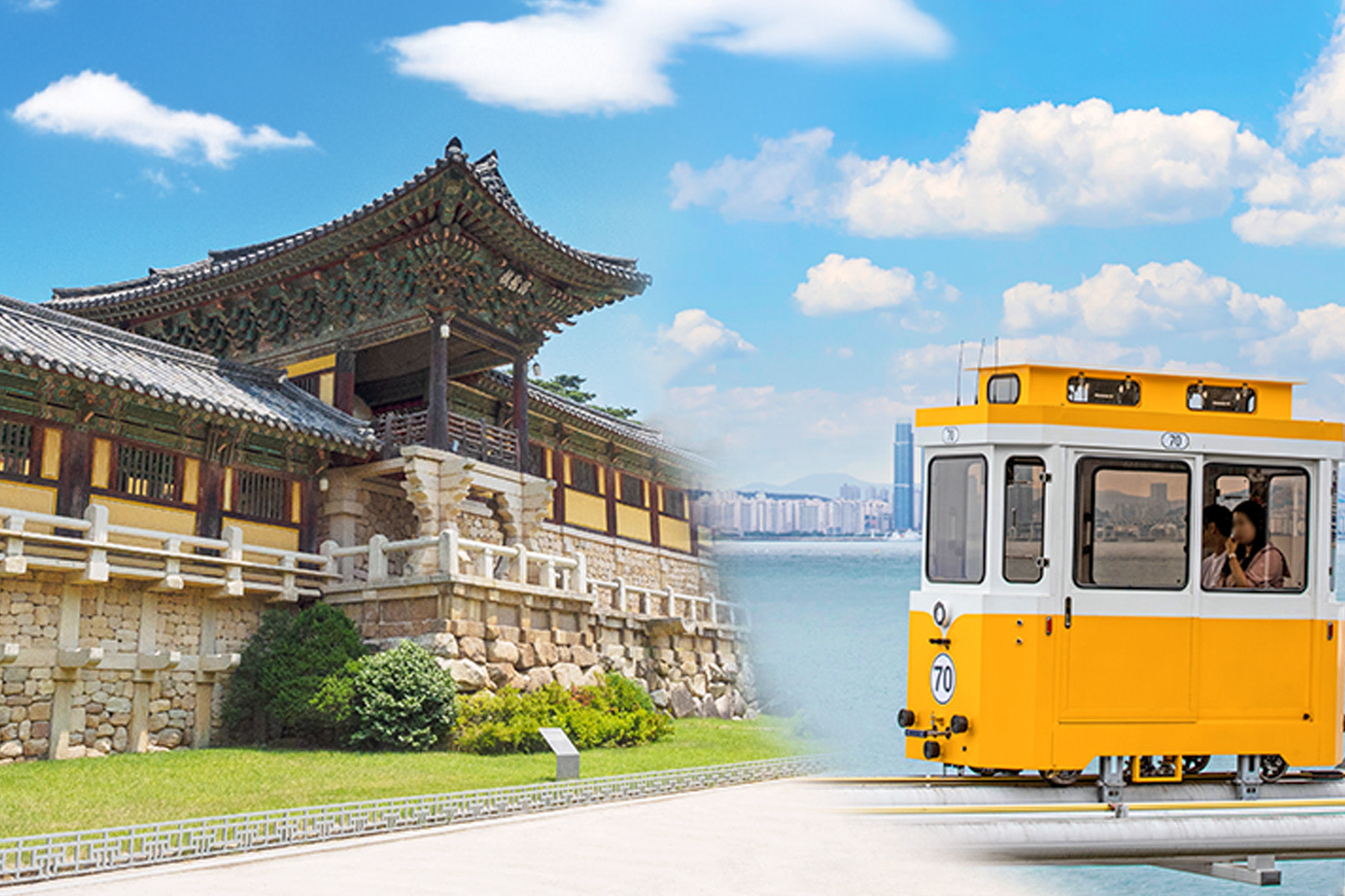
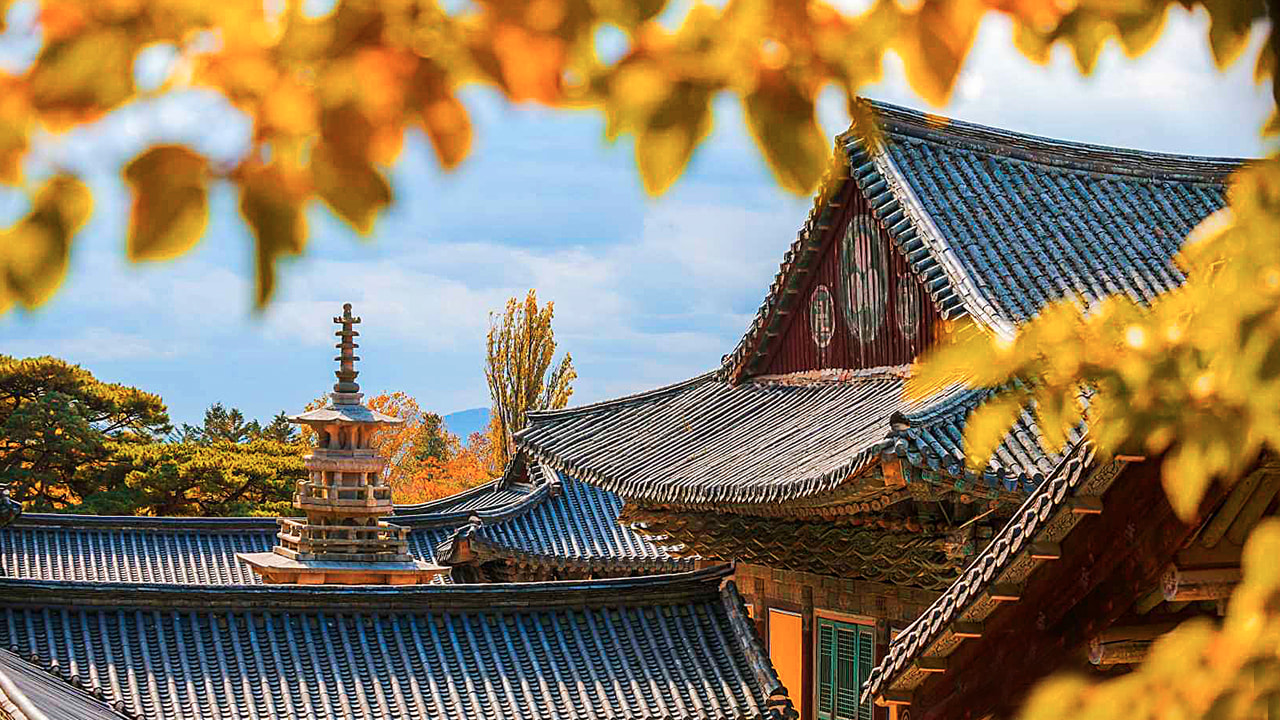
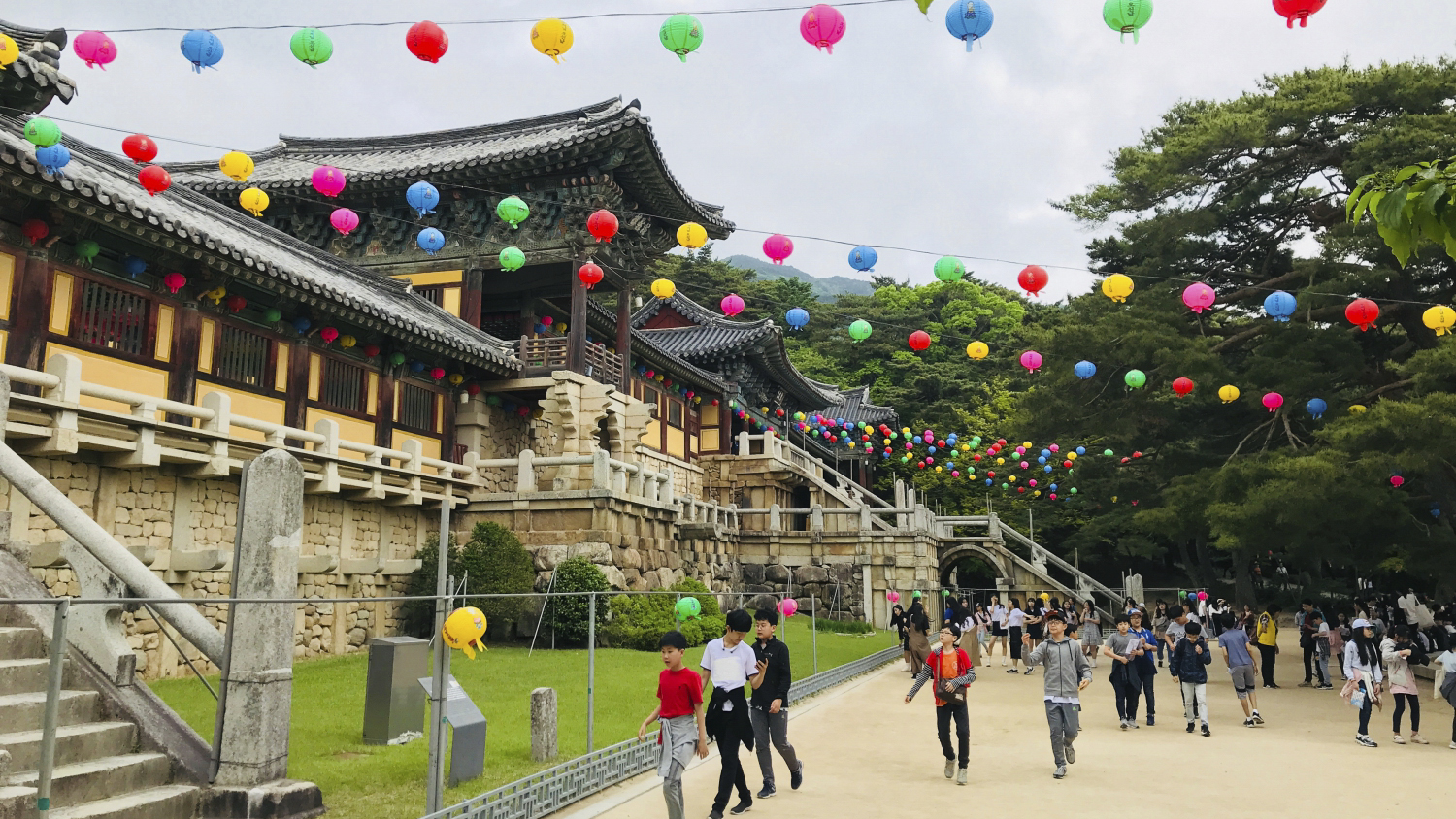
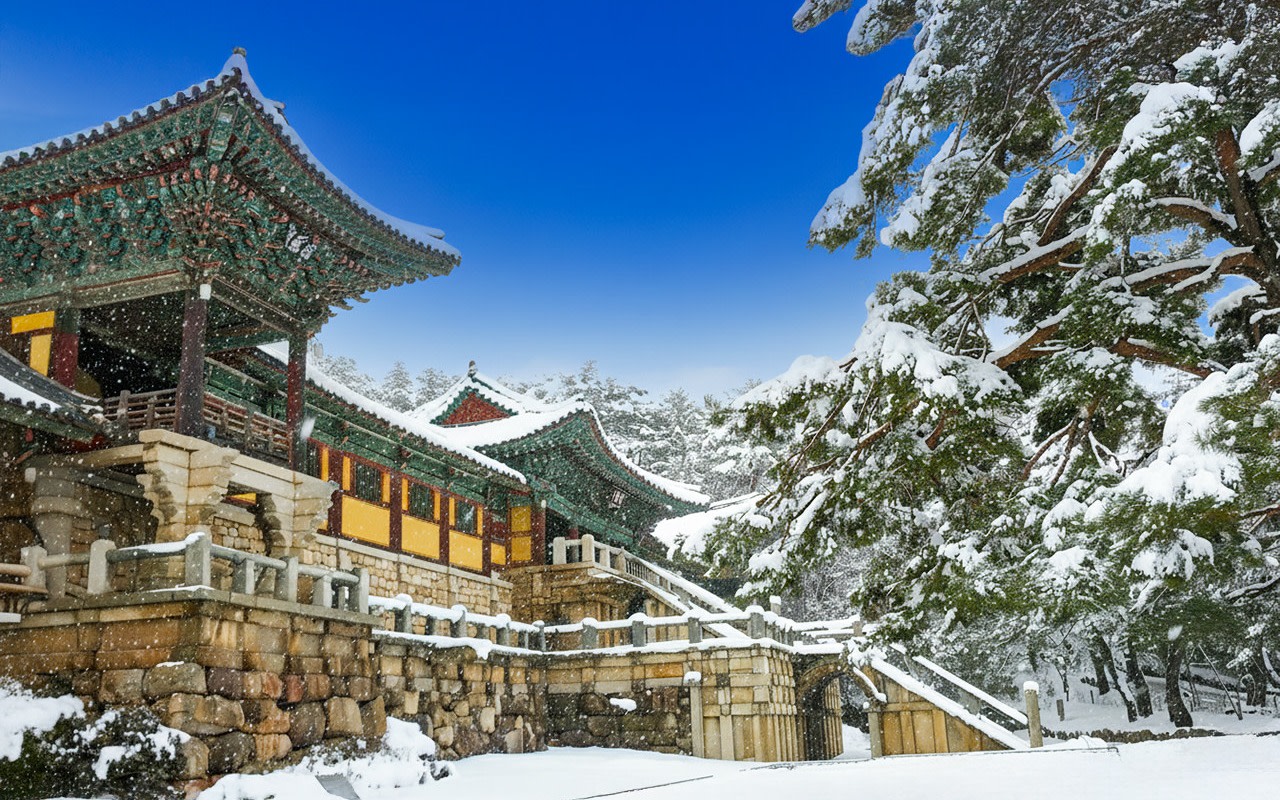
Bulguksa Temple, located on Tohamsan Mountain in Gyeongju, was founded by Kim Dae-seong, who was the prime minister at the time, in the 10th year of King Gyeongdeok's reign (751) and completed in the 10th year of King Hyegong's reign (774).
In the temple grounds, Dabotap, Seokgatap, a three-story stone pagoda, Cheongungyo and Baekungyo leading to Jahamun, and Yeonhwagyo and Chilbogyo leading to Geungnakjeon are designated as national treasures and preserved. These cultural assets provide a glimpse into the outstanding stonework skills of the Silla people at the time. In addition, many cultural assets, including the gilt-bronze Vairocana Buddha Seated in Birojeon and the gilt-bronze Amitabha Buddha Seated in Geungnakjeon, demonstrate the splendid Buddhist culture of the time. In recognition of its value, it was registered as a World Cultural Heritage along with Seokguram Grotto in December 1995.
3
Stop 3
Seokguram Grotto, built in the mid-8th century during the golden age of Unified Silla culture, was completed with advanced architectural techniques based on Buddhist thought and highly developed mathematical principles, and with an excellent sense of form. The grandeur and sublimity we feel from Seokguram Grotto is in this foundation and the harmony inherent within it. Seokguram Grotto is a visible architectural and sculptural reproduction of the moment when Sakyamuni attained enlightenment, and in terms of sculpture, it is full of vitality without artificial techniques or unnaturalness, and it stands out with mature techniques and outstanding artistry. Through the absolute state of enlightenment, the human Sakyamuni becomes the metaphysical being Sakyamuni Buddha, and the secular world becomes an ideal world called the Dharma Realm.
4
Stop 4
Pass by
The World Cultural Heritage
'Yangdong Village' is the largest traditional Hanok village and has a long history. It is a representative noble village in Korea with a history of over 500 years, with the Gyeongju Son Clan and the Yeogang Lee Clan cooperating. It is a historic village with outstanding value in various aspects, such as the size of the village, the state of preservation, the number of cultural assets, and tradition. It is said that Prince Charles of England also visited this place in 1992.
'Yangdong Village' of thatched houses under tiled houses
consists of tiled houses over 500 years old and 110 thatched houses, including upper-class houses from the Joseon Dynasty. As you can see from the Joseon Dynasty's class system, the noble houses are located on high ground, and the servants' houses surround the noble houses on low ground.
5
Stop 5
Cheomseongdae
It is a stone tower with a height of 9.17 m, a base diameter of 4.93 m, and an upper diameter of 2.85 m. It has a square door in the middle facing south, and is built in the shape of a round stone tower with a square shape. Each side of the square on the top points to the east, west, south, and north, and it is claimed that it contained some kind of magical or academic message. This is because the cosmology of the time was a belief that the sky was round and the earth was square, and Cheomseongdae had the opposite shape. There is also a theory that it was a structure to accurately measure the symbolism of celestial bodies and seasonal changes. Some in the Buddhist community claim that it reflects the shape of Mt. Sumeru in Buddhist cosmology. According to Buddhist scriptures, the summit of Mt. Sumeru, Doryecheon, is square.
6
Daereungwon Information
On a large land of 126,500㎡, Daereungwon is home to 23 Silla Dynasty tombs, and there are ancient tomb ruins scattered throughout the area.
It takes time to explore the inside of Daereungwon alone.
The tombs to watch out for are the 13th King Michu's Tomb, the Hwangnamdaechong Tomb with various types of tombs (double tombs) that are left-handed, and Cheonmunchong Tomb that can replace the inside of the tomb.
The painting of the Cheonma, which looks auspicious and cheerful as if the Jade Emperor has come down from the sky to the familiar ground where he used to walk. It is a painting of the 'Cheonma-do' that is drawn to the horse.
There is also a photo zone where a magnolia tree stands between the tombs, just like a painting.
7
Donggung and Wolji information
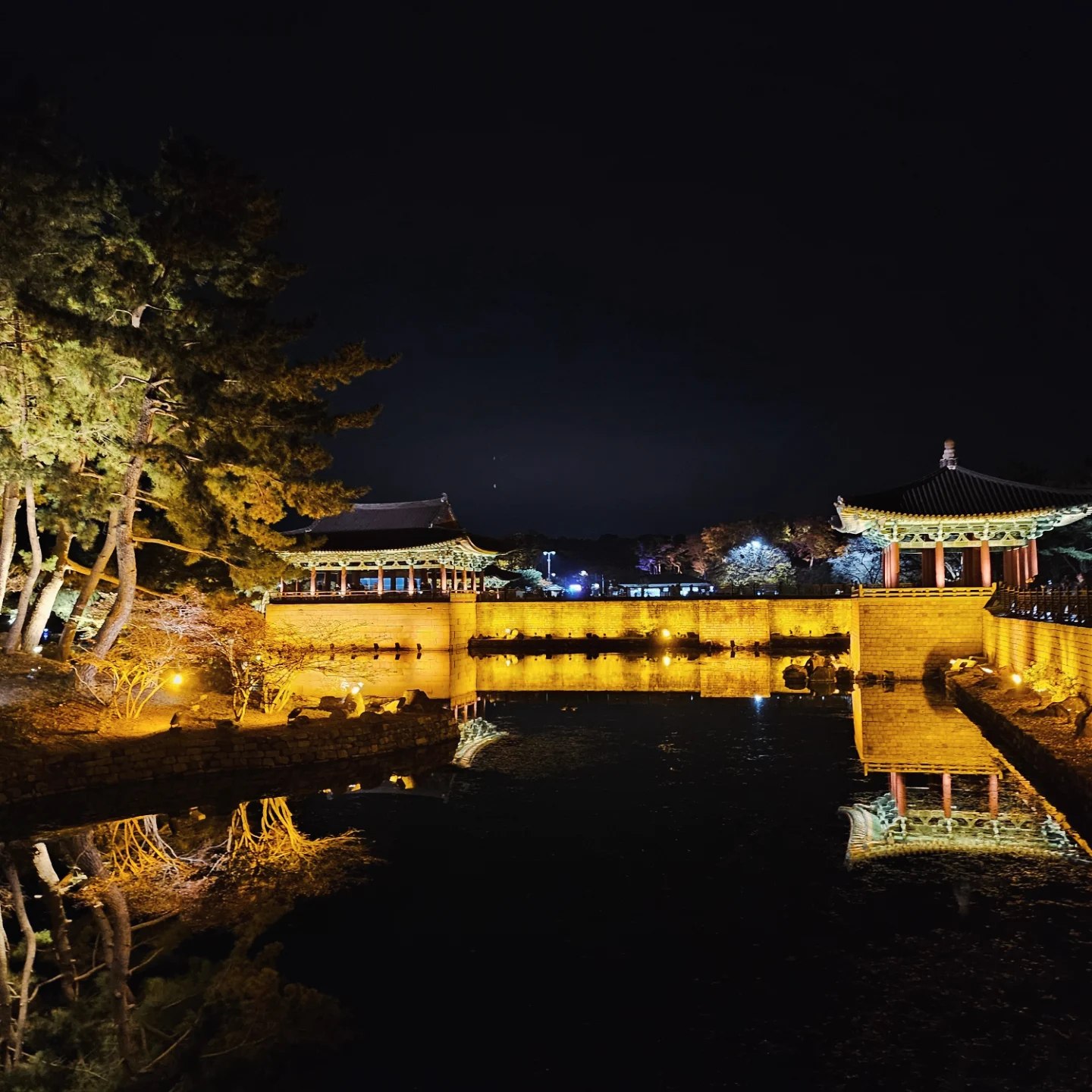
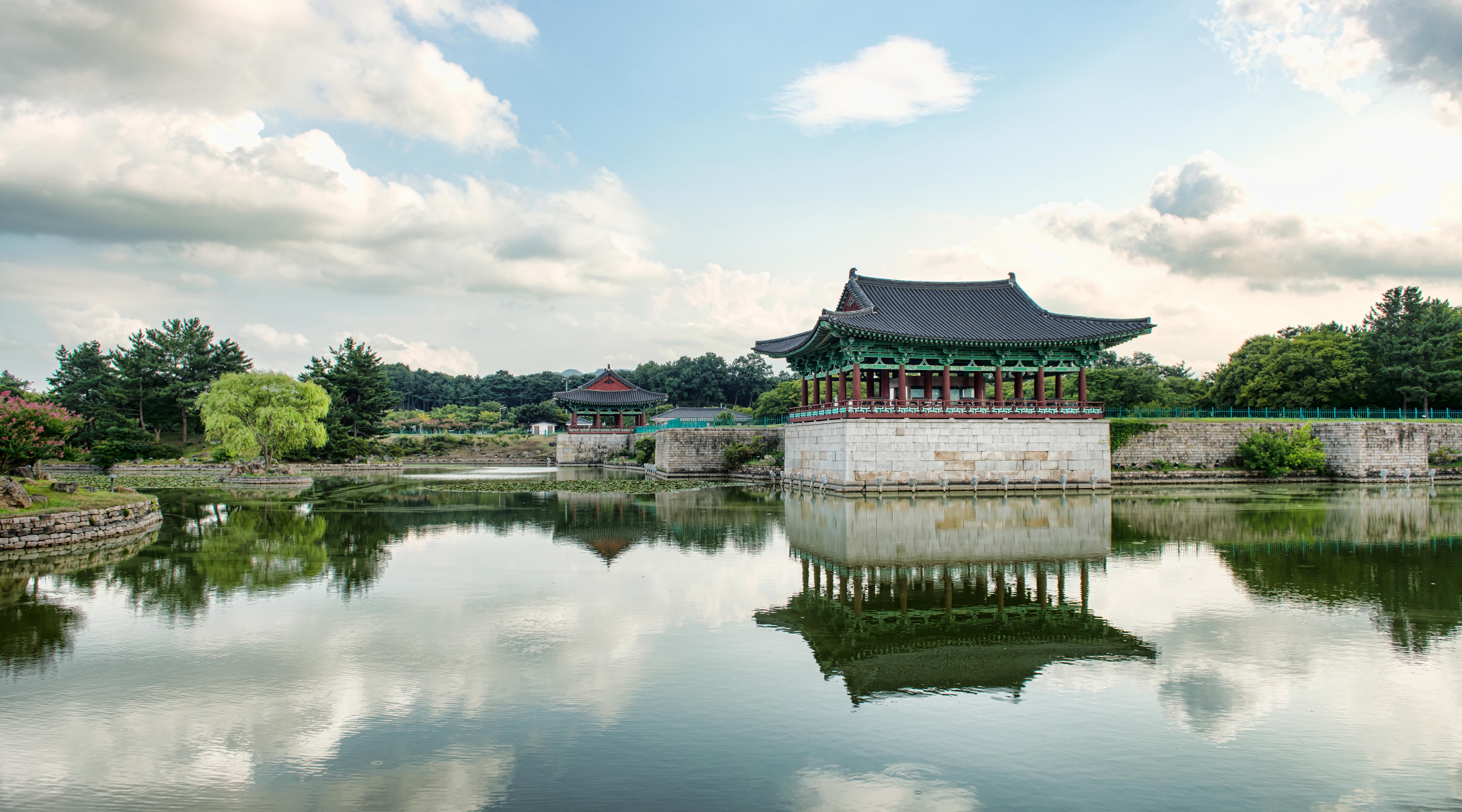
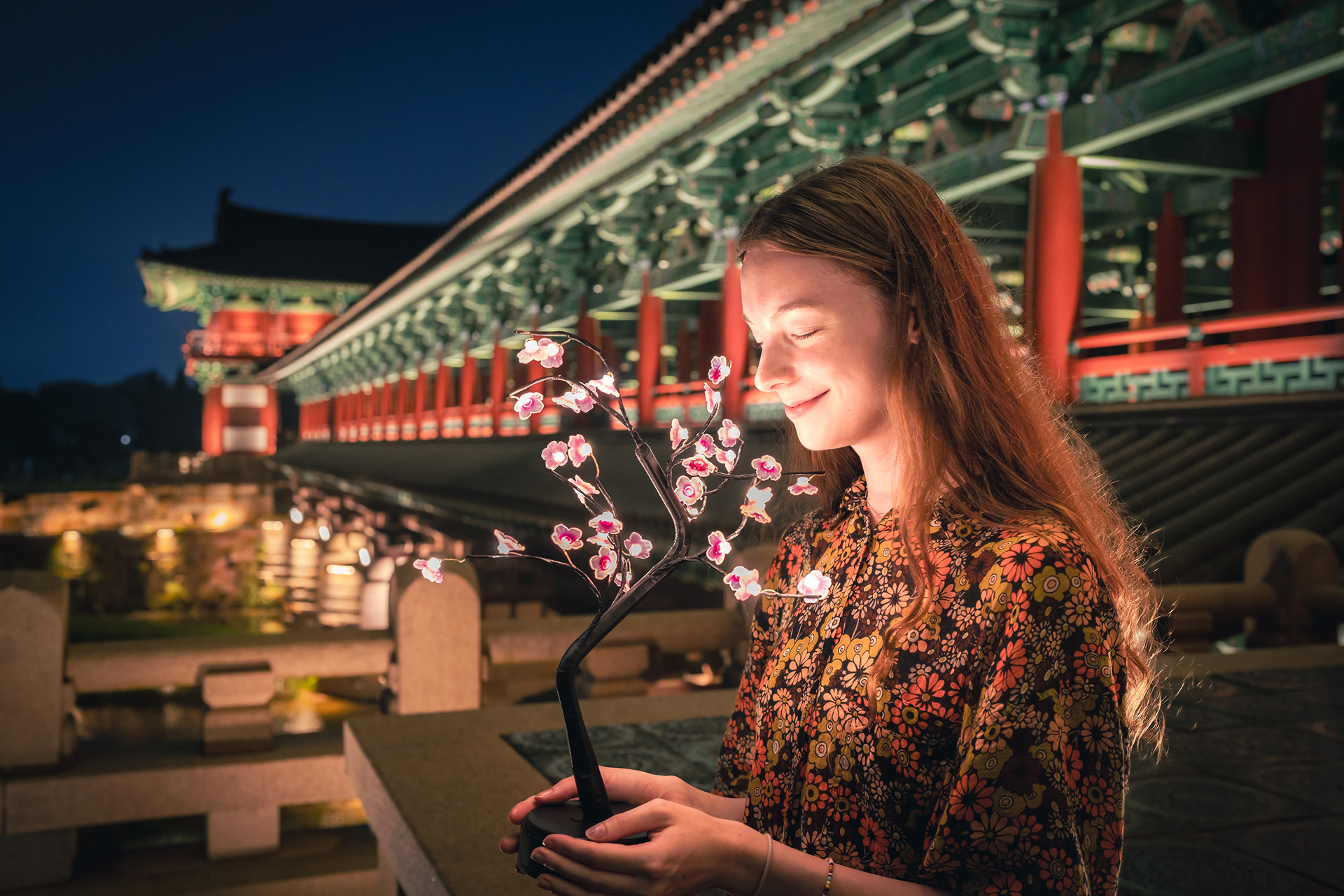
Donggung and Wolji, which are worthy of the title of the best night view in Gyeongju, may be more familiar with the name ‘Anapji’.
During the Joseon Dynasty, this ruined place was called ‘Anapji’ because it was a pond with a flock of geese and ducks. Originally, this was the site of a villa where princes of the Silla Dynasty resided.
Donggung and Wolji show the pinnacle of Silla’s landscaping art.
Wolji, which is 200m long from east to west and 180m long from north to south, has a straight line on the southwest side, while the northeast side is a winding curve.
Because of this, you can’t see the entire pond at a glance from anywhere, giving the impression of an endless sea.
The ‘Imhaejeon (臨海殿)’ used as a performance hall means a pavilion overlooking the sea, so you can guess that the landscaping of the pond Wolji expresses the sea.
8
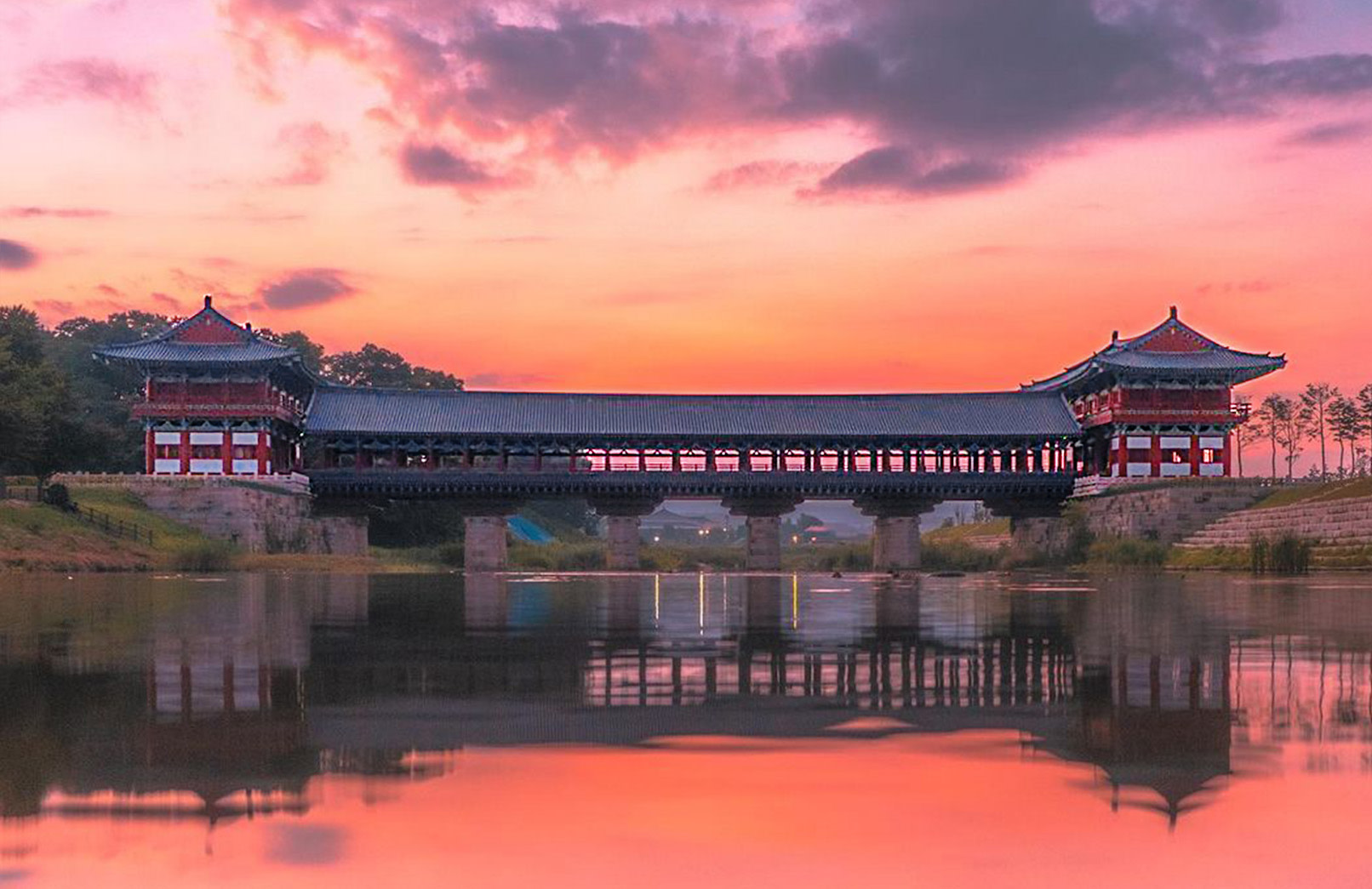
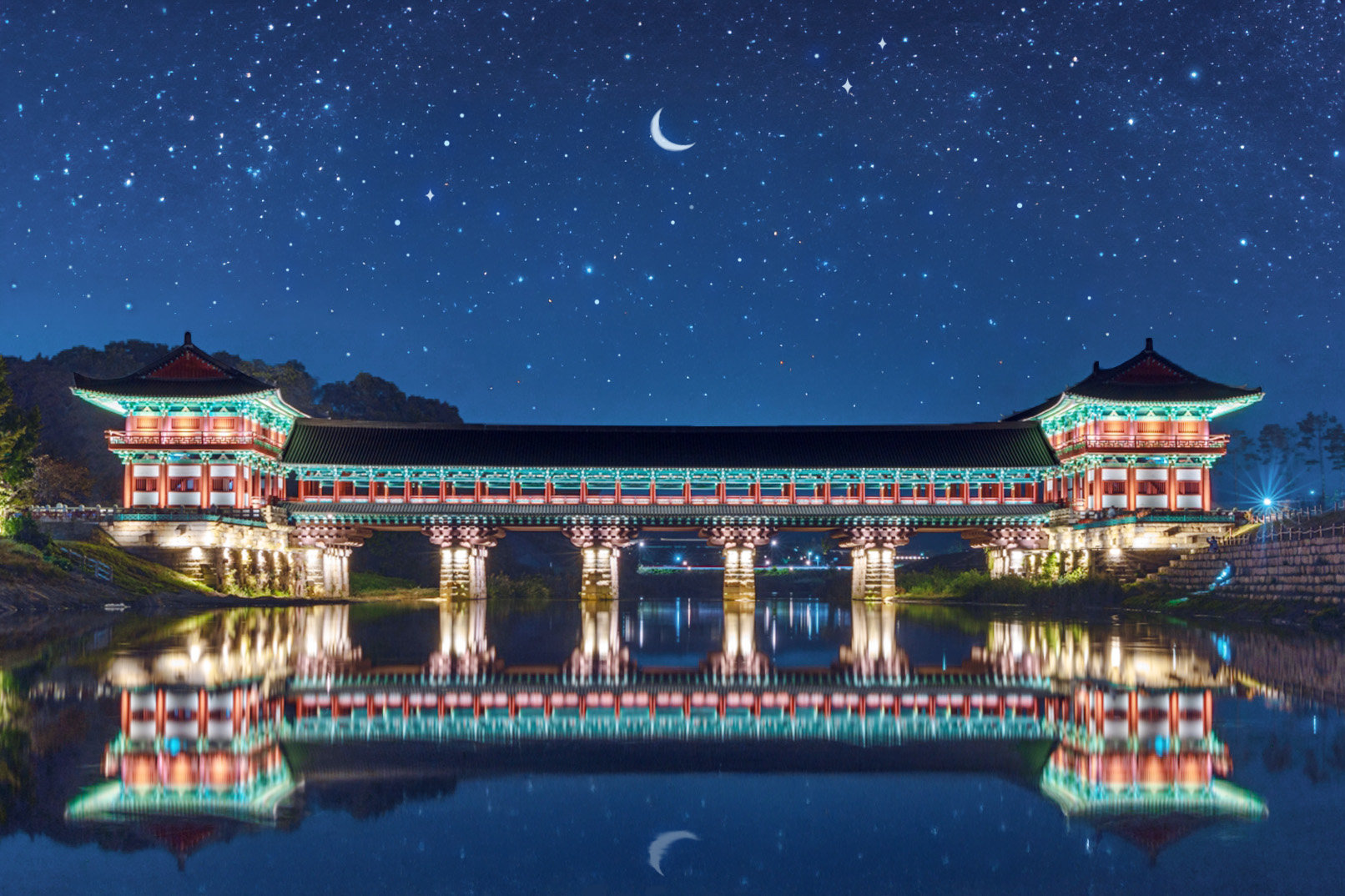
This is a bridge from the Unified Silla period located at 163-1 Gyo-dong, Gyeongju-si, Gyeongsangbuk-do. It was lost during the Joseon period and was restored in April 2018 after much research. According to the Samguk Sagi (History of the Three Kingdoms), it was built in the 19th year of the reign of King Gyeongdeok of the Unified Silla period (760 AD) and served as a connection between Wolseong and Namsan in Gyeongju. Through data collection and excavation surveys for two restoration designs conducted from November 26, 1984 to September 8, 1986, it was confirmed for the first time that there was a wooden bridge, and the restoration of a bridge with a length of 66.15 m, width of 13 m, and height of 6 m was completed through construction from 2008 to 2013. Construction of two gatehouses at each end of the bridge began in April 2016 and was completed in April 2018.
9
Gyeongju Gyochon Traditional Village
Gyeongju Gyochon Village is a village with beautiful hanoks along the stone walls,
and the name ‘Gyochon’ means ‘a village with a hyanggyo.’ The hyanggyo, located at the innermost part of the village, is a cradle of education that has nurtured the nation’s talents for 1,300 years since the establishment of the national school in 682.
The warehouse of the richest family in Gyeongju Gyochon Village, which has been passed down for 12 generations, is known as the largest and oldest wooden granary in existence, capable of storing 800 seok of rice. This granary is a place where the family motto of ‘Make sure no one starves within 100 li’ was put into practice. It is a place where the Joseon version of ‘noblesse oblige’ was practiced, where 100 seok of rice were distributed to poor neighbors during the barley harvest or during a famine.
10
Hwangridan-gil information
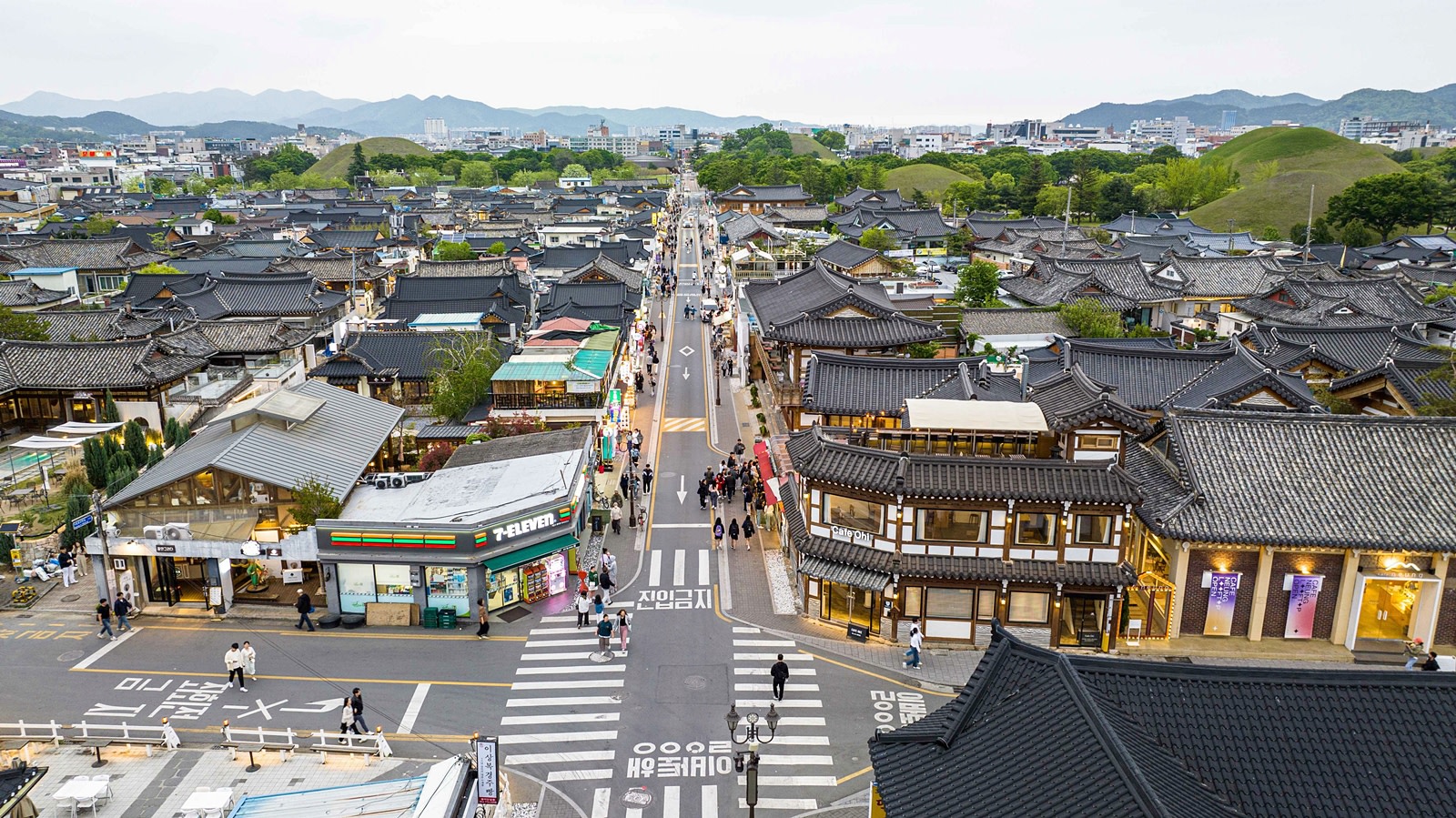
Hwangridan-gil is the youngest street in Gyeongju, and is a combination of Hwangnam-dong and Itaewon's Gyeongridan-gil, meaning 'Hwangnam-dong's Gyeongridan-gil'. It refers to the area of Hwangnam-dong and Sajeong-dong on both sides of the road starting from Naenam Intersection to Hwangnam Elementary School Intersection. It is a street where you can feel the old atmosphere as old buildings from the 1960s and 1970s are preserved as they are. A few years ago, young people began to gather, and cafes with a good atmosphere, cute prop shops, souvenir shops, and unique restaurants opened. In the beginning, stores were centered on the roadside, but as the outer perimeter of Hwangridan-gil expanded, unique stores began to open in every alley. It has become a must-see course for Gyeongju travelers, and it is gaining attention as a famous attraction in Gyeongju as you can visit nearby tourist attractions such as Cheomseongdae and Daereungwon.
11
Silla Millennium
Encounter with History and Culture
Located in Gyeongju, the capital of Silla for a thousand years, the Gyeongju National Museum is a representative museum in Korea where you can see Silla’s cultural heritage at a glance.
The Gyeongju National Museum operates various educational programs, including the Gyeongju Children’s Museum School with a 60-year tradition, and also has a children’s museum. We hope you will start your journey to encounter Silla’s thousand-year history and culture from the Gyeongju National Museum.
Gyeongju has a long history, and since it was the capital so long ago, most of the buildings have been lost, so although there are many historical sites, there are not many spectacular sights to catch the eyes of tourists. However, most of the magnificent artifacts, such as gold crowns, are in the museum, so it is one of the tourist courses that tourists always visit when they visit Gyeongju.
12
The Gyeongbuk Millennium Forest Garden, located at the foot of Dongnamsan Mountain in Gyeongju, has the Gyeongbuk Forest Environment Research Institute to the west of the road and forests, paths, streams, and gardens to the east. If you follow the Metasequoia Forest Path, you will first come across the Mirror Forest. It is named after the clear stream that reflects its appearance like a mirror when you stand on the single-log bridge. Next, you will come across the fountain garden, rock garden, cloud waterfall, and Seorabeol Garden with a floor fountain, and finally the willow pond garden. Each area is planted with various trees and flowers, so each area has different spatial characteristics and you can enjoy the changes according to the season. It is easy to walk and a great place to relax in the forest, and it takes about 30 minutes to 1 hour.
13
Stop 13
After finishing the Gyeongju World Cultural Heritage Tour, it is time to return to Busan.
What's not included
Gratuities/ food and Drinks /personal Expenses
Available languages
Guide guide
EN
Written guide
EN
Important information
Infants are required to sit on an adult’s lap
Specialized infant seats are available
Not recommended for travelers with spinal injuries
Not recommended for travelers with poor cardiovascular health
Not recommended for pregnant travelers
Public transportation options are available nearby
Infants and small children can ride in a pram or stroller
Wheelchair accessible
Travelers should have at least a moderate level of physical fitness
We will try our best to show you as many Jeju tourist attractions as possible in one day.
For lunch, we decide on a restaurant after discussing with the customer, taking into account the menu they want.
Important notes
If you wish to use additional time,
For each additional hour, it costs 30.000 KRW (Regular), 40.000 KRW (jumbo), 50.000 KRW (mini bus)
Regarding vehicle dispatch:
During the peak season, if a group of people cannot go on a tour with one vehicle at the same time,
The customer tour is divided into two vehicles.
In the event that the tour cannot proceed with one vehicle,
If the vehicle cannot be arranged, we will notify the customer in advance and proceed with the tour if the customer approves.
For example: 1) For 8-12 minibus customers
Two jumbo taxis (6-8 passengers) and 2 regular taxis (4 passengers) are dispatched for the tour.
For example 2) In the case of 8 customers, jumbo taxi arrangement is not available
2 general taxis (regular taxis) will be dispatched.
For example 3) In case of 15 customers
Dispatch 2 jumbo taxis
If you pick up in Busan and then tour Gyeongju and then go to another city in the remaining country to end the tour, a separate transportation fee will be applied.
About Busan
Busan, South Korea's second-largest city, is a vibrant coastal metropolis known for its stunning beaches, fresh seafood, and unique cultural heritage. Nestled between mountains and the sea, Busan offers a dynamic blend of modern urban life and traditional charm, making it a must-visit destination in South Korea.
Top Attractions
Haeundae Beach
One of the most famous beaches in South Korea, Haeundae Beach is known for its beautiful coastline, vibrant atmosphere, and water sports. It's a popular spot for swimming, sunbathing, and enjoying the beachside cafes and restaurants.
Beach
Half day to full day
Free (activities and rentals may cost extra)
Gamcheon Culture Village
Known as the 'Machu Picchu of Busan', Gamcheon Culture Village is a colorful and artistic neighborhood built on a hillside. The village is filled with vibrant murals, installations, and quirky shops, making it a unique and photogenic destination.
Cultural
2-3 hours
Free to explore (some shops and cafes may charge for services)
Busan Tower
Located on Yongdusan Park, Busan Tower offers panoramic views of the city and the sea. The tower is a symbol of Busan and a popular spot for visitors to enjoy the scenery and learn about the city's history.
Historical/Architecture
1-2 hours
KRW 10,000 (adults), discounts for children and seniors
Haedong Yonggungsa Temple
This stunning seaside temple is one of the most famous Buddhist temples in South Korea. Haedong Yonggungsa Temple is known for its beautiful architecture, serene atmosphere, and the unique experience of praying by the sea.
Religious/Cultural
1-2 hours
Free (donations welcome)
Gwangalli Beach
Gwangalli Beach is famous for its beautiful night views and the stunning Gwangan Bridge. The beach is a popular spot for swimming, picnicking, and enjoying the vibrant nightlife, including beach bars and clubs.
Beach/Entertainment
Half day to full day
Free (activities and rentals may cost extra)
Must-Try Local Dishes
Milmyeon
A cold wheat noodle dish served with a spicy seafood broth, topped with various seafood and vegetables. It's a refreshing and flavorful dish, perfect for hot summer days.
Noodle dish
Contains seafood, may not be suitable for those with seafood allergies.
Dwaeji Gukbap
A hearty pork soup made with pork bones, meat, and vegetables, served with rice. It's a comforting and flavorful dish that's popular in Busan.
Pork soup with rice
Contains pork, may not be suitable for vegetarians or those with pork allergies.
Busan-style Sundae
A type of blood sausage made with pork blood, noodles, and various ingredients, grilled and served with soup. It's a unique and flavorful street food that's a must-try in Busan.
Blood sausage
Contains pork and blood, may not be suitable for vegetarians or those with pork allergies.
Ganjang Gejang
A popular seafood dish made with raw crab marinated in soy sauce, garlic, and ginger. It's typically served with rice and vegetables, and is a delicacy in Busan.
Raw crab marinated in soy sauce
Contains raw seafood, may not be suitable for those with seafood allergies or pregnant women.
Popular Activities
Hiking in Geumjeongsan Mountain
Glass-bottom walkway at Oryukdo Skywalk
Water sports at Haeundae Beach
Beach lounging at Haeundae Beach
Spas and saunas in Busan
Picnicking in Yongdusan Park
Visiting Gamcheon Culture Village
Exploring Haedong Yonggungsa Temple
Best Time to Visit
April to June, September to October
The best time to visit Busan is during the spring and autumn months when the weather is mild and pleasant. These months offer ideal conditions for outdoor activities and sightseeing.
15-25°C (59-77°F)
59-77°F
Practical Information
Language
- Official: Korean
- Widely spoken: English (limited)
- English: Limited (especially outside tourist areas)
Currency
South Korean Won (KRW)
Time Zone
Korea Standard Time (KST, GMT+9)
Electricity
220VV, 60HzHz
Safety Information
Overall Safety Rating: Generally safe
Busan is generally a safe city for travelers, with low crime rates and a welcoming atmosphere. However, as with any destination, it's important to be aware of your surroundings and take precautions to ensure a safe and enjoyable trip.
Important Precautions:
- • Be cautious of your belongings in crowded areas, such as markets and public transportation.
- • Use reputable taxi services or ride-hailing apps, such as KakaoTaxi, to avoid scams.
- • Be aware of your surroundings, especially at night, and avoid walking alone in isolated areas.
Getting there
By air
- Busan Gimhae International Airport • 15 km from city center
By train
Busan Station
By bus
Nopodong Bus Terminal, Sasang Bus Terminal
Getting around
Public transport
The Busan Metro is efficient, clean, and easy to use. It consists of four lines that connect major attractions, shopping districts, and residential areas.
Taxis
Available • Apps: KakaoTaxi
Rentals
Car, Bike, Scooter
Neighborhoods
Haeundae
Seomyeon
Gwangalli
Jagalchi
Day trips
Taejongdae
15 km from Busan city center • Half day to full day
Taejongdae is a scenic coastal park located at the southern tip of Yeongdo Island, offering stunning views of the sea, cliffs, and lighthouse. The park is also home to historical sites and walking trails.
Oryukdo Skywalk
10 km from Busan city center • Half day
The Oryukdo Skywalk is a thrilling glass-bottom walkway that extends over the sea, offering breathtaking views of the coastline and the city. The skywalk is a popular attraction for adventure seekers and photography enthusiasts.
Geumjeongsan Mountain
15 km from Busan city center • Full day
Geumjeongsan Mountain is the highest peak in Busan, offering stunning views of the city and the sea. The mountain is home to numerous hiking trails, temples, and historical sites, making it a popular destination for nature lovers and hikers.
Festivals
Busan International Film Festival (BIFF) • October (annually)
Busan Sea Festival • July (annually)
Busan Fireworks Festival • October (annually, during BIFF)
Pro tips
- Visit the Jagalchi Fish Market early in the morning to see the bustling fish auction and enjoy the freshest seafood.
- Try the local street food at the Haeundae Night Market, such as Busan-style Sundae and grilled seafood skewers.
- Explore the colorful and artistic Gamcheon Culture Village, also known as the 'Machu Picchu of Busan', for a unique and photogenic experience.
- Take a stroll along the beautiful Haeundae Beach and enjoy the vibrant atmosphere, especially during the summer months.
- Visit the Busan Tower and Yongdusan Park for stunning views of the city and the sea, especially during sunset or at night.
From $25
per person
Price varies by option
Secure booking
Free cancellation available
Instant confirmation


![[BUSAN,GamcheonVillage] Private Korean Art Painting Class](https://media-cdn.tripadvisor.com/media/attractions-splice-spp-674x446/0f/e6/3f/ac.jpg)


![[Private Tour] Busan and Gyeongju Top Attractions Day Tour](https://res.klook.com/image/upload/activities/pj3cuzsrkoqkakpc0sma.jpg)