Brussels Walking Tour with Audioguide on your Smartphone
Active
3h
For a full refund, cancel at least 24 hours before the scheduled departure time.
Instant confirmation
Mobile or paper ticket accepted
About this experience
The audio guide is a handy mobile companion for a self-guided tour of Brussels. This tour is specifically designed for exploring the city in a short span of 2-3 hours. Simply follow the route on the app's map to stroll through the city center, passing by the main attractions. You're guaranteed to see: The Cathedral, The Royal Palace, The Wall Tower, The Old Masters Museum, The Palace of Justice, The Grand Place, The Statue of the Manneken Pis.
Once you've downloaded the tour, the app functions offline. The audio guide can always be heard clearly through your headphones. Enjoy fascinating stories and legends at your own pace, without the need to keep up with a tour group.
If you only have a few hours to visit Brussels, spend it with the TouringBee audio guide and you won't miss a thing.
Available options
Brussels Walking Tour with Audioguide on your Smartphone
What's included
One-year access to the tour in your preferred language
Audio guide app for iPhone and Android
Illustrations to recognize landmarks
34 audio recordings narrated by a professional historian
Offline map featuring a route for effortless GPS navigation
Detailed itinerary
1
Stop 1
Pass by
Halle Gate (Porte de Hal) is the last surviving gate of Brussels’ 14th-century city wall—a fairy-tale-like medieval tower rising in stark contrast to the modern city around it. Once a fortress, prison, and customs post, today it’s a museum showcasing Brussels' military and urban history, with armor, weapons, and sweeping views from the upper ramparts. Its round turrets and pointed roof evoke a time of knights and siege warfare. Step inside, and the echo of hooves and heraldry still lingers in the stone.
2
Stop 2
Jeu de Balle Square (Place du Jeu de Balle) in Brussels is best known for its daily flea market, where treasures and oddities spill from stalls and blankets — vinyl records, antique clocks, mismatched china, military jackets, and the occasional mystery item. Located in the heart of the Marolles district, the square hums with a mix of locals, bargain hunters, and curious wanderers. Surrounded by vintage shops and lively cafés, it’s a gritty, vibrant pocket of Brussels where stories are bought and sold under open skies, seven days a week.
3
Stop 3
The Palace of Justice (Palais de Justice) in Brussels is a colossal neoclassical building that dominates the skyline from its perch in the Marolles district. Completed in 1883, it's one of the largest courthouses in the world — its dome alone towers above much of the city. Designed by Joseph Poelaert, the structure symbolizes state power and legal authority, but its sheer scale and turbulent history (including WWII damage and endless renovations) give it a mythic weight. Part fortress, part labyrinth, it’s where law meets monumental ambition.
4
Stop 4
The Church of Our Lady of Victories at the Sablon (Église Notre-Dame du Sablon) is a Gothic jewel in the heart of Brussels, beloved for its soaring stained-glass windows, intricate stone carvings, and tranquil, light-filled nave. Built in the 15th century by the city's crossbowmen's guild, it was a place of both prestige and devotion. Legends surround its origins — particularly the story of a miraculous Madonna statue brought here by boat. Today, the church offers quiet beauty amid the antique shops and chocolate boutiques of the elegant Sablon district.
5
The Square of Petit Sablon (Square du Petit Sablon) is a refined, intimate garden in Brussels, tucked beside the Church of Our Lady of Victories. Laid out in the late 19th century, it’s framed by 48 elegant bronze statues representing traditional medieval guilds—blacksmiths, stonemasons, bookbinders, and more. At its center stands a monument to Counts Egmont and Hoorn, executed for resisting Spanish rule. With manicured hedges, fountains, and wrought-iron railings, it’s a quiet, symbolic space — where history is sculpted into every detail.
6
Stop 6
The Egmont and Horn Monument, located in the Square of Petit Sablon, commemorates Counts Lamoral of Egmont and Philip de Montmorency (Count of Horn) — two 16th-century nobles executed by the Spanish Inquisition for resisting King Philip II’s rule. Their deaths in 1568 helped ignite the Eighty Years’ War, a turning point in the fight for Dutch independence. The monument, unveiled in 1864, depicts them side by side, solemn and dignified. It’s not just a tribute — it’s a quiet act of remembrance for the price of political courage.
7
Stop 7
Pass by
The Palace of Fine Arts in Brussels — better known as BOZAR (from Beaux-Arts) — is the city’s leading cultural venue, designed by architect Victor Horta in the 1920s. Behind its understated façade lies a vibrant maze of concert halls, exhibition spaces, and cinemas, hosting everything from symphonies and experimental art to film festivals and lectures. It’s where Brussels' artistic soul gathers — highbrow and curious, polished but playful. BOZAR isn’t just a palace of art — it’s a crossroads of ideas, constantly in motion.
8
Stop 8
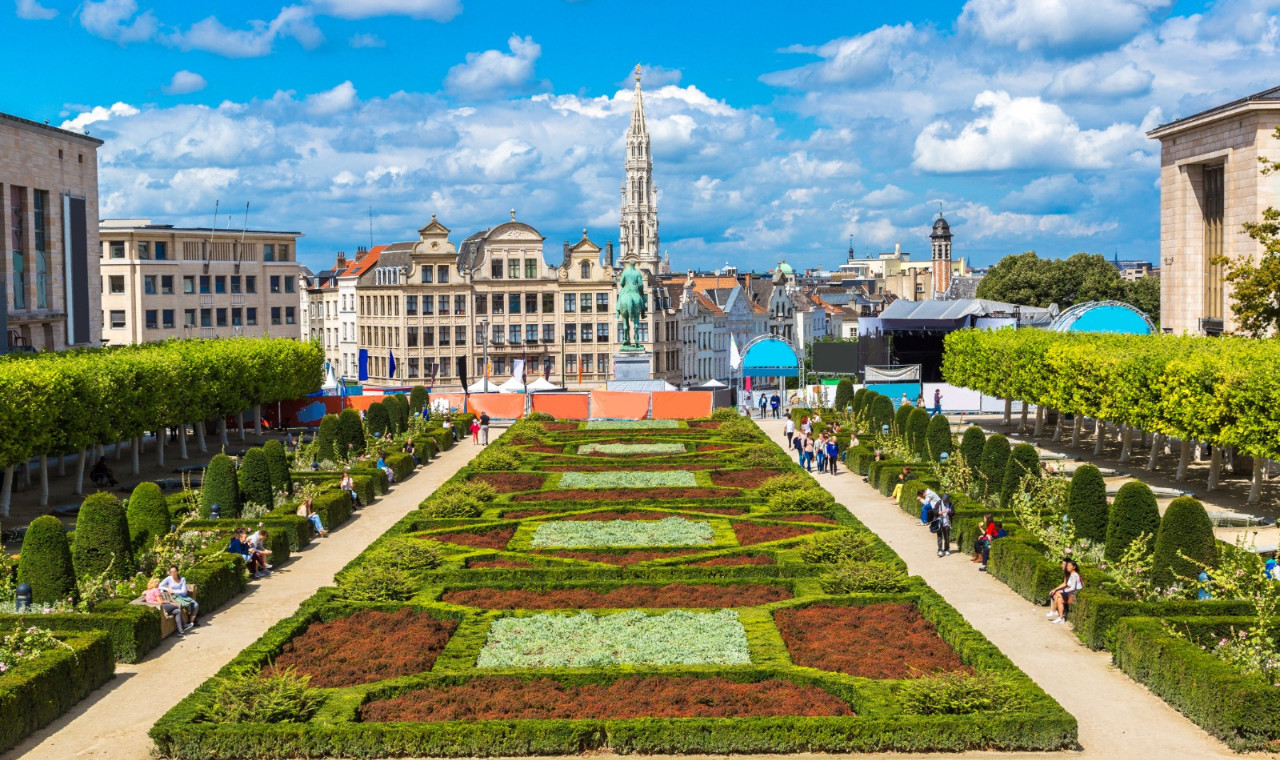
Royal Square (Place Royale) in Brussels is a grand neoclassical plaza laid out in the late 18th century, once marking the entrance to the former Palace of Coudenberg. At its center stands an equestrian statue of Godfrey of Bouillon, the First Crusade leader. Surrounded by imposing buildings like the Church of Saint Jacques-sur-Coudenberg, Magritte Museum, and Royal Museums of Fine Arts, the square blends political, religious, and artistic power. More than a scenic stop, it's a symbolic heart of Belgian monarchy and identity — poised between the past and the present.
9
Stop 9
Pass by
The BELvue Museum, located beside Royal Square in Brussels, offers an engaging deep dive into Belgian history, from independence in 1830 to today's constitutional monarchy. Housed in a neoclassical palace, the museum takes a thematic approach — exploring democracy, migration, industry, and identity through personal stories and historical objects. Beneath it lie the excavated ruins of the Coudenberg Palace, adding layers of medieval intrigue. Modern in design, rich in content, the BELvue turns national history into something tangible, nuanced, and unexpectedly personal.
10
Stop 10
The Royal Palace of Brussels is the official administrative residence of the Belgian monarch, facing Brussels Park across the grand Place des Palais. Though the king doesn’t live here, it's where state affairs, ceremonies, and receptions take place. The neoclassical façade hides richly decorated interiors—chandeliers, marble halls, and the famous Mirror Room with a ceiling covered in iridescent beetle wings. Open to the public each summer, the palace offers a rare glimpse into royal formality with a distinctly Belgian touch: grand, dignified, but never ostentatious.
11
The René Magritte Museum in Brussels, housed in a 19th-century mansion on Place Royale, is dedicated to Belgium’s most celebrated surrealist. Unlike the larger Magritte Museum at the Royal Museums of Fine Arts, this site is deeply personal — it was Magritte’s actual home and studio from 1930 to 1954. Inside, you’ll find original furniture, sketches, photographs, and everyday objects that shaped his dreamlike visions. It's an intimate portrait of the man behind the bowler hat and floating apples — a surrealist grounded in the ordinary, painting mystery into the mundane.
12
Stop 12
Pass by
The Musical Instrument Museum (MIM) in Brussels is a treasure trove of over 7,000 instruments from around the world, housed in the striking Art Nouveau masterpiece of the Old England building. From ancient harps to futuristic synthesizers, the collection spans continents and centuries. Visitors get headphones to hear the sounds each instrument makes, turning the experience into an interactive concert. With its rooftop café offering panoramic city views, MIM is both a sensory feast and an architectural gem — where history sings in every room.
13
Stop 13
The Carillon of the Mont des Arts in Brussels is a hidden-in-plain-sight musical clock perched on the façade of a building along the Mont des Arts steps. Installed in 1964, it features 24 bells and 12 mechanical figures representing key moments and characters from Belgian history—like Charles the Bold and Peter Bruegel. Every hour, one of the figures emerges to the tune of the carillon, turning a quiet city stroll into a moment of pageantry. Look up or you’ll miss it — this is Brussels storytelling in clockwork form.
14
The Smurfs Passage (Passage des Schtroumpfs) in Brussels is a playful tribute to Belgium’s beloved blue cartoon characters, created by Peyo. Tucked inside the Galerie Horta near Brussels Central Station, the passage features vibrant murals, 3D figures, and a ceiling where the Smurfs are mid-adventure—flying, running, and causing their usual mischief. It’s not a museum, but a cheerful, immersive walkway that surprises passersby with a dose of nostalgia and whimsy. For a moment, the city's gray stone gives way to blue magic.
15
Stop 15
The Cathedral of St. Michael and St. Gudula is Brussels’ majestic Gothic heart — an imposing twin-towered church that has stood for centuries as both a religious and national symbol. Completed in the 16th century atop earlier foundations, it features soaring vaulted ceilings, intricate stained-glass windows, and a serene, light-filled nave. Royal weddings and state ceremonies are held here, but it remains open to everyday visitors. Beneath its grandeur lies quiet reverence — a space where stone and glass whisper centuries of faith, power, and history.
16
Stop 16
The Royal Gallery of Saint Hubert (Galeries Royales Saint-Hubert) is a graceful 19th-century glass-roofed arcade in central Brussels — one of Europe’s oldest covered shopping galleries. Opened in 1847, it’s divided into three elegant sections lined with chocolate shops, jewelers, bookstores, cafés, and a historic theater. Light floods the marble floors, echoing footsteps and the clink of coffee cups. This is where Brussels flirts with Parisian style: refined, slow-paced, and unapologetically charming. A stroll here feels like time well-dressed.
17
Stop 17
Chez Léon is a Brussels institution, famed for serving moules-frites (mussels and fries) since 1893. Nestled in a lively alley near the Grand Place, this bustling, family-run restaurant spreads across several cozy dining rooms filled with vintage decor and the hum of happy diners. The menu sticks to Belgian comfort classics—mussels in white wine, stoemp, carbonnade — and the atmosphere is unpretentious and warm. It’s the kind of place where locals and tourists sit elbow to elbow, beer in hand, cracking mussels like it's second nature.
18
Stop 18
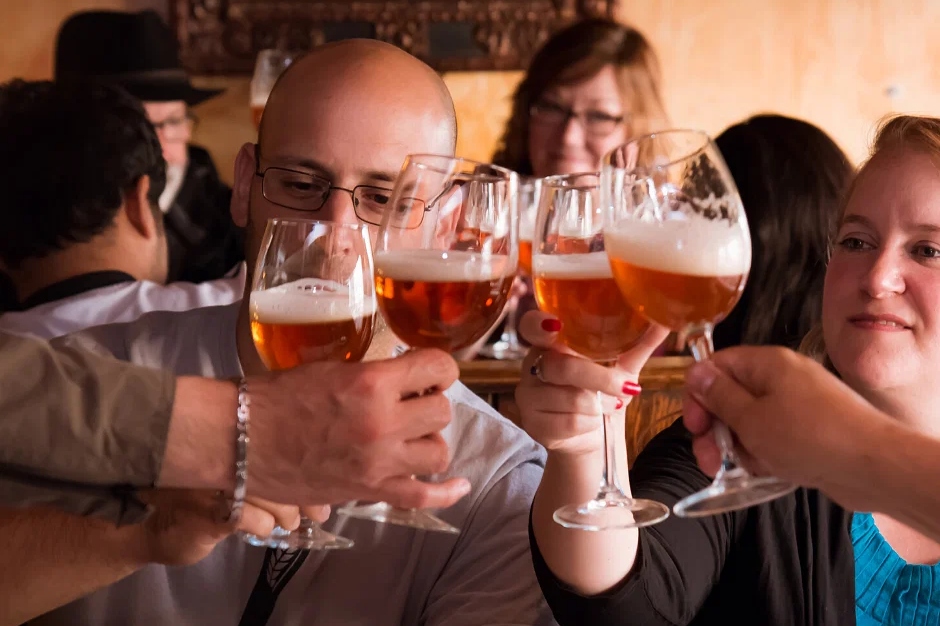
Delirium Café in Brussels is legendary among beer lovers, boasting a Guinness World Record-breaking menu of over 2,000 different beers from around the globe. Tucked in a narrow alley near the Grand Place, it’s instantly recognizable by its pink elephant logo and cavernous, wood-paneled interior plastered with vintage beer signs. Whether you’re sipping a rare Trappist brew or one with chocolate, chili, or fruit, Delirium is less about refinement and more about joyful excess — a spirited chaos where the world’s beers come to party.
19
Jeanneke Pis is Brussels’ cheeky little secret — a modern counterpart to the city’s famous Manneken Pis. Tucked in a small alley near Delirium Café, this bronze statue of a squatting girl was installed in 1987 as a symbol of gender equality and whimsy. Protected by iron bars but always drawing smiles, Jeanneke is part of Brussels’ quirky trio of urinating statues. Not exactly solemn, but delightfully odd — proof that this city doesn’t take itself too seriously, even when it comes to monuments.
20
The Black Tower (Tour Noire) is a rare medieval survivor hidden in plain sight in central Brussels, right next to a modern hotel. Dating back to the 13th century, it was once part of the city's first defensive wall. Its name comes from the darkened stone and weathered facade, standing in stark contrast to the sleek architecture around it. Today, it’s a quiet reminder of Brussels’ fortified past — no longer protecting the city from invaders, just surprising passersby who stumble upon this stone sentinel from another age.
21
Stop 21
The Church of St. Catherine in Brussels is a fascinating fusion of styles — Gothic roots wrapped in a 19th-century neo-Renaissance facade with hints of Baroque. Built on the site of a medieval harbor basin, the church was long surrounded by fish markets, giving it a working-class, maritime soul. Inside, it’s calm and spacious, with soft light filtering through high windows and quiet chapels tucked to the side. Though once threatened with demolition, today it stands dignified and resilient — graceful amid the bustle of Sainte-Catherine square.
22
Zinneke Pis is the final, four-legged member of Brussels’ quirky statue trio — a bronze dog mid-pee, forever cocking its leg against a post on Rue des Chartreux. Installed in 1998 by artist Tom Frantzen, it adds a dose of urban absurdity and humor to the city’s streets. Unlike Manneken and Jeanneke Pis, Zinneke doesn’t spout water — it just makes you smile. Named after the Brussels slang term Zinneke (a mutt or cultural mix), it’s a lighthearted symbol of the city’s diversity and its love of not taking itself too seriously.
23
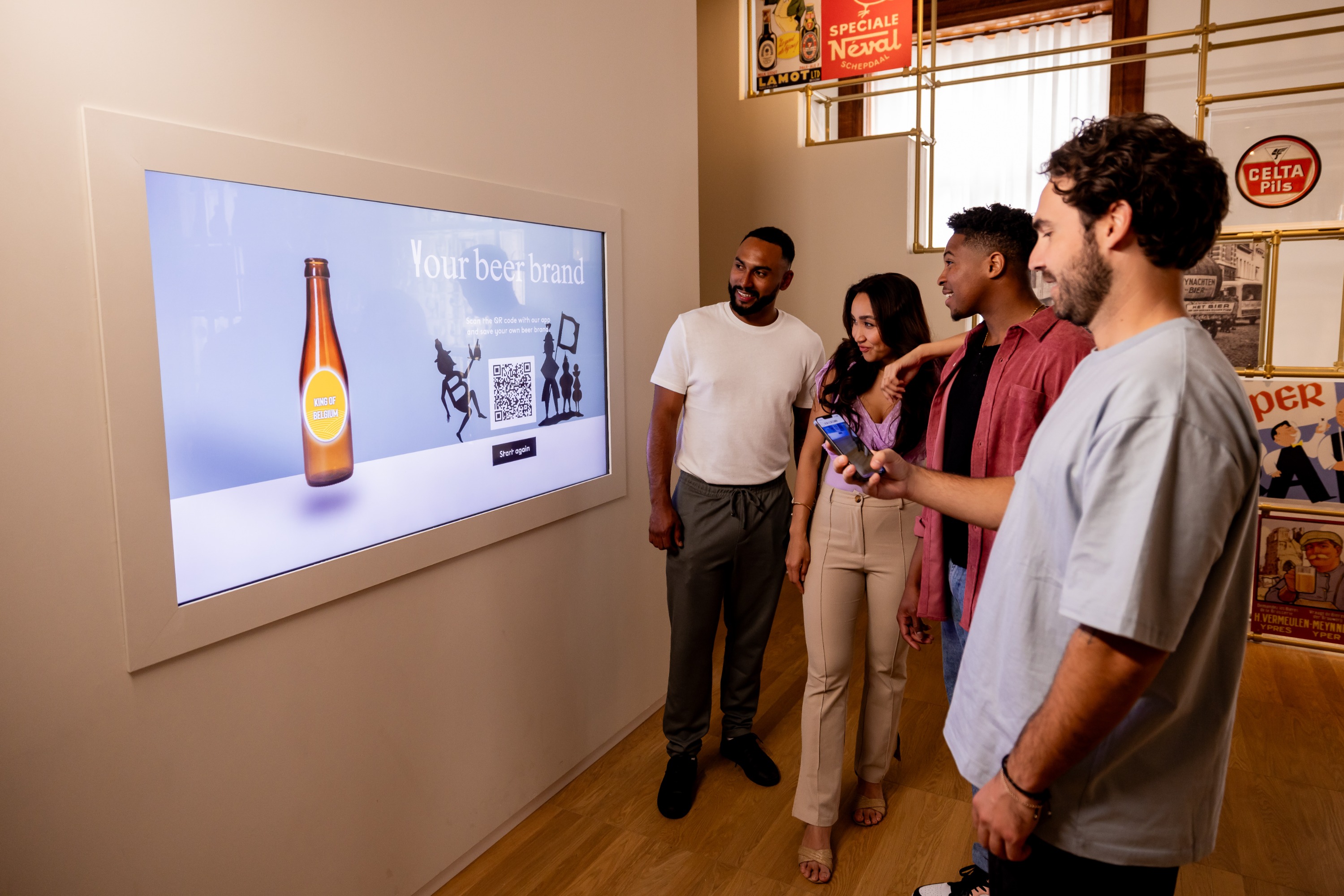
The Belgian Beer World Experience, located inside the iconic Brussels Stock Exchange (Bourse), is an immersive museum dedicated to Belgium’s rich brewing heritage. Opened in 2023, it blends high-tech storytelling with hands-on exhibits, tracing the history, science, and cultural rituals behind over 1,600 Belgian beers. Visitors can explore interactive displays, scent stations, and a dramatic circular tasting hall with panoramic views. It’s not just a museum — it’s a sensory deep dive into the soul of Belgian brewing, where tradition meets innovation one pour at a time.
24
The Church of St. Nicholas in Brussels is one of the city’s oldest places of worship, dating back to the 12th century. Tucked beside the bustling Rue des Fripiers, it was originally built for merchants and traders near the old stock exchange. Its compact Gothic structure, mismatched stones, and weathered facade give it a quietly aged charm. Inside, it’s intimate and darkly atmospheric, with notable artworks and a sense of continuity amid the commercial noise outside. A humble, working church still very much part of daily Brussels life.
25
Stop 25
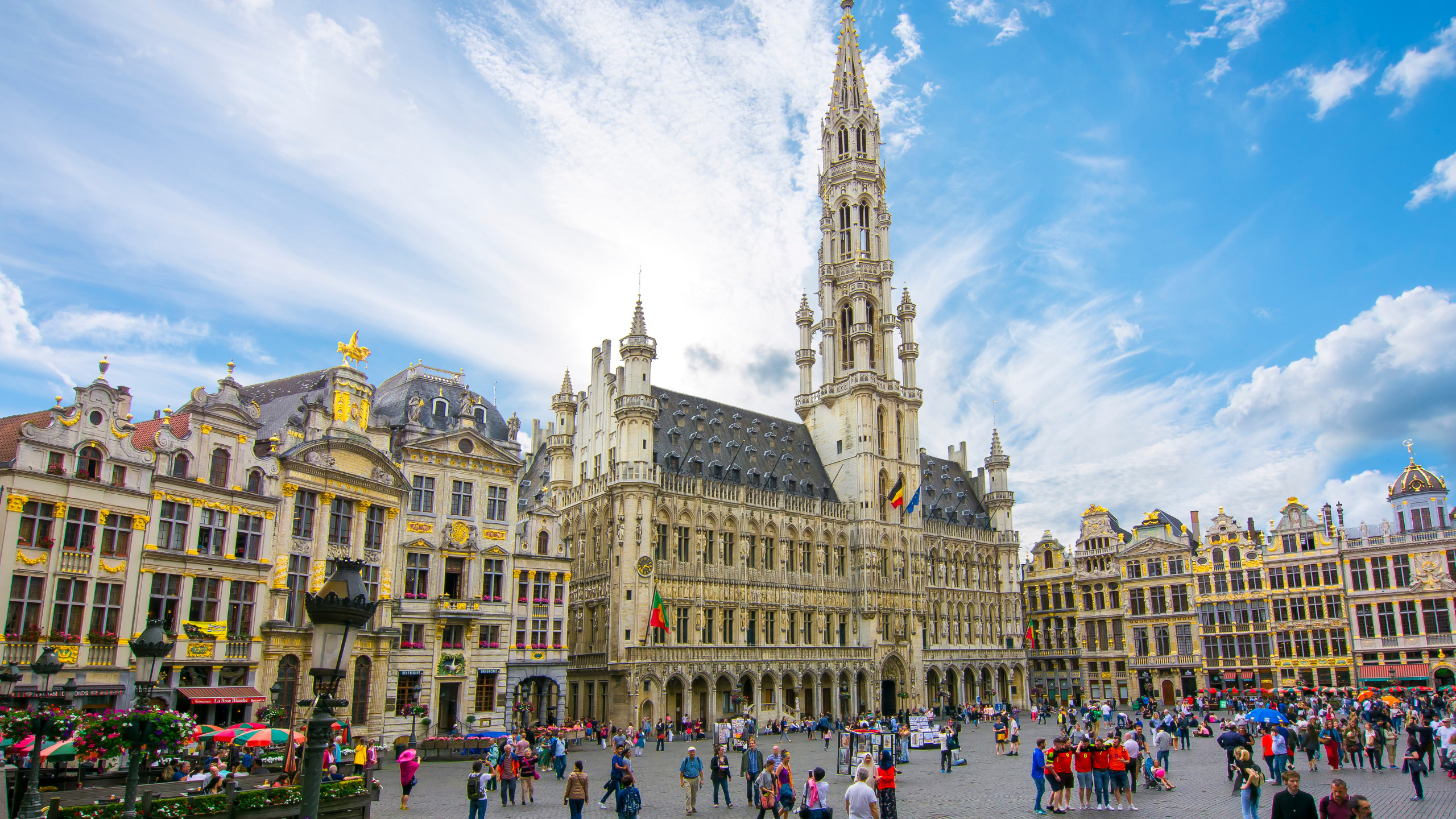
The Grand Place is Brussels’ dazzling central square — a UNESCO World Heritage site framed by ornate guildhalls, the Town Hall, and the King’s House (Maison du Roi). Once a medieval marketplace, it evolved into a stage of civic pride, where every facade brims with gold details, gables, and sculpted flourishes. It's the beating heart of the city, hosting flower carpets, concerts, and festivals. Day or night, under sun or spotlights, the Grand Place overwhelms not with size but with sheer opulence — Brussels in its most theatrical form.
26
Stop 26
Pass by
The Grand Place is Brussels’ dazzling central square — a UNESCO World Heritage site framed by ornate guildhalls, the Town Hall, and the King’s House (Maison du Roi). Once a medieval marketplace, it evolved into a stage of civic pride, where every facade brims with gold details, gables, and sculpted flourishes. It's the beating heart of the city, hosting flower carpets, concerts, and festivals. Day or night, under sun or spotlights, the Grand Place overwhelms not with size but with sheer opulence — Brussels in its most theatrical form.
27
Stop 27
Pass by
The Brussels City Museum, housed in the neo-Gothic Maison du Roi on the Grand Place, tells the story of the city from its medieval roots to modern times. Its collection includes paintings, tapestries, models, and even the original Manneken Pis statue. The building itself, once a bread market and then a royal administrative center, is part of the narrative. Each floor peels back a layer of Brussels’ identity — artistic, political, folkloric. It’s where the city remembers itself, right in the square where its pulse is strongest.
28
Stop 28
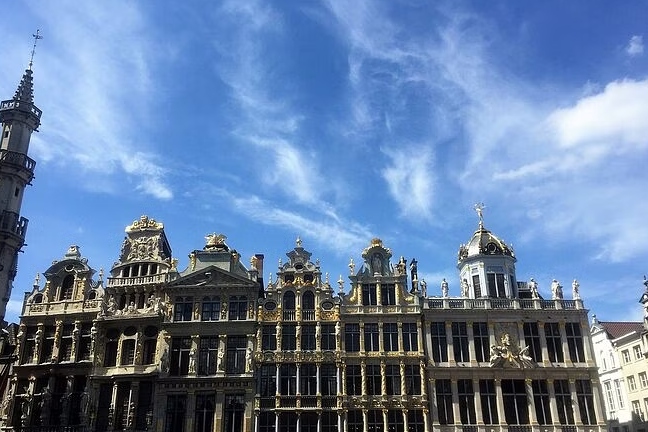
The House of the Dukes of Brabant is a majestic row of seven unified guildhalls on the east side of the Grand Place in Brussels. Despite the name, no dukes ever lived here — it’s a symbolic reference to past rulers. Rebuilt in the late 17th century after the French bombardment, the facade dazzles with columns, statues, and gold trim. Once home to bakers, millers, and other guilds, today it hosts shops and restaurants. It's a striking example of baroque unity, where civic pride and commercial flair are carved into every inch of stone.
29
Stop 29
Manneken Pis is Brussels’ most famous little rebel — a tiny bronze boy eternally relieving himself into a fountain since the early 17th century. Though just 61 cm tall, he’s become a city icon, dressed in hundreds of costumes for holidays, festivals, and diplomatic visits. The statue embodies Brussels’ love of irreverence and humor—cheeky, unexpected, and proud of it. You'll find him just a short walk from the Grand Place, often surrounded by chuckling tourists. It’s a small figure with a huge personality — and a stream of stories behind him.
What's not included
In-person tour guide
Smartphone and Headphones
Entry Tickets
Transportation
Food and Beverages
Available languages
Audio guide
EN
Important information
Public transportation options are available nearby
Suitable for all physical fitness levels
The audio guide is available through a mobile app for iOS and Android
Entry tickets to the museums are not included and must be purchased separately in advance
The tour does not cover all sights in Brussels
This is a self-guided tour, you will need to download the audio guide mobile app, activate your purchase, and follow the route on the app's map (without a human guide)
The audio guide can be accessed at any time. The date and time provided during checkout are approximate
Meeting point
- The tour begins at Halle Gate
- This is a self-guided tour, there will be no guide present at the meeting point
- Open the app, start the Brussels City Tour, and proceed along the designated route
Important notes
To get audioguide:
- Open Viator Ticket
- Find Viator Booking ref - it should start with BR-####
- Find your Viator Booking on https://activate.touringbee.com/?partner=viator
- The tour begins at Halle Gate
- This is a self-guided tour, there will be no guide present at the meeting point
- Open the TouringBee app, start the Brussels City Tour, and proceed along the designated route
About Brussels
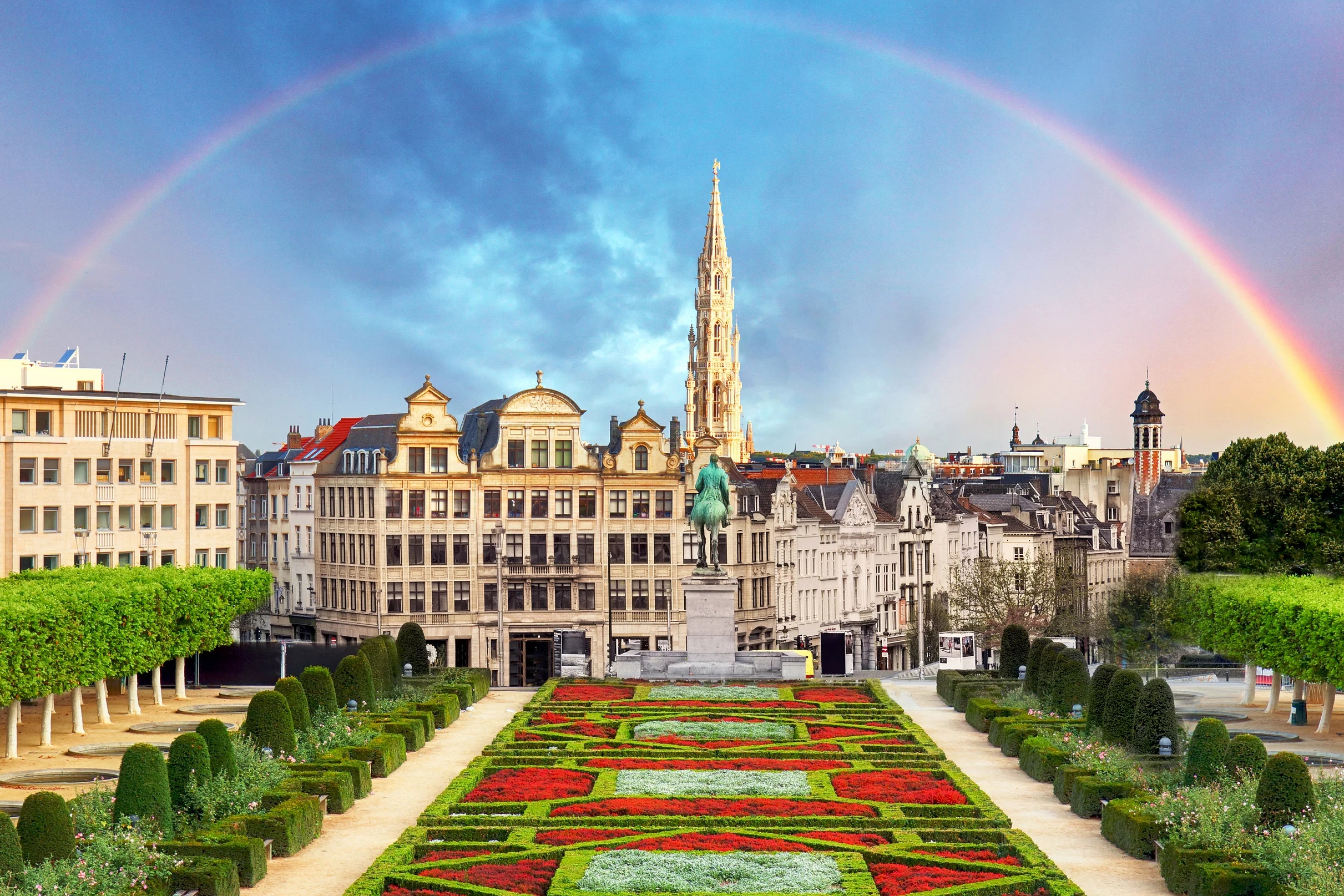
Brussels, the heart of Europe, is a vibrant city known for its rich history, stunning architecture, and world-renowned cuisine. As the de facto capital of the European Union, it's a melting pot of cultures and languages, offering a unique blend of medieval charm and modern sophistication.
Top Attractions
Grand Place
The Grand Place is the central square of Brussels and a UNESCO World Heritage site. It's famous for its ornate guildhalls and the impressive Town Hall.
Historical
1-2 hours
Free
Atomium
The Atomium is a unique structure built for the 1958 World's Fair. It's a symbol of Brussels and offers panoramic views of the city.
Architecture
2-3 hours
€16 (adults), €10 (children)
Manneken Pis
The Manneken Pis is a small bronze statue of a boy peeing, which has become one of Brussels' most famous landmarks. It's often dressed in costumes for special occasions.
Cultural
15-30 minutes
Free
Royal Palace of Brussels
The Royal Palace is the official palace of the King and Queen of the Belgians. While the royal family does not reside here, it's used for official events and ceremonies.
Historical
1-2 hours
€12.50 (for the Royal Greenhouses, open only in spring and autumn)
Parc du Cinquantenaire
Parc du Cinquantenaire is a large urban park with a triumphal arch, museums, and green spaces. It's a great place for a leisurely walk or picnic.
Nature
1-2 hours
Free (museums have separate fees)
Must-Try Local Dishes
Moules-frites
Mussels cooked in white wine, cream, or other sauces, served with a side of fries.
Main course
Can be made vegetarian by omitting the mussels and using a vegetable-based sauce.
Waffles
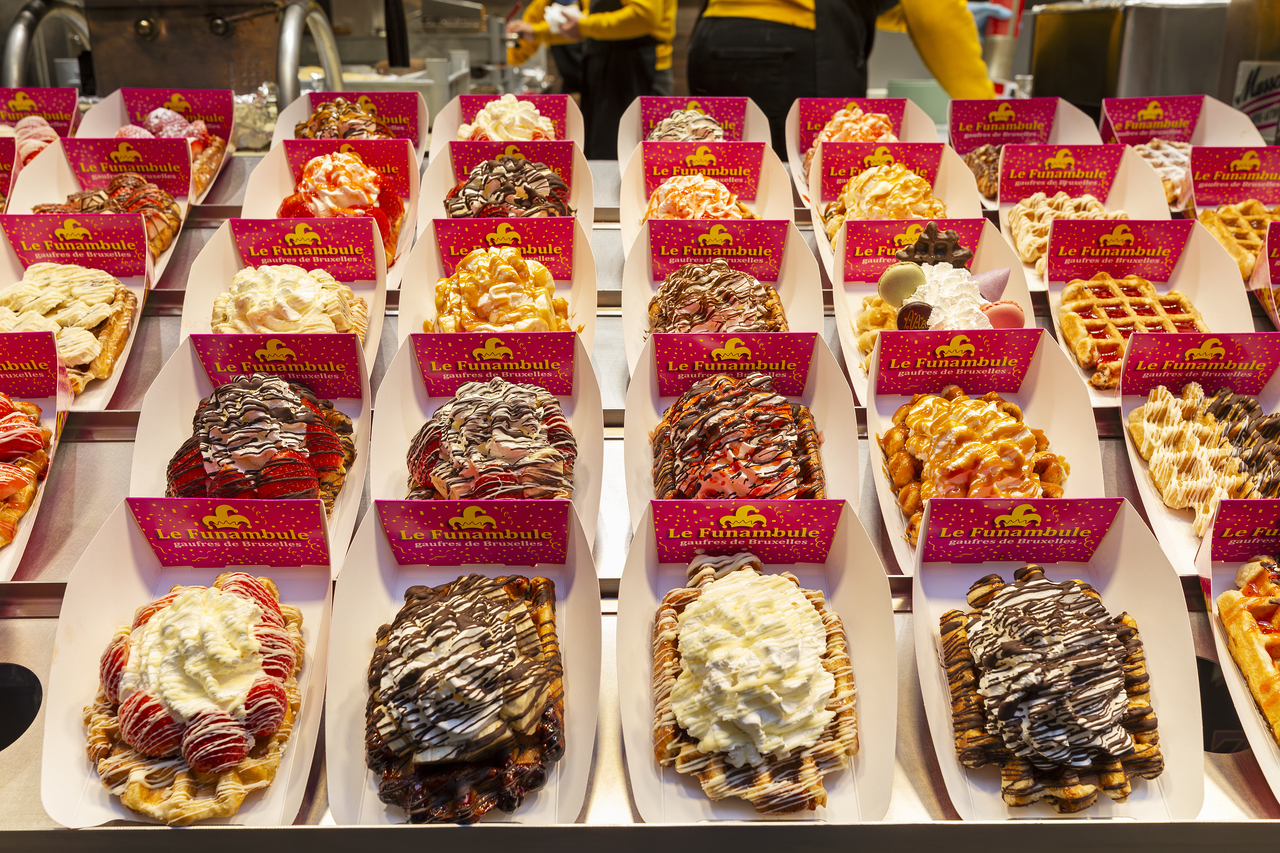
Belgian waffles are a must-try, with various toppings like whipped cream, chocolate, and fruit.
Dessert/Snack
Can be made vegetarian or vegan by choosing appropriate toppings.
Fries
Belgian fries are crispy on the outside and soft on the inside, often served with various sauces.
Snack/Side
Can be made vegetarian by choosing vegetable-based sauces.
Carbonade flamande
A traditional Flemish beef and beer stew, often served with fries or bread.
Main course
Not suitable for vegetarians or vegans.
Popular Activities
Cycling tours
Kayaking on the Senne River
Escape rooms
Spa days
Picnics in parks
Café hopping
Museum visits
Art gallery tours
Best Time to Visit
June to August
Summer is the peak tourist season with warm weather and numerous festivals. The city is lively, but also more crowded and expensive.
15°C to 25°C
59°F to 77°F
Practical Information
Language
- Official: Dutch, French, German
- Widely spoken: English
- English: Widely spoken
Currency
Euro (EUR)
Time Zone
GMT+1 (Central European Time, CET)
Electricity
230VV, 50HzHz
Safety Information
Overall Safety Rating: Generally safe
Brussels is generally safe for travelers, but petty crime like pickpocketing can occur in tourist areas. Be cautious with your belongings and stay aware of your surroundings.
Important Precautions:
- • Keep your belongings secure and out of sight
- • Be cautious with ATMs and avoid using them at night
- • Use licensed taxis or ride-sharing apps
Getting there
By air
- Brussels Airport • 11 km (7 miles) from city center
By train
Brussels-South Station, Brussels-Central Station
By bus
Brussels-North Station, Brussels-South Station
Getting around
Public transport
The metro is efficient and covers most of the city. It's a great way to get around, especially during peak hours.
Taxis
Available • Apps: Uber, Heetch
Rentals
Car, Bike, Scooter
Neighborhoods
City Center
Sablon
Saint-Géry
European Quarter
Day trips
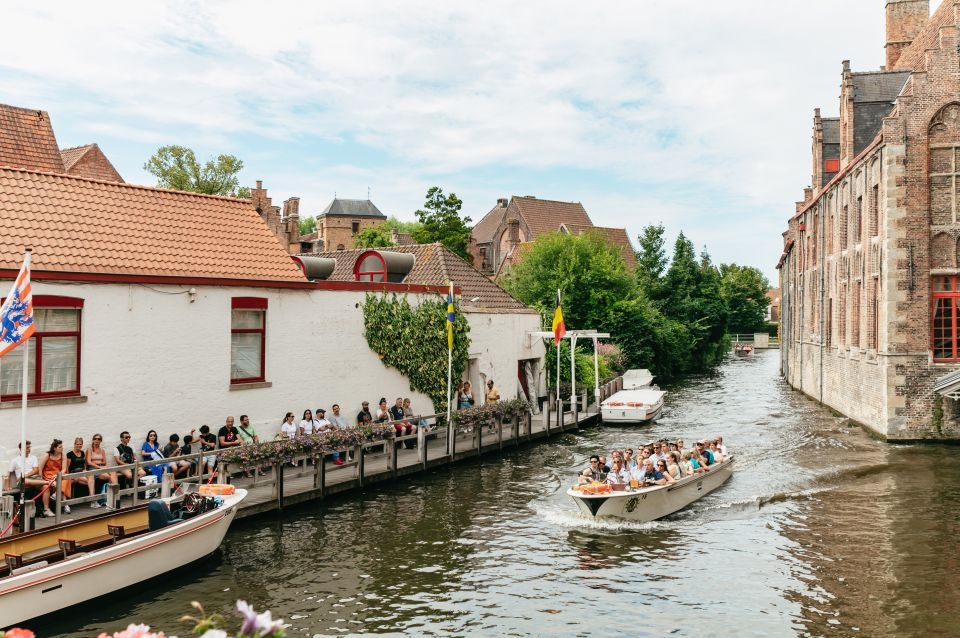
Bruges
100 km (62 miles) • Full day
Bruges is a medieval city with a well-preserved historic center, canals, and cobblestone streets. It's often referred to as the 'Venice of the North'.
Ghent
60 km (37 miles) • Full day
Ghent is a vibrant city with a rich history, beautiful architecture, and a lively student population. It's known for its medieval buildings, castles, and museums.
Antwerp
45 km (28 miles) • Full day
Antwerp is a dynamic city known for its fashion, diamond district, and vibrant cultural scene. It's home to numerous museums, galleries, and historic sites.
Festivals
Ommegang • Early July
Flower Carpet • Every two years in August
Christmas Market • Late November to early January
Pro tips
- Visit the Grand Place early in the morning or late in the afternoon to avoid crowds and enjoy the square's beauty in peace.
- Try a Belgian waffle from a street vendor, but be cautious with toppings that may not be suitable for dietary restrictions.
- Explore the city's neighborhoods on foot or by bike to discover hidden gems and local culture.
- Learn a few basic phrases in French or Dutch to connect with locals and show respect for the language and culture.
- Consider purchasing a Brussels Card for unlimited public transport and discounts on attractions.
From $25
per person
Price varies by option
Secure booking
Free cancellation available
Instant confirmation