Nuremberg Walking Tour with Audioguide on your Smartphone
Active
3h
For a full refund, cancel at least 24 hours before the scheduled departure time.
Instant confirmation
Mobile or paper ticket accepted
About this experience
The audio guide serves as a convenient mobile companion for a self-guided tour of Nuremberg. This tour is specifically designed for those looking to explore the city in a short span of time (2-3 hours). Simply follow the route on the app's map to navigate through the city center, passing by the main attractions. You're guaranteed to see: The Imperial Fortress, Fortress wall and towers, Albrecht Dürer's House, Craftsmen's Court, The finest churches, A picturesque view of the tiled roofs.
Once the tour is downloaded, the app can function offline. The audio guide is best enjoyed through your headphones, allowing you to immerse yourself in fascinating stories and legends at your own pace, without the need to keep up with a tour group.
If you only have a few hours to spare in Nuremberg, make the most of it with the TouringBee audio guide, ensuring you don't miss out on anything.
Available options
English
German
What's included
Illustrations to Recognize Landmarks
30 audio recordings narrated by a professional historian
One-year access to the tour in the language of your preference
Audioguide application for iPhone and Android
Offline map featuring a route for effortless GPS navigation
Detailed itinerary
1
Nuremberg Central Station (Nürnberg Hauptbahnhof) is a grand entry point to the city, blending 19th-century architecture with modern functionality. Its historic stone façade hides a sleek, efficient interior filled with shops, eateries, and bustling platforms serving regional and international trains. A hub since 1844, it’s where Gothic towers meet high-speed rails. Whether you're arriving for Christmas markets or medieval alleys, the station stands as both gateway and anchor to Nuremberg’s layered identity.
2
The Handwerkerhof Nürnberg is a charming pocket of medieval nostalgia tucked just inside the old city walls near the central station. Built in 1971 within a restored bastion, it recreates the feel of a 16th-century artisan quarter, complete with half-timbered houses, cobbled lanes, and traditional craft shops. Goldsmiths, glassblowers, leatherworkers, and toy makers practice their trades here, while cozy taverns serve bratwurst and Franconian beer. Though a bit staged, it offers a warm, tangible link to Nuremberg’s guild heritage — quiet, curious, and full of handmade soul.
3
The Neues Museum Nürnberg is the city’s sleek temple to modern and contemporary art and design, housed in a striking glass-and-stone structure by architect Volker Staab. Opened in 2000 just behind the medieval city wall, it creates a dramatic contrast between past and present. Inside, white-walled galleries display works by Gerhard Richter, Andy Warhol, and cutting-edge designers, with rotating exhibitions that challenge and surprise. Light, minimalism, and movement define the space — more than a museum, it feels like a dialogue between material, space, and thought.
4
The Straße der Menschenrechte (Street of Human Rights) is a powerful open-air installation in Nuremberg, created by Israeli artist Dani Karavan. Located next to the Neues Museum, it features 27 white concrete pillars, each inscribed with one article of the Universal Declaration of Human Rights in both German and another language. Once the site of Nazi rallies, the street now stands as a firm statement of remembrance and commitment. Walking through it is both quiet and unsettling — a sculptural reminder that dignity must be defended, step by step.
5
St. James the Less Episcopal/Anglican Church in Nuremberg offers a rare English-speaking spiritual home in the heart of Franconia. Nestled in a quiet corner of the city, it’s part of the Convocation of Episcopal Churches in Europe, welcoming a diverse, international community. The church emphasizes inclusivity, liturgical tradition, and social outreach, offering a space for worship, reflection, and fellowship. While modest in size, it provides a sense of belonging for expats, students, and travelers seeking Anglican worship far from home.
6
Kirche St. Elisabeth in Nuremberg is a striking neoclassical Catholic church, known for its massive domed rotunda and austere elegance. Built between 1785 and 1903, delays and politics marked its construction, but the result is a solemn, symmetrical space that feels more Roman temple than Gothic sanctuary. Tucked near the bustling Jakobsplatz, it offers quiet contrast to the nearby medieval churches. Inside, light filters through high windows, illuminating clean lines and a sense of calm dignity — spiritual without excess.
7
The White Tower (Weißer Turm) is a medieval gate tower that once formed part of Nuremberg’s second city wall. Dating to the 13th century, it now rises oddly beside a modern U-Bahn station bearing its name. Despite the clash of old and new, the tower remains a sturdy witness to the city's layered history—its pale stone walls weathered but proud. Just steps away is the famous marriage carousel fountain, adding a surreal twist to the setting. The White Tower stands as both relic and landmark, quietly anchoring the chaos around it.
8
The Ehekarussell (Marriage Carousel) in Nuremberg is a wild, surreal fountain that pulls no punches. Created by sculptor Jürgen Weber in 1984, it sits near the White Tower and depicts the stages of marriage — passion, routine, conflict, decay — with six dramatic bronze groupings inspired by 16th-century poet Hans Sachs. Some figures are tender, others grotesque or grimly funny. Water gushes through scenes of love, struggle, and mortality. It’s not romanticized — it’s raw, honest, theatrical. A marriage of sculpture and satire, bold enough to make you blush or laugh out loud.
9
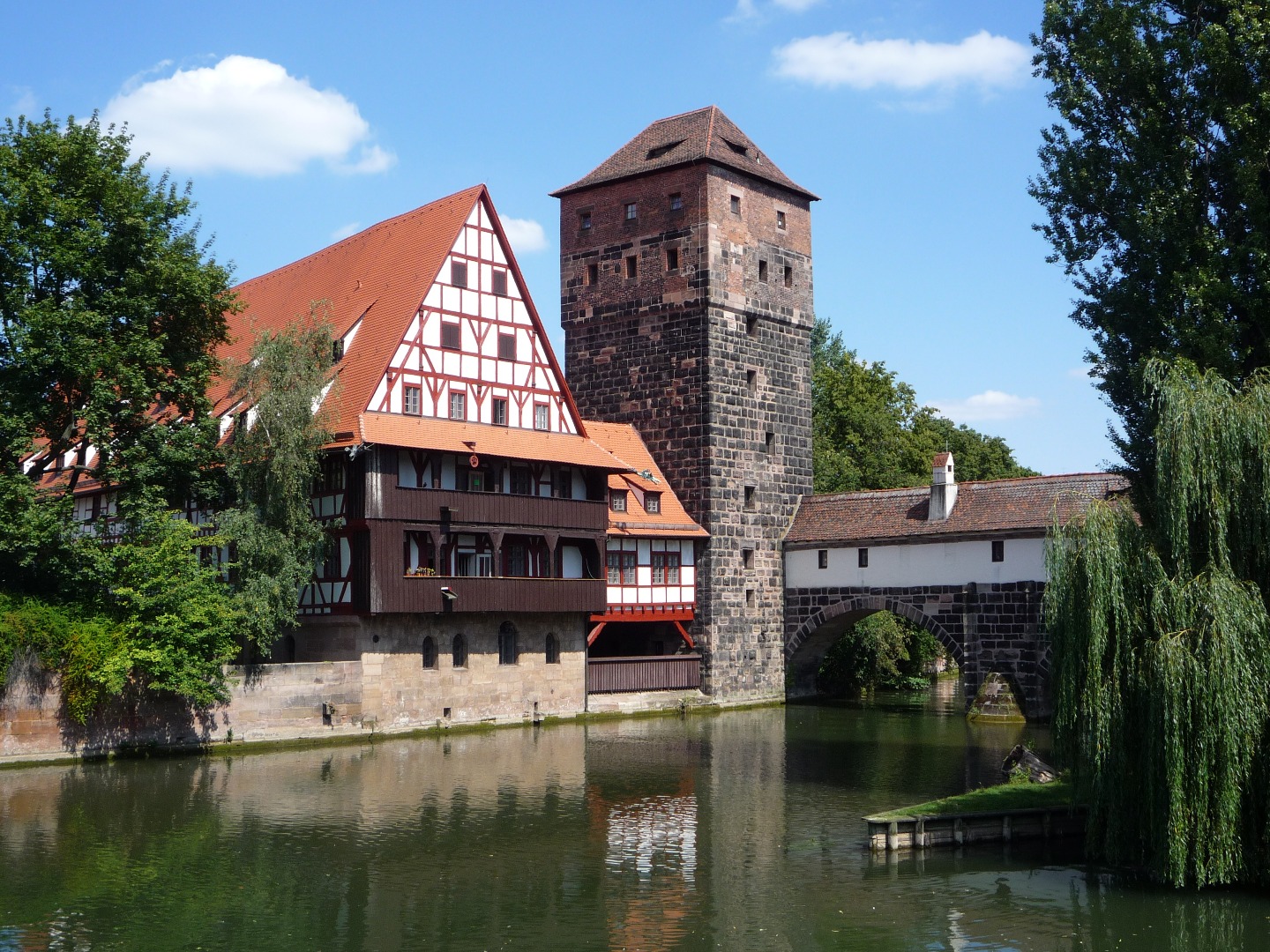
The Wasserturm (Water Tower) in Nuremberg, part of the ensemble with the Weinstadel, stands as a solid medieval sentinel along the Pegnitz River. Built in the 13th century, it was once part of the city’s fortifications, later used for various civic functions—including as a prison. Its cylindrical stone structure, red-tiled roof, and reflection in the water make it one of the Altstadt’s most photographed landmarks. Quietly stoic, the Wasserturm anchors the romantic riverside view with a touch of old-world strength and mystery.
10
The Weinstadel in Nuremberg is a stunning half-timbered building along the Pegnitz River, dating back to 1446. Originally a wine storehouse, it later served as a shelter for lepers during Holy Week and eventually housed the city’s poor. With its intricate woodwork, steep gables, and riverside arcades, it’s one of the best-preserved medieval structures in the city. Today, it serves as student housing — a rare case of 15th-century architecture with 21st-century roommates. Its reflection in the water makes it a postcard come to life.
11
The Spielzeugmuseum Nürnberg (Nuremberg Toy Museum) is a delightful journey through centuries of play, fittingly located in a city once known as the “toy capital of the world.” Housed in a charming Renaissance building, its vast collection spans wooden toys, dolls, tin soldiers, board games, and LEGO, from antique to modern. There's a nostalgic hum in the air — part childhood memory, part cultural reflection. The museum doesn’t just display toys; it shows how they mirror society, invention, and imagination. For kids and grown-ups alike, it’s pure, curated joy.
12
Weißgerbergasse is one of Nuremberg’s most photogenic streets — a cobbled lane lined with over 20 beautifully preserved half-timbered houses, many dating back to the 15th and 16th centuries. Named after the tanners (“Weißgerber”) who once worked here, the street survived WWII bombings and now glows with colorful facades, flower boxes, and quiet charm. It’s a rare glimpse of pre-modern Nuremberg, untouched by war or time. Today, it’s home to cafés, galleries, and private residences — a lived-in fairytale with creaky floors and centuries in the walls.
13
Nuremberg’s City Wall is one of the best-preserved medieval fortifications in Europe, encircling the Altstadt in a near-complete 5-kilometer loop. Built and expanded between the 12th and 16th centuries, it features towers, gates, bastions, and a covered walkway once patrolled by watchmen. The walls defended a wealthy imperial city—and still evoke a sense of medieval power. You can walk stretches of it, especially near the Moat Garden, or admire its layered stonework from below. It’s not just a barrier — it’s a living timeline in stone and shadow.
14
Stop 14
Pass by
The Albrecht Dürer House is where Germany’s most celebrated Renaissance artist lived and worked for nearly 20 years. Located at the foot of Nuremberg Castle, this 15th-century timbered house is beautifully preserved, with creaky floors, leaded windows, and a workshop where Dürer etched genius into copper and wood. Inside, you’ll find period furnishings, facsimiles of his work, and even a printing press demonstration. It’s not just a museum — it’s a deeply personal space where you sense the quiet rhythm of creativity in every beam and brushstroke.
15
The Dürer’s Hare Sculpture is a whimsical tribute to Albrecht Dürer’s most famous drawing, Young Hare (1502). Installed near the artist’s former home in Nuremberg, the sculpture reimagines the hare in three dimensions — but with a twist. The bronze rabbit is oversized, slightly grotesque, and surrounded by smaller, surreal bunny forms, giving it a playful yet unsettling vibe. Created by Jürgen Goertz, it playfully pokes at fame, legacy, and artistic reproduction. Much like the original sketch, it invites you to stop, stare, and question what’s real and what’s imagined.
16
The Historic Art Bunker (Historische Kunstbunker) is one of Nuremberg’s best-kept secrets — hidden beneath the castle in a maze of medieval rock-cut cellars. During World War II, these tunnels were reinforced and transformed into a secure vault to protect the city’s cultural treasures, including Dürer’s works, imperial regalia, and church art. Today, guided tours lead you through this cold, echoing labyrinth, telling stories of curators, soldiers, and silent masterpieces waiting out the bombs. It’s history beneath history — quiet, chilling, and utterly fascinating.
17
Nuremberg Castle crowns the city with medieval might, a vast fortress complex that once hosted Holy Roman Emperors. Comprising the Imperial Castle (Kaiserburg), Burgraves' Castle, and fortified walls, it dominates the skyline with sandstone towers and sweeping views. The Double Chapel, imperial apartments, and deep well offer glimpses into courtly life and power politics. Not just a symbol, the castle was Nuremberg’s nerve center — political, military, and symbolic. Today, it watches over the city like a stone chronicle of empire, endurance, and ambition.
18
St. Sebaldus' Church (Sebalduskirche) is one of Nuremberg’s oldest and most revered churches, dating back to the 13th century. Built in Romanesque and Gothic styles, it was dedicated to St. Sebaldus, the city’s patron saint, whose ornate bronze shrine by Peter Vischer is a masterpiece of German Renaissance sculpture. The church’s weathered exterior bears scars from WWII, while inside, light filters through towering stained glass onto stone columns and silent pews. It's a space of endurance, artistry, and quiet reverence at the city’s medieval core.
19
Nuremberg City Hall (Rathaus Nürnberg) is a grand blend of Renaissance ambition and medieval gravity, located just steps from St. Sebaldus' Church. The old town hall, built in the early 1600s, boasts an imposing façade inspired by Italian palazzi, while the newer Baroque wing extends the building's civic reach. Beneath it lies the eerie medieval dungeons — grim chambers once used for trials and punishment. Above, stately halls once hosted imperial diets. It’s a building of contrasts: elegant above, dark below — where justice, power, and pageantry once shared walls.
20
The Schöner Brunnen ("Beautiful Fountain") is a flamboyant 14th-century Gothic spire disguised as a fountain, rising from the Hauptmarkt in the heart of Nuremberg. Its 40 colorful figures — philosophers, evangelists, church fathers, and princes—represent the world order of the Holy Roman Empire. Locals spin the two golden rings in its wrought-iron fence for luck and fertility. More sculpture than fountain, it’s a piece of political theology cast in stone — idealism flowing upward in a riot of color, belief, and medieval grandeur.
21
Nuremberg’s Weihnachtsmarkt, or Christkindlesmarkt, is one of the oldest and most famous Christmas markets in the world. Held on the Hauptmarkt since at least the 16th century, it transforms the square into a glowing maze of red-and-white stalls selling spiced gingerbread, mulled wine, handcrafted ornaments, and the city’s beloved Nürnberger bratwurst. At its heart is the golden-haired Christkind, who opens the market with a poetic prologue. It’s festive, fragrant, and timeless — where winter magic tastes like cinnamon and sounds like sleigh bells.
22
Nuremberg’s Marktplatz (Hauptmarkt) is the city’s beating heart — an open square flanked by landmarks like St. Sebaldus’ Church, the Schöner Brunnen, and the Church of Our Lady. Since the Middle Ages, it’s been the stage for markets, public events, and historic proclamations. Daily stalls brim with fresh produce, flowers, and Franconian specialties, while at Christmas, it becomes the world-famous Christkindlesmarkt. Layered with centuries of commerce, ritual, and spectacle, the Marktplatz is less a place than a living rhythm.
23
The Fleischbrücke (Meat Bridge) is Nuremberg’s oldest surviving stone bridge, built in 1598–1599 to link the bustling Marktplatz with the Lorenz quarter. Elegant and sturdy, it spans the Pegnitz River in a single graceful arch — an engineering marvel of its time, inspired by Venice’s Rialto Bridge. Named after the nearby butcher stalls, it once teemed with merchants and meat traders. Today, it’s a quiet crossing with perfect views of the city’s riverside charm, bearing centuries of footfall with unshaken poise.
24
Stop 24
St. Lawrence Church (Lorenzkirche) is Nuremberg’s grand Gothic cathedral, rising in soaring stone just beyond the Pegnitz River. Built from the 13th to 15th centuries, it stuns with its twin towers, intricate rose window, and richly carved portal. Inside, sunlight pours through vast stained-glass windows, illuminating treasures like the Angelic Salutation by Veit Stoß, a suspended marvel of carved wood and gold. Though damaged in WWII, it was lovingly restored — still a place of awe, sound, and silence in the city's southern soul.
What's not included
In-person tour guide
Smartphone and Headphones
Entry tickets
Transportation
Food and Beverages
Available languages
Audio guide
DE
EN
Reviews breakdown
Viator
5.0
1 reviews
5★
1
4★
0
3★
0
2★
0
1★
0
Important information
Public transportation options are available nearby
Suitable for all physical fitness levels
The audio guide is available through a mobile app for iOS and Android
Entry tickets to the museums, Albrecht Dürer's House, and Nuremberg Castle are not included. Please purchase these separately in advance
The tour does not cover all the sights in Nuremberg
This is a self-guided tour. You will need to download the audio guide mobile app, activate your purchase, and follow the route on the app's map. There is no human guide provided
The audio guide can be accessed at any time. The date and time provided during checkout are only approximate
Meeting point
- The tour begins at Nuremberg Central Station
- This is a self-guided tour; there will be no guide present at the meeting point
- Open the app, initiate the Nuremberg City Tour, and follow the designated route
Important notes
To get audioguide:
- Open Viator Ticket
- Find Viator Booking ref - it should start with BR-####
- Find your Viator Booking on https://activate.touringbee.com/?partner=viator
- The tour begins at Nuremberg Central Station
- This is a self-guided tour; there will be no guide present at the meeting point
- Open the TouringBee app, initiate the Nuremberg City Tour, and follow the designated route
About Nuremberg
Nuremberg is a historic city in the Franconia region of Bavaria, known for its medieval architecture, rich history, and as the unofficial capital of the Holy Roman Empire. It offers a blend of cultural heritage, vibrant markets, and modern attractions, making it a unique destination for travelers.
Top Attractions
Nuremberg Castle
A complex of medieval fortified buildings that served as the seat of the Holy Roman Empire. It offers stunning views of the city and insights into its rich history.
Historical
2-3 hours
€7-€10
Nuremberg Christmas Market
One of the most famous Christmas markets in Germany, featuring traditional wooden stalls, festive decorations, and a variety of local crafts and foods.
Cultural
2-4 hours
Free entry, variable for purchases
Germanisches Nationalmuseum
The largest museum of cultural history in the German-speaking world, housing a vast collection of art and historical artifacts.
Museum
2-3 hours
€12-€14
Nuremberg Zoo
One of the largest and most popular zoos in Germany, featuring a wide variety of animals and beautiful landscapes.
Nature
3-4 hours
€18-€22
St. Lorenz Church
A magnificent example of Gothic architecture, known for its intricate design and historical significance.
Architectural
1-2 hours
Free entry, €3 for tower climb
Must-Try Local Dishes
Nuremberg sausages (Nürnberger Rostbratwurst)
Small, grilled sausages made from pork, typically served with mustard and bread.
Snack
Contains pork, gluten-free if served without bread
Bratwurst
A traditional German sausage, often served with sauerkraut and mustard.
Main dish
Contains pork, gluten-free if served without bread
Schäufele
A roasted pork dish, typically served with potato salad or dumplings.
Main dish
Contains pork, not gluten-free
Bier
Nuremberg is known for its local breweries and beer culture. Try a local beer like Tucher or Spezial.
Drink
Contains gluten, not suitable for vegetarians or vegans
Popular Activities
Hiking in the nearby forests
Cycling along the Pegnitz River
Rock climbing at the nearby quarries
Visiting the city's parks and gardens
Enjoying a spa day at one of the local wellness centers
Strolling along the Pegnitz River
Visiting museums and historic sites
Attending local festivals and events
Best Time to Visit
May to September
This is the best time to visit Nuremberg, with pleasant weather and numerous outdoor festivals and events. The city is vibrant and lively during these months.
15°C to 25°C
59°F to 77°F
Practical Information
Language
- Official: German
- Widely spoken: English, French, Turkish
- English: Moderately spoken
Currency
Euro (EUR)
Time Zone
CET (GMT+1), CEST (GMT+2 during daylight saving time)
Electricity
230VV, 50HzHz
Safety Information
Overall Safety Rating: Generally safe
Nuremberg is generally safe for travelers, with low crime rates and a welcoming atmosphere. However, as with any destination, it's important to be aware of your surroundings and take basic precautions to ensure a safe and enjoyable trip.
Important Precautions:
- • Be aware of your surroundings
- • Keep valuables secure
- • Use reputable taxis and public transport
Getting there
By air
- Nuremberg Airport • 5 km from city center
By train
Nuremberg Hauptbahnhof
By bus
Nuremberg Central Bus Station
Getting around
Public transport
Nuremberg's public transport system is efficient and covers most of the city. The U-Bahn (subway) and Straßenbahn (tram) are the primary modes of transport.
Taxis
Available • Apps: Free Now, Taxi Nuremberg
Rentals
Car, Bike, Scooter
Neighborhoods
Old Town (Altstadt)
Gostenhof
St. Johannis
Südstadt
Day trips
Bamberg
70 km from Nuremberg • Full day
A UNESCO World Heritage site known for its medieval architecture, historic breweries, and unique culture. Bamberg is a charming city with a rich history and beautiful landscapes.
Rothenburg ob der Tauber
110 km from Nuremberg • Full day
A picturesque medieval town known for its well-preserved old town, Christmas markets, and fairy-tale atmosphere. Rothenburg ob der Tauber is a must-visit for history and culture enthusiasts.
Regensburg
100 km from Nuremberg • Full day
A historic city known for its well-preserved medieval architecture, UNESCO World Heritage sites, and vibrant culture. Regensburg offers a mix of history, art, and local cuisine.
Festivals
Nuremberg Christmas Market • Late November to December 24
Bardentreffen • Early June
Nuremberg International Human Rights Film Festival • Early March
Pro tips
- Visit the Nuremberg Castle early in the morning to avoid crowds and enjoy the best views of the city
- Try the local specialties, such as Nuremberg sausages, schnitzel, and Lebkuchen (gingerbread)
- Explore the city's hidden gems, such as the underground tunnels and bunkers, for a unique and fascinating experience
- Attend a local festival or event, such as the Christmas market or the Bardentreffen music festival, for a taste of Nuremberg's vibrant culture
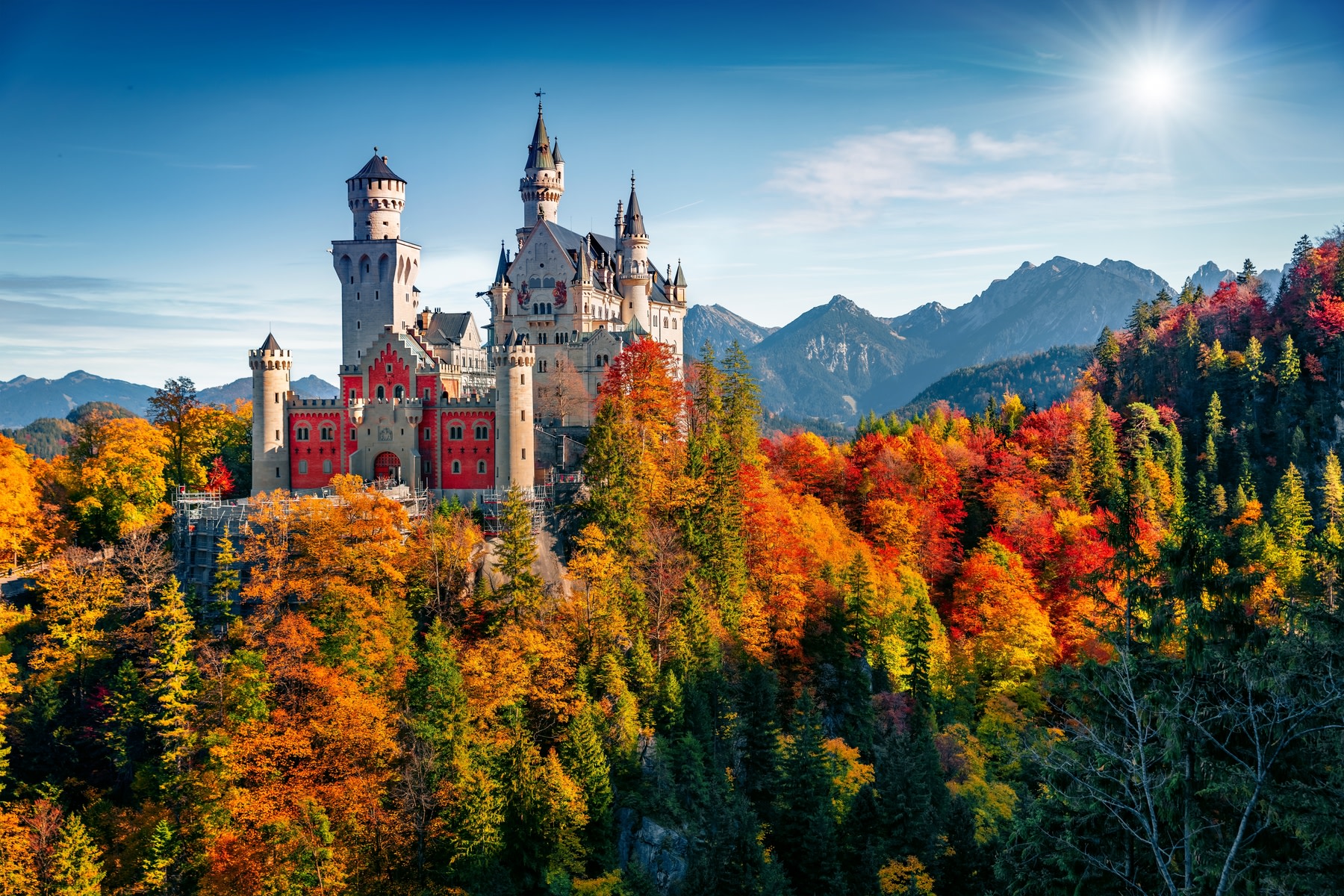
- Take a day trip to nearby cities and attractions, such as Bamberg, Rothenburg ob der Tauber, or the Neuschwanstein Castle, for a more comprehensive exploration of the region
From $25
per person
Price varies by option
Secure booking
Free cancellation available
Instant confirmation