Private Full Day Vientiane City Tour
Active
9h
For a full refund, cancel at least 24 hours before the scheduled departure time.
Instant confirmation
Mobile or paper ticket accepted
About this experience
Experience the beauty and culture of Vientiane, Laos' capital, with a private, personalized full-day tour. This exclusive journey takes you through the city’s most significant landmarks, including temples, monuments, and scenic spots. Each destination has its own story, offering a deeper understanding of Laos’ rich history and heritage.
Available options
Private Full Day Vientiane City Tour
Pickup included
What's included
Tasty Lao Lunch at local restaurant
Transportation in A/C vehicle
Hotel pickup and drop-off at Vientiane City Center Area
Private transportation
Professional English speaking guide
All attractions entrance fee
Detailed itinerary
1
Your day begins with a comfortable hotel pickup in Vientiane. A luxury air-conditioned vehicle will be waiting to take you to your first destination in the heart of the city.
2
Stop 2
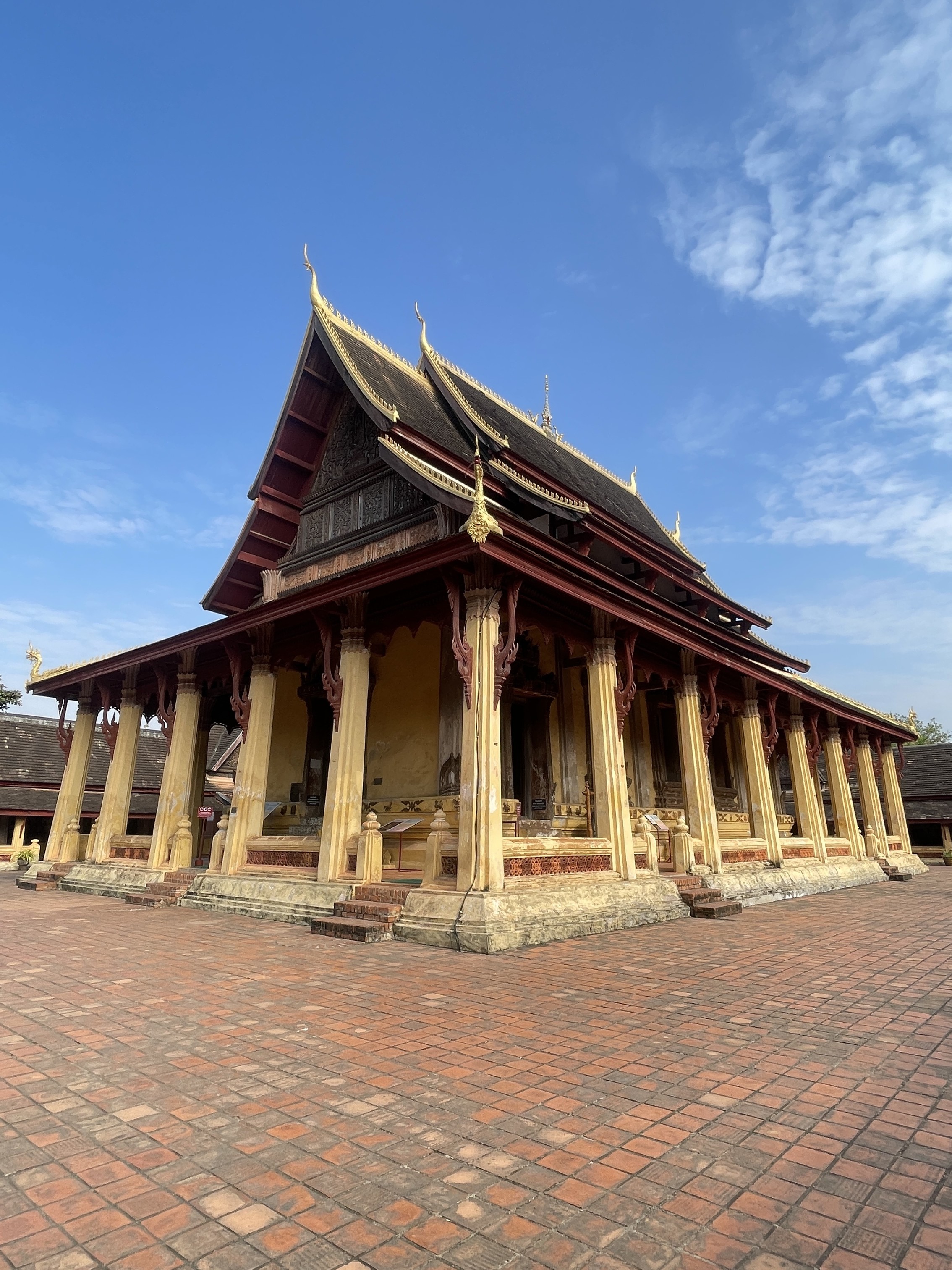
Wat Si Saket, one of the oldest and most beautiful temples in Vientiane. Wat Si Saket is famous for its cloistered courtyard, lined with over 2,000 Buddha statues in different poses. Built in 1818, this Buddhist temple holds historical significance, as it survived the Siamese invasion in the 19th century. The structure showcases beautiful traditional Lao architecture with a distinctive Burmese-style roof and features elegant verandas, stupas, and a stunning library known as the Ho Trai. Inside the temple grounds, take time to admire the ancient artwork and peaceful surroundings. The temple is a symbol of the resilience of the Lao people, reflecting both their religious devotion and cultural preservation.
3
The next stop on your tour is Ho Phra Keo, also known as Wat Ho Phakeo. This sacred temple was originally built in 1565 by King Setthathirath to house the Emerald Buddha, which is now located in Thailand. This remarkable structure was designed in the traditional Lao style, with intricate woodwork and a richly decorated interior. Today, Ho Phra Keo has been transformed into a museum that showcases a collection of religious artifacts and historical relics. It provides visitors with insights into Laos’ religious and cultural evolution, as well as the significance of the Emerald Buddha in Southeast Asian Buddhism.
4
Stop 4
Pha That Luang is undoubtedly the most iconic and revered structure in Laos. Often referred to as the "Great Sacred Stupa," this golden monument stands as a symbol of Lao sovereignty and Buddhist tradition. With its soaring stupa, Pha That Luang reaches a height of 147.6 feet and is surrounded by 30 smaller stupas, each adorned with gold leaf. Built during the 16th century, the stupa is said to enshrine a relic of the Buddha. As you explore the grand complex, you’ll be struck by its majestic presence and the peaceful atmosphere that permeates the site. Pha That Luang is featured prominently on the national emblem of Laos and appears on the currency, making it a true national symbol.
5
Stop 5
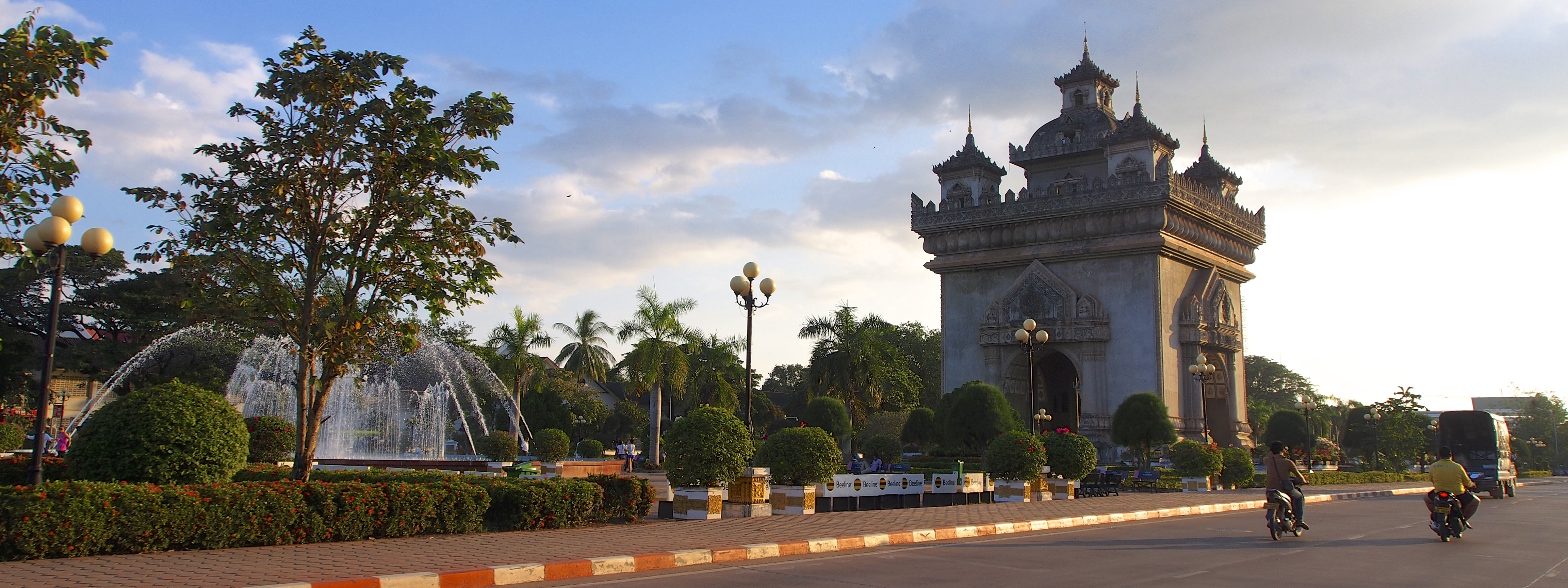
Patuxay, also known as the Victory Monument, is one of the most recognizable landmarks in Vientiane. Constructed between 1957 and 1968, it commemorates those who fought for independence from colonial rule. The monument is designed in a mixture of traditional Laotian and French architectural styles, combining elements of the Arc de Triomphe with local motifs. Standing at 148 feet tall, Patuxay is shaped like a massive arch, crowned with five towers. At the summit, you’ll be treated to panoramic views of Vientiane, providing a great opportunity for photos. The monument stands as a proud symbol of Laos' fight for independence and the country’s cultural heritage.
6
Vat That Khao is another significant temple in Vientiane, revered for its spiritual importance. Located near the famous Pha That Luang, this temple is said to house a relic of the Buddha, specifically his breastbone. This sacred site is a place of pilgrimage for many Laotians, as it is closely tied to the national history and the Buddha’s influence in the region. The peaceful environment and traditional Lao architecture make Vat That Khao a serene spot for reflection. The temple’s intricate carvings and golden decorations add to its spiritual beauty, making it an essential visit for anyone seeking to understand the heart of Laos’ Buddhist faith.
7
Stop 7
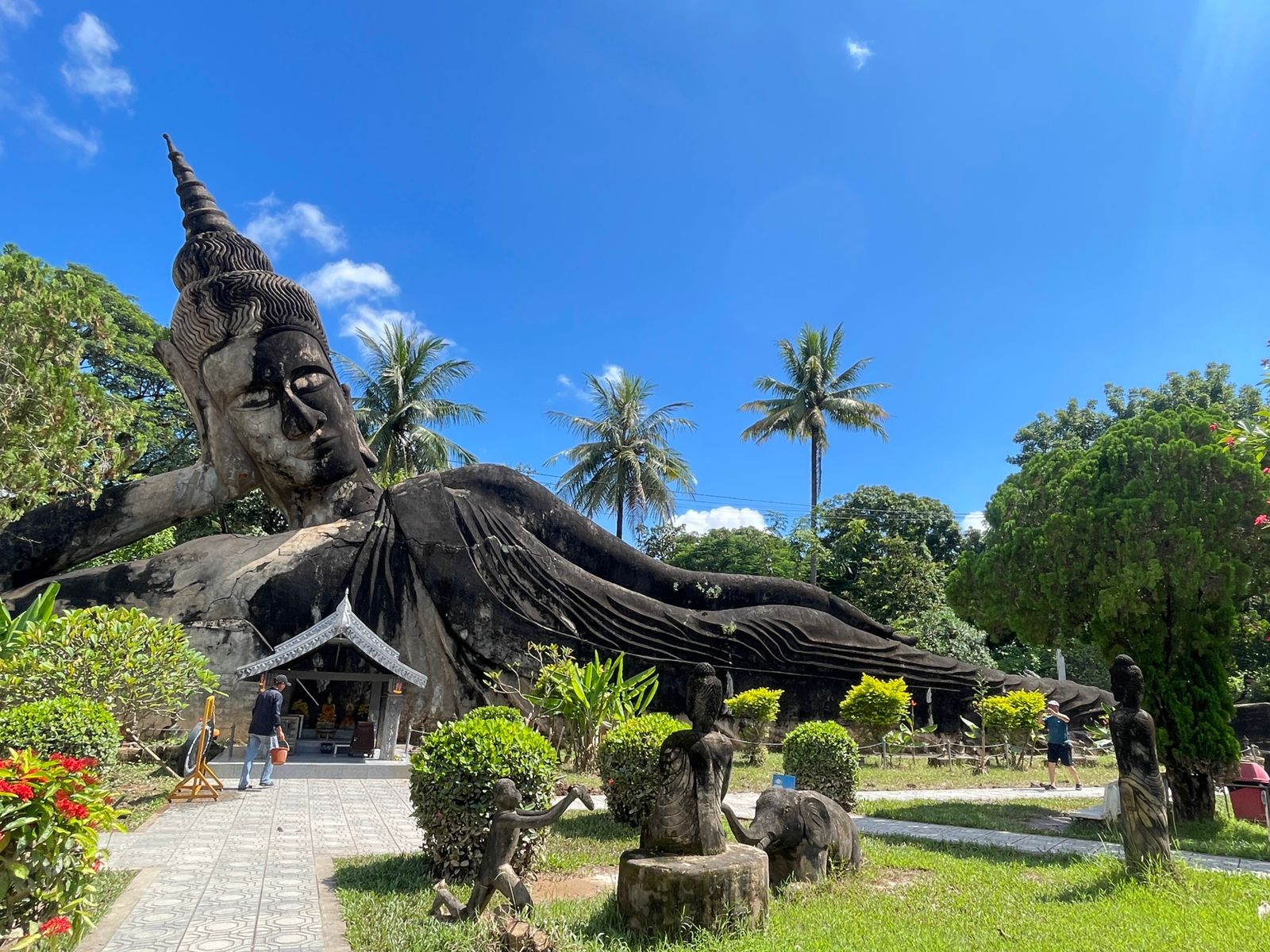
No visit to Vientiane would be complete without a trip to Buddha Park (Xieng Khuan), a fascinating open-air sculpture garden that houses over 200 statues of Buddhist and Hindu deities. Built in 1958 by a mystic named Luang Pu Bounleua Sulilat, the park features an eclectic collection of religious figures, including gods, demons, and mythical creatures. The most striking feature is a three-story pumpkin-shaped structure, which represents Hell, Earth, and Heaven. Visitors can enter the pumpkin and explore its three levels, each representing a different stage of existence. The surreal nature of Buddha Park, with its weathered sculptures and mystical atmosphere, offers a unique experience that blends spirituality and artistic expression.
8
After exploring Buddha Park, relax as you are driven back to your hotel in Vientiane. Reflect on the day’s adventures and the rich history and culture you’ve uncovered throughout the city.
What's not included
Personal expenses
Any item not included in inclusions
Available languages
Guide guide
EN
Reviews breakdown
Tripadvisor
4.8
4 reviews
5★
3
4★
1
3★
0
2★
0
1★
0
Important information
Infants are required to sit on an adult’s lap
Not recommended for travelers with spinal injuries
Not recommended for pregnant travelers
Not recommended for travelers with poor cardiovascular health
Suitable for all physical fitness levels
About Vientiane
Vientiane is the capital and largest city of Laos, known for its laid-back atmosphere, Buddhist temples, and French colonial architecture. Situated on the banks of the Mekong River, it offers a unique blend of traditional Lao culture and modern influences.
Top Attractions
Pha That Luang
This is the most important Buddhist monument in Laos, a golden stupa that symbolizes the pure land of Buddhism.
Religious
1-2 hours
Moderate ($2 entry fee)
Patuxai
This is a famous landmark in Vientiane, often referred to as the Arc de Triomphe of Laos, built to commemorate Lao soldiers who fought in World War II.
Historical
1-2 hours
Moderate ($1 entry fee)
COPE Visitor Center
A museum dedicated to the history of Laos during the Secret War and the impact of unexploded ordnance (UXO) on the country.
Museum
1 hour
Free (donations welcome)
Wat Si Muang
One of the most revered temples in Vientiane, known for its intricate carvings and historical significance.
Religious
1 hour
Moderate ($1 entry fee)
Mekong Riverfront
The Mekong Riverfront is a scenic area along the river, perfect for leisurely walks, enjoying the sunset, and experiencing local life.
Nature
Anytime
Free
Must-Try Local Dishes
Laap
A traditional Lao dish made with minced meat (usually chicken, beef, or fish) mixed with herbs, spices, and lime juice, served with sticky rice.
Main Dish
Contains meat, can be made with chicken, beef, or fish
Tam Mak Hoong (Green Papaya Salad)
A spicy and tangy salad made with green papaya, tomatoes, chili, lime juice, and fish sauce.
Salad
Vegetarian version available (without fish sauce)
Khao Piak Sen
A comforting noodle soup made with rice noodles, chicken or pork, and a flavorful broth.
Soup
Contains meat, can be made with chicken or pork
Sai Oua (Lao Sausage)
A grilled sausage made with minced pork, herbs, and spices, served with sticky rice.
Appetizer
Contains pork
Popular Activities
Kayaking on the Mekong River
Caving in Vang Vieng
Hiking in Buddha Park
Sunset views along the Mekong Riverfront
Spa and wellness treatments
Picnicking in parks
Temple visits
Traditional Lao dance performances
Best Time to Visit
November to February
This is the most pleasant time to visit with lower humidity and cooler temperatures. It's ideal for exploring the city and enjoying outdoor activities.
20-30°C
68-86°F
Practical Information
Language
- Official: Lao
- Widely spoken: English, French
- English: Limited/Rare
Currency
Lao Kip (LAK)
Time Zone
GMT+7
Electricity
230VV, 50HzHz
Safety Information
Overall Safety Rating: Generally safe
Vientiane is generally safe for travelers, but petty crime and scams can occur. Exercise caution, especially in crowded areas and at night.
Important Precautions:
- • Be cautious of pickpockets and petty theft
- • Use reputable tour operators and transportation services
- • Avoid walking alone at night in isolated areas
Getting there
By air
- Wattay International Airport • 5 km from city center
By bus
Northern Bus Station, Southern Bus Station
Getting around
Public transport
Buses are affordable but can be crowded. Routes and schedules are not always clearly marked.
Taxis
Available • Apps: No widely used apps, negotiate fares directly
Rentals
Car, Bike, Scooter
Neighborhoods
City Center
Ban Anou
Sisaket
Day trips
Buddha Park (Xieng Khuan)
25 km from Vientiane • Half day
A unique park featuring hundreds of Buddhist and Hindu statues, as well as a large reclining Buddha. The park is a popular day trip from Vientiane.
Kaysone Phomvihane (Formerly Thakhek)
230 km from Vientiane • Full day
A scenic town along the Mekong River, known for its limestone karst formations and outdoor activities like kayaking and cycling.
Vang Vieng
150 km from Vientiane • Full day or overnight
A picturesque town surrounded by limestone karsts and the Nam Song River, known for its outdoor activities, stunning landscapes, and laid-back atmosphere.
Festivals
Pi Mai (Lao New Year) • Mid-April (dates vary)
Boun Ok Phansa (End of Buddhist Lent) • October (dates vary)
That Luang Festival • November (dates vary)
Pro tips
- Learn a few basic Lao phrases to enhance your experience and connect with locals
- Carry small denominations of Lao Kip for street vendors and markets
- Dress modestly when visiting temples and religious sites
- Use reputable tour operators and transportation services to avoid scams
- Be cautious when using ATMs and exchanging money, and always carry cash
From $25
per person
Price varies by option
Secure booking
Free cancellation available
Instant confirmation