Visit Jaisalmer in Private Car with Guide Service
Active
10h
For a full refund, cancel at least 24 hours before the scheduled departure time.
Instant confirmation
Mobile or paper ticket accepted
About this experience
Explore Jaisalmer on a 10-hour tour and experience the rich culture and heritage of the city. Visit the famous attractions of the city such as the Longewala War Memorial, Tanot Mata Temple, Kuldhara Village, Bada Bagh, Jaisalmer Fort, Old Havelies and the Jain Temple dedicated to Rishabhdev, Sambhavnathh, & Parswanath.
Important Note : Due to security concerns and other restrictions imposed by the Indian government, foreign tourists are currently not permitted to visit Tanot Temple, Longewala Post, or the Indo-Pak border. We regret any inconvenience this may cause.
Available options
Private A/C Car & Local Guide.
Travel comfortably with private A/C Car, a dedicated driver, and an expert local guide.
<br/>Pickup included
All Inclusive Private Tour.
The ultimate package! Enjoy private A/C Car, a dedicated driver, a local guide, and entry tickets.
<br/>Pickup included
What's included
Private transportation
Guide Service is included.
Toll taxes, parking, fuel, driver allowance charge is included.
Entry Tickets included (if option selected).
Air-conditioned vehicle
Detailed itinerary
1
Stop 1
Visit Longewala War Memorial, marking the spot of a 1971 war, shows the aftermath of the war between Pakistan and India through a range of military items.
2
The temple is 153 kms away from Jaisalmer. There are taxis plied every hour for taking devotees and visitors of the temple that is a two hour drive from the main city. Also those camping in the Thar Desert can hire a cab and pay a short visit to the legendary site.
Present since ages, the Tanot Mata shrine gained nationwide fame after the war between India and Pakistan that was waged in 1965. Militants from the other side of the border were shelling bombs aiming the Tanot village. However, despite the fact that more than 1000 bombs were launched, none of them diffused in the vicinity surrounding the Tanot Mata Temple, thus protecting its civilians and a large team of the Indian soldiers.
3
Stop 3
Abandoned since the 19th century, this small village of Kuldhara is around 18 kilometers (12.4 miles) southwest of Jaisalmer.This village is dotted with hundreds of dilapidated sand stone houses and dusty roads, and the ruins of this village are said to be cursed and haunted, and consequently have obtained an air of abandonment, while beholding a dark secret, which needs to be discovered.
4
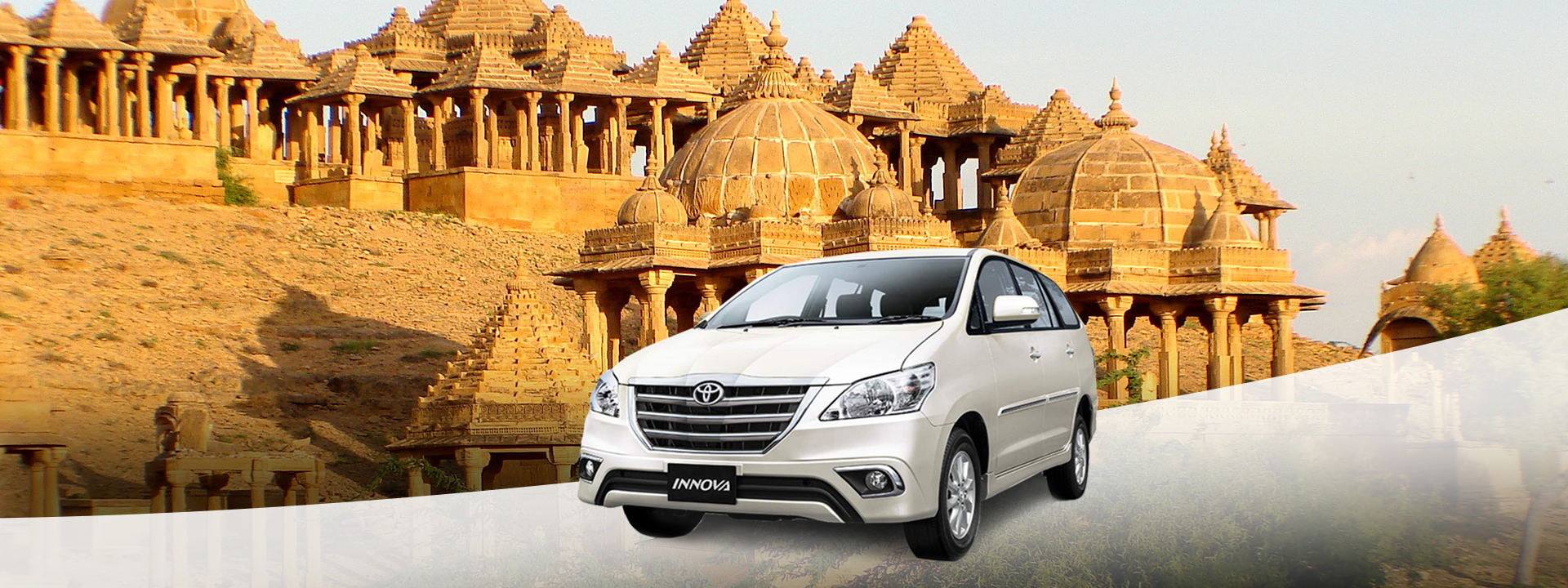
Equidistant from Jaisalmer and Lodhruva, Bada Bagh, literally meaning big garden, features a series of royal cenotaphs or chhatris of Jaisalmer Maharajas, including that of Jai Singh II (Maharaja Sawai Jai Sing). The first cenotaph in the region was built for Jai Singh II by his son, Lunkaran, in the 16th century. Jai Singh II was known for his contribution to making the city green. And to honor him, his son set up a memorial in the form of cenotaph near the dam and created a big park around it. All the cenotaphs here have a beautifully carved ceiling and elegant equestrian statues of rulers. The location of the garden is such that it offers incredible sunset vistas to tourists.
5
Stop 5
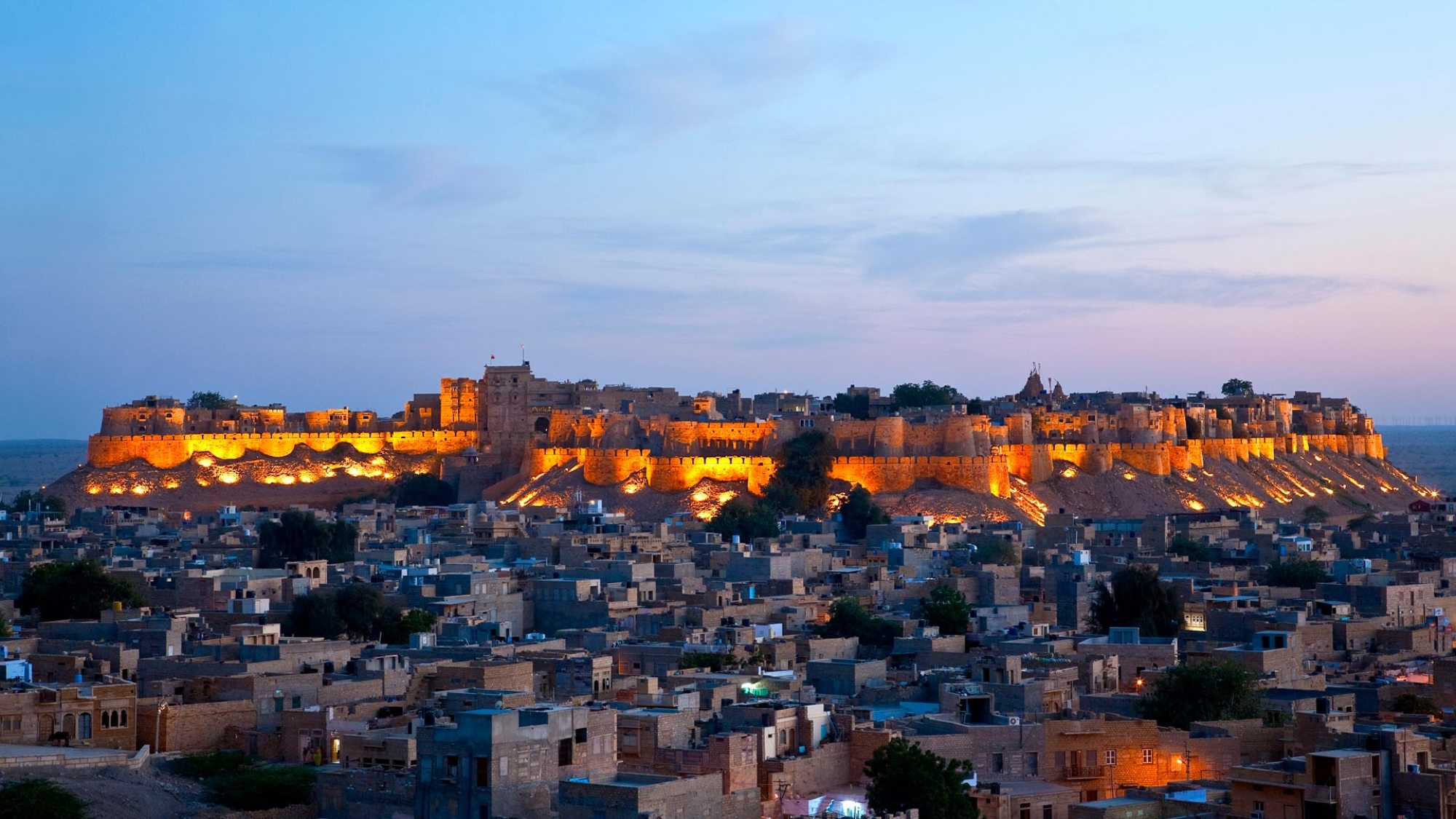
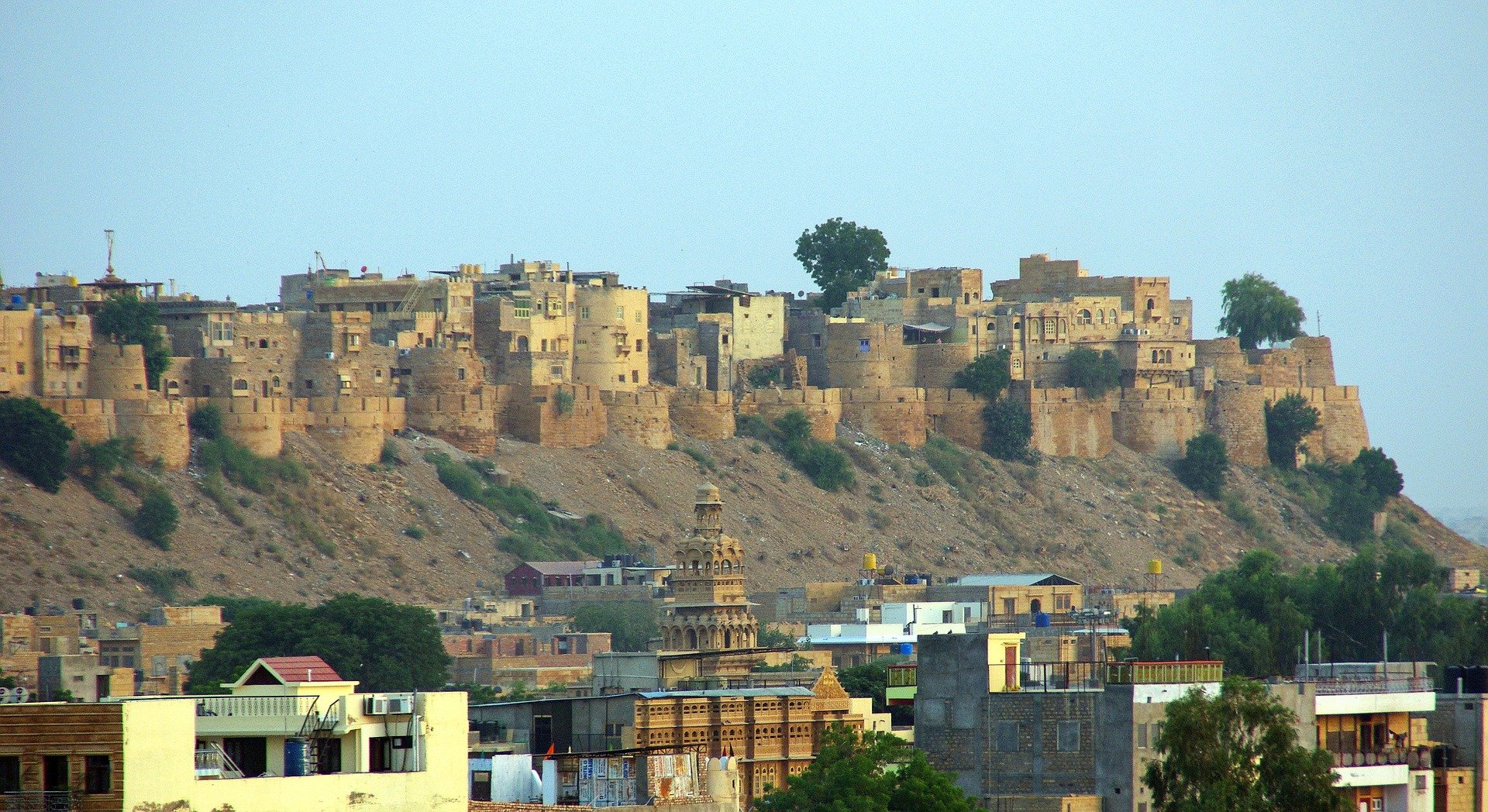
Golden Fort is situated in the city of Jaisalmer, in the Indian state of Rajasthan. It is believed to be one of the very few "living forts" in the world (such as Carcassonne, France), as nearly one fourth of the old city's population still resides within the fort.[1] For the better part of its 800-year history, the fort was the city of Jaisalmer. The first settlements outside the fort walls, to accommodate the growing population of Jaisalmer, are said to have come up in the 17th century.[1]
Jaisalmer Fort is the second oldest fort in Rajasthan, built in 1156 AD by the Rajput[2] Rawal (ruler) Jaisal from whom it derives its name, and stood at the crossroads of important trade routes (including the ancient Silk road).[1]
In 2013, at the 37th session of the World Heritage Committee held in Phnom Penh, Cambodia, Jaisalmer Fort, along with 5 other forts of Rajasthan, was declared a UNESCO World Heritage Site under the group Hill Forts of Rajasthan.
6
Within the vicinity of The Jaisalmer fort lie 7 Jain temples which are an embodiment of beautiful structural designs. Right from ceilings to tombs to gateways, each and every part of this temple is decorated with mirrors, frescoes, carvings, etc. These temples were built way back in the12th and 15th century, and are dedicated to various Jain Tirthankars (Hermits). On the walls of the temples, you can find animal & human figures, carved in famous Dilwara temple style. The Jain temple has a Gyan Bhandar, a library, which interest many tourists.
7
Stop 7
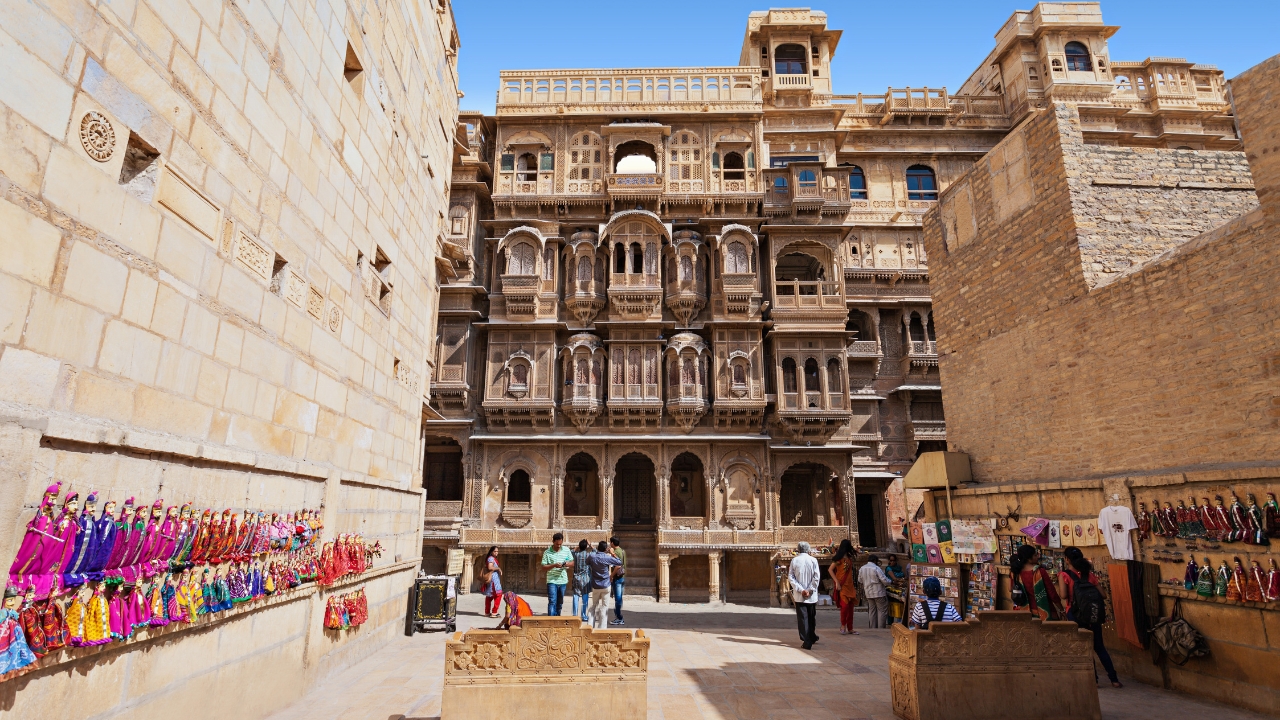
Patwa Havelis: are a cluster of five havelis aligned in a narrow lane in the heart of the city. Of the five havelis, the first haveli in the lane aka the Kothari’s Patwa Haveli is not only extraordinarily preserved and restored but is also open to visitors to experience the lifestyle of the erstwhile patwas.
8
It was constructed by Maharawal Berisal in 1885 CE, to serve as the residence of Diwan Mohata Nathmal, the then Prime Minister of Jaisalmer. The chief architects of this haveli were two brothers, named Hathi and Lulu. There is a very interesting story regarding its construction. It is believed that both the brothers started building the facets of the haveli simultaneously. The two sides are similar, but not identical.
9
Stop 9
Salim Singh Ki Haveli in Jaisalmer, built in 1815, is a stunning example of Rajasthani architecture with Mughal influences. Once home to Salim Singh, The powerful prime minister of Jaisalmer, The haveli is famous for its 38 intricately designed balconies and striking peacock-shaped roof. Its narrow structure rising above the town gives it the name “Jahaz Mahal,” resembling the stern of a ship. With beautiful stone carvings, latticework windows and a commanding view of the Golden City, It remains one of Jaisalmer’s most unique and historic landmarks.
What's not included
Any Type of food and drinks is not included in this day tour.
All Type of Entrance Charge is not included.
Available languages
Guide guide
HI
EN
Reviews breakdown
Tripadvisor
5.0
2 reviews
5★
2
4★
0
3★
0
2★
0
1★
0
Important information
Public transportation options are available nearby
Suitable for all physical fitness levels
Due to security concerns and other restrictions imposed by the Indian government, foreign tourists are currently not permitted to visit Tanot Temple, Longewala Post, or the Indo-Pak border. We regret any inconvenience this may cause.
About Jaisalmer
Jaisalmer, known as the Golden City, is a vibrant desert fortress in the heart of the Thar Desert. Its majestic sandstone architecture, rich history, and unique cultural heritage make it a captivating destination for travelers seeking adventure and tradition.
Top Attractions
Jaisalmer Fort
Jaisalmer Fort, also known as Sonar Quila, is a majestic fortress that dominates the skyline of the city. Built in 1156 AD, it is one of the largest and best-preserved forts in India.
Historical
2-3 hours
₹50 for Indians, ₹250 for foreigners
Patwon Ki Haveli
Patwon Ki Haveli is a cluster of five large havelis (mansions) built by wealthy merchants in the 19th century. These intricately carved havelis showcase the opulence and architectural prowess of the past.
Historical
1-2 hours
₹100 for foreigners
Sam Sand Dunes
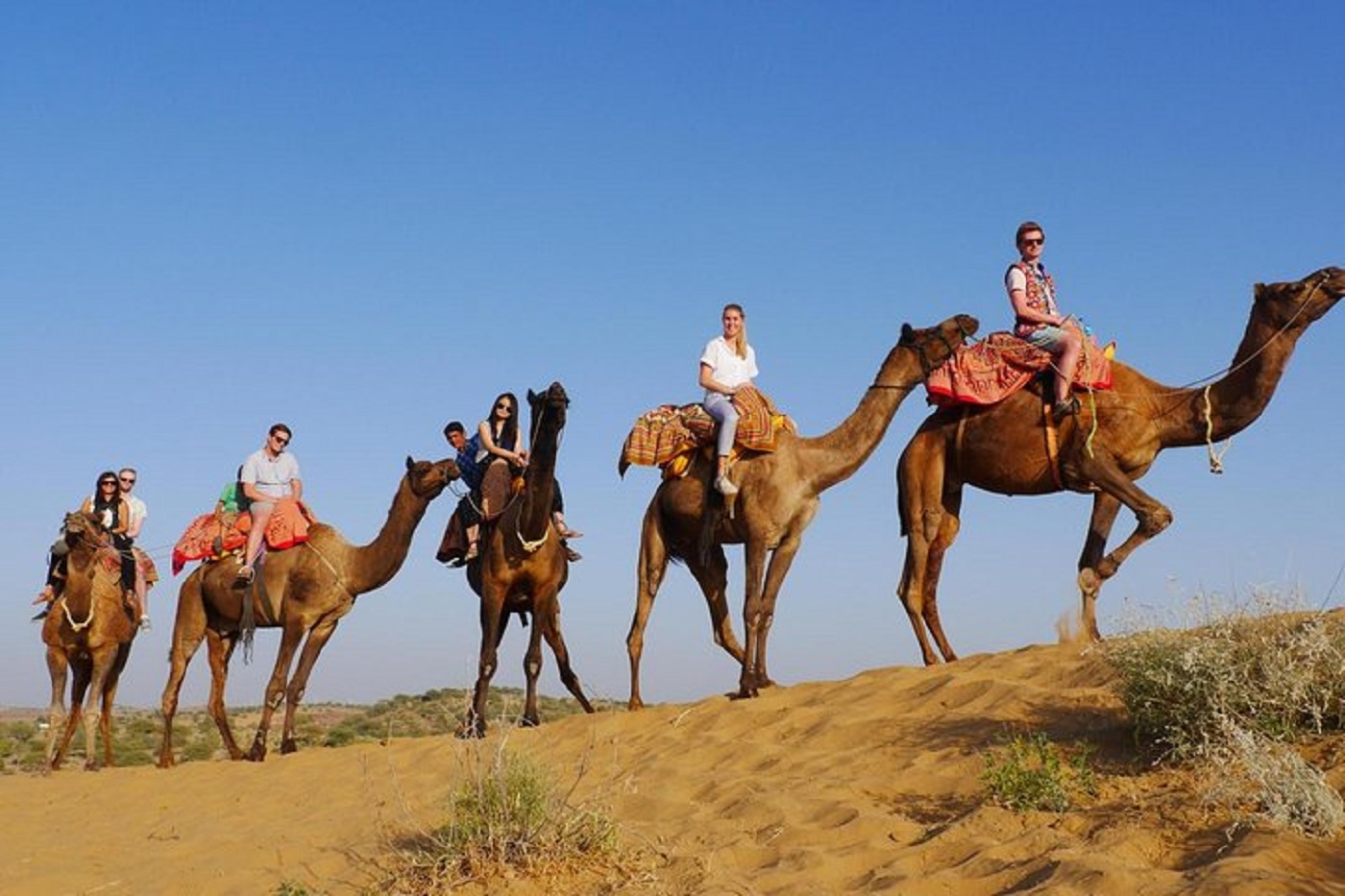
Sam Sand Dunes are a popular destination for experiencing the beauty of the Thar Desert. Located about 40 km from Jaisalmer, these golden sand dunes offer a unique and surreal landscape.
Nature
Half day to overnight
₹500-₹2000 depending on the tour package
Gadisar Lake
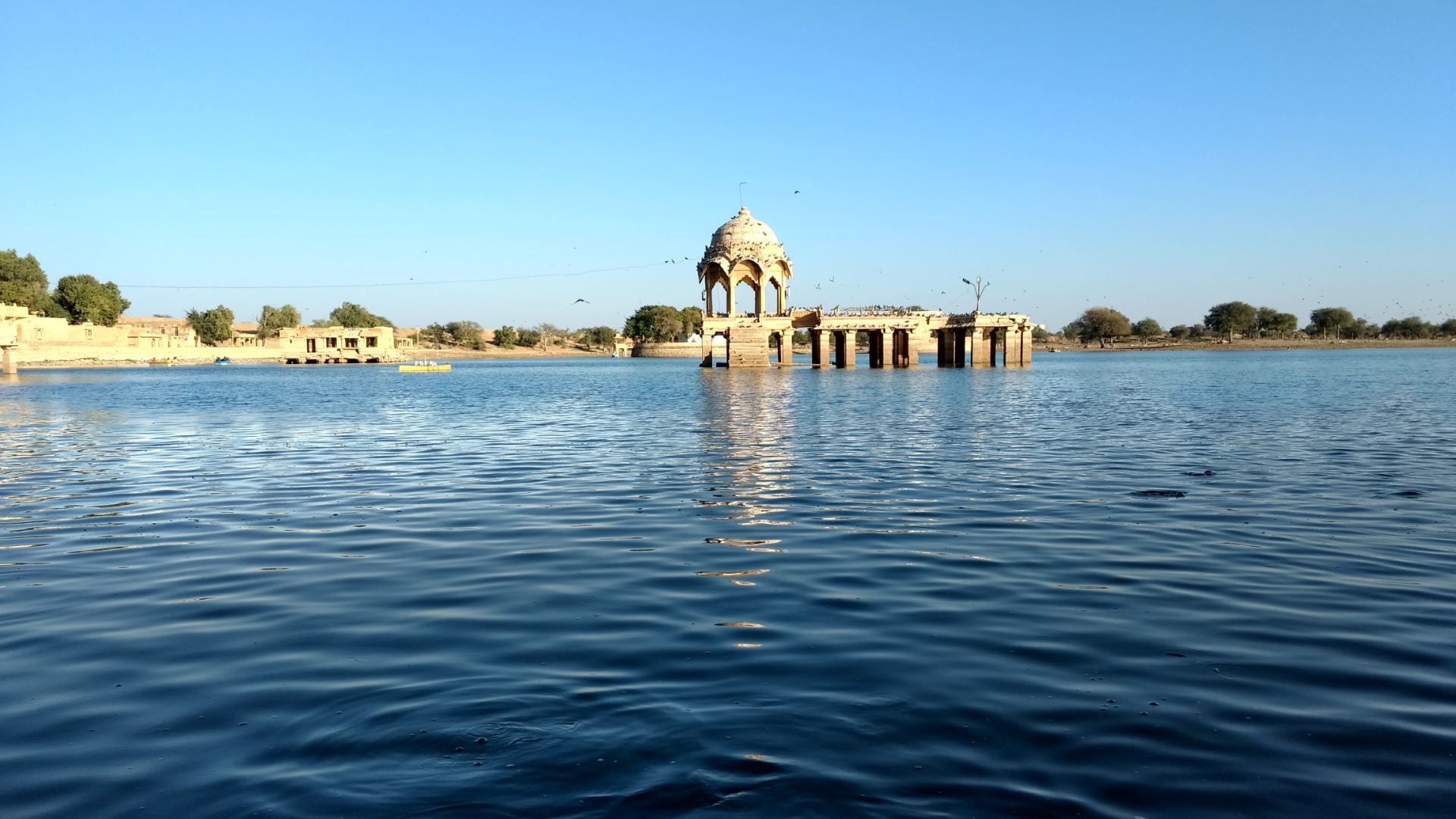
Gadisar Lake is a beautiful artificial lake that was once a major water source for the city. The lake is surrounded by temples, shrines, and ghats, making it a serene and picturesque spot.
Nature
1-2 hours
₹20-₹50 for boat rides
Jain Temples
The Jain Temples in Jaisalmer Fort are a collection of seven temples dedicated to various Jain Tirthankaras. These temples are known for their intricate carvings and beautiful architecture.
Religious
1-2 hours
Included in the fort entry fee
Must-Try Local Dishes
Dal Baati Churma
A traditional Rajasthani dish consisting of lentils (dal), baked wheat balls (baati), and sweet crumbled wheat (churma).
Dinner
Vegetarian
Gatte Ki Sabzi
A spicy curry made with gram flour dumplings (gatte) in a gravy made from yogurt, spices, and herbs.
Lunch/Dinner
Vegetarian
Ker Sangri
A unique dish made from desert vegetables (ker) and beans (sangri), cooked with spices and served with bread.
Lunch/Dinner
Vegetarian
Laal Maas
A spicy meat curry made with red chilies and a blend of aromatic spices.
Lunch/Dinner
Non-vegetarian
Popular Activities
Camel safaris
Desert camping
Jeep safaris
Boat rides on Gadisar Lake
Tea at local cafes
Shopping in local markets
Visiting havelis and forts
Attending local festivals
Best Time to Visit
October to March
The best time to visit Jaisalmer is from October to March when the weather is pleasant and ideal for exploring the city and its attractions. The cooler temperatures make it comfortable to engage in outdoor activities and festivals.
15°C to 35°C
59°F to 95°F
Practical Information
Language
- Official: Hindi
- Widely spoken: English, Rajasthani
- English: Moderately spoken in tourist areas
Currency
Indian Rupee (INR)
Time Zone
GMT+5:30
Electricity
230VV, 50HzHz
Safety Information
Overall Safety Rating: Generally safe, but exercise caution in crowded areas and when traveling alone at night.
Jaisalmer is generally safe for travelers, but petty crime and scams can occur, especially in crowded areas and tourist hotspots. Be cautious of your belongings and avoid walking alone at night in poorly lit areas.
Important Precautions:
- • Be cautious of your belongings in crowded areas.
- • Avoid accepting rides or invitations from strangers.
- • Bargain for prices in markets and with vendors.
Getting there
By air
- Jaisalmer Airport • 10 km from city center
By train
Jaisalmer Railway Station
By bus
Jaisalmer Bus Stand
Getting around
Public transport
City buses are the most common form of public transportation in Jaisalmer. They are affordable and cover most areas of the city.
Taxis
Available • Apps: Uber, Ola
Rentals
Car, Bike, Scooter
Neighborhoods
Old City
New City
Day trips
Sam Sand Dunes
40 km • Half day to overnight
Experience the beauty of the Thar Desert with camel safaris, sunset views, and desert camping.
Kuldhara Village
25 km • Half day
Explore the abandoned village of Kuldhara, which was mysteriously deserted over 400 years ago.
Lodurai Village
16 km • Half day
Visit the beautiful Jain temples and enjoy the serene atmosphere of this historic village.
Festivals
Jaisalmer Desert Festival • February
Diwali • October/November (dates vary each year)
Teej • July/August (dates vary each year)
Pro tips
- Visit the Jaisalmer Fort early in the morning or late in the afternoon to avoid the midday heat and crowds.
- Hire a local guide to explore the city's historic sites and learn about its rich history and culture.
- Try the local street food, but be cautious and choose vendors with high turnover to ensure freshness.
- Book a camel safari or desert camp experience to enjoy the beauty of the Thar Desert and immerse yourself in the local culture.
- Attend the Jaisalmer Desert Festival if you are visiting in February for a vibrant and unforgettable experience.
From $25
per person
Price varies by option
Secure booking
Free cancellation available
Instant confirmation