Granada Day Trip with Alhambra and Albaicin Tour from Seville
Active
13h
All sales are final. No refund is available for cancellations.
Instant_then_manual confirmation
Mobile or paper ticket accepted
About this experience
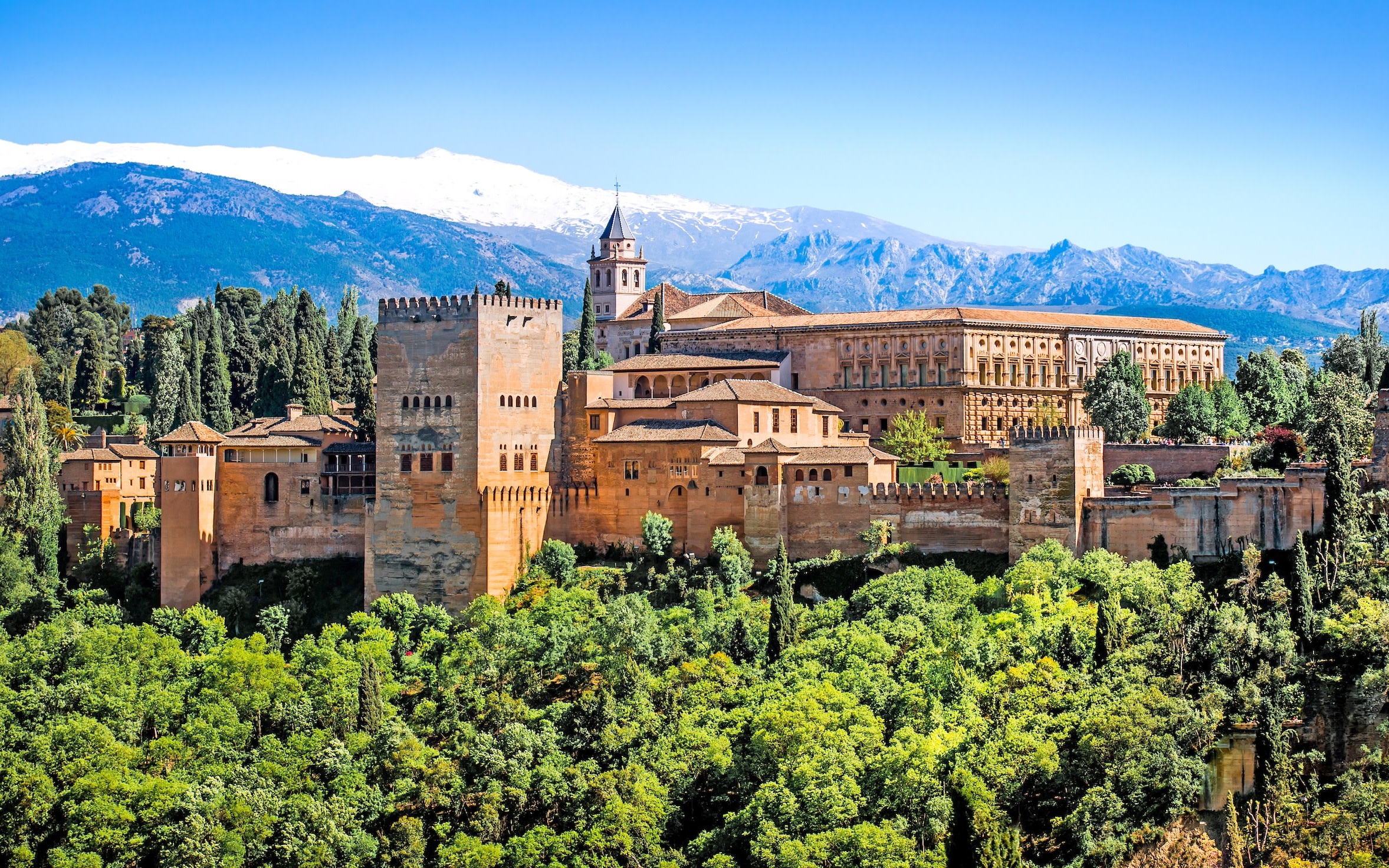
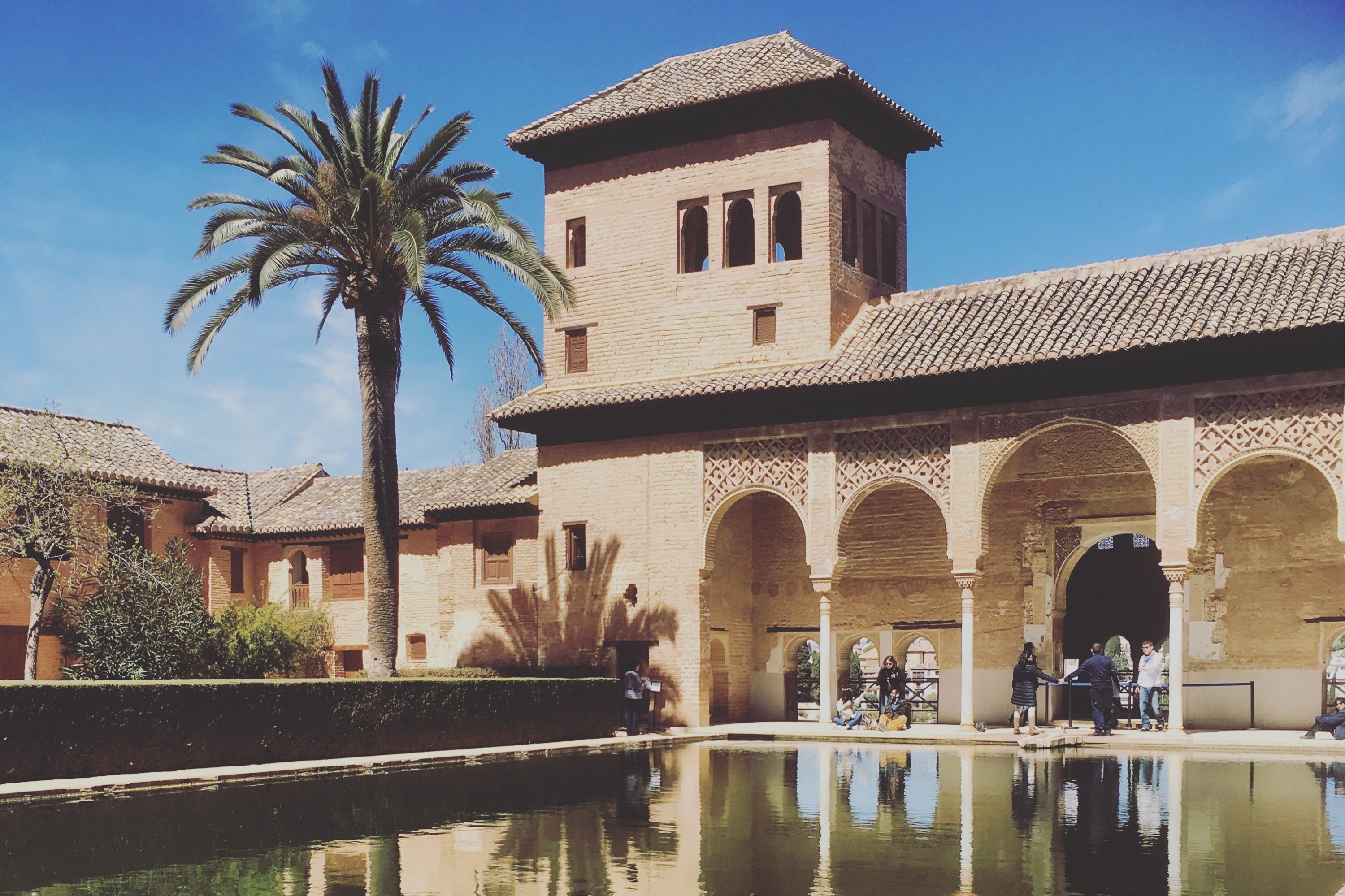
Experience Andalusia’s UNESCO World Heritage-listed wonders on this day trip from Seville to Granada. Enjoy skip-the-line entrance to Alhambra Palace (if option selected), Generalife Gardens, Nasrid Palace and the Alcazaba fortress(if option selected), and explore numerous courtyards filled with fountains, flowerbeds, pavilions and fortresses featuring Moorish architecture. Take an optional walking tour of the Albaicin quarter and learn fascinating facts about these sites from your knowledgeable guide as you travel by comfortable coach.
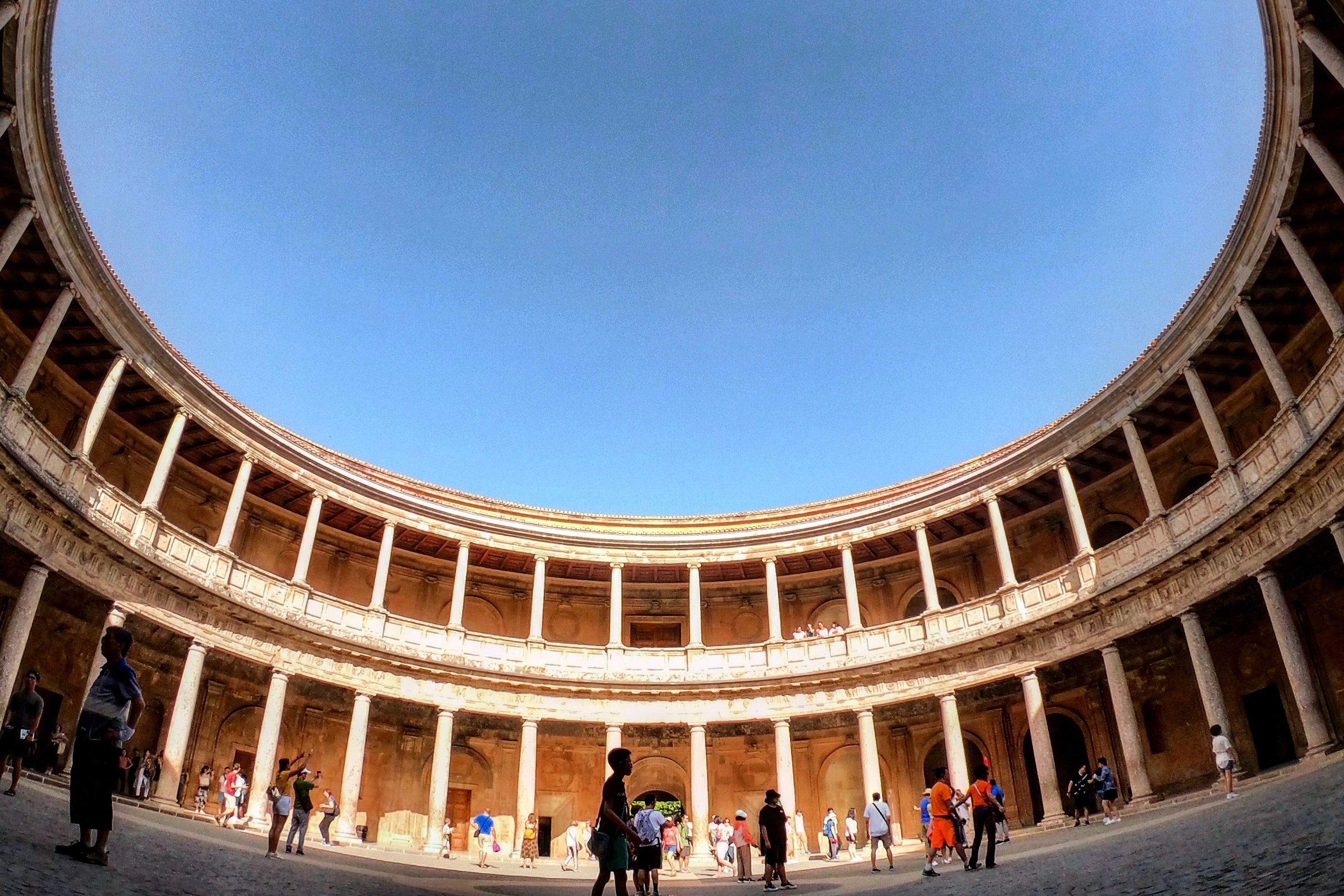
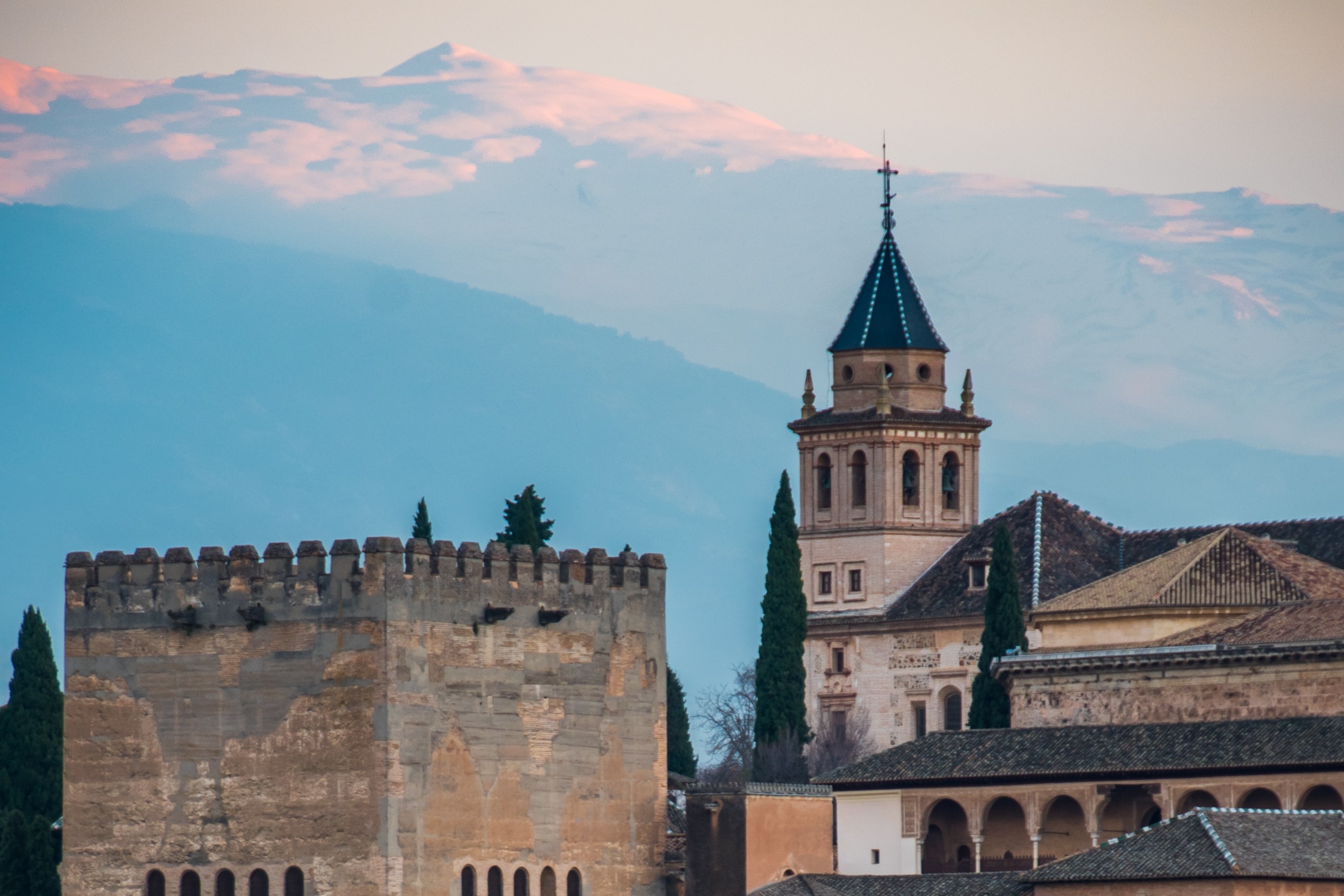
If option selected, explore the surroundings of the Alhambra on your own, taking in the lush greenery and fountains, see ancient towers and stunning views of Granada. Along the way, you'll discover hidden paths, shaded by cypress trees, and admire the contrasting architecture of the Charles V Palace.
Available options
Alhambra Guided Tour
Alhambra Tour: Granada day trip including full Alhambra Tickets
Albaicin&Alhambra Surroundings
NASRID PALACES NOT INCLUDED : NOT included : Important note, in this option, tickets to the Nasrid Palaces, Fortress and Generalife are NOT included
Alhambra Ticket and Albaicin
Alhambra and Albaicin: Granada day trip including full Alhambra Entry Tickets and Albaicin walking tour.
What's included
Local guide
Tour leader on the bus (English and Spanish)
Pickup and drop-off in meeting point of Seville city centre
Albaicin walking tour (if option selected)(English and Spanish)
Entry to Nasrid Palace, Alcazaba fortress, and the Gardens (if option selected),
Detailed itinerary
1
Stop 1
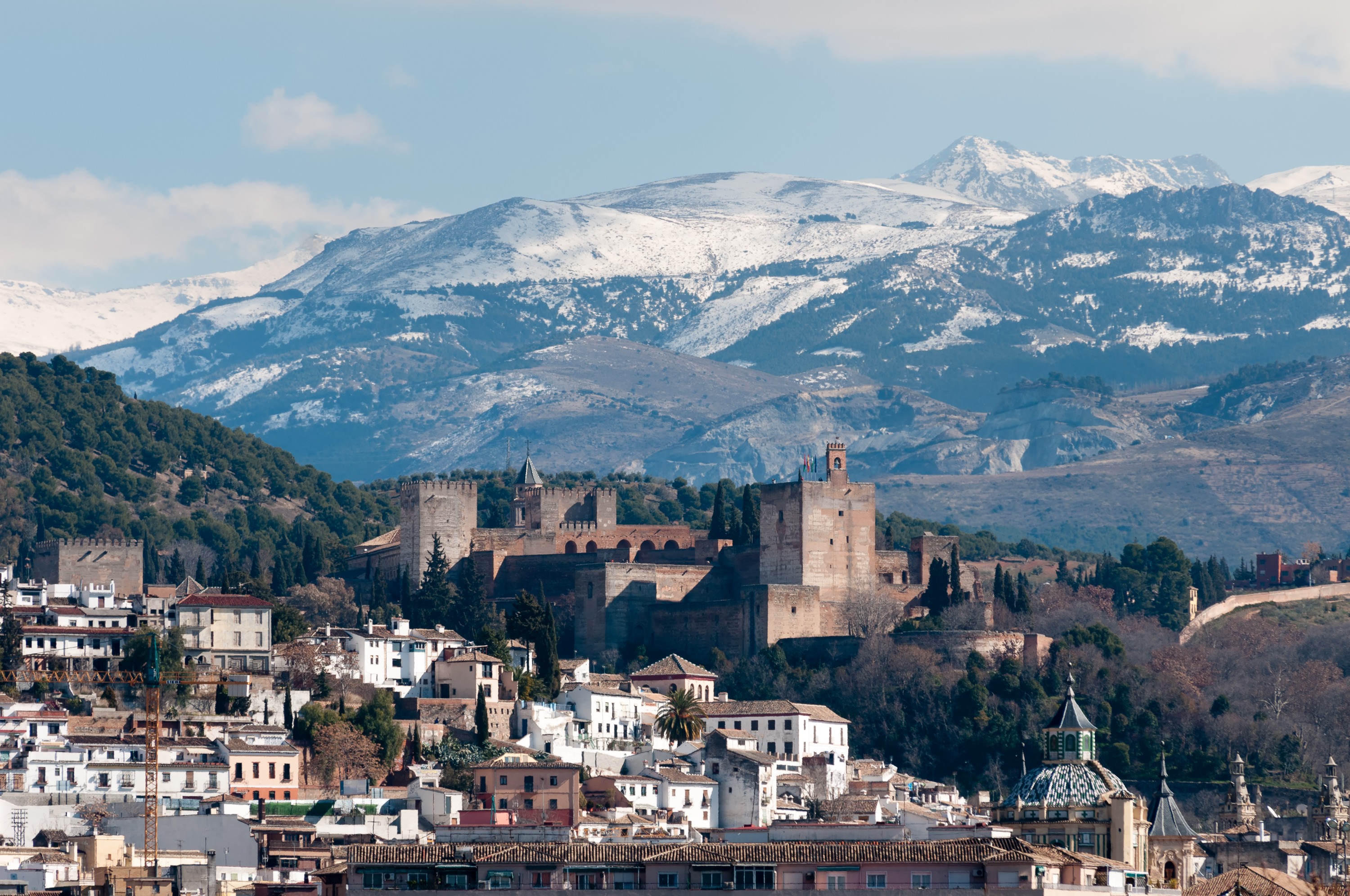
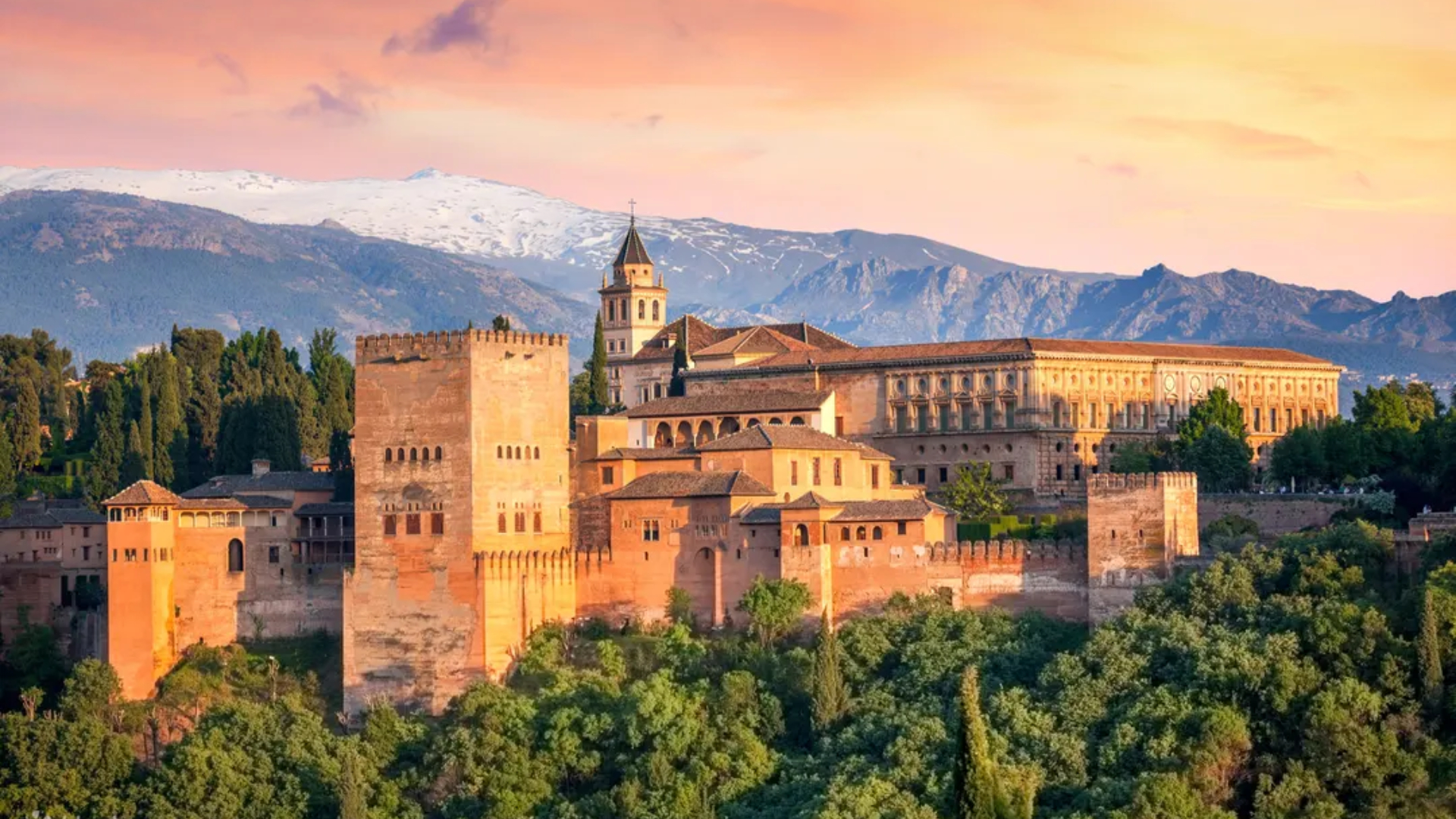
On a rocky hill that is difficult to access, on the banks of the River Darro, protected by mountains and surrounded by woods, among the oldest quarters in the city, the Alhambra rises up like an imposing castle with reddish tones in its ramparts that prevent the outside world from seeing the delicate beauty they enclose.
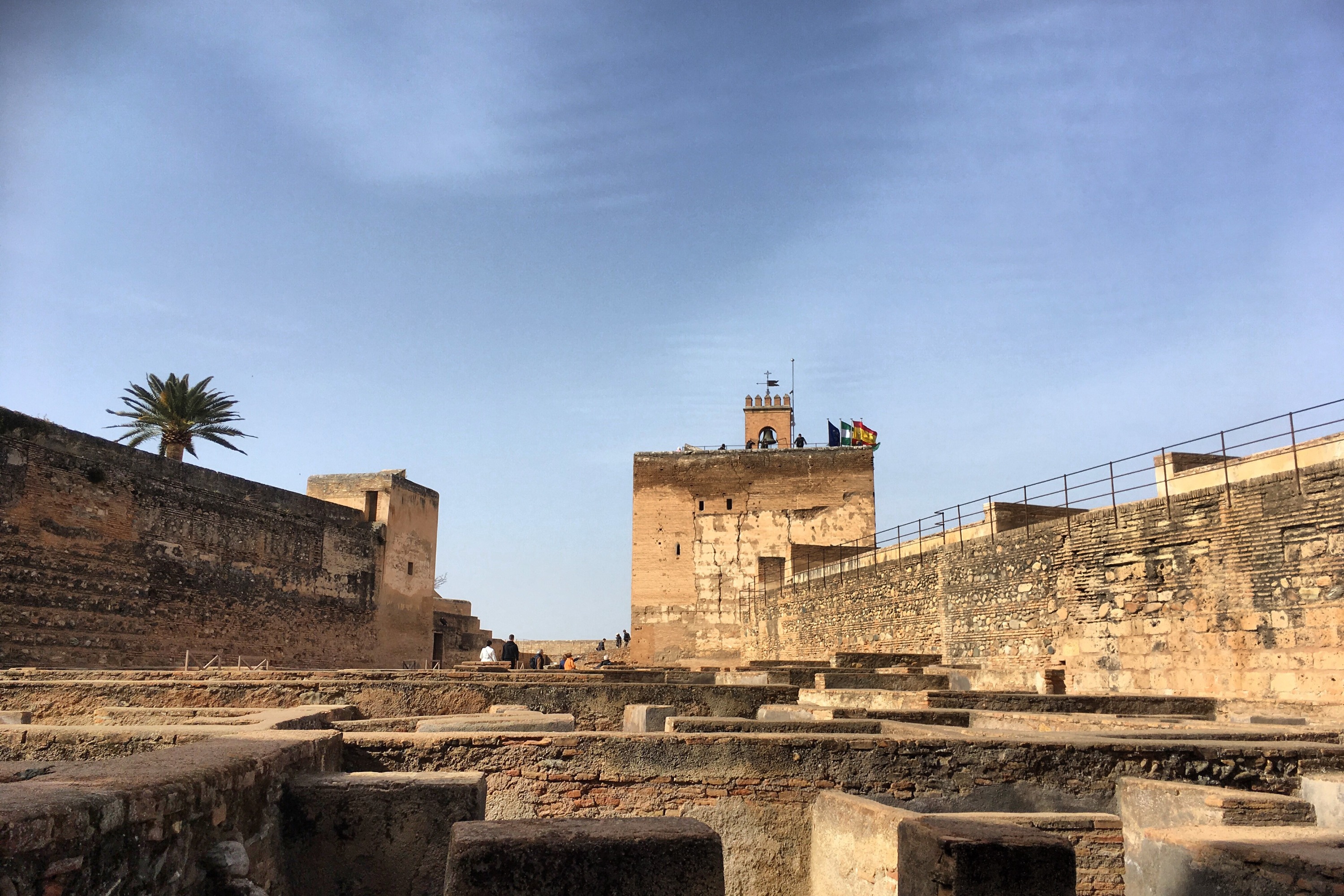
Originally designed as a military area, the Alhambra became the residence of royalty and of the court of Granada in the middle of the thirteenth century, after the establishment of the Nasrid kingdom and the construction of the first palace, by the founder King Mohammed ibn Yusuf Ben Nasr, better known as Alhamar. The fortress became a citadel with high ramparts and defensive towers, which house two main areas: the military area, or Alcazaba, the barracks of the royal guard, and the medina or court city, the location of the famous Nasrid Palaces and the remains of the houses of noblemen and plebeians who lived there.
You will have time to enjoy lunch after this visit.
2
The Alcazaba plainly served a military function. The entrance to the Alcazaba was at the foot of the Tower of Homage . At the base of the tower is a slight slope. A simple L-shaped walkway keeps the main gate from being seen from the outside.
3
Stop 3
The habitual residence of the Kings of Granada, their construction began at the beginning of the 14th Century. The Nasrid Palaces are a palatial complex formed by three buildings:
- The Mexuar is the oldest hall. It was employed for meetings between the Ministers of the King and as a courtroom.
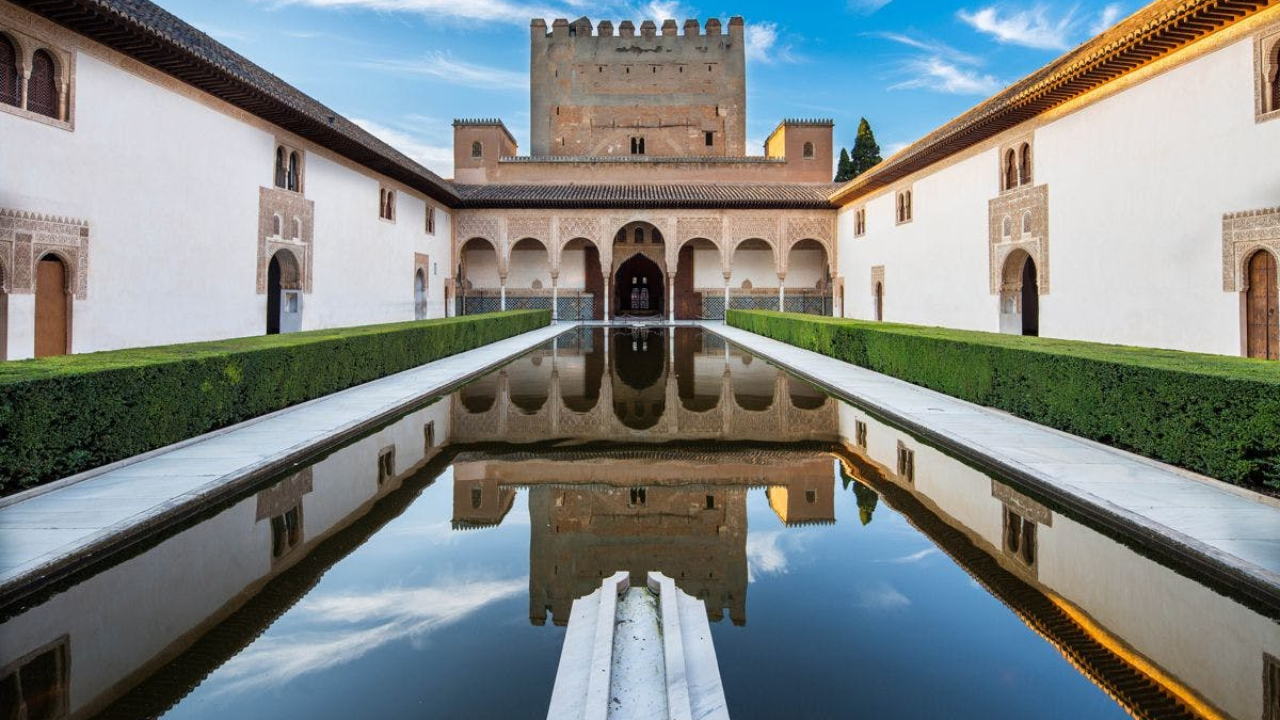
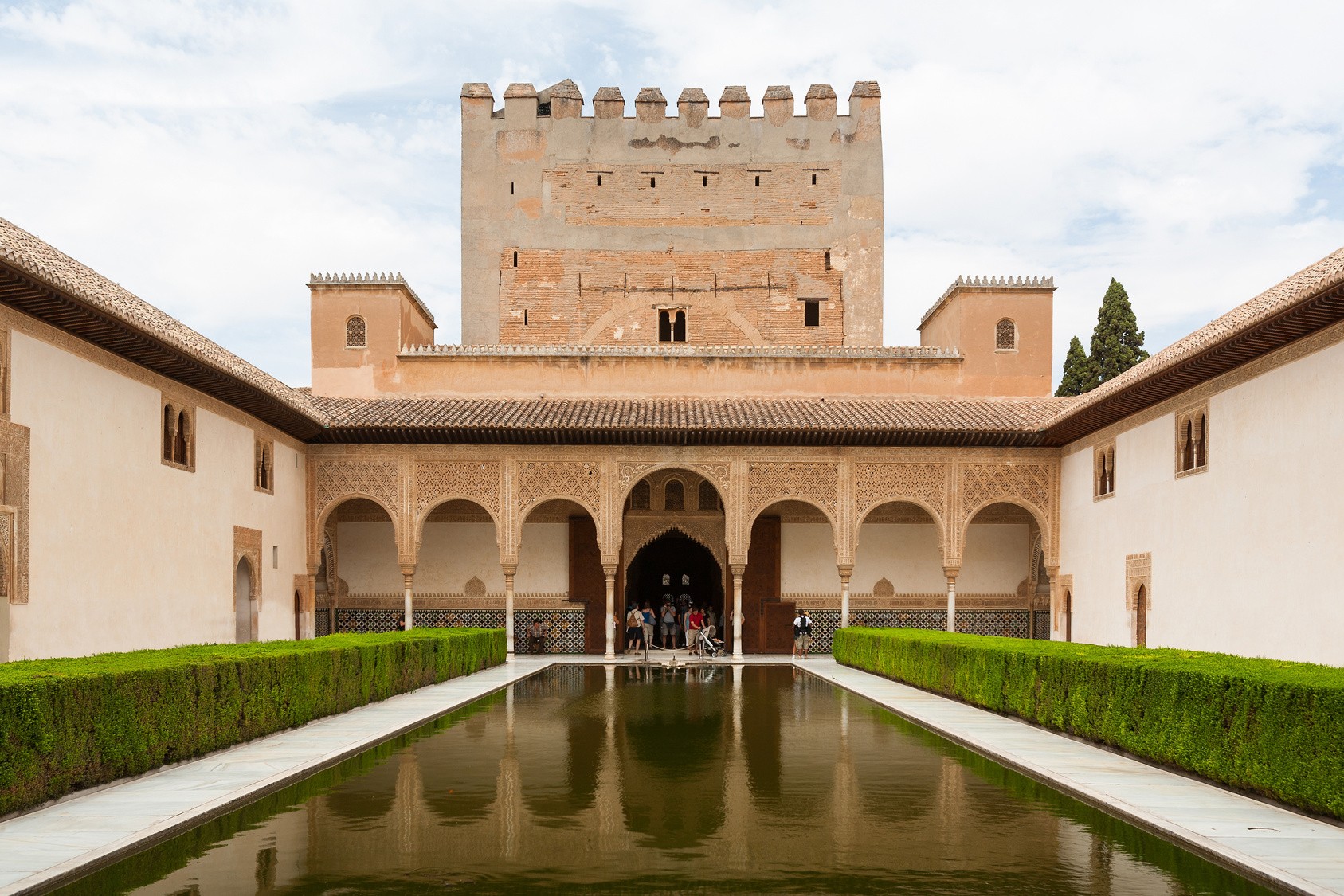
- Next, we come to the Palace of Comares, which dates back to the era of Yusuf I. This dwelling was erected around the Patio de los Arrayanes (Courtyard of the Myrtles), and its side exits lead to the Sala de los Embajadores (Hall of Ambassadors) and the Sala de la Barca (Hall of the Boat).
- The Palace of the Lions, dating back to the era of Muhammed V, is also a royal residence. It is composed of a central courtyard, the Courtyard of the Lions, and halls along each side, the Hall of the Mocarabes, the Hall of the Kings, the Hall of the Two Sisters, the Hall of the Ajimeces, leading on to the mirador Daraxa viewpoint, and the Hall of the Abencerrajes, along with the Harem.
4
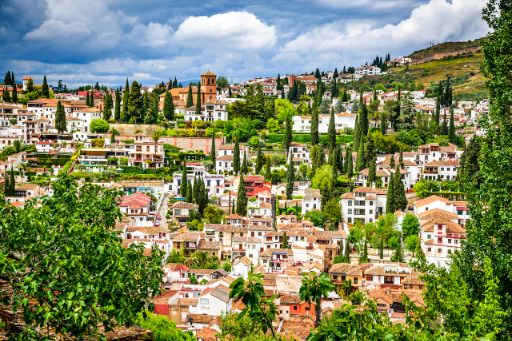
The Albaicin is a “barrio” (a neighbourhood) of Granada which has been built on a hill opposite the Alhambra. The layout came about when Granada was ruled by the Arabs long before the advent of cars so the streets form a narrow cobblestoned maze interspersed with small squares. The geranium filled balconies, glimpses of the Alhambra at every turn, the silence and the sound of running water in numerous fountains all give the Albayzin a romantic slightly enchanted atmosphere.
What's not included
Lunch
Headphones
Available languages
Audio guide
DE
IT
FR
Guide guide
EN
ES
Reviews breakdown
Viator
4.1
951 reviews
5★
494
4★
245
3★
116
2★
46
1★
50
Tripadvisor
4.2
234 reviews
5★
147
4★
35
3★
23
2★
5
1★
24
Important information
Infants and small children can ride in a pram or stroller
Public transportation options are available nearby
Specialized infant seats are available
Travelers should have at least a moderate level of physical fitness
The order of the visit can be changed to any unexpected circumstances. In order to facilitate these changes, your visit may be offered in two different languages
Please note: Depending on the schedule provided by the Alhambra monument the order of the itinerary can be changed.
May be operated by a multi-lingual guide
Please note: the Alhambra requires that all passengers provide the full name, date of birth and passport details for each participant when booking. If not provided, the Alhambra may deny access to their premises.
The maximum of travellers in the Alhambra guided tour will be 30 people and the maximum of travellers in the bus will be 50 people.
The tour with the guide in German, Italian or French requires a minimum number of participants and it is possible to be cancelled with short notice if the minimum is not met. In this case, we will provide audio guide for those languages.
Below is a list of meeting points available for you to choose from. Please select one and ensure you arrive at the indicated time: 7.00 am Hotel Petit Palace Triana / 7.10 am Hotel Derby / 7.15 am Hotel Don Paco / 7.20 am BIKE CENTER Sevilla . The pickup time can be modified, be sure to contact the company the day before your tour to confirm exact pick up time.
If you have booked the option Albaicin&Alhambra Surroundings, take into account The Alhambra Guided Tour is not included
Meeting point
8.30 am Calle Rastro 12a
Important notes
• Please contact the local supplier the day before your tour to confirm the time of pickup
• A moderate amount of walking is involved
• Due to uneven surfaces, this tour is not recommended for those with walking disabilities or using a wheelchair
• The order of visits can be changed due to unexpected circumstances or the Alhambra monument schedule
• Pick-up time may be modified due to unforeseen circumstances or due to the Alhambra's calendar, but it will always be between 07:00 and 08:30. So you must confirm the exact pick-up time with the provider 24 hours before the tour.
• May be operated by a multi-lingual guide
•If you have booked the option Albaicin&Alhambra Surroundings, take into account The Alhambra Guided Tour is not included, these tours are only in Spanish and English
• Please note: the Alhambra requires that all passengers provide the full name, date of birth and passport details for each participant when booking. If not provided, the Alhambra may deny access to their premises.
• The maximum of travellers in the Alhambra guided tour will be 30 people and the maximum of travellers in the bus will be 50 people.
• For reasons of sustainability and cleanliness we do not provide headphones. It is recommended that customers bring their own headphones, if you can not bring yours we can provide them for the price of 1€.
• Emergency phone for local supplier open 6am to 11pm at +34 650 922 997 or +34 664 274 428 or email info@andalsurexcursiones.com (specially for last minute bookings to provide the hotel details for the pickup).
About Seville
Seville, the capital of Andalusia, is a city rich in history, culture, and vibrant traditions. Known for its stunning architecture, including the iconic Alcázar and Seville Cathedral, the city offers a unique blend of Moorish and Spanish influences. The warm climate, lively festivals, and delicious cuisine make it a captivating destination for travelers.
Top Attractions
Real Alcázar de Sevilla
The Alcázar is a stunning royal palace with a mix of Moorish, Gothic, and Renaissance architecture. It is a UNESCO World Heritage Site and features beautiful gardens and courtyards.
Historical/Architecture
2-3 hours
€11.50 (General admission)
Seville Cathedral and Giralda Tower
The Seville Cathedral is the largest Gothic cathedral in the world and a UNESCO World Heritage Site. The Giralda Tower offers panoramic views of the city.
Historical/Religious
1-2 hours
€11 (General admission)
Plaza de España
This iconic plaza is a masterpiece of Regionalism architecture, featuring a semi-circular plaza with beautiful tiled benches and a large fountain.
Architecture/Cultural
1-2 hours
Free
Barrio de Santa Cruz
The historic Jewish quarter of Seville, known for its narrow, winding streets, charming plazas, and vibrant atmosphere.
Cultural/Historical
1-2 hours
Free to explore
Triana Market
A traditional market offering a variety of fresh produce, meats, cheeses, and local specialties. It's a great place to experience the local culture and cuisine.
Cultural/Shopping
1 hour
Free to enter, prices vary
Must-Try Local Dishes
Gazpacho
A cold soup made from tomatoes, cucumbers, bell peppers, garlic, and olive oil. It's a refreshing dish perfect for hot summer days.
Appetizer
Vegan
Salmorejo
A thicker and creamier version of gazpacho, made with tomatoes, bread, garlic, and olive oil. Often topped with hard-boiled eggs and jamón.
Appetizer
Vegetarian
Rabo de Toro
A traditional stew made with oxtail, red wine, and vegetables. It's a hearty and flavorful dish that's a staple in Andalusian cuisine.
Main Course
Contains meat
Pescaíto Frito
Fried small fish, typically served as a tapas dish. It's a popular snack in Seville, often enjoyed with a glass of wine.
Appetizer
Contains fish
Popular Activities
Hiking in the nearby Sierra Morena mountains
Biking along the Guadalquivir River
Relaxing in the gardens of the Real Alcázar
Enjoying a traditional spa experience
Visiting the numerous museums and galleries
Attending flamenco performances
Boating on the Guadalquivir River
Swimming at nearby beaches
Best Time to Visit
April to June, September to October
The best time to visit Seville is during spring and autumn when the weather is pleasant and the city is lively with festivals and events. The temperatures are comfortable, and the tourist crowds are manageable.
20°C to 35°C
68°F to 95°F
Practical Information
Language
- Official: Spanish
- Widely spoken: English, French
- English: Moderately spoken
Currency
Euro (EUR)
Time Zone
GMT+1 (CET), GMT+2 (CEST during daylight saving time)
Electricity
230VV, 50HzHz
Safety Information
Overall Safety Rating: Generally safe
Seville is generally safe for travelers, but petty crime such as pickpocketing can occur in crowded areas. Be cautious and take standard precautions to protect your belongings.
Important Precautions:
- • Keep valuables secure and out of sight
- • Be cautious of pickpockets in crowded areas
- • Use licensed taxis or ride-sharing apps
Getting there
By air
- Seville Airport • 10 km from city center
By train
Santa Justa Station
By bus
Plaza de Armas, Príncipe Pío
Getting around
Public transport
The bus network is the primary form of public transport in Seville, covering most of the city and its suburbs.
Taxis
Available • Apps: Cabify, Uber
Rentals
Car, Bike, Scooter
Neighborhoods
Santa Cruz
Triana
Arsenal
Macarena
Day trips
Córdoba
140 km from Seville • Full day
Córdoba is a historic city known for its stunning Mosque-Cathedral, a UNESCO World Heritage Site, and its beautiful patios and gardens.
Ronda
130 km from Seville • Full day
Ronda is a picturesque town perched on a cliff, known for its dramatic views, historic bullring, and ancient Arab baths.
Cádiz
120 km from Seville • Full day
Cádiz is a coastal city known for its beautiful beaches, historic sites, and vibrant carnival celebrations.
Festivals
Feria de Abril • Two weeks after Easter
Semana Santa • The week leading up to Easter
Feria de San Miguel • Late September to early October
Pro tips
- Visit the Real Alcázar early in the morning to avoid crowds and enjoy the gardens in peace
- Explore the Triana neighborhood for authentic ceramics, flamenco, and local cuisine
- Try salmorejo, a thicker and creamier version of gazpacho, at a local bodega
- Take a day trip to Itálica to explore the ancient Roman ruins near Seville
- Attend a flamenco performance at a local tablao for an authentic cultural experience
From $25
per person
Price varies by option
Secure booking
Free cancellation available