Buggy Tour and Cruise from Coral Bay to Blue Lagoon
Active
8h
For a full refund, cancel at least 24 hours before the scheduled departure time.
Manual confirmation
Mobile or paper ticket accepted
About this experience
The best way to see Akamas! This tour is the most adventurous way to explore the terrestrial and marine nature of the Akamas Peninsula and the National Park. The quad bike will give you the feeling of freedom and the buggy will give you the comfort to enjoy this ride. You can both get the experience of driving an off-road vehicle on the dusty roads and also swim in the crystal clear waters of the Blue Lagoon.
The top 3 reasons to join this tour are to ride a quad bike or buggy on a sightseeing tour, including visiting watermarks like the Blue Lagoon in Neo Chorio. Explore the nature and treasures of the National Park and create unforgettable memories with your family and friends. The option of 3 seats and 4 buggy seats is available.
Available options
DOUBLE QUAD
QUAD FOR 2 PERSON
2 SEAT BUGGY
BUGGY FOR 2 PEOPLE
SINGLE QUAD
SINGLE QUAD
4 SEAT BUGGY
BUGGY FOR 4 PEOPLE
3 SEAT BUGGY
BUGGY FOR 3 PEOPLE
What's included
Boat Trip Tickets
Helmets and Goggles (if needed)
All Fees and Taxes
Detailed itinerary
1
Pegeia is situated mainly on the steep slopes of the coastal hills inland from Coral Bay, at the southern end of the Akamas Peninsula. The origin of the name Pegeia is said to derive from the Latin word Baia (Bay). The village itself was first settled by Venetians, during the Venetian Domination of Cyprus (1489-1570).
2
The Sierra Leone-flagged EDRO III ran aground on 8 September 2011 in heavy seas, during a voyage to Rhodes with a cargo of plasterboard. At the time of the accident, the ship had nine crew members – seven Albanians and two Egyptians. The crew were rescued and airlifted to safety. The EDRO III weighs about 2.5 tons and is over 80 meters in length. Embarking on the ship is no longer permitted as it is dangerous.
3
The area boasts caves, as well as spectacular rock formations, which have taken thousands of years to form. Earlier, when the human presence was less prominent, there were seals (Monachus monachus) inhabiting the caves, which added to the popularity of the area among the sightseers.
4
In this area, between 1952 and 1955, the Department of Antiquities of Cyprus excavated three Early Christian basilicas and a bath, all dated to the 6th century AD. The settlement was probably a port of call for the ships that transported grain from Egypt to Constantinople. The archaeological site next to St George’s is considered to be the most significant early Byzantine site in Cyprus.
Off of the coast lies Yeronisos Island (Holy Island) that is supposed to have been part of the mainland at some point. The archaeological findings have shown three major periods of settlement: Chalcolitic, Hellenistic and Early Byzantine.
There is a church you can visit, as well as catacombs, which are thought to have belonged to the earlier version of it, as well as a little scenic marina adding to the charm and the spectacular view of St George’s.
5
Stop 5
Akamas is the last large unspoiled coastal area remaining in Cyprus and one of the very few important sea turtle nesting grounds in the Mediterranean. Both the Loggerhead Turtle (Caretta-caretta) and the rarer Green Turtle (Chelonia mydas) nest in Turtle Bay; the latter depends on the Akamas beaches for its very survival in this region. The IUCN (International Union for the Conservation of Nature) lists Loggerheads as “vulnerable” and Green Turtles as an “endangered species”. According to the IUCN, the annual number of Green Turtle nesting females in the entire Mediterranean could be as low as 325-375. From end of May to September, you can see the nests that are protected by little enclosures.
In 1989 the Lara coastal region and adjacent sea was declared into a Protected Area. We explain more about the turtles as well.
At this stop, we swim and info about the turtles.
We stop in a cafe near Lara Beach were you can enjoy your lunch or have a snack/drink (not included in the price).
6
Akamas is named after the son of Theseus, the mythical king of Athens.
The main vegetation of Akamas forest consists of very rich, bush-like flora, and the most dominant trees are pines, wild olive-trees, and wild carobs.
Many Magnesium mines used to be operated in the region of Akamas. Today, one can come upon abandoned mines’ galleries, close to which stand the remains of furnaces and kilns that were used for the on-sight processing of the ore.
There are no settlements in Akamas today. However, there are remains of many churches; today most of them are known as names of places or are deserted.
7
This is Akamas's view. We stop here to take photos and enjoy the view of the mountains and the Akamas Peninsula.
8
Latchi or Lakki is a small village that belongs to the area of the Polis and has a small port and number of souvenir shops. Here we stop for lunch, for those who ordered, and then take the boat to the Blue Lagoon.
9
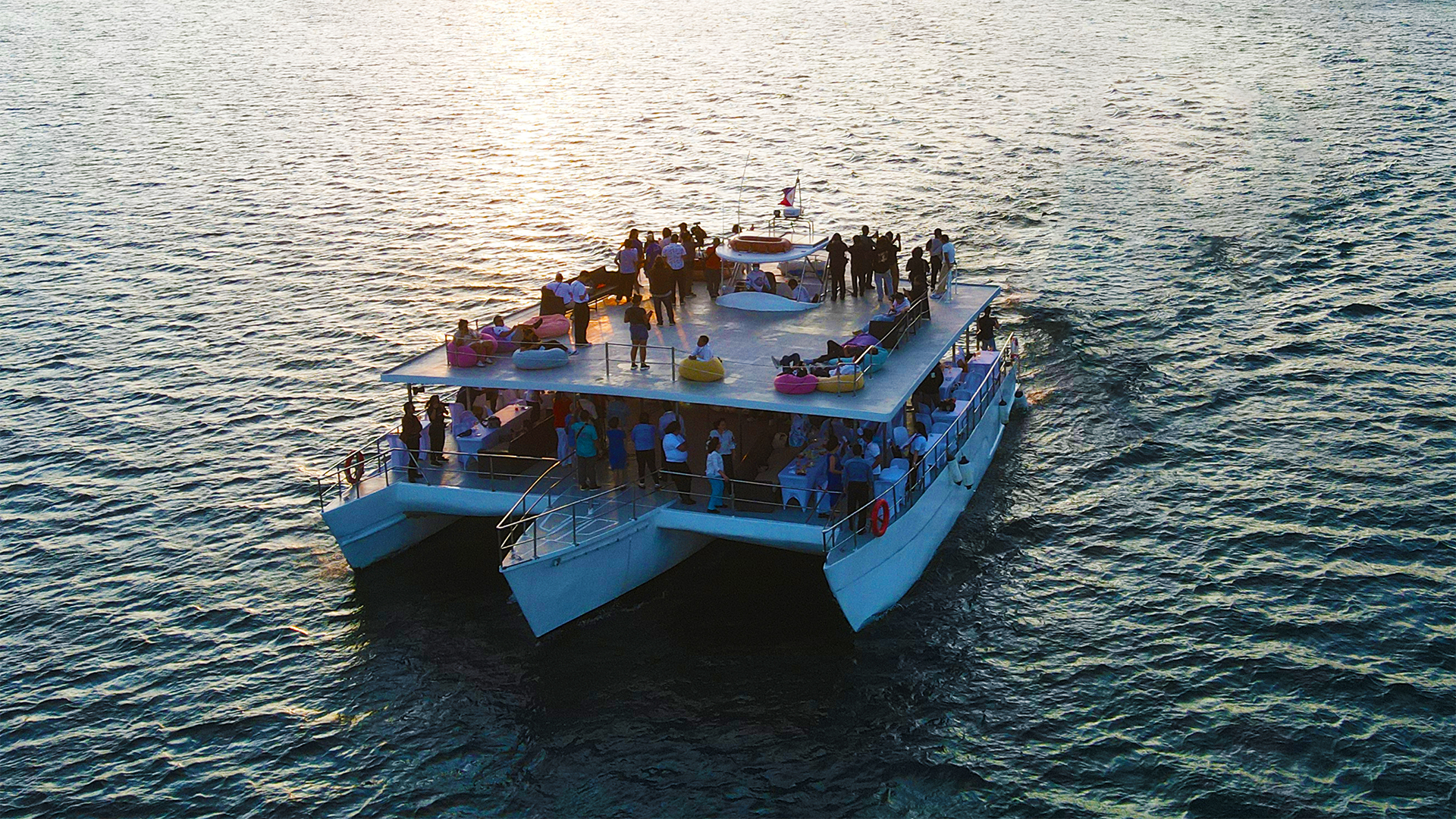
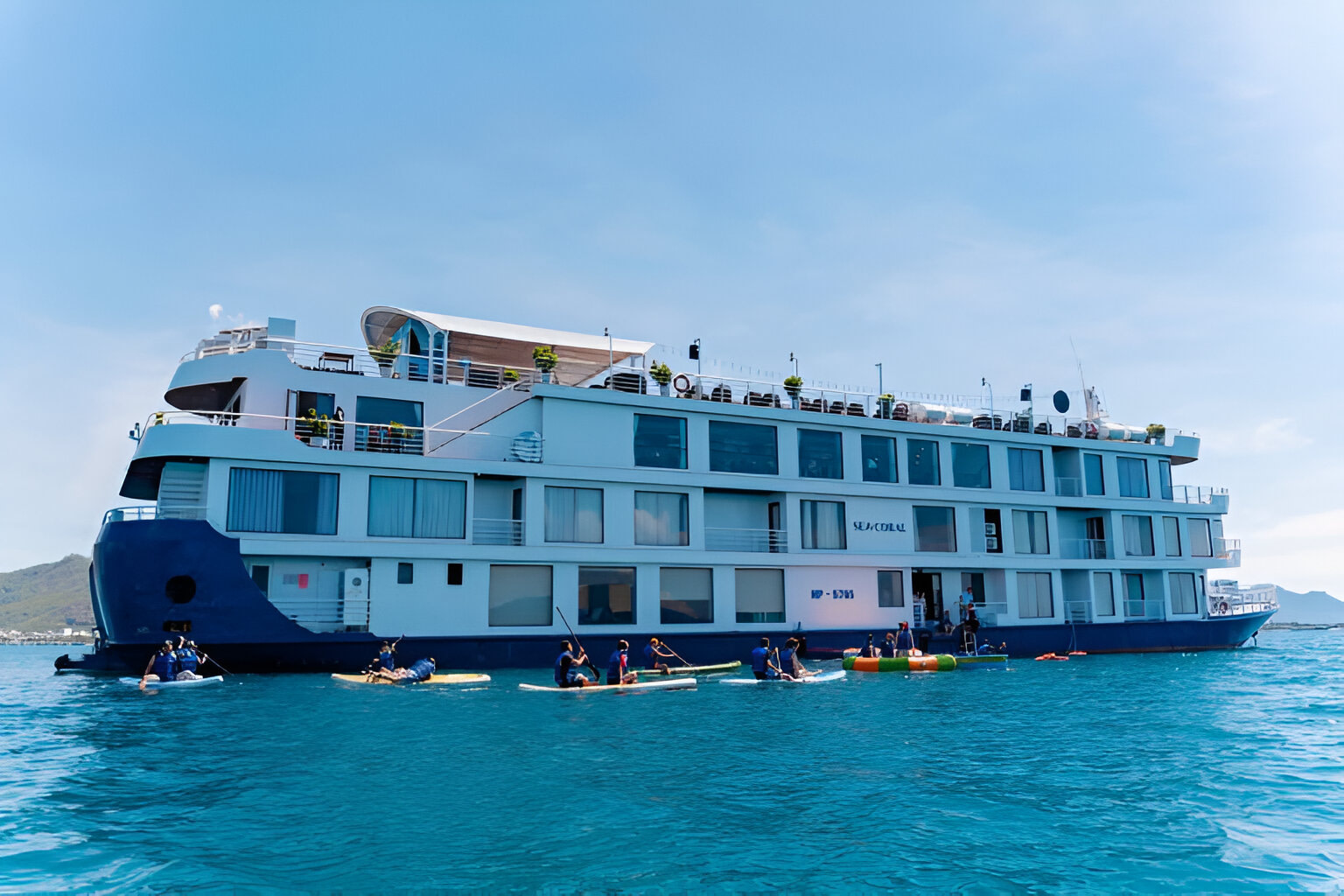
Deep inside Akamas peninsula park and some 12 km from Polis it is the most memorable coastline in Cyprus. On the Glass Bottom Boat you will be able to witness: The incredibly clear turquoise waters, the Peninsula wildlife and the underwater life of Akamas and finally swim to that unbelievable and picturesque bay.
What's not included
Lunch and Drinks
Available languages
Guide guide
EL
EN
FR
RO
Reviews breakdown
Viator
5.0
2 reviews
5★
2
4★
0
3★
0
2★
0
1★
0
Tripadvisor
4.7
26 reviews
5★
22
4★
3
3★
0
2★
0
1★
1
Important information
Wheelchair accessible
Infants and small children can ride in a pram or stroller
Service animals allowed
Public transportation options are available nearby
Specialized infant seats are available
Transportation options are wheelchair accessible
All areas and surfaces are wheelchair accessible
Not recommended for pregnant travelers
Suitable for all physical fitness levels
A driver's license is mandatory
Meeting point
You can use the bus line 615 that starts from the Harbour outside from our shop in the main street of Coral Bay.
About Paphos
Paphos is a coastal city in southwestern Cyprus, renowned for its rich history and mythological significance as the birthplace of the Greek goddess Aphrodite. The city is a UNESCO World Heritage Site, boasting ancient ruins, vibrant culture, and stunning Mediterranean landscapes.
Top Attractions
Paphos Archaeological Park
A UNESCO World Heritage Site featuring ancient ruins, mosaics, and the remains of Roman villas. This park is a must-visit for history enthusiasts.
Historical
2-3 hours
€4.50
Aphrodite's Rock
A legendary sea stack where, according to Greek mythology, the goddess Aphrodite emerged from the sea. A popular spot for swimming and photography.
Nature
1-2 hours
Free
Tombs of the Kings
An underground necropolis dating back to the Hellenistic and Roman periods. The tombs are carved out of solid rock and are a fascinating glimpse into ancient burial practices.
Historical
1-2 hours
€4.50
Paphos Castle
A medieval castle located at the edge of the Paphos harbor. The castle has a rich history and offers beautiful views of the Mediterranean Sea.
Historical
30 minutes to 1 hour
Free
Adonis Baths
A natural waterfall and bathing area located in a scenic forest setting. The site is associated with the myth of Adonis and Aphrodite.
Nature
2-3 hours
€4.50
Must-Try Local Dishes
Meze
A selection of small dishes served together, including grilled meats, vegetables, and dips.
Dinner
Vegetarian and vegan options available
Halloumi
A semi-hard cheese made from a mixture of goat and sheep milk, often grilled and served with vegetables.
Snack/Dinner
Vegetarian
Kleftiko
A slow-cooked lamb dish with herbs and vegetables, traditionally cooked in a sealed clay pot.
Dinner
Contains meat
Loukoumades
Small, deep-fried dough balls soaked in honey and sprinkled with cinnamon and nuts.
Dessert
Vegetarian
Popular Activities
Hiking in the Troodos Mountains
4x4 tours in Akamas Peninsula
Scuba diving in Paphos
Beach lounging
Spa treatments
Yoga by the sea
Visiting archaeological sites
Attending local festivals
Best Time to Visit
April to June, September to October
The best time to visit Paphos is during the spring and autumn months when the weather is pleasant, and the tourist crowds are smaller. This period is ideal for exploring the historical sites and enjoying the beaches.
20-30°C
68-86°F
Practical Information
Language
- Official: Greek
- Widely spoken: English
- English: Widely spoken
Currency
Euro (EUR)
Time Zone
GMT+2 (EET)
Electricity
240VV, 50HzHz
Safety Information
Overall Safety Rating: Generally safe
Paphos is generally safe for tourists, with low crime rates. However, petty theft and pickpocketing can occur in tourist areas, so it's important to stay vigilant.
Important Precautions:
- • Keep valuables secure and out of sight
- • Use reputable tour operators and taxis
- • Be cautious of strangers offering unsolicited help or services
Getting there
By air
- Paphos International Airport • 10 km from city center
By bus
Paphos Bus Terminal
Getting around
Public transport
The bus system is affordable and covers most major attractions. Buses are frequent and reliable, making it easy to get around without a car.
Taxis
Available • Apps: Bolt
Rentals
Car, Bike, Scooter
Neighborhoods
Kato Paphos
Pano Paphos
Paphos Harbor
Day trips
Troodos Mountains
60 km from Paphos • Full day
A mountainous region offering scenic drives, hiking trails, and traditional villages. The Troodos Mountains are known for their natural beauty and cool climate.
Akamas Peninsula
30 km from Paphos • Half day to full day
A scenic peninsula with rugged landscapes, hidden beaches, and diverse wildlife. The Akamas Peninsula is a paradise for nature lovers and adventure seekers.
Limassol
60 km from Paphos • Half day
A vibrant coastal city known for its rich history, modern amenities, and lively atmosphere. Limassol offers a mix of historical sites, shopping, and dining.
Festivals
Aphrodite Festival • September
Paphos Wine Festival • Late May to early June
Paphos International Folk Festival • June
Pro tips
- Visit the Paphos Archaeological Park early in the morning to avoid the heat and crowds
- Explore the Troodos Mountains for a cooler climate and stunning natural scenery
- Try local wines and visit wineries in the region, such as Kolios Winery and Vouni Panayia Winery
- Attend the Aphrodite Festival in September for a unique cultural experience
- Take a boat tour to the Blue Lagoon and other hidden beaches in the Akamas Peninsula
From $25
per person
Price varies by option
Secure booking
Free cancellation available