The Death of Yugoslavia Tour in Mostar
Active
2h
For a full refund, cancel at least 24 hours before the scheduled departure time.
Instant confirmation
Mobile or paper ticket accepted
About this experience
The Death of Yugoslavia is award-winning tour featuring the complete timeline of birth and death of Yugoslavia. By visiting four locations, we explore Yugoslavia in the Cold War, between the nuclear missiles of both Warsaw and NATO pact. We explore Tito and how his actions have led to the formation of a prosperous non-aligned country. We explore the rise of nationalism after the fall of communism. And finally, we will witness the Yugoslavian War. And all of it on breathtaking locations, unwilling monuments to the existence of a country which died more than 20 years ago, but still vivid in the minds of its former citizens.
Available options
The Death of Yugoslavia Tour in Mostar
What's included
All taxes, fees and handling charges
Driver/guide
Local taxes
Detailed itinerary
1
Starting point: Where do travelers meet you to begin their experience? By providing a specific address as your meeting point on your product, travelers will receive the exact starting location upon booking, which ensures an easier arrival experience.
Hotel pickup: Which hotels or areas do you pick up travelers from? By providing this information on your product, travelers can indicate their pickup location upon booking, which ensures a smooth pickup process.
2
Chapter 1: The Yugoslav Paranoia
The tour starts with a drive to the first location during which we will talk about WW2 and the emerging of the Socialist Yugoslavia.
On the first secret location we will go deep into the days of the Cold War. On sight we will experience the dark days of the Yugoslav Informbiro period, which resulted as a side effect of the break with the Soviet Union and the run for militarization that shaped the Country in the 50's.
Please note: The tour locations are kept secret for a more immersive tour experience.
3
Chapter 2: People's life
While driving to the second secret location we will talk about Josip Broz Tito, his personal life, political achievements and his attempts to make a tailor made socialism to better fulfill the needs of the Yugoslav people.
The second location will discover the chapter that covers the life expectations and dreams of the simple people in Tito's Socialism. Starting with the Youth Work Actions and ending with the heavy industrialization of the 50's and 60's. At the end we will learn about the Yugoslav Popular Culture, talking about brands, music, automotive industry and lifestyle throughout the 70's and 80's.
4
Chapter 3: The Yugoslavian wars
During the drive to the third location special attention will be given to the 80's. We will talk about the 1984 Sarajevo Winter olympics and try to understand why that period was considered the golden era of the Yugoslav Socialism.
On the third location we will try to explain the fall of Yugoslavia triggered by economical depression and growing nationalisms which resulted with the flare up of the Yugoslav war, first in Slovenia and Croatia and one year later in Bosnia and Herzegovina where it reached its culmination. At the end, we will give a final overview on what was the Yugoslav dream and how it has dissolved. We'll summarize together the consequences of the war, the destruction and loss of human lifes that was the cause of it.
5
Chapter 4: Bosnia and Herzegovina today.
While driving to the last location of the tour we will analyze together the situation in present day Bosnia and Herzegovina. We will try to understand the political structure with all the problems and challenges that the Country has at the start of the 21st Century.
On the final location we will uncover the final act of the tour trying to place Bosnia and Herzegovina into a bigger frame of a possible membership in the European Union. Walking through the last tour site we will embrace once again the relics of a glorious past with the complicated reality and needs for an economical, cultural and political recovery of the Country.
The main goal of the Death of Yugoslavia tour is to explain to the audience the inspiring difficult history of contemporary Bosnia and Herzegovina in a tour which lasts about 150 minutes.
What's not included
Food and drinks
Hotel pickup and drop-off (if option not selected)
Available languages
Guide guide
EN
Reviews breakdown
Viator
4.8
13 reviews
5★
12
4★
0
3★
1
2★
0
1★
0
Tripadvisor
5.0
89 reviews
5★
89
4★
0
3★
0
2★
0
1★
0
Important information
Not recommended for travelers with poor cardiovascular health
Suitable for all physical fitness levels
Not recommended for pregnant travelers
Children must be accompanied by an adult
Meeting point
Our Location:
iHouse Travel is located in the heart of Mostar’s old town, on the main cobblestone street Onesćukova n.25. about 200m from the famous Old Bridge.
Our office is usually also the starting point of all our tours.
Important notes
• Important note: The tour is not private, other participants might join as well
• Important note: Departure time set each day at 5pm from 1. June till 1. October
• Comfortable walking shoes are recommended
• Not recommended for participants with heart complaints or other serious medical conditions
• Not recommended for children under the age of 9
About Mostar
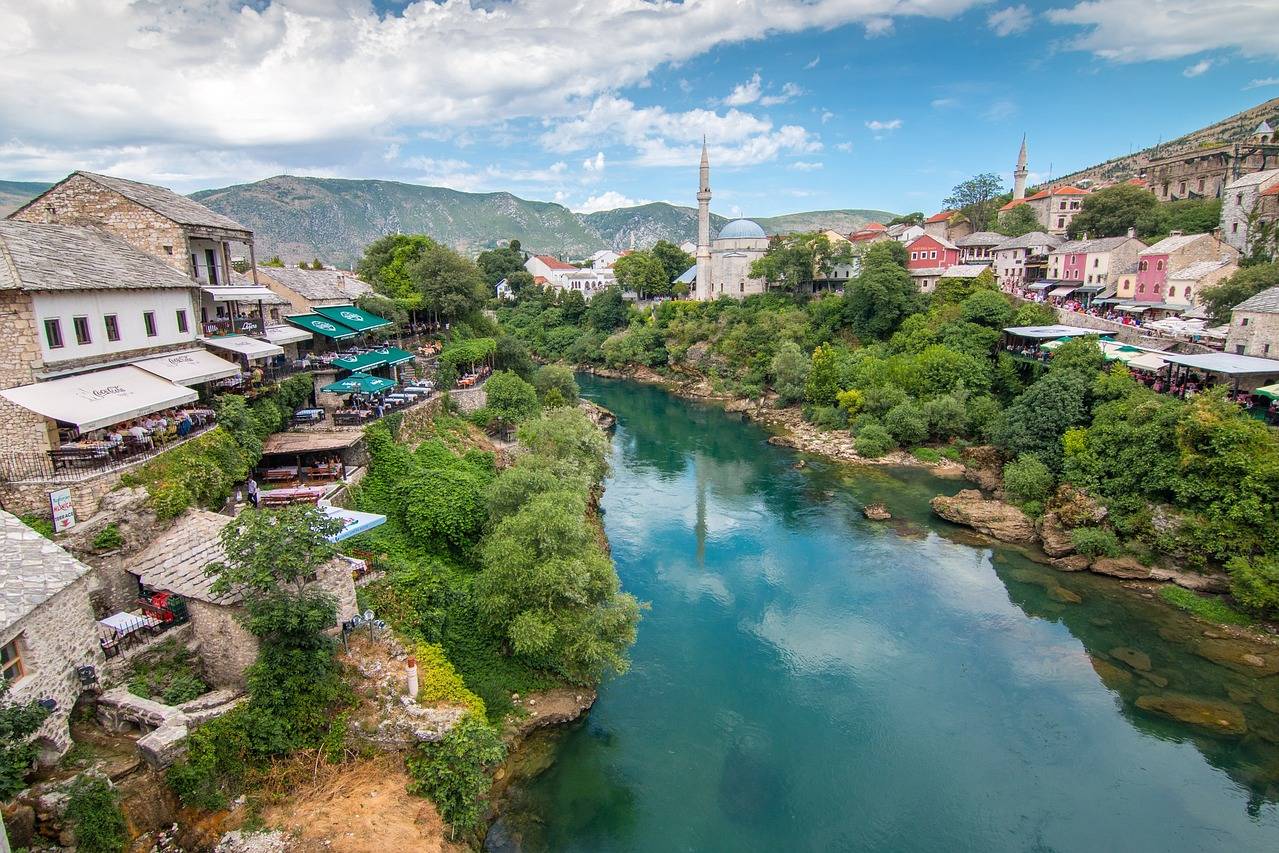
Mostar is a historic city in Bosnia and Herzegovina, famous for its iconic Stari Most (Old Bridge), a 16th-century Ottoman bridge that spans the Neretva River. The city is a blend of Ottoman, Mediterranean, and European influences, offering rich history, vibrant culture, and stunning architecture. It's a must-visit for history buffs and architecture enthusiasts.
Top Attractions
Stari Most (Old Bridge)
A 16th-century Ottoman bridge that spans the Neretva River, symbolizing the city's rich history and cultural heritage.
Historical/Architecture
1-2 hours
Free
Koski Mehmed Pasha Mosque
A 17th-century mosque with a beautiful minaret and panoramic views of the city.
Religious/Architecture
1 hour
Free (small fee for minaret climb)
Blagaj
A picturesque village near Mostar, known for its Dervish monastery (Tekke) built into a cliff overlooking the Buna River.
Nature/Historical
2-3 hours
Free (small fee for monastery entry)
Must-Try Local Dishes
Ćevapi
Grilled minced meat sausages, typically served with somun (flatbread) and onions.
Main Dish
Contains meat
Burek
A flaky pastry filled with meat, cheese, or spinach.
Snack
Vegetarian options available
Begova Čorba
A rich, spicy soup made with vegetables, meat, and various spices.
Soup
Contains meat
Rakija
A traditional fruit brandy, often homemade and served as an aperitif.
Drink
Alcoholic
Popular Activities
Hiking
Rafting on the Neretva River
Diving from the Old Bridge
Coffee at a local cafe
Strolling through the Old Town
Picnicking by the river
Visiting museums and galleries
Attending local festivals
Best Time to Visit
May to September
This is the best time to visit Mostar due to pleasant weather and numerous outdoor activities. The city is lively with festivals and tourists.
20°C to 35°C
68°F to 95°F
Practical Information
Language
- Official: Bosnian
- Widely spoken: Croatian, Serbian, English
- English: Moderately spoken in tourist areas, limited elsewhere
Currency
Bosnia and Herzegovina Convertible Mark (BAM)
Time Zone
CET (UTC +1), CEST (UTC +2) during daylight saving time
Electricity
220VV, 50HzHz
Safety Information
Overall Safety Rating: Generally safe
Mostar is generally safe for tourists, but petty crime and scams can occur, especially in tourist areas. Be cautious of your surroundings and keep an eye on your belongings.
Important Precautions:
- • Use licensed taxis and insist on the meter
- • Keep valuables secure and out of sight
- • Be cautious of strangers offering unsolicited help or services
Getting there
By air
- Mostar International Airport • 10 km from city center
By bus
Mostar Bus Station
Getting around
Public transport
The bus system is affordable and covers most of the city. Buses are frequent but can be crowded during peak hours.
Taxis
Available • Apps: Yutong, Bingo
Rentals
Car, Bike, Scooter
Neighborhoods
Old Town (Stari Grad)
East Mostar
Day trips
Blagaj
8 km • Half day
A picturesque village known for its Dervish monastery and the Buna River spring.
Počitelj
25 km • Half day
A well-preserved Ottoman village with a fortress, mosques, and traditional houses.
Kravice Waterfalls
30 km • Full day
A stunning series of waterfalls and pools in a lush, green setting.
Festivals
Mostar Summer Festival • July
Winter Festival • December
Pro tips
- Visit the Old Bridge early in the morning or late in the afternoon to avoid crowds and heat
- Try the local coffee and pastries at a traditional cafe in the Old Town
- Take a day trip to Blagaj or Kravice Waterfalls for a break from the city
- Learn a few basic phrases in Bosnian to enhance your experience and connect with locals
- Bargain politely in the Old Bazaar, but be prepared to walk away if the price is too high
From $25
per person
Price varies by option
Secure booking
Free cancellation available
Instant confirmation