Essential Athens and Cape Sounion, Poseidon's Temple, Private Day Tour
Active
8h - 9h
For a full refund, cancel at least 24 hours before the scheduled departure time.
Instant_then_manual confirmation
Mobile or paper ticket accepted
About this experience
This tour is a perfect combination of Athens’s most important sites and the most popular excursion to the so called "Greek Riviera", Cape Sounion and the Temple of Poseidon.
During the tour you will have the opportunity to enjoy lunch, a chilled “ouzo” and “meze” in a traditional Greek taverna, overlooking the Aegean Sea.
This tour is the ideal way to avoid noisy crowds and the bustle of the city. Travel in safety and comfort in your own luxurious private vehicle.
Your dedicated private driver will ensure a comfortable personalized experience throughout the day!
Available options
Essential Athens and Cape Sounion, Poseidon's Temple, Private Day Tour
Pickup included
What's included
Experienced, knowledgeable, professional English speaking driver.
Skip the line service to purchase the appropriate entrance tickets in advance.
VAT and all state taxes
Service animals allowed
FAMILY FRIENDLY For family groups our tours can be modified to cater to the needs of the children
Private tour. Personalized service adjusted to your needs and wishes.
All vehicles are fully A/C non-smoking, insured & certified for tourist use by the state authorities
Athens & Piraeus Hotels / residence or Piraeus cruise port pickup & return
Flexible pick up time on request
Luxurious transportation vehicle suitable for the size of your group: taxi, sedan, suv, van, minibus
Child seats available upon request
Parking Fees
Chiled bottled water
Detailed itinerary
1
Stop 1
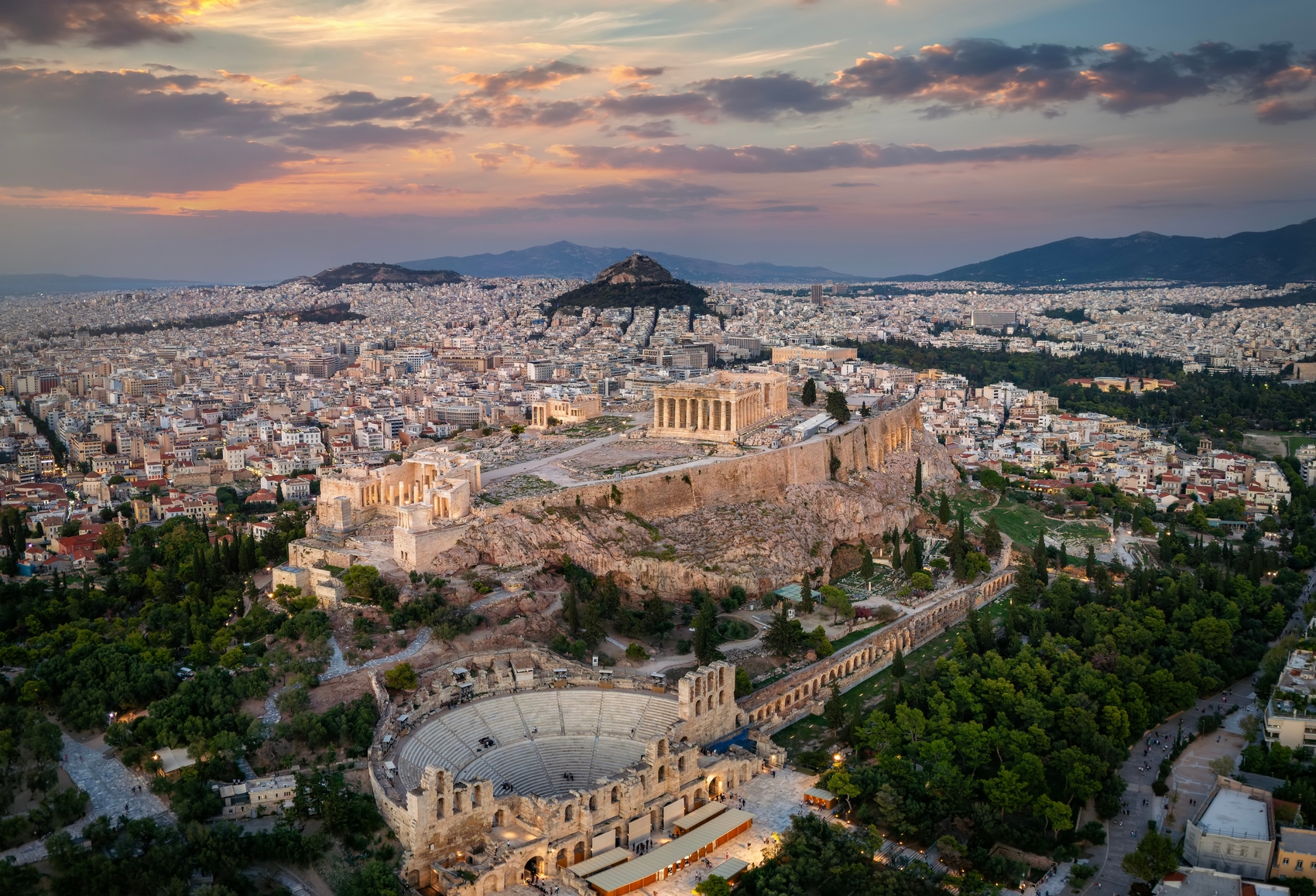
We start the tour by visiting the so called “sacred rock”, The Acropolis. Here you will see:
- Parthenon that was dedicated to goddess Athena (Parthenos)
- Propylea, the monumental entrance to the sacred area
- The Temple of Athena Nike which was dedicated to Athena-Nike
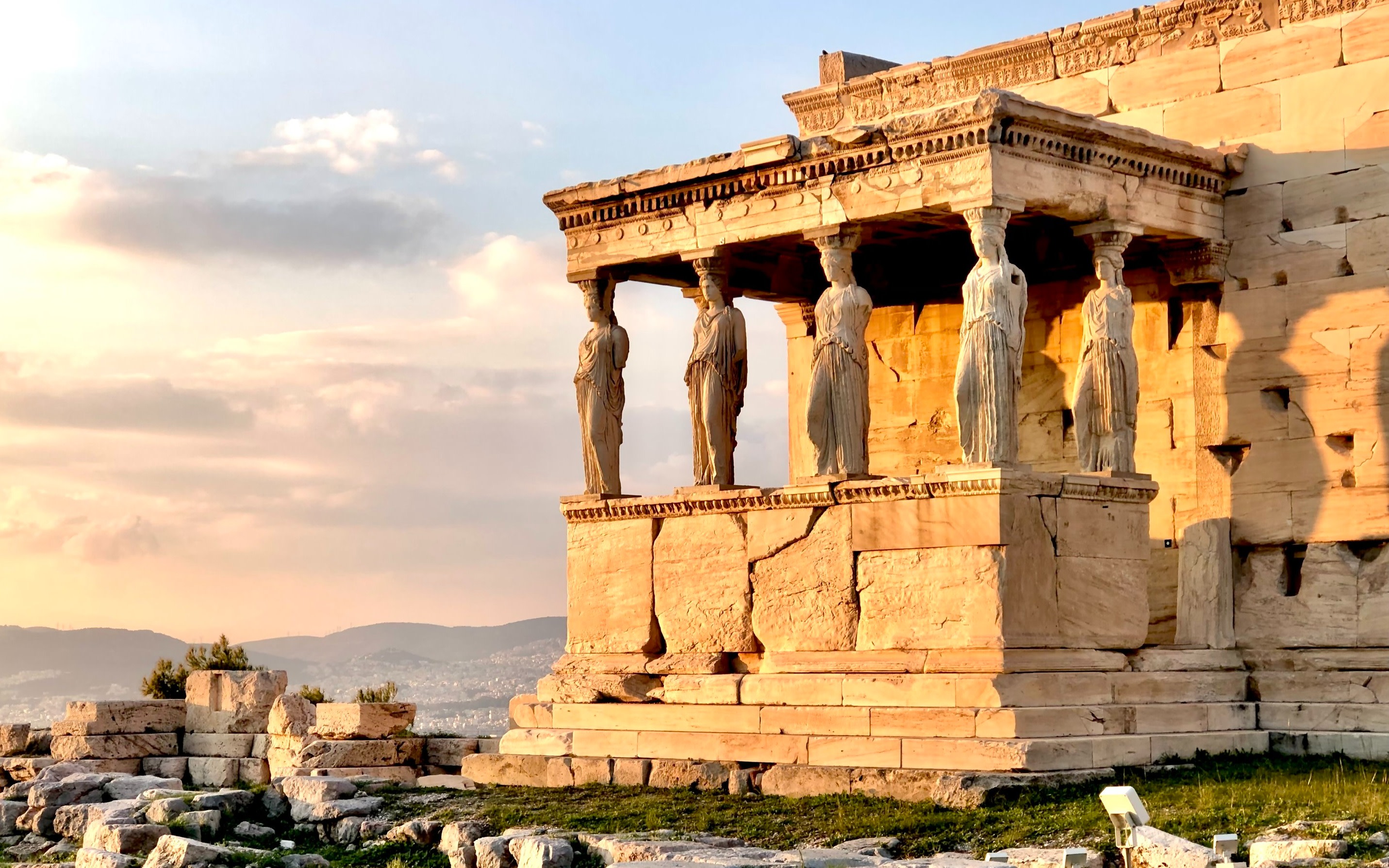
- The Erechtheion with its famous female figures-statues
- The Caryatides or Maidens dedicated to both goddess Athena and god Poseidon
- The Odeum of Herodus Atticus
- The the Theatre of Dionysus, the first theatre in the whole world
- The Areopagus (Mars Hill)
2
Stop 2
The temple of Olympian Zeus (124-132 AD) had three rows of eight columns (tripteral octastyle) on the two narrow sides and two rows of twenty columns (dipteral eikosastyle) on the long sides. It once housed the chryselephantine (gold and ivory) statue of Zeus and the statue of the emperor. Sixteen of the temple's columns survive today, thirteen of them, on the east side, intact. Of the remaining three on the west side, one collapsed in 1852.
3
Stop 3
It was originally a natural hollow part of the ground between the two hills of Agra and Ardettos, over Ilissos river. It was transformed into a stadium by Lykourgos in 330-329 BC for the athletic competitions of the Great Panathinaea Festivities. Between 140 and 144 AD, Herodes Atticus restored the Stadium, giving it the form that was found at the 1870 excavation: the horseshoe construction with a track 204,07 meters long and 33,35 meters wide. It is believed that the Stadium had a seating capacity of 50.000 people. Separating scales were built between the tiers and on the base of the sphendone there was a portico with Doric-style columns; another portico was placed in the stadium's facade. At Roman times, the Stadium was used as an arena, with the addition of a semi-circular wall on the north that was corresponding to the splendor of the southern side.
4
Stop 4
Pass by
The triumphal arch lies on an ancient street that led from the old city of Athens to the new, Roman section, built by Hadrian. It was constructed by the Athenians in A.D. 131, in honor of their benefactor emperor. Two inscriptions are carved on the architrave, one on each side: the first, on the side towards the Acropolis reads "This is Athens, the ancient city of Theseus"; the second, on the other side, facing the new city reads "This is the city of Hadrian and not of Theseus".
5
Stop 5
Lycabettus Hill (Lykavitos) is the highest point of Athens, 277m above sea level.
From Lycabettus Hill you will enjoy the best panoramic view of the Acropolis, the Temple of Olympian Zeus, the Panathenaic Stadium, the Ancient Agora and the whole metropolis! You will also be reminded that Athens is surrounded by sea with spectacular views across the Aegean.
On the top of the hill, you will find the Greek Orthodox church of Agios Georgios (St. George).
6
Stop 6
Also known as Constitution Square, Syntagma Square (Plateia Syntagmatos) is a huge public plaza stretching out in front of Athens’ parliament building. Gleaming with white marble and beautiful statues, it’s a great place for people to watch. Many of the city's most important streets begin here, including Ermou Street and Vassilissis Sofias Avenue.
7
Stop 7
The Tomb of the Unknown Soldier is a war memorial located in Syntagma Square in Athens, in front of the House of the Greek Parliament. It is a cenotaph dedicated to the Greek soldiers killed during war. It was sculpted between 1930 and 1932 by sculptor Fokion Rok. The tomb is guarded 24-7 by the Evzones (Presidential Guards)
8
Stop 8
Pass by
The National and Kapodistrian University of Athens, usually referred to simply as the University of Athens, is a public university in Athens, Greece
9
Stop 9
Pass by
The Academy of Athens is Greece's national academy, and the highest research establishment in the country. It was established in 1926, and operates under the supervision of the Ministry of Education. The Academy's main building is one of the major landmarks of Athens.
10
Stop 10
Pass by
We will pass by the National Library of Greece.
11
Glyfada is an upscale suburb of Athens by the seaside!
12
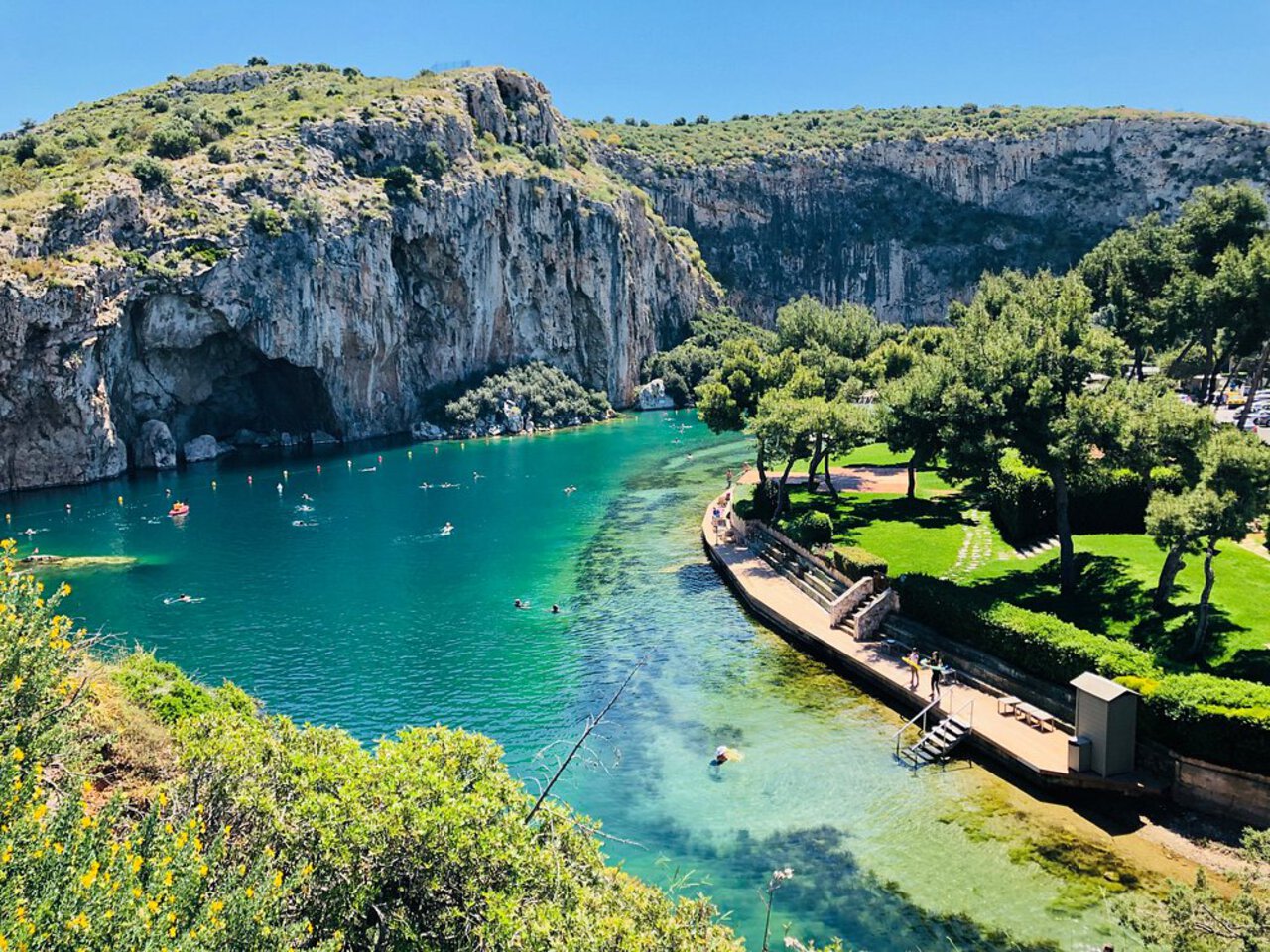
Vouliagmeni is a beautifull and upscale suburb of Athens by the sea side!
13
Varkiza is a beautiful suburb of Athens by the seaside!
14
Stop 14
Pass by
Lagonisi is a beautiful and upscale resort area by the sea side, on the way to Cape Sounio!
15
Stop 15
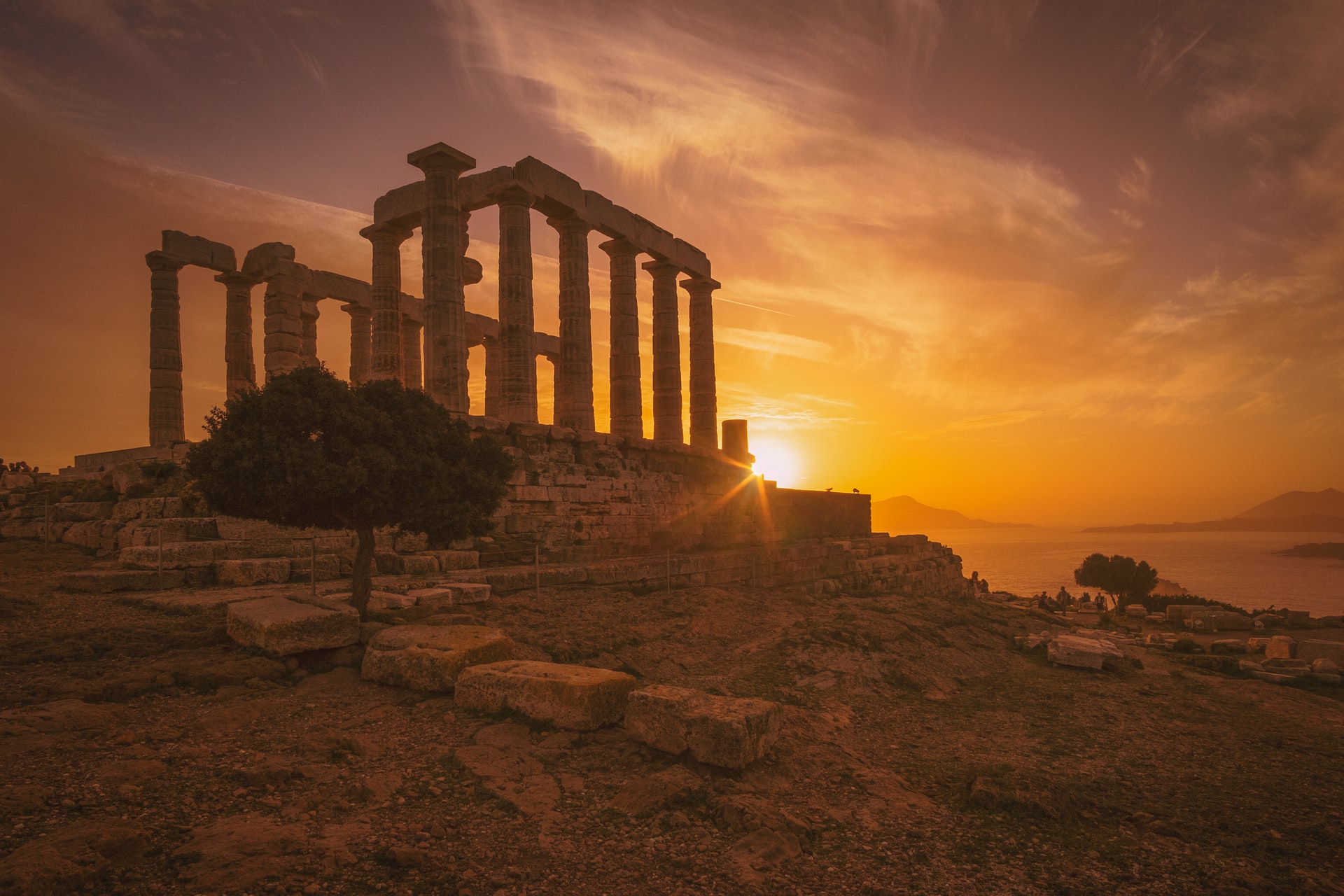
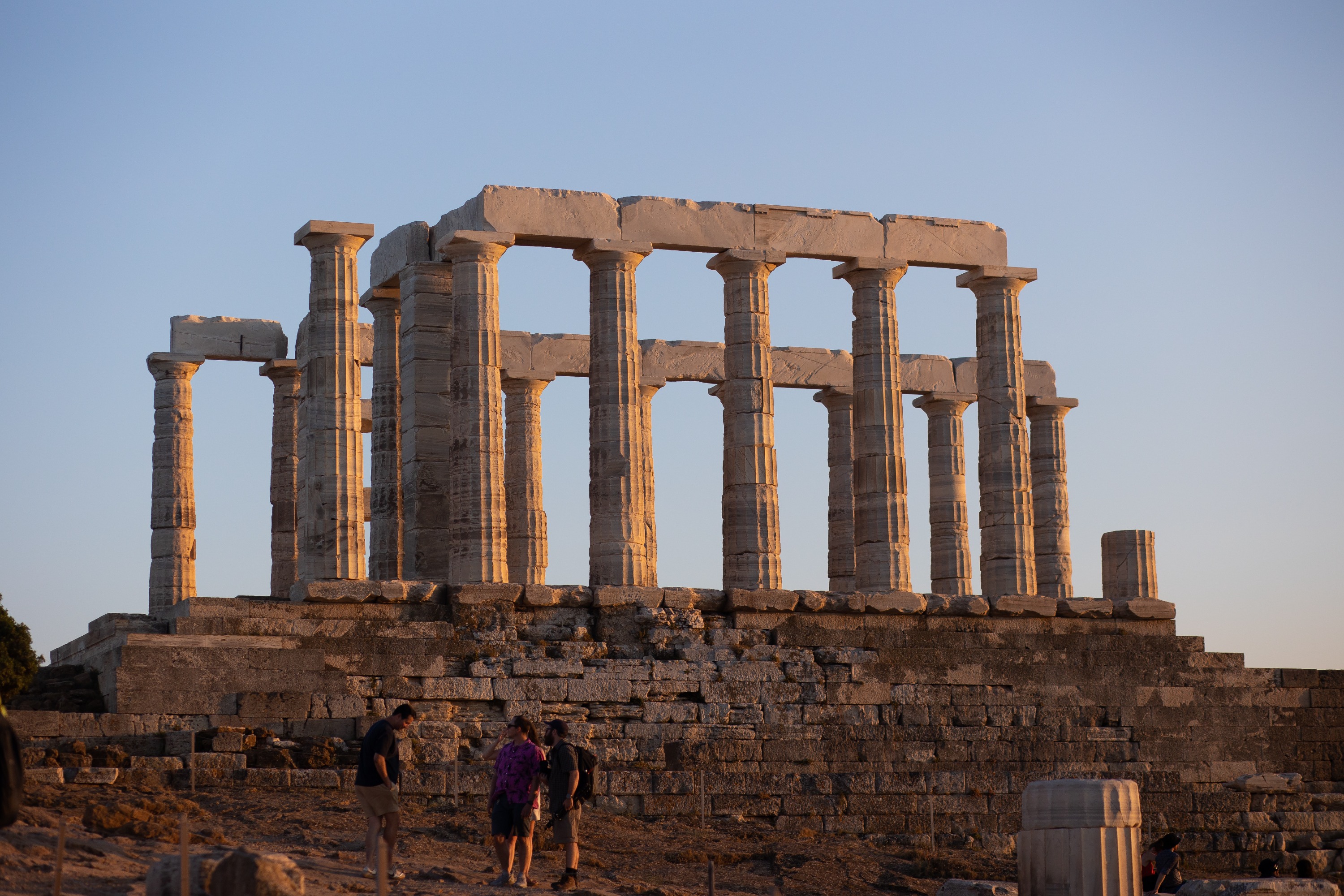
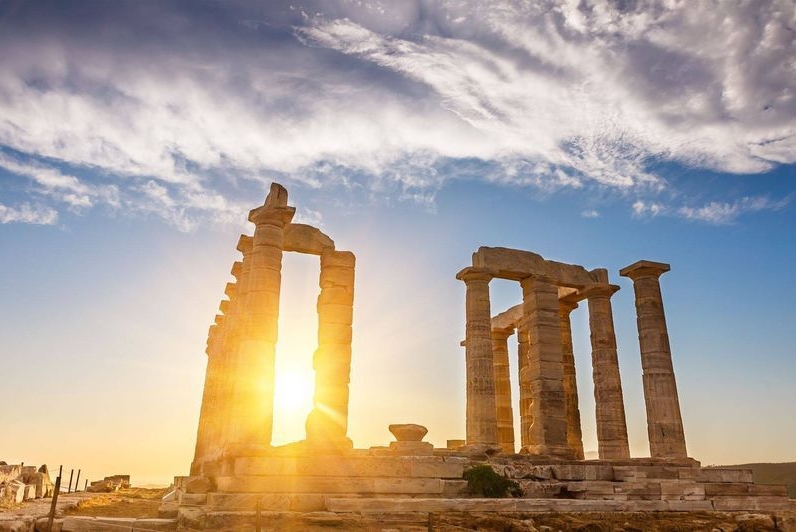
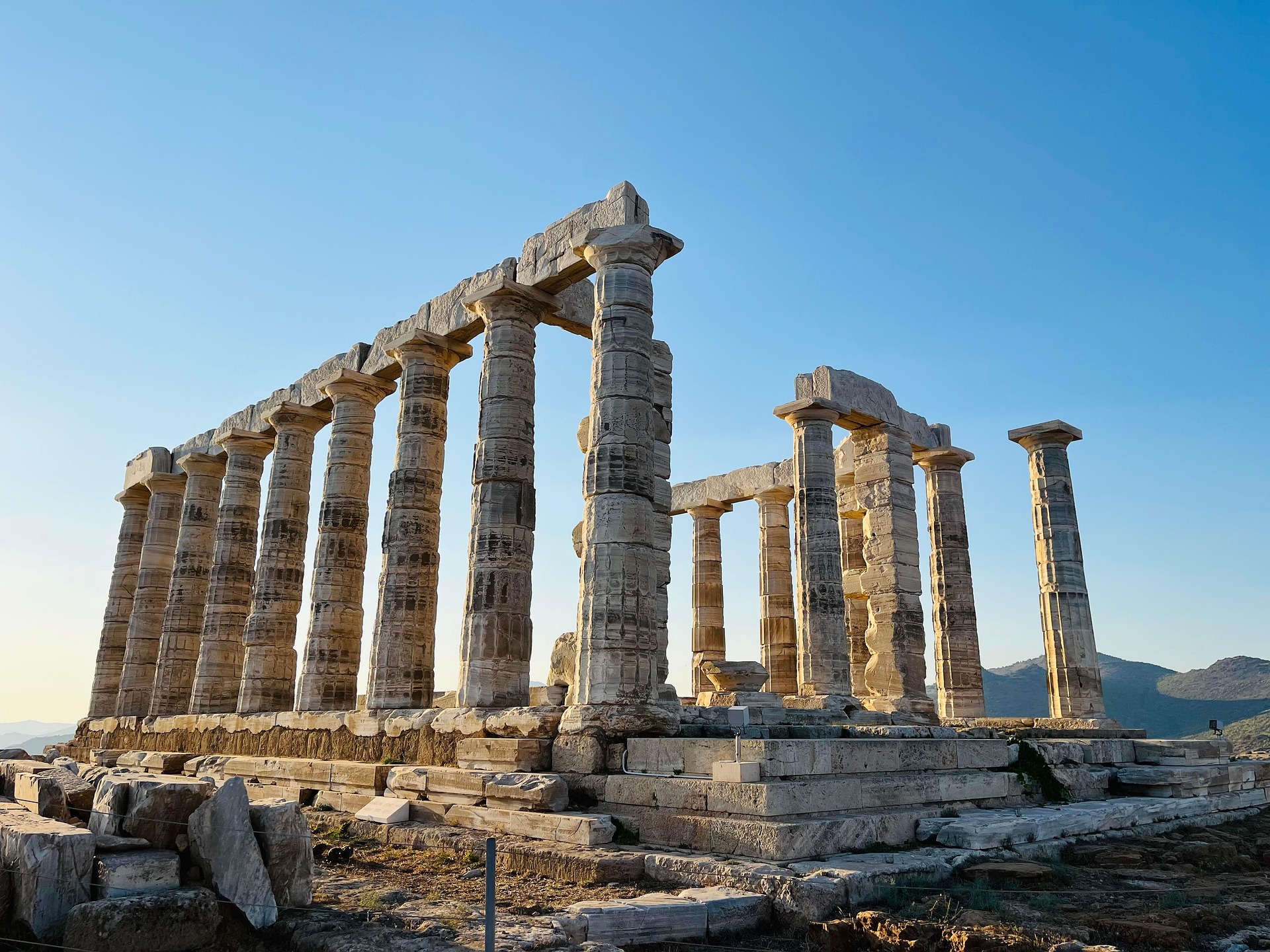
The doric temple seen today was built of local marble from the Agrileza quarries on top of the destroyed archaic temple. Palmette antefixes crowned the gable roof. At least the east pediment (on the entrance side) was decorated with statues. On the same side a relief frieze was running on the top of the interior of the colonnade. On the Parian marble frieze slabs, scenes of the Centaur battle and the deeds of Theseus are sculpted, an allegory for the victory of the Greeks led by the Athenians against the Persians and for the superiority of the Athenian democracy over the eastern monarchy. The temple is attributed to the same architect with the ones of Hephaistos (Theseion) at the Athenian agora, Ares at Akharnes, and Nemesis at Ramnous.
What's not included
Entrance fee to the Acropolis and the other sites
Licensed tour guide for guiding inside the sites, upon request/availability (Additional cost 350€)
Food and drinks unless specified
to visit the Acropolis
to visit the Temple of Zeus (optional visit)
to visit the Temple of Poseidon
Available languages
Guide guide
EN
Reviews breakdown
Viator
5.0
20 reviews
5★
20
4★
0
3★
0
2★
0
1★
0
Tripadvisor
5.0
119 reviews
5★
117
4★
2
3★
0
2★
0
1★
0
Important information
Infants and small children can ride in a pram or stroller
Service animals allowed
Public transportation options are available nearby
Specialized infant seats are available
Suitable for all physical fitness levels
Our company complies with all the health instructions of the World Health Organization about COVID-19.
Please note that your personal professional driver, will provide commentary in fluent English, en-route but cannot enter the archaeological sites. We can arrange for you to have a private licensed guide to escort you in the sites at an extra cost, depending always on the availability. You may contact us on the phone number or by the email provided by Viator and we will confirm accordingly.
The proposed itinerary may need to be adjusted in case of emergencies or special circumstances that are out of our control (e.g. extreme weather conditions, police instructions, safety reasons etc).
About Athens
Athens, the capital of Greece, is a city rich in history and culture, often considered the cradle of Western civilization. It is home to iconic ancient landmarks, vibrant neighborhoods, and a thriving modern scene.
Top Attractions
Acropolis of Athens
The Acropolis is the most iconic landmark in Athens, featuring ancient ruins and temples, including the Parthenon.
Historical
2-3 hours
€20 (combined ticket for multiple sites)
Ancient Agora of Athens
The heart of ancient Athens, featuring the Temple of Hephaestus and the Stoa of Attalos.
Historical
1-2 hours
€8 (included in the combined ticket)
Plaka
A charming, historic neighborhood with narrow streets, neoclassical houses, and vibrant nightlife.
Cultural
2-3 hours
Free to explore
Acropolis Museum
A modern museum showcasing artifacts from the Acropolis and its surroundings.
Museum
1-2 hours
€10
Temple of Olympian Zeus
An ancient temple dedicated to Zeus, once the largest temple in Greece.
Historical
30 minutes to 1 hour
€6 (included in the combined ticket)
Must-Try Local Dishes
Moussaka
A baked dish with layers of eggplant, minced meat, and béchamel sauce.
Dinner
Vegetarian versions available
Souvlaki
Grilled meat skewers, often served with pita bread and tzatziki.
Snack
Can be made with chicken, pork, or vegetarian options
Tzatziki
A yogurt-based dip with cucumber, garlic, and herbs.
Snack
Vegetarian and vegan options available
Baklava
A sweet pastry made with layers of filo, nuts, and honey syrup.
Dessert
Vegetarian
Popular Activities
Hiking in the mountains
Rock climbing
Scuba diving
Beach visits
Spa treatments
Café hopping
Museum visits
Theater performances
Best Time to Visit
April to June, September to October
The best time to visit Athens is during the spring and autumn months when the weather is pleasant and the tourist crowds are smaller.
18°C to 32°C
64°F to 90°F
Practical Information
Language
- Official: Greek
- Widely spoken: English, French, German
- English: Moderately spoken
Currency
Euro (EUR)
Time Zone
GMT+2 (EET)
Electricity
230VV, 50HzHz
Safety Information
Overall Safety Rating: Generally safe
Athens is generally safe for travelers, but petty crime and pickpocketing can occur in tourist areas. Be cautious with your belongings and avoid poorly lit areas at night.
Important Precautions:
- • Keep valuables secure
- • Use licensed taxis or ride-sharing apps
- • Be cautious with ATMs and credit cards
Getting there
By air
- Eleftherios Venizelos International Airport • 30 km from city center
By train
Athens Central Railway Station
By bus
KTEL Bus Station
Getting around
Public transport
Clean, efficient, and air-conditioned. Easy to navigate with clear signage in English.
Taxis
Available • Apps: Beat, Uber
Rentals
Car, Bike, Scooter
Neighborhoods
Plaka
Monastiraki
Psiri
Koukaki
Kolonaki
Day trips
Cape Sounion
65 km from Athens • Half day to full day
A scenic coastal area featuring the Temple of Poseidon with stunning views of the Aegean Sea.
Delphi
180 km from Athens • Full day
An ancient archaeological site and home to the famous Oracle of Delphi.
Meteora
350 km from Athens • Overnight
A unique landscape featuring rock formations and medieval monasteries perched atop cliffs.
Festivals
Athens Festival • May to October
Athens Epidaurus Festival • June to August
Athens International Film Festival • October
Pro tips
- Visit major attractions early in the morning or late in the afternoon to avoid crowds and heat
- Use the metro for easy and efficient travel around the city
- Explore local neighborhoods for an authentic Greek experience
- Try local street food for a quick and delicious meal
- Learn a few basic Greek phrases to enhance your experience and connect with locals
From $25
per person
Price varies by option
Secure booking
Free cancellation available