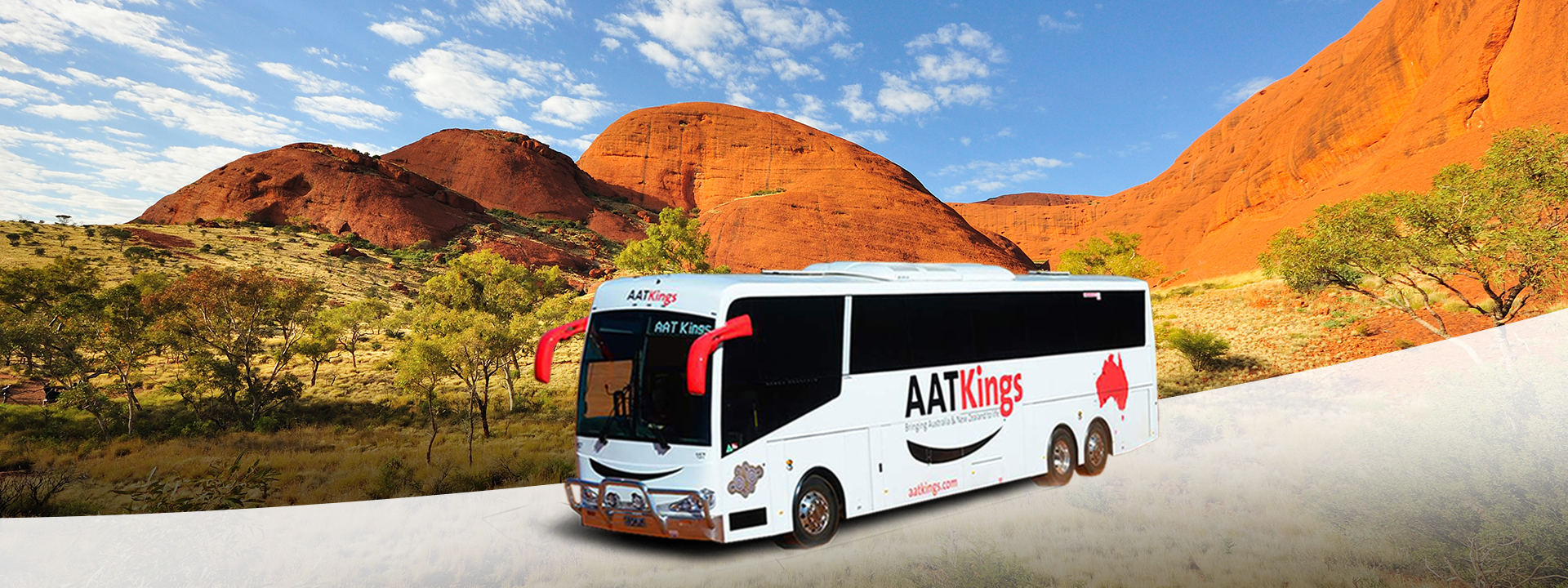
Alice Springs to Uluru One Day Tour Private Charter Service
Active
18h
All sales are final. No refund is available for cancellations.
Manual confirmation
Mobile or paper ticket accepted
About this experience
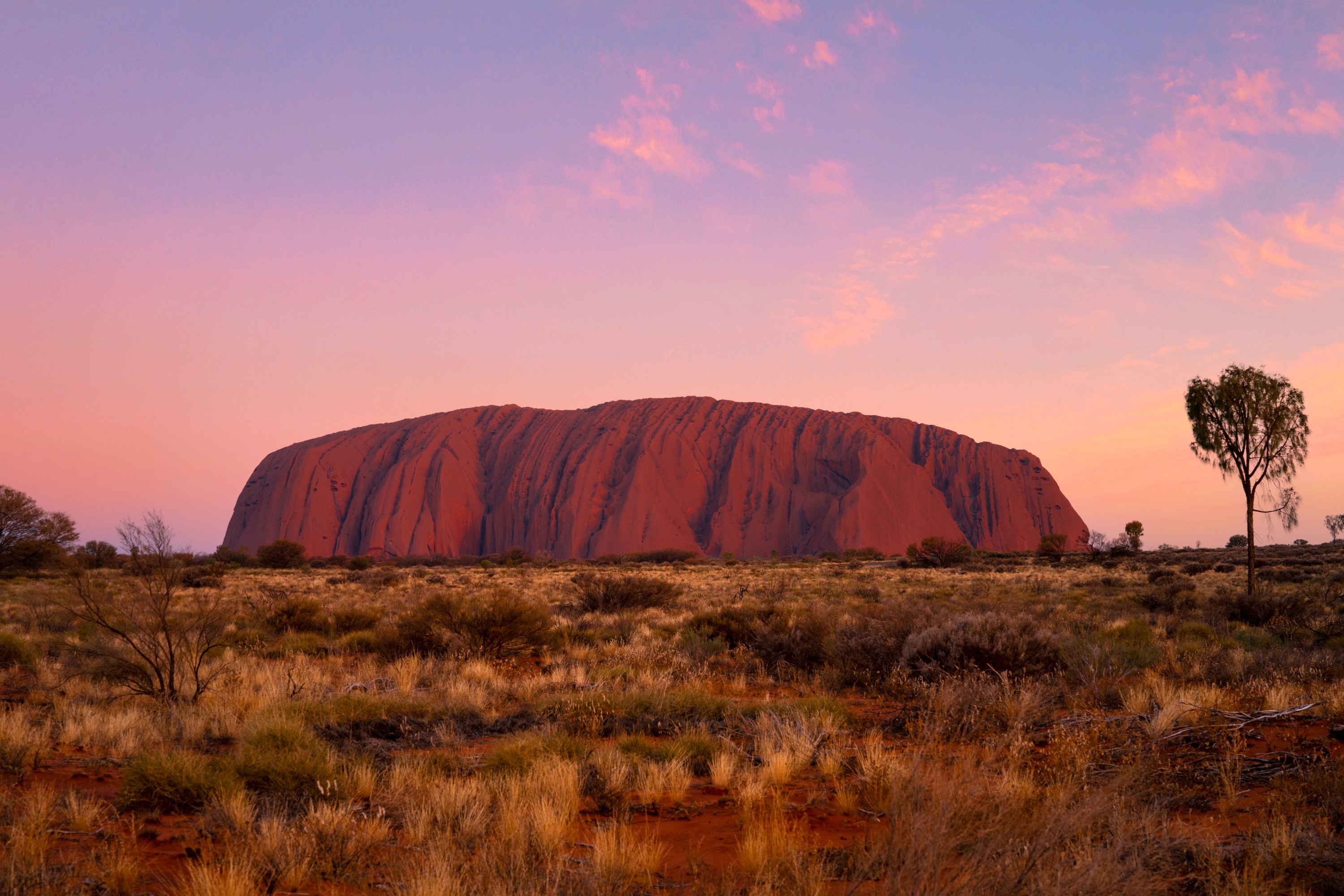
Alice Springs to Uluru One Day Tour Private Charter Service is an excellent opportunity to explore the panoramic desert landscapes of the region. Along the way, the bus will stop at Erldunda Roadhouse for a break. After a short break, we will continue to Uluru. Once we arrive in Uluru, you will start with Mala Walk. After Mala Walk, you will continue to Lungkata Walk. After finishing two walks, you will go on the Kuniya Walk. Our next attraction will be the Aboriginal Cultural Centre. Here, you will have time to learn about the local Pitjantjatjara people and buy souvenirs. After the cultural centre, we will travel to Kata Tjuta (Olgas) for a beautiful Walpa Gorge walk. Your tour group will enjoy the walk alone. Once you complete your walks, we will leave the Uluru-Kata Tjuta site and head back to Curtain Springs, where you will get something to eat from Curtain Springs restaurant. Finally, we will leave from Curtain Springs and drop you at your hotel in Alice Springs.
Available options
Alice Springs to Uluru One Day Tour Private Charter Service
Pickup included
What's included
Private transportation
Bottled water
Air-conditioned vehicle
Detailed itinerary
1
You will explore the panoramic desert landscapes of the region, passing through the beautiful MacDonnell Ranges. Learn the natural and geological history of the region, as well as the unique Australian desert flora and fauna, and hear about the traditional customs and beliefs of the local Aboriginal people. Experienced guide/driver will explain the formation of geology in Central Australia and other social cultures about land, flora, and fauna. Your travel duration from Alice Springs to Erldunda Resort is around two hours. Erldunda Desert Oaks Resort is your haven for relaxation, exploration, and everything between Uluru and Alice Springs. We will facilitate you to get up and enclose Emu. You will get a chance to feed these fascinating animals. You may buy something to eat or get a coffee at your own expense.
2
Stop 2
Mala Walk at Uluru National Park
The Mala Walk is one of the region's most prominent and famous activities. It is a two-kilometer return journey that takes about an hour, making it perfect for walkers of all levels. As well as exposing yourself to the incredible backdrop of Australia’s Red Centre, there is plenty of wildlife and natural scenes to spot along the way. Numerous native species call the area home, and there are some beautiful natural structures to admire. In addition to that, you will listen to Mala's story and about Mala people. Your tour group will enjoy the walk alone. Erldunda to Mala Walk Uluru is 3 hour's bus ride also involved.
3
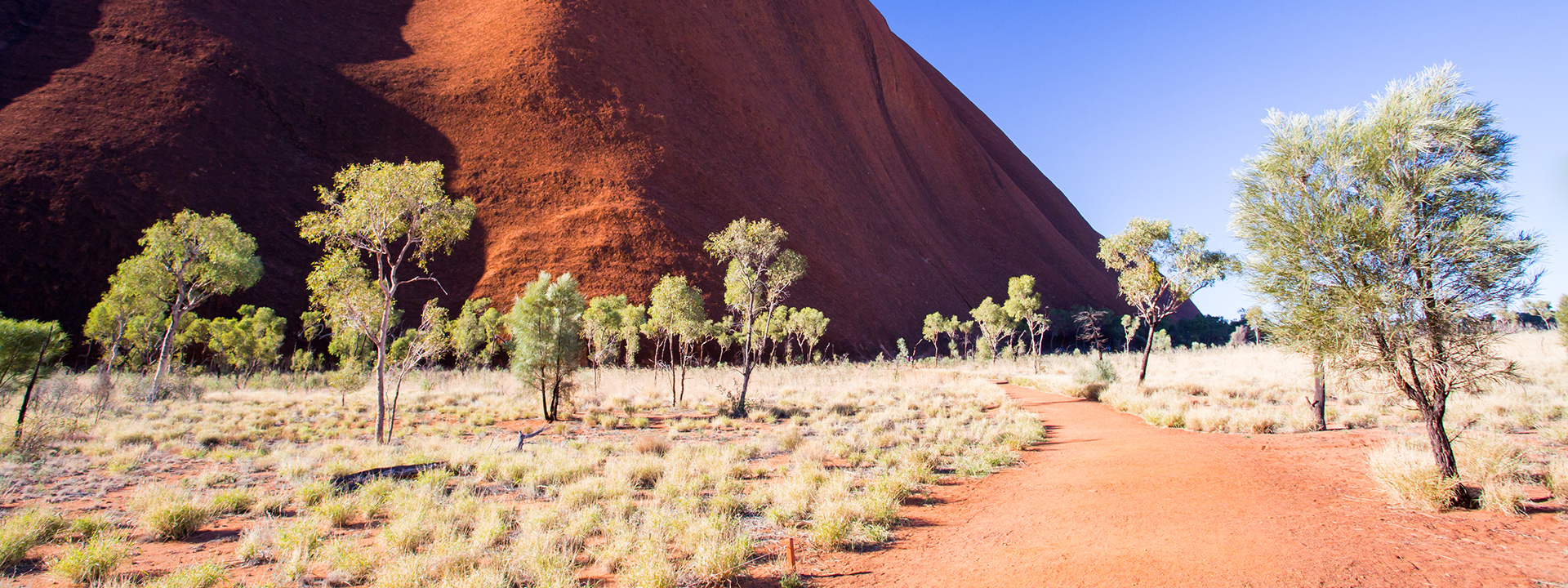
This idyllic track runs right next to Uluru, providing many opportunities to touch the rock and feel its textures. The area is also home to thousands of birds.
Connecting the Kuniya walk with the Mala car park, the Lungkata walk is one of the Uluru base walk's most geologically impressive and visually diverse sections.
There are sections where the sides of Uluru slant down to meet the path. Here, you’ll encounter spectacular elevated caves and crevices—carved by millennia of wind and water erosion—that are home to thousands of birds.
This walk will teach you about Lungkata (the cheeky blue-tongue lizard man) and why Tjukurpa teaches us not to steal from others. As one of Uluru’s first visitors, Lungkata discovered the hard way the dangers of climbing Uluru. Your tour group will enjoy the walk alone.
4
Your tour group will enjoy the walk alone, enjoy the environment's stunning domes of Kata-Tjuta, see the wildflowers (depending on the season), and marvel at the views of the open plains on the return walk. Walpa Gorge is Kuniya Walk heading towards Mutitjulu Waterhole. Mutitjulu Waterhole is home to a Wanampi, an ancestral water snake, surrounded by beautiful scenery and shaded by the impressive height of Uluru;. You will further enjoy ancient caves containing rock art that the Anangu people used in the past, whose ancestors are still alive today. Your tour group will enjoy the walk alone.
5
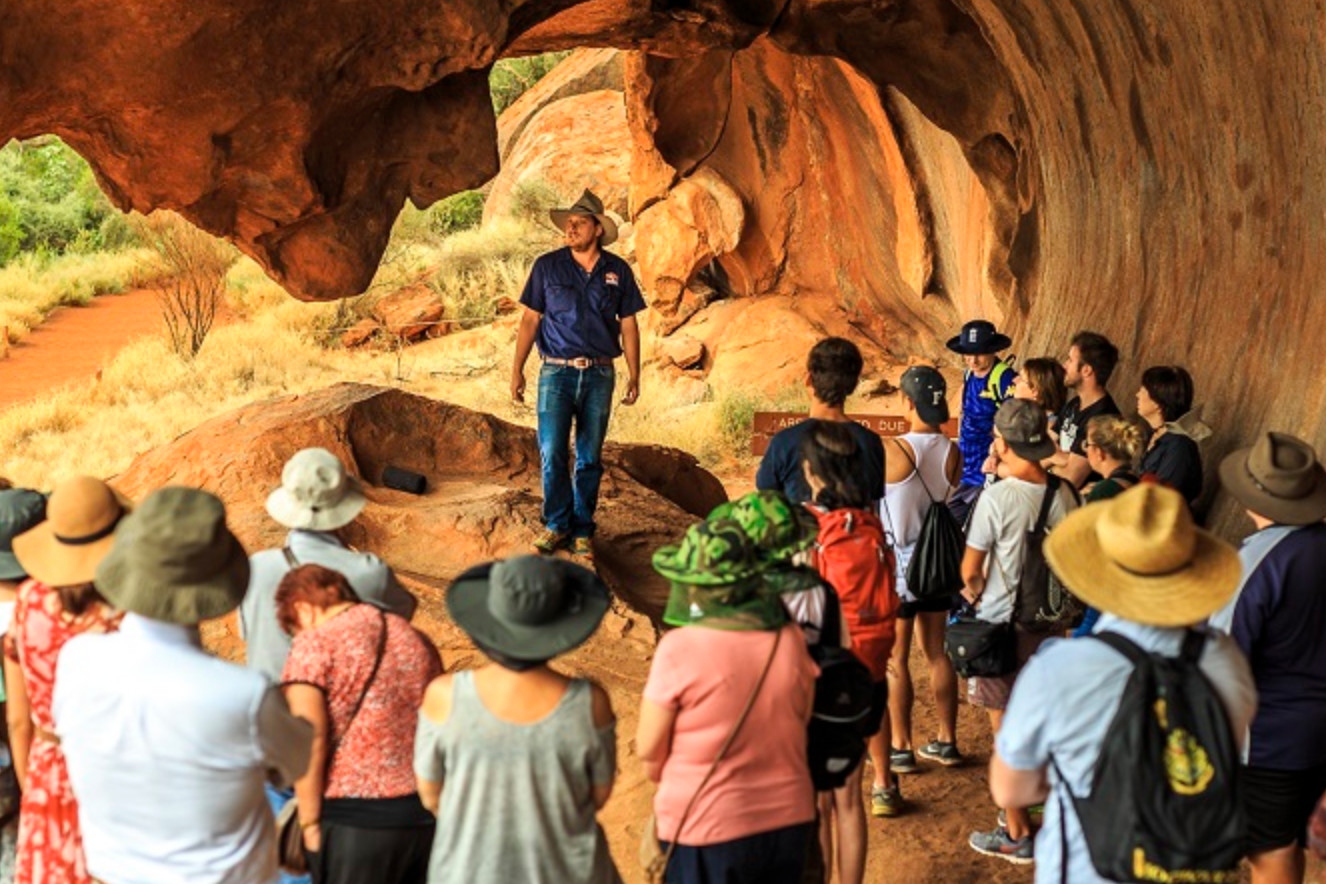
The Cultural Centre was created with the help of the local Anangu people using around 90,000 mud bricks. The sacred site it is built on has special meaning to its traditional owners. Here, you will have time to learn about the local Pitjantjatjara people and buy souvenirs. You may grab something to eat at your own expense.
6
Stop 6
Your tour group will enjoy the walk alone, enjoy the environment's stunning domes of Kata-Tjuta, see the wildflowers (depending on the season), and marvel at the views of the open plains on the return walk. Walpa Gorge is a natural creek that carves its way between the two tallest domes of Kata Tjuta. The path folds out in a rocky formation and follows a 2.6-kilometer return route that takes you directly through the rugged walls of the landmark.
Keep your eyes peeled for rare plant species as you pass groves of vibrant spearwood and reach the designated viewing platform between the domes of Kata Tjuta. Then, we will leave from the Uluru-Kata Tjuta site and head back to Curtain Springs. To reach Kata Tjuta from the Cultural Centre, you must take an additional hour by bus.
7
Curtin Springs is an extraordinary part of Central Australia, owned by a family who have made this remote place their home. This is a significant place for all visitors. The Australian Tradional Resturent. Like many Central Australian cattle stations, Curtin Springs saw many changes in the early years. The land at Curtin Springs was first taken up by Paddy DeConnley in the 1930’s with a sheep stock and was known as Mt Conner Station. In 1940, it was leased to Abraham Andrews, who wanted to call the property ‘Stalin Springs’ after Joseph Stalin of Russia. Because his sons objected, it became known as ‘Curtin Springs’ after the late Honourable John Curtin, the then Prime Minister of Australia.
You may get something to eat at your expense.
To get to Curtin Springs from Kata Tjuta, we must spend an additional one and a half hours on the bus.
8
We will start our return journey from Curtain Springs and head back to Alice Springs. You can relax and enjoy the scenery, and we will drop you back to your hotel. It will take approximately five hours
What's not included
Wheel Chair Access
Available languages
Guide guide
EN
Important information
Infants and small children can ride in a pram or stroller
Service animals allowed
Public transportation options are available nearby
Suitable for all physical fitness levels
Remaining time will be allotted for transport time
About Alice Springs
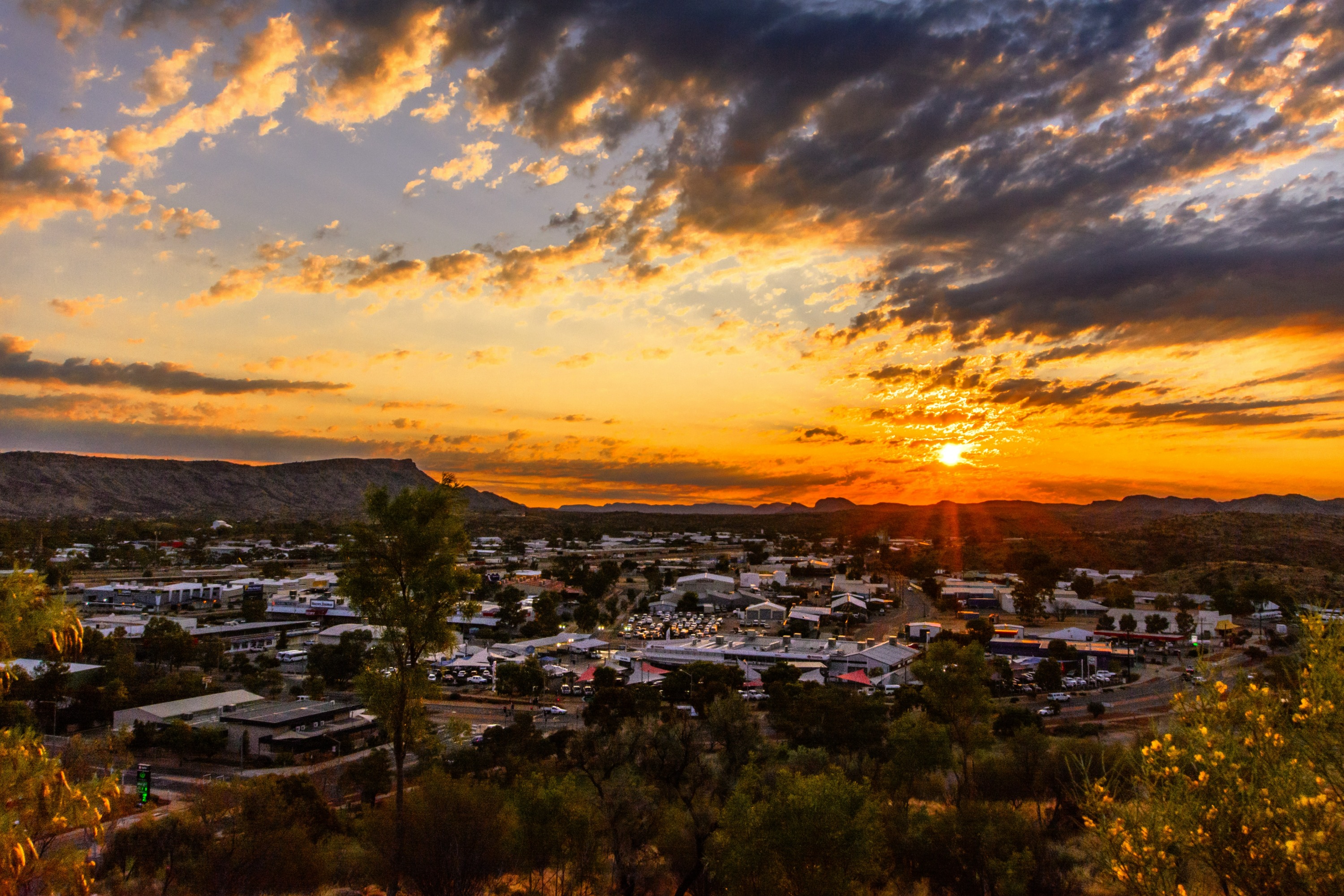
Alice Springs is the gateway to Australia's iconic Red Centre, offering a unique blend of Indigenous culture, stunning natural landscapes, and adventurous activities. It's a place where the ancient traditions of the Arrernte people meet the rugged beauty of the Outback, providing an authentic Australian experience.
Top Attractions
Uluru (Ayers Rock)
Uluru is a massive sandstone monolith sacred to the Indigenous Anangu people. It's one of Australia's most iconic natural landmarks and a UNESCO World Heritage site.
Nature/Historical/Cultural
1-2 days
AUD 25 (park entry fee)
Kata Tjuta (The Olgas)
Kata Tjuta is a group of 36 domed rock formations located near Uluru. It's another significant site for the Anangu people and offers stunning landscapes and hiking trails.
Nature/Cultural
Half to full day
Included in the Uluru-Kata Tjuta National Park entry fee
West MacDonnell Ranges
The West MacDonnell Ranges offer stunning landscapes, gorges, and waterholes. It's a popular destination for hiking, swimming, and camping.
Nature/Adventure
Half to full day
Free (some camping sites may have fees)
Alice Springs Desert Park
The Alice Springs Desert Park is a conservation park showcasing the unique flora and fauna of the Central Australian deserts. It features native wildlife, bird shows, and cultural performances.
Nature/Cultural
2-3 hours
AUD 37 (adult), AUD 17 (child)
Anzac Hill
Anzac Hill is a prominent landmark in Alice Springs offering panoramic views of the town and surrounding desert. It's a memorial to the Australian and New Zealand Army Corps (ANZAC) and features a war memorial.
Historical
30 minutes to 1 hour
Free
Alice Springs Reptile Centre
The Alice Springs Reptile Centre is a small but fascinating facility showcasing the diverse reptile species of the Australian Outback. It offers educational talks and hands-on experiences.
Nature/Education
1-2 hours
AUD 20 (adult), AUD 10 (child)
Must-Try Local Dishes
Kangaroo
Kangaroo is a lean, protein-rich meat with a gamey flavor, often grilled or barbecued. It's a popular dish in Alice Springs and a must-try for adventurous eaters.
Main course
High in protein, low in fat, gluten-free
Bush Tucker
Bush Tucker refers to the traditional foods of Indigenous Australians, including native fruits, vegetables, and meats. In Alice Springs, you can try dishes made with wattleseed, quandong, and bush tomatoes.
Appetizer/Snack
Varies by dish, often gluten-free and vegetarian options available
Outback Steak
Alice Springs is known for its high-quality beef, often sourced from local cattle stations. Outback steak is a popular dish, typically served with a side of vegetables or a salad.
Main course
High in protein, gluten-free options available
Popular Activities
Hiking
Camping
4WD tours
Mountain biking
Rock climbing
Swimming
Picnicking
Wine tasting
Best Time to Visit
April to September (winter and spring)
This is the most comfortable time to visit, with warm days and cool nights. It's the peak tourist season due to the pleasant weather, making it ideal for outdoor activities and sightseeing.
15-28°C
59-82°F
Practical Information
Language
- Official: English
- Widely spoken: English, Arrernte (Indigenous language)
- English: Widely spoken
Currency
Australian Dollar (AUD)
Time Zone
ACST (Australian Central Standard Time, UTC+9:30) during standard time, and ACDT (Australian Central Daylight Time, UTC+10:30) during daylight saving time (first Sunday in October to first Sunday in April)
Electricity
230VV, 50HzHz
Safety Information
Overall Safety Rating: Generally safe
Alice Springs is generally a safe destination for travelers, with low crime rates and a welcoming community. However, it's important to be aware of the unique challenges and risks associated with traveling in the Outback, such as extreme weather, remote locations, and wildlife.
Important Precautions:
- • Be cautious when using ATMs and avoid carrying large amounts of cash
- • Keep valuables secure and out of sight
- • Be wary of strangers offering unsolicited help or services
Getting there
By air
- Alice Springs Airport • 14 km from city center
By train
Alice Springs Railway Station
By bus
Alice Springs Bus Depot
Getting around
Public transport
The bus system is the primary form of public transport in Alice Springs, with regular services connecting major attractions, hotels, and residential areas.
Taxis
Available • Apps: DiDi, Taxi Apps
Rentals
Car, Bike, Scooter
Neighborhoods
Alice Springs Town Centre
East Side
West Side
Day trips
Larapinta Trail
Varies (day hikes and overnight options available) • Half day to multi-day
The Larapinta Trail is a world-renowned hiking trail stretching 223 km through the West MacDonnell Ranges. It offers stunning landscapes, diverse wildlife, and a range of hiking options for all skill levels.
Ormiston Gorge
120 km from Alice Springs • Half to full day
Ormiston Gorge is a stunning gorge located in the West MacDonnell Ranges, offering a range of outdoor activities and scenic views. It's a popular destination for hiking, swimming, and camping.
Standley Chasm
50 km from Alice Springs • Half day
Standley Chasm is a narrow gorge located in the West MacDonnell Ranges, offering a unique and scenic hiking experience. It's a popular destination for visitors looking to explore the natural beauty of the Outback.
Festivals
Alice Springs Beer Can Regatta • September (usually the second weekend)
Alice Springs Camel Cup • July (usually the first weekend)
Alice Springs Desert Festival • August (usually the last weekend)
Pro tips
- Visit Uluru and Kata Tjuta at sunrise or sunset for the best views and cooler temperatures
- Carry plenty of water and sun protection when exploring the Outback, as dehydration and sunburn are serious risks
- Join a guided tour or cultural experience to learn about the local Indigenous culture and history
- Try local Outback cuisine, such as kangaroo, bush tucker, and Outback steak
- Explore the West MacDonnell Ranges for stunning landscapes, gorges, and waterholes
From $25
per person
Price varies by option
Secure booking
Free cancellation available