Full Day Guided Tour In Marrakech with Camel Ride from Casablanca
Active
11h - 12h
For a full refund, cancel at least 24 hours before the scheduled departure time.
Instant confirmation
Mobile or paper ticket accepted
About this experience
Enjoy a full-day private tour from Casablanca to Marrakech, combining top cultural sites with a fun camel ride in the palm groves. Travel in comfort with hotel pickup, a professional guide, and lunch included. Visit iconic spots like the Koutoubia Mosque, Bahia Palace, vibrant souks, and the famous Jemaa el-Fnaa square.
Available options
Full Day Guided Tour In Marrakech with Camel Ride from Casablanca
Pickup included
What's included
Government Fees
Lunch
1H Camel Ride experience
Guide Multilingual
Pick up and Drop off from your Hotel
Coffee and/or Tea
Black Mercedes Van
Detailed itinerary
1
Morning drive from Casablanca at 08 :30 AM, your guide will take you for a panoramic tour of that bustling economic capital, the centre for all trade and business..Casablanca was established as a commercial centre by the French and the architecture here features a mixture of modern, art deco and the traditional design. Highlights include the Central Market and the old Mahakma building.
2
Stop 2
You will visit also the remarkable Mosque Hassan II, one of only two mosques in Morocco open to non-Islamic believers. Built by the late King Hassan II at the end of his 40-year reign, this astounding edifice is larger than Saint Peter’s in Rome andcapable of holding 80,000 worshippers.
3
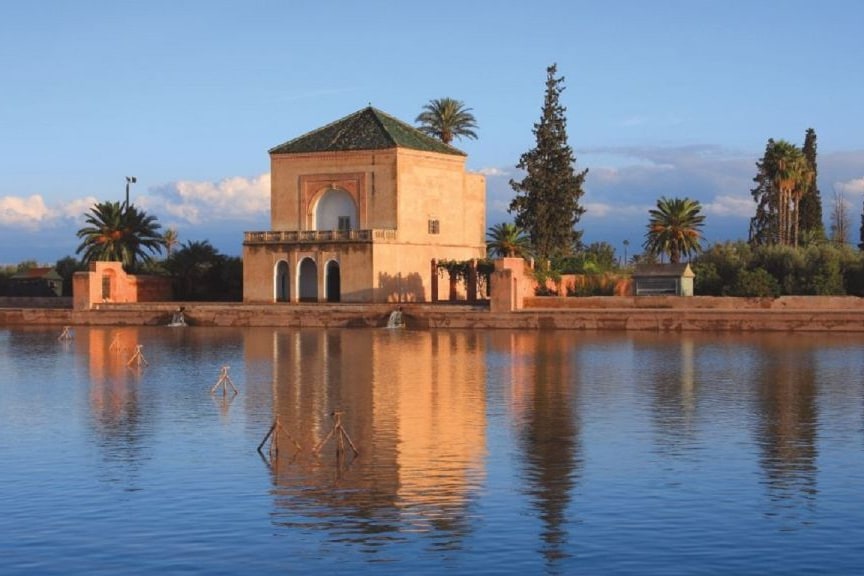
Marrakech enjoys a legend status, which conveys the ideas of mystery, sensuality, and exoticism. Its influence and fame have been so strong and intense in the history of Morocco, that as a matter of fact the country was named after the city.
4
Stop 4
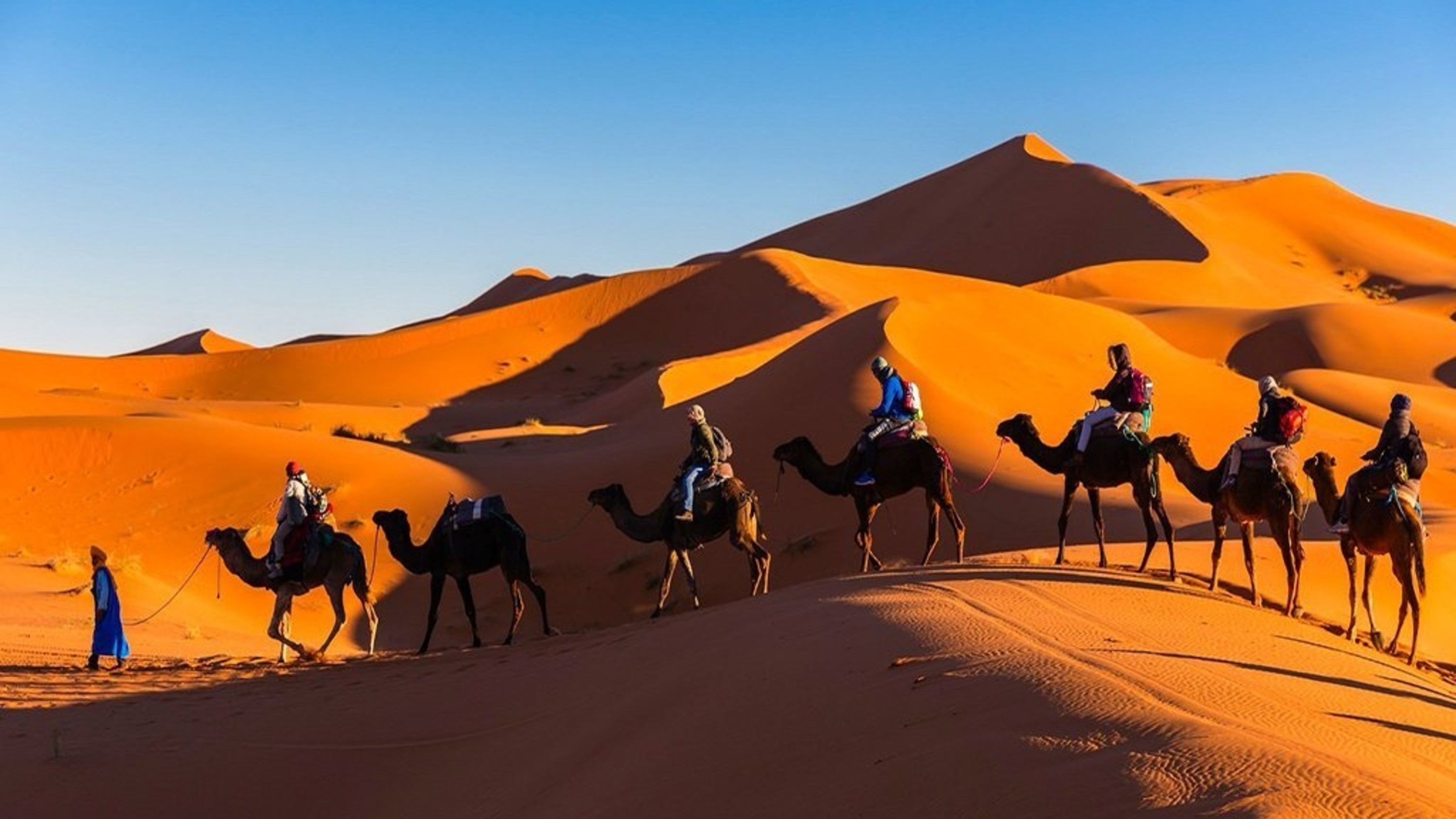
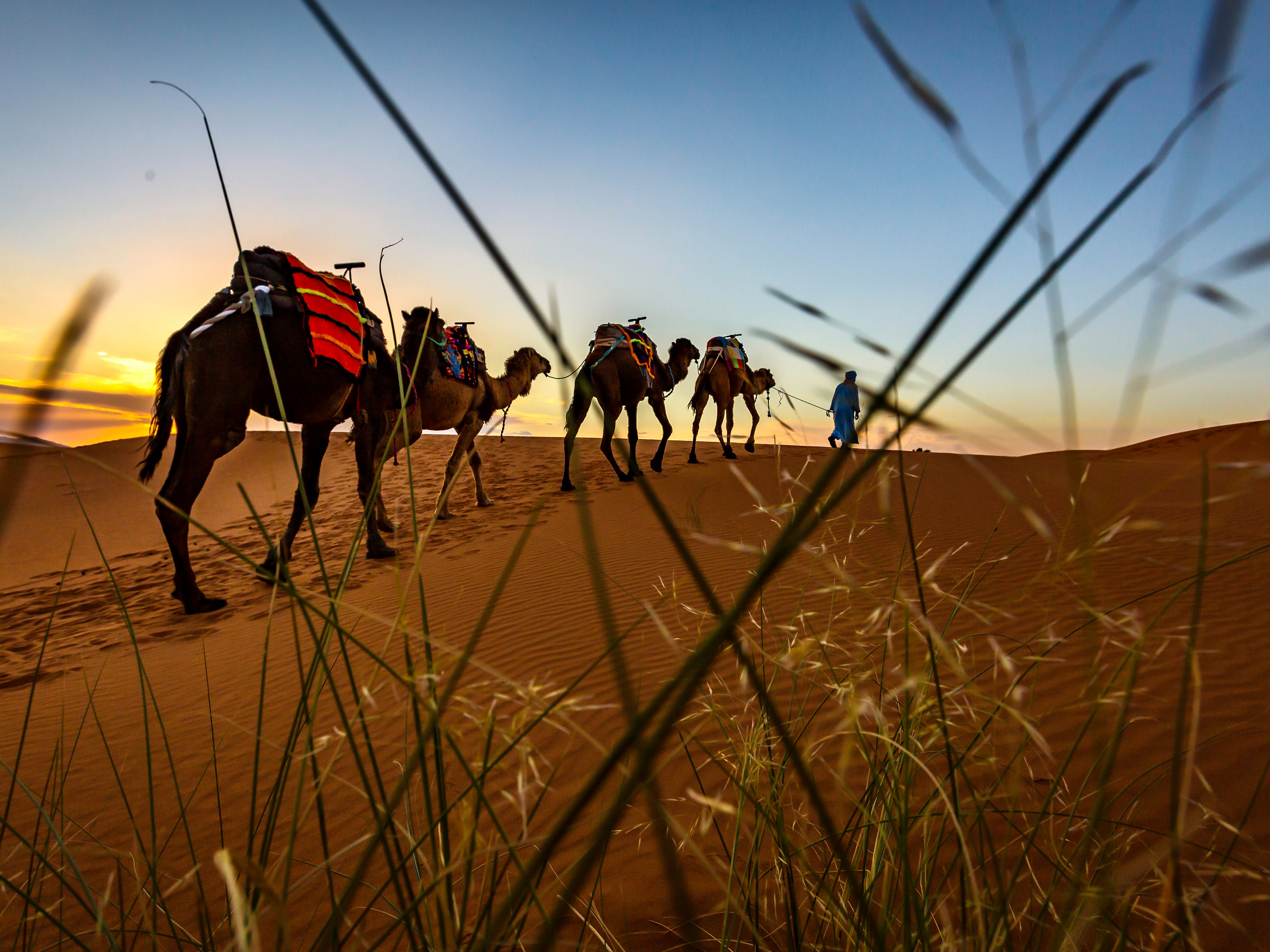
Welcome to Marrakech, we will let take you to a very good adventure without going to the Sahara. after meeting the camel leaders and their camels. The adventure during 1h, start the riding of wonderful place in Marrakech called la palmeraie is on the north of this red city and like an oasis with over that 150 000 palm trees, discovering palms and surroundings. Enjoying with the beautiful view of the all area. It is a very peaceful and exiting experience.
5
Stop 5
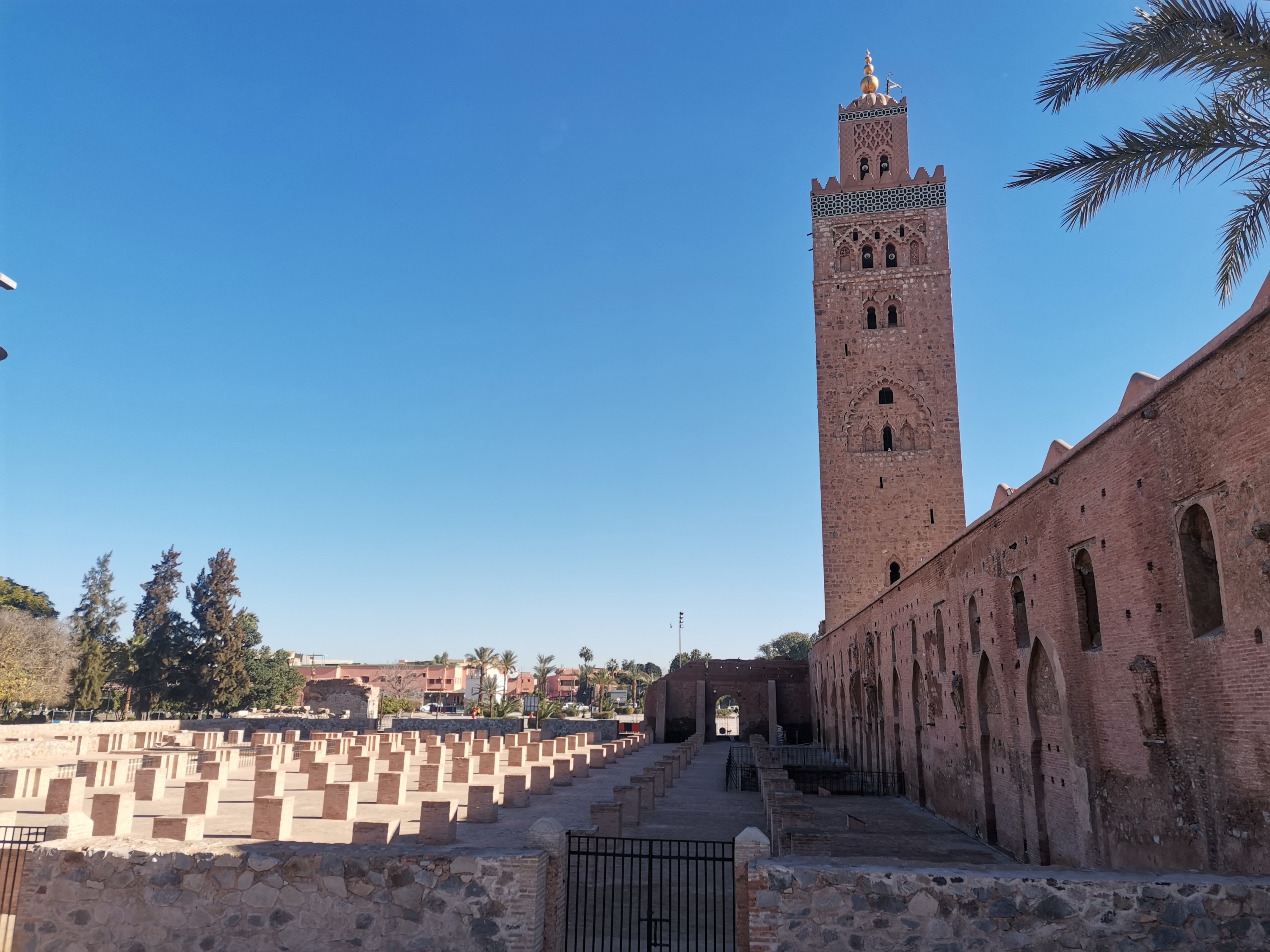
Highlights of your visit will include: The Koutoubia Mosque Built by the Almohads in the late years of 12th Century, the Koutoubia Mosque, and specially its minaret, is the most important landmark of Marrakech, and a symbol of the city itself. The minaret served as a model for the Giralda in Sevilla and the unfinished Tour Hassan in Rabat, all three being designed by the same architect. Koutoubia means ‘booksellers’, as the trade of books was concentrated in the neighborhood during the Middle Ages. The minaret of the Koutoubia, 77 meters high, is visible from almost any point of the city – an old ordinance, still in force, forbids any building of Marrakech to surpass the Koutoubia minaret in height.
6
Stop 6
Built in the 16th Century as mausoleums for some Saadian rulers and their families, the Saadian Tombs were unknown of until they were discovered by the French in 1917 thanks to aerial photographs. The site comprises more than one hundred graves, distributed in 3 mausoleums whose decoration exemplifies Islamic architecture with floral motifs, calligraphy, zellij and carrara marble, and finely worked cedar wood and stucco. Outside the buildings are a garden and the graves of soldiers and servants.
7
Stop 7
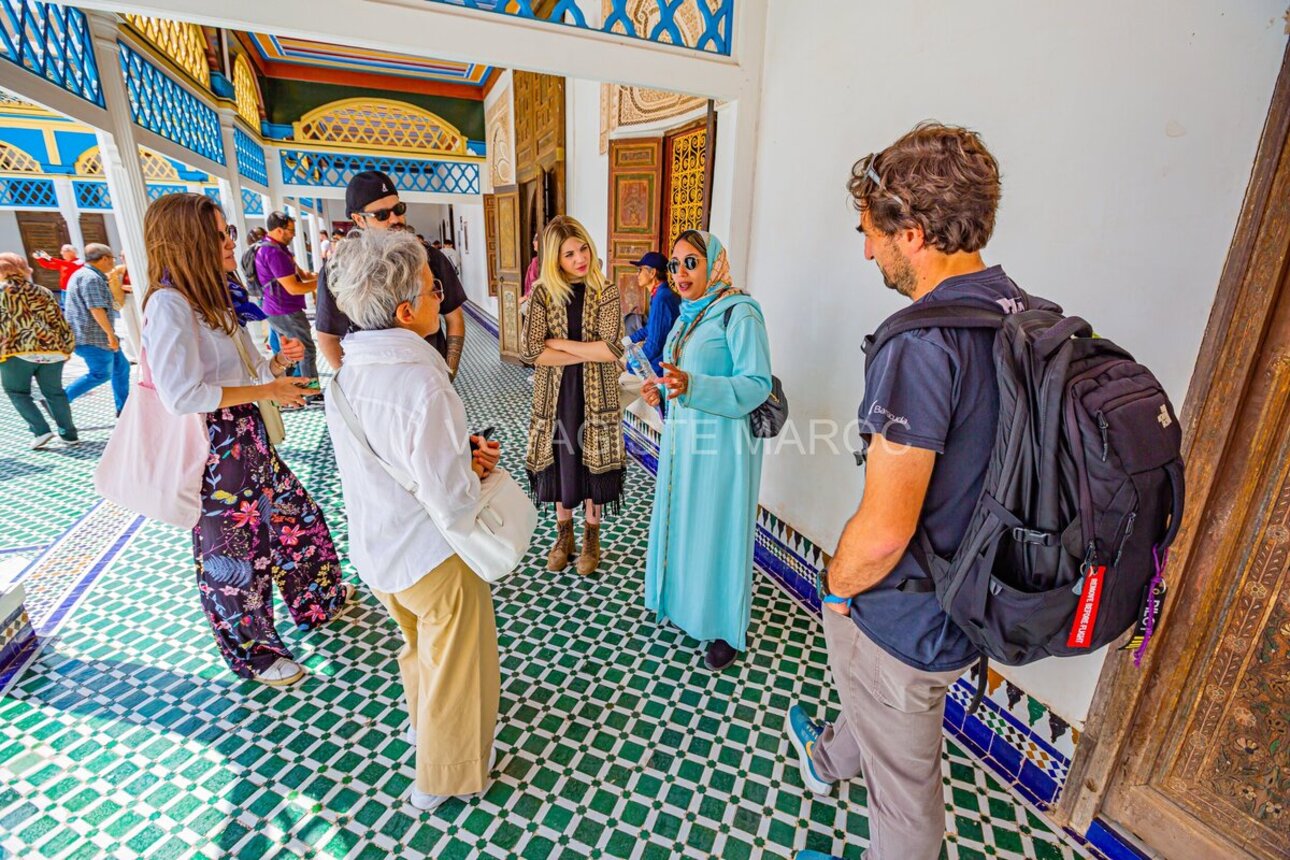
Built in the late 19th Century, and decorated by the best artisans of Morocco at the time, this palace – intended to be the most magnificent of its age – features an exquisite blend of Andalusian and Moorish styles. Specially interesting are the harem apartments, the trapezoidal garden, and a huge tiled courtyard with fountains.
8
Stop 8
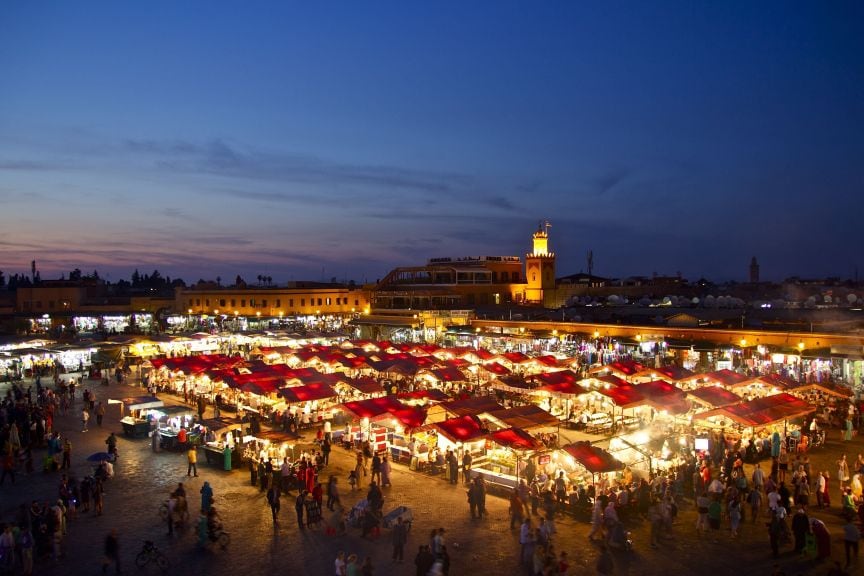
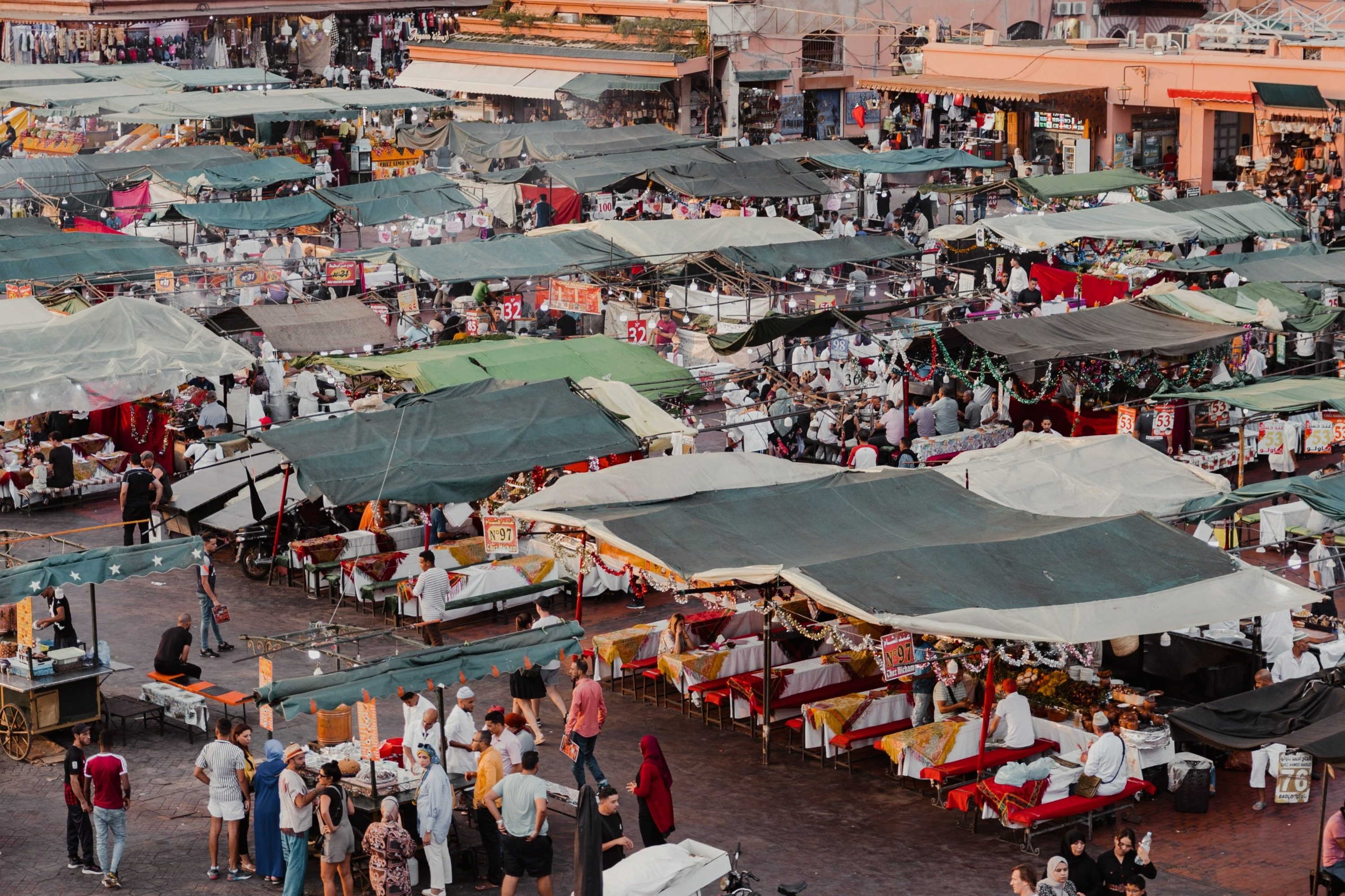
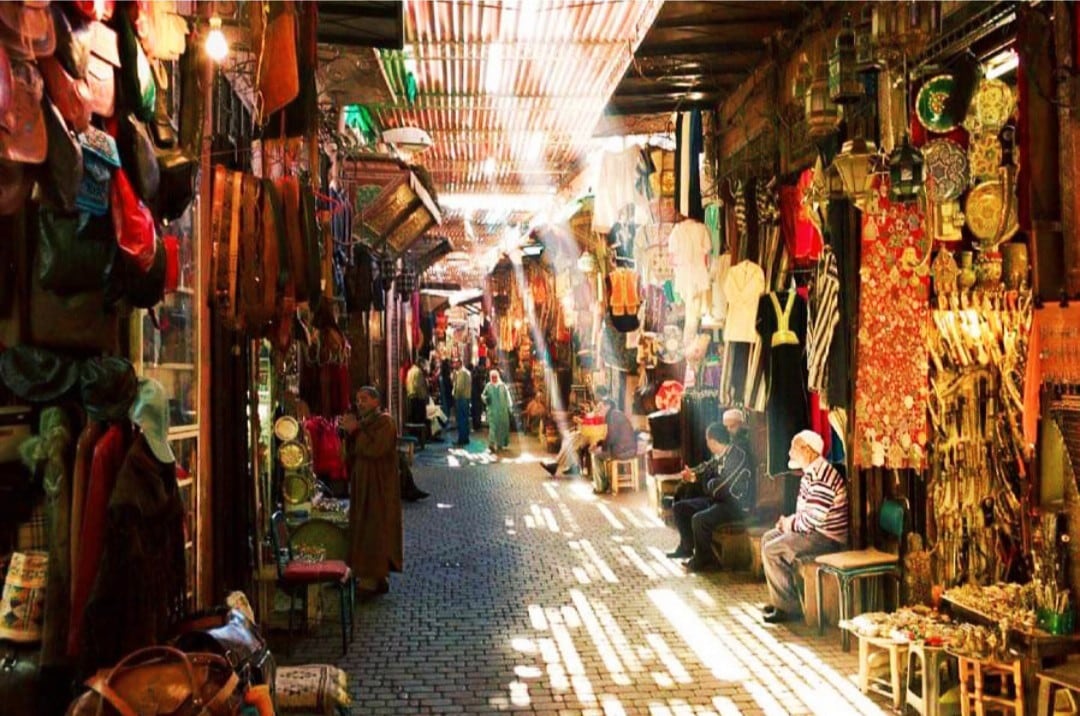
Filling the alleys north of Djmaa el Fna is the souk, or traditional market – the largest one in Morocco. It is, in turn, subdivided in some 18 souks, each one of them devoted to a specific trade or craftsmanship – from spices or ironwork, to the ingredients necessary for casting magic spells. The number of shops – often not much bigger in size than a closet - is overwhelming, and in them Moroccans can indulge in one of the activities that they enjoy most: bargaining. Cunning, patience, sense of humour.
9
Stop 9
Yves Saint Laurent exhibiting creative masterpieces of couture, accessories, sketches and photographs that span the late designer’s 40- year career, from 1962 until his retirement in 2002. Designed by Studio KO, the building sits a short distance away from Jardin Majorelle – the home acquired by Saint Laurent and Pierre Bergé in 1980. With a large permanent exhibition space designed by scenography’s Christophe Martin, showcasing the collections of its namesake, the museum also features temporary exhibition spaces, a research library and archives, an auditorium, bookstore, and a terrace café.
10
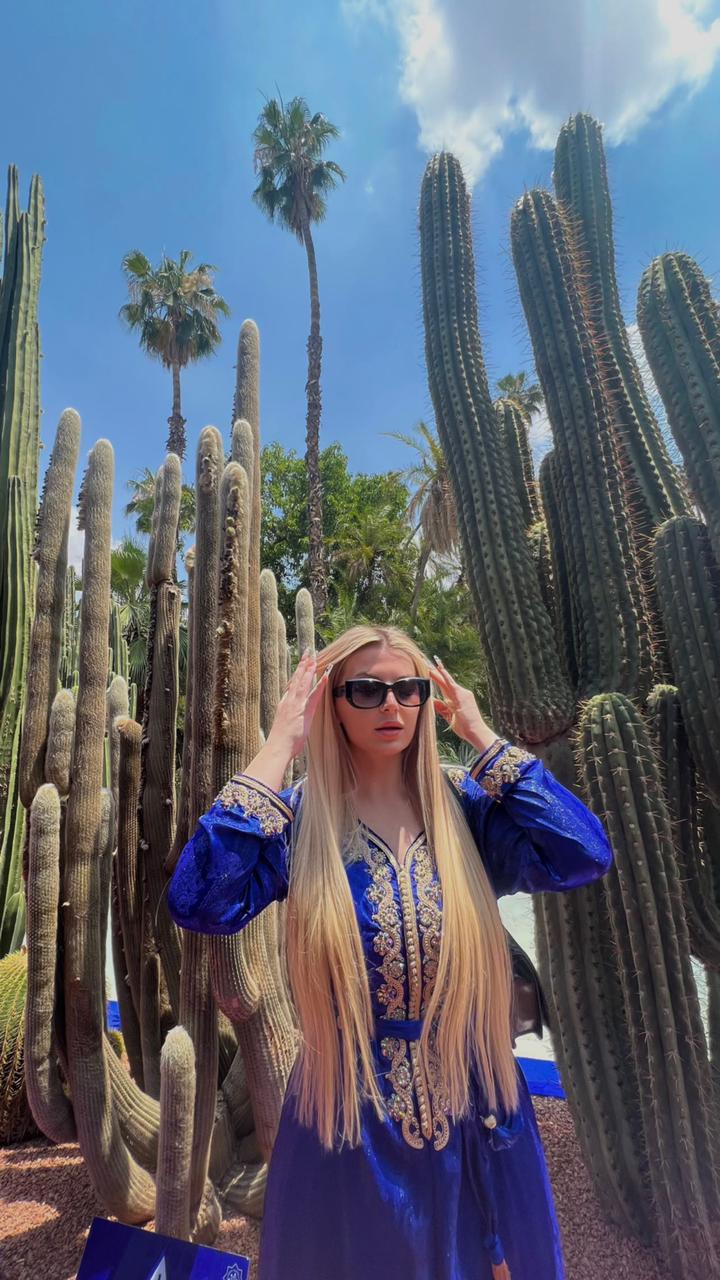
Yves Saint Laurent in his beloved Marrakech The magical Majorelle Gardens are adjacent to the Villa Oasis and are certainly worth a visit. Acquired in 1922 by the French painter Jacques Majorelle and later bought and developed by YSL and Bergé, the gardens are home to bougainvillea, coconut, banana and palm trees, as well as rare and exotic plants, some of which have strange and menacing forms. Once inside the garden walls, you would never think you were in the heart of a busy city. Here you can also stop at the excellent Berber Museum that was the former studio of painter Jacques Majorelle. This tiny museum features absolute gems from YSL’s private collection, in particular its room of stunning Berber jewelry in a magnificent display. There is also an excellent café in the gardens where you can enjoy a drink or snack, and both a gift shop and bookshop selling Yves St Laurentinspired treasures and publications. Do not miss the newly opened and dramatic.
11
Nowadays, Marrakech is a vibrant city which exhibits a curious blend of the ancient and the modern, allowing travelers the chance to experience the genuine medieval atmosphere of the old medina, and visit the trendiest bars, art galleries and restaurants in the French Quarter, Guéliz, built at the beginning of the 20th Century, all in one day.
What's not included
Dinner
Jardin Majorelle Tickets not included
Available languages
Guide guide
EN
FR
Reviews breakdown
Tripadvisor
5.0
1 reviews
5★
1
4★
0
3★
0
2★
0
1★
0
Important information
Infants and small children can ride in a pram or stroller
Service animals allowed
Specialized infant seats are available
Suitable for all physical fitness levels
About Casablanca
Casablanca, Morocco's largest city, is a vibrant blend of modern and traditional. Known for its stunning architecture, including the iconic Hassan II Mosque, it offers a unique mix of coastal charm, cultural richness, and economic dynamism. The city's Atlantic coastline provides beautiful beaches and a lively port atmosphere.
Top Attractions
Hassan II Mosque
The Hassan II Mosque is one of the most impressive mosques in the world and a symbol of Casablanca. It is the largest mosque in Morocco and the seventh-largest in the world. The mosque's minaret is the tallest in the world, standing at 210 meters.
Religious/Architecture
1-2 hours for a guided tour
Free for non-Muslims to enter the mosque, but guided tours may have a fee
Casablanca Cathedral
Also known as the Church of the Sacred Heart, this Catholic church is a unique blend of Art Deco and Moroccan architectural styles. It is one of the few churches in Morocco that is still in use.
Historical/Architecture
30-45 minutes
Free
Mahmoud II Square
This bustling square is the heart of Casablanca's old medina. It is surrounded by traditional markets, cafes, and historic buildings, offering a glimpse into the city's past.
Historical/Cultural
1-2 hours
Free to explore the square and markets
Casablanca Twin Center
This iconic skyscraper is one of the most recognizable landmarks in Casablanca. It consists of two identical towers and is a symbol of the city's modern architecture and economic growth.
Architecture/Cultural
30-45 minutes
Free to admire from the outside, observation deck may have a fee
Corniche Aïn Diab
This vibrant seaside promenade is a popular spot for locals and tourists alike. It offers beautiful views of the Atlantic Ocean, beaches, cafes, and restaurants, making it a great place to relax and enjoy the coastal atmosphere.
Beach/Entertainment
2-3 hours or more
Free to explore, beach clubs and restaurants may have fees
Must-Try Local Dishes
Couscous
A traditional Moroccan dish made with steamed semolina grains, often served with vegetables, meat, and a flavorful broth.
Dinner
Vegetarian options available, but often contains meat
Tagine
A slow-cooked stew made with meat, vegetables, and spices, named after the earthenware pot it is cooked in.
Dinner
Vegetarian options available, but often contains meat
Harira
A hearty soup made with tomatoes, lentils, chickpeas, and sometimes meat, often served during Ramadan.
Soup
Vegetarian options available, but often contains meat
Pastilla
A savory-sweet pie made with layers of phyllo dough, filled with spiced meat (usually pigeon or chicken), and topped with powdered sugar and cinnamon.
Dinner
Contains meat, not suitable for vegetarians
Popular Activities
Surfing at Aïn Diab Beach
Hiking in the nearby countryside
Relaxing at a hammam or spa
Strolling along the Corniche
Exploring historic landmarks and museums
Shopping for traditional crafts and souvenirs
Swimming and sunbathing at the beach
Boat tours and water sports
Best Time to Visit
Spring (March to May) and Fall (September to November)
Spring and fall offer pleasant weather with comfortable temperatures and fewer tourists. These seasons are ideal for exploring the city's attractions and enjoying outdoor activities.
18-24°C
64-75°F
Practical Information
Language
- Official: Arabic, Berber
- Widely spoken: French, Spanish, English
- English: Moderately spoken, especially in tourist areas and among younger people
Currency
Moroccan Dirham (MAD)
Time Zone
GMT+1
Electricity
220VV, 50HzHz
Safety Information
Overall Safety Rating: Generally safe, but exercise caution and be aware of your surroundings
Casablanca is generally safe for travelers, with low levels of violent crime. However, petty crime such as pickpocketing and scams can occur, especially in crowded areas and tourist hotspots. Exercise caution and be aware of your surroundings, especially at night and in isolated areas.
Important Precautions:
- • Be aware of your surroundings and keep valuables secure, especially in crowded areas and on public transportation
- • Use licensed taxis or ride-hailing apps, and agree on the fare before starting your journey
- • Be cautious when approaching strangers or accepting help from locals, as scams and theft can occur
Getting there
By air
- Mohammed V International Airport • 30 km from city center
By train
Casablanca Voyageurs
By bus
Casablanca Oasis, Casablanca Trafic
Getting around
Public transport
The tram system is modern, efficient, and connects key areas of the city. It's a convenient and affordable way to get around.
Taxis
Available • Apps: Careem, Heetch
Rentals
Car, Bike, Scooter
Neighborhoods
Maarif
Old Medina
Habous
Quartier des Hôpitaux
Day trips
Rabat
90 km from Casablanca • Full day recommended
Rabat is the capital of Morocco and a UNESCO World Heritage site, known for its historic landmarks, cultural attractions, and beautiful beaches. It offers a mix of modern and traditional architecture, as well as a rich history and vibrant arts scene.
Marrakech
240 km from Casablanca • Overnight recommended
Marrakech is a vibrant and colorful city known for its bustling markets, historic landmarks, and lively atmosphere. It is a popular destination for travelers seeking a mix of culture, adventure, and relaxation, with a variety of activities and attractions to explore.
El Jadida
90 km from Casablanca • Half day recommended
El Jadida is a coastal city known for its historic landmarks, beautiful beaches, and relaxed atmosphere. It is a popular destination for travelers seeking a mix of history and relaxation, with a variety of activities and attractions to explore.
Festivals
Casablanca International Film Festival • November
Casablanca International Book Fair • February
Pro tips
- Learn a few basic phrases in Arabic or French to help you communicate with locals and show respect for the culture.
- Dress modestly and respect local customs and traditions, especially when visiting religious sites.
- Be cautious when using taxis, and agree on the fare before starting your journey. Consider using licensed taxis or ride-hailing apps for a more reliable and safe experience.
- Explore the city's many neighborhoods, each with its own unique character and attractions. From the bustling markets of the Old Medina to the upscale shopping and dining of Maarif, there is something for everyone in Casablanca.
- Try local street food and snacks, such as msemen (Moroccan pancakes) and harira (hearty soup). Look for vendors with high turnover and good hygiene practices to minimize the risk of foodborne illness.
From $25
per person
Price varies by option
Secure booking
Free cancellation available
Instant confirmation