Walking Historical Tour
Active
3h
All sales are final. No refund is available for cancellations.
Instant confirmation
Mobile or paper ticket accepted
About this experience
As we walk we go back in time, from the arrival of the first explorers to the transfer of the city to Morro do Castelo forming the first group of residents of the future capital.
Available options
Walking Historical Tour
What's included
Professional guide
Detailed itinerary
1
Stop 1
Praça Floriano occupies part of the land of the former Convento da Ajuda, built in the 18th century and demolished in the first decade of the 20th century. The idea of transforming the new square, surrounded by the buildings of the National Library, the City Hall (Palácio Pedro Ernesto), the former Federal Supreme Court, the Monroe Palace and the Municipal Theater into a Brazilian version of Times Square came from businessman Francisco Serrador, a Spanish based in Brazil and owner of casinos (currently prohibited in Brazil), cinemas, theaters and hotels. The name Cinelândia became popular in the 1930s. Dozens of theaters, nightclubs, bars and restaurants were installed in the region, making it a reference in terms of popular entertainment.
2
Stop 2
Pass by
National Library, also called National Library of Brazil, whose official institutional name is Fundação Biblioteca Nacional, is the depository of Brazil's bibliographic and documentary heritage, considered by UNESCO one of the ten largest national libraries in the world and the largest in Latin America.
3
Stop 3
Pass by
Its history is much older, and dates back to the arrival of the Portuguese royal family in 1808, Dom João VI arrives in Brazil with a set of works of art, some of which remained after his return to Europe and appear as the initial core of the collection. . The king founded the Royal School of Science, Arts and Crafts. In 1826, Emperor Pedro I changed the name to Academia Imperial de Belas Artes. Over the years, the Imperial Academy formed a significant art gallery and a glyptotheque, and with the advent of the Republic, the academy was renamed the Escola Nacional de Belas Artes.
4
Stop 4
Pass by
Municipal Theater opened at the beginning of the 20th century during the first major reform of the city. Designed in the molds of the Opera de Paris, it has played an important role since the beginning of Rio de Janeiro and national culture, receiving on its stage important artists, orchestras and ballet companies.
5
Metropolitan Cathedral of Rio de Janeiro, was inaugurated in 1979, in conical format, the great differential of the building, of straight and sober lines, are the colorful stained glass windows on the walls to the summit.
6
Stop 6
The institution was founded in 1837 by a group of forty -three Portuguese immigrants, political refugees, to promote culture among the Portuguese community in the then capital of the Empire. It was the first association of this community in the city. In a neomanueline style, which evokes the exuberant Gothic-renascentist style in force at the time of Portuguese discoveries.
7
The confectionery was founded in 1894 by Portuguese immigrants Joaquim Borges de Meireles and Manuel José Lebrão.
Its architecture and environment allow you to get an idea of what the Belle Époque would have been like. At the beginning of the 20th century, the interior halls were renovated, with an Art Nouveau touch, with huge crystal mirrors brought from Antwerp, framed by elegant friezes carved in rosewood wood. The wooden furniture inside was carved at the same time by artisan Antônio Borsoi. The facilities were expanded with the construction of a second floor, with a tea room. An opening in the ceiling of the ground floor allows you to see the tea room's skylight, decorated with beautiful stained glass windows.
8
Stop 8
Pass by
This historic building, in neoclassical style, was designed by the French architect Grandjean de Montigny, by order of D.João VI, and inaugurated on May 13, 1820, aiming at the installation of the First Praça do Comércio in the City of Rio de Janeiro.
Conceived as Praça do Comércio, it later housed several functions, such as Customs, Archives of the Ítalo-Germanic Bank and the II Jury Court. In 1990, it was opened as a Cultural Center.
9
Stop 9
Pass by
The hermitage built in 1609, by the Portuguese Antônio Martins Palma and Leonor Gonçalves who faced a storm on the high seas, while traveling in a ship called "Candelária". Promising our lady of Candelária, that if they survived, they would build the hermitage.
There were several renovations and additions from the 18th century until the parish church of Candelária began to be renovated in 1710. The inauguration, with the church still unfinished, took place in 1811, in the presence of the Prince Regent, D. João VI. The church had, at that time, only one nave. After the intervention of several architects, the dome was finally completed in 1877. The different parts of the dome, in Portuguese limestone, were made in Lisbon, as well as the eight statues that decorate it, sculpted by the Portuguese José Cesário de Salles. When finished, the dome was the tallest building in the city (62.24 meters high from the floor to the dome), visible from a distance.
10
Stop 10
The square has existed since the 16th century, when the Jesuits built a hermitage facing Piaçaba beach. The square was named in honor of November 15, 1889, the day the Republic was proclaimed in Brazil. It was once called Largo do Terreiro da Polé; Largo do Carmo; Carmo Square; Terreiro do Paço; and Largo do Paço. And it has several points of historical and political importance, such as the Imperial Palace and the Tiradentes Palace, in addition to the Mestre Valentim Fountain; the Statue of Dom João VI; the Statue of General Osório, an important military combatant in the Paraguayan War; and the Statue of the Black Admiral, a tribute to João Cândido, who led the Revolt of the Lash in 1910. And the beautiful view of Ilha Fiscal.
11
In the early history of the city, in the 16th century, in the region currently occupied by Largo da Carioca, there was a lagoon where it was donated to the Franciscans who denated the lagoon by opening the old Rua do Valão (today Uruguaiana) and built their convent and church on top. from the hill.
What's not included
Food and drinks
Gratuities
Drop-off
Available languages
Guide guide
EN
IT
ES
Reviews breakdown
Viator
5.0
2 reviews
5★
2
4★
0
3★
0
2★
0
1★
0
Tripadvisor
5.0
1 reviews
5★
1
4★
0
3★
0
2★
0
1★
0
Important information
Infants and small children can ride in a pram or stroller
Public transportation options are available nearby
Suitable for all physical fitness levels
Dress code is smart casual
Rio in Tours tours operated by qualified, experienced and verbal fluent guides. All Co work are registered with the Ministry of Tourism. (CADASTUR).
Meeting point
After finding a metro station, buy a round trip ticket, cost per trip - R$ 7.90 per person, take the train towards Pavuna or Uruguay and get off at Cinelândia, (pay attention the route is very fast), the exit is the Municipal Theater.
About Rio de Janeiro
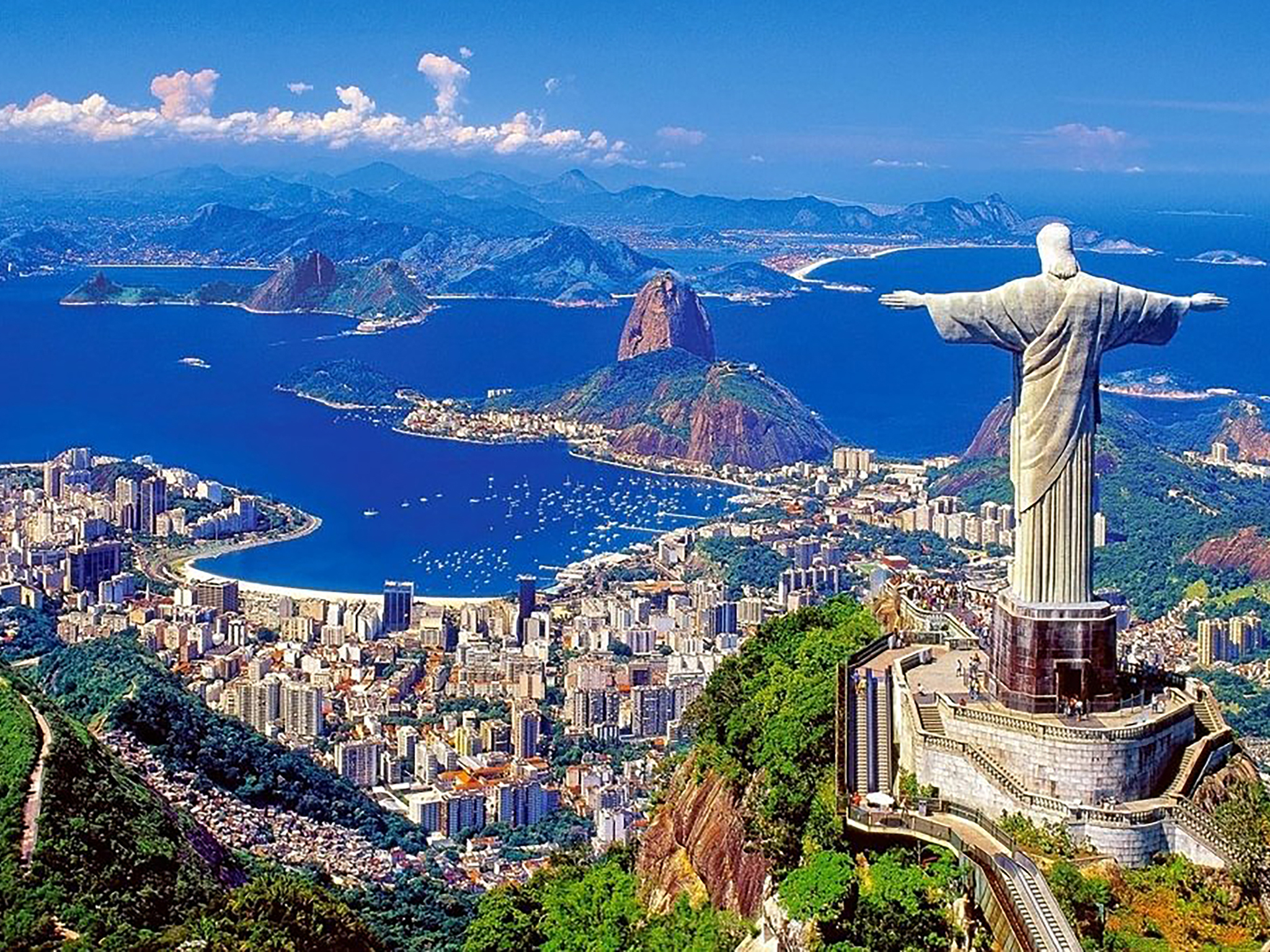
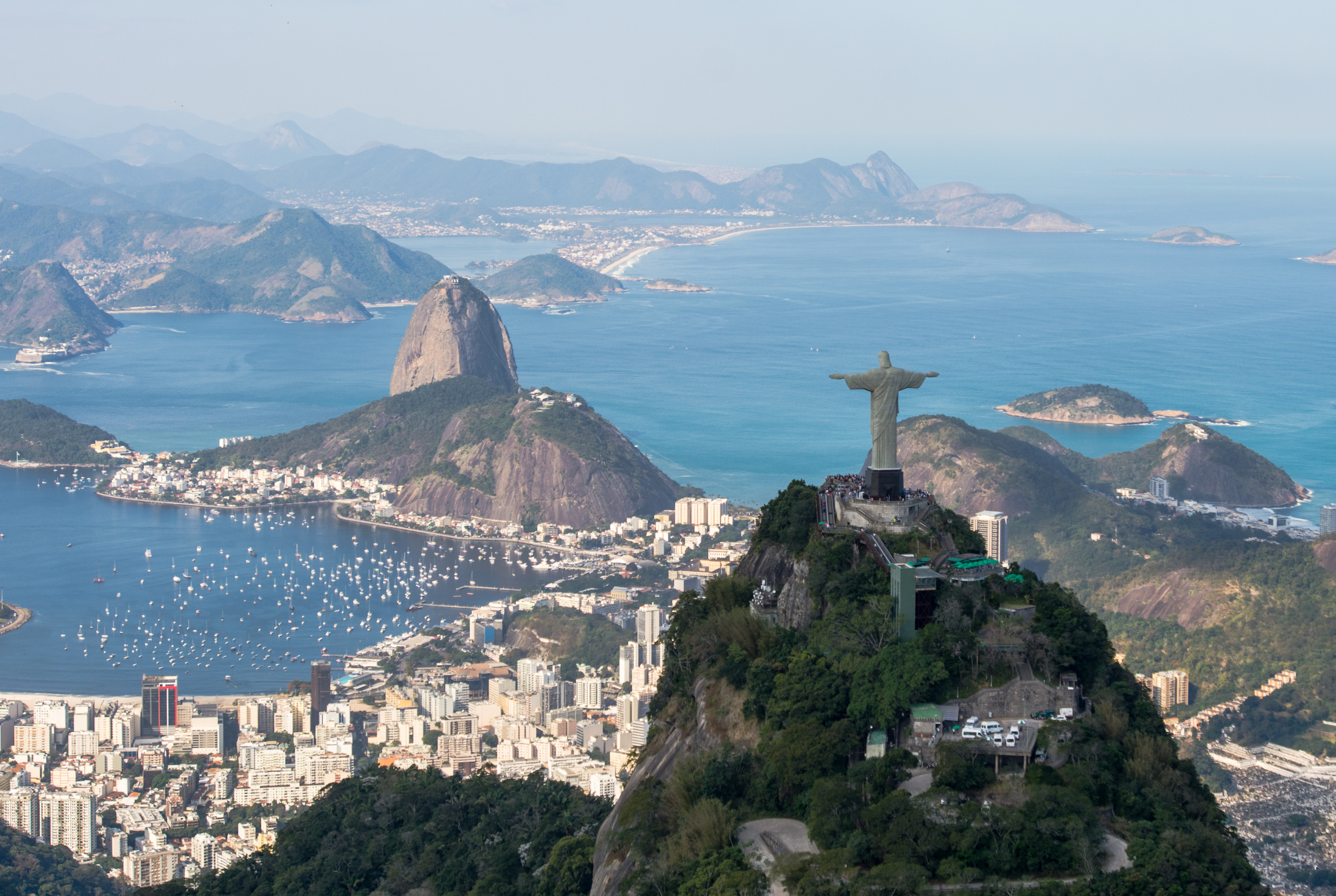
Rio de Janeiro, known as the 'Marvelous City,' is famous for its natural settings, Carnival, samba, bossa nova, and Balneario beaches such as Copacabana and Ipanema. It's a vibrant city with a rich cultural heritage and stunning landscapes, including the iconic Christ the Redeemer statue and Sugarloaf Mountain.
Top Attractions
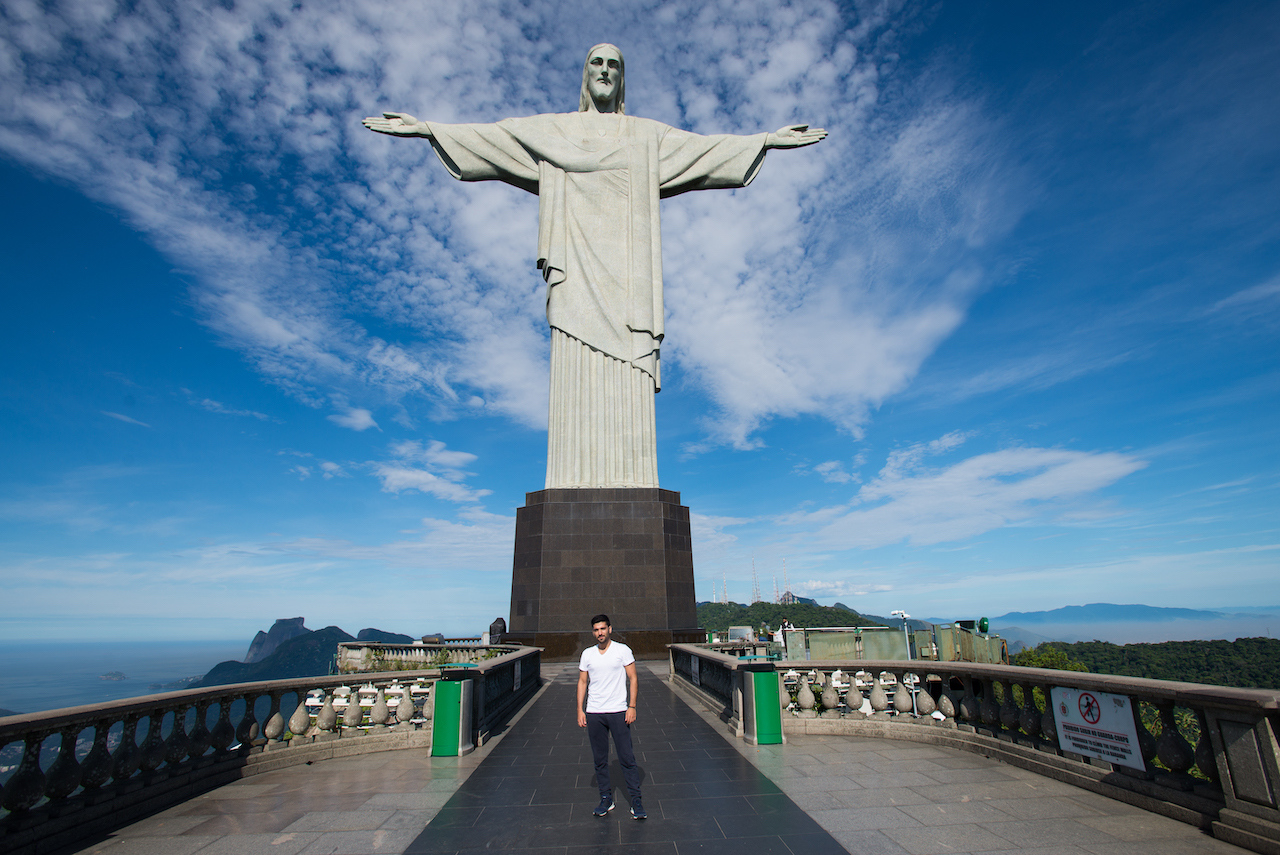
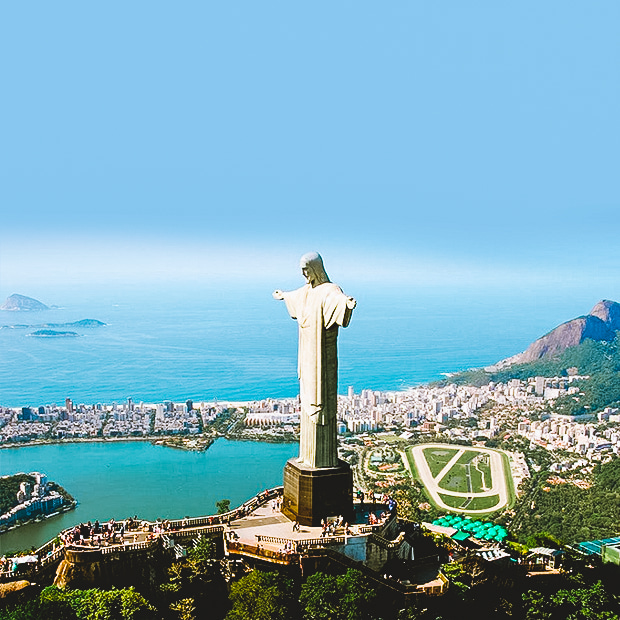
Christ the Redeemer
One of the New Seven Wonders of the World, this iconic statue offers breathtaking views of Rio de Janeiro.
Historical/Religious
2-3 hours
R$84 (including train ticket)
Sugarloaf Mountain
A famous peak offering stunning views of Rio de Janeiro and its beaches.
Nature
2-3 hours
R$88 (round-trip cable car)
Copacabana Beach
One of the most famous beaches in the world, known for its vibrant atmosphere and beautiful sunsets.
Beach
Half day or full day
Free
Tijuca National Park
The world's largest urban forest, offering hiking trails, waterfalls, and diverse wildlife.
Nature
Half day or full day
Free (some attractions may have fees)
Santa Teresa
A historic and bohemian neighborhood known for its cobblestone streets, art galleries, and scenic views.
Cultural
Half day
Free to explore
Must-Try Local Dishes
Feijoada
A hearty stew made with black beans and various cuts of pork, often served with rice, collard greens, and orange slices.
Dinner
Contains pork, not suitable for vegetarians or vegans.
Pão de Queijo
Cheese bread made with tapioca flour, giving it a unique texture and flavor.
Snack
Vegetarian, but contains dairy.
Moqueca
A traditional fish stew cooked in coconut milk and dendê oil, with various seafood and vegetables.
Dinner
Can be made vegetarian or vegan with vegetable broth and tofu.
Açaí
A thick, creamy fruit pulp from the açaí palm, often served with granola and condensed milk.
Dessert/Drink
Can be made vegan with plant-based milk.
Popular Activities
Hiking in Tijuca National Park
Surfing in Arpoador
Paragliding in Pedra Bonita
Beach lounging in Ipanema
Spa treatments in Copacabana
Yoga in Botafogo
Visiting museums in Centro
Attending a samba show
Best Time to Visit
December to March
This is the peak tourist season with warm weather and the famous Carnival in February/March. Expect crowded beaches and higher prices.
25-30°C
77-86°F
Practical Information
Language
- Official: Portuguese
- Widely spoken: English (limited)
- English: Limited
Currency
Brazilian Real (BRL)
Time Zone
GMT-3 (Brasília Time)
Electricity
110V/220VV, 60HzHz
Safety Information
Overall Safety Rating: Exercise caution
Rio de Janeiro is generally safe for tourists, but petty crime and violence can occur. Exercise caution, especially in less touristy areas and at night.
Important Precautions:
- • Avoid walking alone at night in unsafe areas
- • Use common sense and stay alert to your surroundings
- • Keep valuables secure and out of sight
Getting there
By air
- Rio de Janeiro-Galeão International Airport • 20 km (12 miles) from city center
- Santos Dumont Airport • 12 km (7.5 miles) from city center
By train
Central do Brasil
By bus
Rodoviária Novo Rio, Terminal Rodoviário da Gavea
Getting around
Public transport
Efficient and air-conditioned, the metro is a great way to avoid traffic.
Taxis
Available • Apps: Uber, 99 Taxis
Rentals
Car, Bike, Scooter
Neighborhoods
Copacabana
Ipanema
Santa Teresa
Lapa
Botafogo
Day trips
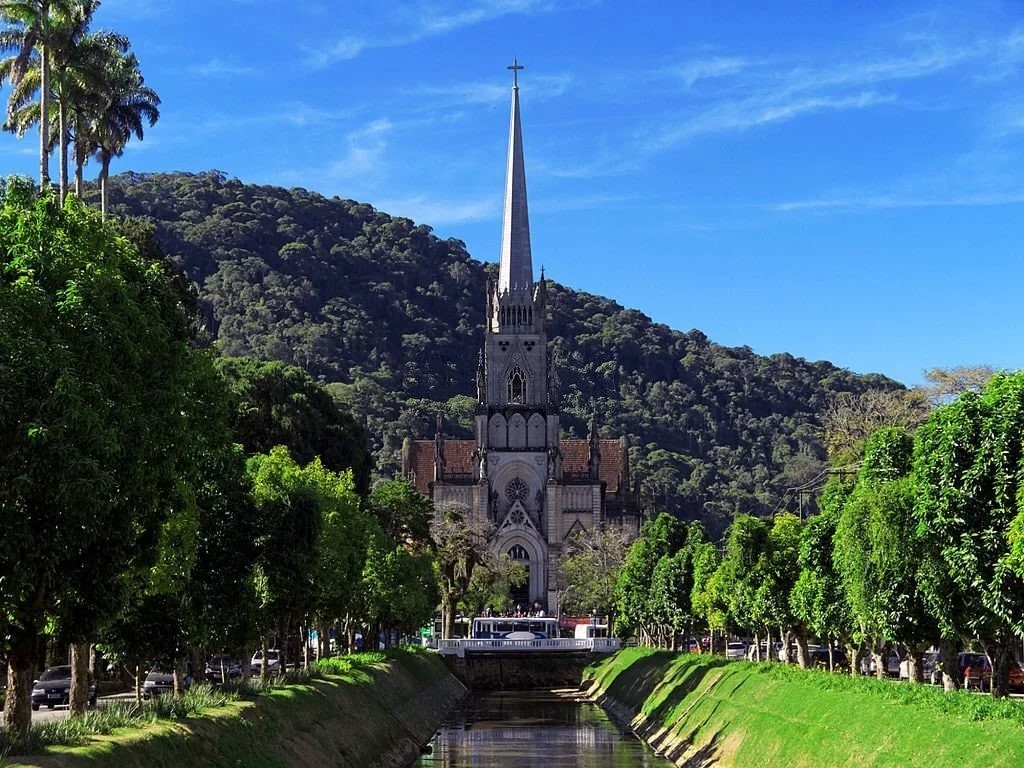
Petrópolis
65 km (40 miles) • Full day
A charming colonial town in the mountains, known for its historic architecture and cool climate.
Paraty
170 km (105 miles) • Full day or overnight
A historic coastal town with cobblestone streets, colonial architecture, and beautiful beaches.
Búzios
170 km (105 miles) • Full day or overnight
A picturesque beach town known for its stunning beaches, clear waters, and vibrant nightlife.
Festivals
Carnival • February/March (dates vary)
Rio Carnival Samba Parade • February/March (dates vary)
New Year's Eve (Réveillon) • December 31
Pro tips
- Visit Christ the Redeemer early in the morning to avoid crowds and enjoy the best views
- Take a helicopter tour for a unique perspective of the city
- Explore the less touristy neighborhoods like Santa Teresa and Botafogo for a more authentic experience
- Try local street food like pão de queijo and coxinha for a taste of Brazilian flavors
- Learn some basic Portuguese phrases to enhance your interactions with locals
From $25
per person
Price varies by option
Secure booking
Free cancellation available
Instant confirmation