Private Vespa Tour in Chianti
Active
5h
For a full refund, cancel at least 24 hours before the scheduled departure time.
Instant confirmation
Mobile or paper ticket accepted
About this experience
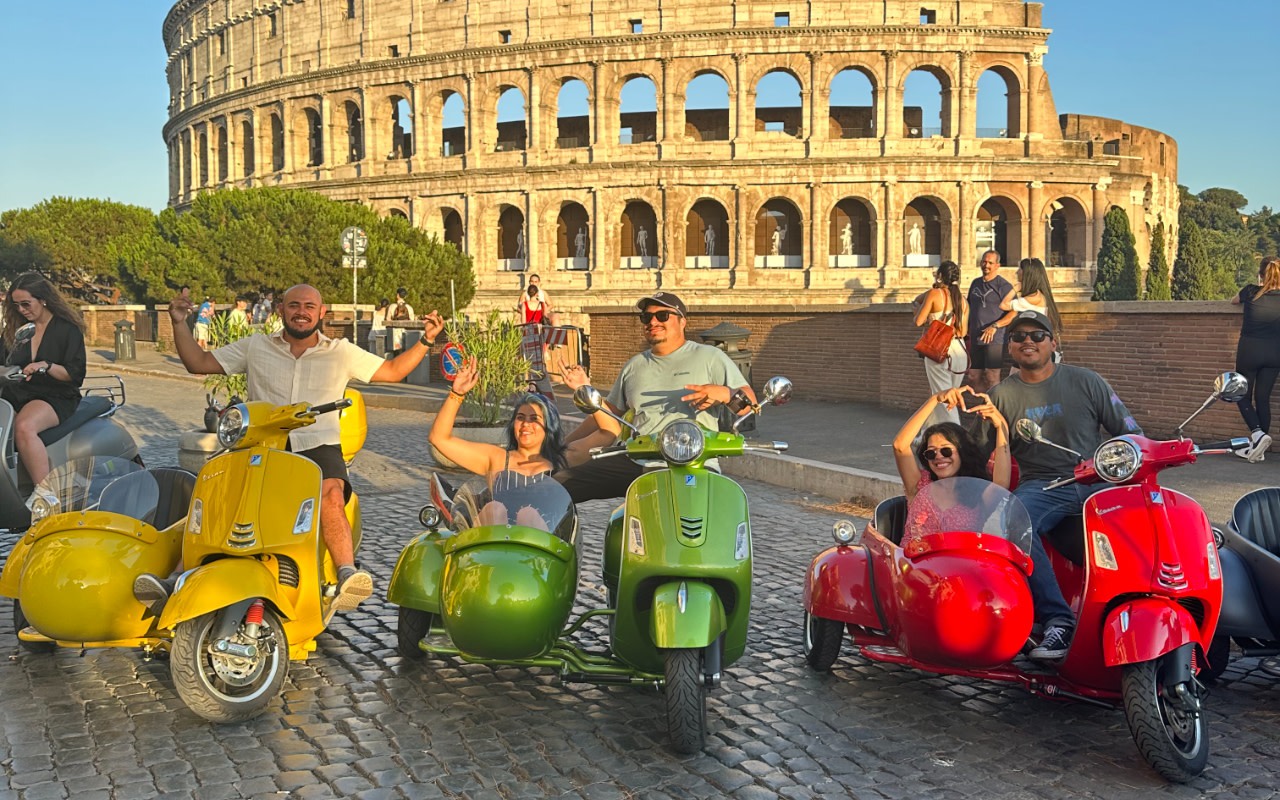
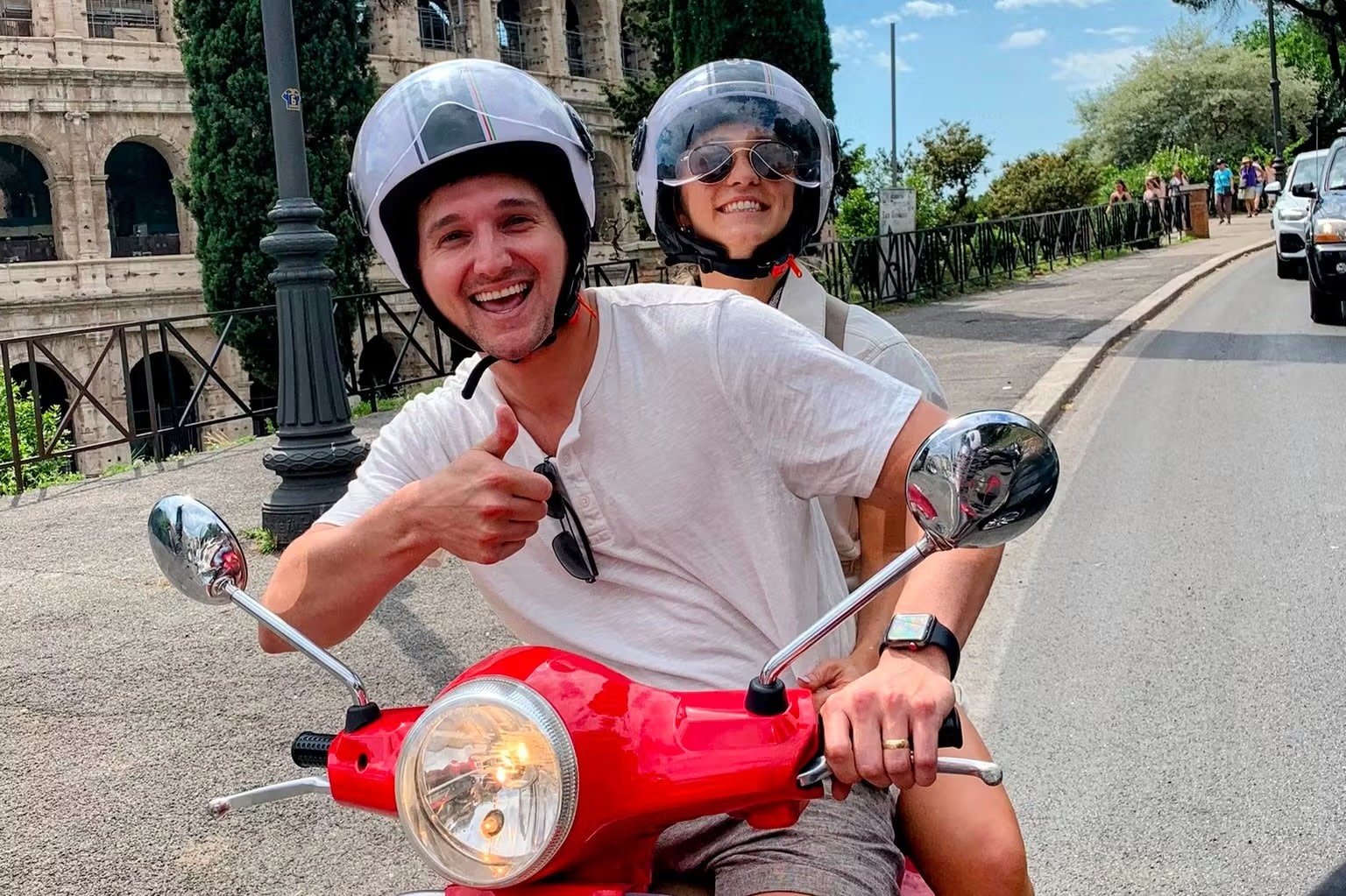
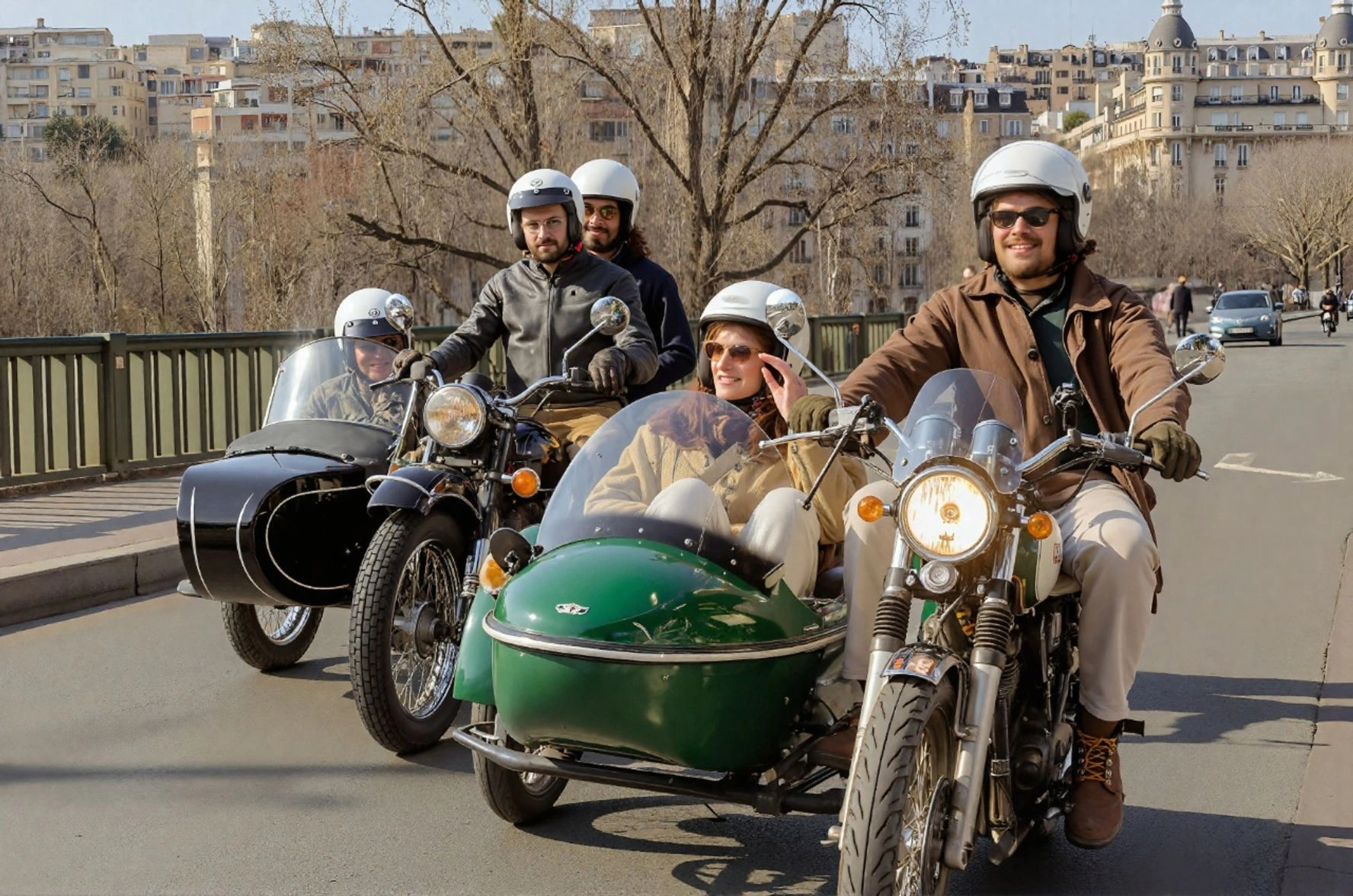
While we take care of every detail, leave the chaos behind and enjoy the best of Tuscany’s landscapes from your stylish Vespa — perfect not only for avoiding traffic, but also for experiencing what being Italian truly means.
We will stop as many times as we like throughout the day, discovering the Chianti area with its medieval villages, marvelous views, and some of the best wine producers in the world.
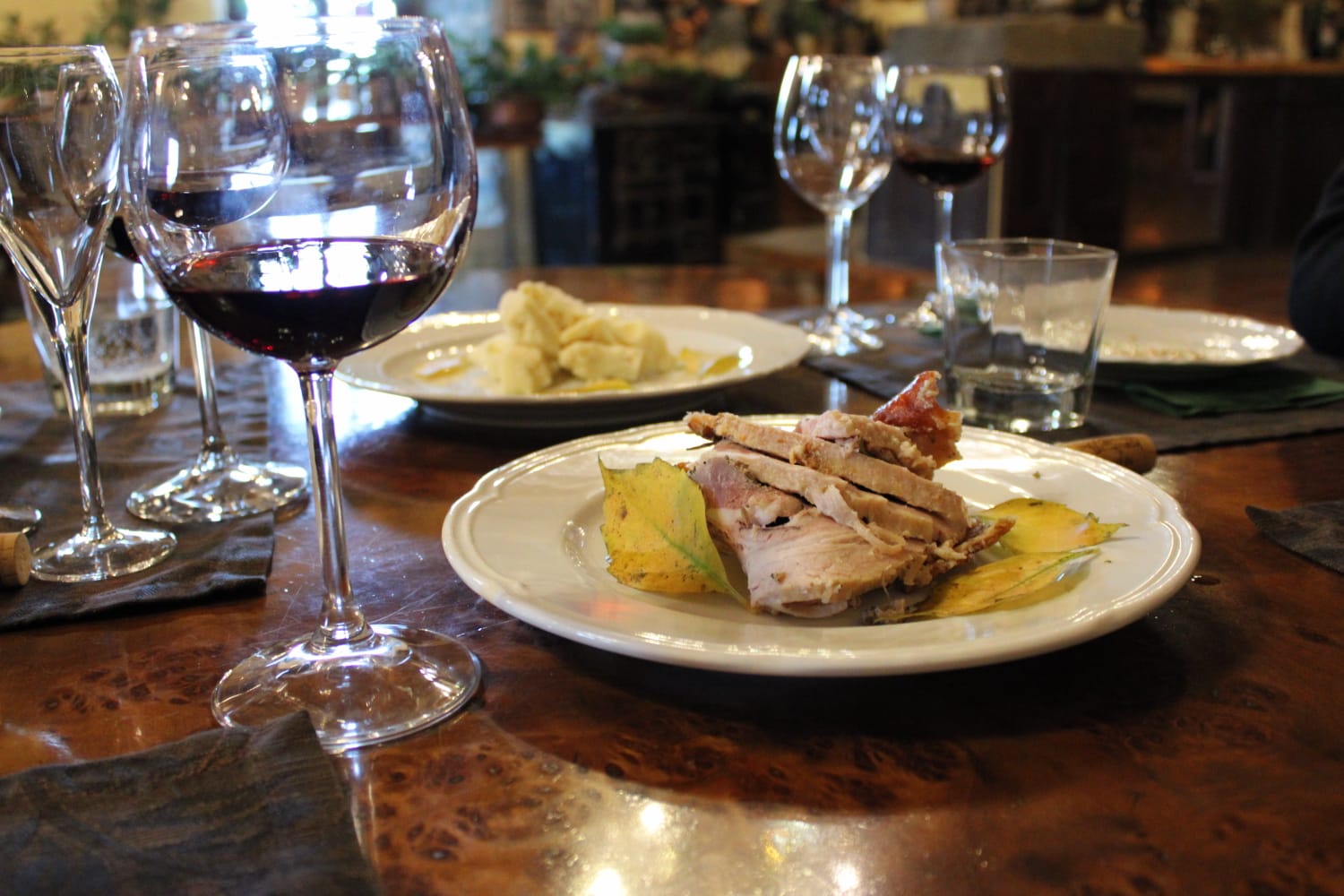
Let us open the doors of one of the finest wineries in the region and introduce you to the secrets of this ancient craft. At the end of our ride, we will visit an organic farm and its cellar, relaxing on a terrace overlooking rolling hills covered with vineyards. A traditional Tuscan lunch will be served, prepared with fresh local ingredients and paired with a curated selection of wines.
A symbol, a lifestyle, a unique memory.
Previous experience with scooters or motorbikes is required.
The meeting point is at our office in Castellina in Chianti.
Available options
Private Vespa Tour in Chianti
What's included
Wine tasting
Lunch
Tour Guide
Use of helmet
Detailed itinerary
1
The area around the capital has been inhabited since 2000 BC, as evidenced by the archaeological area of Poggio la Croce where the remains of an ancient village emerged and where, during the excavations carried out in the last decade, they were brought to light many exhibits. Later, even if very few traces have emerged, the presence of an Etruscan village can be assumed. By the fall of the Western Roman Empire, in the 5th century, small agglomerations of a rural nature had already formed in the area, which still exist today; these villages were Castelvecchi, Monterinaldi, Volpaia and Radda itself.
Between the 9th and 10th centuries the area of Radda saw the birth of the feudal society which involved the building of the villages. The first certain document in which Radda is mentioned is a diploma from 1002 in which Emperor Otto III confirmed the donation made by Countess Willa in favor of Badia Fiorentina. The locality Radda appears in many documents of the Badia Fiorentina until the XII century. Ramda judicaria fiorentina et fesulana is reported in a document of the Badia a Coltibuono of 1041.
On 25 May 1191 the emperor Henry VI granted the castle of Radda and its court in fiefdom to the Counts Guidi, the same fiefdom was again confirmed by the emperor Frederick II, even if already in the thirteenth century the territory of Radda was dependent on Florence . The castle was sacked by the Sienese in a raid in 1230 while in 1268 it was occupied, together with other localities in the Chianti region, by French troops led by Carlo I d'Angiò. A new occupation and a new heavy looting Radda suffered it during the second Aragonese invasion in 1478.
Administratively Radda was the capital of the Chianti League, comprising the territories of Radda, Gaiole and Castellina. From the end of the thirteenth century it became the seat of a podestà appointed by the Florentines and in the municipal statute of 1415 Radda was confirmed as the capital of the League. Among the podestàs of Radda is Francesco Ferrucci.
In the seventeenth century, after the conflicts had ended, the castles were transformed into stately villas in which the owners dedicated themselves to the production of wine. Radda in Chianti was visited in 1773 by the Grand Duke Pietro Leopoldo who found it far from everything. As a consequence of the visit, the roads were improved but the territory of Radda was always poor and isolated. The affection for the Habsburg-Lorraine dynasty remained strong for a long time, however, considering the fact that at the plebiscite of 1860 for the annexation of Tuscany to Sardinia, Radda voted against (281 yes out of 581 voters, out of 879 entitled [4 ]).
This situation reached its climax in the 1950s when the depopulation of the countryside, a phenomenon common to many areas of Chianti, reached its peak. In the seventies the rediscovery of these places began and slowly all the castles, villas and individual farmhouses were restored and farmhouses and farms were planted there.
2
The area of Panzano was already inhabited in Etruscan times as evidenced by the discovery of a stele dating back to the VI - V century BC. at the parish church of San Leolino, stele then dispersed. Even in Roman times the area was densely inhabited, from that period there are numerous traces in the toponyms including Panzano himself. At the beginning of the 10th century the parish church of San Leolino in Flacciano was mentioned, which later became Panzano.
In the XII century the first testimony of the name Panzano is had which is mentioned in the plebe Sancti Leolini sitam in Panzano while in the tenth of the XIII century the church of Santa Maria placed in the castle is also mentioned. The castle of Panzano certainly had already developed before the XII century and was among the possessions of the Firidolfi family.
Of the historical events of the castle not many traces remain. In the mid-thirteenth century when the Florentine countryside was organized in Panzano leagues it was included in the Lega della Val di Greve. After the Battle of Montaperti in 1260 the castle was sacked and two towers were destroyed by the victorious Ghibelline troops. During the war that opposed Florence with the Visconti of Milan Panzano, in 1397, was occupied and sacked again by Alberico da Barbiano's troops.
In 1478, the Sienese troops and their allies, the troops of the King of Naples Ferdinand II of Aragon invaded Chianti for the second time. On that occasion the castle of Panzano was one of the most important bulwarks in defense of the republic of Florence so as to become the seat of the Commissioner of the Republic. After the fall of the Republic of Siena in 1555, Panzano will no longer be involved in warfare until 1944.
3
The mound of Montecalvario, an Etruscan tomb located near the town and dated 7th-6th century BC. and the Necropoli del Poggino, located near Fonterutoli, attest to the presence of the Etruscans in the area. According to the excavation campaigns carried out from the eighties in the Castellina area, the presence of a large town was certain; inhabited center which was to be located in Salinvolpe, a few hundred meters from today's Castellina.
There are more testimonies from the medieval era. The first certain documents date back to the 11th century when the area was a fief of the nobles of the Castello del Trebbio, a family related to the Counts Guidi. In the twelfth century Castellina came under the influence of Florence and in 1193 an agreement was signed between the lords of Trebbio and Florence in which the Florentines were allowed to militarily preside over the castles of Trebbio and Castiglione (now Castellina). After the Lodo di Poggibonsi of 1203, an act in which the Chianti borders between Florence and Siena were sanctioned, Castellina found itself to be one of the most important Florentine outposts since it was located on the most direct road that put the two rival cities in communication.
In the 14th century Castellina became one of the cornerstones of the Lega del Chianti, so much so that it was the head of one of the third parties in which it was divided. The Terziere di Castellina administered the part of the Chianti that slopes down towards the Valdelsa. In 1397 it was sacked and completely burnt by the troops of the Duke of Milan Gian Galeazzo Visconti commanded by Alberico da Barbiano. In 1400 it was decided to fortify Castellina, and in the list of reformations preserved in the State Archives of Florence it is written
«On site qui dicitur la Castellina fiat fortilitia»
The works, however, had to proceed slowly so that in 1430 the workers of the Opera del Duomo were commissioned to fortify Castellina together with Staggia Senese and Rèncine; Filippo Brunelleschi was sent to establish the type of necessary interventions and to estimate the costs. In 1452 the walls of Castellina suffered the assault of the Aragonese troops but resisted. Very differently things went in 1478 during the second Aragonese invasion of Chianti when Castellina was conquered by the Sienese and Neapolitan troops. On that occasion the defense of Castellina was personally directed by Giuliano da Sangallo while Francesco di Giorgio Martini was in command of the besiegers. The Sienese occupation lasted until 1483 when it was resumed by the Florentines.
In 1774 with the administrative reform of the Grand Duke Pietro Leopoldo, Castellina became the seat of the Community from which the current municipality will derive.
Available languages
Guide guide
EN
IT
ES
Reviews breakdown
Viator
5.0
2 reviews
5★
2
4★
0
3★
0
2★
0
1★
0
Tripadvisor
4.3
6 reviews
5★
5
4★
0
3★
0
2★
0
1★
1
Important information
Not recommended for travelers with poor cardiovascular health
Suitable for all physical fitness levels
We require experience with scooters or motorbikes
Minimum age for driving is 18 years
A driving license is requested
Please note that a briefing with Vespas will be lead by members of our staff and they will evaluate client skills and will decide if renting or not the Vespas, their decision will be unquestionable. The tour will start with a different vehicle up to our availability
Important notes
• Dress code is smart casual
• Bring your driving license
• Minimum driving age 18
About Siena
Siena is a medieval city in Tuscany, Italy, renowned for its rich history, stunning architecture, and the famous Palio horse race. The city's well-preserved historic center is a UNESCO World Heritage site, offering a glimpse into Italy's medieval past with its cobblestone streets, towering churches, and grand piazzas.
Top Attractions
Piazza del Campo
Piazza del Campo is the heart of Siena and the site of the famous Palio horse race. This stunning, shell-shaped square is surrounded by historic buildings and is a must-visit for its architectural beauty and vibrant atmosphere.
Historical
1-2 hours
Free
Siena Cathedral (Duomo di Siena)
The Siena Cathedral is a masterpiece of Italian Gothic architecture, featuring stunning marble facades, intricate mosaics, and beautiful frescoes. The cathedral's interior is equally impressive, with a richly decorated nave and a magnificent marble floor.
Religious
1-2 hours
€8-12
Basilica of San Domenico
The Basilica of San Domenico is one of the largest churches in Siena and houses the relics of St. Catherine of Siena. The church's interior is adorned with beautiful frescoes, sculptures, and a magnificent choir.
Religious
1 hour
Free (donations appreciated)
Palazzo Pubblico
The Palazzo Pubblico is a historic palace that houses the Museo Civico, which showcases a collection of medieval and Renaissance art. The palace's courtyard and tower offer panoramic views of the city and surrounding countryside.
Historical
1-2 hours
€9-12
Santa Maria della Scala
Santa Maria della Scala is a historic hospital and museum complex that showcases the city's rich history and art. The complex features beautiful frescoes, sculptures, and a labyrinthine network of underground passages.
Historical
1-2 hours
€7-10
Must-Try Local Dishes
Pici all'Aglione
A traditional Tuscan pasta dish made with hand-rolled pici pasta and a garlic and tomato sauce.
Main course
Vegetarian
Ribollita
A hearty bread and vegetable soup, often made with cannellini beans, kale, and carrots.
Soup
Vegetarian
Panforte
A traditional Siena dessert made with dried fruits, nuts, and spices, often enjoyed during the Christmas season.
Dessert
Vegetarian, contains nuts
Peposo
A traditional Tuscan beef stew, slow-cooked with wine, garlic, and spices.
Main course
Contains meat
Popular Activities
Hiking in the Tuscan countryside
Cycling tours
Wine tasting tours
Visiting hot springs
Enjoying local cuisine
Exploring historic sites
Visiting museums
Attending the Palio horse race
Best Time to Visit
June to August, July 2 (Palio di Provenzano), August 16 (Palio di Assunta)
The peak season in Siena is during the summer months, especially around the Palio horse races. The weather is warm and sunny, perfect for exploring the city's outdoor attractions and enjoying the vibrant atmosphere.
22°C to 34°C
72°F to 93°F
Practical Information
Language
- Official: Italian
- Widely spoken: English, French, Spanish
- English: Moderately spoken
Currency
Euro (EUR)
Time Zone
GMT+1 (CET), GMT+2 (CEST) during daylight saving time
Electricity
230VV, 50HzHz
Safety Information
Overall Safety Rating: Generally safe
Siena is generally safe for tourists, with low crime rates. However, pickpocketing and petty theft can occur in crowded areas, so it's important to stay vigilant.
Important Precautions:
- • Keep valuables secure
- • Be cautious of pickpockets in crowded areas
- • Use licensed taxis or ride-sharing apps
Getting there
By air
- Florence Airport • 80 km (50 miles)
- Pisa International Airport • 120 km (75 miles)
By train
Siena Station
By bus
Siena Piazza Gramsci, Siena Piazza del Duomo
Getting around
Public transport
The bus system in Siena is efficient and covers most parts of the city and nearby towns. Buses are a convenient way to get around, especially for those staying outside the city center.
Taxis
Available • Apps: MyTaxi, FreeNow
Rentals
Car, Bike, Scooter
Neighborhoods
San Martino
San Domenico
Santa Maria della Scala
Day trips
Chianti Wine Region
20-40 km (12-25 miles) • Half day to full day
The Chianti region is famous for its vineyards, rolling hills, and picturesque villages. It's a perfect day trip for wine enthusiasts and those looking to explore the Tuscan countryside.
San Gimignano
35 km (22 miles) • Half day to full day
San Gimignano is a medieval hilltop town known for its towering houses and stunning views of the Tuscan countryside. It's a UNESCO World Heritage site and a must-visit for history buffs.
Val d'Orcia
60-80 km (37-50 miles) • Full day
Val d'Orcia is a UNESCO World Heritage site known for its stunning landscapes, hot springs, and picturesque villages. It's a perfect day trip for nature lovers and those looking to relax in a beautiful setting.
Festivals
Palio di Siena • July 2 and August 16
Siena Jazz Master Classes • July
Siena International Film Festival • November
Pro tips
- Visit the historic sites early in the morning or late in the afternoon to avoid crowds
- Try local specialties like pici pasta, ribollita, and panforte
- Explore the city's hidden gems, such as underground passages and historic streets
- Attend the Palio horse race for a unique cultural experience
- Take a day trip to the Chianti wine region for wine tasting and scenic landscapes
From $25
per person
Price varies by option
Secure booking
Free cancellation available
Instant confirmation