Peloponnese Highlights: Corinth, Mycenae, Epidaurus &Nafplio Tour
Active
9h
For a full refund, cancel at least 24 hours before the scheduled departure time.
Instant confirmation
Mobile or paper ticket accepted
About this experience
Embark on a full-day journey through the Peloponnese and discover four of Greece’s most legendary destinations in one unforgettable experience. Your adventure begins at the impressive Corinth Canal, where the Aegean and Ionian Seas meet. Continue to Ancient Corinth, once a powerful city-state and an important center of early Christianity. Next, travel to Mycenae, the mythical kingdom of Agamemnon, where you’ll walk through the iconic Lion Gate, explore the royal citadel, and uncover the stories that inspired Homer’s epics. The tour continues to Epidaurus, home to the world-famous ancient theatre renowned for its perfect acoustics and remarkable architecture. Finally, enjoy free time in the coastal town of Nafplio, one of the most romantic places in Greece, filled with seaside views, Venetian fortresses, and charming neoclassical streets. History, culture, and natural beauty come together on this seamless private tour from Athens—an absolute must for every traveler.
Available options
Peloponnese Highlights:Corinth, Mycenae, Epidaurus & Nafplio Tour
Tickets Not Included<br/>Pickup included
Corinth/Mycenae/Epidaurus
Tickets Included: - Ancient Corinth & Archaeological Museum
- Mycenae & Archaeological Museum
- Epidaurus & Archaeological Museum<br/>Pickup included
What's included
Pick-up & drop-off services: Athens Hotel/ Airbnb residence/Piraeus Port
Groups of 1-3 people are transported in luxurious Sedan Vehicles.
Expert English-speaking Tour Drivers with extensive historical knowledge (not licensed to accompany you in any site)
This is a private tour, you can customize the program according to your needs
Entrance Tickets (If you choose the option Admission tickets included)
All vehicles with WiFi, A/C, Bottled Water
Corinth Canal
Groups of 4-7 people are transported by Spacious Minivans.
Detailed itinerary
1
Stop 1
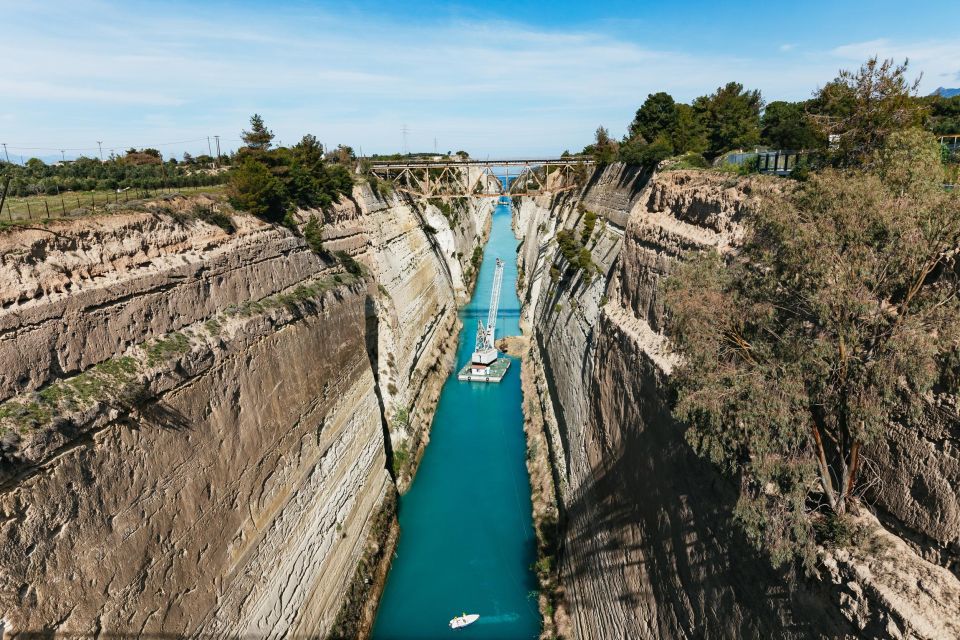
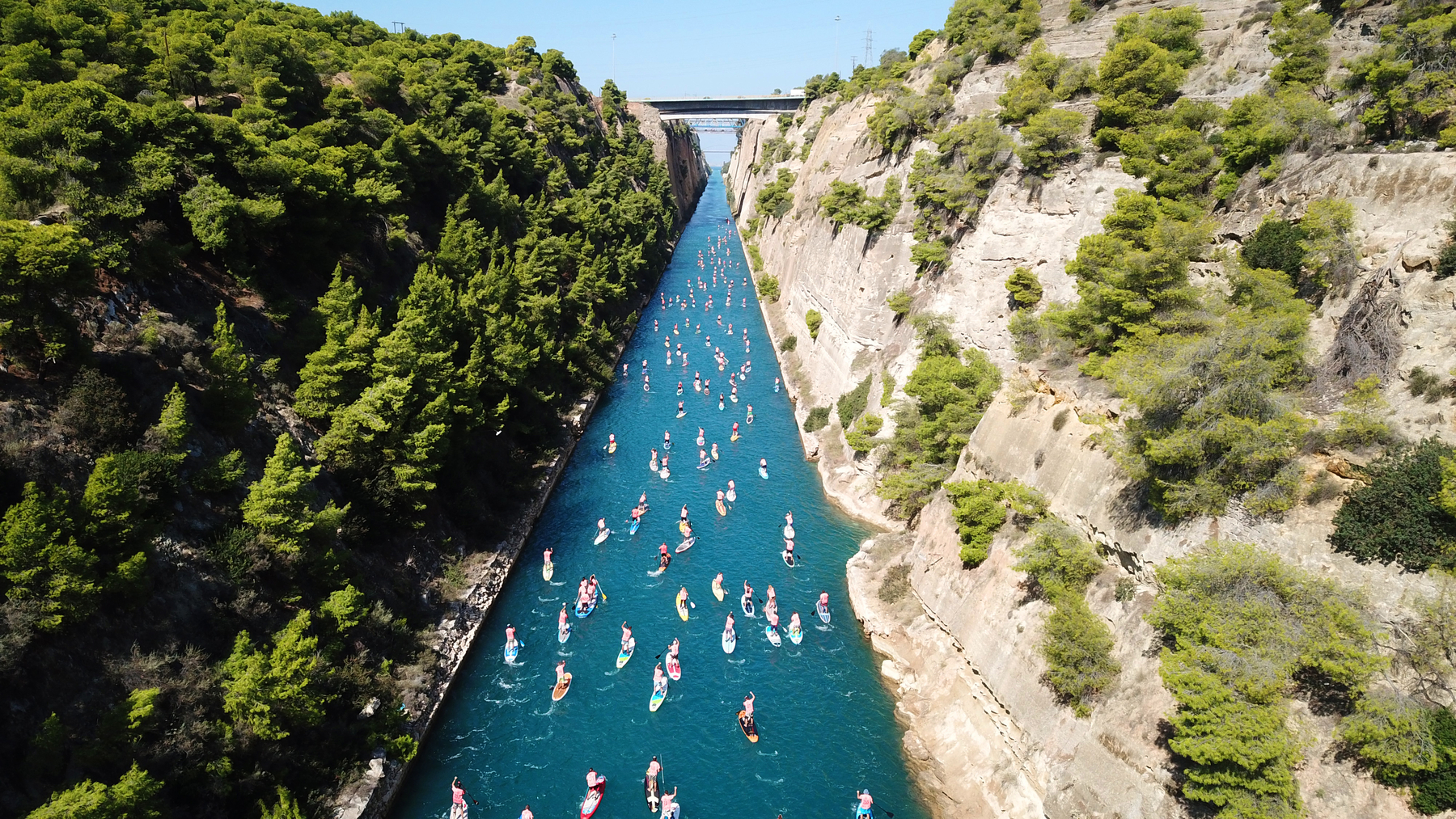
The Corinth Canal is one of Greece’s most impressive engineering marvels, dramatically cutting through the narrow Isthmus of Corinth to connect the Aegean and Ionian Seas. Spanning more than six kilometers in length and bordered by towering limestone cliffs rising over 70 meters high, the canal creates a breathtaking visual spectacle. From designated viewpoints, visitors can observe ships navigating the remarkably narrow passage, showcasing extraordinary maritime precision and highlighting the canal’s ongoing importance. Although completed in the late 19th century, the idea for the canal dates back to ancient times and was envisioned by figures such as Julius Caesar and Nero, making its existence not only a technical triumph but also the fulfillment of a centuries-old dream. Today, the Corinth Canal stands as a striking blend of history, ambition, and natural beauty, offering an unforgettable stop for travelers exploring the Peloponnese.
2
Ancient Corinth was one of the most powerful and influential city-states of classical Greece, commanding a strategic position between the Aegean and Ionian Seas. A thriving hub of trade, culture, and innovation, it connected East and West, attracting merchants, philosophers, and travelers from across the ancient world. Today, visitors can explore the extensive archaeological site and walk among striking remains such as the Temple of Apollo, the ancient agora, marketplace, and public buildings that once shaped the daily life of the city. The dramatic backdrop of Acrocorinth, the towering fortress overlooking the site, enhances the sense of history and grandeur. As you wander through its temples, courtyards, and stone-paved paths, it becomes easy to imagine the vibrant energy of the city at its peak. Rich in mythology, archaeology, and cultural legacy, Ancient Corinth offers a deeply immersive journey into the heart of Greek antiquity.
3
The Archaeological Museum of Corinth is a remarkable gateway into the rich history and multicultural legacy of one of Greece’s most powerful ancient cities. Located within the archaeological site, the museum showcases priceless artifacts that span from the prehistoric era to the Roman and Byzantine periods, reflecting Corinth’s long-standing role as a global crossroads of trade and culture. Its beautifully curated halls display exquisite Corinthian pottery, mosaics, statues, everyday objects, inscriptions, and treasures unearthed from temples, workshops, and private homes. Highlights include the impressive marble sculptures, the stunning Roman mosaic floors, and the unique votive offerings connected to the Sanctuary of Asklepios. Each gallery deepens the visitor’s understanding of life in ancient Corinth—its art, religion, economy, and societal values. Blending world-class exhibits with a vivid sense of place, the museum offers an unforgettable and illuminating cultural experience.
4
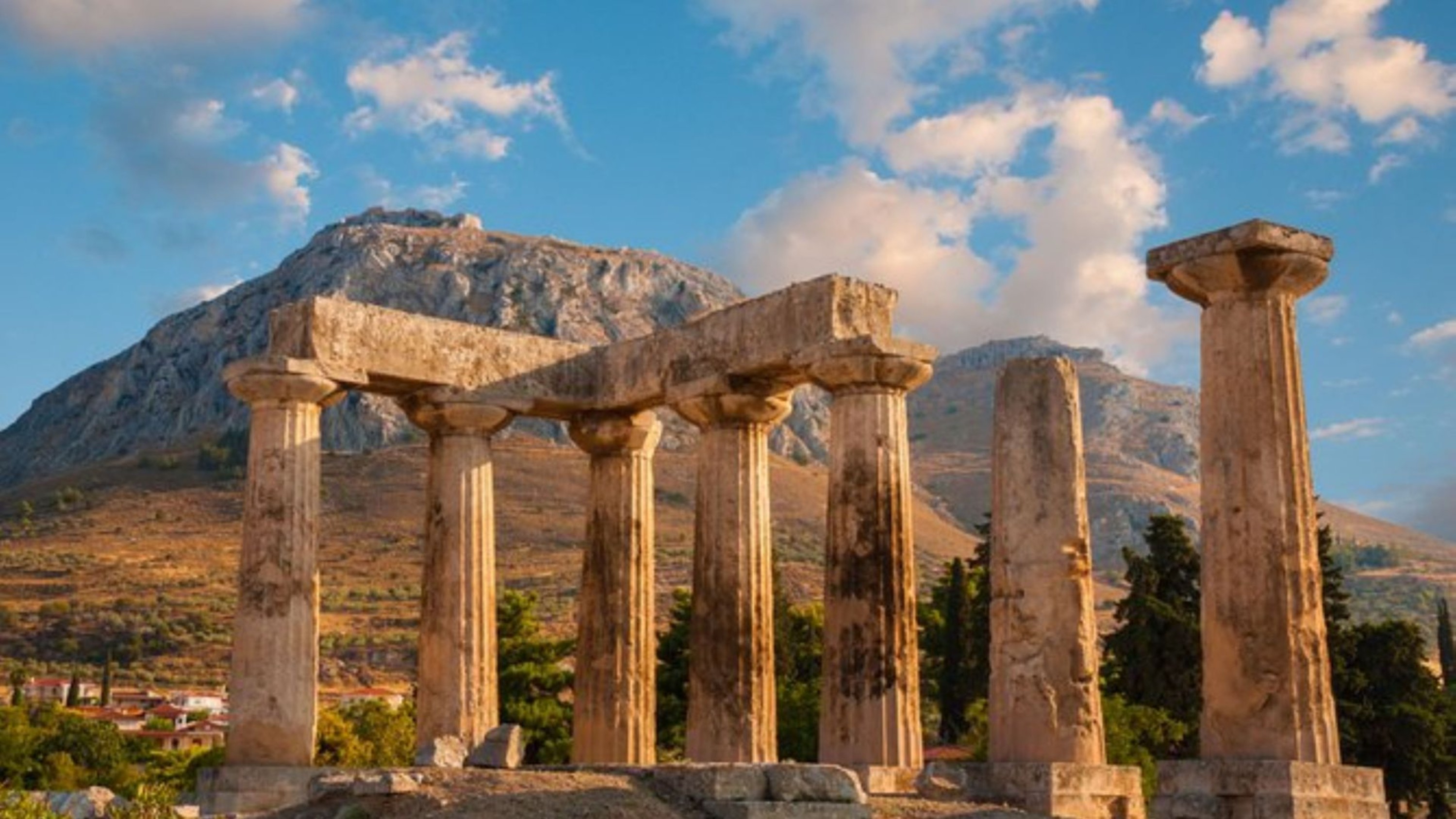
The Temple of Apollo in Ancient Corinth stands as one of the most iconic landmarks of classical Greece, a powerful reminder of the city’s ancient glory. Built in the 6th century BC, this massive Doric temple once dominated the center of Corinth and symbolized the prosperity and devotion of its people. Today, seven monumental limestone columns still rise dramatically against the landscape, offering visitors a vivid connection to the ancient world. Walking among the ruins, you can imagine the temple as it once was—surrounded by marble, statues, and worshippers honoring Apollo, god of light and prophecy. Its strategic placement overlooking the city and the surrounding mountains adds to its timeless grandeur. More than an archaeological site, the Temple of Apollo represents the heart of ancient Corinth: a place where religion, commerce, and political life intersected. It remains a breathtaking stop for anyone seeking to experience the true essence of classical Greece.
5
Stop 5
The Ancient Theatre of Epidaurus is one of Greece’s most celebrated classical monuments, renowned for its exceptional architecture, perfect acoustics, and stunning natural setting. Built in the 4th century BC, this remarkable open-air theatre once hosted dramatic performances, religious ceremonies, and festivals dedicated to the god of healing, Asclepius. Its 34 concentric rows of stone seating rise elegantly on the hillside, allowing every visitor, from the front row to the top, to hear even the faintest whisper on stage—a marvel of ancient engineering. Surrounded by lush greenery and rolling hills, the theatre offers breathtaking panoramic views that enhance the dramatic atmosphere. Visiting Epidaurus allows travelers to experience the artistry, culture, and spiritual significance of ancient Greece, while connecting with the myths, performances, and architectural brilliance that continue to inspire audiences today.
6
The Epidaurus Archaeological Museum provides a captivating insight into the sanctuary of Asclepius and the surrounding region. Located near the famous ancient theatre, it houses artifacts from the 6th century BC through the Roman period, showcasing the religious, cultural, and daily life of ancient Epidaurus. Visitors can admire statues of Asclepius, votive offerings, inscriptions, and tools linked to healing practices, as well as architectural fragments from temples and public buildings. Carefully curated exhibits connect the archaeological remains to the rituals, artistry, and beliefs of the time. The museum enriches the visit to Epidaurus, offering context and depth that bring this sacred site and its historical significance vividly to life.
7
Stop 7
The Archaeological Site of Mycenae is one of Greece’s most legendary and historically significant locations, offering a fascinating glimpse into the Mycenaean civilization that dominated the late Bronze Age. As you enter through the imposing Lion Gate, you are immediately transported back thousands of years, surrounded by massive stone walls and the remnants of a once-mighty citadel. Explore the royal palaces, storerooms, and ceremonial areas that reveal the sophistication, wealth, and strategic importance of Mycenae. Highlights include Grave Circle A, where the famed gold treasures, including the “Mask of Agamemnon,” were discovered, reflecting the artistry and power of this ancient kingdom. The elevated location provides sweeping views over the Argive plain, emphasizing the strategic brilliance of the site. At Mycenae, myth and history converge, allowing visitors to step into the world of Homeric heroes and experience the enduring legacy of early Greek civilization.
8
Mycenae, the legendary stronghold of Agamemnon, invites visitors into the heart of Greek mythology and Bronze Age history. As you approach the citadel, the imposing Lion Gate instantly sets the tone—its massive stones and carved relief hinting at a once-powerful civilization that dominated the ancient world. Walking through the fortified walls, you’ll explore the ruins of royal palaces, ancient residences, and storerooms that once supported a thriving kingdom. The Grave Circle A, where magnificent gold treasures such as the “Mask of Agamemnon” were discovered, reveals the wealth and artistry of Mycenaean culture. From the top of the citadel, the sweeping views over the Argive plain add to the majesty of the experience. Mycenae is not just an archaeological site; it is a place where myth and history merge, where heroes of Homer’s epics once walked, and where the foundations of Greek civilization were first laid.
9
The Lion Gate at Mycenae is one of the most iconic monuments of the ancient Greek world and the grand entrance to the legendary citadel of Agamemnon. Dating back to the 13th century BC, this monumental gateway is framed by massive Cyclopean stone walls and crowned with a sculpted relief of two lions standing protectively above the central opening—one of the earliest examples of monumental sculpture in Europe. The Lion Gate symbolizes the strength, power, and sophistication of the Mycenaean civilization, serving as both a defensive structure and a statement of prestige. Passing through this historic entrance, visitors are immediately transported into the heart of a city that was once a dominant political and military center. Overlooking the surrounding Argive plain, the Lion Gate not only impresses with its artistic mastery but also provides a profound connection to the myths, legends, and enduring legacy of ancient Mycenae.
10
The Archaeological Museum of Ancient Mycenae offers an extraordinary window into the wealth, artistry, and culture of the Mycenaean civilization. Located near the ancient citadel, the museum houses a remarkable collection of artifacts uncovered from tombs, palaces, and ceremonial sites, spanning from the Bronze Age to later periods. Highlights include exquisite gold treasures such as the famed “Mask of Agamemnon,” intricate pottery, weapons, and everyday objects that reveal the sophistication and daily life of this powerful kingdom. Carefully curated exhibits provide context for the imposing ruins of Mycenae, including the Lion Gate, royal citadel, and Grave Circle A, allowing visitors to fully appreciate the city’s historical and cultural significance. With detailed displays and a focus on storytelling, the museum brings the myths, legends, and accomplishments of Mycenae to life, offering a deeply enriching and unforgettable cultural experience.
11
The Citadel of Mycenae and the Treasury of Atreus are among the most remarkable monuments of the ancient Mycenaean world. The citadel, perched atop a hill overlooking the Argive plain, showcases massive Cyclopean walls that once protected one of Greece’s most powerful Bronze Age cities. Within this fortified stronghold, the Treasury of Atreus—a magnificent beehive-shaped tholos tomb—stands as a testament to the architectural brilliance and ceremonial grandeur of the Mycenaeans. Believed to have been built around 1250 BC, the tomb is famous for its perfect corbelled dome and monumental entrance, reflecting the wealth and status of the rulers buried within. Visiting the citadel and tomb allows travelers to walk in the footsteps of kings and warriors, to marvel at ancient engineering, and to experience firsthand the myths, history, and enduring legacy that make Mycenae a cornerstone of Greek civilization.
12
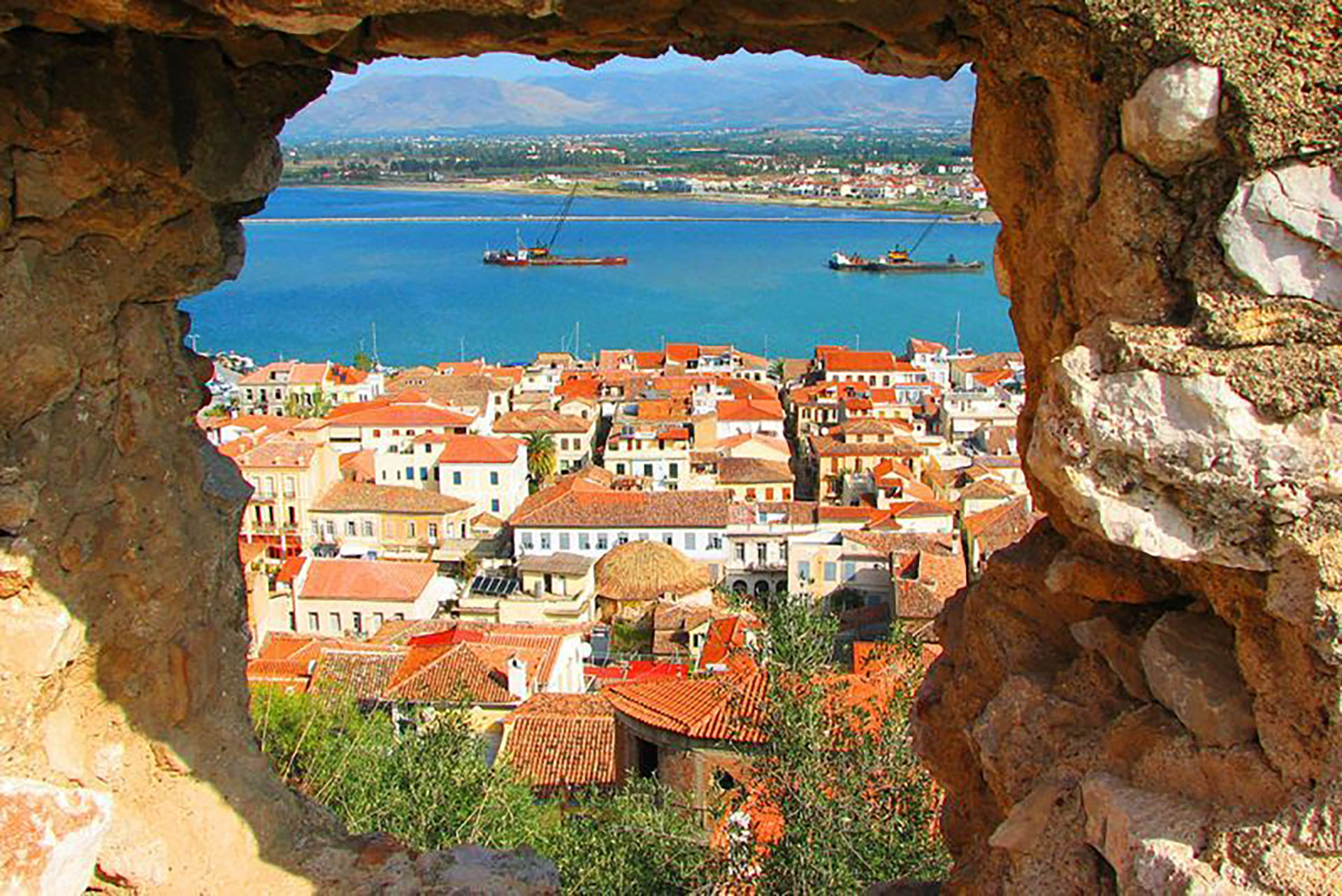
Nafplio is one of Greece’s most picturesque coastal towns, renowned for its charming old town, neoclassical architecture, and vibrant waterfront. Perched between the Argolic Gulf and surrounding hills, Nafplio offers narrow cobblestone streets, colorful houses, and lively squares filled with cafés, boutiques, and local markets. The town’s historic significance is remarkable: it served as the first capital of modern Greece and is dotted with impressive fortresses, including Palamidi and Bourtzi, overlooking the sea. Visitors can stroll along the scenic promenade, explore charming alleys, and enjoy panoramic views of the coastline. Combining history, culture, and stunning natural beauty, Nafplio offers an unforgettable experience, making it one of the most enchanting stops in the Peloponnese.
13
Bourtzi is the iconic fortress of Nafplio, perched on a small islet in the Argolic Gulf and accessible by a short boat ride from the town’s harbor. Built by the Venetians in the 15th century to protect the city from naval attacks, Bourtzi served as a fortress, a residence for guards, and even a prison. Its stone walls, cannons, and strategic position create a striking silhouette against the sparkling waters, offering visitors a unique blend of history and scenic beauty. From the fortress, you can enjoy panoramic views of Nafplio’s old town, the surrounding coastline, and the Argolic Gulf. A visit to Bourtzi combines architectural charm, maritime heritage, and breathtaking vistas, making it a must-see highlight of Nafplio’s rich cultural and historical landscape.
14
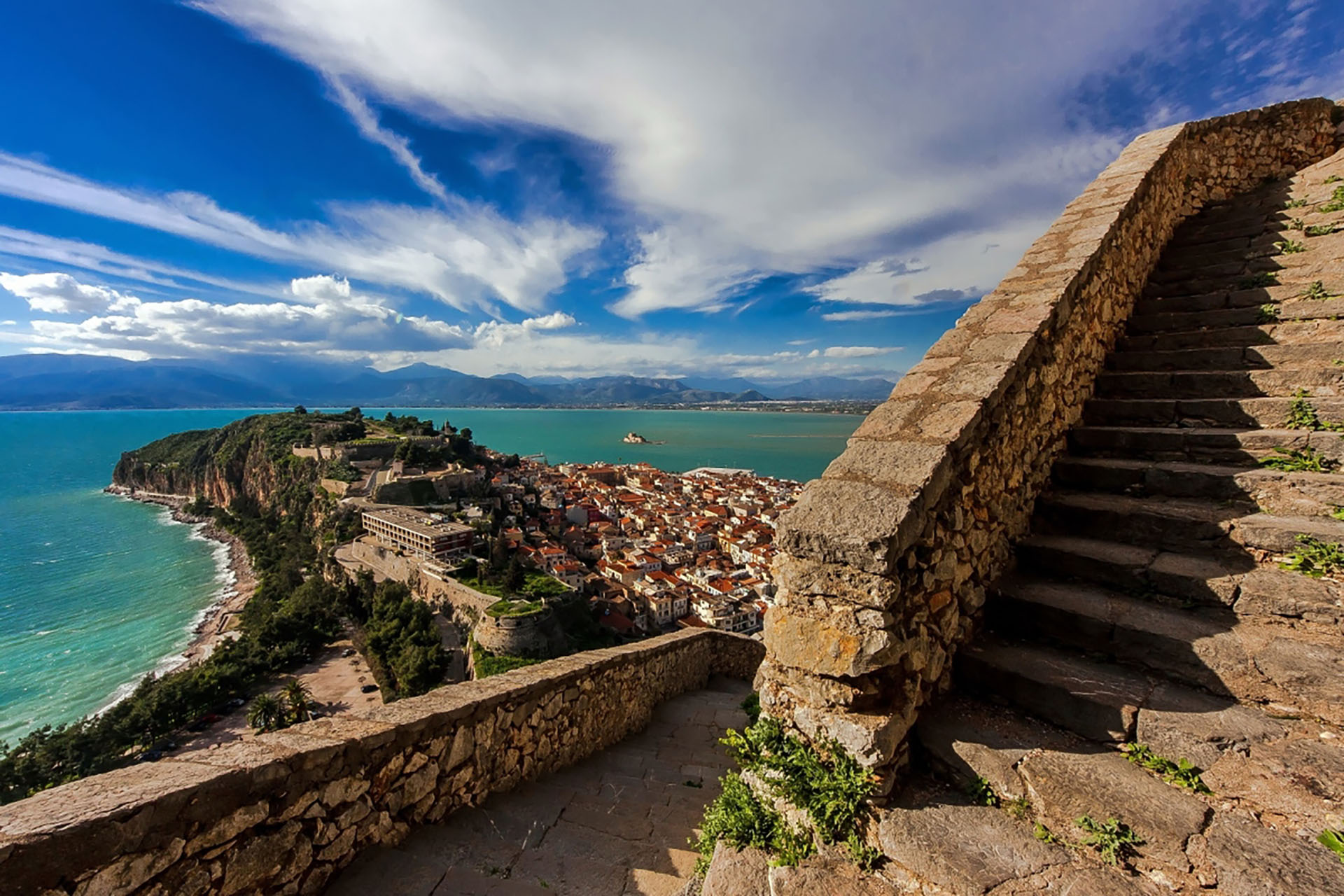
Palamidi Castle is a magnificent fortress overlooking the picturesque town of Nafplio and the Argolic Gulf, widely regarded as one of Greece’s most impressive Venetian fortifications. Constructed in the early 18th century, the castle sits atop a steep hill, offering panoramic views of the town, coastline, and surrounding mountains. Visitors can ascend its 999 stone steps or drive to the entrance, exploring the massive bastions, bastion walls, and strategically designed ramparts that once protected the city from invaders. Inside, the castle reveals historic prisons, guardrooms, and military structures, evoking the life of soldiers and rulers who once held the fortress. The blend of architectural mastery, stunning vistas, and historical significance makes Palamidi Castle a must-see destination, providing a dramatic and immersive experience of Greece’s rich heritage and strategic ingenuity.
What's not included
Ancient Corinth & Archaeological Museum of Corinth (can be purchased on-site)
Mycenae & Archaeological Museum of Mycenae & Treasury of Atreus (can be purchased on-site)
Epidaurus & Epidaurus Archaeological Museum (can be purchased on-site)
Palamidi Castle
Lunch in Nafplio - Lunch stops are scheduled, but meal costs are not included
Kindly note that gratuities and tips are not included in the price and are left to your discretion
Available languages
Guide guide
EL
EN
Important information
Infants and small children can ride in a pram or stroller
Service animals allowed
Specialized infant seats are available
Suitable for all physical fitness levels
All excluded entrance fees must be purchased and paid directly on site on the day of the tour
About Athens
Athens, the capital of Greece, is a city rich in history and culture, often considered the cradle of Western civilization. It is home to iconic ancient landmarks, vibrant neighborhoods, and a thriving modern scene.
Top Attractions
Acropolis of Athens
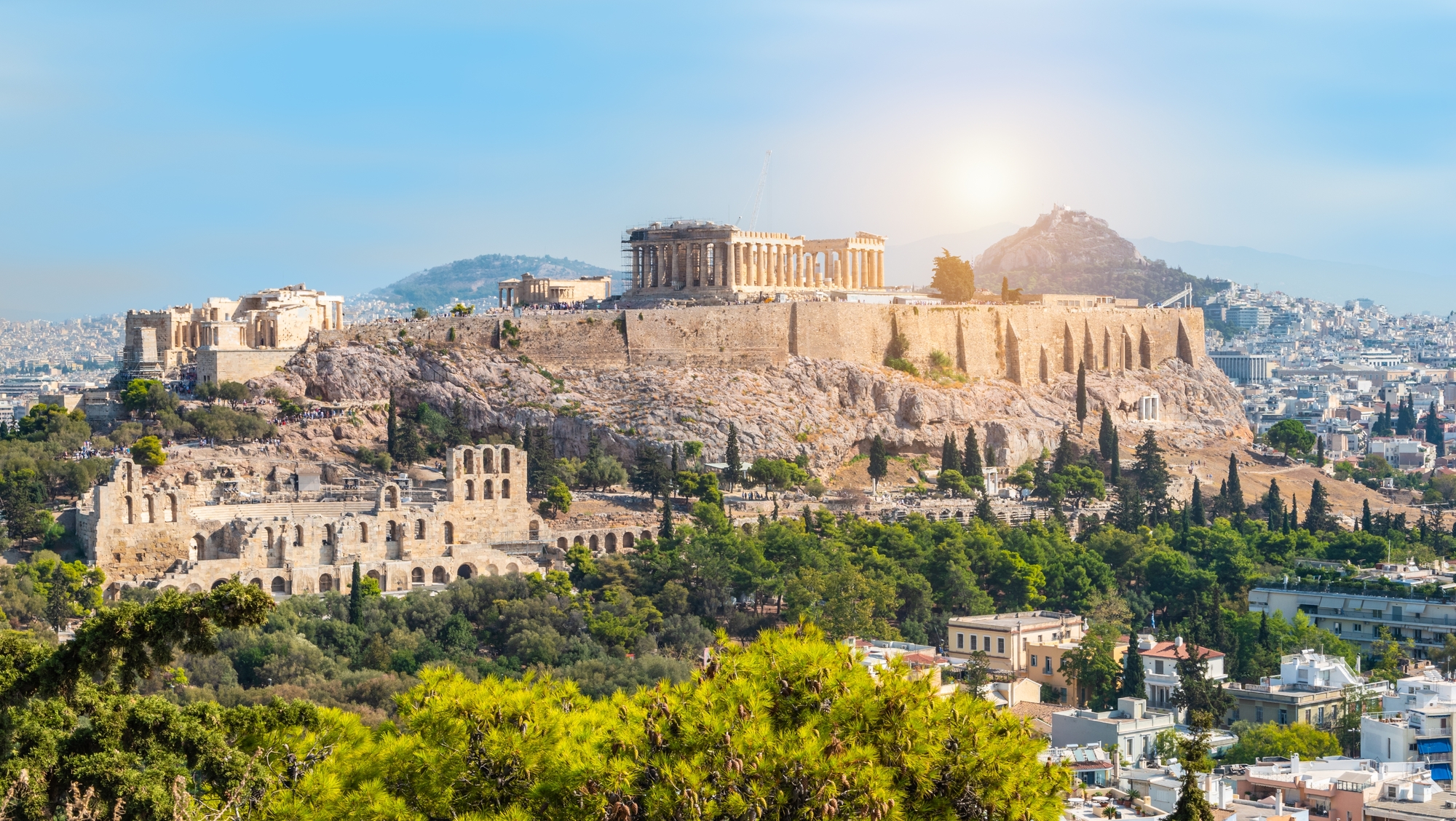
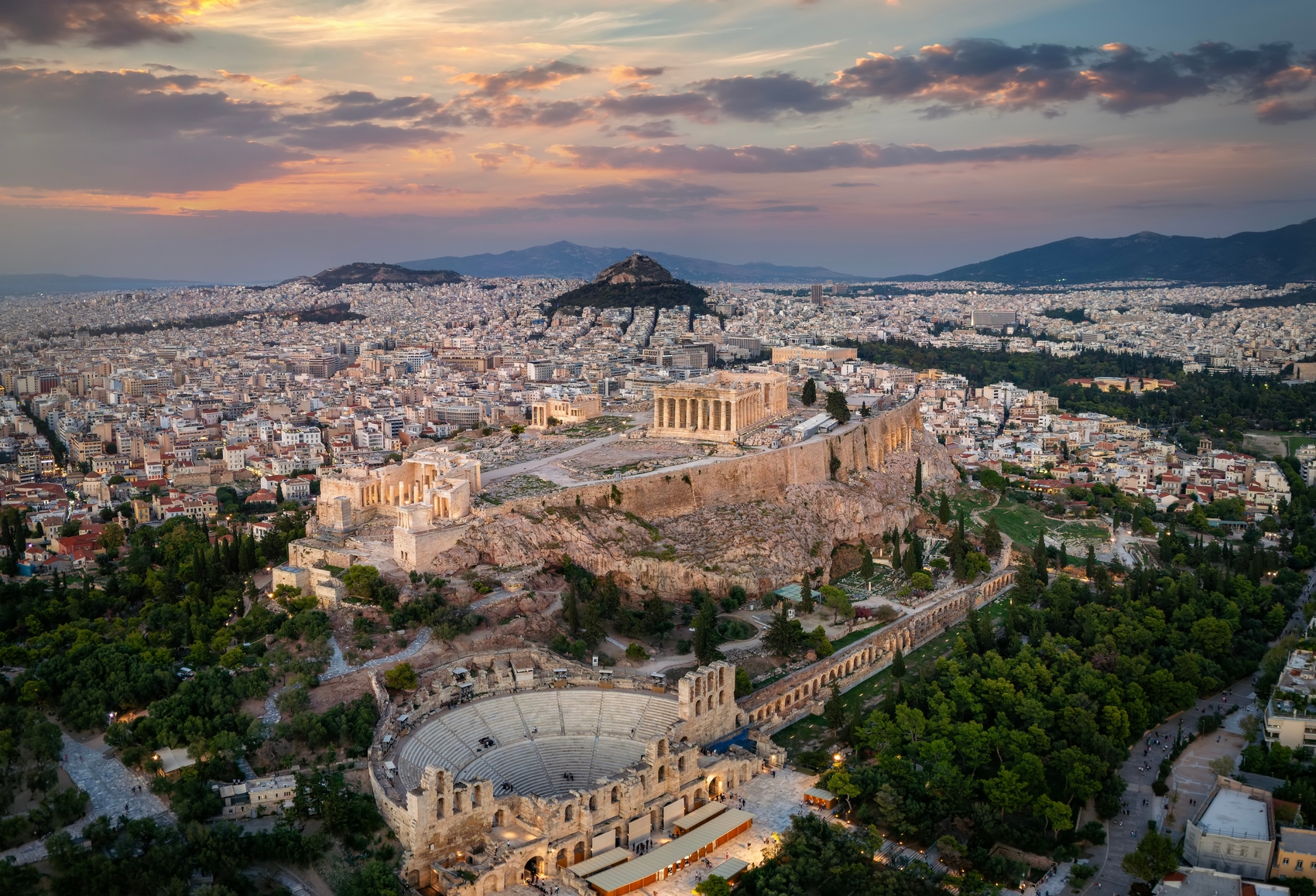
The Acropolis is the most iconic landmark in Athens, featuring ancient ruins and temples, including the Parthenon.
Historical
2-3 hours
€20 (combined ticket for multiple sites)
Ancient Agora of Athens
The heart of ancient Athens, featuring the Temple of Hephaestus and the Stoa of Attalos.
Historical
1-2 hours
€8 (included in the combined ticket)
Plaka
A charming, historic neighborhood with narrow streets, neoclassical houses, and vibrant nightlife.
Cultural
2-3 hours
Free to explore
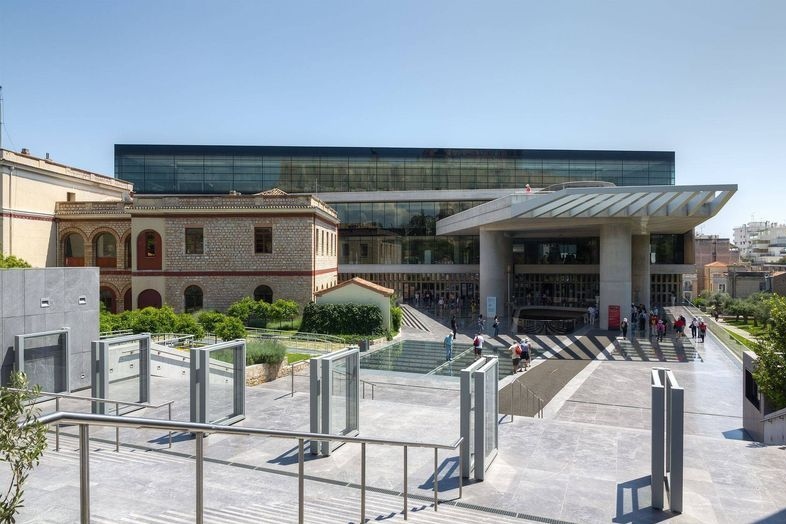
Acropolis Museum
A modern museum showcasing artifacts from the Acropolis and its surroundings.
Museum
1-2 hours
€10
Temple of Olympian Zeus
An ancient temple dedicated to Zeus, once the largest temple in Greece.
Historical
30 minutes to 1 hour
€6 (included in the combined ticket)
Must-Try Local Dishes
Moussaka
A baked dish with layers of eggplant, minced meat, and béchamel sauce.
Dinner
Vegetarian versions available
Souvlaki
Grilled meat skewers, often served with pita bread and tzatziki.
Snack
Can be made with chicken, pork, or vegetarian options
Tzatziki
A yogurt-based dip with cucumber, garlic, and herbs.
Snack
Vegetarian and vegan options available
Baklava
A sweet pastry made with layers of filo, nuts, and honey syrup.
Dessert
Vegetarian
Popular Activities
Hiking in the mountains
Rock climbing
Scuba diving
Beach visits
Spa treatments
Café hopping
Museum visits
Theater performances
Best Time to Visit
April to June, September to October
The best time to visit Athens is during the spring and autumn months when the weather is pleasant and the tourist crowds are smaller.
18°C to 32°C
64°F to 90°F
Practical Information
Language
- Official: Greek
- Widely spoken: English, French, German
- English: Moderately spoken
Currency
Euro (EUR)
Time Zone
GMT+2 (EET)
Electricity
230VV, 50HzHz
Safety Information
Overall Safety Rating: Generally safe
Athens is generally safe for travelers, but petty crime and pickpocketing can occur in tourist areas. Be cautious with your belongings and avoid poorly lit areas at night.
Important Precautions:
- • Keep valuables secure
- • Use licensed taxis or ride-sharing apps
- • Be cautious with ATMs and credit cards
Getting there
By air
- Eleftherios Venizelos International Airport • 30 km from city center
By train
Athens Central Railway Station
By bus
KTEL Bus Station
Getting around
Public transport
Clean, efficient, and air-conditioned. Easy to navigate with clear signage in English.
Taxis
Available • Apps: Beat, Uber
Rentals
Car, Bike, Scooter
Neighborhoods
Plaka
Monastiraki
Psiri
Koukaki
Kolonaki
Day trips
Cape Sounion
65 km from Athens • Half day to full day
A scenic coastal area featuring the Temple of Poseidon with stunning views of the Aegean Sea.
Delphi
180 km from Athens • Full day
An ancient archaeological site and home to the famous Oracle of Delphi.
Meteora
350 km from Athens • Overnight
A unique landscape featuring rock formations and medieval monasteries perched atop cliffs.
Festivals
Athens Festival • May to October
Athens Epidaurus Festival • June to August
Athens International Film Festival • October
Pro tips
- Visit major attractions early in the morning or late in the afternoon to avoid crowds and heat
- Use the metro for easy and efficient travel around the city
- Explore local neighborhoods for an authentic Greek experience
- Try local street food for a quick and delicious meal
- Learn a few basic Greek phrases to enhance your experience and connect with locals
From $25
per person
Price varies by option
Secure booking
Free cancellation available
Instant confirmation