Private Day Trip to Pisa Round Trip from Rome
Active
12h
For a full refund, cancel at least 24 hours before the scheduled departure time.
Instant_then_manual confirmation
Mobile or paper ticket accepted
About this experience
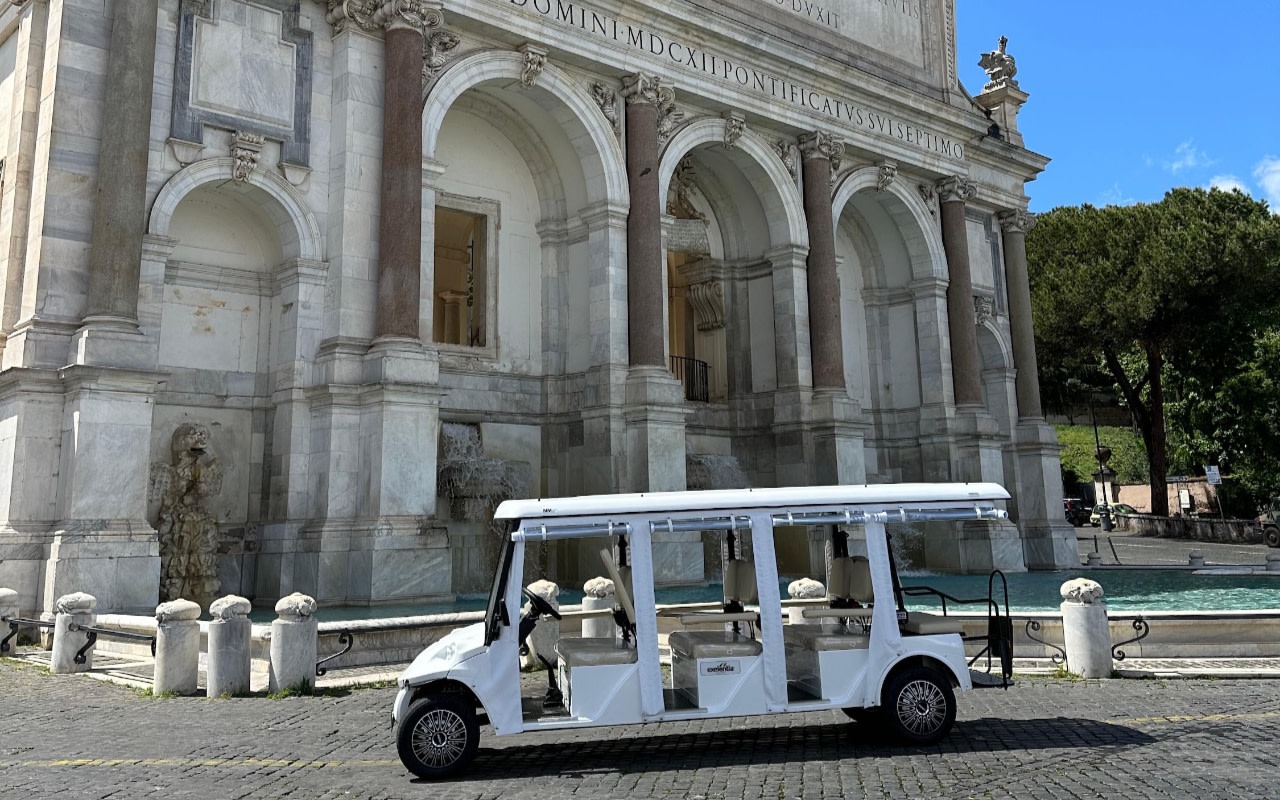
The comfort and independence that is acquired by choosing to travel with a minivan driven by a professional driver, are an added value for your holiday.
You will have the opportunity to decide the departure and return times without having to stick to fixed times and without having to share the means of transport.
The driver will take you to Pisa, leaving you free to visit the attractions of your choice. A time will be agreed to meet you and return to Rome, but you will still have the possibility to contact the driver to anticipate or postpone the departure.
Available options
Private Day Trip to Pisa Round Trip from Rome
Pickup included
What's included
Private transportation
Bottled water
WiFi on board
Air-conditioned vehicle
Detailed itinerary
1
A few meters from the central station is this elliptical square, recently redeveloped.
In the center stands the statue dedicated to the king of Italy.
Several important buildings overlook this area, such as the Palazzo delle Poste and the Palazzo della Provincia.
A stone's throw away is the Church of S. Antonio, whose external wall is immediately noticeable for a real explosion of colour. I'm talking about the largest mural in Europe, the Tuttomondo by Keith Haring. If you love street art, this work is certainly one of the unmissable things to see in Pisa in one day.
The American artist gave life to this important project in 1989, invited to the city by a Pisan student he met in New York. The mural shows thirty figures joined together to represent peace in the world. In the centre, ocher in colour, the Pisan cross stands out, formed by four linked figures.
2
From Piazza Vittorio Emanuele II begins Corso Italia, the main street of Pisa. It is the shopping street, full of bars and shops of all kinds.
Along Corso Italia are the Church of S. Domenico and the Church of S. Maria del Carmine, with a rather simple interior but with a very nice cloister.
3
Stop 3
Among the things to see in Pisa in one day, there is the Church of S. Maria della Spina, so called because it housed a relic of the thorn from Christ's crown.
4
Piazza Garibaldi waiting for us, with the bronze statue of the famous leader. Here I stopped in the afternoon for a relaxing beer overlooking the river.
From Piazza Garibaldi begins Borgo Stretto, one of the oldest districts of Pisa. A pleasant walk under the arcades that characterize this street, full of historic shops and cafes, overlooked by medieval palaces that belonged to nobles and merchants.
5
The walkway on the walls was regularly reopened to the public on 18 May 2018. The walls are one of the oldest in Italy and have undergone several restoration and redevelopment interventions over time.
This is a route of about 3 km with four access points: Torre di Legno (Piazza Federico del Rosso), Piazza delle Gondole, Piezometric Tower (Via S. Francesco – Via Vittorio Veneto) and Torre di S. Maria (Piazza of miracles).
6
Stop 6
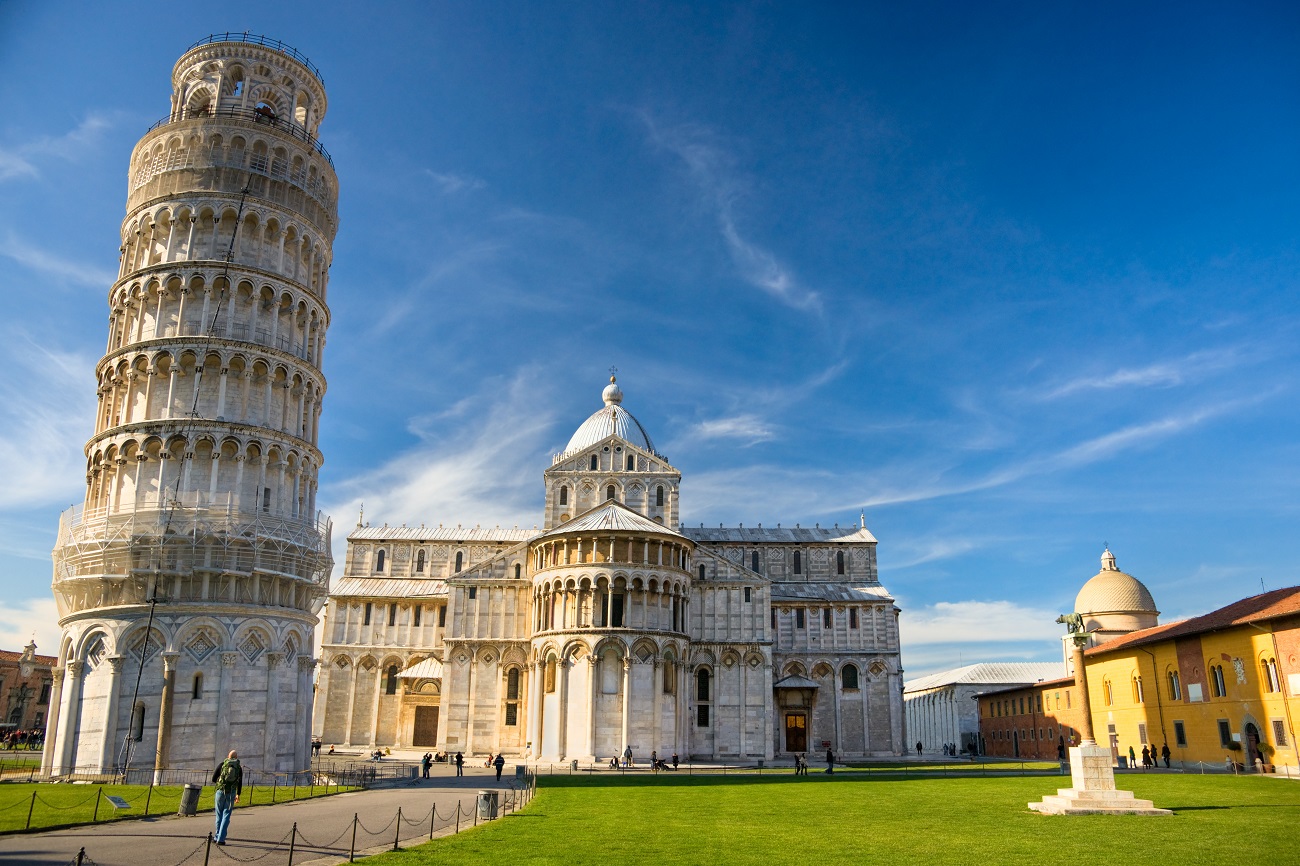
Inscribed in the Unesco World Heritage list in 1987, Piazza dei Miracoli appears to our eyes as a large green lawn reserved exclusively for pedestrians.
Here are the famous Leaning Tower, the Cathedral of S. Maria Assunta, the Monumental Cemetery and the Baptistery of S. Giovanni.
7
Stop 7
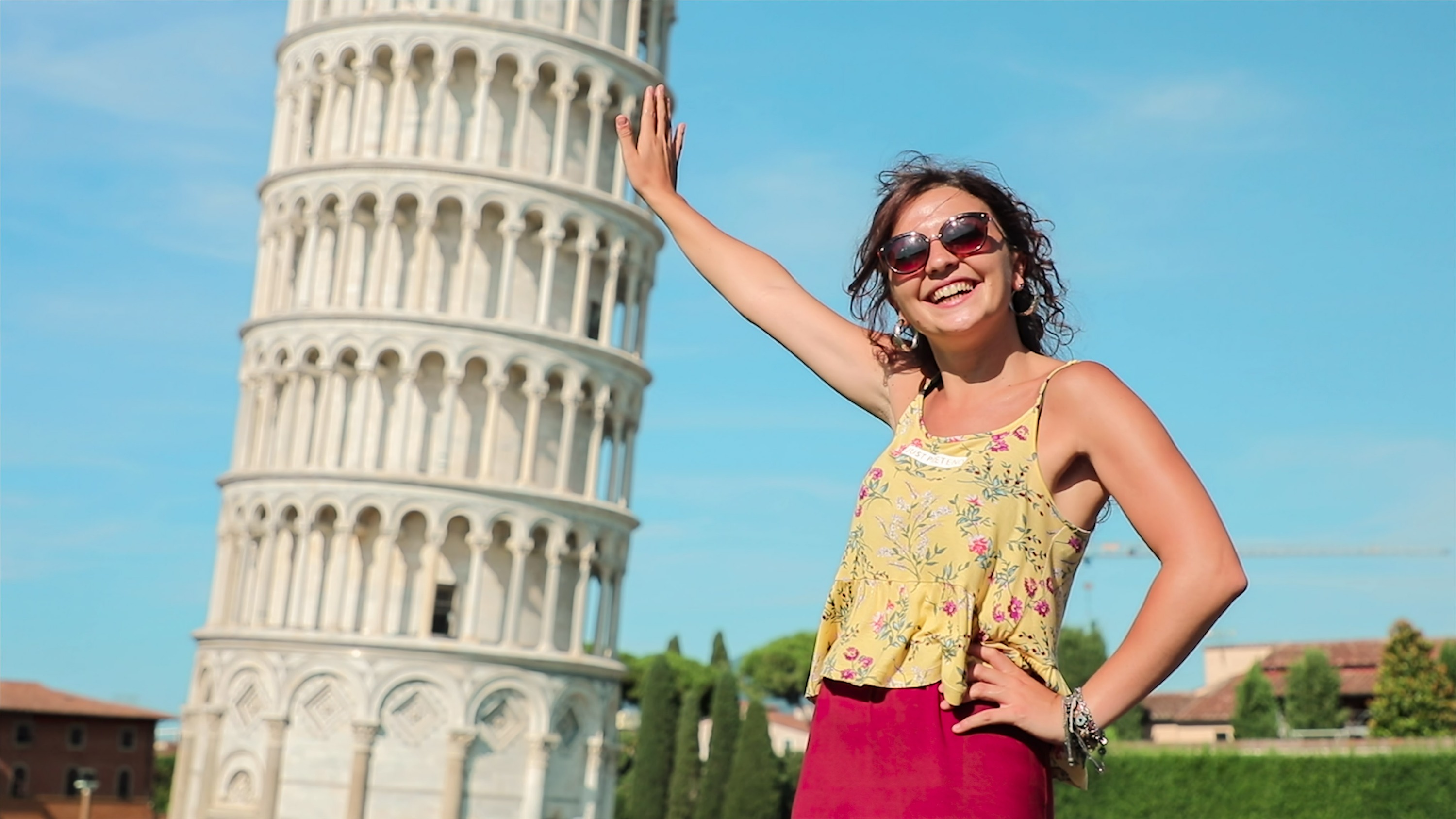
The Leaning Tower, symbol of Pisa. In reality it is the bell tower of the Cathedral, located a few meters away.
Since its construction in 1173, the ground gradually yielded more and more, leading to the leaning of the tower. Fortunately, the axis passing through its center of gravity falls into the support base, so there is no chance that the tower will fall.
No less than 294 steps, a somewhat complicated climb due to the slope, but the effort is repaid by a beautiful 360° panorama of the city.
8
Stop 8
It is striking both externally and internally for a very strong use of marble: white and gray for the external cladding, black and white for the interior. Since its construction, the architect has been able to combine classical, Arab and Byzantine elements.
Inside this beautiful Romanesque cathedral, a rich heritage of works of art unwinds, to which the elegant coffered ceiling gives majesty.
9
Stop 9
Leaving the Cathedral, we see the Baptistery of S. Giovanni in front of us. It is the largest in Italy and was built with different materials (red tiles and lead plates), probably due to lack of money. I took the photo of the facade of the Cathedral here, on the first floor, from an open window.
10
Stop 10
The Camposanto Monumentale is a sacred place because here the Crusaders brought the holy land taken on Mount Golgotha. The leading figures in Pisan history have been buried for centuries.
In the 19th century the ancient cemetery was rearranged: all the sarcophagi were moved inside under the arches. Exploring this place we notice the richness of the frescoes, whose sinopias, i.e. the preparatory drawings in red lime, are kept in the Museo delle Sinopie, included in the admission ticket.
11
Stop 11
It takes its name from the headquarters of the Order of the Knights of St. Stephen, commissioned by Cosimo De' Medici, and has been the seat of city power for centuries. Today it houses the prestigious Scuola Normale Superiore of Pisa, inside the Palazzo della Carovana, a jewel seen from the outside.
Also interesting is the Palazzo dell'Orologio which incorporates the so-called Torre della Muda, or Torre della Fame. Here, as Dante's Divine Comedy says, Count Ugolino della Gherardesca, his children and grandchildren were imprisoned. The archbishop gave orders to throw the prison key into the Arno and let them die of hunger.
What's not included
Food and beverages
Extratime 70€ per hour (including 12 hours from departure to return to Rome)
Entrance (camposanto, baptistero, and Sinopie) starting from
Tower of Pisa ticket price from (attention limitations for disabled and minors)
Walking at height On the walls of Pisa
Important information
Infants and small children can ride in a pram or stroller
Service animals allowed
Public transportation options are available nearby
Specialized infant seats are available
Suitable for all physical fitness levels
About Rome
Rome, the capital of Italy, is a city of ancient ruins, artistic masterpieces, and vibrant culture. Known as the Eternal City, it is a living museum where every corner tells a story of its rich history spanning over 2,500 years.
Top Attractions
Colosseum
The Colosseum is an iconic symbol of Rome and one of the most famous ancient amphitheaters in the world. It was used for gladiatorial contests and public spectacles.
Historical
1-2 hours
€16 (combined ticket with Roman Forum and Palatine Hill)
Vatican City
Vatican City is an independent city-state enclaved within Rome. It is the spiritual and administrative center of the Roman Catholic Church.
Religious
Half day
€17 (Vatican Museums and Sistine Chapel), Free (St. Peter's Basilica)
Roman Forum
The Roman Forum was the political, commercial, and legal hub of the Roman Republic and Empire. It is a sprawling ruin of temples, basilicas, and arches.
Historical
1-2 hours
€16 (combined ticket with Colosseum and Palatine Hill)
Pantheon
The Pantheon is a former Roman temple, now a church, known for its large dome and oculus. It is one of the best-preserved ancient buildings in Rome.
Historical
30 minutes to 1 hour
Free
Trevi Fountain
The Trevi Fountain is a Baroque masterpiece and the largest fountain in Rome. It is a popular spot for visitors to throw coins and make wishes.
Architecture
15-30 minutes
Free
Must-Try Local Dishes
Cacio e Pepe
A simple yet delicious pasta dish made with Pecorino Romano cheese and black pepper.
Pasta
Vegetarian
Carbonara
A rich pasta dish made with eggs, Pecorino Romano, guanciale (cured pork cheek), and black pepper.
Pasta
Contains pork and eggs
Supplì
Fried rice balls filled with mozzarella and tomato sauce.
Snack
Vegetarian (some variations may contain meat)
Carciofi alla Romana
Artichokes braised with garlic, mint, and olive oil.
Vegetable
Vegetarian
Popular Activities
Hiking in the Appian Way Regional Park
Biking along the Tiber River
Rock climbing in the nearby mountains
Picnicking in Villa Borghese Gardens
Boating on Lake Albano
Enjoying a spa day at a luxury hotel
Visiting the Vatican Museums
Attending an opera at the Teatro dell'Opera di Roma
Best Time to Visit
April to June, September to October
Spring and fall offer pleasant weather and fewer crowds compared to the summer peak. Ideal for sightseeing and outdoor activities.
15-30°C
59-86°F
Practical Information
Language
- Official: Italian
- Widely spoken: English, Spanish, French
- English: Moderately spoken
Currency
Euro (EUR)
Time Zone
GMT+1 (CET), GMT+2 (CEST during daylight saving time)
Electricity
230VV, 50HzHz
Safety Information
Overall Safety Rating: Generally safe
Rome is generally safe for tourists, but pickpocketing and scams can be a problem in crowded areas. Be aware of your surroundings and take precautions to protect your belongings.
Important Precautions:
- • Keep valuables secure and out of sight
- • Use official taxis or ride-sharing services
- • Be cautious of strangers approaching you with petitions or bracelets
Getting there
By air
- Leonardo da Vinci International Airport • 35 km from city center
- Ciampino Airport • 15 km from city center
By train
Roma Termini, Roma Tiburtina
By bus
Tiburtina Bus Station, Roma Termini
Getting around
Public transport
The metro system is efficient and covers major tourist areas. It operates from 5:30 AM to 11:30 PM.
Taxis
Available • Apps: Uber, FreeNow
Rentals
Car, Bike, Scooter
Neighborhoods
Trastevere
Monti
Prancipio
Testaccio
Day trips
Ostia Antica
30 km from Rome • Half day
An ancient Roman port city with well-preserved ruins, including a theater, baths, and mosaics. It offers a glimpse into daily life in ancient Rome.
Tivoli
30 km from Rome • Full day
A picturesque town known for its stunning villas and gardens, including the famous Villa d'Este with its elaborate fountains and gardens.
Orvieto
120 km from Rome • Full day
A charming hilltop town known for its stunning cathedral, underground caves, and local wine. It offers a mix of history, culture, and scenic views.
Festivals
Natale di Roma • April 21
Festa de' Noantri • July
Rome Film Festival • October
Pro tips
- Visit major attractions early in the morning or late in the afternoon to avoid crowds
- Use public transport or walk instead of taking taxis to save money and experience the city like a local
- Try local specialties and ask for recommendations from locals and restaurant staff
- Dress modestly when visiting religious sites and be respectful of local customs and traditions
- Be aware of pickpockets and scams, especially in crowded areas and tourist hotspots
From $25
per person
Price varies by option
Secure booking
Free cancellation available