Private Split Walking tour with a Photo session
Active
2h
For a full refund, cancel at least 24 hours before the scheduled departure time.
Instant confirmation
Mobile or paper ticket accepted
About this experience
Join me on a journey of 1700 years as we explore together the fascinating history of the Unesco city of Split. We will walk on the footsteps of the emperor Diocletian and you will get to know how did a Roman villa of a retired emperor become a live city.
Available options
Private Split Walking tour with a Photo session
What's included
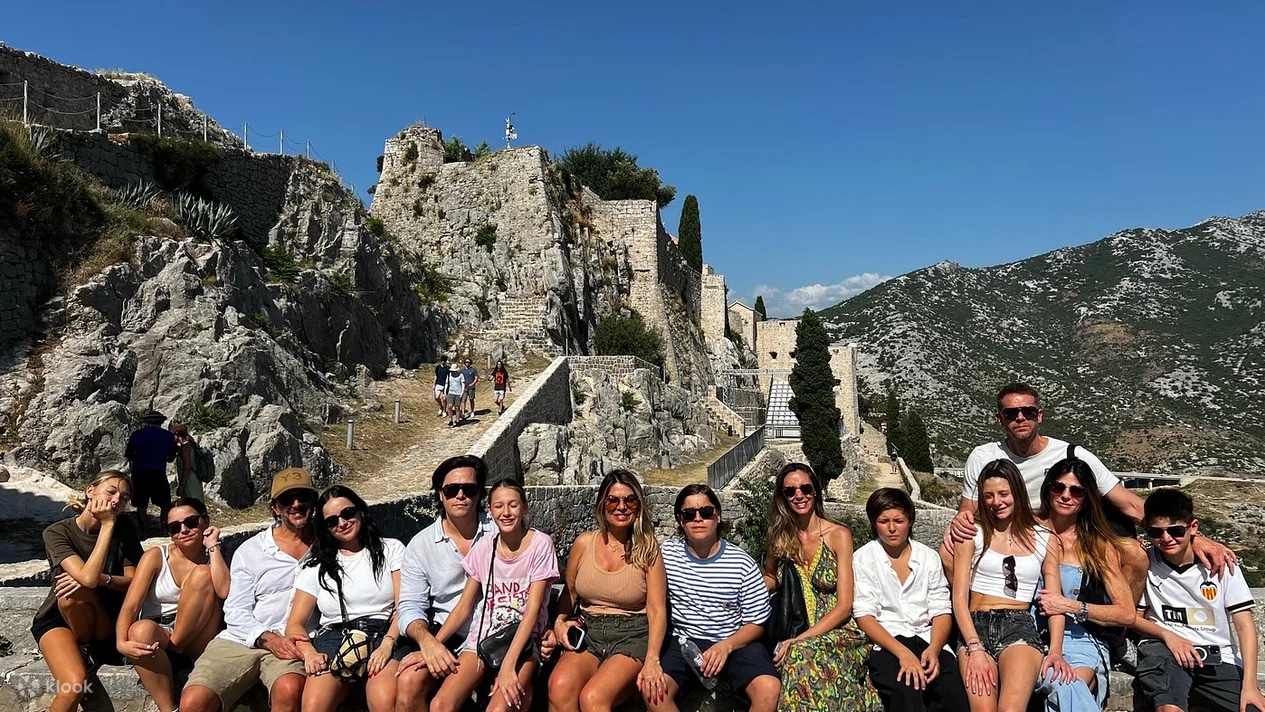
Private professional lifestyle photographer Ivan Gudić.
Live guide
Detailed itinerary
1
Stop 1
We start our tour at the Riva promenade - the most important public space in the Split. Riva represents something far more then just a nice waterfront. It is a genuine living room for us locals. It is a stage for numeros concerts and events throughout the entire year.The waterfront is a central place to celebrate New Year, Christmas, City Day, Carnival and many other events. The Promenade is 250m long and 55m wide and it offers numerous coffee shops and restaurants where you can relax and enjoy the sea view. We are start the tour at the very beginning of Riva near a bronze model of the city of Split.
2
Stop 2
Our next stop is the Diocletian Palace. The Palace is one of the best preserved monuments of the Roman architecture in the world. The Emperor's Palace was built as a combination of a luxury villa - summer house and a Roman military camp (castrum), divided into four parts with two main streets. Southern part of the Palace was, in this scheme, intended for the Emperor's apartment and appropriate governmental and religious ceremonies, while the north part was for the Imperial guard - the military, servants, storage etc. The Palace is a rectangular building (approximately 215 x 180 meters) with four large towers at the corners, doors on each of the four sides and four small towers on the walls.
3
From the outside rectangular, and from the inside circular ground plan of this old imperial court, Vestibule leaves a monumental impression even to this day. And how fascinating was it in its original entirety: semicircular niches with statues; a large cupola with colourful glittery mosaic, witnessed by Marko Marulić in his manuscript from the 16th century; the whiteness of the round wall. Vestibule was used to enter the residential part of the palace. But can you imagine that little over half a century ago it was used for living, and that the residents kept poultry there and cultivated gardens? Vestibul is today appreciated for its outstanding acoustics. You will be amazed by the sounds of man groups who sing traditional dalmatian a capella songs.
4
Stop 4
Among the European cathedrals the one in Split finds its seat in the oldest building - the Mausoleum of the Roman Emperor Diocletian. Inside the cathedral, at the end of the second millennium, the history reconciles ancient pagan, Christian Medieval and modern heritage. Mausoleum of the Emperor - persecutor of Christians becomes a cathedral in the 7th century where altars with relics of St Domnius and St Anastasius, martyrs executed in the nearby Solin, take an honorary place.
Cathedral today is primarily a place of liturgy, with a millennium long continuity, best reflected in the Sunday mass and the renewed splendour of the procession on the St Domnius's day - the day of Split's patron saint. The renowned part of the Cathedral are its gates carved in walnut by Andrija Buvina from Split.
Admission for the Cathedral is 25 Croatian kuna or 3.5 euros and it includes also the entrance to the Temple of Jupiter and the Crypt of St.Lucy.
5
Stop 5
Located outside the Golden Gate, one of four principal Roman gates into Diocletian’s Palace, is a statue of Gregory of Nin. He was a medieval bishop, famous for defying the Catholic church in Rome and insisting they introduce the national Croatian language into Catholic services throughout Croatia. As a result, everyone could understand what was being said. Before, services were only held in Latin. Christianity ultimately grew stronger throughout the country.
The statue was crafted by renowned Croatian sculptor, Ivan Meštrović, in 1929 to commemorate one thousand years since Gregory of Nin historically defended the Croatian culture. It is said to rub his big toe will grant you your wish!
6
Pjaca (People's Square, another square nobody in Split calls by its real name), is first mentioned in 13th century as St. Lawrence's Square, and it was the first inhabited part of Split outside the Diocletian Palace, leaning to its western wall. Already for centuries the Pjaca is the central stage of the city life, there in the Gothic building of the Old Town Hall, today an exhibition centre, was the seat of the city's authority, and in still beautiful and preserved Palaces on the outskirts of the Pjaca lived the noble families Cambi, Pavlović, Nakić, Ciprianis, Karepić.
Every building on Pjaca has its story, each is a witness of history and the spirit of the city. As it was yesterday, it is also today, when Pjaca is filled with numerous bars, restaurants and shops, and when it became one of the most important spots for tourists wishing to enjoy in whatever it is that their hosts, citizens of Split, are enjoying.
7
Stop 7
There are several landmarks decorating this not so large a square thriving with city life in bars, restaurants and exclusive shops, a venue often used also by fairs. The biggest is certainly the octagonal Venetian tower, the leftover of the former fortress, built in the 15th century for the defence of, at the time, a small town. Opposite the tower is a magnificent Palace of the old family Milesi from the 17th century with a spectacular Baroque facade, one of the best examples of that style in the whole of Dalmatia. Just in front of it stands the monument to the father of the Croatian literature, the citizen of Split, Marko Marulić, who was one of the most important philosophers and intellectuals of the 15th century. The author of the monument, as well as of several others in the city is Ivan Meštrović.
8
Stop 8
Prokurative or as they are officially called, Republic Square resemble the Venice St. Marks Square. They are located west of the Riva and they were named after the arches found on the neo-Renaissance buildings surrounding the square on three sides. The building of the Prokurativa was initiated by one of the most renowned mayors in the history of the city Antonio Bajamonti in the mid 19th century. He wanted to show that Split supported Italian tradition with all its might. Hence the colonnade resembling Venetians, and reliefs above the windows evoking the ancient and Renaissance influences. Bajamonti also made his great theatre on the square, but it was destroyed by a fire.
The square has long been established as an excellent stage for cultural events, especially the pop music festival, and the local bars and restaurants made it a popular venue for the citizens of Split.
What's not included
Lunch
Admission to Cathedral of Saint Domnius, Temple of Jupiter and The Crypt of Saint Lucy is 25KN
Available languages
Guide guide
EN
Reviews breakdown
Viator
4.0
5 reviews
5★
3
4★
1
3★
0
2★
0
1★
1
Tripadvisor
5.0
8 reviews
5★
8
4★
0
3★
0
2★
0
1★
0
Important information
Service animals allowed
Public transportation options are available nearby
Infants are required to sit on an adult’s lap
Suitable for all physical fitness levels
About Split
Split is a stunning coastal city in Croatia, known for its rich history, vibrant culture, and breathtaking Adriatic Sea views. The city is home to the impressive Diocletian's Palace, a UNESCO World Heritage site, and offers a blend of ancient Roman architecture and modern Mediterranean charm.
Top Attractions
Diocletian's Palace
A UNESCO World Heritage site and one of the most impressive Roman palaces in the world. Built by the Roman Emperor Diocletian in the 4th century, it's a must-visit for history buffs.
Historical/Architecture
2-3 hours
Free to enter, some areas require a ticket (around 50 HRK)
Riva Promenade
A lively waterfront promenade that stretches along the Adriatic Sea. It's a great place to enjoy the sea breeze, people-watch, and sample local ice cream.
Scenic
1-2 hours
Free
Marjan Hill
A forested park offering stunning views of Split and the surrounding islands. It's perfect for hiking, swimming, and enjoying the natural beauty of the area.
Nature/Scenic
2-4 hours
Free
Bacvice Beach
A popular sandy beach known for its shallow waters and vibrant atmosphere. It's a great place to relax, swim, and enjoy local seafood.
Beach
Half-day
Free, sunbeds and umbrellas for rent
Split City Museum
Housed in the historic Papalić Palace, this museum offers a fascinating look at the history and culture of Split through various exhibits and artifacts.
Museum
1-2 hours
Free, donations welcome
Must-Try Local Dishes
Black Risotto (Crni Rižot)
A traditional Dalmatian dish made with cuttlefish, giving it a distinctive black color.
Main course
Contains seafood, not suitable for vegetarians or those with seafood allergies.
Peka
A slow-cooked dish made with meat (lamb, veal, or octopus) and vegetables, cooked under a bell-like lid with hot coals.
Main course
Can be made with meat or seafood, not suitable for vegetarians.
Brodet
A traditional fish stew made with various types of fish, potatoes, and tomatoes.
Main course
Contains seafood, not suitable for vegetarians or those with seafood allergies.
Rozata
A traditional Dalmatian dessert similar to crème caramel, flavored with rose liqueur.
Dessert
Contains dairy and eggs, not suitable for vegans.
Popular Activities
Hiking on Marjan Hill
Sailing to nearby islands
Scuba diving in the Adriatic Sea
Sunbathing at Bacvice Beach
Enjoying a leisurely stroll along Riva Promenade
Relaxing at a local spa
Exploring Diocletian's Palace
Visiting local museums and galleries
Best Time to Visit
June to August
The peak season offers the best weather for beach activities and outdoor exploration. However, it is also the busiest and most expensive time to visit.
25°C to 35°C
77°F to 95°F
Practical Information
Language
- Official: Croatian
- Widely spoken: English, Italian, German
- English: Moderately spoken, especially in tourist areas
Currency
Croatian Kuna (HRK)
Time Zone
GMT+1 (Central European Time, CET)
Electricity
230VV, 50HzHz
Safety Information
Overall Safety Rating: Generally safe
Split is generally safe for travelers, with low crime rates and a welcoming atmosphere. However, as with any tourist destination, it's important to be aware of your surroundings and take precautions to ensure a safe and enjoyable trip.
Important Precautions:
- • Be aware of your surroundings, especially in crowded areas.
- • Use licensed taxis and agree on the fare before starting your journey.
- • Be cautious of strangers offering unsolicited help or services.
Getting there
By air
- Split Airport • 15 km from city center
By train
Split Railway Station
By bus
Split Bus Terminal
Getting around
Public transport
The bus system is efficient and covers most parts of the city. Buses are a convenient and affordable way to get around.
Taxis
Available • Apps: Camme, Bolt
Rentals
Car, Bike, Scooter
Neighborhoods
Old Town
Varoš
Bačvice
Meje
Day trips
Hvar Island
60 km from Split • Full day
A picturesque island known for its stunning beaches, lavender fields, and historic sites. Hvar is a popular destination for sailing, swimming, and exploring.
Brač Island
30 km from Split • Full day
A beautiful island known for its golden beaches, crystal-clear waters, and scenic hiking trails. Brač is a great destination for beach lovers and outdoor enthusiasts.
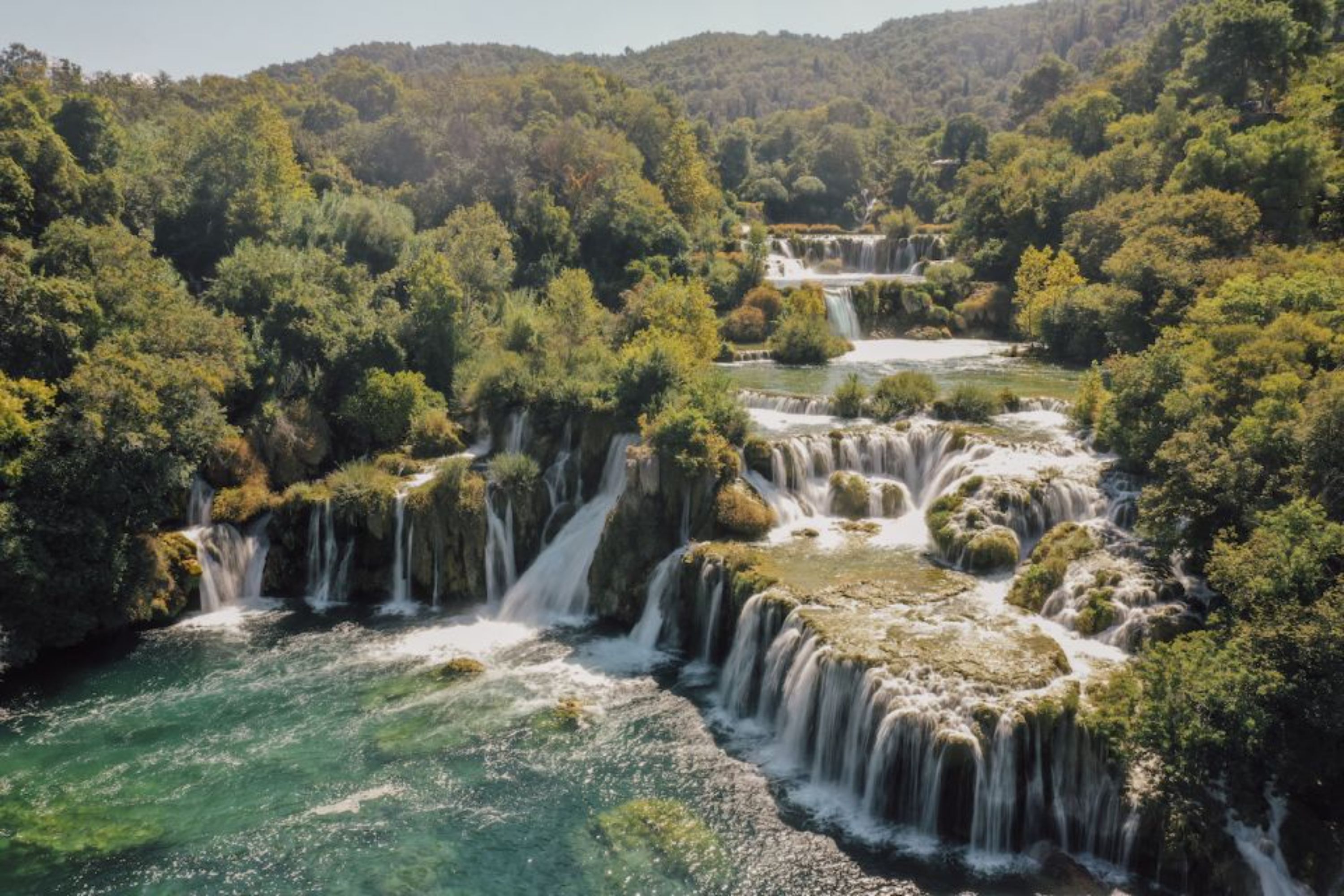
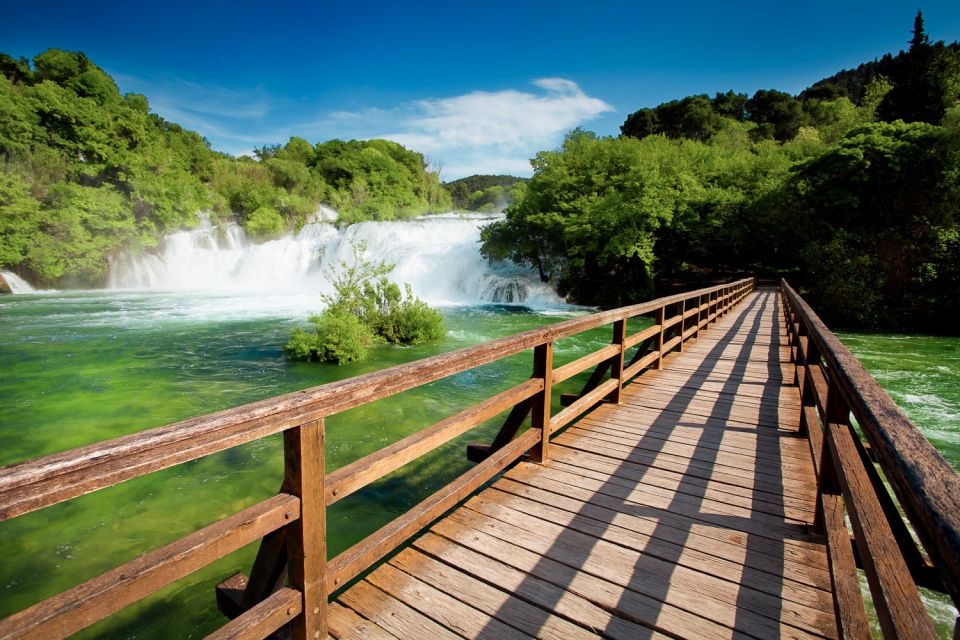
Krka National Park
80 km from Split • Full day
A stunning national park known for its waterfalls, lakes, and lush greenery. Krka is a great destination for hiking, swimming, and nature lovers.
Festivals
Split Summer Festival • July to September
Split Music Festival • July to August
Split International Film Festival • June to July
Pro tips
- Visit Diocletian's Palace early in the morning or late in the afternoon to avoid crowds.
- Try local seafood dishes, especially Black Risotto and Peka, for an authentic taste of Dalmatian cuisine.
- Explore the city on foot or by bike to discover hidden gems and enjoy the scenic views.
- Take a day trip to nearby islands like Hvar or Brač for stunning beaches and outdoor activities.
- Enjoy the sunset from Marjan Hill for a breathtaking view of the city and the Adriatic Sea.
From $25
per person
Price varies by option
Secure booking
Free cancellation available
Instant confirmation