


Full-Day Private Guided Tour to Marrakesh City with Lunch
Active
6h - 7h
For a full refund, cancel at least 24 hours before the scheduled departure time.
Instant confirmation
Mobile or paper ticket accepted
About this experience
Known as the “Pearl of the South,” this unique city was founded in the 11th century by the Almoravids Dynasty and is situated where the desert meets the mountains. This beautiful city deserve to be visited and guided by one of our professionel tour guides most of them are big history, culture and architecture lover.
Available options
Full-Day Private Guided Tour to Marrakesh City with Lunch
What's included
Guide touristique
Lunch
Detailed itinerary
1
Stop 1
The highlight of the Koutoubia mosque, which non-Muslims may not enter, is the beautiful minaret. Rising almost 70m, it dominates the Djemaa el Fna square and can be seen from much of the city.
The design of the Koutoubia minaret was highly influential on later towers (notably the Hassan Tower in Rabat and the beautiful La Giralda in Seville) and on Moroccan architecture in general. The wide band of ceramic tiles at the top, the pointed battlements (merlons), the alternate patterning on each side, and various other decorative motifs can all be seen on various buildings across the country.
The minaret is topped with copper balls of decreasing size, a traditional design in Morocco. There are usually only three orbs; legend has it the fourth was a gift from the wife of Saadian ruler Yacoub el Mansour, as penance for breaking her fast for three hours during Ramadan.
2
Stop 2
Bahia Palace is undeniably one of the top historical Marrakech tourist attractions, although it does not attract as many tourists as Majorelle Garden which can actually becomes rather crowded during the high season. This alone makes if a really nice place to visit if you are hoping to avoid large crowds of tourists.
The palace itself is located on a large 2-acre plot of land in the center of Marrakech’s famous medina. It has a total of 150 rooms, including a harem section which is located alongside the palace’s Court of Honor.
3
Stop 3
Jemaa El Fnaa is a must-visit destination in the Medina and the main square of Marrakech. It is a place that gives great experience both to the visitors and inhabitants at all times. While in this destination, the visitors and inhabitants can observe several shows that take place at night and during the day.
In the year 2001, UNESCO recognized Jemaa el-Fnaa as the place of Entertainment, hence genuine evidence of what you can expect while in this square.
4
Stop 4
The enclosure consists of two main mausoleums, with 66 tombs laid out within them and over 100 more outside in the gardens. The first mausoleum, seen on the left as you enter, is the finest of the two. Built to house Mansour's tomb and completed during his lifetime, its vaulted roof, fine carvings and stunning zellij tiles recall the Alhambra in Granada (built 200 years earlier).
The first hall is an oratory and probably not originally intended for burial, but nevertheless contains the thin marble stones of several Saadian princes. Here also is the tomb of the mad Moulay Yazid, which ironically conflicts with the black-and-white script in the hall that reads, "And the works of peace they have accomplished will make them enter the holy gardens."
In the back of the mausoleum is a very fine mihrab, supported by a delicate group of columns. El Mansour's tomb is in the domed central chamber, flanked by the tombs of his sons and successors.
The second mausoleum is older but less impressive.
5
Stop 5
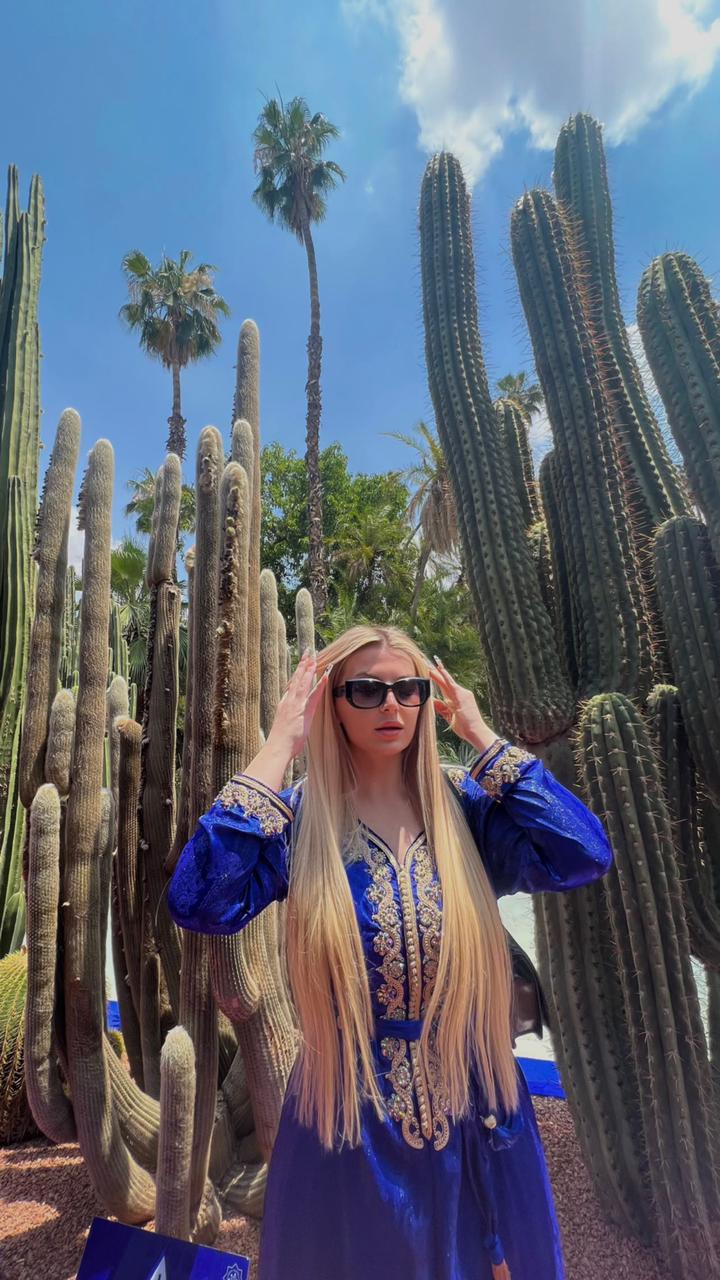
This is the most famous gardens in Marrakech. The painter Jacques Majorelle, son of the famous Art Nouveau artist Louis Majorelle Nancy, invents himself the famous Blue Majorelle color in 1937, intense and clear, which is found throughout the garden that brings together a collection of plants brought from all corners world: Cactus, yucca, lilies, bamboo … thrive alongside pools and elegant Art Deco villa.
6
Gueliz is the heart of the modern part of Marrakech. Its main avenues are Mohammed VI and Mohammed V. This area is where many foreigners choose to live in Marrakech.
This area houses international clothing shops like Zara and H&M, as well as modern restaurants and cafés.
You will have lunch in one the best restaurants in the area before you leave to Majorel Garden.
What's not included
Gratuities
Admission fees
Available languages
Guide guide
EN
IT
FR
ES
Reviews breakdown
Tripadvisor
5.0
2 reviews
5★
2
4★
0
3★
0
2★
0
1★
0
Important information
Infants and small children can ride in a pram or stroller
Public transportation options are available nearby
Infants are required to sit on an adult’s lap
Specialized infant seats are available
Suitable for all physical fitness levels
About Marrakech
Marrakech is a vibrant city known for its rich history, bustling souks, and stunning architecture. It offers a blend of traditional Moroccan culture and modern amenities, making it a captivating destination for travelers.
Top Attractions
Jemaa El-Fnaa
Jemaa El-Fnaa is the heart of Marrakech, a bustling square filled with food stalls, entertainers, and souvenir vendors. It's a must-visit for its vibrant atmosphere and cultural experiences.
Cultural
2-3 hours
Free (food and souvenirs cost extra)
Koutoubia Mosque
The Koutoubia Mosque is one of the most iconic landmarks in Marrakech. Its minaret is a symbol of the city and can be seen from many parts of the medina.
Historical
1 hour
Free (non-Muslims cannot enter the mosque)
Bahia Palace
The Bahia Palace is a stunning example of Moroccan architecture, featuring intricate tile work, lush gardens, and beautiful courtyards. It offers a glimpse into the opulent lifestyle of the past.
Historical
1-2 hours
70 MAD
Majorelle Garden
The Majorelle Garden is a beautiful botanical garden designed by French painter Jacques Majorelle. It features a variety of plants, a striking blue villa, and a museum dedicated to Yves Saint Laurent.
Nature
2-3 hours
70 MAD
Saadian Tombs
The Saadian Tombs are a collection of mausoleums dating back to the 16th and 17th centuries. They were discovered in 1917 and offer a fascinating look into the history of Marrakech.
Historical
1 hour
70 MAD
Must-Try Local Dishes
Tagine
A slow-cooked stew made with meat, vegetables, and spices, named after the earthenware pot it's cooked in.
Main course
Vegetarian options available
Couscous
A dish made with steamed semolina grains, often served with vegetables and meat.
Main course
Vegetarian options available
Pastilla
A savory-sweet pie made with layers of filo pastry, filled with spiced pigeon or chicken, almonds, and powdered sugar.
Main course
Contains nuts
Mint Tea
A traditional Moroccan tea made with green tea and fresh mint leaves, sweetened with sugar.
Drink
Contains caffeine
Popular Activities
Hiking in the Atlas Mountains
Surfing in Essaouira
Quad biking in the desert
Spa treatments
Yoga retreats
Relaxing in a hammam
Exploring the medina
Visiting museums
Best Time to Visit
Spring (March to May) and Fall (September to November)
The best time to visit Marrakech is during spring and fall when the weather is pleasant and ideal for exploring the city. The temperatures are mild, and the crowds are manageable.
15°C to 25°C
59°F to 77°F
Practical Information
Language
- Official: Arabic
- Widely spoken: French, Berber languages
- English: Moderately spoken in tourist areas
Currency
Moroccan Dirham (MAD)
Time Zone
GMT+0
Electricity
220VV, 50HzHz
Safety Information
Overall Safety Rating: Exercise caution
Marrakech is generally safe for tourists, but petty crime and scams can occur. Be cautious of your surroundings, especially in crowded areas.
Important Precautions:
- • Be cautious of your belongings in crowded areas.
- • Use reputable taxi services and agree on the fare before starting your journey.
- • Avoid walking alone at night in less crowded areas.
Getting there
By air
- Menara International Airport • 4 km from city center
By train
Marrakech Railway Station
By bus
Marrakech Central Bus Station
Getting around
Public transport
Buses are the most common form of public transport in Marrakech. They are affordable and cover most areas of the city.
Taxis
Available • Apps: Careem, Heetch
Rentals
Car, Bike, Scooter
Neighborhoods
Medina
Gueliz
Hivernage
Day trips
Atlas Mountains
60 km from Marrakech • Full day
The Atlas Mountains offer stunning landscapes, hiking trails, and traditional Berber villages. It's a great escape from the city for nature lovers.
Ourika Valley
30 km from Marrakech • Half day to full day
The Ourika Valley is known for its beautiful landscapes, traditional Berber houses, and waterfalls. It's a popular destination for day trips from Marrakech.
Essaouira
180 km from Marrakech • Full day to overnight
Essaouira is a charming coastal town known for its beautiful beaches, historic medina, and vibrant arts scene. It's a popular destination for surfing, windsurfing, and relaxation.
Festivals
Marrakech Popular Arts Festival • Every July
Marrakech International Film Festival • Every November/December
Ramadan • Dates vary (Islamic calendar)
Pro tips
- Hire a local guide for a more immersive and informative experience.
- Learn a few basic phrases in Arabic or French to enhance your interactions with locals.
- Visit the medina early in the morning or late in the afternoon to avoid the heat and crowds.
- Bargain politely when shopping in the souks, as prices are often negotiable.
- Try local street food for an authentic culinary experience, but choose stalls with high turnover.
From $25
per person
Price varies by option
Secure booking
Free cancellation available
Instant confirmation


![MSC Bellissima/Spectrum of the Seas Caribbean Sea [Okinawa Port Day Trip] Boutique Small Group + Port Transfer/Chinese Tour Guide](https://res.klook.com/image/upload/activities/tiylcztq2iht7j3bhmij.jpg)