Authentic Braga & Guimarães: Small Historical Group Tour
Active
8h
For a full refund, cancel at least 24 hours before the scheduled departure time.
Instant confirmation
Mobile or paper ticket accepted
About this experience
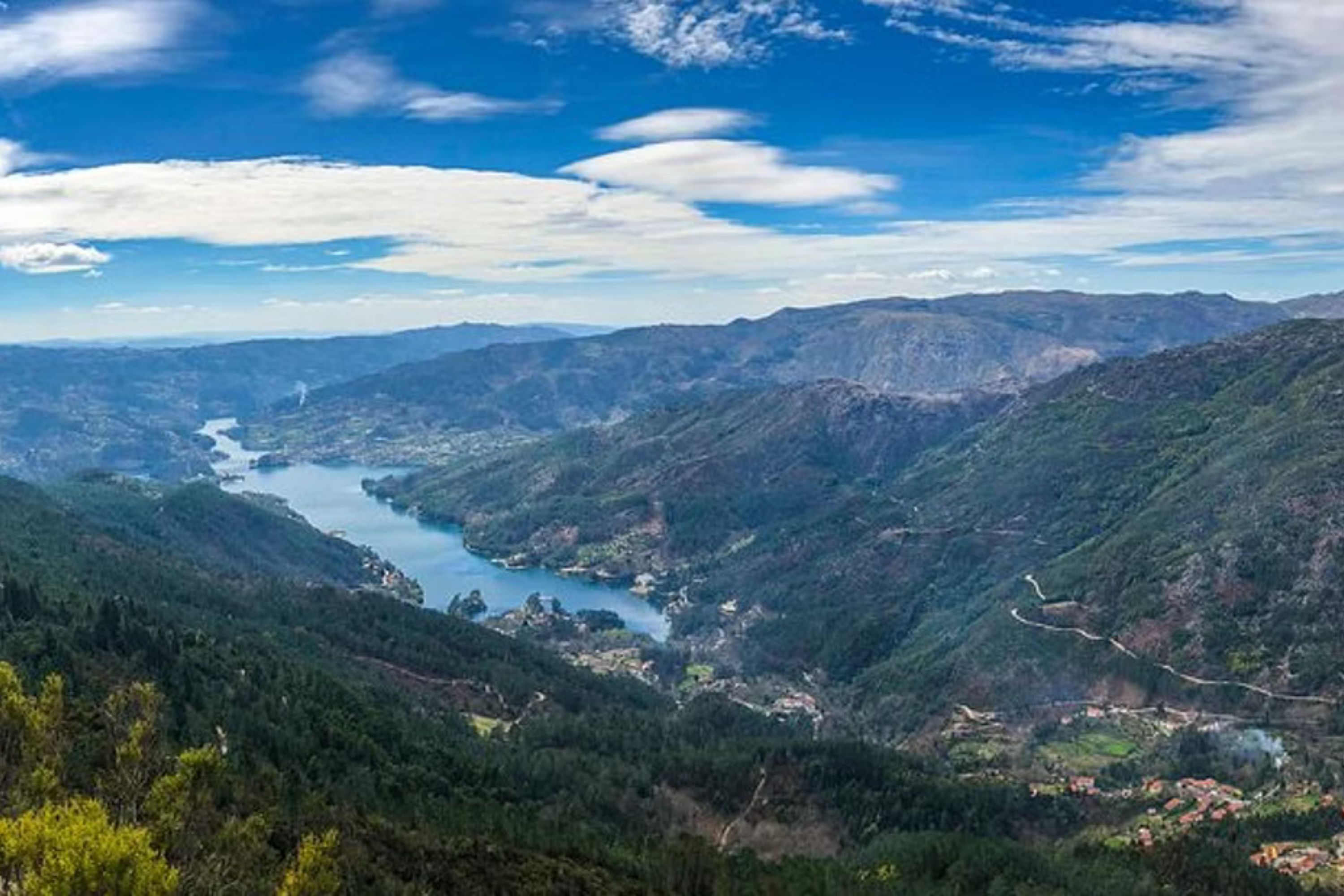
Enjoy the scenic landscapes of Minho, noted for its popular Vinho Verde, and visit two of the region’s historic cities, Guimarães and Braga, to discover their architectural heritage. The first stop on this full-day tour is Guimarães, the birthplace of Portugal. The city center has been a UNESCO World Heritage Site since 2001. Marvel the Guimarães Castle, dating from the 10th century, where you’ll learn about the early period of Portugal’s history. Admire the Dukes of Bragança Palace and the architecture of this medieval city, full of unique buildings, streets, and squares.
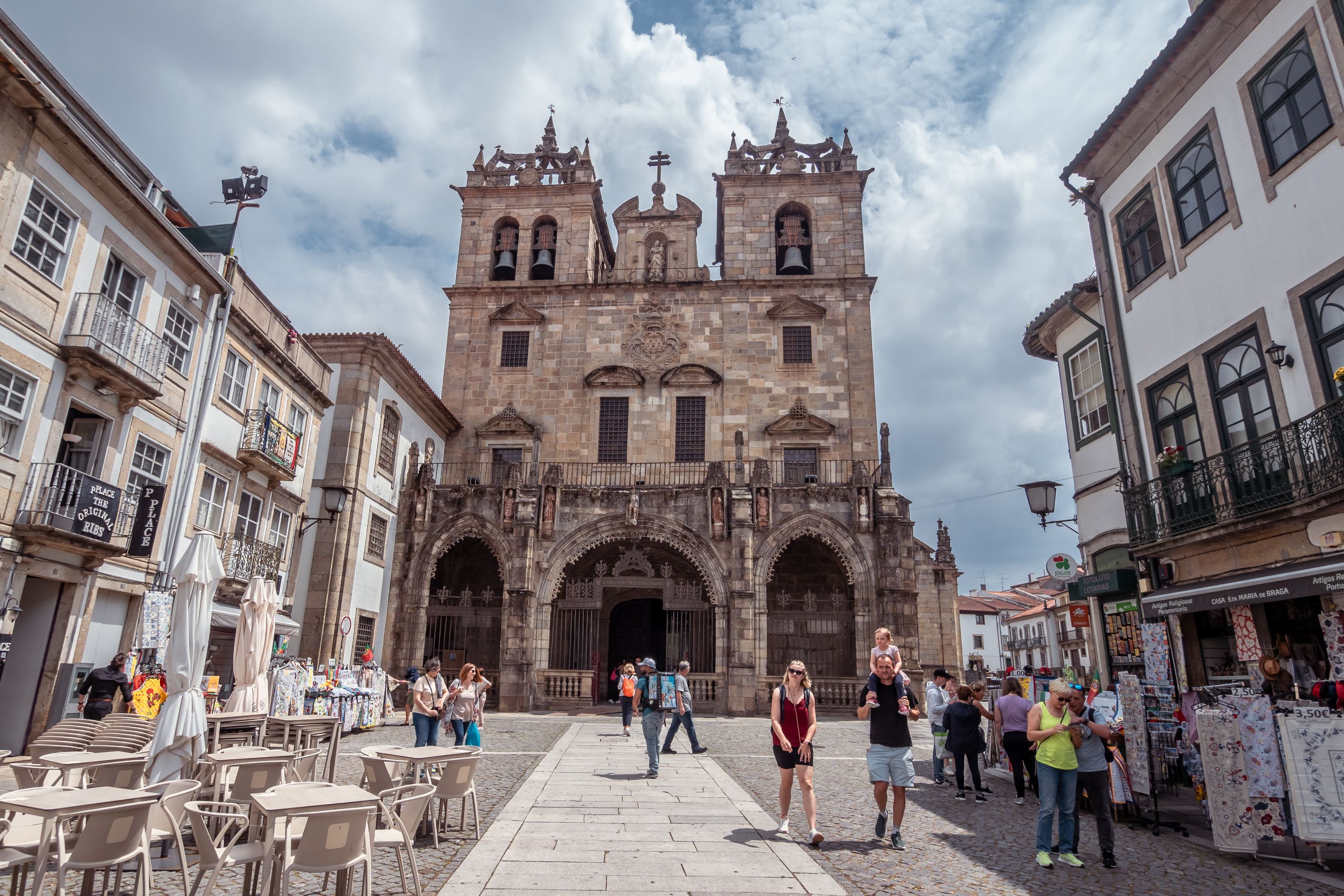
Continue to Braga, a city once occupied by the Romans and one of the most important Christian centers of Portugal. Take a break to enjoy a traditional lunch with Vinho Verde. After that continue learning about the history of Braga and pay a visit to its most important landmarks such as the Cathedral from the 11th century, Bom Jesus do Monte, and the Sameiro Sanctuary. You will arrive back to Porto close to 5pm.
Available options
Authentic Braga & Guimarães: Small Historical Group Tour
Pickup included
What's included
Small goup tour - Maximum up to 8 people
Entrances to monuments included
Expert tour guide
Hotel pick up and drop off
Bottled water
Premium air-conditioned vehicle
Detailed itinerary
1
Stop 1
Pass by
Upon arrival in Guimarães, we begin our tour in the upper part of the city, where the Guimarães Castle is located. Our guide will tell you about Portugal's early history as you pass Portugal's oldest medieval castle and begin the descent into the city center.
2
This church dates back to the 13th century and is currently classified as a national monument. It is a building built in the Romanesque style, which was rebuilt at the beginning of the 20th century according to its original appearance. There is a legend associated with this church, according to which the first king of Portugal, D. Afonso Henriques, was baptized here.
3
This palace dates back to the beginning of the 15th century and its construction was ordered by D. Afonso (son of King D. João I) at the time of his marriage to D. Constança de Noronha. Over the years it served several purposes, causing wear and tear. At the beginning of the 20th century, the restoration of the palace began. It is classified as a national monument and currently serves as a museum, displaying works of tapestry, furniture, Chinese porcelain and paintings.
4
Along the descent to the residential area of the city, we will pass through Rua de Santa Maria, one of the first streets in Guimarães, which served as the main connection between the convent of D. Mumadona Dias, the residential area and the Castle.
5
This is a social square for the inhabitants of Guimarães, where you can find restaurants, bars and terraces, surrounded by the city's typical architecture. According to the legend, the name of the square is due to the apostle James who, on a pilgrimage, left an image of the Virgin Mary here. A church was built there in the 12th century, which was demolished in the 19th century.
6
Largo da Oliveira is one of the most emblematic and historic squares in Guimarães, Portugal. Its name comes from an ancient olive tree that symbolizes peace and tradition. This place has been the scene of significant events over the centuries, including medieval courts and crucial moments in the formation of Portugal as a nation.
7
In addition to the church, Largo da Oliveira is known for the Padrão do Salado, a monument that celebrates the victory of D. Afonso IV over the Moors in the battle of Salado in 1340.
8
Stop 8
From Largo da Oliveira you can see the church of Nossa Senhora da Oliveira - Colegiada de Guimarães, whose origins date back to a monastery founded in the first half of the 10th century by Countess Mumadona Dias. The current church was built in 1387 by order of King D. João I, following models of Gothic architecture.
9
Stop 9
Braga Cathedral is one of the most emblematic and historic monuments in Portugal. Located in the city of Braga, this Catholic cathedral is a testament to the country's cultural and religious richness.
Its construction dates back to the end of the 11th century, having been sacred and dedicated to the Virgin Mary by Bishop D. Pedro in 10891. The Braga Cathedral is considered the first Portuguese cathedral, built several decades before the founding of the nation itself.
10
Stop 10
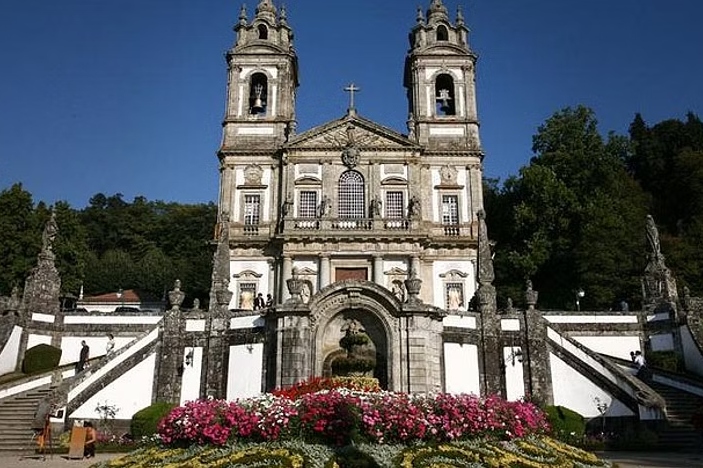
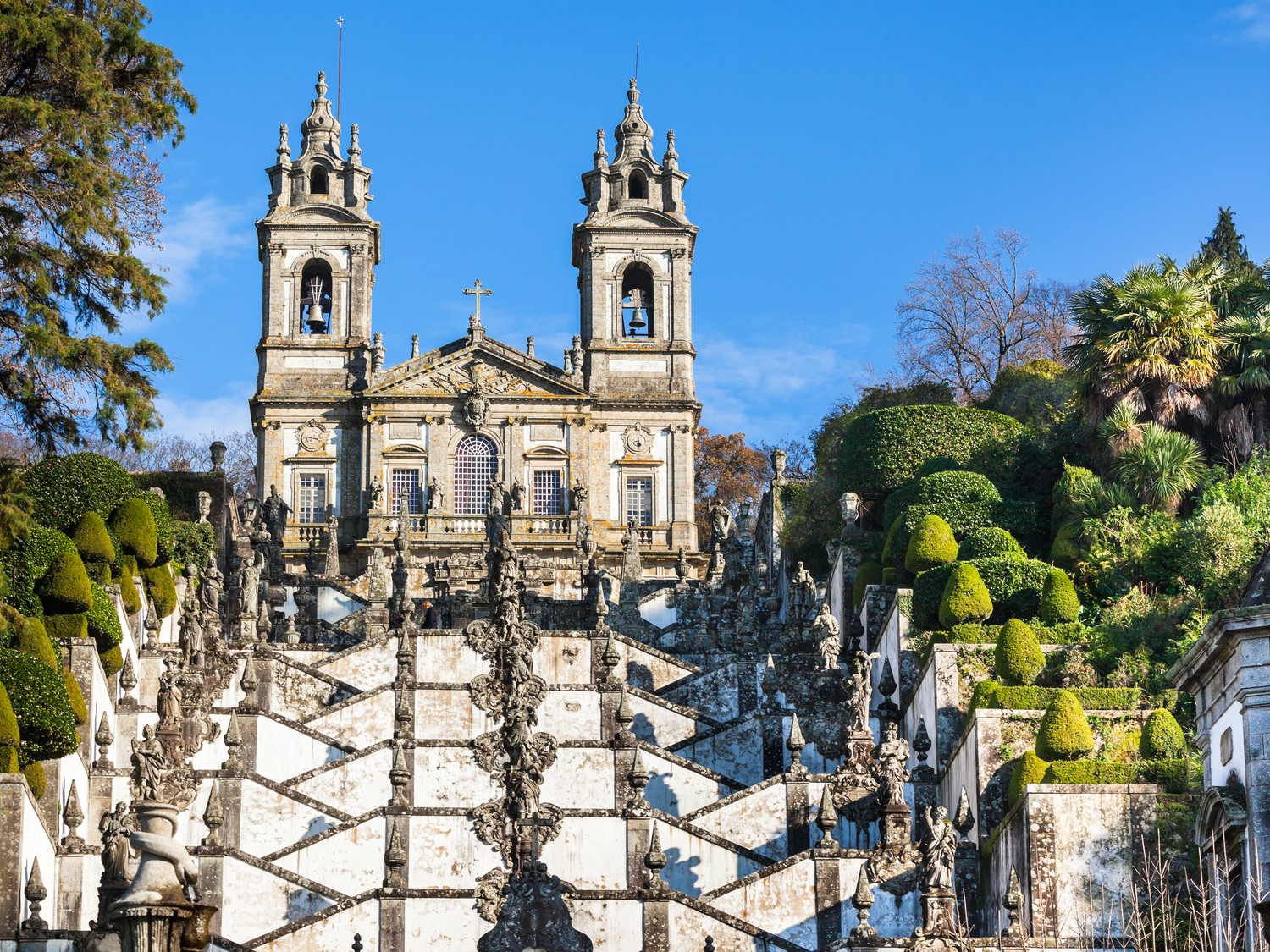
The Bom Jesus do Monte Sanctuary is a jewel of the religious architecture and landscaping, located in Braga. With over 600 years of history, this site of Christian pilgrimage is a notable example of the European Sacri Monti, created after the Council of Trent in the 16th century.
The sanctuary's Via Crucis, which winds up the mountainside, is made up of chapels, fountains and sculptures representing the Passion of Christ, culminating in the neoclassical church built between 1784 and 1811. The Staircase of the Five Senses, a baroque work, is a of the most emblematic elements of the set, symbolizing the human senses through fountains and statues.
Bom Jesus do Monte was recognized as a World Heritage Site by UNESCO in 2019, standing out for its harmonious integration with the natural landscape and its cultural and spiritual importance. The sanctuary offers panoramic views of Braga and is a testament to the religious tradition and influence of the Catholic Church in the region.
11
The Sanctuary of Nossa Senhora do Sameiro, or simply Santuário do Sameiro, is one of the most important places of Marian worship in Portugal, located in the city of Braga. Founded on June 14, 1863 by Father Martinho António Pereira da Silva, the sanctuary is a symbol of devotion to the Virgin Mary.
Sameiro is the second largest Marian pilgrimage center in Portugal, after the Sanctuary of Fátima, and is a place that attracts not only devotees, but also tourists, due to its rich history and its privileged location at the top of the mountain, at 566 meters of altitude. It offers a spectacular view over the city of Braga and the surrounding landscape.
What's not included
Gratuities
Lunch
Available languages
Guide guide
PT
EN
Reviews breakdown
Viator
5.0
10 reviews
5★
10
4★
0
3★
0
2★
0
1★
0
Tripadvisor
5.0
54 reviews
5★
54
4★
0
3★
0
2★
0
1★
0
Important information
Specialized infant seats are available
Suitable for all physical fitness levels
Travel time is already included with the total tour duration.
Green wine - legal age to drink is 18 years old and above
About Porto
Porto, the second-largest city in Portugal, is a vibrant coastal city known for its rich history, stunning architecture, and delicious cuisine. With its picturesque Ribeira district, historic bridges, and world-famous port wine cellars, Porto offers a unique blend of cultural heritage and modern charm.
Top Attractions
Ribeira District
The Ribeira district is the historic heart of Porto, known for its colorful buildings, narrow streets, and lively atmosphere. It's a UNESCO World Heritage site and a must-visit for anyone coming to Porto.
Historical
2-3 hours
Free to explore
Livraria Lello
Livraria Lello is one of the most famous bookstores in the world, known for its stunning neo-Gothic interior and as an inspiration for J.K. Rowling's Harry Potter series.
Cultural
1 hour
€6 (includes a book voucher)
Clérigos Tower
The Clérigos Tower is a iconic Baroque bell tower that offers panoramic views of Porto. Climbing the 240 steps to the top is well worth the effort for the breathtaking views.
Architecture
1 hour
€5
Dom Luís I Bridge
This double-deck iron bridge spans the Douro River, connecting Porto to Vila Nova de Gaia. The upper deck offers stunning views of the river and the city.
Architecture
30 minutes
Free
Port Wine Cellars
Vila Nova de Gaia is home to many of Porto's famous port wine cellars, where you can learn about the history of port wine and enjoy tastings.
Cultural
2-3 hours
€10-€30
Must-Try Local Dishes
Francesinha
A hearty sandwich made with layers of meat, covered in melted cheese and a special sauce, served with fries.
Lunch/Dinner
Contains meat and dairy
Bacalhau à Brás
A traditional Portuguese dish made with shredded cod, onions, potatoes, and eggs.
Lunch/Dinner
Contains fish and eggs
Tripas à Moda do Porto
A traditional Porto dish made with tripe, beans, and spices, slow-cooked to perfection.
Lunch/Dinner
Contains meat
Pastéis de Nata
Delicious custard tarts with a flaky pastry crust, often dusted with cinnamon or powdered sugar.
Dessert
Contains dairy and eggs
Popular Activities
Hiking in the Serra do Pilar
Kayaking on the Douro River
Sunbathing at Praia do Castelo do Queijo
Enjoying a port wine tasting
Visiting the Livraria Lello
Exploring the Ribeira district
Swimming at Praia do Castelo do Queijo
Boat tours on the Douro River
Best Time to Visit
May to September
This is the peak tourist season with warm weather and plenty of sunshine. It's ideal for exploring the city and enjoying outdoor activities.
18°C to 28°C
64°F to 82°F
Practical Information
Language
- Official: Portuguese
- Widely spoken: English, Spanish, French
- English: Widely spoken in tourist areas
Currency
Euro (EUR)
Time Zone
GMT+1 (Western European Time)
Electricity
230VV, 50HzHz
Safety Information
Overall Safety Rating: Generally safe
Porto is generally a safe city for travelers, with low violent crime rates. However, petty crime, such as pickpocketing and bag snatching, can occur in tourist areas and on public transportation.
Important Precautions:
- • Keep valuables secure and out of sight, especially in tourist areas and on public transportation
- • Be cautious when using taxis, and always ensure the meter is running or agree on a price before starting your journey
- • Avoid walking alone at night in quiet or poorly lit areas
Getting there
By air
- Francisco Sá Carneiro Airport • 11 km (7 miles) from city center
By train
Porto Campanhã, Porto São Bento
By bus
Porto Bus Terminal (Terminal de Camionagem de Porto)
Getting around
Public transport
The metro system is efficient and easy to use, with six lines connecting major points of interest.
Taxis
Available • Apps: Bolt, Uber
Rentals
Car, Bike, Scooter
Neighborhoods
Ribeira
Bolhão
Foz do Douro
Miguel Bombarda
Day trips
Braga
50 km (31 miles) • Full day
Braga is a historic city known for its beautiful churches, monasteries, and the Bom Jesus do Monte sanctuary.
Guimarães
40 km (25 miles) • Full day
Guimarães is a historic city known as the birthplace of Portugal. It's home to a well-preserved medieval center and the stunning Guimarães Castle.
Douro Valley
80 km (50 miles) • Full day
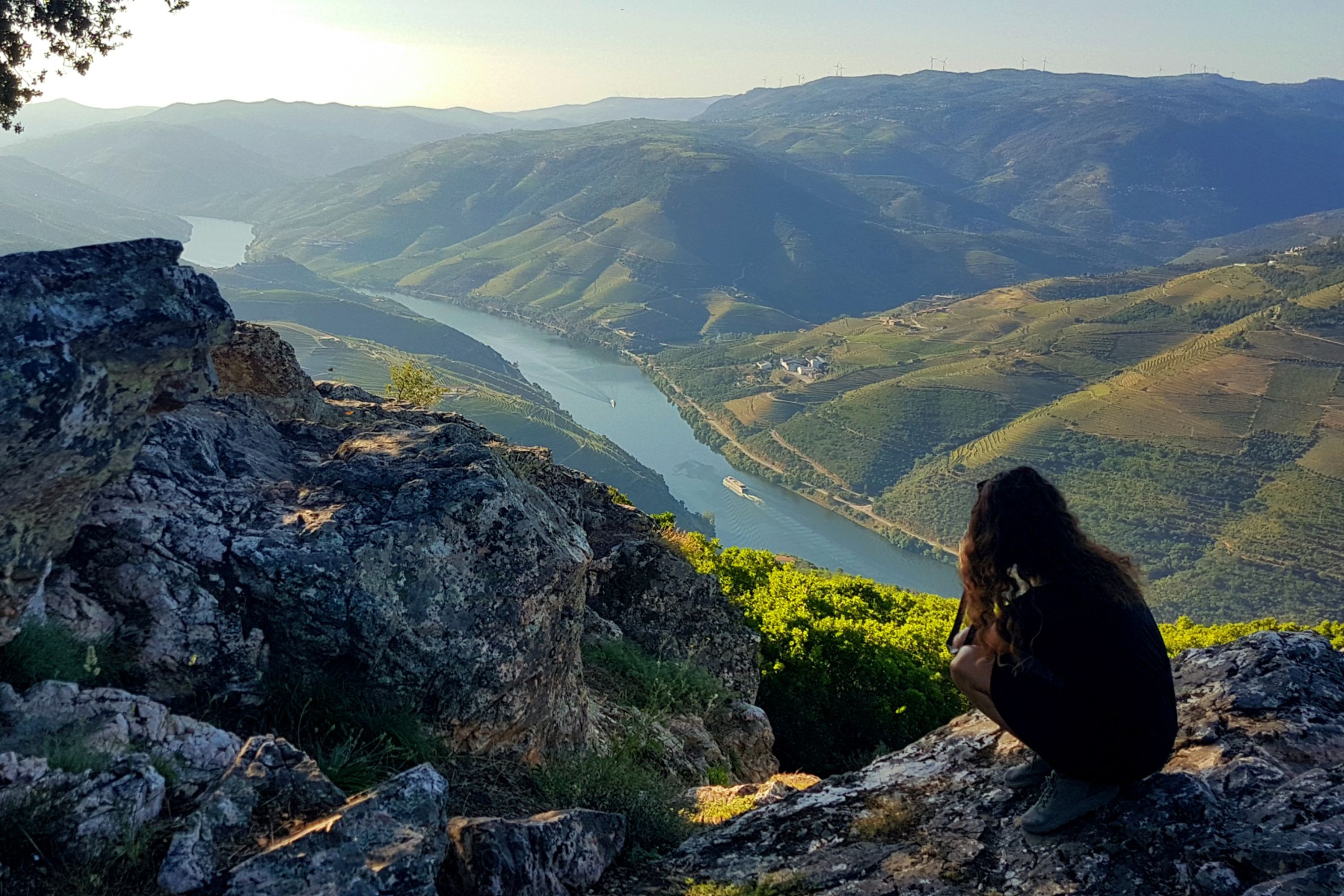
The Douro Valley is a stunning wine region known for its terraced vineyards, port wine cellars, and scenic boat tours.
Festivals
São João Festival • June 23-24
Festa de São João • June 24
Porto Wine Festival • September
Pro tips
- Visit the Livraria Lello bookstore early in the morning or late in the afternoon to avoid the crowds and long queues
- Take a port wine tasting tour to learn about the history of port wine and sample a variety of wines from different cellars
- Explore the historic center of Porto on foot, as many of its narrow streets and charming squares are best discovered by walking
- Try the local cuisine, such as Francesinha, Bacalhau à Brás, and Tripas à Moda do Porto, at traditional restaurants and cafes
- Take a day trip to the Douro Valley to see the stunning vineyards, visit port wine cellars, and enjoy a scenic boat tour on the Douro River
From $25
per person
Price varies by option
Secure booking
Free cancellation available
Instant confirmation