Dublin City Ireland Self Guided Walking Audio Tour
Active
1h - 2h
For a full refund, cancel at least 24 hours before the scheduled departure time.
Instant confirmation
Mobile or paper ticket accepted
About this experience
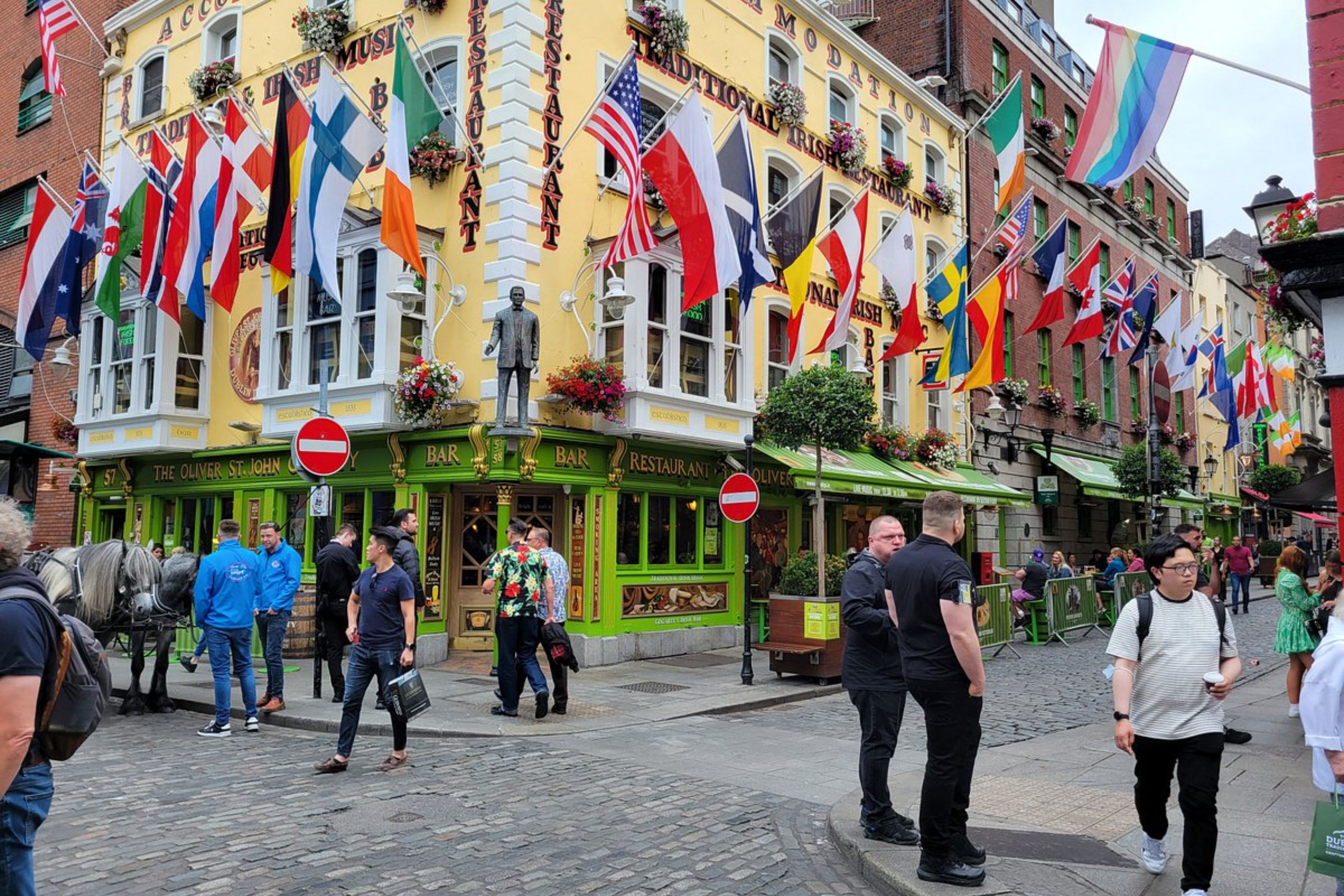
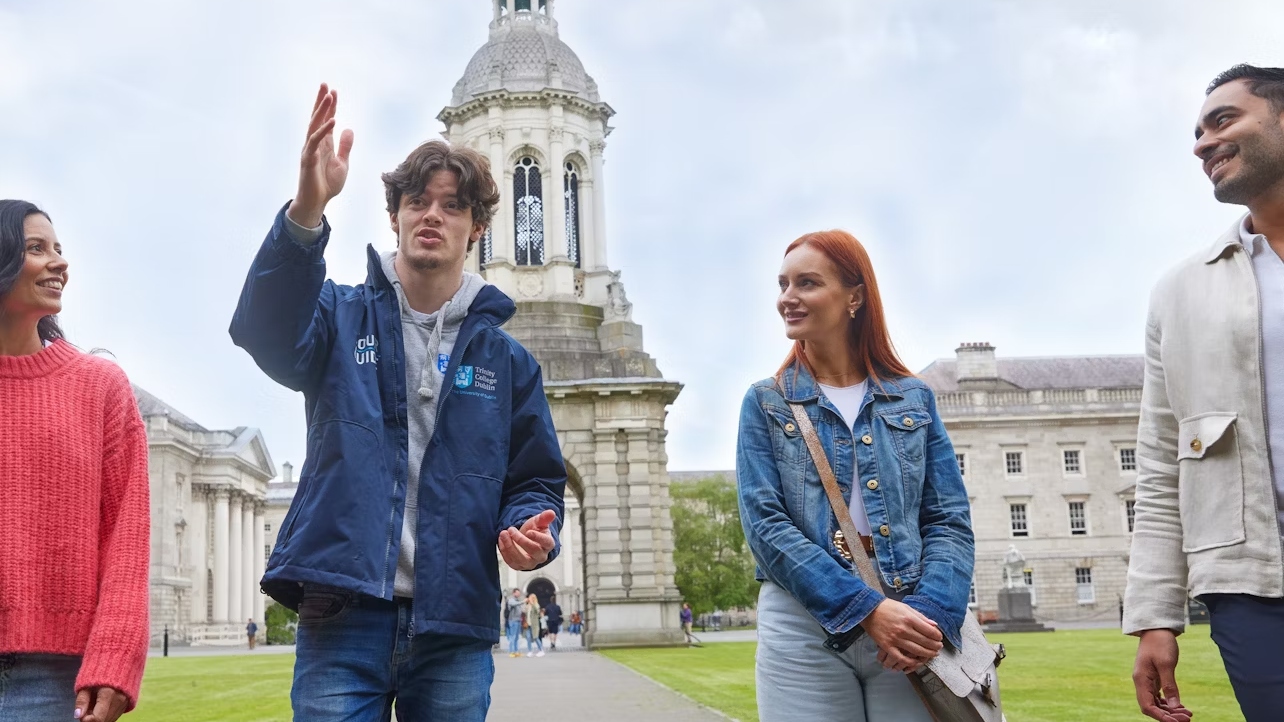
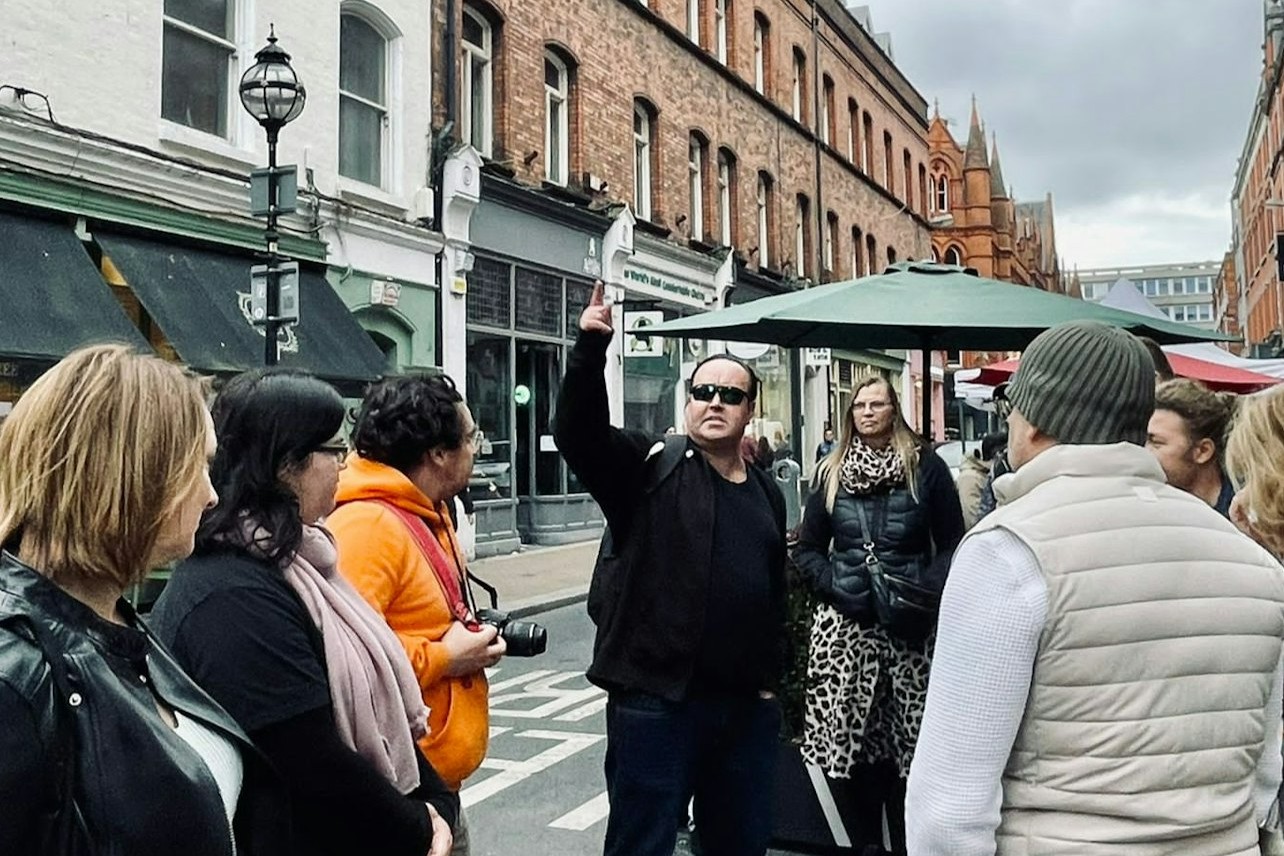
Stroll down Dublin’s historic streets and dive into the city’s long and embattled history with this self-guided walking tour of the iconic Irish capital. Visit St. Patrick's Cathedral, the city's Gothic marvel. Stop by Dublin Castle and Trinity College for a glimpse at age-old architectural splendor, then pay a visit to The Spire for a glimpse of modernity. Walk down the shop-filled O'Connell Street and visit the picturesque Temple Bar neighborhood. Along the way, you’ll uncover the history of the city and the Irish people.
After booking, check your email/text to download the separate Audio Tour Guide App by Action while connected to WiFi or mobile data. Enter the password, download the tour, and enjoy it offline. Follow the audio instructions and route from the designated starting point.
Buy once, use for one year! Ideal for extended visits and return trips over the next 12 months.
This isn't an entrance ticket. Check opening hours before your visit.
Available options
Dublin City Ireland Self Guided Walking Audio Tour
What's included
Easy-to-use app: download Action’s Tour Guide App onto your phone
Engaging storytelling: Uncover unique tales and thrilling history for a memorable journey!
Perfect narrator: nothing can beat listening to a great voice. Proven with tons of rave reviews!
Offline maps: no signal, no problem! Works perfectly without cellular or wifi.
Comprehensive route and stops: See it all, miss nothing, leave no stone unturned!
Go at your own pace: Start anytime, pause anywhere, enjoy breaks for snacks and photos freely!
Learn more: dive deeper into any story you enjoyed with extra stories.
Hands-free: audio stories play on their own based on your location. Easy to use!
Detailed itinerary
1
Stop 1
This spot was once where the original Viking fortifications stood. It’s the high point of the city, making it easy to defend and giving it a clear view of the surrounding area. So when the English King John decided to build a castle in 1204, he picked the same spot. It was constructed as a motte and bailey, basically a main building on a hill surrounded by a defensive wall with a large courtyard and smaller buildings inside.
Note: The tour is over 2.9 miles long, with more than 41 audio stories, and takes about 1-2 hours per tour to complete.
Buy once, use for one year! Ideal for extended visits and return trips over the next 12 months.
Your password can be used on the same number of devices as the travelers you have booked. Please enter the same password on each device.
2
Stop 2
The song is simple and catchy, and it’s been popular ever since it was first published in the 1800s. The version we know today made its first appearance in a book of music hall songs printed in Boston, though it was definitely sung before then.
3
Stop 3
Pass by
This gorgeous white stone building to our left is Dublin’s city hall, a beautiful example of Georgian architecture. In this style, balance is king. That’s why this hall is so symmetrical. Those classical pillars out front are another iconic characteristic of Georgian buildings.
4
Stop 4
Pass by
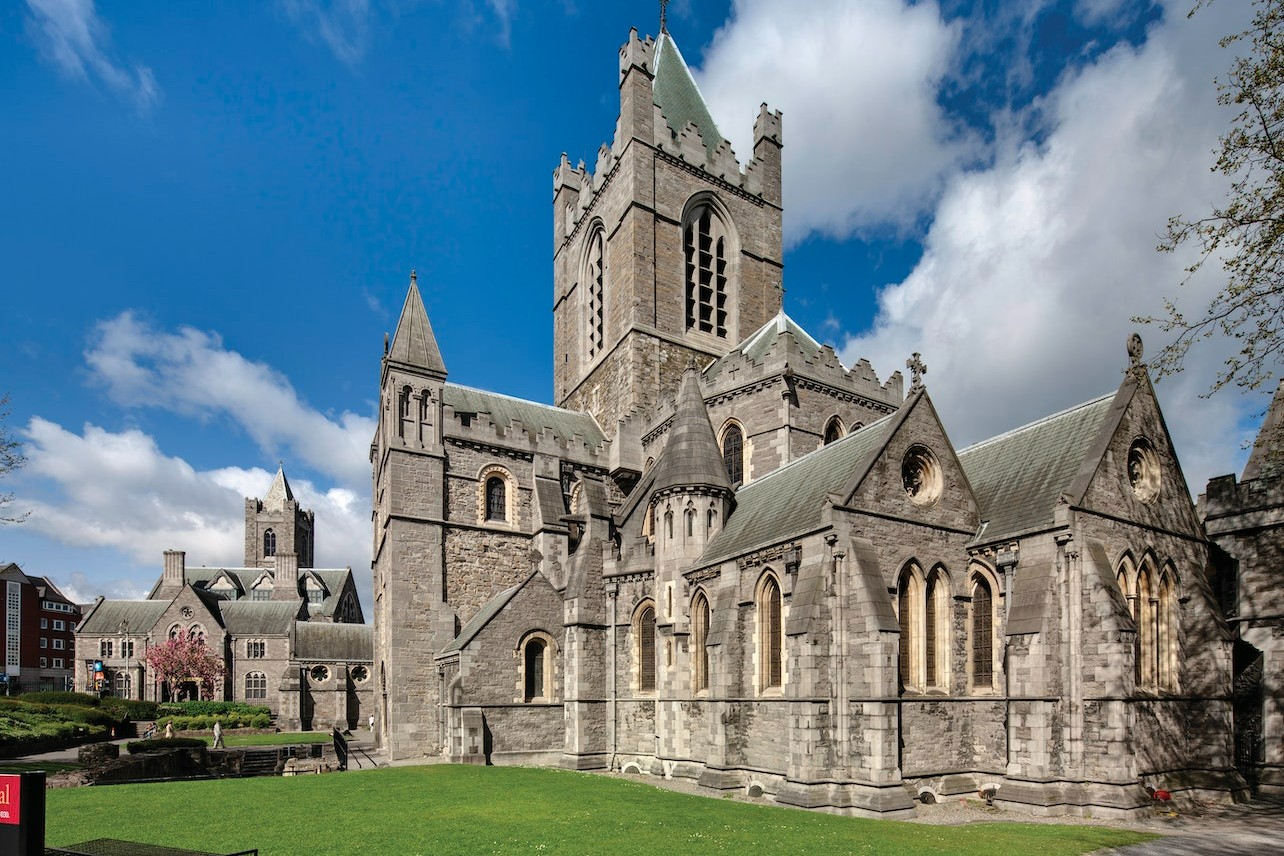
St. Patrick’s Cathedral is part of a long history of holy buildings that have stood at this same spot. The first reference to a church here is from the year 890, more than eleven hundred years ago. Around 800 years ago, the wooden church built here was rebuilt with stone by the Normans. It was also elevated to the status of cathedral and dedicated to "God, our Blessed Lady Mary and St Patrick" in March of 1191.
5
Stop 5
Pass by
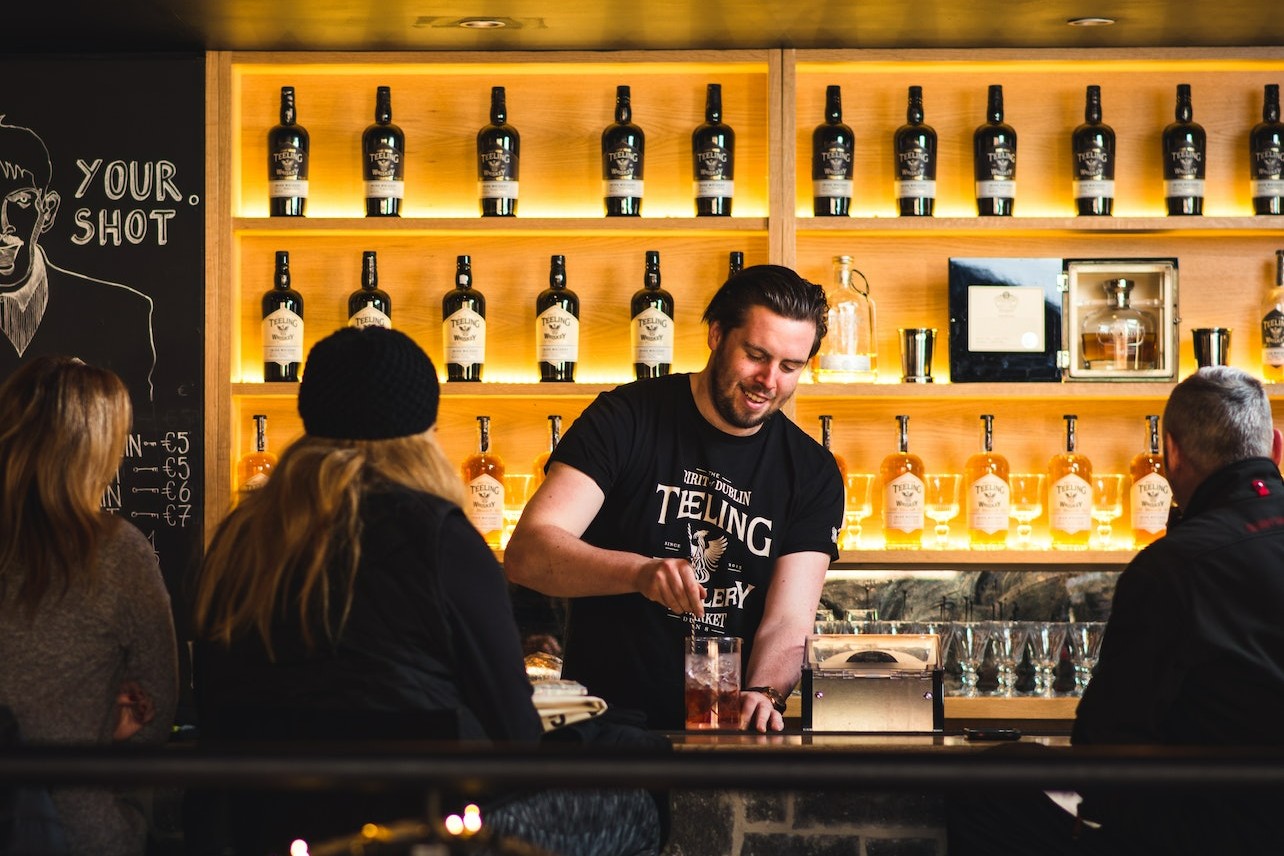
Whiskey has been an Irish staple since the 12th century. The name comes from the Irish phrase “uisge beatha,” which means “water of life.” This museum explores the long history of one of the world’s most popular spirits, and even gives visitors the chance to blend their own bottle.
6
Stop 6
Pass by
We’re on O’Connell Bridge, crossing over the river Liffey. It was this river which first drew the Vikings to settle in this spot, as it promised plentiful food and easy transportation. In Dublin’s early days, the settlement only existed on the south side of the river.
7
The big statue on our left is a monument to Daniel O’Connell, also known as The Liberator. O’Connell hailed from Ireland and studied law in London. But during his time in Britain, he didn’t forget his roots. He was a staunch advocate of Irish independence.
8
Stop 8
The spire was built on the former site of Nelson’s Pillar, an English monument. The Pillar was 134 feet of granite with a statue of Horatio Nelson on top, a famous English military leader. As you might imagine, the Irish didn’t relish having an English military man looming over them day and night.
9
Stop 9
On April 24th, 1916, 400 men armed with rifles, pistols, and shotguns stormed into this post office. They raised flags of the Irish Republic and one stood outside to read the Proclamation of the Irish Republic aloud to shocked onlookers.
10
Stop 10
The bronze sculpture of a man with a coat and cane is none other than James Joyce, one of Ireland’s most famous writers. His novel Ulysses is considered to be a masterpiece and a cornerstone of modern literature, but he was also a poet and a playwright.
11
Stop 11
The street stands at the Abbey Theatre, one of Ireland’s most famous performance venues. It opened in 1904, and in over a century of operation, it’s been an incubator for many of Ireland’s most beloved playwrights. Famous poet W.B. Yeats was one of the founders of the theater, and when he set out to define the Abbey’s goals, he wrote:
“We hope to find in Ireland an uncorrupted & imaginative audience trained to listen by its passion for oratory ... & that freedom to experiment which is not found in the theatres of England, & without which no new movement in art or literature can succeed."
12
The Custom House is ahead on our left. Keep walking until you’re standing in front of the main entrance in the middle of the building.
As you look up at the facade, you might notice that some areas of the stone seem to be a darker color than the rest. That’s because the Custom House had to have major repairs after starring in one of the IRA’s military actions.
13
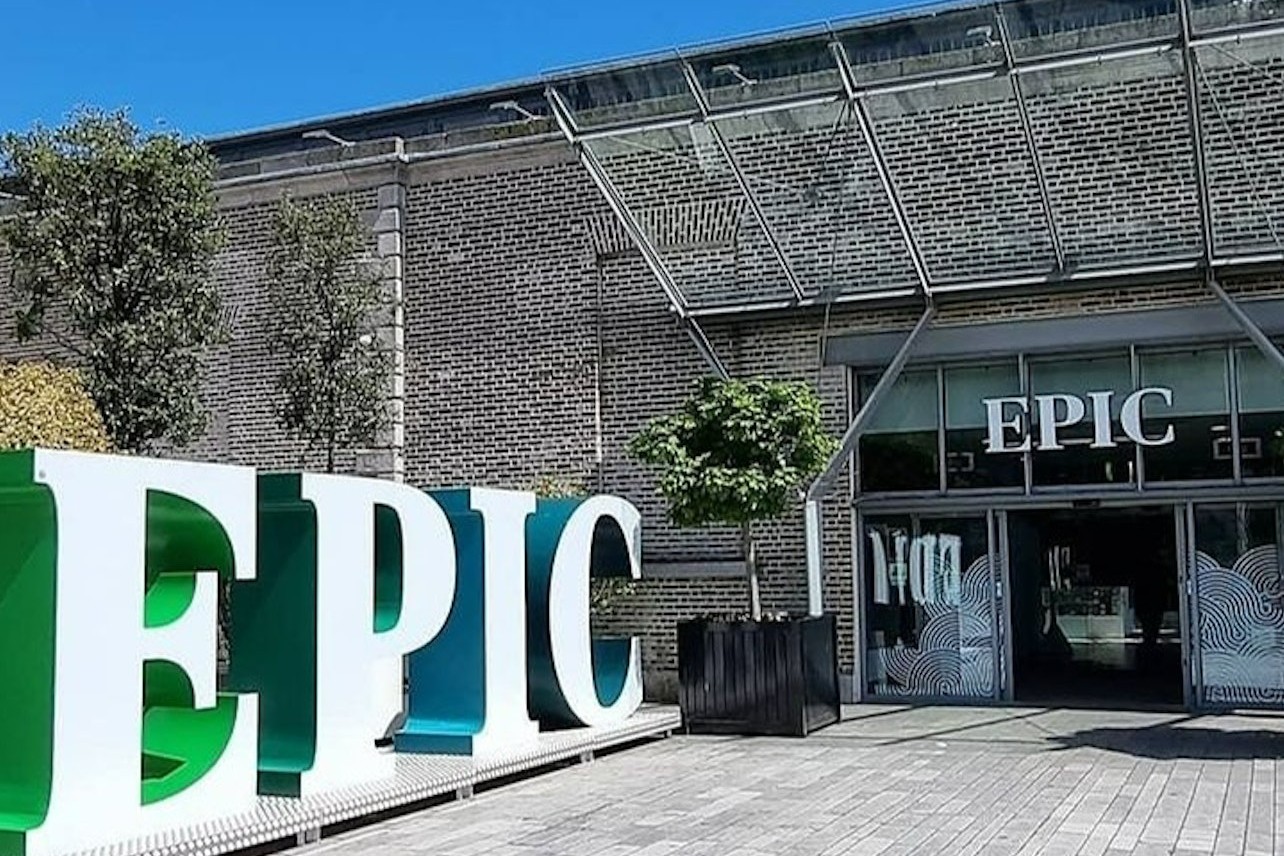
the Irish Emigration Museum. They keep the stories of Irish emigrants alive, and highlight Irish contributions to world history, from old-school Hollywood heartthrobs to polar explorers. They’ve got displays on everything from famous pirate Anne Bonny to former American Presidents.
14
Stop 14
Pass by
Over to the left you should be able to see a beautiful old-fashioned ship, which might look a little out of place in modern Dublin. That’s a replica of the Jeanie Johnson, a three-masted barque that was built in Canada as a cargo vessel.
15
This impressive church dates all the way back to 1670, although it’s been rebuilt a couple of times since then. Most recently, Dubliners needed to rebuild it in 1860 after a terrible fire destroyed the building.
16
That impressive building with the tall windows and a cupola on top is the Davenport, one of Dublin’s most iconic hotels. The building itself was originally constructed as a church in 1863. It served as a worship space for over a hundred years.
17
The house coming up on the corner on our left is the childhood home of Oscar Wilde, one of the great Irish writers. Wilde was a poet, playwright, and novelist, but also a sought-after party guest. With an iconic sense of style and a sharp sense of humor, he was one of the most famous personalities in 1890s London. He once wrote:
“There is only one thing worse than being talked about, and that is not being talked about.”
18
Stop 18
Pass by
The National Gallery of Ireland. This beautiful museum was founded in 1854, and houses art from the 14th Century to the present day. It boasts a wide range of Irish art, but also works from artists across the world, from Caravaggio to Monet. Feel free to stop in for a visit if art’s your thing.
19
Stop 19
Pass by
During most of its history, this wasn’t exactly what one would call an Irish university. As the most prestigious university in Ireland, it was attended almost exclusively by the upper crust of Dublin society. That meant British Protestants. In fact, in the 1700s and 1800s, Catholics were barred from receiving scholarships from the institution and couldn’t become professors.
What's not included
Attraction passes, entry tickets, or reservations
Available languages
Audio guide
EN
Reviews breakdown
Viator
5.0
1 reviews
5★
1
4★
0
3★
0
2★
0
1★
0
Important information
Suitable for all physical fitness levels
How To Access: After booking, you’ll get an email and text with setup instructions and password (search “audio tour” in emails and texts). • Download the separate tour app by Action • Enter the password sent by email and text. • MUST download the tour while in strong wifi/cellular. • Works offline after download.
How to start touring: Open Action’s separate audio tour guide app once onsite. • If there is just one tour, launch it. • If multiple tour versions exist, launch the one with your planned starting point and direction.
Go to the starting point No one will meet you at the start. This tour is self-guided Enter the first story’s point and the audio will begin automatically Follow the audio cues to the next story, which will also play automatically. Enjoy hands-free exploring. If you face audio issues, contact support. Stick to the tour route & speed limit for the best experience.
Travel worry-free: Use the tour app anytime, on any day, and over multiple days. Start and pause the tour whenever you like, taking breaks and exploring side excursions at your own pace. Skip anything you don’t care about or explore bonus content for everything that interests you
Savings tips: Walking tours: couples can share one tour by splitting headphones
Buy once, use for one year! Ideal for extended visits and return trips over the next 12 months.
For the best experience, bring headphones/earbuds for your walking tour.
For the best experience, please use an iPhone running iOS 15 or later, an Android device running version 9 or later, or an iPad/tablet with GPS and cellular connectivity, as these are recommended for navigation.
Your password can be used on the same number of devices as travelers booked. Enter the same password on each device.
Meeting point
Begin from Marsh’s Library, St Patrick's Close, Dublin, Ireland. After booking the tour, search your emails and texts for "audio tour". Your tour is VALID FOR ONE YEAR so follow these instructions NOW to finish setting up the tour while you have Wi-Fi/data. Do NOT wait until you are onsite.
Important notes
1. Find The Setup Instructions NOW:
• Download the App: actiontourguide.com/app
• Find Your Password: Search your email or text messages for "Action Tour Guide"
• Enter Password: Open the app and enter your 8-digit password
• Download the Tour NOW while you have WiFi or cell service
• Offline Ready: Once downloaded, the tour works without internet
• Need Help? Visit: actiontourguide.com/redeem
2. Download The Tour NOW:
• Download NOW over WiFi or cellular data ahead of your trip.
• Don't wait until travel day - your tour is VALID FOR ONE YEAR from purchase.
• Your password redemption is limited to the number of travelers booked. Please enter the same password on each device.
3. Audio Tour Tips:
• This is a self-guided audio tour - no one will meet you at the starting point.
• Entrance and attraction tickets are not included. Please book those separately.
• Curious how it works? Watch a quick video here: actiontourguide.com/tutorial
• Bring headphones for the best experience on your walking tour.
• Valid for 12 months - listen to your tour on any day without changing your travel date or rebooking!
4. Help & Support:
• Visit our FAQs: actiontourguide.com/faq
• Chat online: actiontourguide.com
• Call: 1-401-380-3997
• Email: support@actiontourguide.com
About Dublin
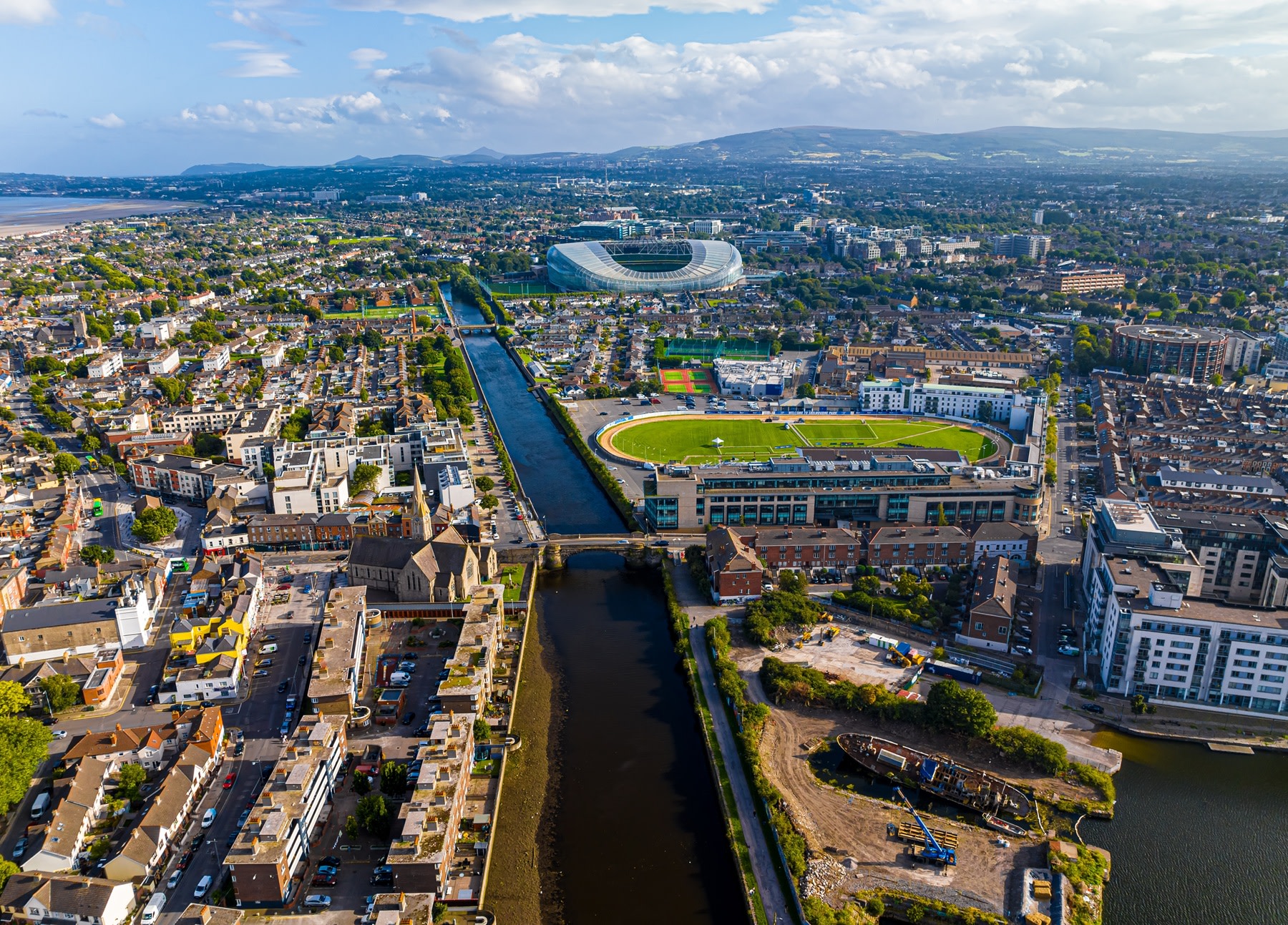
Dublin, the capital of Ireland, is a vibrant city rich in history, culture, and charm. Known for its welcoming atmosphere, literary heritage, and lively pub scene, Dublin offers a unique blend of medieval architecture, modern amenities, and stunning coastal landscapes.
Top Attractions
Trinity College and the Book of Kells
Trinity College is Ireland's oldest university and home to the famous Book of Kells, a beautifully illustrated manuscript from the 9th century.
Historical
1-2 hours
€16 (Book of Kells exhibition)
Guinness Storehouse
The Guinness Storehouse is a seven-story interactive experience dedicated to the history and brewing process of Ireland's most famous beer.
Cultural
2-3 hours
€25-€30
Kilmainham Gaol
Kilmainham Gaol is a former prison that played a significant role in Irish history, particularly during the struggle for independence.
Historical
1-2 hours
€8
Dublin Castle
Dublin Castle has been a symbol of British rule in Ireland for centuries and is now a major government complex and tourist attraction.
Historical
1-2 hours
€10-€12
St. Patrick's Cathedral
St. Patrick's Cathedral is one of Dublin's most impressive churches, known for its stunning architecture and historical significance.
Religious
1 hour
€7.50
Phoenix Park
Phoenix Park is one of the largest urban parks in Europe, offering a peaceful escape from the city with its lush greenery and wildlife.
Nature
2-3 hours
Free
Must-Try Local Dishes
Irish Stew
A hearty dish made with lamb or beef, potatoes, carrots, and onions, slow-cooked to perfection.
Main Course
Contains meat, can be made vegetarian
Boxty
A traditional Irish potato pancake made with grated and mashed potatoes, flour, and buttermilk.
Side Dish
Vegetarian
Coddle
A comforting dish made with sausages, bacon, potatoes, and onions, slow-cooked in a rich broth.
Main Course
Contains meat
Soda Bread
A traditional Irish bread made with flour, baking soda, and buttermilk, known for its dense texture and slightly tangy flavor.
Bread
Vegetarian
Popular Activities
Hiking in the Wicklow Mountains
Kayaking on the River Liffey
Rock climbing at Dublin Rock Climbing Centre
Spa day at a luxury hotel
Strolling through St. Stephen's Green
Enjoying a pint in a cozy pub
Visiting museums and galleries
Attending a traditional music session
Best Time to Visit
June to August
Summer is the peak tourist season with the warmest weather and longest daylight hours. This is the best time for outdoor activities and festivals.
15°C to 20°C
59°F to 68°F
Practical Information
Language
- Official: Irish, English
- Widely spoken: English
- English: Widely spoken
Currency
Euro (EUR)
Time Zone
GMT (UTC+0) or GMT+1 during daylight saving time
Electricity
230VV, 50HzHz
Safety Information
Overall Safety Rating: Generally safe
Dublin is generally safe, with low levels of violent crime. However, petty crime such as pickpocketing and bag snatching can occur, especially in tourist areas and on public transport.
Getting there
By air
- Dublin Airport • 10 km (6 miles) north of the city center
By train
Heuston Station, Connolly Station
By bus
Busáras Central Bus Station
Getting around
Public transport
Dublin Bus offers a comprehensive network covering the entire city and surrounding areas.
Taxis
Available • Apps: Free Now, Uber
Rentals
Car, Bike, Scooter
Neighborhoods
Temple Bar
Dublin 2 (City Center)
Dublin 4 (Ballsbridge and Sandymount)
Dublin 7 (Smithfield and Stoneybatter)
Dublin 8 (The Liberties)
Day trips
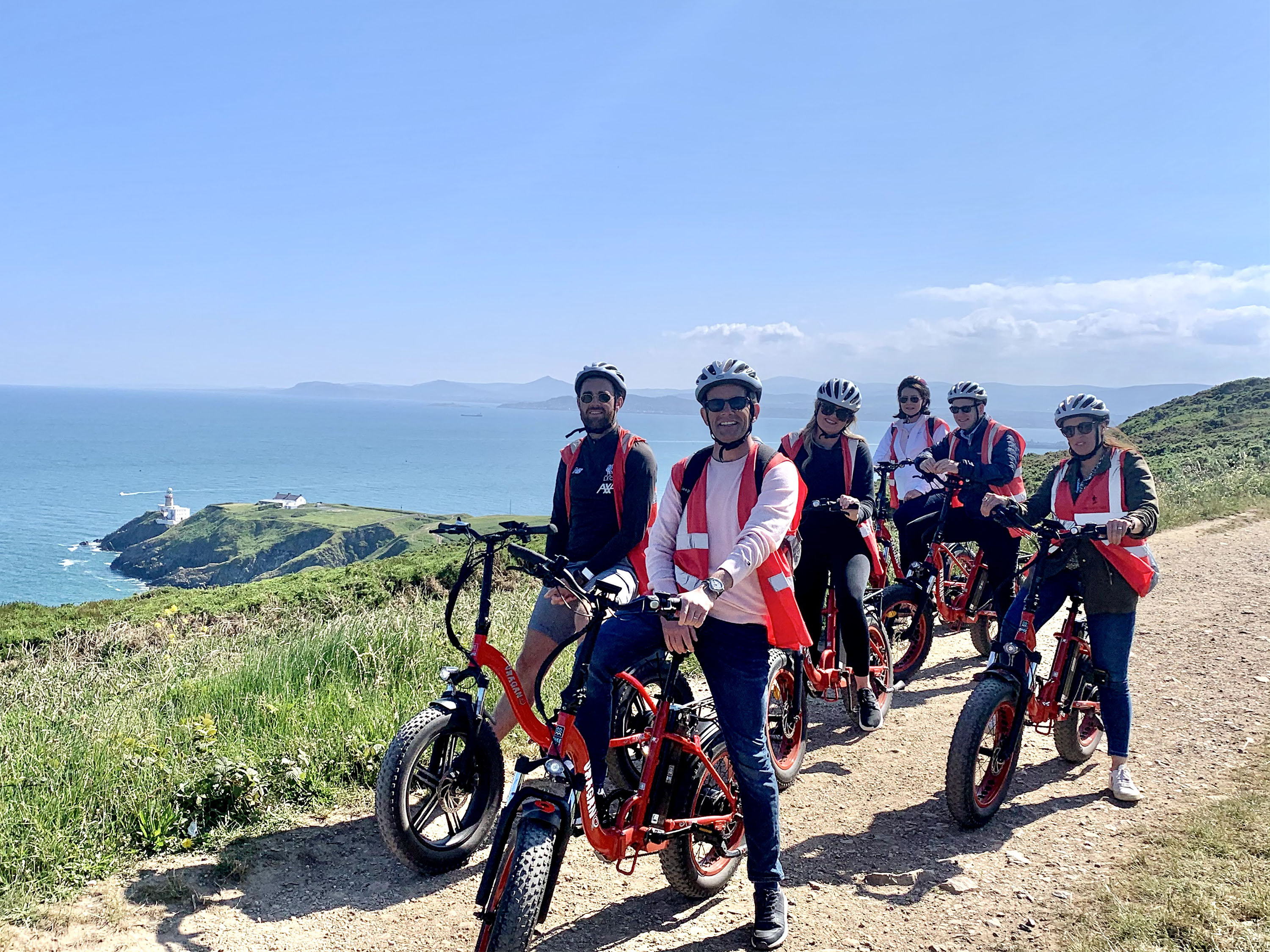
Howth
13 km (8 miles) from Dublin • Half day to full day
A charming coastal village known for its scenic cliffs, fishing harbor, and fresh seafood.
Malahide Castle and Gardens
14 km (9 miles) from Dublin • Half day
A historic castle and beautiful gardens offering a glimpse into Ireland's medieval past.
Glendalough
50 km (31 miles) from Dublin • Full day
A scenic monastic site and glacial valley in the Wicklow Mountains, known for its ancient ruins and hiking trails.
Festivals
St. Patrick's Festival • March 17
Dublin Theatre Festival • September-October
Temple Bar Traditional Music Festival • March
Pro tips
- Visit the Guinness Storehouse for a complimentary pint and stunning views of the city
- Explore the historic Trinity College and the Book of Kells, but book tickets in advance to avoid long queues
- Take a stroll through St. Stephen's Green, a beautiful urban park in the heart of the city
- Experience traditional Irish music in a cozy pub, such as The Brazen Head or The Cobblestone
- Try Irish stew, a hearty and comforting dish made with lamb or beef, potatoes, and onions
From $25
per person
Price varies by option
Secure booking
Free cancellation available
Instant confirmation