Mantova Centro Storico - Tour a piedi con Guida Tiziana Portioli
Active
1h
For a full refund, cancel at least 24 hours before the scheduled departure time.
Manual confirmation
Mobile or paper ticket accepted
About this experience
Mantua, 'the City on Water of the Gonzagas'. This tour's highlights: Piazza Sordello with Duomo, Bishop’s Palace, Palazzo Ducale with its courtyards and gardens, Piazza Broletto and Piazza Erbe with Palazzo Comunale and Palazzo della Ragione, Clock Tower, Rotonda of S. Lorenzo and Basilica of S. Andrea, Via Orefici with the Canal “Rio”. On request visit to the Academy Theatre (Teatro Bibiena) entrance ticket €. 2,00
Available options
Private In-Depth Tour
Duration: 2 hours
Private Guided Tour
Duration: 1 hour 30 minutes
What's included
Private tour
Professional guide
Guided Tour Service Only
Detailed itinerary
1
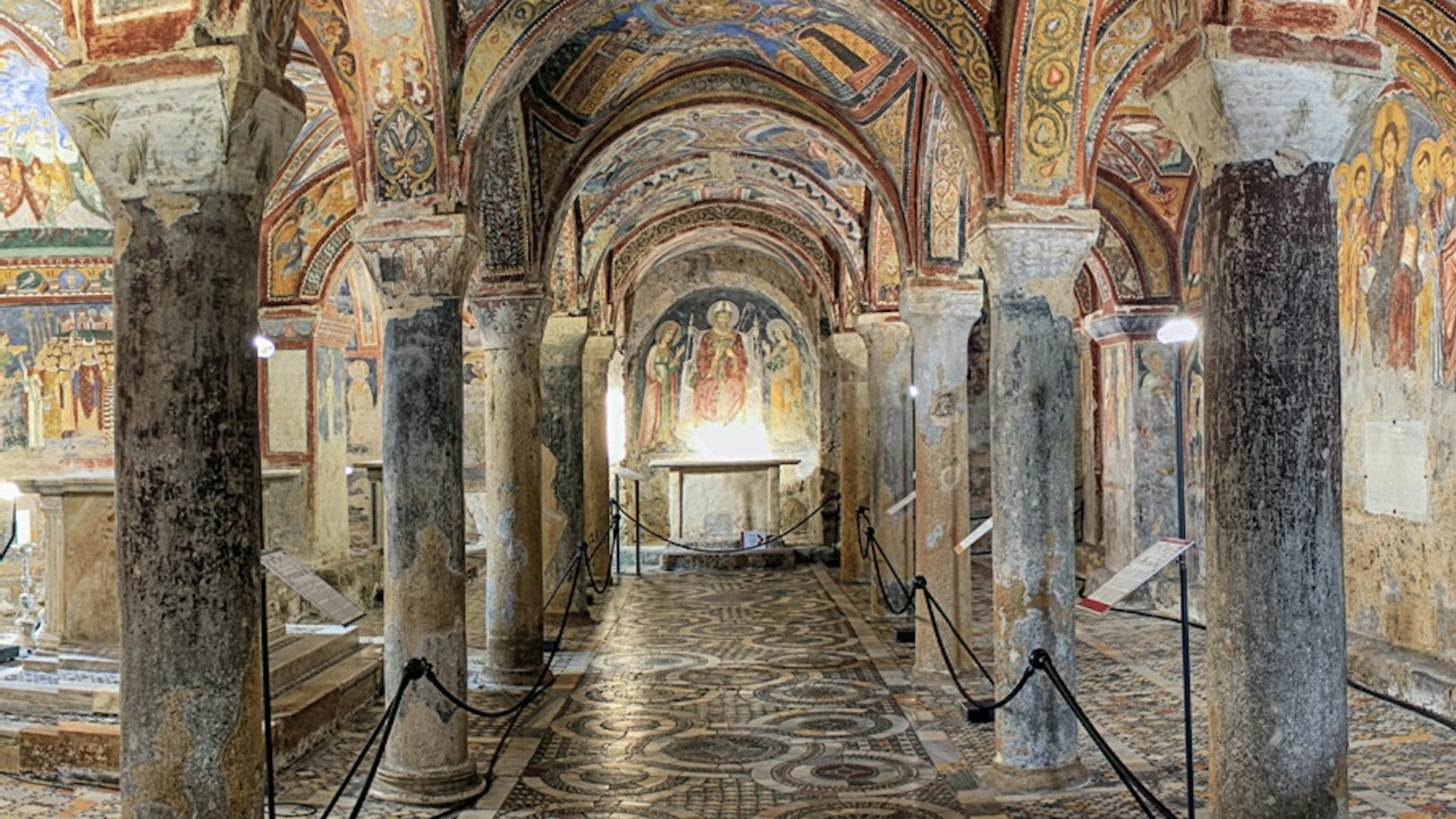
The Rotonda di San Lorenzo is a religious building in Mantua, Lombardy (northern Italy).
It is the most ancient church in the city. It is now sunk below the level of the Piazza della Erbe. It probably stands on the site of a Roman temple that was dedicated to the goddess Venus.
It was built during the reign of the Canossa family in the late 11th century. Inspired by the Holy Sepulchre church in Jerusalem and dedicated to the martyr St. Lawrence, it has a central plan and has maintained ancient features like the matronaeum (loggia for female faithful) and frescoes of the Byzantine school from the 11th-12th century. Another fresco fragment in the apse, portraying the Martyrdom of St. Lawrence, dates to the 15th century. The construction, according to the Lombard tradition, is in bricks, but has two columns and other details in marble, coming from ancient edifices.
2
The Basilica of Sant'Andrea is a Roman Catholic co-cathedral and minor basilica in Mantua. It is one of the major works of 15th-century Renaissance architecture in Northern Italy. Commissioned by Ludovico III Gonzaga, the church was begun in 1472 according to designs by Leon Battista Alberti on a site occupied by a Benedictine monastery, of which the bell tower (1414) remains. The building, however, was only finished 328 years later. Though later changes and expansions altered Alberti's design, the church is still considered to be one of Alberti's most complete works. It looms over the Piazza Mantegna.
3
Mantua Cathedral (Italian: Cattedrale di San Pietro apostolo; Duomo di Mantova) in Mantua, is a Roman Catholic cathedral dedicated to Saint Peter. It is the seat of the Bishop of Mantua.
4
Stop 4
This is perhaps even more the centre of Mantova than Piazza Sordello. There are a string of small eateries on both sides, including the lovely arcade at the back of the Basilica Sant' Andrea, plus the unusual church, Rotonda di San Lorenzo.
5
The Palazzo Ducale di Mantova ("Ducal Palace") is a group of buildings in Mantua, built between the 14th and the 17th century mainly by the noble family of Gonzaga as their royal residence in the capital of their Duchy. The buildings are connected by corridors and galleries and are enriched by inner courts and wide gardens. The complex includes some 500 rooms and occupies an area of c. 34,000 m². Although most famous for Mantegna's frescos in the Camera degli Sposi (Wedding Room), they have many other very significant architectural and painted elements.
The Gonzaga family lived in the palace from 1328 to 1707, when the dynasty died out. Subsequently, the buildings saw a sharp decline, which was halted in the 20th century with a continuing process of restoration and the designation of the area as museum. In 1998, a hidden room was discovered by Palace scholars, led by musicologist Paula Bezzutti. The room is thought to have been used for performances of Monteverdi's music in the late 16th century.
6
The square, in the municipal era, was the center of public life. On the southern side stands the Palazzo Broletto, built in 1227 by Laudarengo Martinengo, mayor of the city. On the rear facade of the building there is the thirteenth-century statue depicting Virgil in the chair, called in dialect 'la vecia'. On the corner stands the Torre del Broletto (or Torre del Podestà), to which Casa Tortelli is attached. At the center of the square is the 19th century dolphin fountain. On the south side is the Palazzo del Massaro, from the 14th century, inside which there are important frescoes of the fifteenth century from the Pisanello school.
What's not included
In Mantua city centre: no tickets are required with exception of the Theatre Bibiena where a ticket costs € 2,00/each.
Entrance ticket for the Ducal palace € 15,00/each. People under 18 can enter free.
From March to June and from September to October reservations are necessary.
Reservation fee costs € 1,50/each.
Palazzo Te Entrance Tickets
Palazzo Ducale
Reservation fee costs, Palazzo Ducale
Rotonda di San Lorenzo
Available languages
Guide guide
EN
IT
FR
Reviews breakdown
Viator
4.9
10 reviews
5★
9
4★
1
3★
0
2★
0
1★
0
Tripadvisor
4.9
50 reviews
5★
47
4★
3
3★
0
2★
0
1★
0
Important information
Wheelchair accessible
Infants and small children can ride in a pram or stroller
Service animals allowed
Public transportation options are available nearby
Transportation options are wheelchair accessible
Suitable for all physical fitness levels
Operates in all weather conditions, please dress appropriately
Meeting point
Meeting Point at Mantova, Piazza Sordello 40, portico di Palazzo Ducale
About Mantua
Mantua, known as Mantova in Italian, is a historic city in the Lombardy region of northern Italy. It is famous for its Renaissance palaces, art collections, and the romantic Mincio River that encircles the city. The city's well-preserved medieval and Renaissance architecture makes it a must-visit for history and art enthusiasts.
Top Attractions
Palazzo Ducale
The Ducal Palace is a grand Renaissance palace that was the residence of the Gonzaga family, who ruled Mantua for over 300 years. It houses an extensive art collection, including works by artists like Andrea Mantegna and Giulio Romano.
Historical/Architecture
2-3 hours
€12
Piazza delle Erbe
Piazza delle Erbe is the main square of Mantua, surrounded by historic buildings and filled with cafes and restaurants. It is a lively spot for both locals and tourists, offering a glimpse into the city's daily life.
Historical/Cultural
1-2 hours
Free
Basilica di Sant'Andrea
The Basilica of Sant'Andrea is a beautiful Renaissance church that houses the tomb of Saint Andrew and the remains of the Gonzaga family. The church is known for its stunning architecture and artistic treasures.
Religious/Historical
1 hour
Free (donations welcome)
Lago di Mezzo
Lago di Mezzo is one of the three artificial lakes surrounding Mantua, created in the 12th century for defensive purposes. It is a peaceful spot for a leisurely stroll or a picnic by the water.
Nature/Scenic
1-2 hours
Free
Teatro Bibiena
Teatro Bibiena is a stunning 18th-century theater known for its exquisite Baroque architecture and acoustics. It is one of the most beautiful theaters in Italy and hosts opera and concert performances.
Cultural/Historical
1-2 hours
€10-€50 (depending on performance)
Must-Try Local Dishes
Tortelli di Zucca
A traditional Mantuan dish made with pumpkin-filled pasta, served with a butter and sage sauce
Main Course
Vegetarian
Risotto alla Pilotta
A creamy risotto made with saffron, pumpkin, and Parmigiano Reggiano
Main Course
Vegetarian
Busiata di Zucca
A sweet pumpkin dumpling served with a sugar and cinnamon sauce
Dessert
Vegetarian
Salsiccia di Maiale
A savory pork sausage seasoned with garlic, fennel, and other herbs
Main Course
Contains pork
Popular Activities
Hiking along the Mincio River
Cycling around the city and surrounding areas
Picnicking by Lago di Mezzo
Strolling through the historic center
Visiting museums and historic sites
Attending opera and concert performances
Boating on the Mincio River
Ice skating in the city center during the winter months
Best Time to Visit
April to June, September to October
The best time to visit Mantua is during the spring and autumn months when the weather is pleasant and the city is less crowded. This is also the time when many cultural events and festivals take place.
15-28°C
59-82°F
Practical Information
Language
- Official: Italian
- Widely spoken: English, French, German
- English: Moderately spoken
Currency
Euro (EUR)
Time Zone
GMT+1 (Central European Time)
Electricity
220VV, 50HzHz
Safety Information
Overall Safety Rating: Generally safe
Mantua is generally a safe city for travelers, with low crime rates. However, as with any destination, it is important to take basic precautions to ensure a safe and enjoyable visit.
Important Precautions:
- • Keep valuables secure and out of sight
- • Be cautious of pickpockets in crowded areas
- • Use licensed taxis or ride-sharing services
Getting there
By air
- Verona Villafranca Airport • 50 km
By train
Mantua Station
By bus
Mantua Bus Terminal
Getting around
Public transport
The bus system is efficient and affordable, with frequent services throughout the city. Buses are a convenient way to get around, especially for reaching attractions outside the city center.
Taxis
Available • Apps: FreeNow, ItTaxi
Rentals
Car, Bike, Scooter
Neighborhoods
Historic Center
San Giorgio
Pradella
Day trips
Verona
50 km • Full day
Verona is a beautiful city known for its Roman amphitheater, the Arena, and its association with Shakespeare's Romeo and Juliet. It is a UNESCO World Heritage site and offers a wealth of history and culture.
Lake Garda
70 km • Full day
Lake Garda is the largest lake in Italy and offers stunning natural beauty, charming towns, and a variety of outdoor activities. It is a popular destination for hiking, swimming, and boating.
Parma
100 km • Full day
Parma is a city known for its rich culinary traditions, including Parmigiano Reggiano cheese and Prosciutto di Parma. It is also home to a stunning cathedral and a historic opera house.
Festivals
Mantova Jazz Festival • July
Mantova Literary Festival • May
Festa di San Giorgio • April 23
Pro tips
- Visit the Palazzo Ducale early in the morning to avoid crowds and long queues
- Try the local specialty, Tortelli di Zucca, at a traditional osteria or trattoria
- Explore the city on foot or by bike to discover hidden gems and charming streets
- Check the schedule for local festivals and events, such as the Mantova Jazz Festival and the Mantova Literary Festival
- Take a day trip to nearby cities like Verona or Lake Garda for a change of pace and scenic beauty
From $25
per person
Price varies by option
Secure booking
Free cancellation available