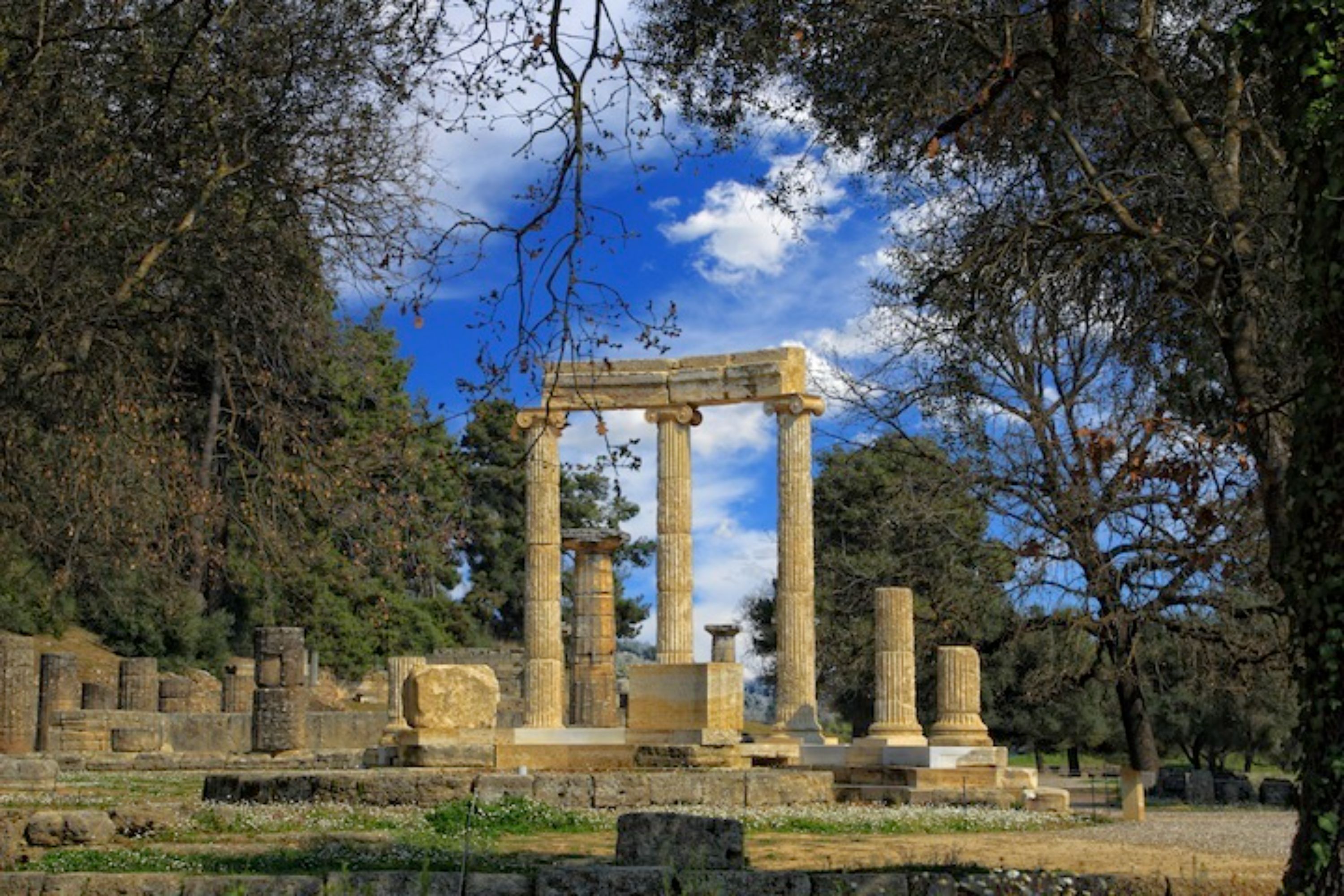
Mycenae, a UNESCO World Heritage Site and the Cyclopean walls 5H
Active
5h
For a full refund, cancel at least 24 hours before the scheduled departure time.
Instant confirmation
Mobile or paper ticket accepted
About this experience
The Corinth Canal is a waterway that crosses the narrow isthmus of Corinth to link the Gulf of Corinth to the Saronic Gulf. As such, the canal separates the Greek mainland from the Peloponnese, turning it into an island
Mycenae
‘Rich in Gold', the kingdom of mythical Agamemnon, first sung by Homer in his epics, is the most important and richest palatial centre of the Late Bronze Age in Greece. Its name was given to one of the greatest civilizations of Greek prehistory, the Mycenaean civilization, while the myths related to its history have inspired poets and writers over many centuries
In the second millennium BC, Mycenae was one of the major centres of Greek civilization, a military stronghold which dominated much of southern Greece, Crete, the Cyclades and parts of southwest Anatolia. The period of Greek history from about 1600 BC to about 1100 BC is called Mycenaean in reference to Mycenae. At its peak in 1350 BC, the citadel and lower town had a population of 30,000
Available options
Semi Private Group up to 7pax
Pick up included <br/>Duration: 5 hours<br/>Mini Van <br/>Pickup included
Half Day Mycenae - Isthmus Canal - Private Tour 5 Hours
Pickup included
What's included
Transportation via modern, first-class private vehicle
All vehicles with WiFi, A/C, Bottled Water
Fully Private Tour
English-speaking tour driver well-versed in Greek history.not Licenced to accompany you in any site
pick-up and drop-off service: Athens Hotel, Airbnb residence or Port
All taxes, fees and handling charges
Detailed itinerary
1
Stop 1
Athens To Ancient Mycenae
2
Stop 2
The Corinth Canal is a waterway that crosses the narrow isthmus of Corinth to link the Gulf of Corinth to the Saronic Gulf. As such, the canal separates the Greek mainland from the Peloponnese, turning it into an island
The canal, though executed in the late 19th century, has been a 2000-year-old dream. Before its construction, ships in the Aegean Sea that wanted to cross to the Adriatic or anchor in Corinth, a rich shipping city, had to circle the Peloponnese, which would prolong their journey an extra 185 nautical miles.
It is believed that Periander, the tyrant of Corinth (602 BC), was the first to conceive of the idea of digging the Corinth Canal. As the project was too complicated given the limited technical capabilities of the times, Periander constructed the diolkos, a stone road which allowed ships to be transferred on wheeled platforms.
The Corinth Canal connects the Gulf of Corinth in the Ionian Sea with the Saronic Gulf in the Aegean Sea.
3
The fortified citadel of ancient Mycenae, the seat of the mythical and mighty King Agamemnon. An impressive and well-preserved site, the city of Mycenae gave its name to an entire civilization. Admire sites such as the Tomb of Clytemnestra, the infamous Lion’s Gate, the Cyclopean walls and learn of their blood-stained past. In the second millennium BC, Mycenae was one of the major centres of Greek civilization, a military stronghold which dominated much of southern Greece, Crete, the Cyclades and parts of southwest Anatolia. The period of Greek history from about 1600 BC to about 1100 BC is called Mycenaean in reference to Mycenae. At its peak in 1350 BC, the citadel and lower town had a population of 30,000 and an area of 32 hectares.
Located in eastern Peloponnese, the archaeological site of Mycenae is among the most important places in mainland Greece. Even mentioned by the epic poet Homer and the geographer Pausanias, Mycenae was the most powerful town of its days .
4
Rich in Gold', the kingdom of mythical Agamemnon, first sung by Homer in his epics, is the most important and richest palatial centre of the Late Bronze Age in Greece. Its name was given to one of the greatest civilizations of Greek prehistory, the Mycenaean civilization, while the myths related to its history have inspired poets and writers over many centuries
The Archaeological Museum of Mycenae is located in the northern part of the Acropolis of Mycenae, located within the archaeological site.
The Archaeological Museum of Ancient Mycenae offers a remarkable glimpse into the world of the Mycenaean civilization. Featuring a rich collection of artifacts, including golden jewelry, intricate pottery, and detailed frescoes, the museum showcases the cultural achievements and everyday life of this influential Bronze Age society. Through its exhibits, visitors can explore the customs, beliefs, and artistry that shaped one of the most iconic civilizations of ancient Greece.
5
The Lion Gate was the main entrance of the Bronze Age citadel of Mycenae, southern Greece. It was erected during the 13th century BC, around 1250 BC, in the northwest side of the acropolis and is named after the relief sculpture of two lionesses or lions in a heraldic pose that stands above the entrance.
The Lion Gate is the sole surviving monumental piece of Mycenaean sculpture, as well as the largest sculpture in the prehistoric Aegean. It is the only monument of Bronze Age Greece to bear an iconographic motif that survived without being buried underground, and the only relief image which was described in the literature of classical antiquity, such that it was well known prior to modern archaeology.
The Lions Gate, the Treasury of Atreus, and the walls of Tiryns are examples of the noteworthy architecture found in Mycenae and Tiryns. These discoveries' structures and layouts exemplify the human creative talent of the time. Greek architecture and urban planning
6
The Treasury of Atreus or Tomb of Agamemnon is a large tholos or beehive tomb on Panagitsa Hill at Mycenae constructed during the Bronze Age around 1250 BC. The stone lintel above the doorway weighs 120 tons, with approximate dimensions 8.3 x 5.2 x 1.2m, the largest in the world. The tomb was used for an unknown period. Mentioned by the Roman geographer Pausanias in the 2nd century AD, it was still visible in 1879 when the German archaeologist Heinrich Schliemann discovered the shaft graves under the "agora" in the Acropolis at Mycenae.
It is the largest and most elaborate tholos tomb known to have been constructed in the Aegean Bronze Age, and one of the last to have been built in the Argolid. The main tomb consisted of a circular burial chamber, or thalamos, topped with a corbelled dome. This dome was the largest in the world until the Roman period, and remains the world's largest corbelled dome. Originally, the façade was decorated with marble columns and sculptures,
7
Drive Back to the Hotel or Apartment or Cruise Ship
What's not included
Lunch, other beverages and meals.
Entry or admission fees for Archaelogical sites
Licensed tour guide (upon request and depending on availability)
Travelers expences
Available languages
Guide guide
EN
Reviews breakdown
Tripadvisor
5.0
1 reviews
5★
1
4★
0
3★
0
2★
0
1★
0
Important information
Specialized infant seats are available
Not recommended for pregnant travelers
Not recommended for travelers with poor cardiovascular health
Suitable for all physical fitness levels
About Athens
Athens, the capital of Greece, is a city rich in history and culture, often considered the cradle of Western civilization. It is home to iconic ancient landmarks, vibrant neighborhoods, and a thriving modern scene.
Top Attractions
Acropolis of Athens
The Acropolis is the most iconic landmark in Athens, featuring ancient ruins and temples, including the Parthenon.
Historical
2-3 hours
€20 (combined ticket for multiple sites)
Ancient Agora of Athens
The heart of ancient Athens, featuring the Temple of Hephaestus and the Stoa of Attalos.
Historical
1-2 hours
€8 (included in the combined ticket)
Plaka
A charming, historic neighborhood with narrow streets, neoclassical houses, and vibrant nightlife.
Cultural
2-3 hours
Free to explore
Acropolis Museum
A modern museum showcasing artifacts from the Acropolis and its surroundings.
Museum
1-2 hours
€10
Temple of Olympian Zeus
An ancient temple dedicated to Zeus, once the largest temple in Greece.
Historical
30 minutes to 1 hour
€6 (included in the combined ticket)
Must-Try Local Dishes
Moussaka
A baked dish with layers of eggplant, minced meat, and béchamel sauce.
Dinner
Vegetarian versions available
Souvlaki
Grilled meat skewers, often served with pita bread and tzatziki.
Snack
Can be made with chicken, pork, or vegetarian options
Tzatziki
A yogurt-based dip with cucumber, garlic, and herbs.
Snack
Vegetarian and vegan options available
Baklava
A sweet pastry made with layers of filo, nuts, and honey syrup.
Dessert
Vegetarian
Popular Activities
Hiking in the mountains
Rock climbing
Scuba diving
Beach visits
Spa treatments
Café hopping
Museum visits
Theater performances
Best Time to Visit
April to June, September to October
The best time to visit Athens is during the spring and autumn months when the weather is pleasant and the tourist crowds are smaller.
18°C to 32°C
64°F to 90°F
Practical Information
Language
- Official: Greek
- Widely spoken: English, French, German
- English: Moderately spoken
Currency
Euro (EUR)
Time Zone
GMT+2 (EET)
Electricity
230VV, 50HzHz
Safety Information
Overall Safety Rating: Generally safe
Athens is generally safe for travelers, but petty crime and pickpocketing can occur in tourist areas. Be cautious with your belongings and avoid poorly lit areas at night.
Important Precautions:
- • Keep valuables secure
- • Use licensed taxis or ride-sharing apps
- • Be cautious with ATMs and credit cards
Getting there
By air
- Eleftherios Venizelos International Airport • 30 km from city center
By train
Athens Central Railway Station
By bus
KTEL Bus Station
Getting around
Public transport
Clean, efficient, and air-conditioned. Easy to navigate with clear signage in English.
Taxis
Available • Apps: Beat, Uber
Rentals
Car, Bike, Scooter
Neighborhoods
Plaka
Monastiraki
Psiri
Koukaki
Kolonaki
Day trips
Cape Sounion
65 km from Athens • Half day to full day
A scenic coastal area featuring the Temple of Poseidon with stunning views of the Aegean Sea.
Delphi
180 km from Athens • Full day
An ancient archaeological site and home to the famous Oracle of Delphi.
Meteora
350 km from Athens • Overnight
A unique landscape featuring rock formations and medieval monasteries perched atop cliffs.
Festivals
Athens Festival • May to October
Athens Epidaurus Festival • June to August
Athens International Film Festival • October
Pro tips
- Visit major attractions early in the morning or late in the afternoon to avoid crowds and heat
- Use the metro for easy and efficient travel around the city
- Explore local neighborhoods for an authentic Greek experience
- Try local street food for a quick and delicious meal
- Learn a few basic Greek phrases to enhance your experience and connect with locals
From $25
per person
Price varies by option
Secure booking
Free cancellation available
Instant confirmation