Thermopylae The battle of the 300 Spartans & Delphi Day Tour
Active
9h
For a full refund, cancel at least 24 hours before the scheduled departure time.
Instant confirmation
Mobile or paper ticket accepted
About this experience
Live the Legend: Thermopylae & Delphi Tour (300 Spartans & the Oracle!)
Stand where King Leonidas and his 300 Spartans** made their legendary last stand against Persia at Thermopylae—then uncover the secrets of **Apollo’s Oracle** in mystical Delphi. This **exclusive tour** blends **epic history, breathtaking landscapes, and mythical power** into one unforgettable day.
Why This Tour?
✔ Walk in the footsteps of heroes at the Thermopylae battlefield
✔ Unlock Delphi’s mysteries—home of the ancient world’s most powerful oracle
✔ Luxury transport & flexible itinerary
Stand on the Thermopylae battlefield** where 300 Spartans defied an empire
✔ Visit therapeutic hot springs** (just like ancient soldiers did!
Delphi - the navel of the world
At Delphi, you'll:
- Stand before the **Temple of Apollo**, where pilgrims sought divine wisdom
- See the **ancient theater** with breathtaking mountain views
- Explore the **Sanctuary of Athena Pronaia**, Delphi's hidden gem
Available options
Thermopylae The battle of the 300 Spartans & Delphi Day Tour
Pickup included
What's included
Pick-up and drop-off service: Athens Hotel, Airbnb residence or Port
Groups of 1-3 people are transported in luxurious sedan vehicles.
Transportation via modern, first-class private vehicle
Expert English-speaking Tour Drivers with extensive historical knowledge
English-speaking tour driver well-versed in Greek history. not Licensed to accompany you in any site
Small Group Tour can participate 2-5 Passengers with A Luxury Mini Van with capacity up to 8 pax
All vehicles with WiFi, A/C, Bottled Water
Travel Expences Fuel Tolls Included
Groups of 4-7 people are transported in comfortable mini vans.
Detailed itinerary
1
Thermopylae, Thermopylae, Phthiotis Region, Central Greece
Thermopylae is a place in Greece where a narrow coastal passage existed in antiquity. The Battle of Thermopylae was fought between an alliance of Greek city states led by King Leonidas of Sparta and the Persian Empire of Xerxes.
The Gates of Fire: Deriving from the Hot sulphur Springs and in Greek mythology the cavernous entrances to Hades.
The monument of King Leonidas: Erected in 1955 and created by the sculptor Vasos Falireas. The brass sculpture of the Spartan King with his spear and shield is truly amazing.
Hotsprings: The baths of Thermopylae could be described as a paradise of healing spas. High end hydrotherapy facilities focusing on balneotherapy not only as a treatment for specific ailments, illnesses and injuries but also to promote general well-being. Of the 60 pending, 34 springs have officially been recognized so far.
Gazing out at the now serene valley of Thermopylae, the landscape of Central Greece spread
2
Thermopylae Museum, Thermopylae Greece
Thermopylae museum: The innovative museum is dedicated to the 480 BC battle that changed the course of Greek history and western civilization as we know it today.
Duration: 30 minutes
In antiquity, the pass at Thermopylae, between Mt Kallidromos and the Maliakos Gulf, was the only practical route for large armies to reach southern Greece and thus the site of many a skirmish. The most famous battle occurred in 480 BC, when 300 Spartans under King Leonidas, along with 700 Thespians, delayed the vast army of Xerxes in a legendary last stand, following the betrayal by Ephialtes, who showed the Persians how to outflank the Greek forces.
3
Delphi formerly also called Pytho is famous for the ancient sanctuary that grew rich as the seat of Pythia, the oracle who was consulted about important decisions throughout the ancient classical world. The Greeks considered Delphi the navel or center of the world as represented by the stone monument known as the Omphalos of Delphi.
Delphi archaeological site: A Unesco World Heritage Center, Delphi is one of the most important archaeological sites in Greece. The functions of the oracle grew over the centuries to include athletic games, cultural events, most importantly the Pythian games. The Temple of Apollo, the Ancient Theater, the Stadium, the Athenian Treasury, the Gymnasium, the Sanctuary of Athena Pronaia are truly captivating.
4
The Battle of Thermopylae was fought between an alliance of Ancient Greek city-states, led by King Leonidas I of Sparta, and the Achaemenid Empire of Xerxes I. It was fought in 480 BC over the course of three days, during the second Persian invasion of Greece.
The battle took place simultaneously with the naval battle at Artemisium. It occurred at the narrow coastal pass of Thermopylae ("The Hot Gates") in August or September 480 BC. The Persian invasion was a delayed response to the defeat of the first Persian invasion of Greece, which had been ended by the Athenian victory at the Battle of Marathon in 490 BC. By 480 BC, Xerxes had amassed a massive army and navy and set out to conquer all of Greece. The Athenian politician and general Themistocles had proposed that the allied Greeks block the advance of the Persian army at the pass of Thermopylae, while simultaneously blocking the Persian navy at the Straits of Artemisium.
5
Stop 5
The Temple of Apollo, god of music, harmony, light, healing, and oracles occupied the most important and prominent position in the Delphic Panhellenic Sanctuary. The edifice with the partially restored colonnade visible today dates to the 4th century BC; it is the third temple built at the same place. The famous oracle, the Pythia, operated inside the temple, the location chosen, according to one tradition, due to a sacred chasm beneath the site emitting vapors, which were inhaled by the Pythia. Some ancient writers state that the Pythia then entered a state of delirium and uttering inarticulate cries, which were then turned into equivocal oracles by the priests.
6
Leonidas was a king of the Greek city-state of Sparta, and the 17th of the Agiad line, a dynasty which claimed descent from the mythological demigod Heracles and Cadmus. Leonidas was son of King Anaxandridas II. He succeeded his half-brother King Cleomenes I to the throne in c. 489 BC.
Leonidas had a notable participation in the Second Persian War, where he led the allied Greek forces to a last stand at the Battle of Thermopylae (480 BC) while attempting to defend the pass from the invading Persian army; he died at the battle and entered myth as the leader of the 300 Spartans. While the Greeks lost this battle, they were able to expel the Persian invaders in the following year.
7
Relax in the hot springs of Thermopylae
According to mythology, Thermopylae’s hot springs were created by Hephestus at Athena’s request, as a gift for Hercules. The modern spa was built in 1935 and the village of Thermopyles (the name means Hot Gates) has developed into an important spa resort in Central Greece.
8
Thermopylae
Honour be to those who choose
to devote their lives to guarding Thermopylae; steadfast in their duty;
just and measured in word and deed,
but also merciful and kind;
generous in times of wealth, and in times of hardship,
come what may, giving of their best;
always truthful themselves,
yet without rancour for the deceitful.
And even greater honour be to those
who foresee (and many do)
that Ephialtes will inevitably emerge
and the Barbarians will in the end break through.
The famous Greek poet Constantine Cavafy wrote these words in honour of the heroes of Thermopylae
9
Parnasos mountain
10
Visit Arachova one of the most magnificent Village in the mainland enjoy Lunch and shopping
11
Stop 11
Many important ancient Greek artifacts from the excavations at Delphi are housed here.
Frieze of the Treasury of Sifnias
Naxian Sphinx: Dated to 560 BC, comprises one of the earliest representations in art of the demonic creature with a lion's body, bird's wings and a woman's head.
Metopes of the Athenian Treasury: Early 5th century BCE you will gaze upon Theseus and Antiope, Theseus and the Minotaur, Theseus and Marathonian bull, Heracles and the cattle of Geryon, Heracles battling the three-bodied giant Geryon, Heracles subduing a Centaur, Heracles and Cycnus, Heracles and the Nemean lion, An Amazonomachy scene and many more.
Omphalos: Signifying the center of the earth and kept in Apollo's temple.
Kleobis and Biton: Two brothers from Argos. The statues are of the typical kouros type attributed to a Peloponnesian workshop and date to the end of the 7th century BC.
Statue of Antinoos: Portrays the celebrated for his beauty, youth and emperor Hadrian's favorite as a god.
12
The tholos at the sanctuary of Athena Pronoia (Ἀθηνᾶ Πρόνοια, “Athena of forethought”) is a circular building that was constructed between 380 and 360 BC. It consisted of 20 Doric columns arranged with an exterior diameter of 14.76 meters, with 10 Corinthian columns in the interior.
The Tholos is located approximately a half a mile (800 meters) from the main ruins at Delphi. Three of the Doric columns have now been restored, making it the most popular site at Delphi for tourists to take photographs.
The gymnasium, which is half a mile away from the main sanctuary, was a series of buildings used by the youth of Delphi. The building consisted of two levels: a stoa on the upper level providing open space, and a palaestra, pool and baths on lower floor. These pools and baths were said to have magical powers, and imparted the ability to communicate to Apollo himself.
13
Stop 13
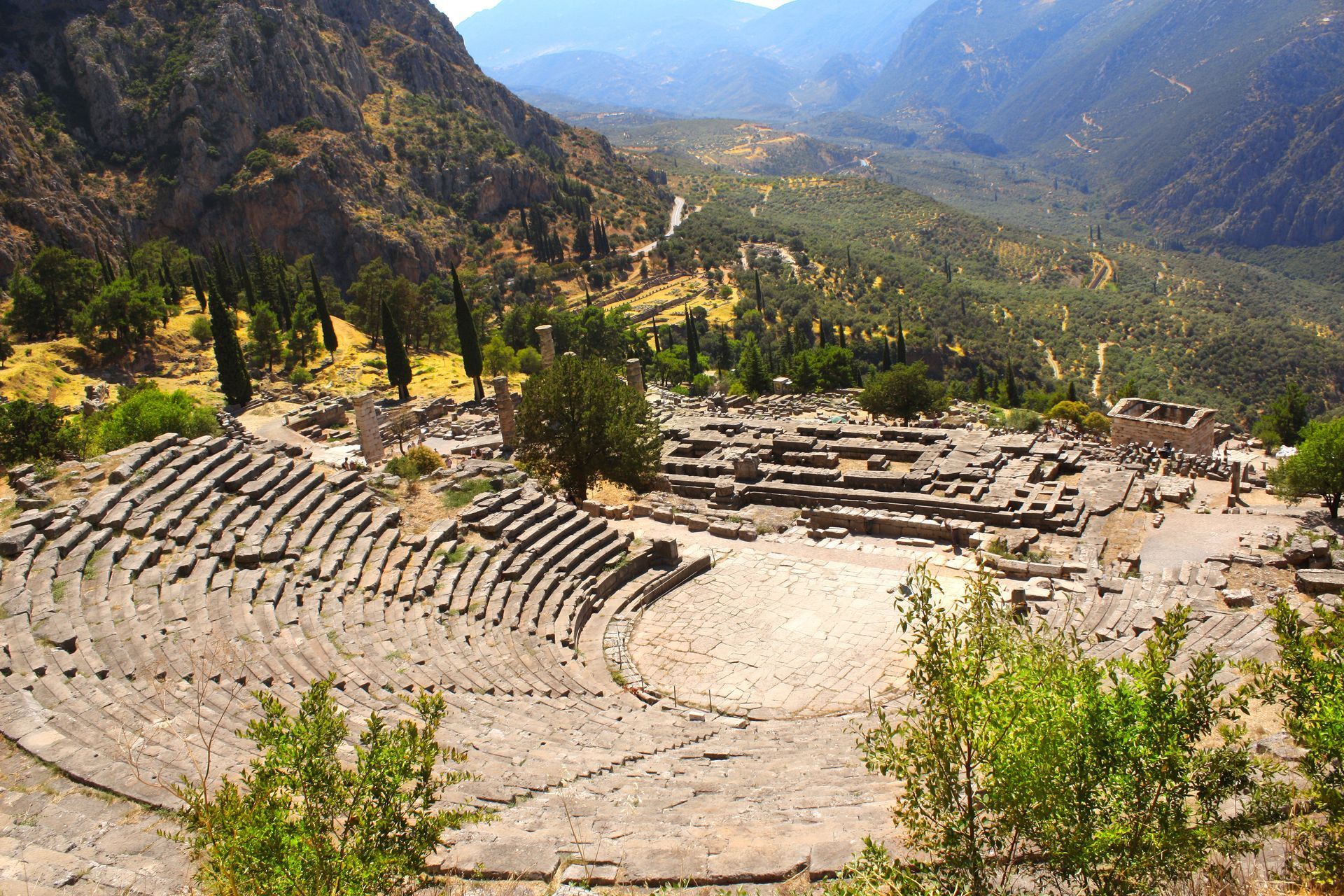
The ancient theatre at Delphi was built further up the hill from the Temple of Apollo, giving spectators a view of the entire sanctuary and the valley below. It was originally built in the 4th century BC. The koilon (cavea) leans against the natural slope of the mountain whereas its eastern part overrides a little creek that led the water of the fountain Cassotis right underneath the temple of Apollo.
The orchestra was initially a full circle, with a diameter measuring 7 meters around (23 feet). The rectangular scene building ended up in two arched openings, of which the foundations are preserved today. The theater at Delphi could accommodate about 4,500 spectators.
its façade was decorated with scenes from Hercules’ life in relief. Further repairs and transformations took place in the 2nd century AD. Pausanias mentions that these were carried out under the auspices of Herod Atticus. In antiquity, the theater was used for the vocal and musical contests which formed part of the Pythia
14
Stop 14
The Temple of Apollo, god of music, harmony, light, healing, and oracles occupied the most important and prominent position in the Delphic Panhellenic Sanctuary. The edifice with the partially restored colonnade visible today dates to the 4th century BC; it is the third temple built at the same place. The famous oracle, the Pythia, operated inside the temple, the location chosen, according to one tradition, due to a sacred chasm beneath the site emitting vapors, which were inhaled by the Pythia. Some ancient writers state that the Pythia then entered a state of delirium and uttering inarticulate cries, which were then turned into equivocal oracles by the priests. This interpretation is controversial, and has been challenged by scholars such as Joseph Fontenrose and Lisa Maurizio, who argue that the ancient sources uniformly represent the Pythia speaking intelligibly, and giving prophecies in her own voice.
15
Enjoy a delicious lunch on the Caldera of Mt Parnasus at Delphi, overlooking the Corinthian sea, the fabulous ancient port of Itea, Amfissa and the picturesque town of Galaxidi.
16
Stop 16
Pickup from your Hotel, Airbnb or apartment in Athens. Drive to Thermopylae.
What's not included
Entrance fees for all the attractions
Kindly note that gratuities and tips are not included in the price and are left to your discretion.
Optional airport pick-up, available at an additional cost.
Licensed guide to accompany you into archaeological sites
Meal in Delphi - Lunch stops are scheduled, but meal costs are not included.
Archaeological Site Of Delphi
Archeological Site of Thermopylae
Visit Arachova Free
Available languages
Guide guide
EL
EN
Reviews breakdown
Viator
4.9
25 reviews
5★
23
4★
1
3★
1
2★
0
1★
0
Tripadvisor
5.0
60 reviews
5★
59
4★
1
3★
0
2★
0
1★
0
Important information
Specialized infant seats are available
Public transportation options are available nearby
Infants and small children can ride in a pram or stroller
Suitable for all physical fitness levels
Important notes
we do not issue tickets
About Athens
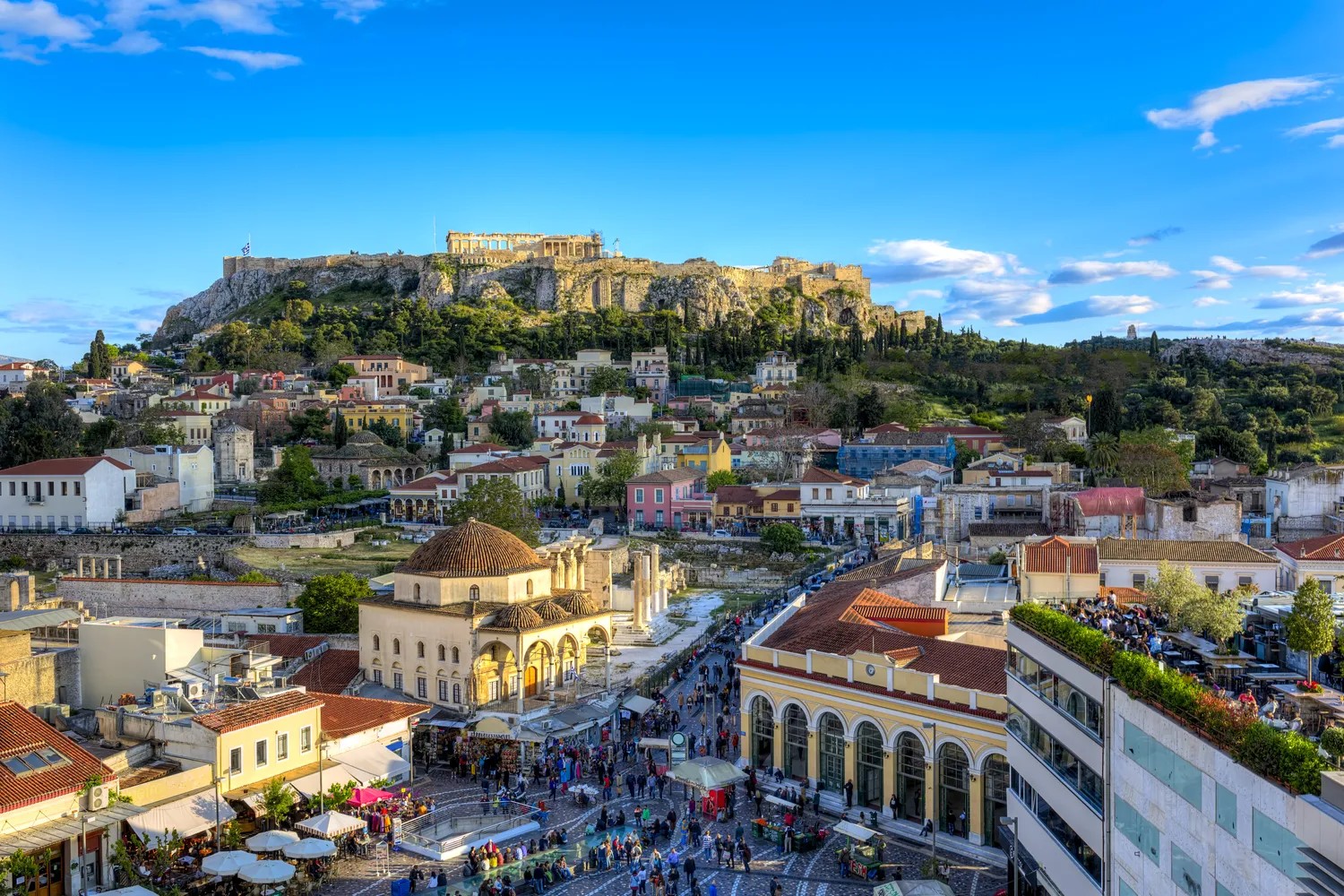
Athens, the capital of Greece, is a city rich in history and culture, often considered the cradle of Western civilization. It is home to iconic ancient landmarks, vibrant neighborhoods, and a thriving modern scene.
Top Attractions
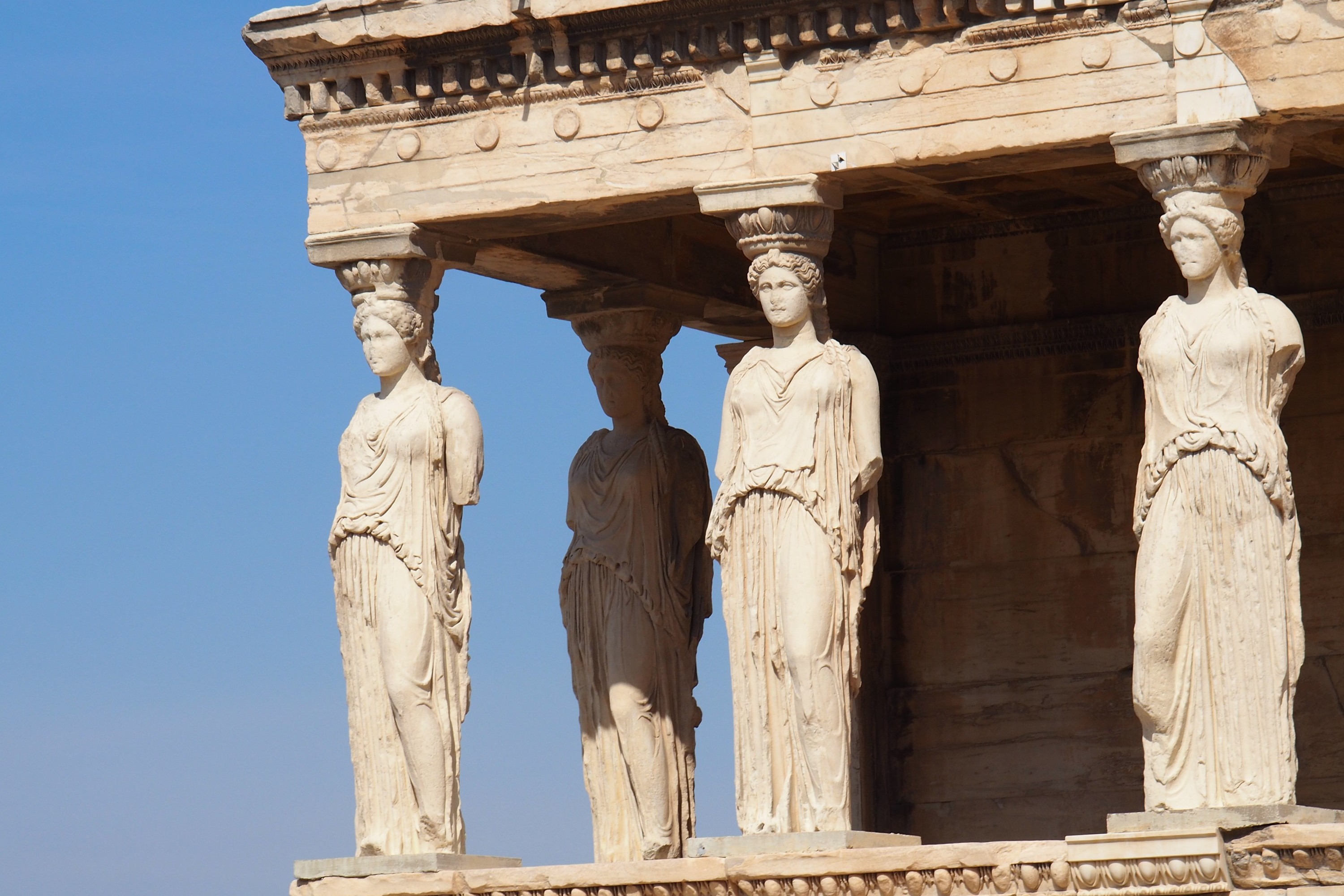
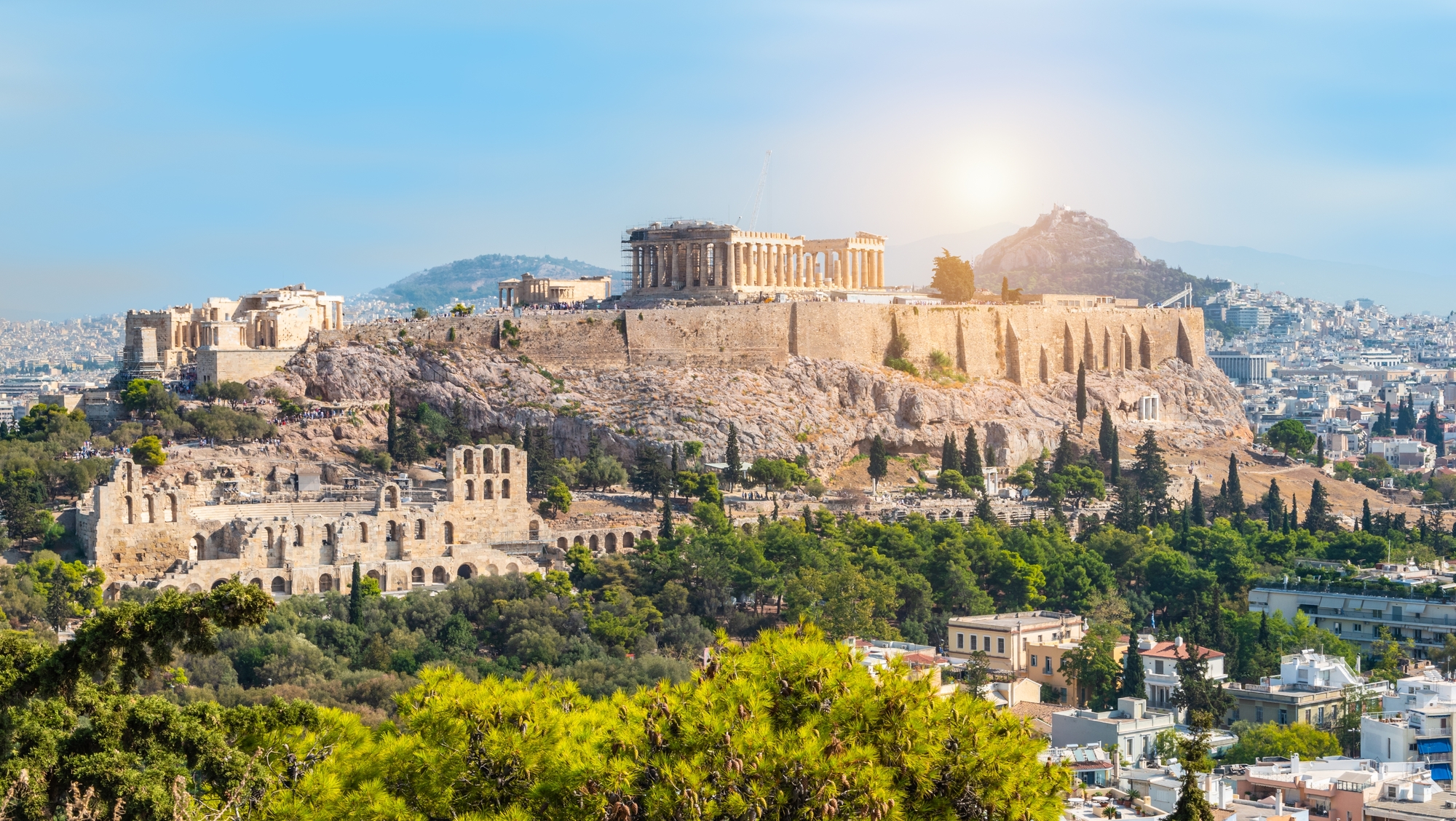
Acropolis of Athens
The Acropolis is the most iconic landmark in Athens, featuring ancient ruins and temples, including the Parthenon.
Historical
2-3 hours
€20 (combined ticket for multiple sites)
Ancient Agora of Athens
The heart of ancient Athens, featuring the Temple of Hephaestus and the Stoa of Attalos.
Historical
1-2 hours
€8 (included in the combined ticket)
Plaka
A charming, historic neighborhood with narrow streets, neoclassical houses, and vibrant nightlife.
Cultural
2-3 hours
Free to explore
Acropolis Museum
A modern museum showcasing artifacts from the Acropolis and its surroundings.
Museum
1-2 hours
€10
Temple of Olympian Zeus
An ancient temple dedicated to Zeus, once the largest temple in Greece.
Historical
30 minutes to 1 hour
€6 (included in the combined ticket)
Must-Try Local Dishes
Moussaka
A baked dish with layers of eggplant, minced meat, and béchamel sauce.
Dinner
Vegetarian versions available
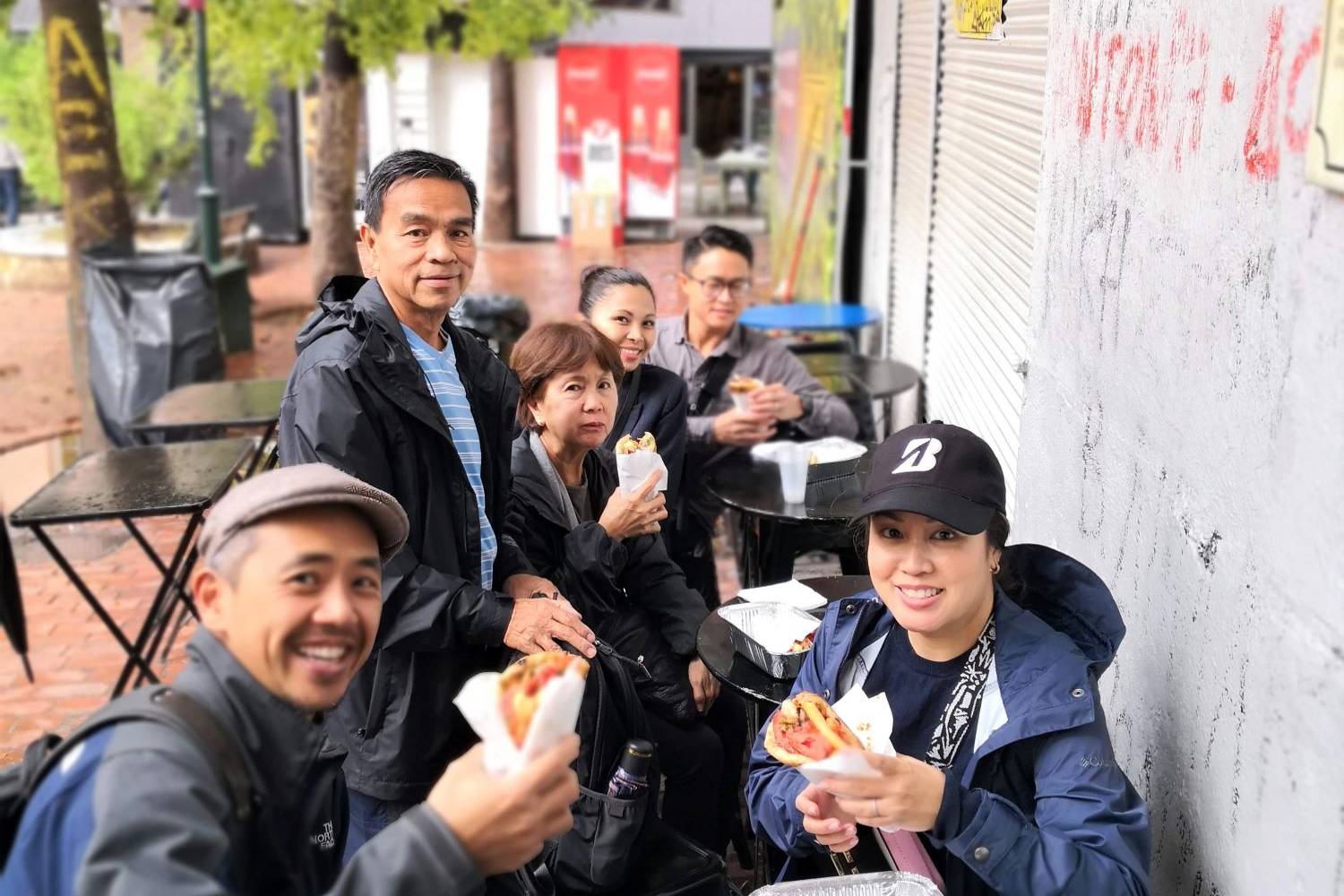
Souvlaki
Grilled meat skewers, often served with pita bread and tzatziki.
Snack
Can be made with chicken, pork, or vegetarian options
Tzatziki
A yogurt-based dip with cucumber, garlic, and herbs.
Snack
Vegetarian and vegan options available
Baklava
A sweet pastry made with layers of filo, nuts, and honey syrup.
Dessert
Vegetarian
Popular Activities
Hiking in the mountains
Rock climbing
Scuba diving
Beach visits
Spa treatments
Café hopping
Museum visits
Theater performances
Best Time to Visit
April to June, September to October
The best time to visit Athens is during the spring and autumn months when the weather is pleasant and the tourist crowds are smaller.
18°C to 32°C
64°F to 90°F
Practical Information
Language
- Official: Greek
- Widely spoken: English, French, German
- English: Moderately spoken
Currency
Euro (EUR)
Time Zone
GMT+2 (EET)
Electricity
230VV, 50HzHz
Safety Information
Overall Safety Rating: Generally safe
Athens is generally safe for travelers, but petty crime and pickpocketing can occur in tourist areas. Be cautious with your belongings and avoid poorly lit areas at night.
Important Precautions:
- • Keep valuables secure
- • Use licensed taxis or ride-sharing apps
- • Be cautious with ATMs and credit cards
Getting there
By air
- Eleftherios Venizelos International Airport • 30 km from city center
By train
Athens Central Railway Station
By bus
KTEL Bus Station
Getting around
Public transport
Clean, efficient, and air-conditioned. Easy to navigate with clear signage in English.
Taxis
Available • Apps: Beat, Uber
Rentals
Car, Bike, Scooter
Neighborhoods
Plaka
Monastiraki
Psiri
Koukaki
Kolonaki
Day trips
Cape Sounion
65 km from Athens • Half day to full day
A scenic coastal area featuring the Temple of Poseidon with stunning views of the Aegean Sea.
Delphi
180 km from Athens • Full day
An ancient archaeological site and home to the famous Oracle of Delphi.
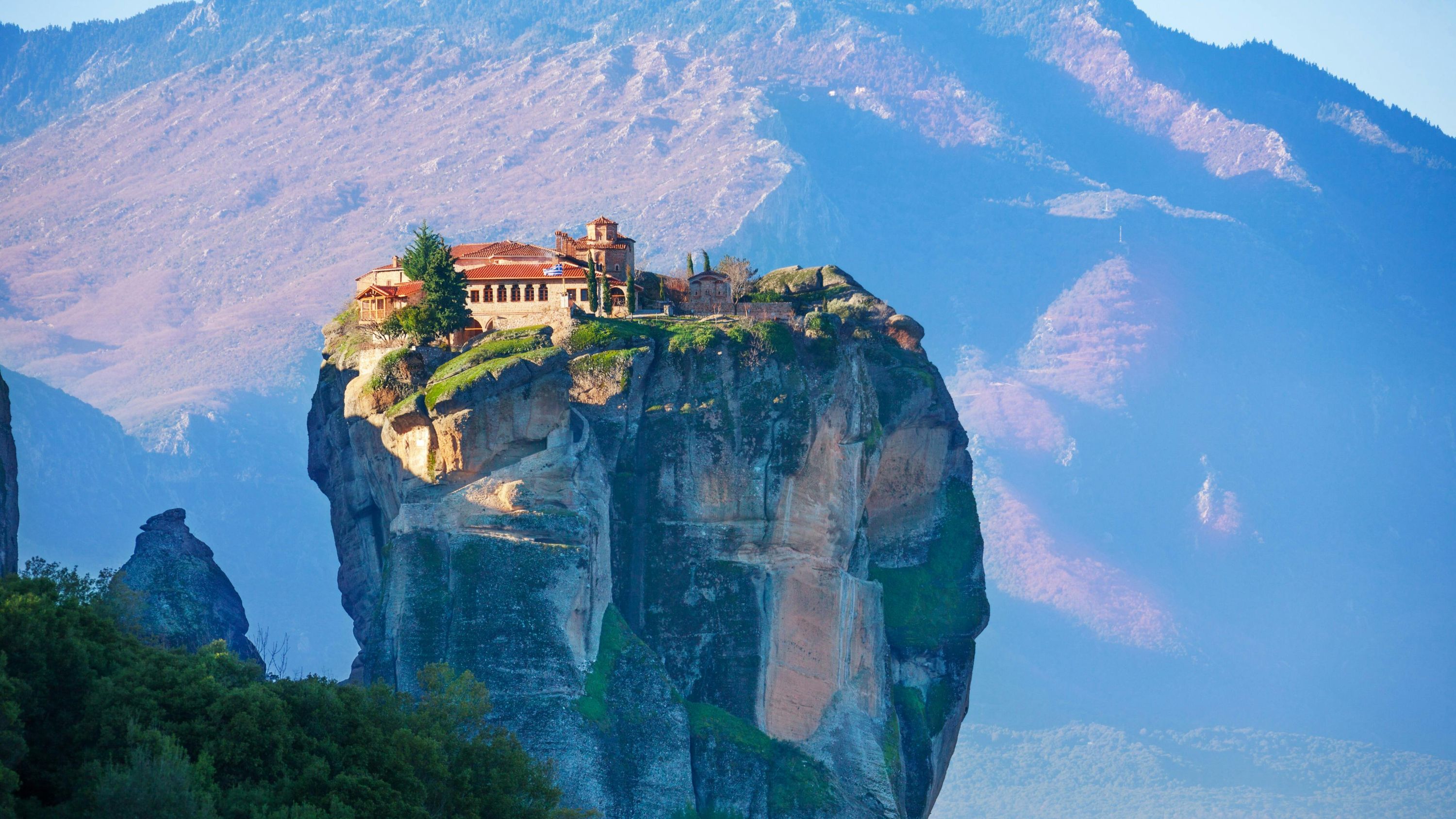
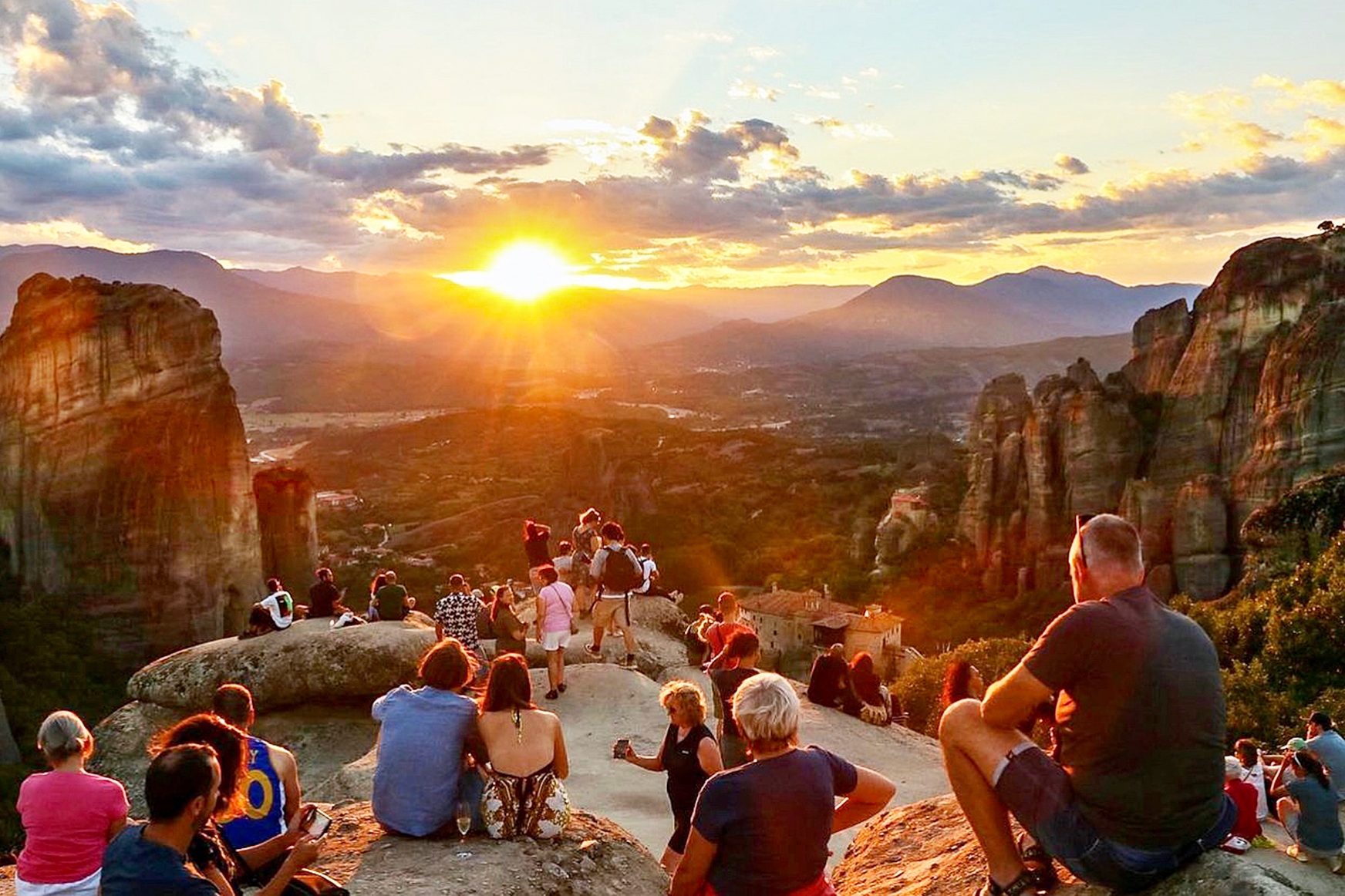
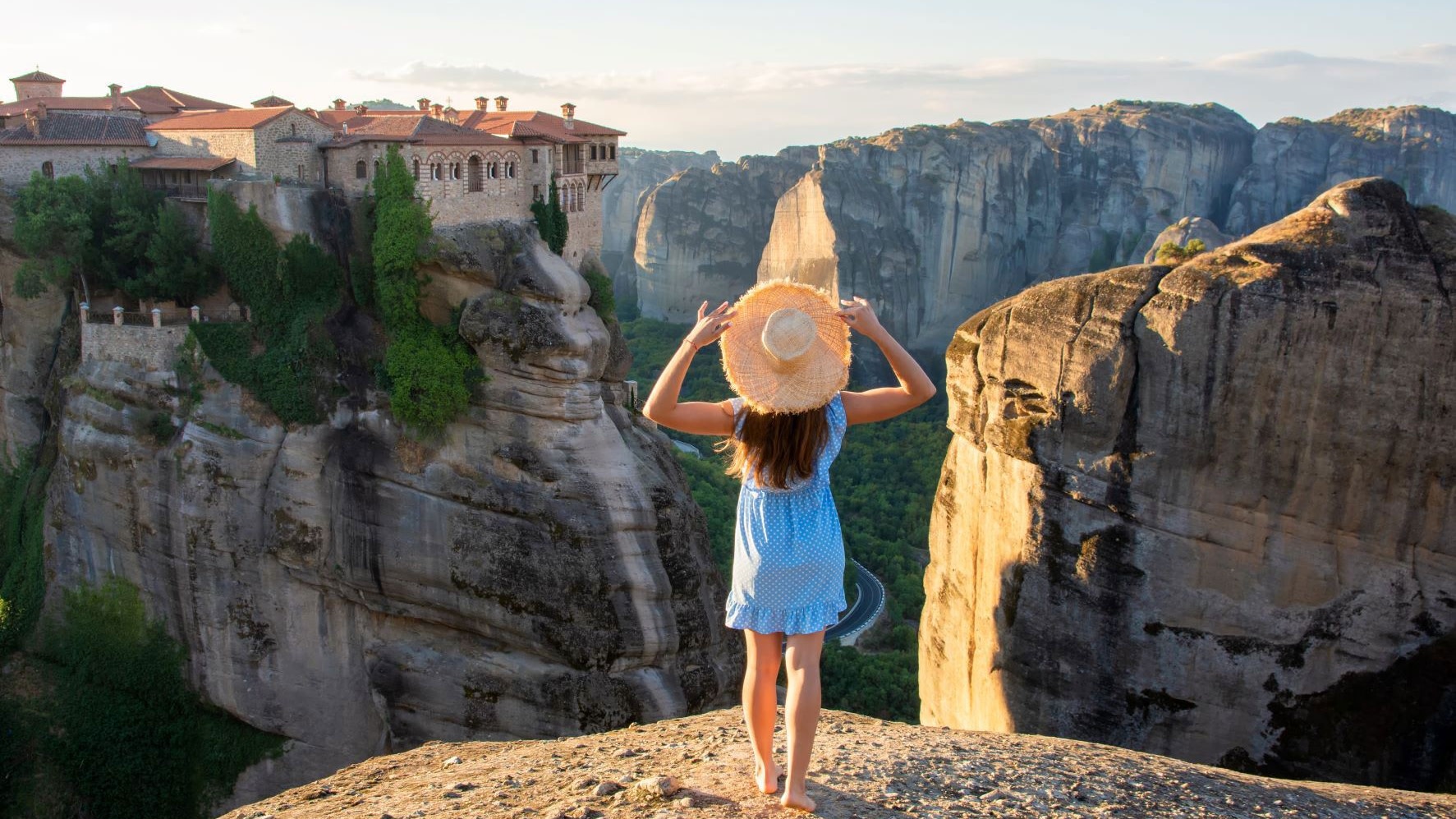
Meteora
350 km from Athens • Overnight
A unique landscape featuring rock formations and medieval monasteries perched atop cliffs.
Festivals
Athens Festival • May to October
Athens Epidaurus Festival • June to August
Athens International Film Festival • October
Pro tips
- Visit major attractions early in the morning or late in the afternoon to avoid crowds and heat
- Use the metro for easy and efficient travel around the city
- Explore local neighborhoods for an authentic Greek experience
- Try local street food for a quick and delicious meal
- Learn a few basic Greek phrases to enhance your experience and connect with locals
From $25
per person
Price varies by option
Secure booking
Free cancellation available
Instant confirmation