Full day Premium ride POR Buos Aires EN private vehicle
Active
7h - 8h
For a full refund, cancel at least 24 hours before the scheduled departure time.
Instant confirmation
Mobile or paper ticket accepted
About this experience
We really cannot say that it is a unique service, since as in every tourist attraction metropolis, you will be able to find several tour options.
But what we can say!!! Is that we strive every day for more than 15 years to be the best, and thus provide our clients with a quality service with strong bases in seriousness, cordiality, commitment, punctuality and respect...
You can be sure that when you hire our Tour, you will not be induced to make purchases to get commissions, the Tour time will be 100% used for sightseeing, we provide tours and not excursions.
Give us the opportunity and in the future you will wish that in every trip of your life, there is the possibility of being able to hire a service like ours.
Available options
Full day Premium ride through Buenos Aires by private vehicle
Pickup included
What's included
Vehicle with air conditioning
Bilingual guide throughout the tour providing the necessary information
Private transportation just for your group
Detailed itinerary
1
Stop 1
Located in the Recoleta neighborhood, built in 1732. In its day it was part of the Recoletos Franciscan convent and since the 19th century it has been one of the city's parishes, being the second oldest temple in it.
2
The Plaza Mayor Alvear, wrongly called Plaza Francia, is located in the Recoleta neighborhood, in the northern area of the city of Buenos Aires. There we will find three tourist attractions (Recoleta Cemetery, Basilica of Our Lady of Pilar and the Recoleta Cultural Center).
This distinguished and beautiful plaza will be the first stop on our tour. Our clients will be able to enjoy a walk, enter and take photos at will, at each of the attractions, as well as enjoy a coffee, an ice cream or, why not?, a beer in the cafes, ice cream shops and bars that make this plaza one of the most beautiful in the City of Buenos Aires.
3
Stop 3
It is one of the most popular tourist attractions in the city, famous for its numerous and imposing mausoleums and vaults adorned with marble and sculptures. Its architectural value is a sample of the times when Argentina was an emerging economic power at the end of the 19th century, and the wealthiest families of the city began to move to the Recoleta area and build splendid pantheons in the cemetery. Many of its mausoleums and vaults are the work of important architects and more than 90 have been declared National Historic Monuments. The cemetery itself has been considered a National Historical Museum since 1946.
4
Stop 4
The Floralis Genérica is a metal sculpture located in the Plaza de las Naciones Unidas, donated to the city by the Argentine architect Eduardo Catalano.
It is located in the center of a four-hectare park with tree-lined borders, surrounded by paths that approach and move away, providing different perspectives of the monument and situated above a reflecting pool, which, apart from fulfilling its aesthetic function, protects it. It represents a large flower made of stainless steel, with an aluminum and reinforced concrete skeleton, which looks towards the sky, extending its six petals towards it. It weighs 18 tons and is 23 meters high.
5
The Faculty of Law is one of the thirteen faculties that make up the University of Buenos Aires. It is one of the most popular; 16 Presidents of the Argentine Nation and one Nobel Prize winner have graduated from this institution.
6
Stop 6
Pass by
Tres de Febrero Park, popularly known as the Palermo Woods, is a group of parks. Noted for its groves, lakes and rose garden, they make up the most popular green area in the city and whose expansion and design was assisted by landscaper Carlos Thays.
7
Stop 7
The Japanese Garden was built with the support and effort of the Japanese Community in 1967, as a testimony to the first visit to Argentina of a member of the Japanese Imperial Family, Crown Prince Akihito and Princess Michiko. This Garden is a representative emblem of the relationship between Argentina and Japan, donated by the Community through the Embassy of Japan in Argentina to the Municipality of the City of Buenos Aires in 1967.
8
Stop 8
Pass by
Its first function was on June 13, 1967, and it has undergone various renovations and updates, the most important of which were in 2011 and 2017. It was built with the aim of promoting the dissemination of astronomical science through educational shows for students and the general public. Its entrance esplanade displays three metallic meteorites, which were found in Argentine territory. Its dome is 20 meters in diameter and can display up to 8,900 fixed stars, constellations and nebulae.
9
The Palermo Rose Garden, also called Paseo del Rosedal, is a traditional park in the city of Buenos Aires. Its 3.4 hectares contain 18,000 rose bushes and numerous works of art, including 26 busts of poets and writers, a Greek bridge and an Andalusian patio.
10
The Ateneo Grand Splendid is a bookstore located in the Recoleta neighborhood of Buenos Aires. It stands out for being located where the Grand Splendid theater once stood, having preserved the original architecture of said theater, but at the same time being readapted to function as a bookstore. In 2008, it was chosen by the British newspaper The Guardian as the second most beautiful bookstore in the world, and in 2019, National Geographic declared it the most beautiful in the world.
11
Stop 11
9 de Julio Avenue is one of the main arteries of the Autonomous City of Buenos Aires. It runs for around three kilometers in the heart of the city, connecting the transport hubs and the main railway terminals in the Retiro neighborhood and in Plaza Constitución.
It is particularly known because the Obelisk is located at the midpoint of its route. It is also known for being considered the widest avenue in the world, at 140 meters. It is frequently used for large artistic, sporting, cultural and political events. It was the protagonist of the largest popular gathering in the history of the city, on the occasion of the victory at the 2022 World Cup in Qatar4.
12
Stop 12
The Obelisk of Buenos Aires is a historical monument, considered an icon of the city.
It was built in 1936 on the occasion of the fourth centenary of the first foundation of Buenos Aires.
It is 67.5 meters high, and is currently under construction to give visitors the possibility of climbing to the top and enjoying the panoramic view from its 4 windows.
13
Stop 13
The Teatro Colón is an opera house in the Autonomous City of Buenos Aires, the capital of Argentina. Due to its size, acoustics and history, it has come to be considered one of the best opera houses in the world. According to a survey conducted by acoustics expert Leo Beranek among leading international opera and orchestra conductors, the Teatro Colón has the hall with the best acoustics for opera and the second best for concerts in the world.
14
The Plaza de Mayo in the City of Buenos Aires is the square in front of the Casa Rosada, the seat of the National Executive Power. It was created in 1884, as a result of the union of the Plaza de la Victoria and the Plaza del Fuerte, when a construction called Recova Vieja, which separated them, was demolished. It is located on the site where the second foundation of the City took place in 1580.
15
Stop 15
The Casa Rosada is the seat of the Executive Branch of the Argentine Republic, and is located in the historic center of the city. Inside it is the office of the President of the Argentine Nation and his various secretariats, and of the Chief of the Cabinet of Ministers.
This building is located in front of the historic Plaza de Mayo. Its characteristic color is pink and it is considered one of the most emblematic buildings in Buenos Aires. It also houses the Government House Museum, with objects related to the country's presidents. In 1942 it was declared a National Historic Monument.
16
The Metropolitan Cathedral of Buenos Aires (of the Holy Trinity) is the main Catholic temple in Argentina.
On July 7, 2013, the Pope's museum was inaugurated, with personal and liturgical objects that he used during the fifteen years of his pastoral activity in the city. The museum is located inside the Cathedral, in some rooms arranged to the left of the central nave.
17
Stop 17
The Buenos Aires City Hall was built in 1580 and has undergone various modifications throughout history. At first it had adobe walls, a thatched roof and two rooms: a meeting room and a jail. Later, tiles were added to the roof, a balcony and towers made of wood and mud were built.
In 1725 it was demolished because it was in very poor condition. Years later, the model of the City Hall that we know today was built. In 1748, the construction of the first floor of the institution was finished, and in 1773 the tower was raised.
By 1821, the City Hall was transformed into an administrative center for almost 60 years, then it was reduced to make way for new streets and avenues in downtown Buenos Aires. In 1894, three arches of the north wing were removed to make way for the construction of Avenida de Mayo, and in 1931 the same happened to the south wing to make way for Avenida Julio A. Roca. It is currently a museum that displays elements of the .
18
Stop 18
The Avenida de Mayo, located in the Buenos Aires neighborhood of Monserrat, was the first boulevard in the city of Buenos Aires, Argentina, and the backbone of the historic and civic center of the city. It was born opulent and majestic and over time became a symbol of Argentine-Spanish relations, and the scene of all social events in Buenos Aires. It was the first avenue in the Republic and in all of South America.
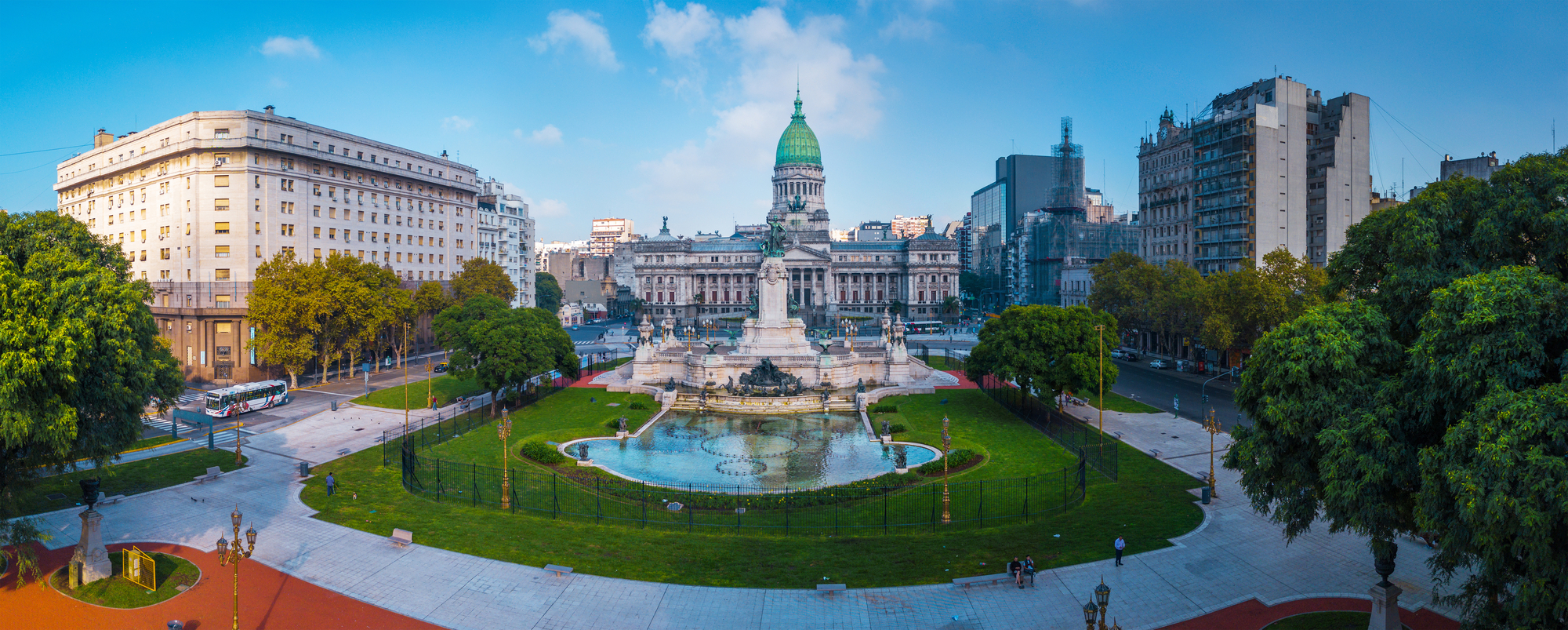
It connects the historic Plaza de Mayo with the Plaza del Congreso in an extension of about ten blocks.
It was officially inaugurated on July 9, 18941 with the pretext that it would serve as a lung for the population that was concentrated within the central sector of the city and also be the showcase for the city's presentation to the world.
19
Stop 19
Café Tortoni, located at 825 Avenida de Mayo, is a historic commercial establishment in the city. Its name almost undoubtedly comes from the famous Café Tortoni in Paris at the end of the 19th century. For almost a century, the Buenos Aires-Argentine Café Tortoni is the most representative of the traditional spirit of Avenida de Mayo, and is already a legend of the city of Buenos Aires. The most famous literary club in Buenos Aires, led by the painter Benito Quinquela Martín, operated in this café. Today it continues to be a place of cultural and touristic diffusion par excellence.
20
Stop 20
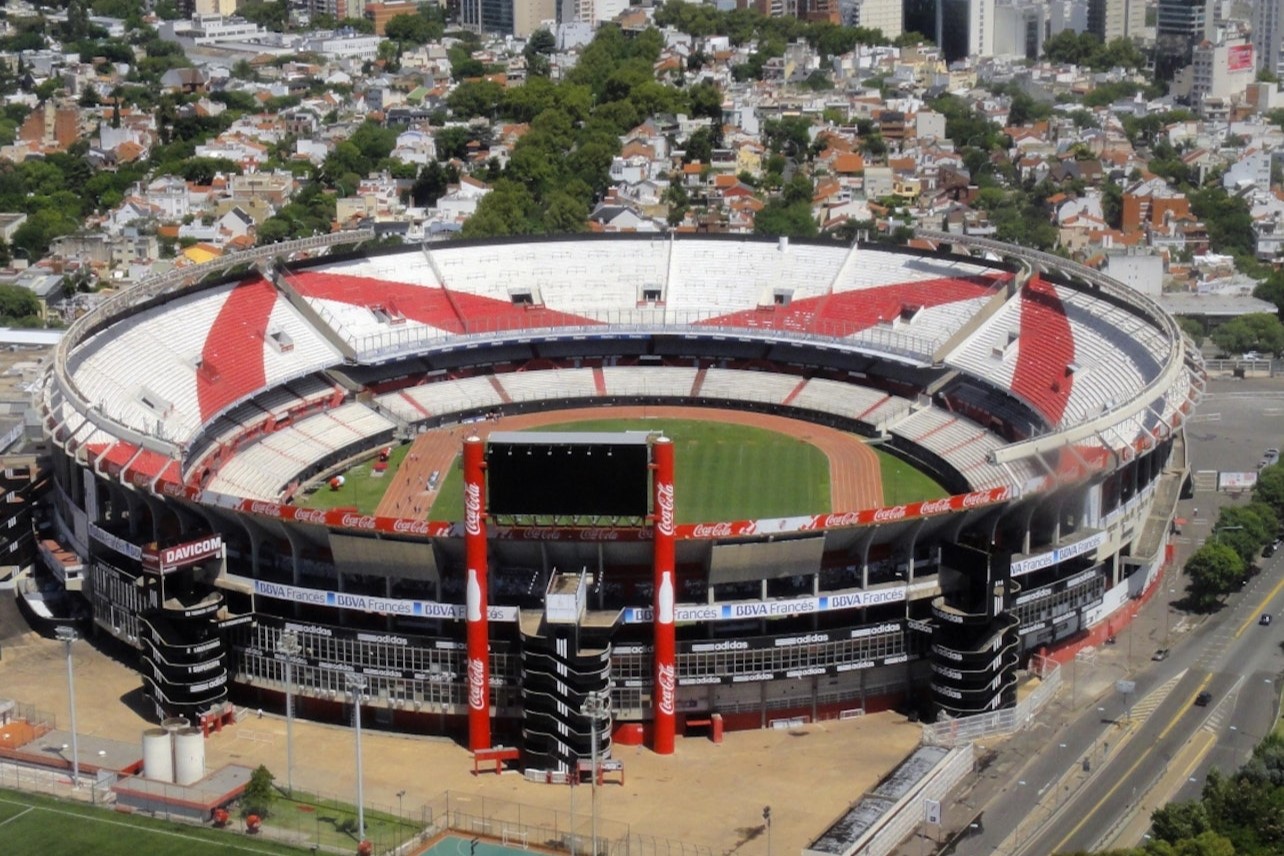
The Alberto J. Armando Stadium, popularly known as La Bombonera, is a sports venue owned by the Boca Juniors Athletic Club.
It is located in the La Boca neighborhood, just 400 meters from the stadium.
Recognized by various national and international media as one of the most emblematic in the world, and declared of sporting, tourist and artistic interest in the city of Buenos Aires.
21
Stop 21
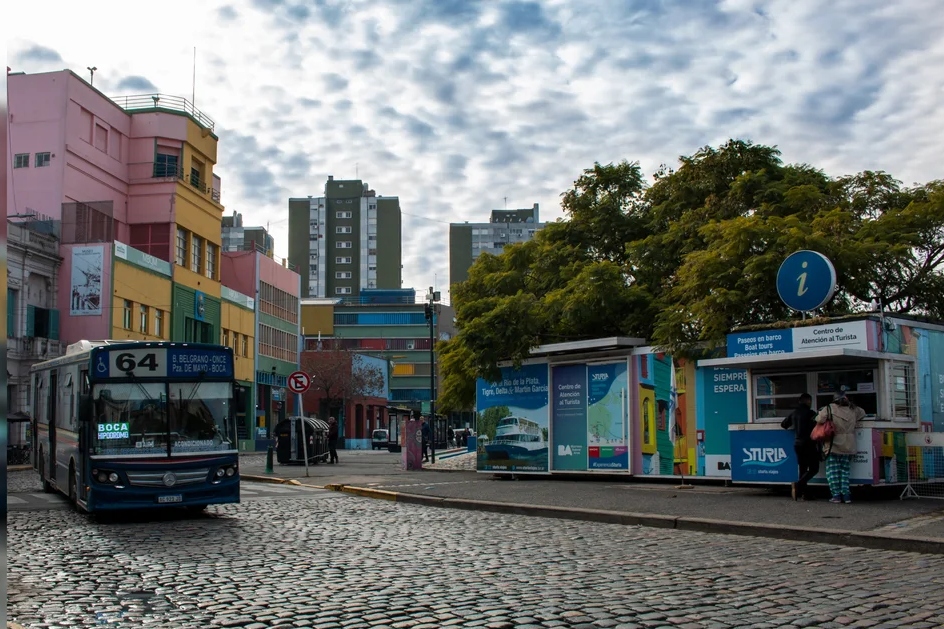
Caminito is an alley, museum and passage of great cultural and touristic value, located in the La Boca neighborhood of the City of Buenos Aires, Argentina. The place acquired cultural significance because it inspired the music of the famous tango "Caminito" (1926), composed by Juan de Dios Filiberto. On the contrary, the lyrics of the famous tango, written by the Riojan Gabino Coria Peñaloza, are inspired by a path in the town of Olta, in the province of La Rioja. For this reason and in homage to Coria Peñaloza, in 1971 a street in the town of Chilecito was also named "Caminito".1
22
Stop 22
Puerto Madero is a Buenos Aires neighborhood located in Commune 1 of the Autonomous City of Buenos Aires. It is also one of the forty-eight official neighborhoods into which the Argentine capital is subdivided. Its location near the eastern part of the city, its vast area and its view of the river make this district one of the most valued in Buenos Aires.
This district has held the title of "the most expensive neighborhood in Latin America" for several decades.
23
Stop 23
The Puente de la Mujer is a cable-stayed counterweight pylon bridge designed by Spanish architect Santiago Calatrava. It is the first of his works in Latin America (followed by the Museu do Amanhã in Rio de Janeiro).
The design is a synthesis of the image of a couple dancing tango.
24
In 1897, the frigate ARA Presidente Sarmiento became the first modern training ship in Argentina built specifically for this purpose and is a testament to the naval training of Argentine youth. Built in England, it made 39 trips around the world, covering a total of 1,100,000 nautical miles, always on a peace mission. It is currently moored in Dock III of Puerto Madero, in the City of Buenos Aires, converted into a museum.
What's not included
Food and drinks not included
entry/entry to the points DE interest that charge entry.
Start or end of the tour outside the city limits of Buenos Aires
Available languages
Guide guide
PT
ES
Reviews breakdown
Tripadvisor
5.0
4 reviews
5★
4
4★
0
3★
0
2★
0
1★
0
Important information
Infants and small children can ride in a pram or stroller
Service animals allowed
Public transportation options are available nearby
Infants are required to sit on an adult’s lap
Specialized infant seats are available
Suitable for all physical fitness levels
About Buenos Aires and The Pampas
Buenos Aires, the vibrant capital of Argentina, is known for its European-influenced architecture, rich cultural scene, and passionate tango. The Pampas, a vast fertile plain, offers a glimpse into Argentina's gaucho (cowboy) culture and stunning landscapes. Together, they provide a unique blend of urban sophistication and rural charm.
Top Attractions
Recoleta Cemetery
A famous cemetery where Eva Perón is buried, featuring ornate mausoleums and a rich history.
Historical
1-2 hours
Free
La Boca
A colorful neighborhood known for its vibrant street art, tango performances, and the famous Caminito street.
Cultural
2-3 hours
Free to explore, paid shows
The Pampas
A vast fertile plain offering a glimpse into Argentina's gaucho culture, with estancias (ranches) and beautiful landscapes.
Nature
Full day or overnight
Varies by estancia (ARS 1,000-5,000 approx. USD 13-65)
Teatro Colón
One of the world's most famous opera houses, known for its stunning architecture and acoustics.
Cultural
1-2 hours (tour), longer for performances
Tour: ARS 1,200 (approx. USD 16), Performances: ARS 500-5,000 (approx. USD 6.50-65)
San Telmo Market
A historic market offering antiques, collectibles, and local crafts, with a lively Sunday market atmosphere.
Market
1-3 hours
Free to explore, varies for purchases
Must-Try Local Dishes
Asado
Argentine barbecue featuring various cuts of beef, sausages, and other meats, cooked over an open fire.
Dinner
Not vegetarian or vegan
Empanadas
Savory pastries filled with various ingredients like beef, chicken, or cheese.
Snack or Lunch
Can be vegetarian or vegan
Milanesa
Breaded and fried meat cutlet, similar to schnitzel, often served with mashed potatoes or salad.
Lunch or Dinner
Not vegetarian or vegan
Dulce de Leche
A sweet, caramel-like spread made from milk and sugar, used in various desserts.
Dessert
Vegetarian
Popular Activities
Horseback riding in The Pampas
Kayaking in Tigre Delta
Hiking in Sierra de la Ventana
Wine tasting in Palermo
Spa day in Recoleta
Strolling through Bosques de Palermo
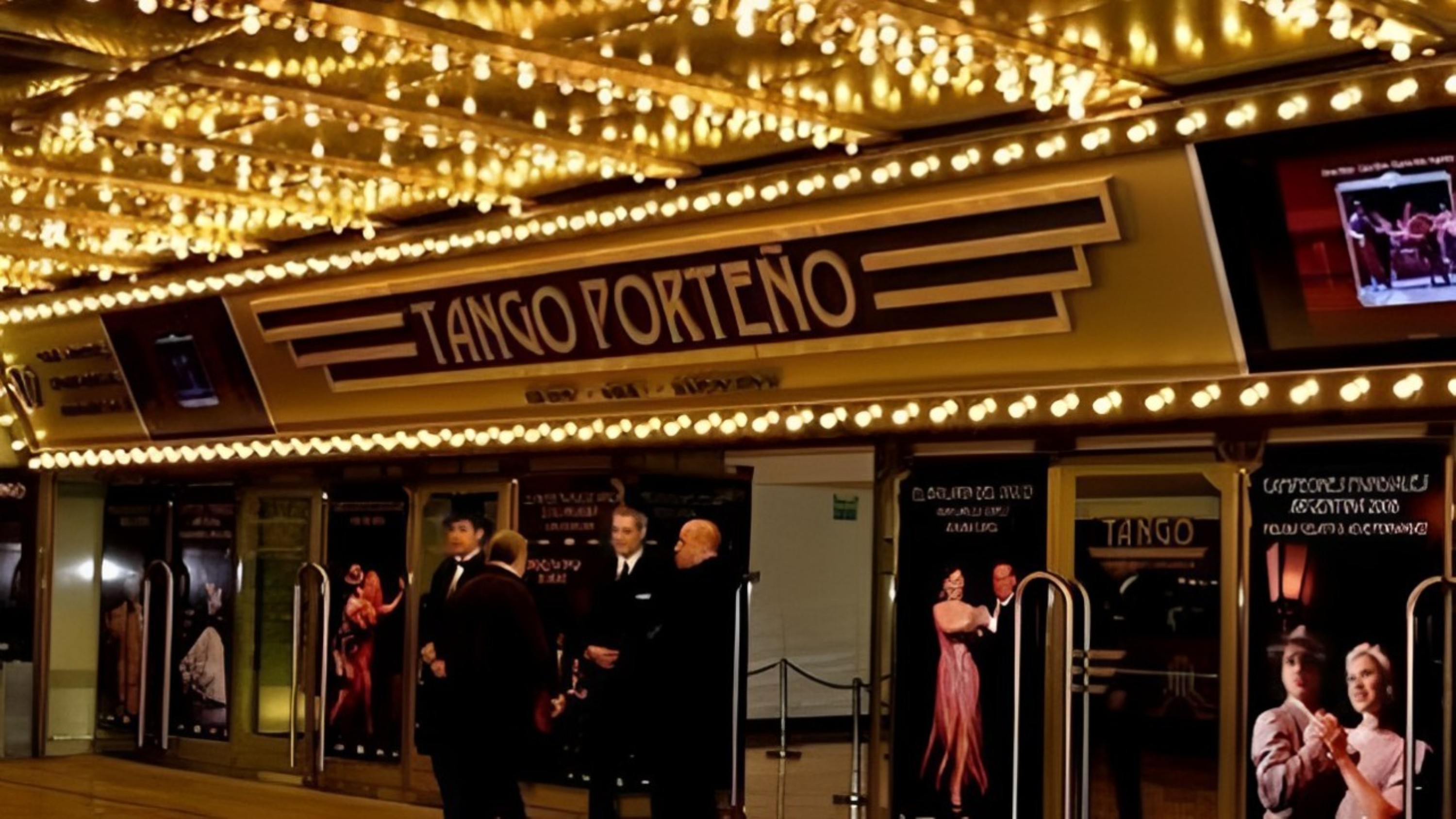
Tango shows in La Boca
Visiting museums in Recoleta
Best Time to Visit
Spring (September to November) and Fall (March to May)
Pleasant weather, fewer crowds, and vibrant city life. Ideal for outdoor activities and exploring both the city and the Pampas.
15-25°C
59-77°F
Practical Information
Language
- Official: Spanish
- Widely spoken: English, Italian, French
- English: Moderately spoken in tourist areas, limited elsewhere
Currency
Argentine Peso (ARS)
Time Zone
GMT-3
Electricity
220VV, 50HzHz
Safety Information
Overall Safety Rating: Exercise caution
Buenos Aires is generally safe for tourists, but petty crime like pickpocketing and scams can occur, especially in crowded areas. Be aware of your surroundings and take precautions.
Important Precautions:
- • Keep valuables secure
- • Avoid flashing expensive items
- • Use reputable taxi services or app-based taxis
Getting there
By air
- Ministro Pistarini International Airport • 35 km from city center
- Aeroparque Jorge Newbery • 4 km from city center
By train
Retiro Station
By bus
Retiro Bus Terminal, Constitución Bus Terminal
Getting around
Public transport
Efficient and affordable, with six lines connecting major neighborhoods.
Taxis
Available • Apps: Uber, Cabify
Rentals
Car, Bike, Scooter
Neighborhoods
Palermo
Recoleta
La Boca
San Telmo
Day trips
Estancia Santa Susana
100 km from Buenos Aires • Full day
A traditional estancia offering horseback riding, gaucho shows, and authentic Argentine asado.
Colonia del Sacramento
100 km from Buenos Aires (by ferry) • Full day
A charming colonial town in Uruguay with cobblestone streets, historic buildings, and a relaxed atmosphere.
Tigre Delta
35 km from Buenos Aires • Half day to full day
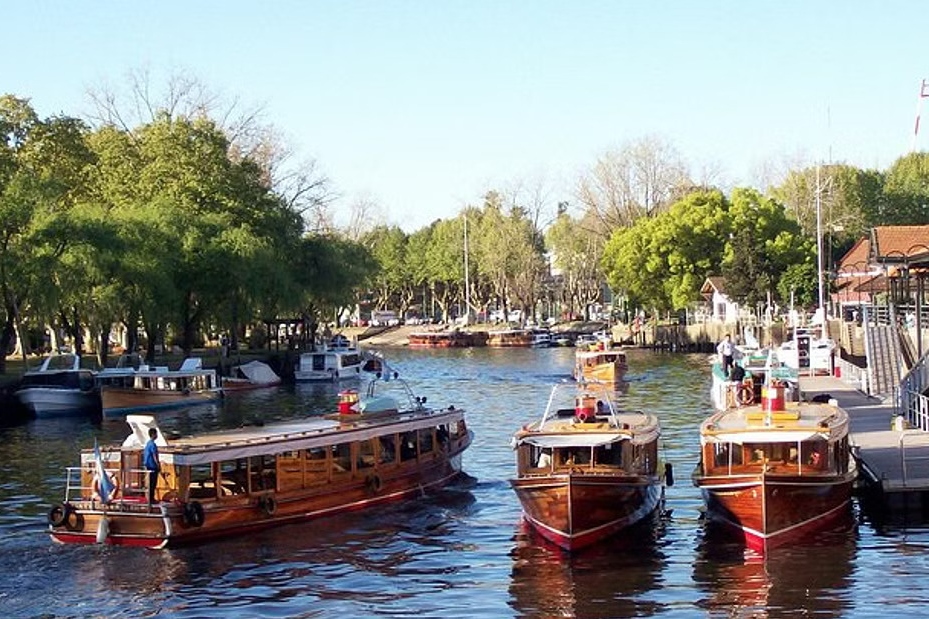
A network of islands and waterways offering boat tours, kayaking, and nature walks.
Festivals
Carnaval de Buenos Aires • February or March (dates vary)
Festival Internacional de Cine Independiente de Buenos Aires (BAFICI) • April (dates vary)
La Noche de los Museos • November (dates vary)
Pro tips
- Use the SUBE card for convenient and discounted public transport
- Learn a few basic Spanish phrases to enhance your experience and connect with locals
- Explore beyond the tourist hotspots to discover the city's hidden gems
- Try local specialties like empanadas, milanesa, and dulce de leche
- Visit during the shoulder seasons (spring and fall) for pleasant weather and fewer crowds
From $25
per person
Price varies by option
Secure booking
Free cancellation available
Instant confirmation