Private Full Day Sightseeing Marrakech Tour by Car
Active
6h - 8h
For a full refund, cancel at least 24 hours before the scheduled departure time.
Instant confirmation
Mobile or paper ticket accepted
About this experience
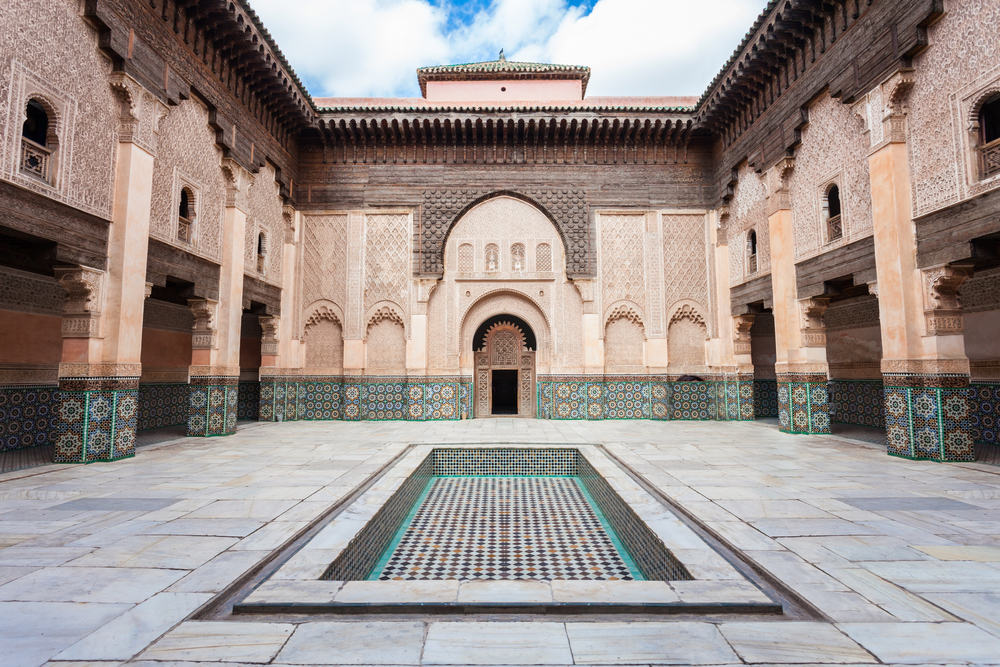
Explore the enchanting old city of Marrakech with a private tour that promises an unforgettable experience. Immerse yourself in its rich history and vibrant culture as you visit famous landmarks like the majestic 11th-century Koutoubia Mosque, the stunning Bahia Palace, the historic Saadian Tombs, the beautiful Majorelle Gardens, and the lively Jemaa el-Fnaa Square.
This tour offers more than just sightseeing; it provides an opportunity to understand Marrakech in depth. You will be accompanied by an experienced driver who will also serve as your tour guide, sharing valuable insights into the city’s heritage.
We encourage you to engage and ask questions about the culture, politics, society, or any topic related to the Kingdom of Morocco. Our friendly and knowledgeable team—including your guide, companion, and driver—is eager to enhance your experience with their expertise.
Join us for an immersive exploration of Marrakech—an experience you won’t want to miss!
Available options
Full-Day Private Guided Tour
Duration: 8 hours: Experience the ultimate adventure with our Full-Day Private Guided Tour of Marrakech! <br/>No Meal /or drinks<br/>Pickup included
Private Full Day Sightseeing Marrakech Tour by Car
Pickup included
What's included
Private transportation
Bottled water
Lunch
Air-conditioned vehicle
Detailed itinerary
1
Stop 1
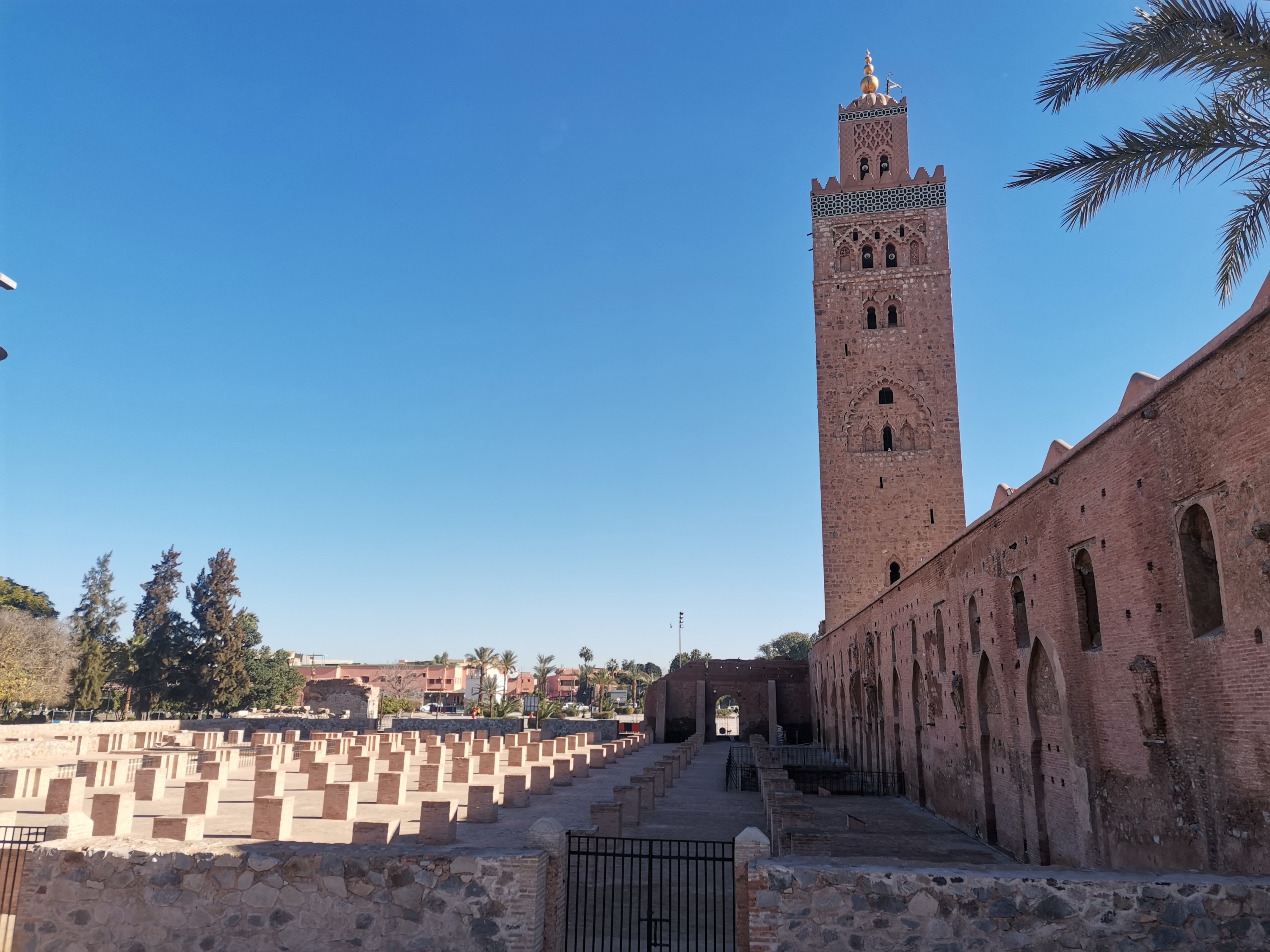
The city of Marrakech was captured by the Almohads after the death of the Almoravid leader Ali ibn Yusuf in 1147. The Almohads wanted no trace of religious monuments built by the Almoravids, their bitter enemies, because they considered them heretics. Abd-al-Mu’min, who won the territory, was responsible for the construction of the first Koutoubiya mosque on the grounds of the former palace of Ali ibn Yusuf in the southwest quarter of the medina. This first mosque was built between 1147 and 1154 and completed in 1157. This first mosque was rebuilt under the Almohad Caliph Yacoub El-Mansour, because halfway through construction, the mihrab (prayer niche) was off center and not oriented towards Mecca and underwent many changes until the end of the 12th century. When the Andalusians defeated the Almohad dynasty. The alignment problem was a minor problem, as devotees could always adjust the direction when offering prayers in the hall, but the decision was made to build a new mosque next to the first structure. The first mosque was completed while the second mosque was under construction. The second mosque was built identical to the first except for its orientation.
The layout, architectural designs, inscriptions, dimensions and materials used for construction were all the same. The plan and design of the minaret remained the same in both buildings. While in the first mosque, the orientation of the mihrab was 5 degrees out of alignment with the direction of Mecca, in the second mosque, the orientation was 10 degrees, therefore further from Mecca than the first mosque.
These two structures were built during the reign of Abd al-Mu’min (reign 1130-1163). The second mosque was started after 1154 and the building was partially completed in September 1158, with the first prayers held in the mosque at that time. It was completed in the 1190s, although the reported completion dates vary between 1162, 1190 and 1199. The first mosque eventually deteriorated.
2
The Kasbah Mosque of Marrakech is a Friday Mosque originally built by the Almohad caliph Yaqub al-Mansour in 1185-1190 CE. It is located in the old kasbah of Marrakech, the citadel or royal district. Along with the Koutoubia Mosque, it is one of the most important historical mosques in Marrakech
3
Bab Agnaou is one of the nineteen gates of Marrakesh, Morocco. It was built in the 12th century in the time of the Almohad dynasty. While Bab er Robb was the official entrance to the city, Bab Agnaou gives entrance to the royal kasbah in the southern part of the medina of Marrakech
4
Stop 4
Located next to the mosque of the Kasbah, the Saadian tombs are one of the only vestiges remaining from the Saadian dynasty which reigned on the golden age of Marrakech between 1524 to 1659. At the beginning of the 18th century, Sultan Moulay Ismaïl indeed decided to remove all traces of the magnificence of this dynasty by asking for the destruction of all the remaining vestiges. However, he did not dare to commit the sacrilege to destroy their graves and ordered that the entrance to the necropolis be walled up.
5
Stop 5
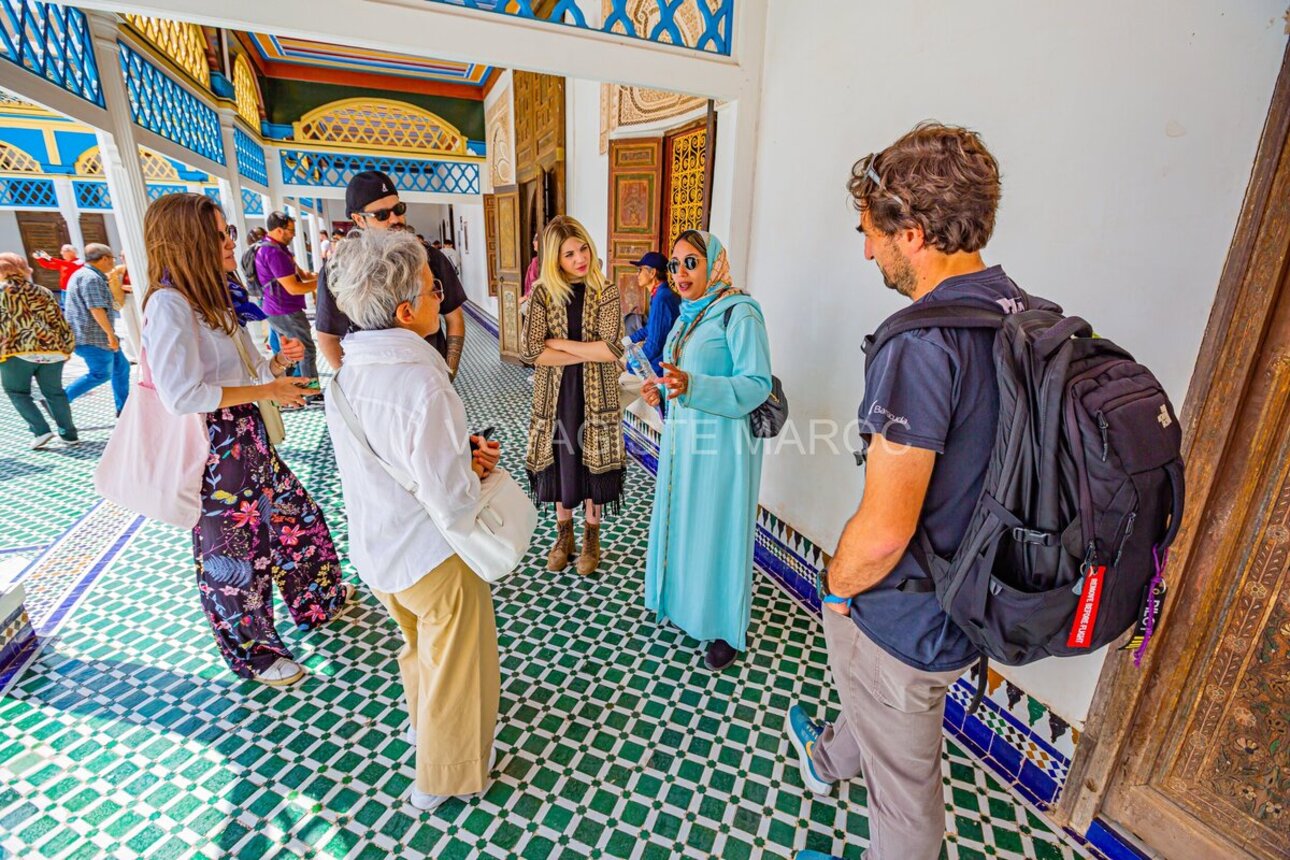
The beginnings of the construction of the Bahia Palace date back to the time of Minister Ahmed bin Musa, nicknamed “Ba Hammad”, during the reign of Sultan Abdulaziz. His father, Al-Hajib Al-Sultani, Haji Musa, was nicknamed “Al-Bukhari” because he was descended from the servants of Al-Bukhari who made up the army of the Alawite sultan Moulay Ismail.
As for the name of the palace, it perpetuates the name of the minister’s wife, “Ba Hammad”. According to current tales, the “Bahia”, whose name is the palace, descended from the al-Rahmanah tribe, which borders the city of Marrakech, and who came from a family known for its knowledge, its glory and its power.
The narrators mention that Bahia was moving from her father’s castle in the Rahamneh region to the family riad in the “Al-Qanariya” district in Marrakech, until the strong minister “Ba Ahmad” saw him while he was still in the prime of life, in the care of his father, Hajj Musa Al-Hajib, so he hired her to be “His life partner, the lady of his palates, the comfort of his wives, the head of his neighborhood, his service and his decency, ”says one of the narrators.
And given the gravity of his affection for Bahia, Minister Ahmed bin Musa brought the most skilled craftsmen and craftsmen from the city of Fez to work in the palace for six consecutive years, but death died without seeing his palace embrace the Bahia in its most beautiful analysis. He died in 1890 before completing the construction of the palace.
6
Stop 6
We suggest several excellent restaurants, and the customer has the freedom to choose. We can also deliver the customer to the restaurant he chooses or knows
7
Stop 7
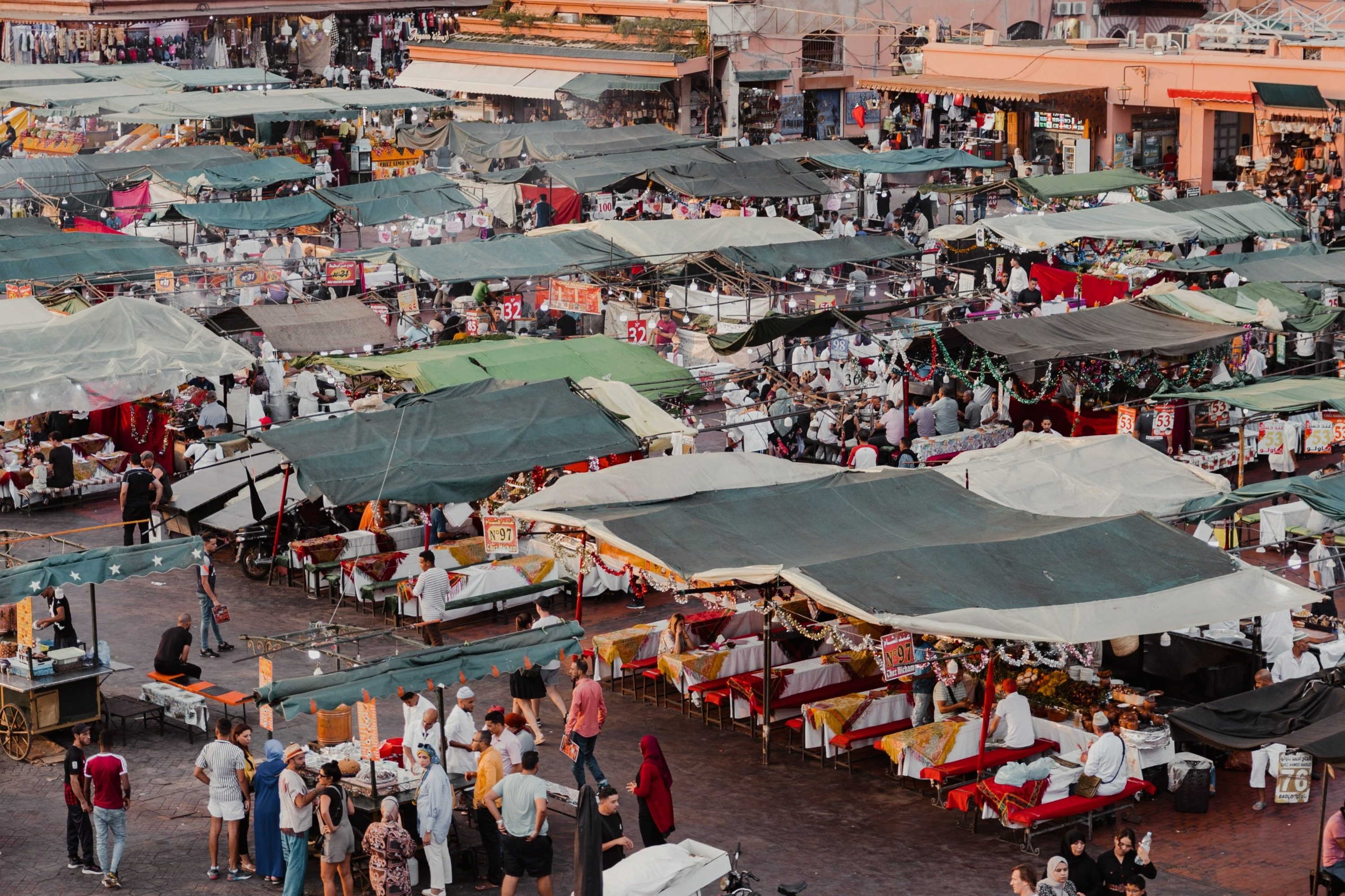
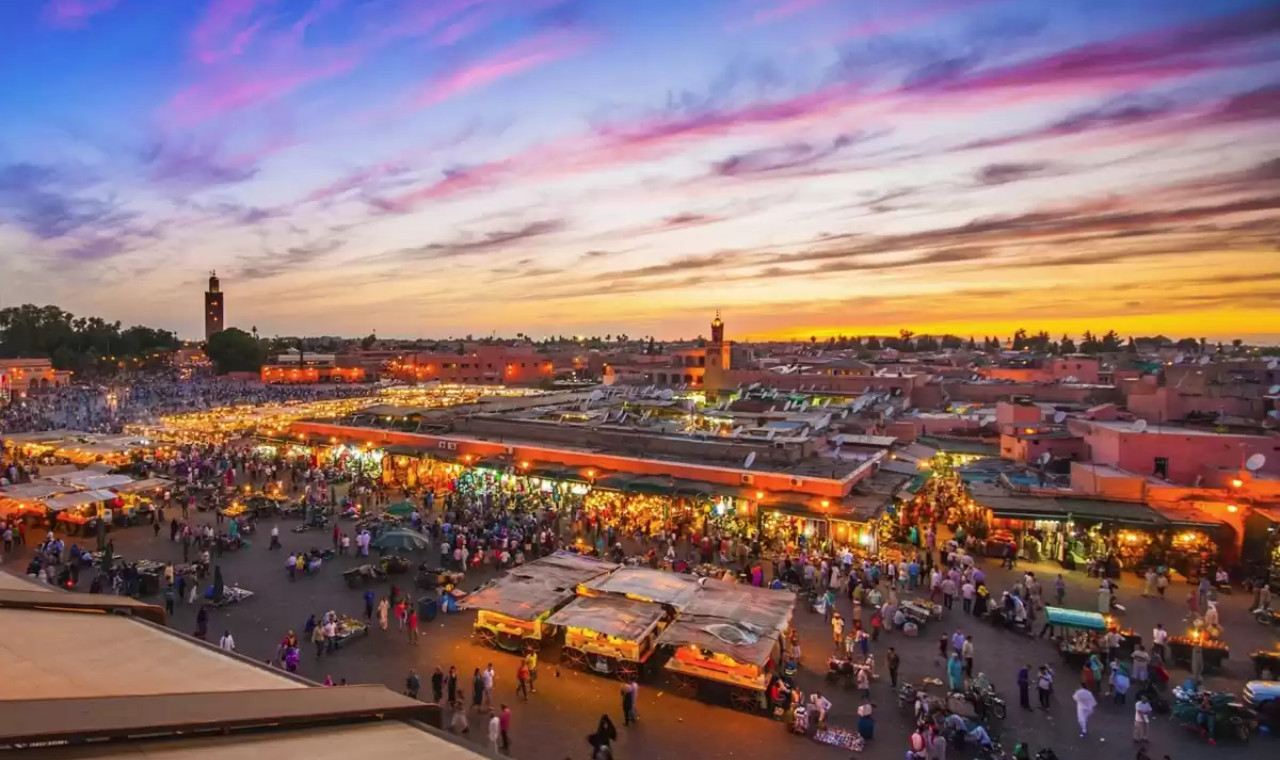
There is nowhere in Morocco like Jemaa el Fna square – no place that so easily involves you and keeps you coming back for more. By day, most of the square is just a large open space, where a handful of snake charmers bewitch their cobras with flutes, medicine men (especially in the northeastern part of the place) display cures and Panacea, and pulling teeth, wielding fearsome tongs, offer to tear off the pain of the outside of the heads of people suffering from toothache, trays of extracts attesting molar their skills.
It is only in the afternoon that the square really happens. At dusk, as in France and Spain, people go out for a walk early evening (especially in Bab Agnaou street), and the place fills gradually until it becomes a fairytale carnival, acrobats, musicians and artists. Go down and you will soon be immersed in the ritual: wandering around, squatting in the circles of spectators, which gives a dirham or two as your contribution. If you want a respite, you can move on the roof terraces, like the Grand Balcony Café, for a view of the square, its storytellers and musicians, and the crowds who come to see them.
As a foreigner in Jemâa, you may feel something of an intruder. Most of the crowd are Moroccan of course (some foreigners, for example, will include storytellers’ tales), but tourists also make a significant contribution to both the atmosphere and the cash flow. Sometimes a storyteller or musician may take it upon you to participate or contribute generously to the end-of-show collection and, entering the show, it’s best to go bare-bones of the usual tourist outlines such as watches, money belts or too much money; pickpockets and crooks work (giving a “present” and demanding payment as it is an old scam to be wary of, ask tourists to change counterfeit euro coins is a more recent version) .
Tourist attractions include bottle hoop games, fortune tellers sitting under umbrellas with divination card packs ready and women with piping bags full of henna paste, ready to paint their hands, feet or arms with “tattoos” that will last up to three months, beware if synthetic “black henna”, which contains a toxic chemical; that red henna is natural (Café Henné guarantees to use only natural henna).
8
The Yves Saint Laurent Museum in Marrakech is a museum dedicated to the fashion designer Yves Saint Laurent located in Marrakesh, Morocco
9
End of the tour at the train station or the customer's hotel
10
Stop 10
The Majorelle Garden is a two and half acre botanical garden and artist's landscape garden in Marrakech, Morocco. It was created by the French Orientalist artist, Jacques Majorelle over almost forty years, starting in 1923, and features a Cubist villa designed by the French architect, Paul Sinoir in the 1930s
11
Stop 11
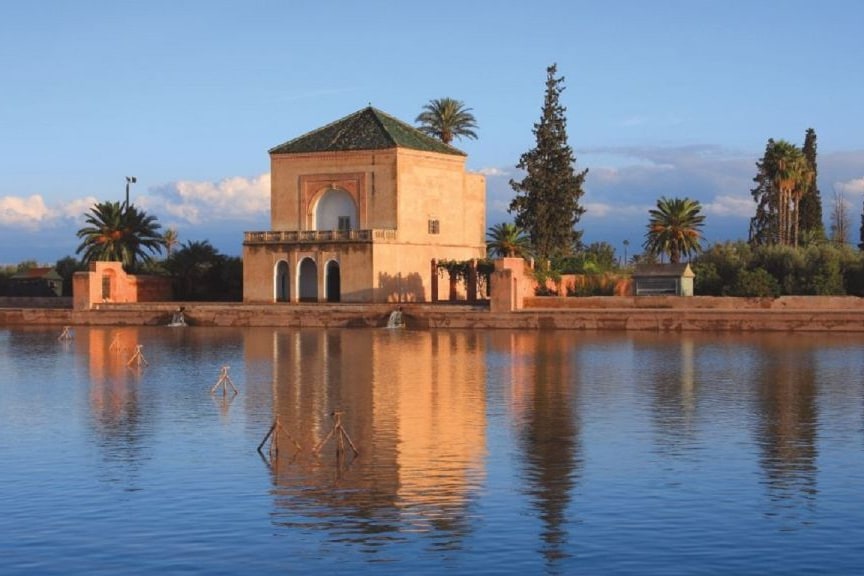
The Menara gardens are botanical gardens located to the west of Marrakech, Morocco, near the Atlas Mountains. They were established in the 12th century by the Almohad Caliphate ruler Abd al-Mu'min. The name menara derives from the pavilion with its small green pyramid-shaped roof, meaning lighthouse.
What's not included
Entrance fees for museums and historical monuments
Entrance fees to Majorelle Garden,Berber Muesem,Yves Saint Laurent Muesem: 315.00 MAD;32$ per person
Available languages
Written guide
DE
EN
IT
FR
ES
Guide guide
EN
FR
Reviews breakdown
Viator
5.0
1 reviews
5★
1
4★
0
3★
0
2★
0
1★
0
Tripadvisor
4.9
19 reviews
5★
18
4★
1
3★
0
2★
0
1★
0
Important information
Wheelchair accessible
Infants and small children can ride in a pram or stroller
Public transportation options are available nearby
Specialized infant seats are available
Transportation options are wheelchair accessible
All areas and surfaces are wheelchair accessible
Suitable for all physical fitness levels
About Marrakech
Marrakech is a vibrant city known for its rich history, bustling souks, and stunning architecture. It offers a blend of traditional Moroccan culture and modern amenities, making it a captivating destination for travelers.
Top Attractions
Jemaa El-Fnaa
Jemaa El-Fnaa is the heart of Marrakech, a bustling square filled with food stalls, entertainers, and souvenir vendors. It's a must-visit for its vibrant atmosphere and cultural experiences.
Cultural
2-3 hours
Free (food and souvenirs cost extra)
Koutoubia Mosque
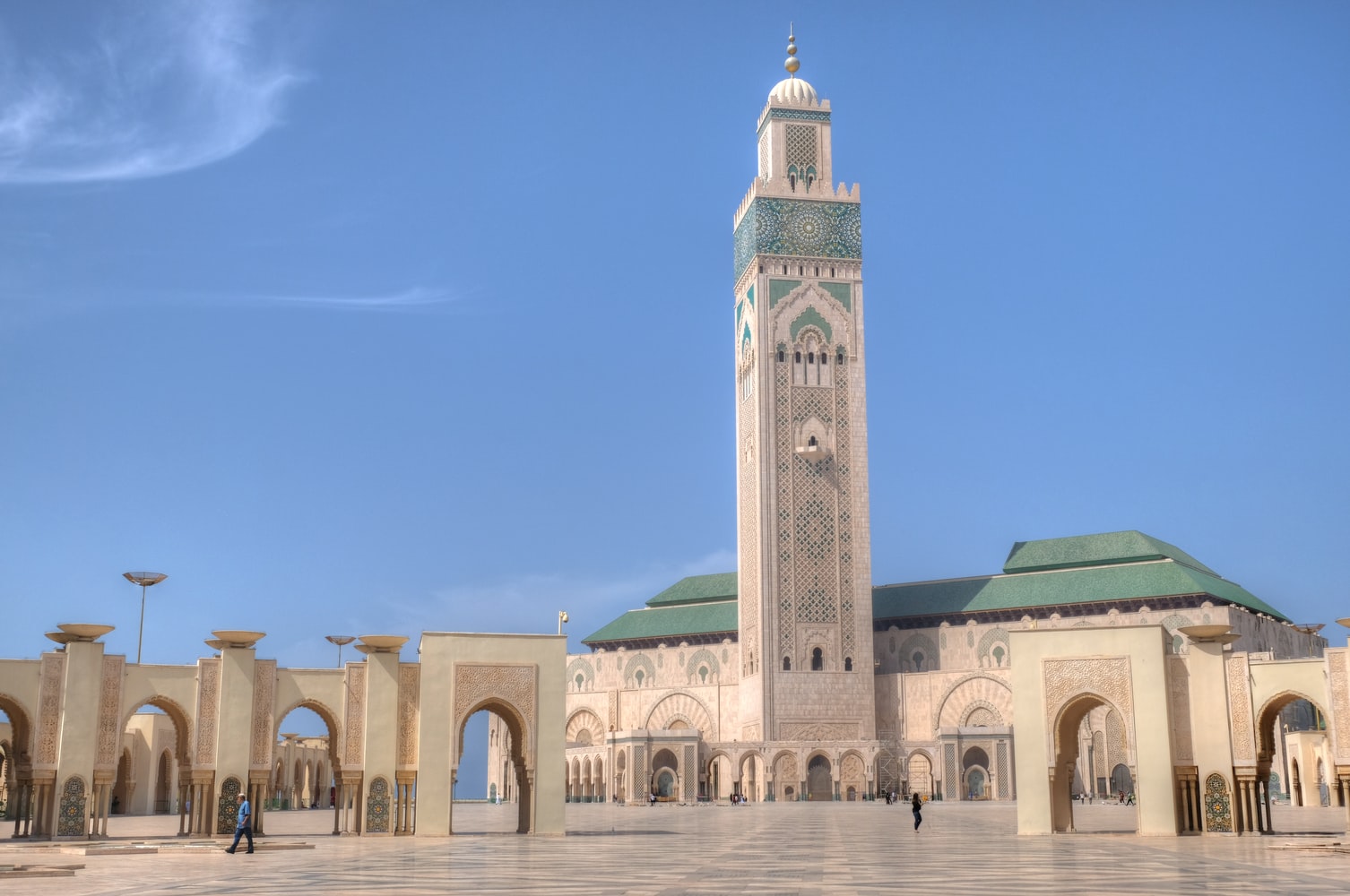
The Koutoubia Mosque is one of the most iconic landmarks in Marrakech. Its minaret is a symbol of the city and can be seen from many parts of the medina.
Historical
1 hour
Free (non-Muslims cannot enter the mosque)
Bahia Palace
The Bahia Palace is a stunning example of Moroccan architecture, featuring intricate tile work, lush gardens, and beautiful courtyards. It offers a glimpse into the opulent lifestyle of the past.
Historical
1-2 hours
70 MAD
Majorelle Garden
The Majorelle Garden is a beautiful botanical garden designed by French painter Jacques Majorelle. It features a variety of plants, a striking blue villa, and a museum dedicated to Yves Saint Laurent.
Nature
2-3 hours
70 MAD
Saadian Tombs
The Saadian Tombs are a collection of mausoleums dating back to the 16th and 17th centuries. They were discovered in 1917 and offer a fascinating look into the history of Marrakech.
Historical
1 hour
70 MAD
Must-Try Local Dishes
Tagine
A slow-cooked stew made with meat, vegetables, and spices, named after the earthenware pot it's cooked in.
Main course
Vegetarian options available
Couscous
A dish made with steamed semolina grains, often served with vegetables and meat.
Main course
Vegetarian options available
Pastilla
A savory-sweet pie made with layers of filo pastry, filled with spiced pigeon or chicken, almonds, and powdered sugar.
Main course
Contains nuts
Mint Tea
A traditional Moroccan tea made with green tea and fresh mint leaves, sweetened with sugar.
Drink
Contains caffeine
Popular Activities
Hiking in the Atlas Mountains
Surfing in Essaouira
Quad biking in the desert
Spa treatments
Yoga retreats
Relaxing in a hammam
Exploring the medina
Visiting museums
Best Time to Visit
Spring (March to May) and Fall (September to November)
The best time to visit Marrakech is during spring and fall when the weather is pleasant and ideal for exploring the city. The temperatures are mild, and the crowds are manageable.
15°C to 25°C
59°F to 77°F
Practical Information
Language
- Official: Arabic
- Widely spoken: French, Berber languages
- English: Moderately spoken in tourist areas
Currency
Moroccan Dirham (MAD)
Time Zone
GMT+0
Electricity
220VV, 50HzHz
Safety Information
Overall Safety Rating: Exercise caution
Marrakech is generally safe for tourists, but petty crime and scams can occur. Be cautious of your surroundings, especially in crowded areas.
Important Precautions:
- • Be cautious of your belongings in crowded areas.
- • Use reputable taxi services and agree on the fare before starting your journey.
- • Avoid walking alone at night in less crowded areas.
Getting there
By air
- Menara International Airport • 4 km from city center
By train
Marrakech Railway Station
By bus
Marrakech Central Bus Station
Getting around
Public transport
Buses are the most common form of public transport in Marrakech. They are affordable and cover most areas of the city.
Taxis
Available • Apps: Careem, Heetch
Rentals
Car, Bike, Scooter
Neighborhoods
Medina
Gueliz
Hivernage
Day trips
Atlas Mountains
60 km from Marrakech • Full day
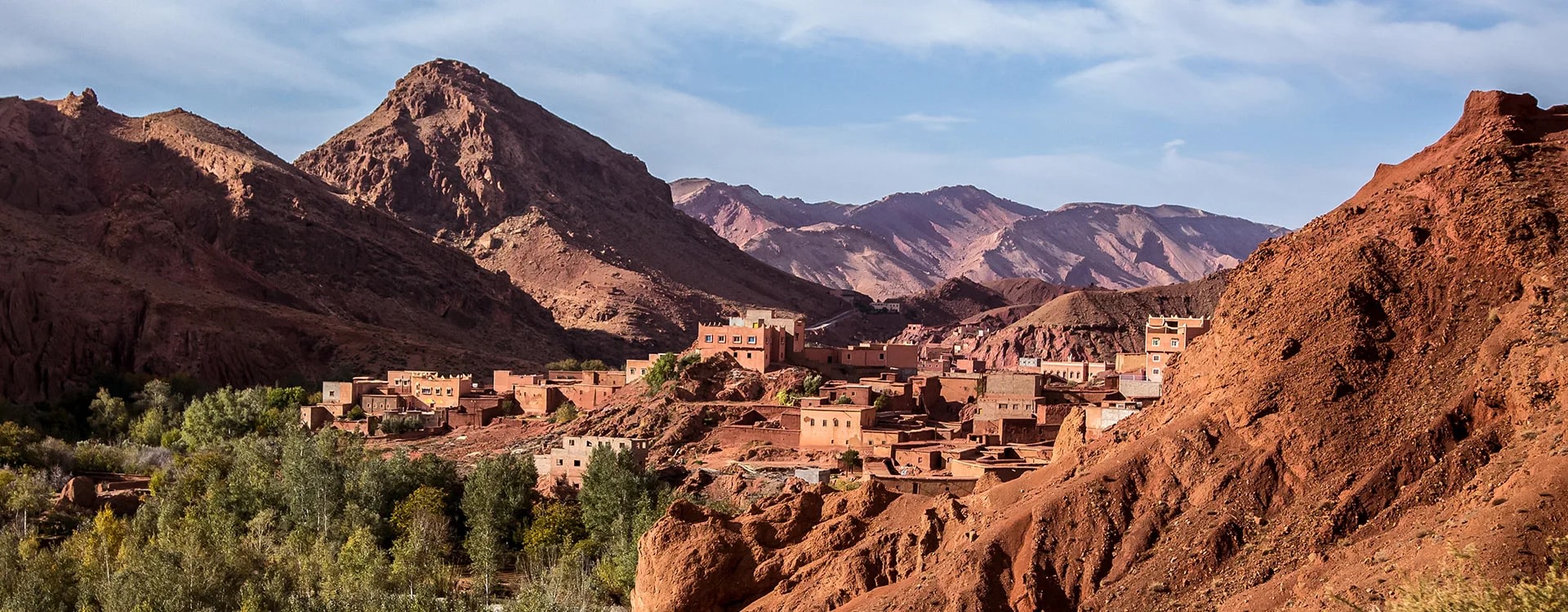
The Atlas Mountains offer stunning landscapes, hiking trails, and traditional Berber villages. It's a great escape from the city for nature lovers.
Ourika Valley
30 km from Marrakech • Half day to full day
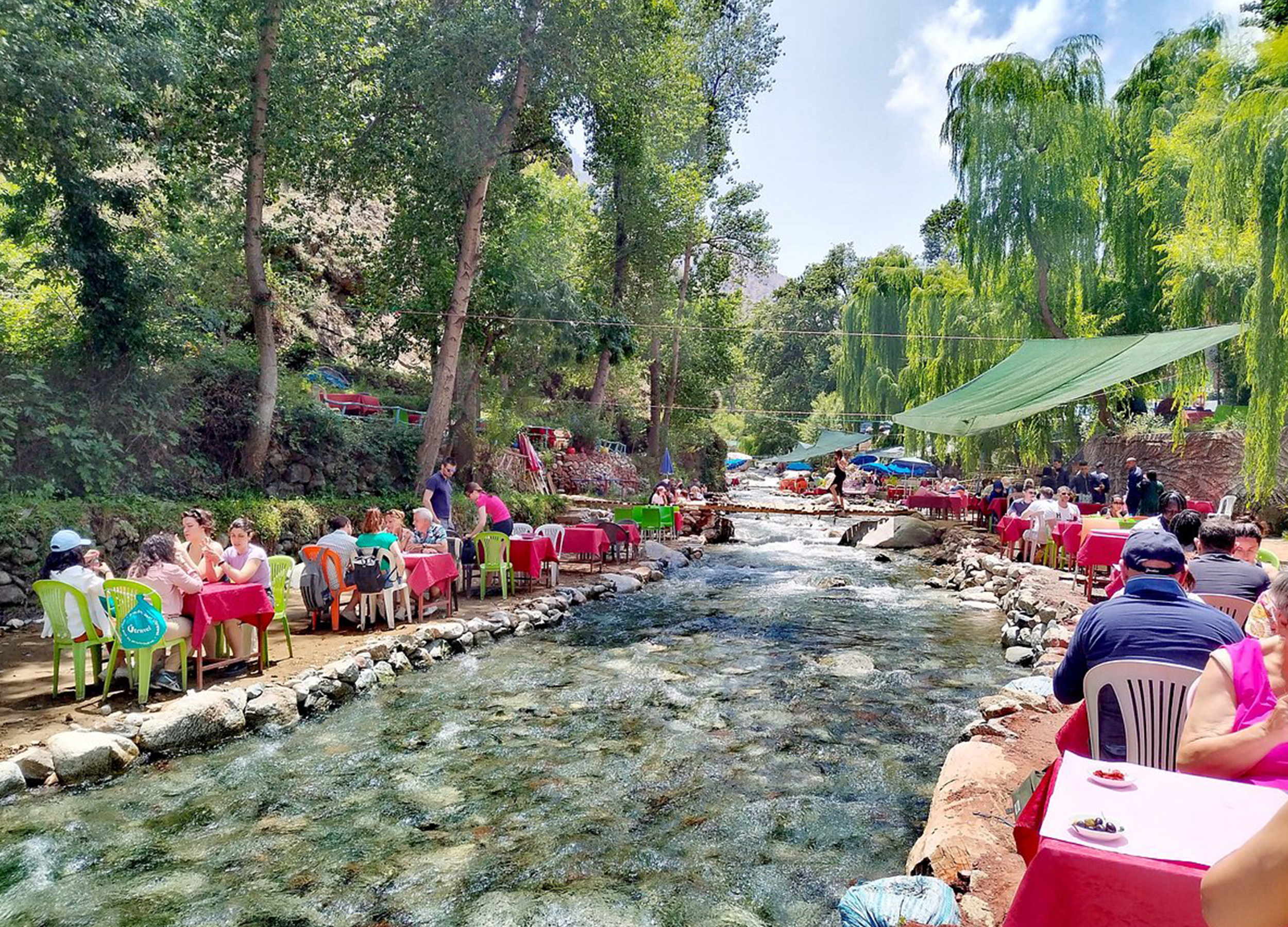
The Ourika Valley is known for its beautiful landscapes, traditional Berber houses, and waterfalls. It's a popular destination for day trips from Marrakech.
Essaouira
180 km from Marrakech • Full day to overnight
Essaouira is a charming coastal town known for its beautiful beaches, historic medina, and vibrant arts scene. It's a popular destination for surfing, windsurfing, and relaxation.
Festivals
Marrakech Popular Arts Festival • Every July
Marrakech International Film Festival • Every November/December
Ramadan • Dates vary (Islamic calendar)
Pro tips
- Hire a local guide for a more immersive and informative experience.
- Learn a few basic phrases in Arabic or French to enhance your interactions with locals.
- Visit the medina early in the morning or late in the afternoon to avoid the heat and crowds.
- Bargain politely when shopping in the souks, as prices are often negotiable.
- Try local street food for an authentic culinary experience, but choose stalls with high turnover.
From $25
per person
Price varies by option
Secure booking
Free cancellation available
Instant confirmation