Full Day Excursion to Santo Domingo from Bávaro and Punta Cana
Active
12h
For a full refund, cancel at least 24 hours before the scheduled departure time.
Instant confirmation
Mobile or paper ticket accepted
About this experience
In this experience, we will get to know the tourist center and the first settlement in the Americas along with our history from the beginning of our posthumous history to being colonized by Spain and Christopher Columbus as ambassador, who began his journey in search of new routes to reach the Indies and the spices that were marketed at that time.
We offer the best personalized service, our guides are trained to provide memorable experiences through good service, smiles and kindness; and our office staff will assist you at all times and make you feel special.
Available options
Santo Domingo City tour full day from Bavaro / Punta Cana.
Pickup included
What's included
All Fees and Taxes
Air-conditioned vehicle
Typical buffet lunch
Detailed itinerary
1
Stop 1
In this beautiful national park we will see 4 lakes, each one with its charm and particularity:
- Aguas Azufradas: It is four meters deep and a whitish component can be seen at its bottom that was thought to be sulfur, hence the name of the lake, but later it was discovered that it was calcium and other minerals.
- La Nevera: It is 5.4 meters deep; It is the coldest since sunlight does not reach it. Its temperature varies between 15 and 21 ºC.
- Lago de las Damas: 2.5 meters deep. Formerly it was used as a spa for women and children.
- Los Zaramagullones: The curious name given to the lake is due to some native ducks of the area. At 6.1 meters deep, the beautiful lake is surrounded by exuberant vegetation, since it is the only cavity that is outdoors.
We will take a boat tour inside the caverns.
Three hours are taken en route from pick up to Santo Domingo.
2
Stop 2
Pass by
The Columbus Lighthouse, commonly known as Faro Colón, is a Dominican monument and museum built in honor of Christopher Columbus, discoverer of the New World.
It is a cross-shaped monument that measures approximately 800 meters long by 36.5 meters high and has exhibits from different countries and cultures within its facilities.
3
Stop 3
The Alcázar de Colón was built between 1511 and 1514, following the influences of the existing one in Mancera de Abajo, in Salamanca (Spain), of which ruins are still preserved. The name of the architect who carried out the construction of this fortified palace is unknown. This construction was built on a plot near the cliffs that look towards the Ozama River; Granted to Diego Columbus, eldest son of the discoverer of America, Christopher Columbus, by King Ferdinand the Catholic, so that he could build a home for him and his offspring on the island of Hispaniola.
4
Stop 4
Pass by
The Ozama Fortress is part of the Colonial City of Santo Domingo. According to historians and architects, the construction of this monument lasted from 1502 to 1508, which was started by Governor Nicolás Ovando.
The main objective of this construction was to protect the city from various attacks by English pirates, and from French and Portuguese invaders.
The Ozama Fortress was called during the colonial era Torre del Homenaje, although later it was also called Torre de la Vigía or de la Vigilancia, since in the upper part you could see the entrance of the Ozama river and the coast of the Caribbean Sea.
5
The building was one of the last buildings built by the Spanish on Dominican soil. The date of the beginning of its construction is not known with certainty, but some historians suppose that it was between the years 1714 and 1755 and it is attributed to Jerónimo Quesada y Garçon. It originally served as a church for the Jesuit order.
The National Pantheon has about 36 empty spaces to house future heroes. There is also an empty space without a plaque, dedicated to the unknown soldier. There is a permanent Honor Guard, made up of members of the presidential guard, dressed in gala clothes, without moving a single muscle. One of them makes a solemn round walk in the central aisle, which goes from the main entrance to just in front of the main altar. In the pantheon, together with the Dominican flag, the flags of the Air Force, the Navy and the Army of the Dominican Republic are displayed.
6
It is an old street in the Colonial City of Santo Domingo. For a time it was one of the main streets of Santo Domingo. Its name is due to the Count of Peñalva. This street begins with two corners, it begins at the Puerta del Conde Monument, at the intersection with Palo Hincado street, and ends at a stone staircase that leads to Francisco Alberto Caamaño avenue. Currently it is the only pedestrian street in Santo Domingo.
7
In 1939, by order of the then President of the Dominican Republic, Rafael Trujillo, the plans that would give shape to this work of art were drawn up, whose architect was the Italian Guido D'Alessandro Lombardi. It was not until February 27, 1944 on the occasion of the first centenary of National Independence where the construction of the work began.
The National Palace, the seat of the Dominican government, represents the symbol of Dominican sovereignty and is the place where major decisions are made and policies are drawn up for the smooth running of the country.
The building consists of three levels where the first level serves as accommodation for the general service facilities, the second level houses the entrance and the main lobby, as well as the Governing Council Room and the offices of the President, Vice President and various officials.
What's not included
Souvenirs.
Alcoholic Beverages
Available languages
Guide guide
EN
ES
Important information
Public transportation options are available nearby
Suitable for all physical fitness levels
Meeting point
In front of KFC at the Sunix pump in Downtown Punta Cana.
About Dominican Republic
The Dominican Republic, occupying the eastern part of the island of Hispaniola, is known for its stunning beaches, lush landscapes, and rich cultural heritage. It offers a blend of Caribbean charm and vibrant history, making it a top destination for travelers seeking both relaxation and adventure.
Top Attractions
Punta Cana
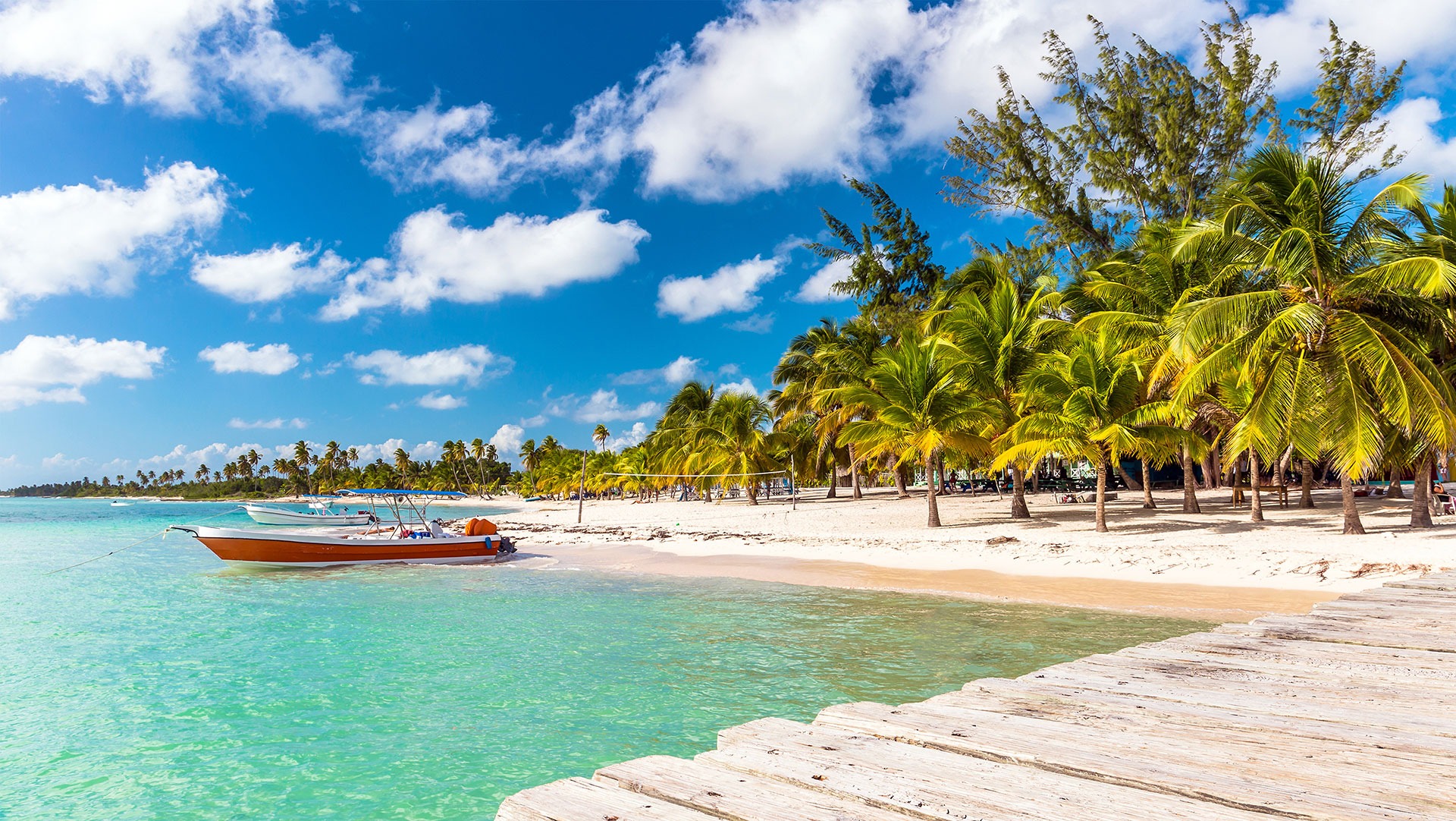
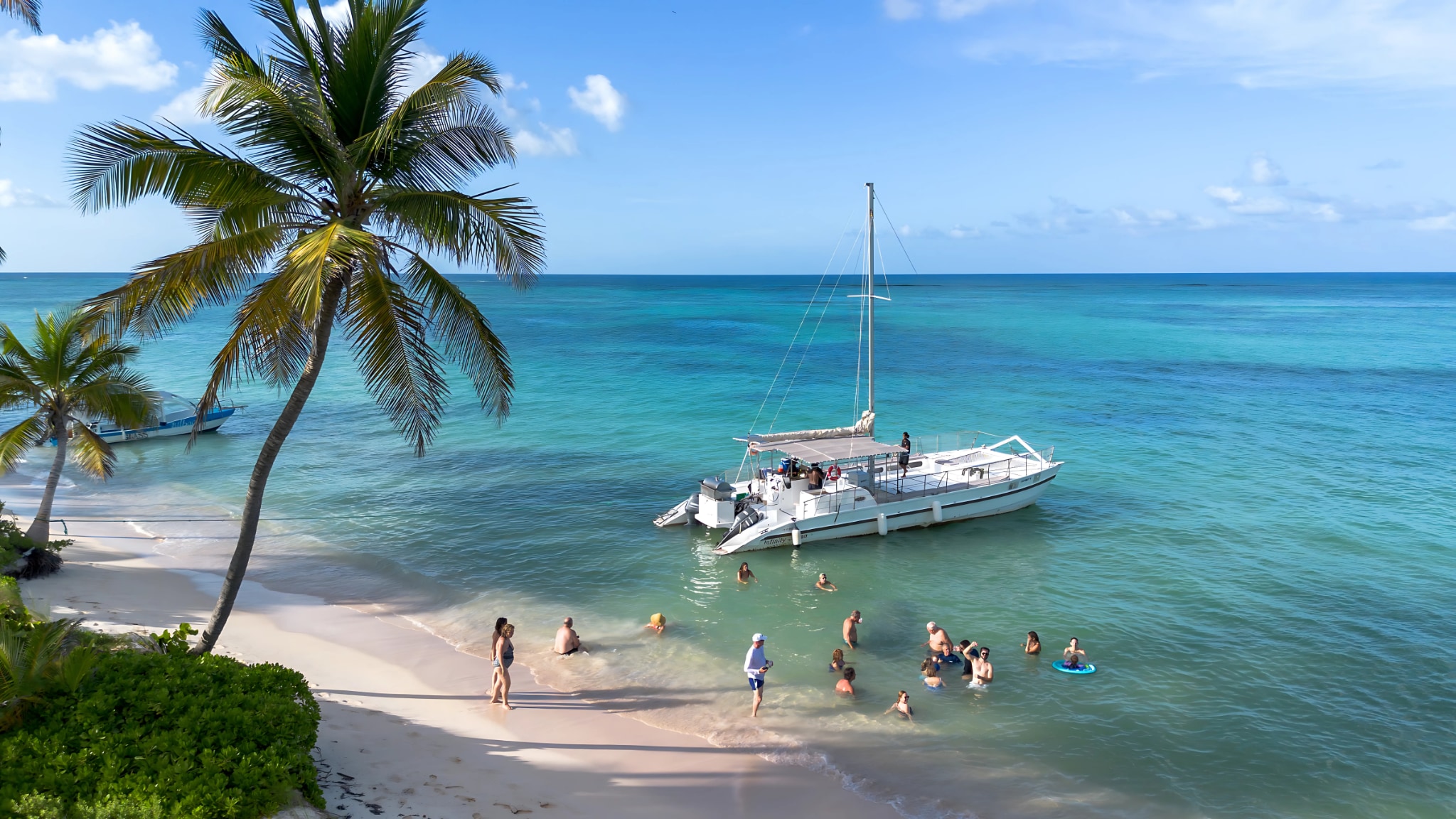
Punta Cana is famous for its stunning white-sand beaches and turquoise waters. It's a top destination for relaxation, water sports, and luxury resorts.
Beach
Full day or multi-day
Free to expensive (resorts and activities)
Santo Domingo
The capital city is rich in history, with colonial architecture, museums, and vibrant culture. It's a UNESCO World Heritage site.
Historical
Full day
Moderate (entrance fees to attractions)
Los Haitises National Park
This national park is known for its mangroves, caves, and diverse wildlife. It's a great spot for nature lovers and adventure seekers.
Nature
Full day
Moderate (tour packages)
Must-Try Local Dishes
La Bandera Dominicana
A traditional meal consisting of rice, stewed meat (usually chicken or beef), and red beans.
Lunch/Dinner
Can be vegetarian with plantains and beans.
Mangú
Mashed plantains often served with eggs, cheese, and fried cheese (salami).
Breakfast
Vegetarian.
Sancocho
A hearty stew made with meat (chicken, beef, or goat) and root vegetables.
Lunch/Dinner
Not vegetarian.
Popular Activities
Zip-lining in Jarabacoa
Canyoning in Río Damajagua
Beach lounging in Punta Cana
Spa treatments in resort areas
Exploring Zona Colonial in Santo Domingo
Visiting local markets for crafts and souvenirs
Snorkeling in Saona Island
Scuba diving in Bayahibe
Best Time to Visit
December to April
This is the peak tourist season with sunny weather, low humidity, and minimal rainfall. Ideal for beach activities and outdoor adventures.
25-30°C
77-86°F
Practical Information
Language
- Official: Spanish
- Widely spoken: English (in tourist areas)
- English: Moderately spoken in tourist areas, limited elsewhere
Currency
Dominican Peso (DOP)
Time Zone
GMT-4
Electricity
110VV, 60HzHz
Safety Information
Overall Safety Rating: Generally safe
The Dominican Republic is generally safe for tourists, but petty crime can occur. Stay aware of your surroundings and take precautions to protect your belongings.
Important Precautions:
- • Use reputable taxi services or ride-sharing apps.
- • Keep valuables secure and out of sight.
- • Avoid walking alone at night in unfamiliar areas.
Getting there
By air
- Las Américas International Airport • 25 km from Santo Domingo
- Punta Cana International Airport • 5 km from Punta Cana
By bus
Santo Domingo Terminal, Santiago Terminal
Getting around
Public transport
Local buses are affordable but can be crowded. They are a good option for budget travelers.
Taxis
Available • Apps: Uber, InDriver
Rentals
Car, Bike, Scooter
Neighborhoods
Zona Colonial
Punta Cana
Day trips
Saona Island
25 km from La Romana • Full day
A beautiful island known for its pristine beaches and clear waters, perfect for a day of relaxation and water activities.
Samana
100 km from Santo Domingo • Full day
A picturesque town on the northern coast, known for its natural beauty and outdoor activities.
Festivals
Carnival of Santo Domingo • February (dates vary)
Meriñe Festival • August (dates vary)
Pro tips
- Learn a few basic Spanish phrases to enhance your experience and interact with locals.
- Book tours and activities in advance, especially during peak season.
- Use ATMs in banks or reputable locations to avoid skimming devices.
- Carry small bills and coins for local purchases and tips.
- Stay hydrated and protect yourself from the sun, especially when visiting beaches and outdoor attractions.
From $25
per person
Price varies by option
Secure booking
Free cancellation available
Instant confirmation