Barcelona Highlights Private Tour with Port or Hotel Transfers
Active
4h
For a full refund, cancel at least 24 hours before the scheduled departure time.
Instant confirmation
Mobile or paper ticket accepted
About this experience
Enjoy Barcelona in a private vehicle driven by professional drivers, uniformed and multilingual.
The driver will pick you up at your centrally located hotel in Barcelona and will show you around some of the city's most famous landmarks such as la Sagrada Familia, Casa Batlló, la Pedrera-Casa Milà and many more!
Your driver will not join you while you visit your desired stops by foot or while you go inside a monument; your driver will be inside the vehicle waiting for you.
Available options
Visit with Official Guide
Official Tour Guide Service: An official tour guide would join the group during this private visit. <br/>Pickup included
Barcelona Highlights Private Tour
Pickup included
What's included
Private transportation
Bottled water
Baby Chairs and Boosters for Children (On Request)
Air-conditioned vehicle
Hotel/port pickup and drop-off
Detailed itinerary
1
Start of the Tour from your Hotel or the Port.
The itinerary can change depending on the starting/ending place and the preferences of the client.
2
Stop 2
The Puerto Olímpico de Barcelona is a leisure port located in front of Villa Olímpica, between the beaches of Barceloneta and Nova Icària, in the San Martín district.
3
Stop 3
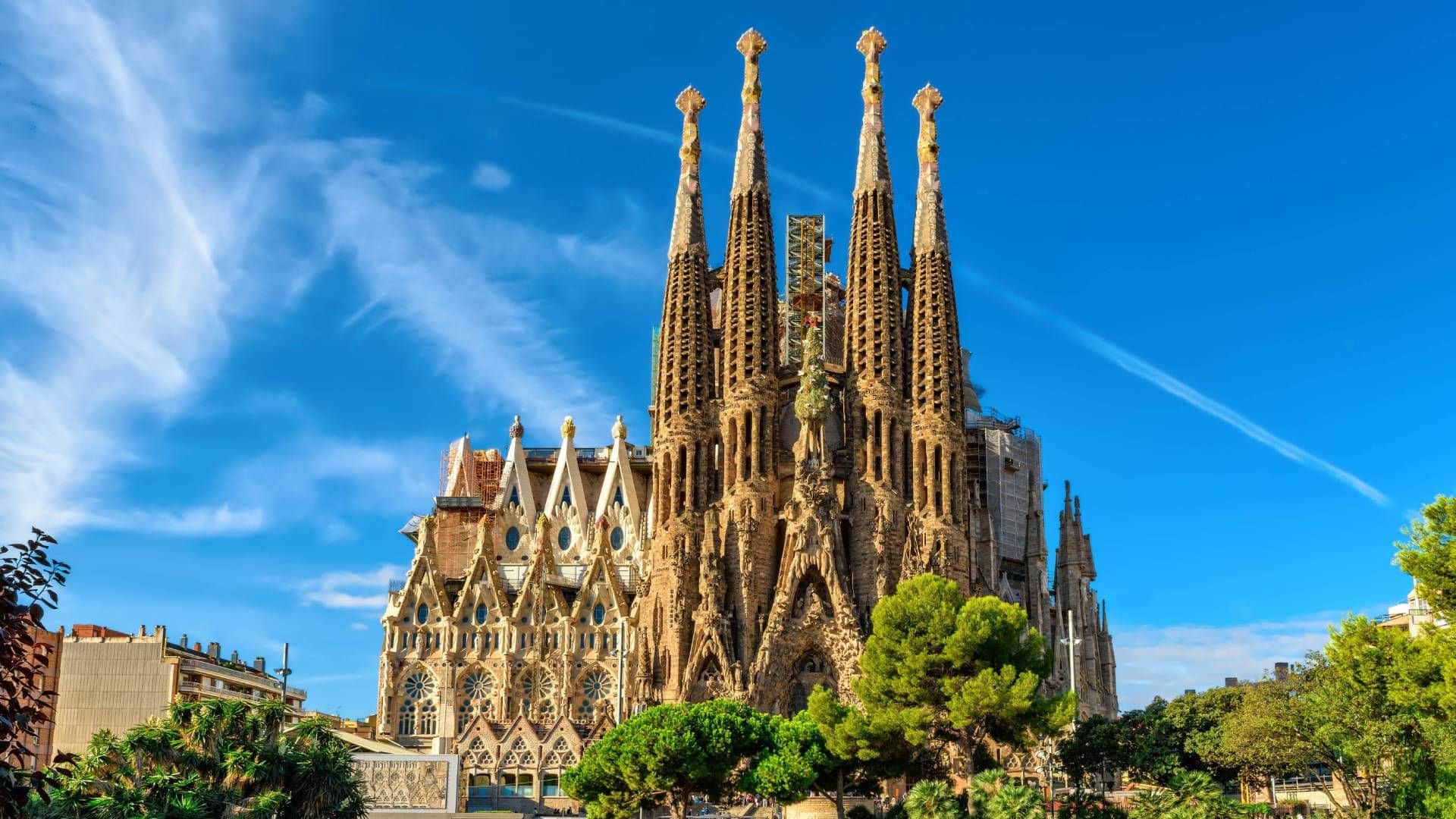
The Sagrada Familia is a catholic basilica projected by Antonio Gaudí.
The construction began in 1882 and it's going on to this day. It's considered Gaudí's masterpiece, one of Spain's main attractions and the most visited church in Europe, just after Saint Peter's Basilica in the Vatican.
When its construction concludes, it will be the tallest christian church in the world.
4
Stop 4
Paseo de Gracia is one of the main avenues in Barcelona. It's full of commercial and business areas; it also includes lots of important examples of Modernist Architecture, such as the Casa Batlló or la Pedrera by Antoni Gaudí, and other houses by great Catalan architects like Lluís Domènech i Montaner. These buildings are considered to be part of the World Heritage by the Unesco.
The avenue is located in the center of Barcelona, the Ensanche, and it connects Plaza Cataluña to the east with the Calle Mayor de Gracia to the west.
5
Stop 5
The Casa Milà, commonly known as "La Pedrera" is a Modernist building by Antoni Gaudí, built between 1906 and 1910.
It is one of the most visited buildings in Barcelona, with 20 million visitors since its opening to the public in 1987.
6
Stop 6
The Casa Batlló is a building built by Antoni Gaudí, the greatest exponent of the Catalan "Modernisme" (a modernist Catalan movement).
The construction was between 1904 and 1906. It is located in the number 43 of Paseo de Gracia, in the named "Manzana de la Discordia" (literally "Apple of Discord"). This name was born due to the concentration of modernist buildings by different architects: la Casa Amatller, la Casa Lleó i Morera, la Casa Mulleras and la Casa Josefina Bonet.
7
Stop 7
The Casa Amatller is a Modernist building adjacent to the Casa Batlló and near the Casa Lleó i Morera. It was projected by the architect Josep Puig i Cadafalch between 1898 and 1900.
8
The Casa Lleó i Morera is a Modernist building built by the architect Lluís Domènech i Montaner. It's located in the number 35 in Paseo de Gracia.
9
Stop 9
Plaza Cataluña is a centric square in Barcelona, one of the city's nerve centers.
It has an area of 5 hectares. It constitutes the point of union between the old town of Barcelona and the Ensanche (one of the city's districts).
10
The Vía Layetana is a street that communicates the Ensanche with the Port traversing Ciutat Vella.
It received its name in honor of the first Iberian inhabitants of the area.
11
Stop 11
The Santa Iglesia Catedral Basílica Metropolitana de la Santa Cruz y Santa Eulalia is the Gothic Cathedral of Barcelona.
The Cathedral was built between the XIIIth and XVth Centuries over the old Romanesque cathedral, which was also built over a paleochristian basilica, remains of which can be seen in the underground of the Museo de Historia de la Ciudad.
Its facade is more modern than the rest of the building (XIXth Century) but it shares style with the totality of the Cathedral.
This building is considered to be Asset of Cultural Interest and since the 2nd of November 1929, National Artistic Historical Monument.
12
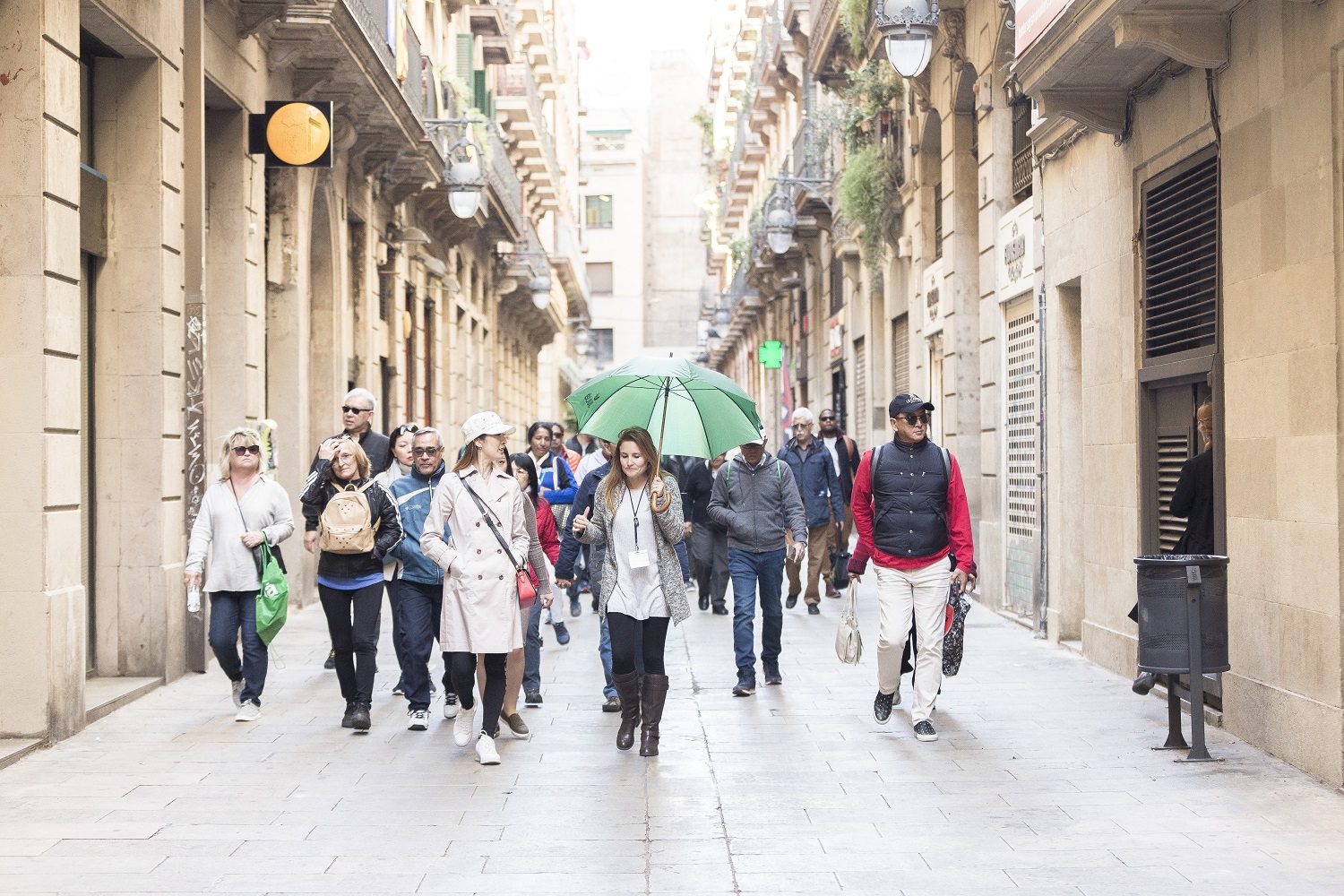
The Barrio Gótico is a district with charm that has many medieval alleys full of trendy bars, pubs and Catalan restaurants.
The artisans sell leather goods and beading products next to the Cathedral, and flower stands and food can be found in the busy Rambla.
At the Plaza del Pi, named this way thanks to its basilica, there is an art market every weekend.
13
The Paseo de Colón is an avenue in the Ciudad Vieja District, that runs parallel to the sea between the squares of Antonio López and Puerta de la Paz, where you will find the Colombus Monument.
14
Stop 14
The Columbus Monument is an scultoric complex located in the square Portal de la Paz in Barcelona.
Built in honor of Christopher Colombus, it stands in the point of union between las Ramblas and the Paseo de Colón, in front of the old port of Barcelona.
The monument was built during the context of improvement of the coastal part of the city on the score of the Universal Exposition of Barcelona of 1888.
Inaugurated the 1st of June 1888 during the Exposition, it quickly became one of the most characteristic icons of the city.
On the inside of the column there is an elevator that allows you to go up to a half sphere situated below the feet of the statue, where you can view the city.
15
Stop 15
The Castillo de Montjuic is an old militar fortress located in the mountain of Montjuïc.
Historically the castle has had an important role during different relevant chapters of the History of Barcelona.
16
The Jardins del Mirador del Alcalde are located in Montjuïc, in the Sants-Montjuïc District.
They were elaborated between 1962 and 1969 by Joaquim Casamor, while the monumental fountain was made by Carles Buïgas. Next to this viewpoint we can find one of Montjuïc's cableway's stops.
17
Anella Olímpica (Olympic Ring) is the name of the space and group of sportive facilities located in Montjuïc receive, that were built or restored for the Barcelona 1992 Olympics.
It has an approximate area of 400 hectares.
18
Stop 18
The Estadio Olímpico is a sports venue situated in Montjuïc.
The original stadium was inaugurated the 20th of May of 1929 by Alfonso XIII, a day after the International Exposition.
On the score of the Olympics of 1992, the stadium was rebuilt practically in its totality (1985-1989), being re-inaugurated 60 years later as "Estadio Olímpico" the 8th of September of 1989 by king Juan Carlos I.
Designed by Barcelona based architect Pere Domènech i Roura, son of modernist architect Domènech i Montaner, it was projected to house future Olympics, that after aplying 4 times, would arrive to Barcelona 63 years later.
19
Stop 19
The Palau Sant Jordi is a multifunctional pavilion on Montjuïc.
It was built on the score of the Olympic Games of 1992, inaugurated in 1990.
It is considered the gem of the so-called "Anillo Olímpico de Montjuïc", which also include facilities such as the Estadio Olímpico and the Pisicinas Picornell (Picornell Pools).
20
Stop 20
The Museo Nacional de Arte de Cataluña (MNAC) stands out thanks to its Romanesque Art collection, considered to be one of the most complete ones in the world.
Also known as Palacio Nacional (National Palace), it was built for the International Exposition of 1929.
21
Stop 21
Pass by
The Pueblo Español is an outdoor architectural museum located in Montjuïc, close to the Magical Fountain.
The enclosure contains 117 life-sized buildings that represent a typical Spanish village, with its streets, houses, squares, theatre, school, restaurants and artisanal workshops.
It was built due to the International Exposition of 1929.
At the beginning, it was planned that the enclosure would be built only for 6 months (the duration of the Exposition), but the success this place had allowed this place to remain complete to this day.
22
Stop 22
The Magical Fountain of Montjuïc was built on the score of the International Exposition of 1929 by Carles Buïgas in the place where the Four Columns by Puig i Cadafalch were located.
During the 80s, music was incorporated to the fountain's show, and just before the Olympic Games of 1992 in Barcelona they were totally restored.
The fountain was also one of the external stages for the celebration of the MTV Europe Music Awards 2002.
Since 2013, the Barcelona Campanadas (a New Years' Spanish tradition) are celebrated in this place.
23
The towers to access the enclosure of the Exposition of 1929, known as "Torres Venecianas", are two twin ornamental towes, located at the intersection of Avenida de la Reina María Cristina with Plaza España.
The name "Torres Venecianas" is due to their similarity with the belfry of Saint Mark in Venice.
Built by Ramon Reventós as the access of the enclosure of the International Exposition in Barcelona; nowadays they work as the access to the enclosure of Montjuïc's Fira Barcelona.
24
Stop 24
Barcelona's Plaza España is one of the most emblematic points of the city.
It was built during the International Exposition of 1929, following a project by Puig i Cadafalch and Guillem Busquets. It was finished by Antoni Darder.
It is an important center of the city's traffic from which you can acces to the area of Montjuïc, and where the Feria de Muestras and the Museo Nacional de Arte de Cataluña (MNAC) are located.
Other relevant buildings in the square are the Centro Comercial Las Arenas (old bullring and actual mall, artwork in "neomudéjar" style, an Islamic inspired style), as well as the so-called Torres Venecianas, inspired by the famous belfry in Venice, built by Ramon Reventós for the International Exposition of 1929.
What's not included
Tickets for the attractions
Available languages
Guide guide
PT
EN
ES
Reviews breakdown
Viator
4.7
111 reviews
5★
100
4★
3
3★
2
2★
3
1★
3
Tripadvisor
4.9
45 reviews
5★
44
4★
0
3★
0
2★
0
1★
1
Important information
Infants and small children can ride in a pram or stroller
Public transportation options are available nearby
Specialized infant seats are available
Suitable for all physical fitness levels
At time of booking, cruise ship passengers must provide the following information: ship name, docking time, disembarkation time and re-boarding time
Important notes
• If you have not already specified, you MUST advise supplier as soon as possible your ship name, docking time, disembarkation time and departure time so that appropriate arrangements can be made
About Barcelona
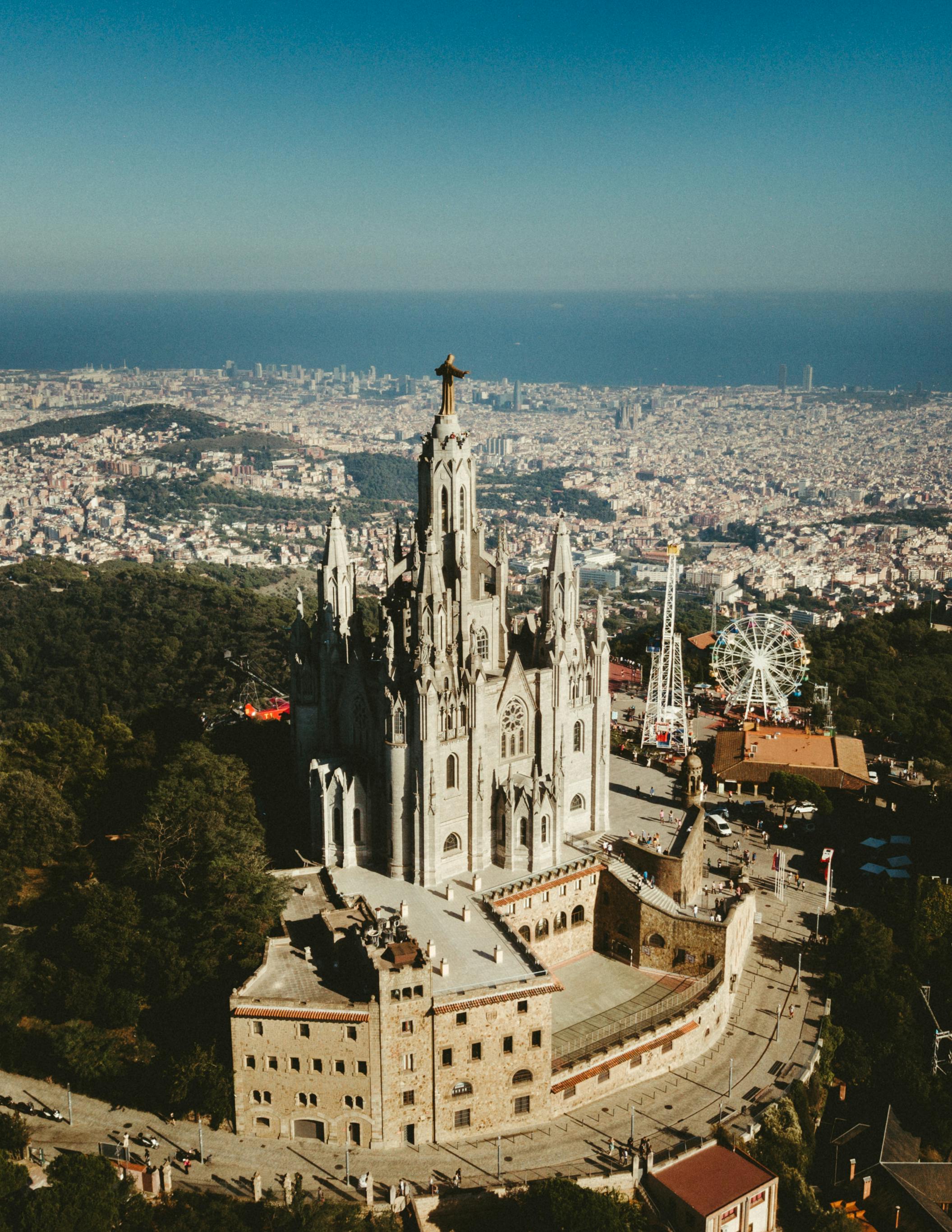
Barcelona is a vibrant city on the northeastern coast of Spain, known for its rich cultural heritage, stunning architecture, and lively atmosphere. It seamlessly blends medieval history with modernist masterpieces, making it a unique and appealing destination for travelers.
Top Attractions
Sagrada Família
Antoni Gaudí's unfinished masterpiece, a stunning basilica that combines Gothic and Art Nouveau forms. It's a UNESCO World Heritage Site and a must-visit.
Architecture
1.5-2.5 hours
€26-€34 (depending on access to towers)
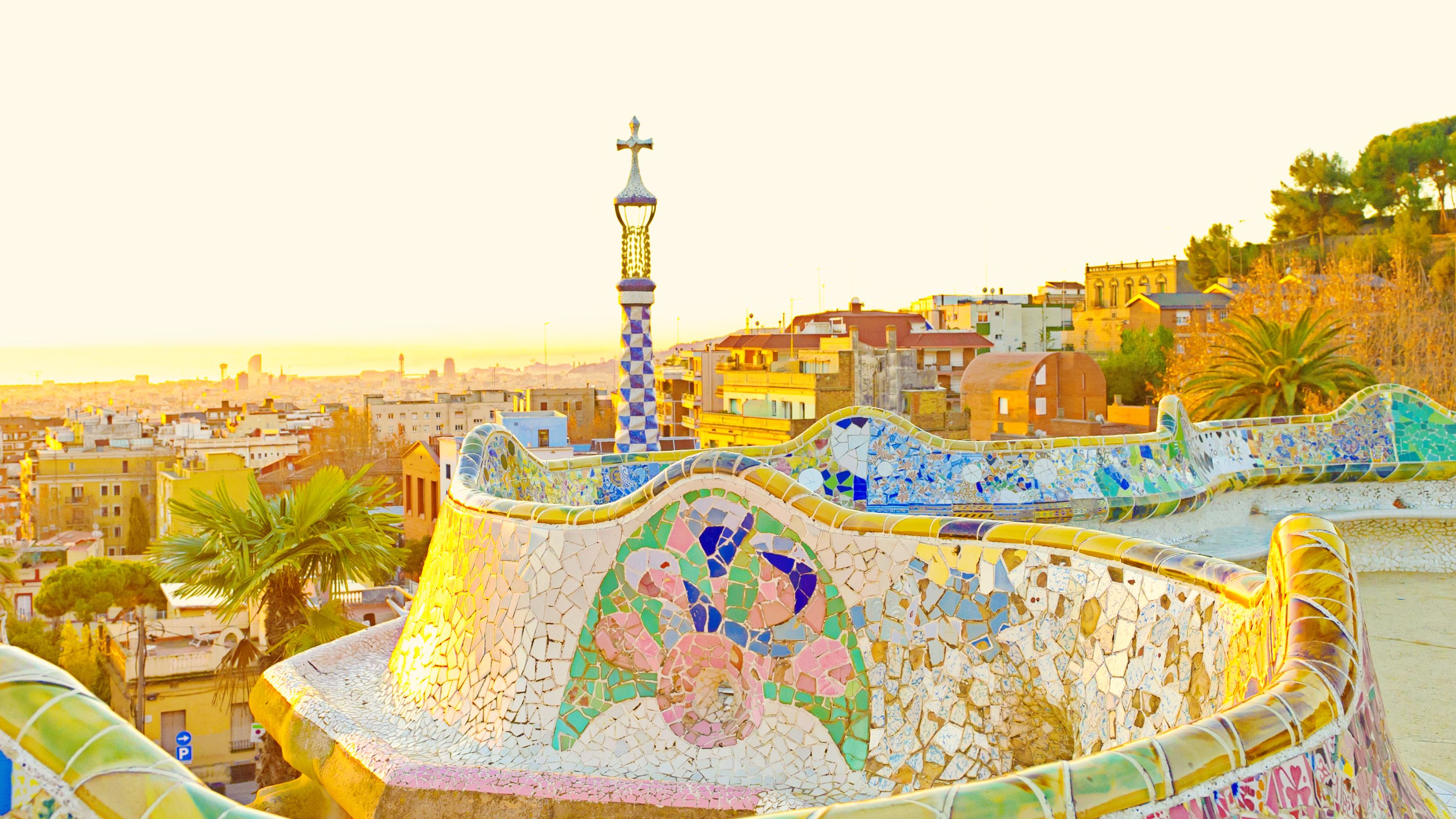
Park Güell
Another Gaudí masterpiece, this park features colorful mosaics, whimsical structures, and beautiful city views.
Architecture
1.5-2 hours
€10 (Monumental Zone)
La Rambla
A famous pedestrian street filled with shops, restaurants, street performers, and the famous La Boqueria market.
Street
1-2 hours
Free (shopping and dining costs vary)
Casa Batlló
A unique building designed by Gaudí, known for its surrealist design and colorful façade.
Architecture
1 hour
€35-€45 (depending on the tour)
Gothic Quarter
The historic heart of Barcelona, filled with medieval streets, ancient buildings, and hidden plazas.
Historical
2-3 hours
Free (some attractions may have entry fees)
Must-Try Local Dishes
Pa amb tomàquet
Bread rubbed with tomato, garlic, and olive oil, often served as an appetizer.
Snack
Vegetarian
Fideuà
A paella-like dish made with short, thin noodles, seafood, and saffron.
Main Course
Contains seafood
Crema Catalana
A Catalan version of crème brûlée, made with egg yolks, sugar, and cinnamon.
Dessert
Vegetarian
Patatas Bravas
Fried potato cubes topped with a spicy tomato sauce and garlic aioli.
Snack
Vegetarian
Popular Activities
Hiking in Montserrat
Water sports in Barceloneta
Rock climbing
Beach lounging in Barceloneta
Spa treatments
Strolling through parks and gardens
Visiting museums and galleries
Attending festivals and events
Best Time to Visit
May to June, September to October
The peak season offers pleasant weather and is ideal for exploring the city's attractions. The crowds are manageable, and the city is vibrant with festivals and events.
20°C to 28°C
68°F to 82°F
Practical Information
Language
- Official: Catalan, Spanish
- Widely spoken: English, French
- English: Moderately spoken
Currency
Euro (EUR)
Time Zone
GMT+1 (CET), GMT+2 (CEST during daylight saving time)
Electricity
230VV, 50HzHz
Safety Information
Overall Safety Rating: Generally safe
Barcelona is generally safe, but like any major city, it has its share of petty crime and scams. Be aware of your surroundings, especially in touristy areas and on public transportation.
Important Precautions:
- • Be cautious of pickpockets, especially in crowded areas and on public transportation.
- • Keep an eye on your belongings, especially in touristy areas and on public transportation.
- • Be cautious of fake petitions or distractions to steal from you.
Getting there
By air
- Barcelona-El Prat Airport • 12 km from city center
By train
Sants Station, Estació de França
By bus
Estació d'Autobusos Sants, Estació d'Autobusos Nord
Getting around
Public transport
The metro system is efficient, clean, and covers most of the city. It's a great way to get around quickly and affordably.
Taxis
Available • Apps: Free Now, Cabify
Rentals
Car, Bike, Scooter
Neighborhoods
Eixample
Gràcia
Barceloneta
Gothic Quarter
El Raval
Day trips
Montserrat
50 km from Barcelona • Half day to full day
A stunning mountain range with a historic monastery, offering hiking, scenic views, and religious sites.
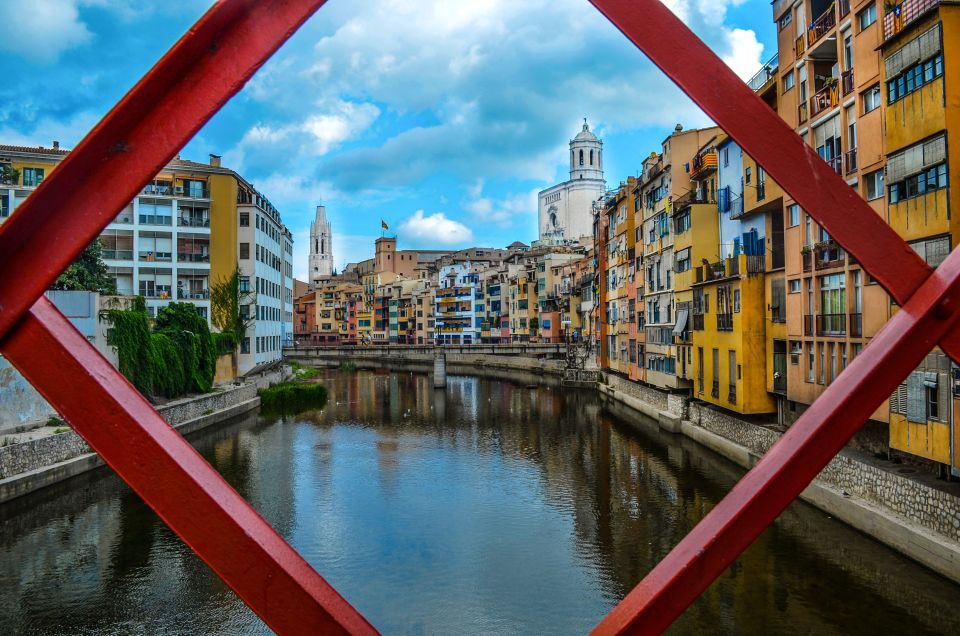
Girona
100 km from Barcelona • Full day
A charming medieval city with a well-preserved Jewish Quarter, a stunning cathedral, and a rich history.
Sitges
40 km from Barcelona • Half day to full day
A picturesque coastal town known for its beaches, nightlife, and historic sites.
Festivals
La Mercè Festival • Late September
Sant Jordi • April 23
Festa Major de Gràcia • Mid-August
Pro tips
- Visit popular attractions like the Sagrada Família and Park Güell early in the morning or late in the afternoon to avoid crowds.
- Explore the city's neighborhoods on foot or by bike to discover hidden gems and local culture.
- Try local specialties like pa amb tomàquet, fideuà, and crema catalana at local markets and restaurants.
- Use the T-Casual pass for unlimited travel on public transportation, which is more cost-effective than single tickets.
- Be cautious of pickpockets, especially in crowded areas and on public transportation, and keep an eye on your belongings.
From $25
per person
Price varies by option
Secure booking
Free cancellation available
Instant confirmation