The Third Reich in Dresden- private tour
Active
2h
For a full refund, cancel at least 24 hours before the scheduled departure time.
Manual confirmation
Mobile or paper ticket accepted
About this experience
Third Reich Tour in Dresden provides an insight to how the Nazis came to power and sustained it to the bitter end against the backdrop of events in Dresden. As the capital of the richest and most densely populated region of Germany at that time, and one of the cultural centres of the Reich, Dresden was in the centre of attention of the regime.
Since the tour also covers the major landmarks of the historic city of Dresden it can be the perfect choice for those who who want to see the city centre, but also have an interest in this special topic.
The tour is led by a local guide who is not of German origin. This made her ask questions and dig deep in order to understand the events that took place in this turbulent time. The tour content arose out of these years of personal enquiry and interest in the subject.
As this is a private tour, it can be customized and personalized according to your wishes.
Available options
The Third Reich in Dresden- private tour
Pickup included
What's included
The information is customized and delivered in an engaging and interesting manner.
A well researched tour with a guide who is passionate and informed about the subject.
Detailed itinerary
1
Stop 1
We begin our tour at the 'end' in a manner of speaking with the story of the aerial bombing of Dresden and its destruction. The end of the war, the end of the regime, and the beginning of coming to terms with immense loss.
2
Stop 2
The former arsenal called the Albertinum stands directly in front of the Police headquarters in Dresden. What did it witness in those early years of the Reich in Dresden?
3
See the New Synagogue of Dresden built in 2001 and the relic to the old one. What were the stories of the Jews in Dresden and the role of the larger community? We do not go inside the Synagogue.
4
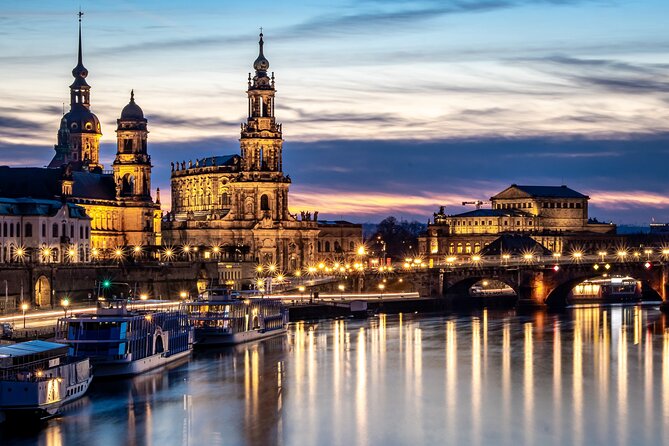
The banks of the River Elbe underwent a powerful redesigning so as to become a place for showing support to the Führer. Learn about the role of architecture and propaganda in The Third Reich.
5
The Catholic Cathedral and the former Parliament building of Saxony and events in Dresden during the Third Reich. Did the role played by Churches undergo a change during those 12 years? And afterwards? We will walk through the Church if time permits and take a look at some evocative sculptures relating to these times.
6
Stop 6
Surrounded by magnificent historical buildings, the Theater square where the Opera House stands, was once the Adolf Hitler Platz. What happened here during the Third Reich? We do not go inside the Opera House.
7
Stop 7
A stage for magnificence and to demonstrate power and status. We go into the Zwinger, see it up close and learn about symbols of power and strength. And propaganda. Always propaganda...
8
The heart of the old walled Dresden is an appropriate place to end the tour. Tragedy and regret are present in this space as is continuation of life and tradition. We will visit the Church of the Holy Cross (if open) and end with a story of forgiveness and reconciliation.
Available languages
Guide guide
EN
Reviews breakdown
Viator
5.0
2 reviews
5★
2
4★
0
3★
0
2★
0
1★
0
Tripadvisor
5.0
1 reviews
5★
1
4★
0
3★
0
2★
0
1★
0
Important information
Wheelchair accessible
Infants and small children can ride in a pram or stroller
Service animals allowed
Public transportation options are available nearby
Suitable for all physical fitness levels
Meeting point
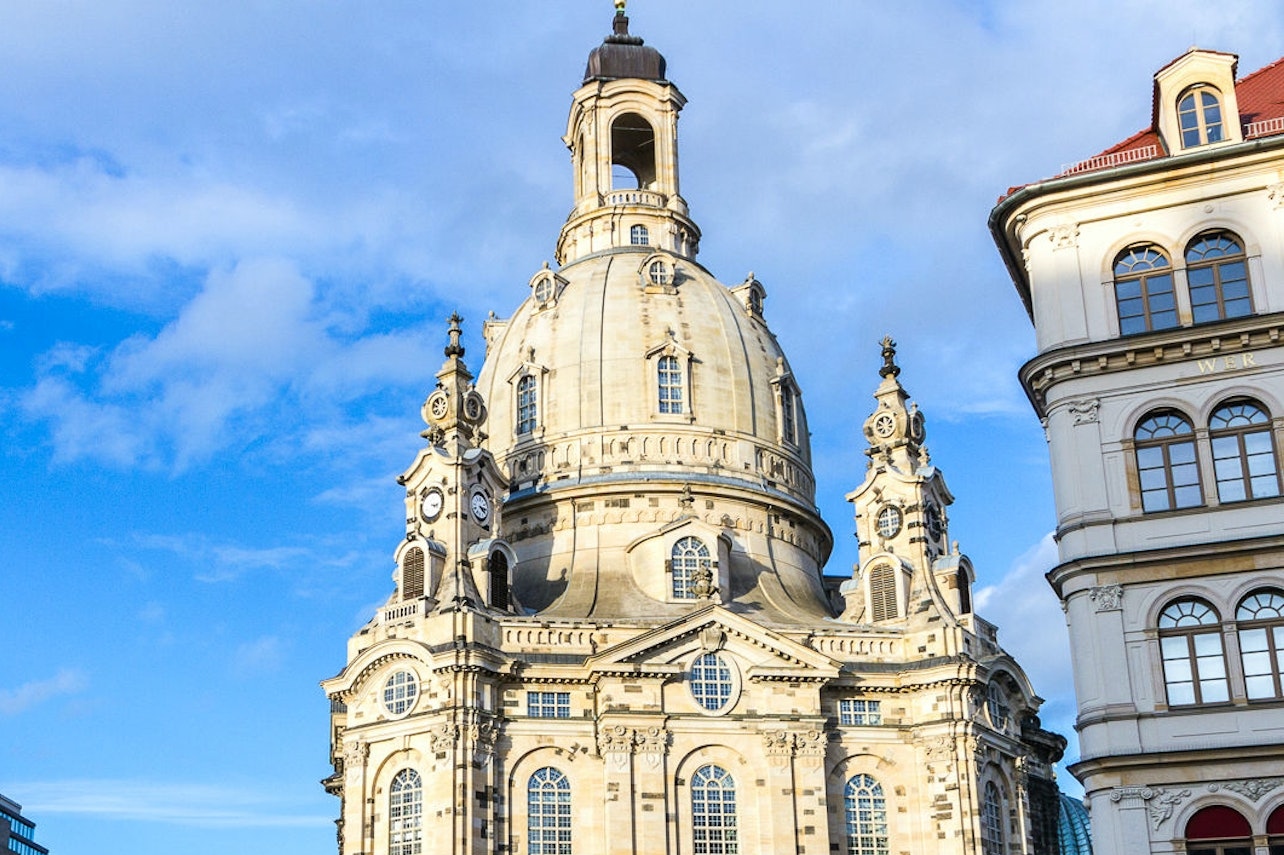
At the statue of Martin Luther in front of the Frauenkirche, the Church Of Our Lady in Dresden.
About Dresden
Dresden, the capital of Saxony, is renowned for its stunning architecture and rich cultural heritage. Known as the 'Florence of the Elbe' due to its baroque and rococo architecture, the city offers a blend of historic charm and modern vibrancy along the Elbe River.
Top Attractions
Frauenkirche
The Frauenkirche is a stunning Baroque church that was rebuilt after being destroyed in World War II. It is a symbol of reconciliation and peace.
Historical/Architecture
1-2 hours
Free entry, donations welcome
Zwinger Palace
The Zwinger Palace is a beautiful Baroque complex that houses several museums, including the Old Masters Picture Gallery and the Porcelain Collection.
Historical/Architecture
2-3 hours
€12-€14 for museum entry
Semperoper
The Semperoper is one of the world's most famous opera houses, known for its stunning architecture and acclaimed performances.
Architecture/Cultural
1-2 hours for a tour, longer for a performance
Tours: €9, Performances: €20-€150
Dresden Castle (Residenzschloss)
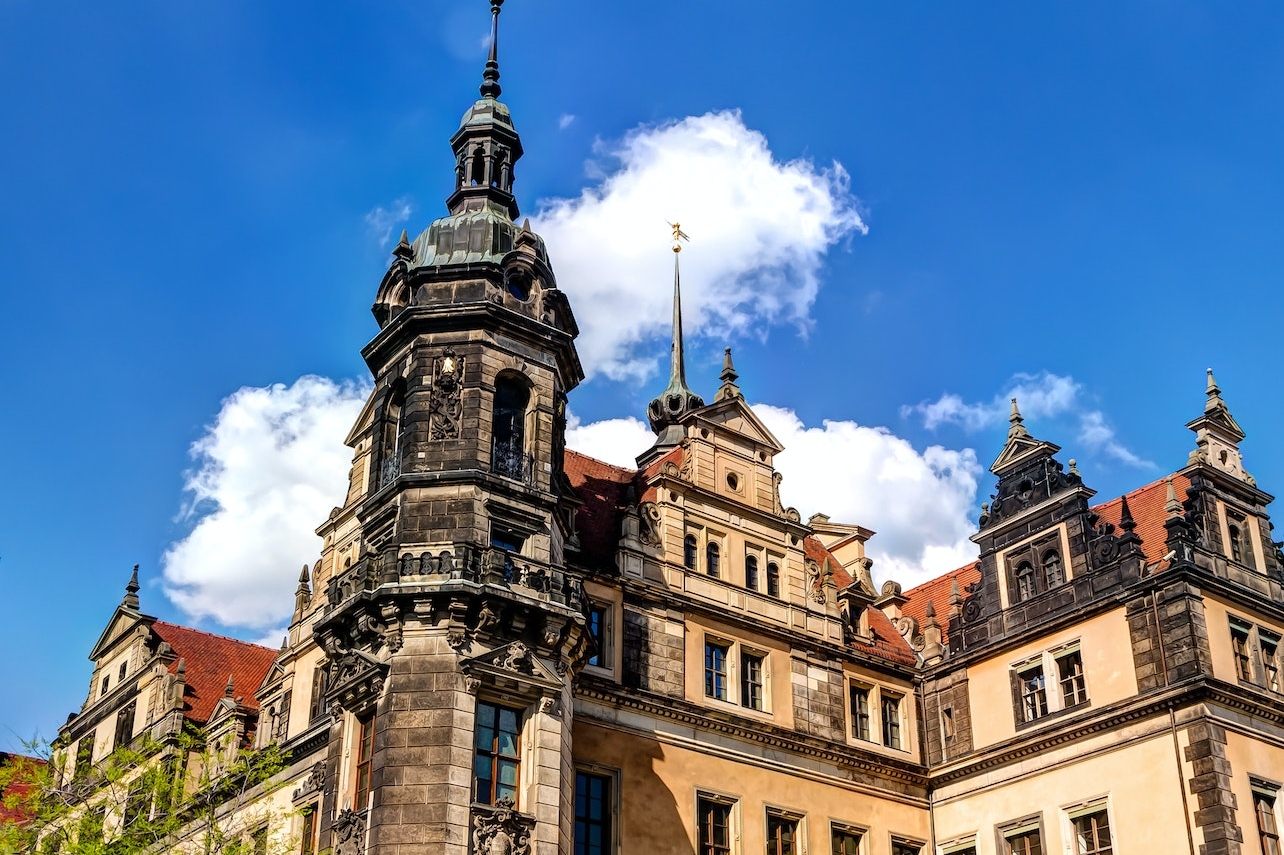
Dresden Castle is a historic palace that houses several museums, including the Green Vault and the Armory.
Historical/Architecture
2-3 hours
€12-€14 for museum entry
Elbe River Cruise
An Elbe River cruise offers a unique perspective of Dresden's skyline and landmarks. Cruises are available in various durations and themes.
Nature/Entertainment
1-3 hours
€15-€50 depending on the cruise
Must-Try Local Dishes
Dresdner Eierschecke
A traditional layered cake made with eggs, quark, and cream, topped with a layer of baked cheese.
Dessert
Contains dairy and eggs, not suitable for vegans or those with lactose intolerance
Sächsische Klöße
Potato dumplings, often served with meat and gravy.
Side Dish
Can be made gluten-free, but typically contains potatoes and flour
Dresdner Sauerbraten
A pot roast marinated in vinegar and spices, often served with red cabbage and Klöße.
Main Course
Contains meat, not suitable for vegetarians or vegans
Dresdner Christstollen
A traditional fruit bread made with dried fruits, nuts, and spices, often dusted with powdered sugar.
Dessert
Contains dairy and nuts, not suitable for vegans or those with nut allergies
Popular Activities
Hiking in Saxon Switzerland
Rock climbing
Boat tours on the Elbe
Spas and wellness centers
Elbe River cruises
Walking tours
Museum visits
Opera and ballet performances
Best Time to Visit
May to September
This is the best time to visit Dresden, with pleasant weather and numerous outdoor festivals and events. The city is bustling with tourists, and all attractions are open.
15°C to 25°C
59°F to 77°F
Practical Information
Language
- Official: German
- Widely spoken: English, French, Russian
- English: Moderately spoken, widely spoken in tourist areas
Currency
Euro (EUR)
Time Zone
GMT+1 (Central European Time, CET), GMT+2 (Central European Summer Time, CEST) during daylight saving time
Electricity
230VV, 50HzHz
Safety Information
Overall Safety Rating: Generally safe
Dresden is generally a safe city with low crime rates. However, as with any tourist destination, it's important to be aware of your surroundings and take precautions to protect your belongings.
Important Precautions:
- • Keep valuables secure and out of sight
- • Be cautious of pickpockets in crowded areas
- • Use licensed taxis or ride-sharing services
Getting there
By air
- Dresden Airport • 9 km from city center
By train
Dresden Hauptbahnhof
By bus
Dresden Central Bus Station
Getting around
Public transport
The tram system is efficient and user-friendly, with frequent services and clear signage.
Taxis
Available • Apps: Taxi Dresden, mytaxi
Rentals
Car, Bike, Scooter
Neighborhoods
Innere Altstadt
Neustadt
Blasewitz
Loschwitz
Day trips
Saxon Switzerland National Park
30 km from Dresden • Full day
A stunning national park known for its unique rock formations, hiking trails, and scenic views.
Meissen
25 km from Dresden • Half day to full day
A historic town known for its porcelain production and beautiful architecture.
Pillnitz Castle and Park
8 km from Dresden • Half day
A beautiful castle and park located along the Elbe River, offering stunning views and historic architecture.
Festivals
Dresden Music Festival • May to June
Dresden Christmas Market • Late November to December 24th
Dresden Opera Ball • Late January
Pro tips
- Visit the historic centers early in the morning or late in the afternoon to avoid crowds
- Take a guided tour of the Green Vault to learn about the fascinating history of the collection
- Explore the neighborhoods beyond the historic center for a more local experience
- Try the local specialties, such as Dresdner Eierschecke and Saxon Sauerbraten
- Attend a performance at the Semperoper for a unique cultural experience
From $25
per person
Price varies by option
Secure booking
Free cancellation available