Brunello/Montalcino-Tour in Ferrari
Active
4h
All sales are final. No refund is available for cancellations.
Manual confirmation
Mobile or paper ticket accepted
About this experience
Driving the Ferrari California Turbo Cabriolet in Tuscany, in the heart of Val D'Orcia Valley "Unescu Heritage of theWorld" is pure magic .. Your Tour director an expert of Ferrari, will drive you among Bagno Vignoni, a little hidden gem in Val D'Orcia Valley, not commercial place!.. where ancient roman warriors use to relax after battles.. you still can fin original thermal baths.
Driving ahead Montalcino, you will discover the most beautiful roads of Europe, full of turns where you can taste the speed of your Ferrari, the sound of the Ferrari V8 engine and enjoy the wind trough your hair... Breathtaking landscapes, medieval towns, tasty food, good wine and the smile of the locals are waiting for you ... Try this unforgettable luxury unique experience. Real Luxury is leader in the ultimate self-driving experience...
Available options
Brunello/Montalcino-Tour in Ferrari
Pickup included
What's included
GST (Goods and Services Tax)
Wine Tasting
Tour Director Travel&Living
Airport/Departure Tax
Parking Fees
Ferrari Rental 1 Day (8 hours) - Tour Director - Car Insurance - Staff Car - Radio Walkie Talkie
Detailed itinerary
1
Bagno Vignoni, the thermal station that has been known since Medieval times for its celebrated piazza d’acqua. On the slope that leads towards the river, you’ll find the Parco dei Mulini — interesting park that bears witness to plumbing constructions and techniques that were invented in medieval times.
Bagno Vignoni is a small spa of medieval origin, although it was already know in Roman times. Bagno Vignoni sits on a hill above the Val d'Orcia just south of San Quirico. The fascinating tiny village is clustered around a large pool closed on three sides by the town walls, whith water that flows at 52°. The pool essentially fills the square, surrounded by a 1.5 metre-high wall on three sides. All around are buildings designed by Bernardo Rossellino in honour of Pope Pius II, while on the fourth side is the archway from which St. Catherine of Siena admired the view. This place also fascinated Lorenzo il Magnifico of the Medici family, who spent part of 1490 here. The old Francigena road passes near the village, and as the diary written in 1581 by Michel de Montagne confirms, pilgrims and travellers heading toward Rome frequently stopped in Bagno Vignoni to find comfort in its hot springs.
In 1677 the Gran Duke Cosimo III enfeoffed St. Quirico d’Orcia to Cardinal Flavio Chigi, together with the lilttle villages of Vignoni and Bagno Vignoni; the thermal establishment, together with three mills, eight houses, a tavern and a certain amount of land thus passed into the hands of the Chigi family and their discendents to whom a part still remains in property.
Nowadays Bagno Vignoni is well-known and appreciated the world over as an esteemed thermal locality situated in the heart of the Val d’Orcia.
2
Stop 2
Montalcino is situated high on a hill, between the Brunello vineyards. The impressive castle or Fortezza, which was built by the Sienese in 1361, dominates this well-preserved medieval town. The town takes its name from il leccio or holm oak, a variety of oak tree that once covered the terrain.
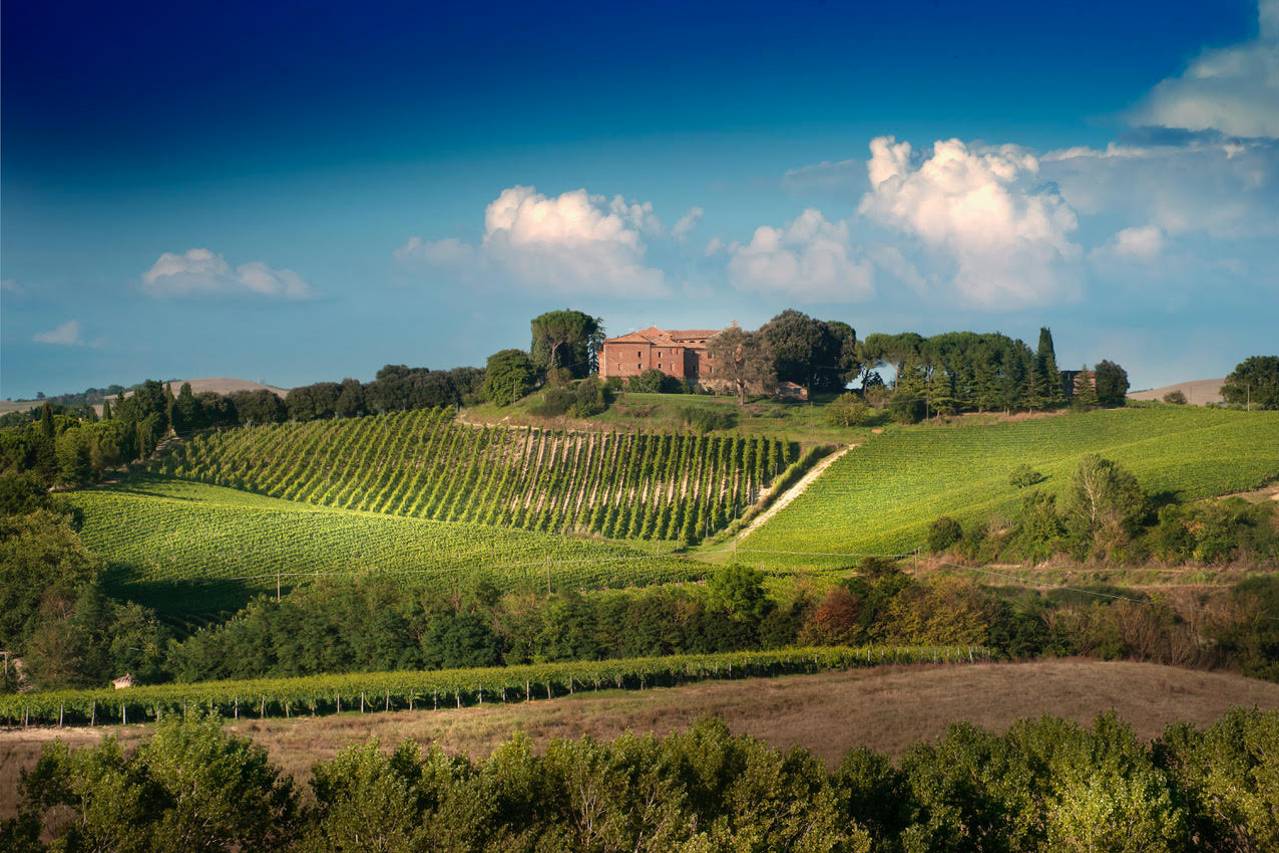
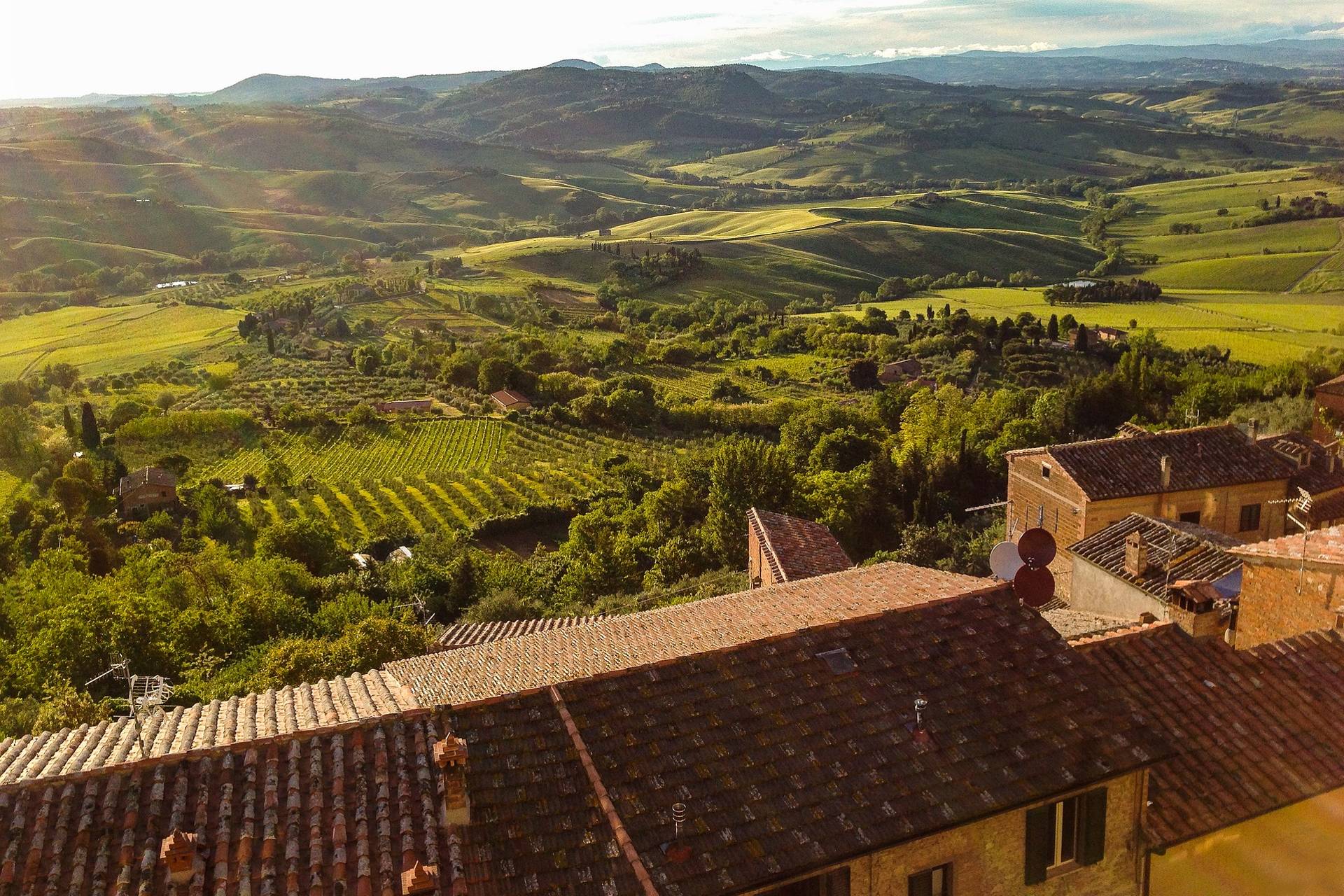
The very high site of the town offers stunning views over the Asso, Ombrone and Arbia valleys of Tuscany, dotted with silvery olive orchards, vineyards, fields, and villages. The lower slopes of the Montalcino hill itself are dominated by highly productive vines and olive orchards.
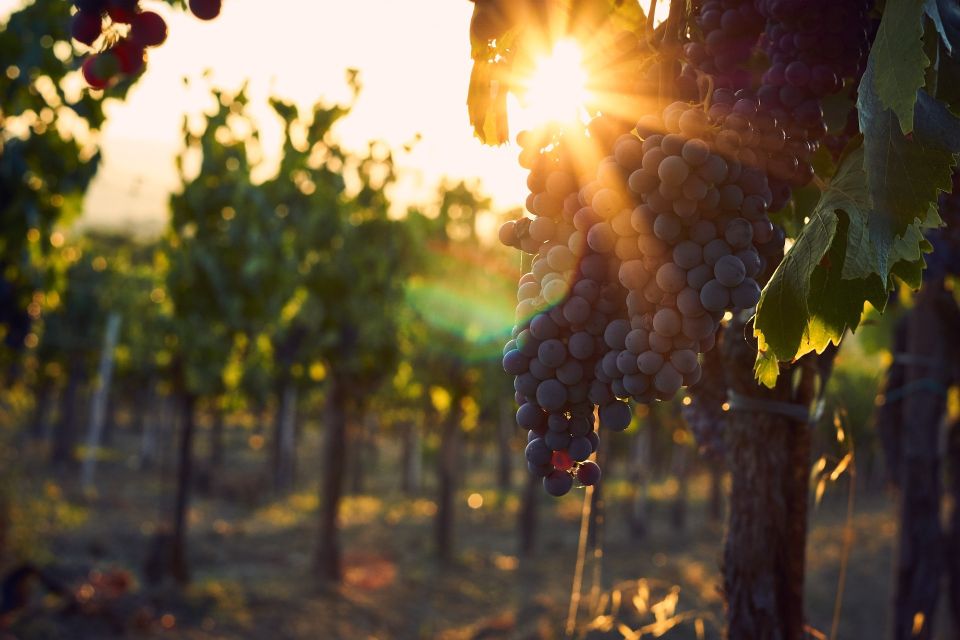
Even more than because of its historical heritage, Montalcino is known for its famous Brunello di Montalcino wines. Some pleasant enoteca or wineries can be found in the heart of the city. In the early hours, when the locals prepare everything for the incoming visitors,
The historic center of Montalcino has been pedestrianized, so it is a pleasant place to stroll around or linger over at a café on the square and practice your Italian with the locals.
Parking is easy on Via Pietra Strozzi (Parcheggio Viale Strozzi).
At the end of Via Pietra Strozzi is the Chiesa della Madonna del Soccorso. Behind the church, there is a small square offering a marvelous view over the Val d’Arbia in the direction of Siena.
Montalcino is situated in the heart of Val d’Orcia in a postcard-like scenery. The city is part of the Val d’Orcia, a part of southern Tuscany characterized by gentle hills, sinuous country roads or strade bianche, and a horizon dotted with isolated cypress trees. The entire valley of the Val d'Orcia with this magnificent natural scenery was added to the UNESCO World Heritage list in 2006.'San Gimignano delle belle Torri' is in Tuscany, 56 km south of Florence. It served as an important relay point for pilgrims travelling to or from Rome on the Via Francigena. The patrician families who controlled the town built around 72 tower-houses (some as high as 50 m) as symbols of their wealth and power. Although only 14 have survived, San Gimignano has retained its feudal atmosphere and appearance. The town also has several masterpieces of 14th- and 15th-century Italian art.
What's not included
Gas for the Ferrari
Alcoholic Beverages
Available languages
Guide guide
RU
CMN
EN
IT
FR
RO
ES
Important information
Public transportation options are available nearby
Suitable for all physical fitness levels
You only need valid Driver Licence
Meeting point
Meeting Point: Siena Train Station. It's very small, impossible to get lost :P
About Siena
Siena is a medieval city in Tuscany, Italy, renowned for its rich history, stunning architecture, and the famous Palio horse race. The city's well-preserved historic center is a UNESCO World Heritage site, offering a glimpse into Italy's medieval past with its cobblestone streets, towering churches, and grand piazzas.
Top Attractions
Piazza del Campo
Piazza del Campo is the heart of Siena and the site of the famous Palio horse race. This stunning, shell-shaped square is surrounded by historic buildings and is a must-visit for its architectural beauty and vibrant atmosphere.
Historical
1-2 hours
Free
Siena Cathedral (Duomo di Siena)
The Siena Cathedral is a masterpiece of Italian Gothic architecture, featuring stunning marble facades, intricate mosaics, and beautiful frescoes. The cathedral's interior is equally impressive, with a richly decorated nave and a magnificent marble floor.
Religious
1-2 hours
€8-12
Basilica of San Domenico
The Basilica of San Domenico is one of the largest churches in Siena and houses the relics of St. Catherine of Siena. The church's interior is adorned with beautiful frescoes, sculptures, and a magnificent choir.
Religious
1 hour
Free (donations appreciated)
Palazzo Pubblico
The Palazzo Pubblico is a historic palace that houses the Museo Civico, which showcases a collection of medieval and Renaissance art. The palace's courtyard and tower offer panoramic views of the city and surrounding countryside.
Historical
1-2 hours
€9-12
Santa Maria della Scala
Santa Maria della Scala is a historic hospital and museum complex that showcases the city's rich history and art. The complex features beautiful frescoes, sculptures, and a labyrinthine network of underground passages.
Historical
1-2 hours
€7-10
Must-Try Local Dishes
Pici all'Aglione
A traditional Tuscan pasta dish made with hand-rolled pici pasta and a garlic and tomato sauce.
Main course
Vegetarian
Ribollita
A hearty bread and vegetable soup, often made with cannellini beans, kale, and carrots.
Soup
Vegetarian
Panforte
A traditional Siena dessert made with dried fruits, nuts, and spices, often enjoyed during the Christmas season.
Dessert
Vegetarian, contains nuts
Peposo
A traditional Tuscan beef stew, slow-cooked with wine, garlic, and spices.
Main course
Contains meat
Popular Activities
Hiking in the Tuscan countryside
Cycling tours
Wine tasting tours
Visiting hot springs
Enjoying local cuisine
Exploring historic sites
Visiting museums
Attending the Palio horse race
Best Time to Visit
June to August, July 2 (Palio di Provenzano), August 16 (Palio di Assunta)
The peak season in Siena is during the summer months, especially around the Palio horse races. The weather is warm and sunny, perfect for exploring the city's outdoor attractions and enjoying the vibrant atmosphere.
22°C to 34°C
72°F to 93°F
Practical Information
Language
- Official: Italian
- Widely spoken: English, French, Spanish
- English: Moderately spoken
Currency
Euro (EUR)
Time Zone
GMT+1 (CET), GMT+2 (CEST) during daylight saving time
Electricity
230VV, 50HzHz
Safety Information
Overall Safety Rating: Generally safe
Siena is generally safe for tourists, with low crime rates. However, pickpocketing and petty theft can occur in crowded areas, so it's important to stay vigilant.
Important Precautions:
- • Keep valuables secure
- • Be cautious of pickpockets in crowded areas
- • Use licensed taxis or ride-sharing apps
Getting there
By air
- Florence Airport • 80 km (50 miles)
- Pisa International Airport • 120 km (75 miles)
By train
Siena Station
By bus
Siena Piazza Gramsci, Siena Piazza del Duomo
Getting around
Public transport
The bus system in Siena is efficient and covers most parts of the city and nearby towns. Buses are a convenient way to get around, especially for those staying outside the city center.
Taxis
Available • Apps: MyTaxi, FreeNow
Rentals
Car, Bike, Scooter
Neighborhoods
San Martino
San Domenico
Santa Maria della Scala
Day trips
Chianti Wine Region
20-40 km (12-25 miles) • Half day to full day
The Chianti region is famous for its vineyards, rolling hills, and picturesque villages. It's a perfect day trip for wine enthusiasts and those looking to explore the Tuscan countryside.
San Gimignano
35 km (22 miles) • Half day to full day
San Gimignano is a medieval hilltop town known for its towering houses and stunning views of the Tuscan countryside. It's a UNESCO World Heritage site and a must-visit for history buffs.
Val d'Orcia
60-80 km (37-50 miles) • Full day
Val d'Orcia is a UNESCO World Heritage site known for its stunning landscapes, hot springs, and picturesque villages. It's a perfect day trip for nature lovers and those looking to relax in a beautiful setting.
Festivals
Palio di Siena • July 2 and August 16
Siena Jazz Master Classes • July
Siena International Film Festival • November
Pro tips
- Visit the historic sites early in the morning or late in the afternoon to avoid crowds
- Try local specialties like pici pasta, ribollita, and panforte
- Explore the city's hidden gems, such as underground passages and historic streets
- Attend the Palio horse race for a unique cultural experience
- Take a day trip to the Chianti wine region for wine tasting and scenic landscapes
From $25
per person
Price varies by option
Secure booking
Free cancellation available