Casablanca & Imperial cities v.i.p tour 2nights 3 days
Active
3d
For a full refund, cancel at least 24 hours before the scheduled departure time.
Instant confirmation
Mobile or paper ticket accepted
About this experience
Casablanca and its pretty mosque ; Rabat – the Capital – and its beautiful monuments ; Fes the oldest imperial city and spiritual capital of the kingdom ; Meknes and its palaces ; the ruins of the capital of Rome in North Africa … and many more other happy surprises.
It’s going to discover the multi-cultural facets of Morocco.
Available options
Casablanca & Imperial cities v.i.p tour 2nights 3 days
Pickup included
What's included
Private transportation
Traditional breakfasts 2nd and 3rd day
3 lunches 1st, 2nd and 3rd day
2 nights in a suptuous Riad in Fes El Bali
Driver and Guides
Monuments entrance fees
Air-conditioned vehicle
2 diners 1st and 2nd day
1L1/2 mineral water per day
Detailed itinerary
1
Stop 1
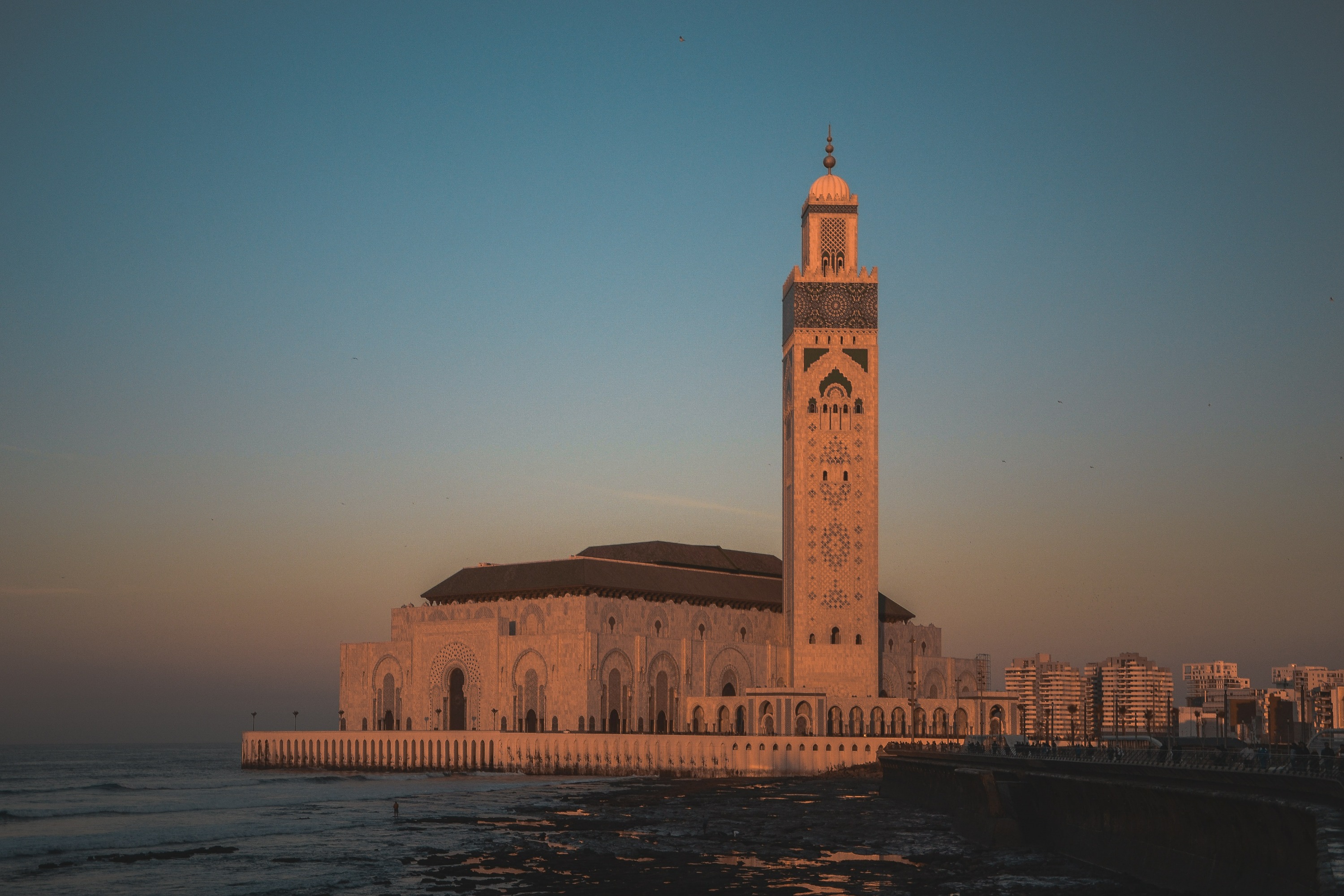
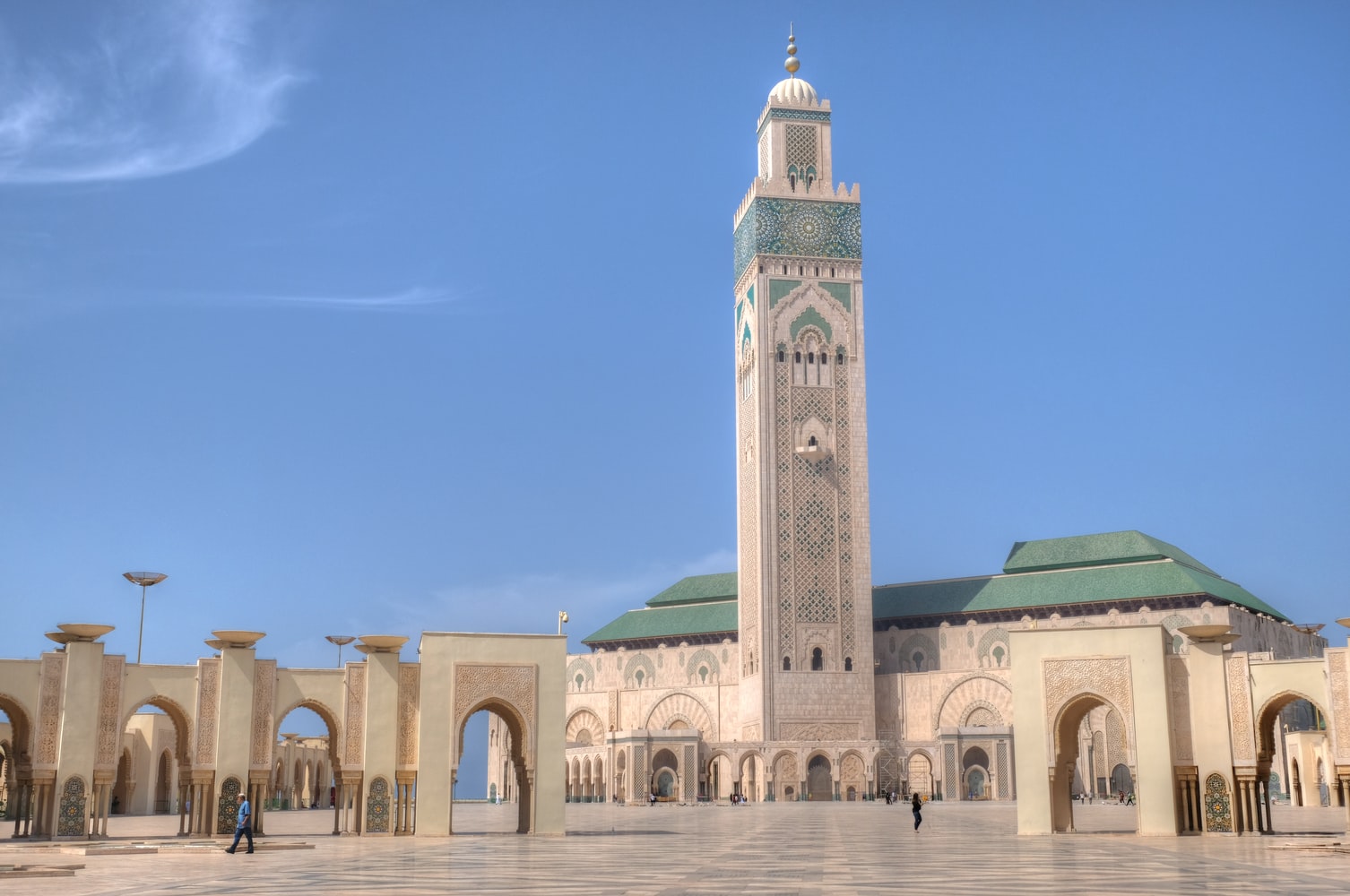
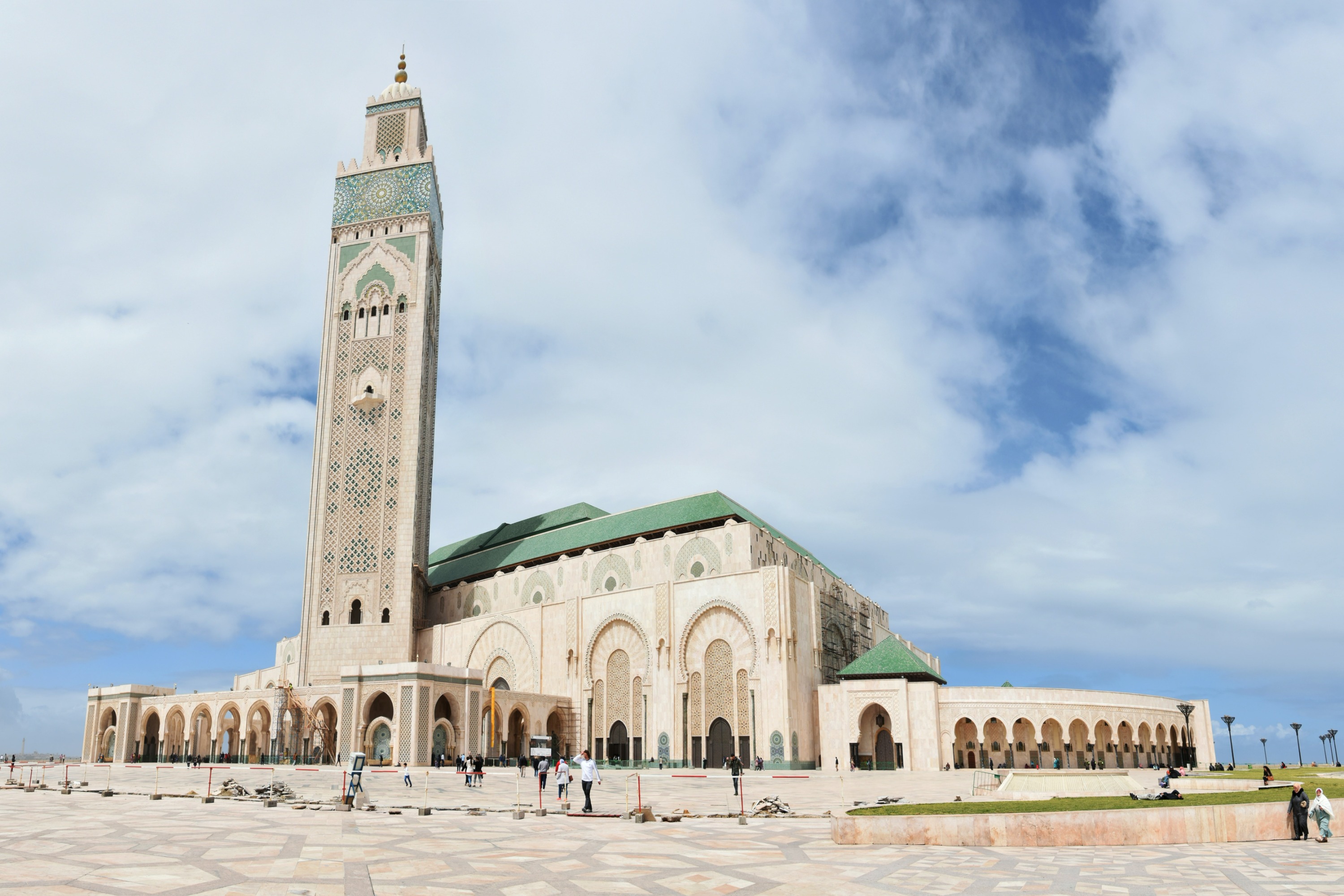
1 Hassan II Mosque : Built on the sea, translation of the Coran verse that proclaims God’s throne was built upon water. The mosque is a truly marvelous piece of architecture. Huge monument, it can accomodate 25.000 worshipers inside and 80.000 more outside. The founder, King Hassan II, desired for the city to be endowed with a large, fine building of which it can be proud until the end of time. The mosque’s most exquisite examples of Moroccan craftsmanship are the blankets of zellij, some designs more than 10m high. The mosque is one of the world’s largest. 50 minutes • Admission Ticket Included
2
2 Rick’s Café : the spirit of the movie Casablanca is alive and well in downtown. Madam Rick, an American woman who had lived in Morocco, had restored a multilevel former medina residence to resemble the era depicted in the movie, dominated by a central courtyard with its authentic 1930’s Pleyel piano. 10 minutes • Admission Ticket Free
3
Stop 3
3 Place des Nations Unies : or United Nations square in some planes : administrative center of Casablanca with very beautiful buildings designed in the 1920’s by a french architect. The square is bordered by the Wilaya ( main government office ) flanked by a tower with clock; the courthouse; a beautiful musical and luminous fountain (at night) around which hundreds of pigeons come to eat the grains offered by the visitors and drink the fountain water. 30 minutes • Admission Ticket Free
4
4 Chellah necropolis : it is both a Roman ruin and Islamic burial place. As the roman city of Sala Colonia, it was a bustling trading post of the empire’s southernmost colony from A.D 40 onward, and was one of the lst to eventually sever links with the empire.
5
Stop 5
5 The Hassan tower & mausoleum of Mohammed V : Hassan Tower or Sawm’at Hassan in Arabic, referring to the significant minaret shaft following the special Moroccan and Spanish style of architecture of the same time. The minaret was projected to be the largest of its type of all time around the world, yet – unfortunately – the construction processes stopped suddenly following the sudden death of al-Mansur in 1199.
6
Stop 6
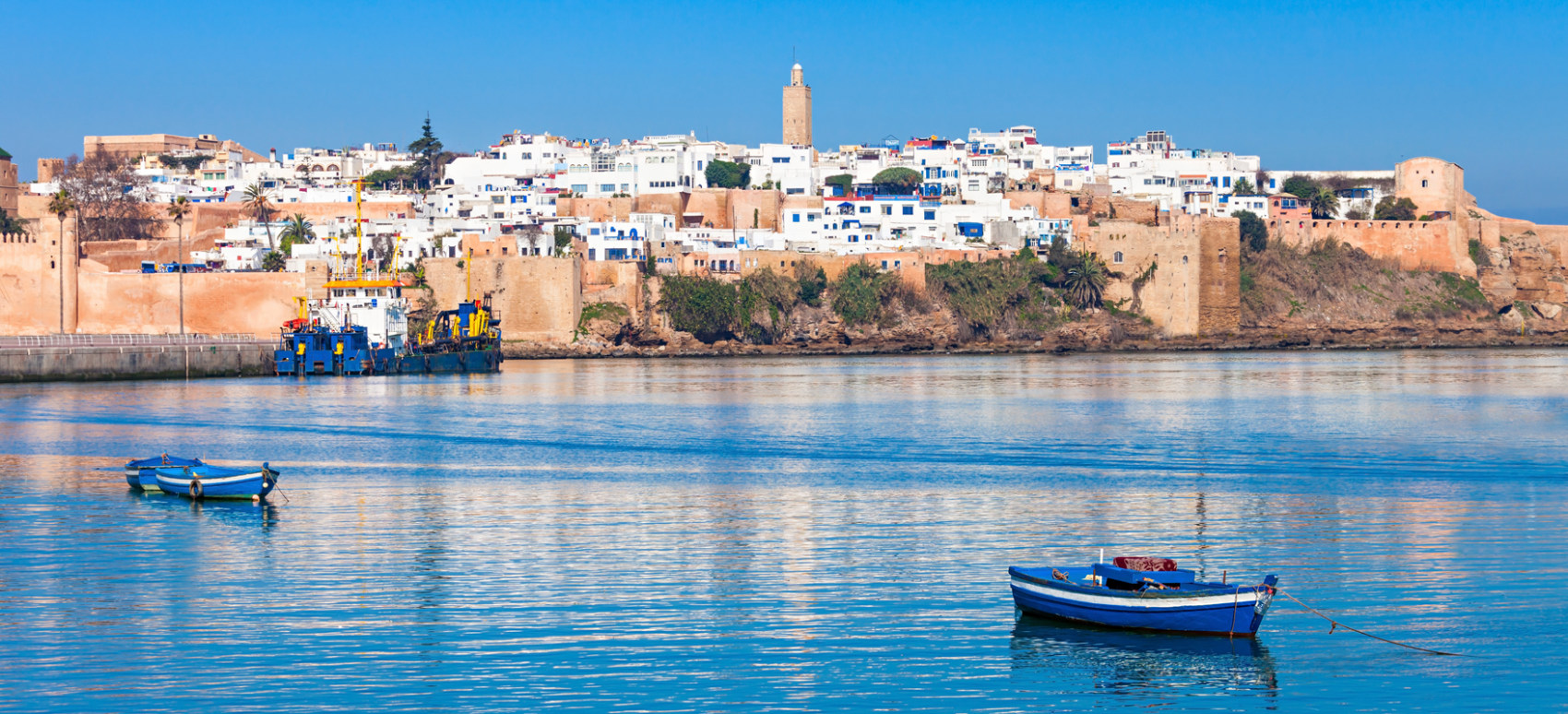
6 Kasbah of Oudayas : The Oudaya Kasbah is a haven of tranquility, with its flower-filled little streets, Andalusian garden, and Moorish café. Referred to also as Kasbah of the Udayas, the Oudaya Kasbah is one of the most unique sites in Morocco and is the first milestone of the city of Rabat. It’s located at the mouth of the Bou Regreg River, opposite the city of Salé, in Rabat, Morocco. UNESCO recognized the significance of the Oudaya Kasbah and added it to the World Heritage Tentative List in 2006.
First night in a sumptuous Riad in the Medina of Fes El Bali
7
2nd day : guided tours of Fes
Fes is the spiritual heart of Morocco and is the most ancient, and indeed the greatest, of the country’s imperial cities. It’s one of the undisputed highlights of any visit to Morocco. Within the walls of its medina, Fes Al Bali (Old Fes), lies the world’s largest intact medieval city. More than 9,500 narrow streets and dim alleyways wind endlessly up and down, around and around, crammed with people, music, noise, and smells. Whether arriving from within Morocco or elsewhere, nothing can prepare you for this assault of the senses.
8
Stop 8
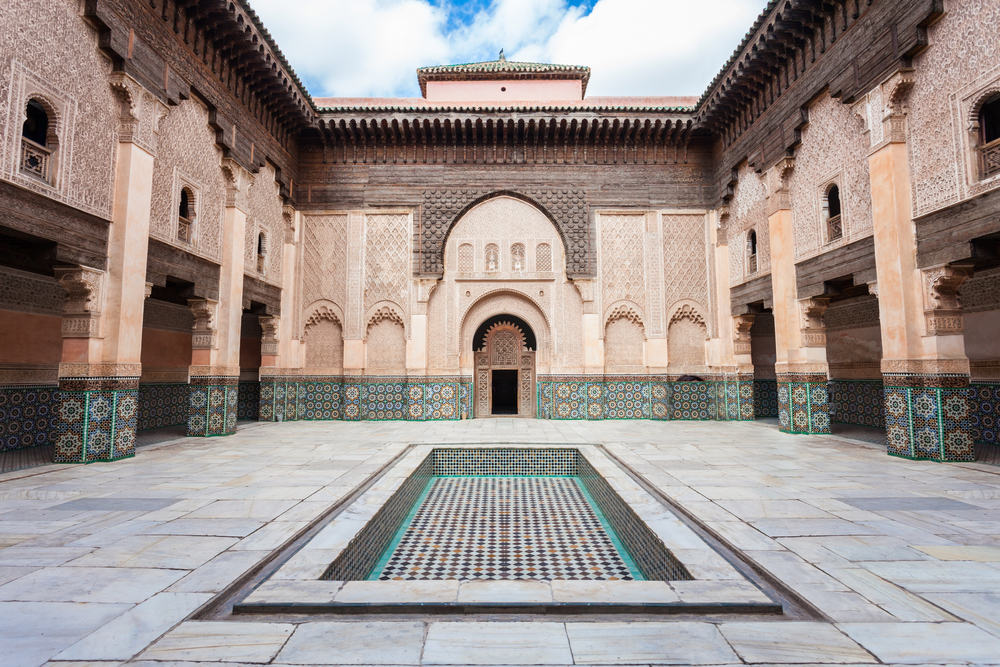
7 Bounaniya Medersa : As a theological college and dormitories built by the Merenid dynasty, Bouaniya Medersa is a group of buildings built between 1350 and 1356 by Sultan Abou Inan. It simultaneously functioned as both an educational institute and as a congregational mosque, and accommodated shops and a large public latrine along the front façade. Zellij, carved wood and panels of stucco, originally a mix of plaster and egg whites, finely carved with Coranic verses, decorate every available surface of the courtyard. Wood mashrabiyya screens separate the marble-paved courtyard from the arcaded corridors leading to the student rooms.
9
Stop 9
8 Chouwara Tannery : a picture straight ut of medieval times, The Chouara Tannery is the larges and busiest of the four traditional tanneries still operating in the medina. Sheep, goat and cow skins are cured, stretched, scraped and dyed in numerous honeycombed earthen pits in a process that is still as manual as when it began in the 1th century upon the decline of Cordoba.
10
9 Karaouiyine Mosque : and University : the most important mosque in Morocco, and one of the oldest university in the world, it was built in 859 by Fatima Al Fihriya, the daughter of a wealthy immigrant from Kairaouane (Tunisia) and by the 10th century had become the congregational mosque of the Karaouiyine quarter of the medina. Surrounded by medersas, it became a major intellectual center in medieval Mediterranean.
11
10 Fes Jdid : At the beginning of the 14th century, Fes’s Jewish community was relocated to an area known as the Mellah in the Merenid-built Fes Jdid (New Fes). The concentration of the community’s skills – and wealth led to prosperous neighborhood of multistory houses with large interior patios and baconies hanging over the street, many of them decorated in the stucco and zelij designs from the jew’s Andalusian heritage.
Close to the area, the royal palace of the King of Morocco
12
3rd day : departure from Fes at 8h00 a.m
- Meknes city tour
For a medina lacking any great number of sights, those that Meknes offers visitors are up there with the best in the country.
13
11 Bab Mansour : one of the grandest of Moroccan gateways. It is quite often overlooked by travelers who become ensconced in the activity and sights of the square opposite called Place El Hedim. Resplendent in green and blue zellij and towering columns
14
12 Mausoleum of Moulay Ismail : a peaceful and spiritual resting place , one of the few sacred sites in Morocco open to non-Muslims
15
Stop 15
13 Place El Hedim : the heart of Meknes medina. A smaller version of Marrakech’s Jamâa Lafna
16
Stop 16
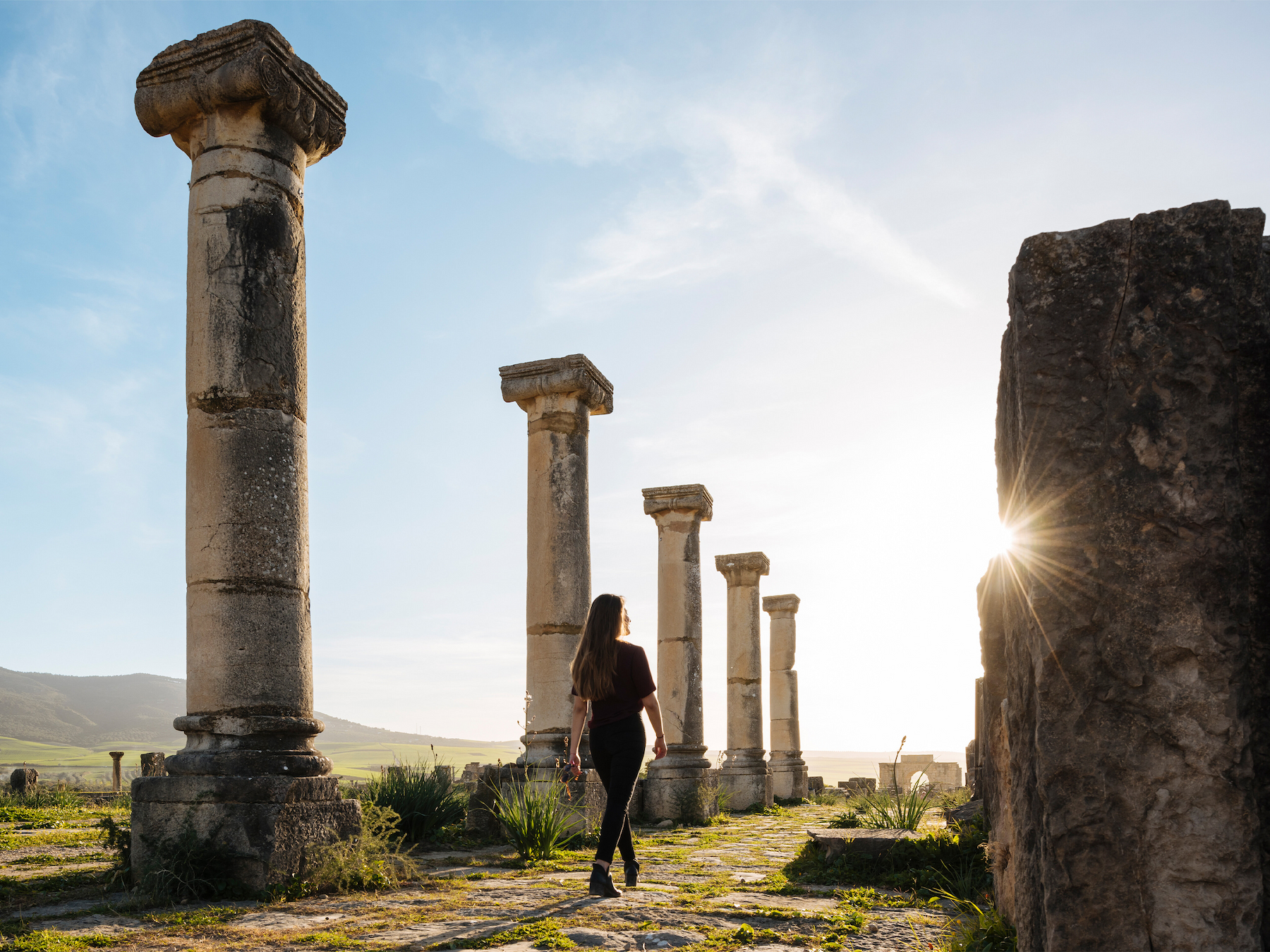
14 Volubilis : the most impressive Roman ruins in Morocco. The existence of a Roman city in the country surprises some people. The structure of Volubilis ( Latin for “morning glory “ ) is still clearly visible from the ruins. A visit of the UNESCO World Heritage site is highly recommended.
17
Stop 17
15 Moulay Driss Zerhoune : second pilgrimage center after Meccah, it is the home to the tomb of the great grandson of Ali and Fatima, the prophet Mohammed’s daughter. Moulay Driss was the founder of the first Moroccan dynasty , the Idrissides.
Return to Marrakech around 6h00 p.m
What's not included
Tips
Available languages
Guide guide
EN
FR
ES
Reviews breakdown
Tripadvisor
5.0
1 reviews
5★
1
4★
0
3★
0
2★
0
1★
0
Important information
Wheelchair accessible
Infants and small children can ride in a pram or stroller
Service animals allowed
Public transportation options are available nearby
Specialized infant seats are available
Transportation options are wheelchair accessible
All areas and surfaces are wheelchair accessible
Suitable for all physical fitness levels
About Marrakech
Marrakech is a vibrant city known for its rich history, bustling souks, and stunning architecture. It offers a blend of traditional Moroccan culture and modern amenities, making it a captivating destination for travelers.
Top Attractions
Jemaa El-Fnaa
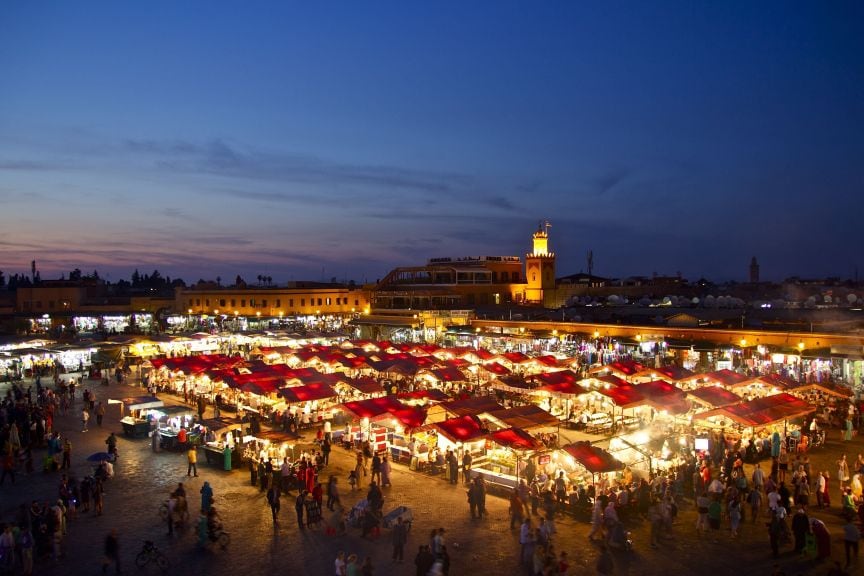
Jemaa El-Fnaa is the heart of Marrakech, a bustling square filled with food stalls, entertainers, and souvenir vendors. It's a must-visit for its vibrant atmosphere and cultural experiences.
Cultural
2-3 hours
Free (food and souvenirs cost extra)
Koutoubia Mosque
The Koutoubia Mosque is one of the most iconic landmarks in Marrakech. Its minaret is a symbol of the city and can be seen from many parts of the medina.
Historical
1 hour
Free (non-Muslims cannot enter the mosque)
Bahia Palace
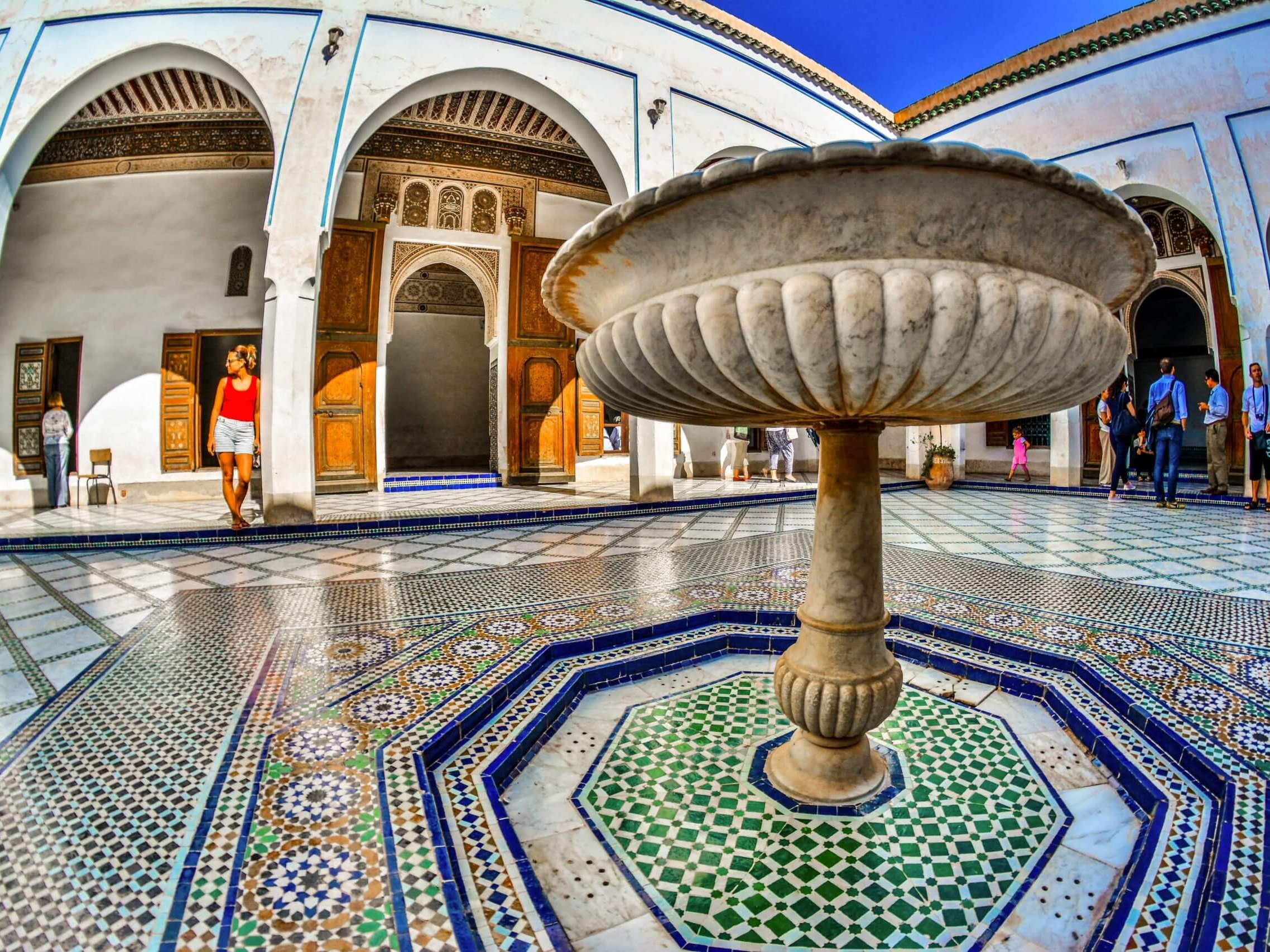
The Bahia Palace is a stunning example of Moroccan architecture, featuring intricate tile work, lush gardens, and beautiful courtyards. It offers a glimpse into the opulent lifestyle of the past.
Historical
1-2 hours
70 MAD
Majorelle Garden
The Majorelle Garden is a beautiful botanical garden designed by French painter Jacques Majorelle. It features a variety of plants, a striking blue villa, and a museum dedicated to Yves Saint Laurent.
Nature
2-3 hours
70 MAD
Saadian Tombs
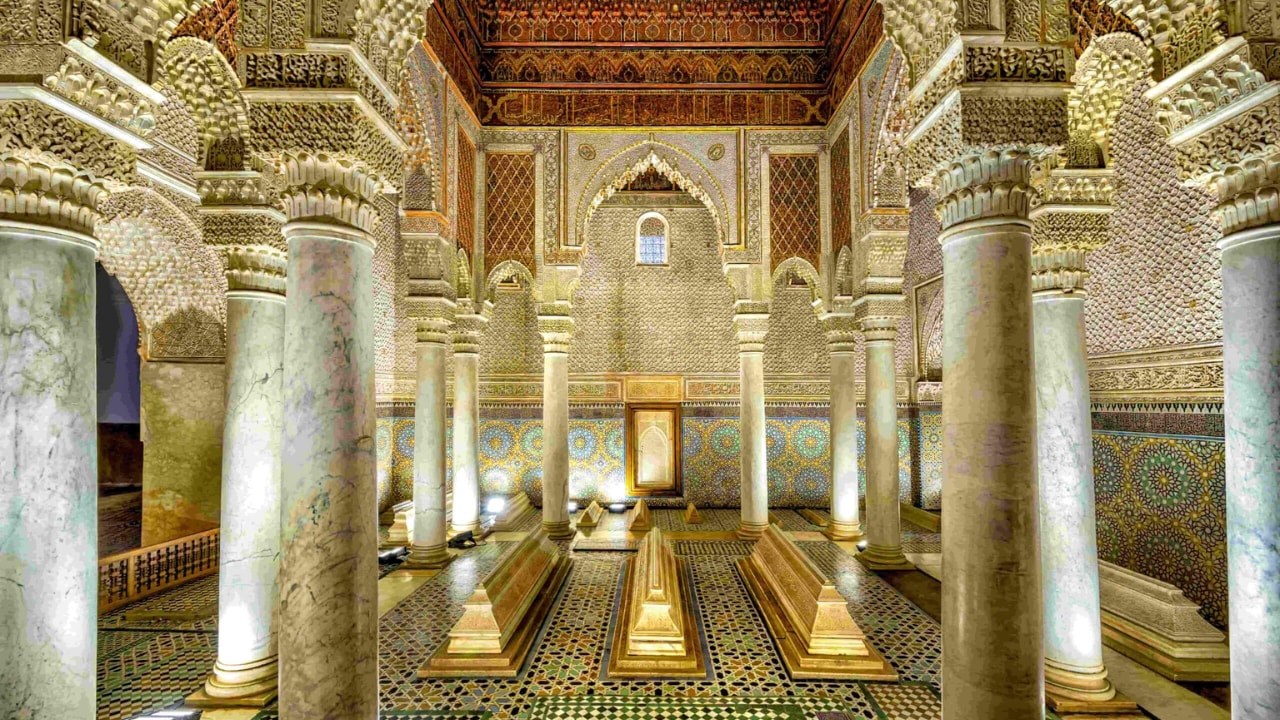
The Saadian Tombs are a collection of mausoleums dating back to the 16th and 17th centuries. They were discovered in 1917 and offer a fascinating look into the history of Marrakech.
Historical
1 hour
70 MAD
Must-Try Local Dishes
Tagine
A slow-cooked stew made with meat, vegetables, and spices, named after the earthenware pot it's cooked in.
Main course
Vegetarian options available
Couscous
A dish made with steamed semolina grains, often served with vegetables and meat.
Main course
Vegetarian options available
Pastilla
A savory-sweet pie made with layers of filo pastry, filled with spiced pigeon or chicken, almonds, and powdered sugar.
Main course
Contains nuts
Mint Tea
A traditional Moroccan tea made with green tea and fresh mint leaves, sweetened with sugar.
Drink
Contains caffeine
Popular Activities
Hiking in the Atlas Mountains
Surfing in Essaouira
Quad biking in the desert
Spa treatments
Yoga retreats
Relaxing in a hammam
Exploring the medina
Visiting museums
Best Time to Visit
Spring (March to May) and Fall (September to November)
The best time to visit Marrakech is during spring and fall when the weather is pleasant and ideal for exploring the city. The temperatures are mild, and the crowds are manageable.
15°C to 25°C
59°F to 77°F
Practical Information
Language
- Official: Arabic
- Widely spoken: French, Berber languages
- English: Moderately spoken in tourist areas
Currency
Moroccan Dirham (MAD)
Time Zone
GMT+0
Electricity
220VV, 50HzHz
Safety Information
Overall Safety Rating: Exercise caution
Marrakech is generally safe for tourists, but petty crime and scams can occur. Be cautious of your surroundings, especially in crowded areas.
Important Precautions:
- • Be cautious of your belongings in crowded areas.
- • Use reputable taxi services and agree on the fare before starting your journey.
- • Avoid walking alone at night in less crowded areas.
Getting there
By air
- Menara International Airport • 4 km from city center
By train
Marrakech Railway Station
By bus
Marrakech Central Bus Station
Getting around
Public transport
Buses are the most common form of public transport in Marrakech. They are affordable and cover most areas of the city.
Taxis
Available • Apps: Careem, Heetch
Rentals
Car, Bike, Scooter
Neighborhoods
Medina
Gueliz
Hivernage
Day trips
Atlas Mountains
60 km from Marrakech • Full day
The Atlas Mountains offer stunning landscapes, hiking trails, and traditional Berber villages. It's a great escape from the city for nature lovers.
Ourika Valley
30 km from Marrakech • Half day to full day
The Ourika Valley is known for its beautiful landscapes, traditional Berber houses, and waterfalls. It's a popular destination for day trips from Marrakech.
Essaouira
180 km from Marrakech • Full day to overnight
Essaouira is a charming coastal town known for its beautiful beaches, historic medina, and vibrant arts scene. It's a popular destination for surfing, windsurfing, and relaxation.
Festivals
Marrakech Popular Arts Festival • Every July
Marrakech International Film Festival • Every November/December
Ramadan • Dates vary (Islamic calendar)
Pro tips
- Hire a local guide for a more immersive and informative experience.
- Learn a few basic phrases in Arabic or French to enhance your interactions with locals.
- Visit the medina early in the morning or late in the afternoon to avoid the heat and crowds.
- Bargain politely when shopping in the souks, as prices are often negotiable.
- Try local street food for an authentic culinary experience, but choose stalls with high turnover.
From $25
per person
Price varies by option
Secure booking
Free cancellation available
Instant confirmation