Khujand Private Day Tour from Tashkent
Active
9h
For a full refund, cancel at least 24 hours before the scheduled departure time.
Instant confirmation
Mobile or paper ticket accepted
About this experience
In this historic destination, we will see the oldest and most fascinating city in Central Asia - Khujand. We will visit the ancient Khujand Fortress, Jomi Mosque, Panjshanbe Bazar, Arbob Palace, and the beautiful Tajik Sea. The incredible city of Khujand is situated on the banks of the majestic Syr Darya, nestled below the Kayrakkum reservoir in the breathtaking Fergana Valley. Khujand is one of the oldest cities in Central Asia! Some sources even believe it was founded as far back as the 7th-6th centuries BC. It was conquered by none other than Alexander the Great himself! He rebuilt and strengthened it, calling it Alexandria Eskhata (Extreme).
The Khujand Fortress was founded in the VI—V centuries BC. According to the fascinating archaeological dates, the Khujand fortress was first surrounded by a massive bulk rampart, later by a wall of remarkable thickness made of raw material. The city and the citadel — are two of the most important components of ancient Khujand.
Available options
Khujand Day Tour for couples
Khujand Day Tour from Tashkent: This package - Khujand Day Tour is indicated for 2 and more people<br/>Pickup included
Khujand Private Full-Day Tour from Tashkent
Pickup included
What's included
Private transportation
All Fees and Taxes
Lunch
Licensed guide/driver
Detailed itinerary
1
Stop 1
At 08:00 Pick up from Tashkent and departure to Khujand.
Khujand is the second largest city in Tajikistan, an important transport hub, political, economic, cultural and scientific center of the country. Khujand is located on the banks of the Syr Darya, below the Qayroqqum reservoir, in the Fergana Valley. Khujand is one of the oldest cities in Central Asia, according to some sources, the foundation of the city falls on the VII-VI centuries BC. It was conquered by Alexander the Great, who rebuilt and strengthened it, calling Alexandria Eskhata (Extreme).
2
Khujand Fortress
The Khujand Fortress was founded in the VI—V centuries BC. According to the archaeological dates, the Khujand fortress was first surrounded by a bulk rampart, later by a wall of considerable thickness made of raw material. The city and the citadel — components of ancient Khujand, had separate fortress walls surrounded by a wide and deep moat filled with water. The remains of these fortifications were found under the central part of the left-bank Khujand and surround the territory of the ancient city with an area of 20 hectares. With the development of the economy, trade, government system and population, the city is growing. In the VI—VII centuries, a new fortress was built. Medieval Khujand consisted of three main parts: Citadel, Shahristan and Rabad. The citadel was located on the bank of the Syr Darya at the Rabad gate. The medieval Khujand fortress was considered one of the most fortified in Central Asia.
3
The Jami Mosque is a complex of Sheikh Muslihiddin, a monument of folk architecture of the XVI century. The object is located on the western side of Panjshanbeh Square. The facade of the building faces Shark Street. The mosque was built in 1512-1513. The multi-column (30 columns) aivan adjoins the eastern wall of the winter hall, also multi-column (20 columns), and enters the courtyard of the mosque.
4
Panjshanbe Bazar is one of the attractions of Khujand, is located in the center of Khujand, and opposite it stands the mausoleum of Sheikh Muslihiddin. The bazar consists of the main pavilion and many shops, tents, and shops adjacent to it. It is always very noisy here, as not only residents of the city come to shop, but also guests from nearby villages. The main feature of the Panjshanbe Bazar is its unique architecture and decor. The bazaar building combines elements of classicism and Stalinist Empire style, and the decoration is harmoniously executed using Soviet and Oriental styles. A hemispherical portal decorated with bright paintings rises above the central entrance, and sculptures of a man and a woman are installed on the sides. If you go inside, you can see a long-vaulted hall with slender rows of columns. In Panjshanbe Bazar we have time for shopping
5
The Arbob Cultural Palace is a building in Khujand, Tajikistan, the former headquarters of a Soviet collective farm, built in the 1950s and modelled on the winter gardens of Peterhof, St Petersburg. The main building consists of three wings - with an ornate theatre seating 800 people in the main wing. The South wing currently houses a museum which tells the history of Arbob and of collectivization and the soviet empire in Tajikistan. The building had particular significance in 1992, when it was the site for the meeting of the Tajik Soviet which officially declared independence from the Soviet Union. It was the site where the Tajik flag was chosen. More recently, in the late 1990s it was also the site where peace conferences following the Tajik civil war were held. In particular, Tajik President Emomalii Rahmon first came to prominence speaking at the Palace, and it was the site for a "plov of peace" which celebrated successful negotiations towards an agreed end to the Tajik civil war.
6
Kayrakum also spelled variously as Qayroqqum, Qayraqqum, Kayrakum or Kairakum, is a large artificial lake in Ghafurov District of Sughd Province, in northwestern Tajikistan. In 2016, the reservoir was renamed Tajik Sea (Tajik: Баҳри Тоҷик) by the country's parliament. The reservoir lies in the western part of the Fergana Valley on the Syr Darya river. The provincial capital of Khujand lies about 15 km west of the dam. A 1150 km2 tract of land encompassing the reservoir and its surrounds has been identified as an Important Bird Area (IBA) by BirdLife International because it supports 4 significant numbers of the populations of various bird species, either as residents, or as overwintering, breeding or passage migrants.
In a vivid oasis of Sogd valley of Tajikistan, on a shore of a purest Kairakkum reservoir, which is also called the Tajik sea, is located a new sanatorium “Bahoriston”.
7
Way back to the border and seeing off with travelers
What's not included
Alcoholic Beverages
Available languages
Guide guide
RU
EN
FA
Important information
Wheelchair accessible
Public transportation options are available nearby
Specialized infant seats are available
Transportation options are wheelchair accessible
Suitable for all physical fitness levels
We can accommodate dietary restrictions such as vegetarian, vegan, gluten-free, etc. If you have dietary requirements, please indicate them when booking. You can add this information under "Information travelers need from you"
About Tashkent
Tashkent, the capital of Uzbekistan, is a vibrant city that blends modern urban life with rich historical heritage. Known for its Soviet-era architecture, bustling bazaars, and beautiful parks, it offers a unique mix of cultures and experiences. The city's rapid development and strategic location make it a gateway to Central Asia.
Top Attractions
Khast Imam Complex
This historic religious complex houses the Osman Quran, one of the world's oldest Qurans. It's a significant site for Islamic pilgrimage.
Historical/Religious
1-2 hours
Free (small fee for the museum)
Chorsu Bazaar
One of the oldest and largest bazaars in Central Asia, Chorsu offers a vibrant atmosphere with a variety of goods, from fresh produce to traditional crafts.
Market/Cultural
1-2 hours
Free to enter, prices vary for goods
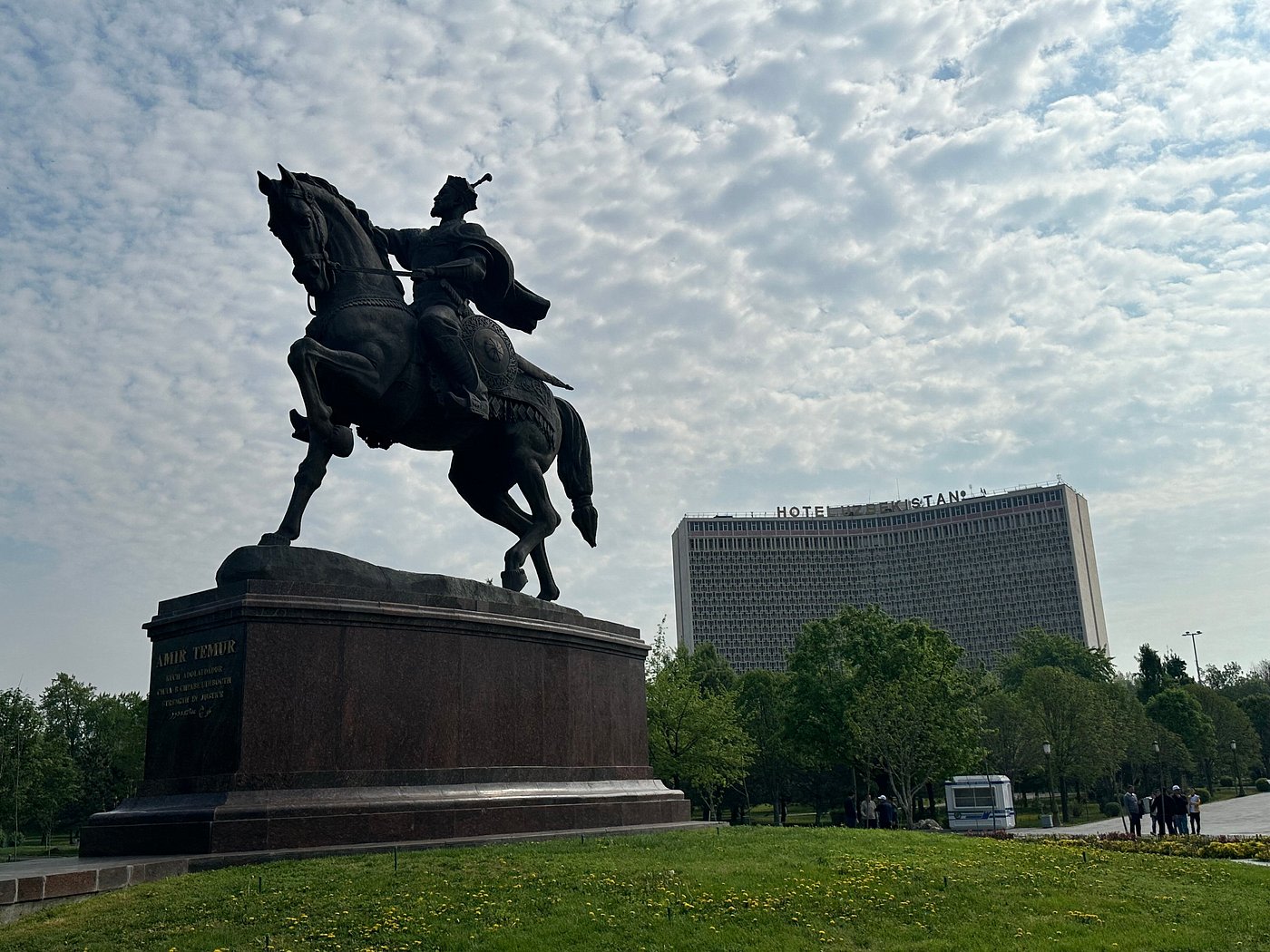
Amir Timur Square
Named after the famous conqueror, this square is the heart of Tashkent, surrounded by beautiful architecture and monuments.
Historical
30 minutes to 1 hour
Free
Tashkent Metro
The Tashkent Metro is not just a mode of transport but a work of art, with beautifully decorated stations showcasing Soviet-era design.
Architecture/Historical
1-2 hours for a full tour
1,200-1,500 UZS per ride
Tashkent TV Tower
The Tashkent TV Tower is the tallest structure in Uzbekistan, offering panoramic views of the city from its observation deck.
Architecture/Adventure
1-2 hours
Moderate (entry fee for the observation deck and suspension bridge)
Must-Try Local Dishes
Plov
A rice dish cooked with carrots, meat (usually lamb or beef), and spices. It's a staple of Uzbek cuisine and often served at celebrations.
Main dish
Contains meat, can be made with chicken or vegetarian versions
Lagman
A noodle soup with meat, vegetables, and a rich broth. It's a comforting and hearty dish, often enjoyed for lunch.
Main dish
Contains meat, can be made with chicken or vegetarian versions
Shashlik
Grilled skewers of marinated meat, usually lamb or beef. It's a popular street food and often served with onions and flatbread.
Main dish
Contains meat, can be made with chicken or vegetarian versions
Samsa
Baked pastries filled with meat, pumpkin, or potatoes. They are a popular street food and can be found in bakeries and markets.
Snack
Can be vegetarian or with meat
Popular Activities
Hiking in the nearby mountains
Exploring the Chimgon Water Park
Visiting the hot springs in Chimgon
Enjoying a traditional tea ceremony
Exploring the Khast Imam Complex
Visiting the Tashkent Metro stations
Swimming in the Chimgon Water Park
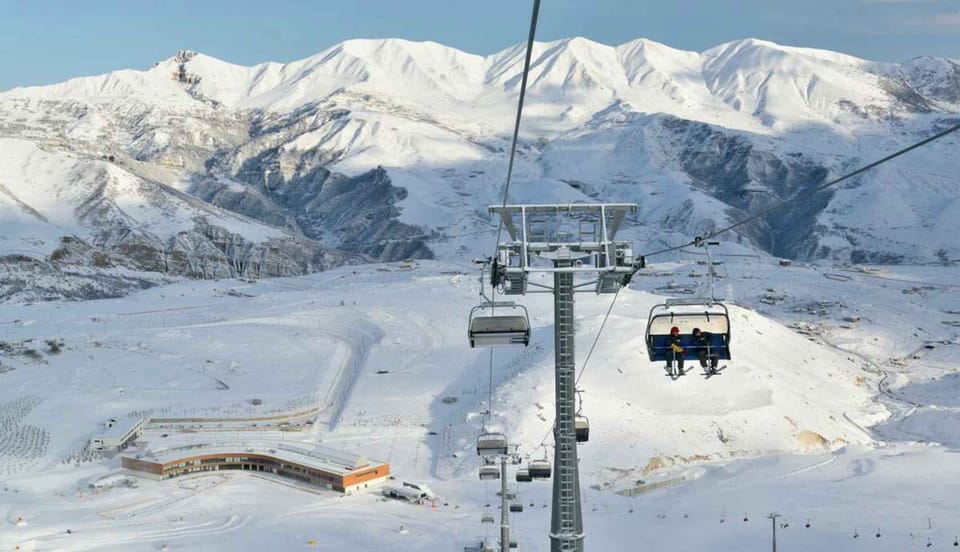
Skiing in the nearby mountains
Best Time to Visit
April to June, September to October
These months offer pleasant weather, ideal for sightseeing and outdoor activities. The city is vibrant with festivals and cultural events.
15°C to 30°C
59°F to 86°F
Practical Information
Language
- Official: Uzbek
- Widely spoken: Russian
- English: Limited
Currency
Uzbekistani Som (UZS)
Time Zone
GMT+5
Electricity
220VV, 50HzHz
Safety Information
Overall Safety Rating: Generally safe
Tashkent is generally safe for travelers, with low crime rates and a strong police presence. However, petty crime and scams can occur, especially in crowded areas and tourist spots.
Important Precautions:
- • Use official taxis or app-based services
- • Keep valuables secure and out of sight
- • Be cautious of strangers offering unsolicited help or services
Getting there
By air
- Tashkent International Airport • 10 km from city center
By train
Tashkent Railway Station
By bus
Tashkent International Bus Terminal, Seragelsk Bus Station
Getting around
Public transport
The metro is clean, efficient, and affordable. It's the fastest way to get around the city.
Taxis
Available • Apps: Yandex.Taxi, Uber
Rentals
Car, Bike, Scooter
Neighborhoods
Old City
City Center
Yunusabad District
Seragelsk
Day trips
Chimgon
25 km from Tashkent • Half day to full day
Chimgon is a popular resort town known for its hot springs, parks, and recreational facilities. It's a great place to relax and enjoy nature.
Ohangaron
70 km from Tashkent • Full day
Ohangaron is a picturesque area known for its natural beauty, hiking trails, and traditional Uzbek villages. It's a great place for nature lovers and adventure seekers.
Jomboy Valley
80 km from Tashkent • Full day to overnight
Jomboy Valley is a stunning area known for its natural beauty, hiking trails, and traditional Uzbek villages. It's a great place for nature lovers and adventure seekers.
Festivals
Tashkent Fashion Week • April
Tashkent International Film Festival • September
Navruz (Nowruz) • March 21
Pro tips
- Learn a few basic phrases in Uzbek or Russian to enhance your experience and interact with locals
- Use the metro for a unique and efficient way to get around the city, and take the time to appreciate the beautiful station designs
- Visit the Chorsu Bazaar early in the morning for the freshest produce and fewer crowds
- Try a traditional Uzbek plov cooking class for a unique and delicious cultural experience
- Explore the city's parks and green spaces, such as the Amir Timur Museum Park and the Tashkent Botanical Garden, for a relaxing and scenic break from the bustling city
From $25
per person
Price varies by option
Secure booking
Free cancellation available
Instant confirmation