Mostar Blagaj Kravice Tour
Active
5h - 10h
For a full refund, cancel at least 24 hours before the scheduled departure time.
Manual confirmation
Mobile or paper ticket accepted
About this experience
Mostar, Blagaj, Počitelj, Kravice is a full-day tour for a group from Sarajevo to Konjic, Kravice waterfall, Pocitelj, Blagaj and Mostar. Herzegovina is a must see location for anyone visiting the Balkans. This tour enables you to visit five interesting places. That is why we have designed a tour which offer most of it from perspective of cultural diversity and unique history, truly amazing scenery and as well as delicious.
Ideal for travelers who want to see more of Herzegovina in one day
Comprehensive overview of local culture and history
Hassle-free, round-trip transportation from Sarajevo
Available options
Mostar Blagaj Kravice Tour
Pickup included
What's included
Air-conditioned vehicle
Fuel surcharge
Parking Fees
Detailed itinerary
1
The old stone bridge in Konjic is one of the four most important in Bosnia and Herzegovina, next to the Old Bridge in Mostar, the Višegrad Bridge on Drina and the Trebinje Arslanagić Bridge. Beautiful BH monument, built in 1682, was also on the list of protected cultural and historical heritage of Bosnia and Herzegovina, and many consider it a point where Herzegovina joins Bosnia.
Bridge was a masterpiece of architecture of the 17th century. As a builder, the legend mentions Aliaga Hasečić, a senior officer in Istanbul, while some authors, without quoting sources for their claim, attributed this to Ahmet-paša Sokolović.
2
Stop 2
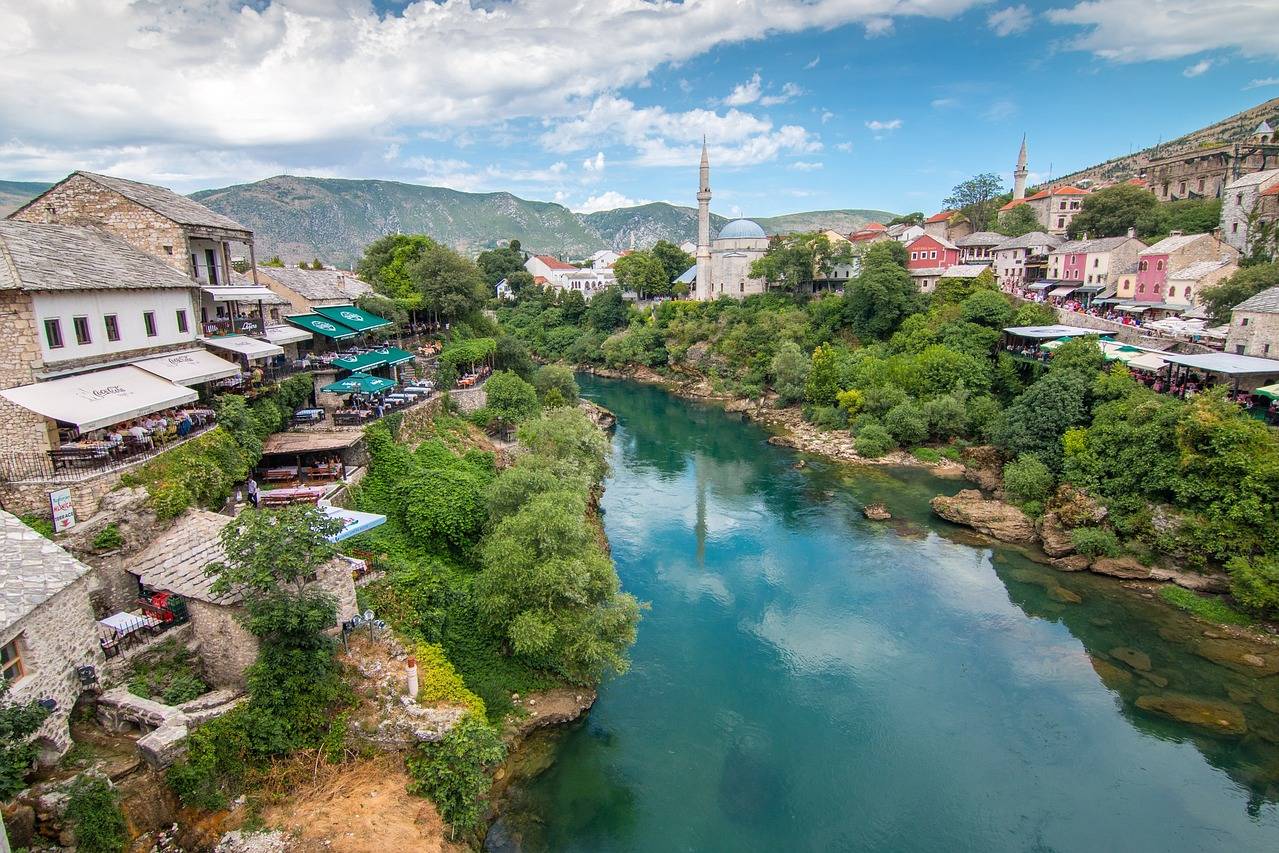
The historic town of Mostar, spanning a deep valley of the Neretva River, developed in the 15th and 16th centuries as an Ottoman frontier town and during the Austro-Hungarian period in the 19th and 20th centuries. Mostar has long been known for its old Turkish houses and Old Bridge, Stari Most, after which it is named. In the 1990s conflict, however, most of the historic town and the Old Bridge, designed by the renowned architect Sinan, was destroyed. The Old Bridge was recently rebuilt and many of the edifices in the Old Town have been restored or rebuilt with the contribution of an international scientific committee established by UNESCO. The Old Bridge area, with its pre-Ottoman, eastern Ottoman, Mediterranean and western European architectural features, is an outstanding example of a multicultural urban settlement. The reconstructed Old Bridge and Old City of Mostar is a symbol of reconciliation, international co-operation and of the coexistence of diverse cultural, ethnic and religious communities.
3
Stop 3
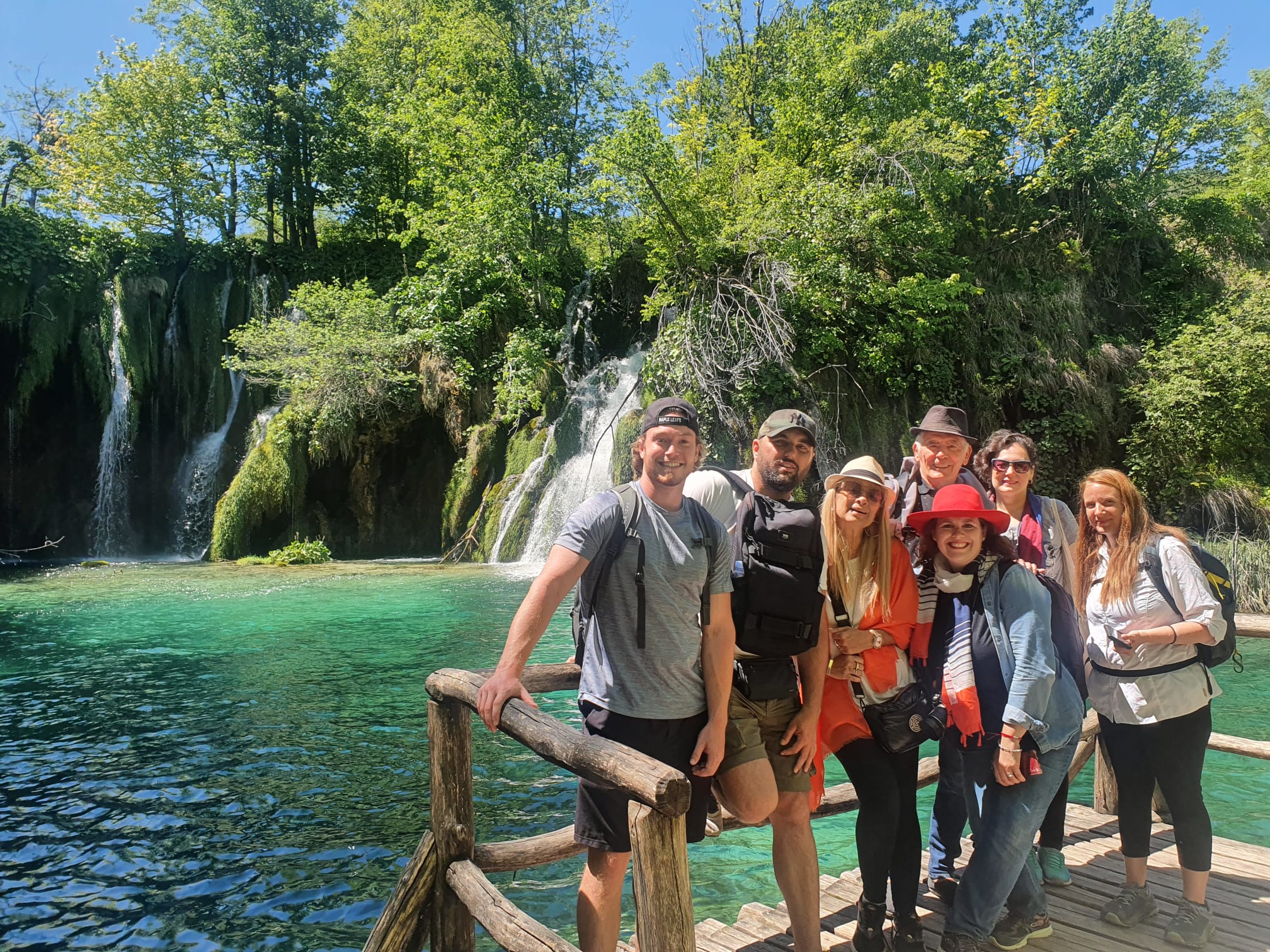
Kravica waterfall, often erroneously called Kravice, is a large tufa cascade on the Trebižat River, in the karstic heartland of Herzegovina in Bosnia and Herzegovina. It is 10 kilometres (6 mi) south of Ljubuški and 40 kilometres (25 mi) south of Mostar.[1] Its height is about 25 metres (80 ft) and the radius of the lake in the base of the waterfall is 120 metres (390 ft).Kravica is a popular swimming and picnic area and, during the summer, it is frequently visited by tourists from Mostar, Medjugorje and Dubrovnik.
4
Stop 4
Blagaj Tekija is a Dervish monastery outside Mostar, Bosnia, that’s nearly 600 years old. Situated at the base of a cliff, next to the source of the river Buna, it’s a unique and picturesque series of buildings that looks even better in person than it does in pictures.
The Tekija (or Tekke) was first founded during the height of the Ottoman empire. Time and rock slides have led to extensive repairs and reconstruction to the buildings. Today, thanks largely to a Turkish travel agency, the Tekke looks mostly as it did in the past.
5
Počitelj is historic village and an open-air museum in Bosnia and Herzegovina. It is located in the municipality of Čapljina, in the Herzegovina-Neretva Canton of the Federation of Bosnia and Herzegovina. The historic village is situated on the left bank of the river Neretva, on the main road Mostar-Metković, and it is about 30 kilometres (19 mi) to the south of Mostar and about 3 kilometres (1.9 mi) from center of Čapljina.
What's not included
• Food • Entry/Admission - Kravice Falls • Entry/Admission - Blagaj tekija
Available languages
Guide guide
EN
Reviews breakdown
Tripadvisor
5.0
2 reviews
5★
2
4★
0
3★
0
2★
0
1★
0
Important information
Infants and small children can ride in a pram or stroller
Public transportation options are available nearby
Specialized infant seats are available
Suitable for all physical fitness levels
About Sarajevo
Sarajevo, the capital of Bosnia and Herzegovina, is a city of rich history, cultural diversity, and stunning architecture. Known for its Ottoman, Austro-Hungarian, and Yugoslav heritage, Sarajevo offers a unique blend of Eastern and Western influences, making it a fascinating destination for travelers.
Top Attractions
Baščaršija
The old bazaar and cultural heart of Sarajevo, Baščaršija is a must-visit for its historic charm and traditional crafts.
Historical
1-2 hours
Free to explore, but shopping and dining costs vary
Sarajevo War Tunnel Museum
This museum showcases the tunnel that was used to supply the city during the Siege of Sarajevo.
Historical
1-2 hours
Moderate (around 10 EUR)
Yellow Fortress (Žuta Tabija)
A historic fortress offering panoramic views of the city and the Miljacka River.
Historical
1 hour
Free
Must-Try Local Dishes
Ćevapi
Grilled minced meat sausages, typically served with somun (flatbread) and onions.
Main Dish
Contains meat, gluten (from bread)
Burek
A flaky pastry filled with meat, cheese, or spinach.
Snack
Contains gluten, can be vegetarian (cheese or spinach versions)
Begova Čorba
A rich and flavorful beef and vegetable soup, often served with noodles or rice.
Soup
Contains meat, gluten (from noodles or rice)
Popular Activities
Skiing
Hiking
Mountain biking
Coffee tasting
Spa treatments
Strolling through Baščaršija
Visiting museums
Attending festivals
Best Time to Visit
May to September
This is the best time to visit Sarajevo due to the pleasant weather and numerous outdoor activities and festivals.
15°C to 30°C
59°F to 86°F
Practical Information
Language
- Official: Bosnian
- Widely spoken: English, Serbian, Croatian
- English: Moderately spoken
Currency
Bosnia and Herzegovina Convertible Mark (BAM)
Time Zone
CET (GMT+1), CST (GMT+2) during daylight saving time
Electricity
220VV, 50HzHz
Safety Information
Overall Safety Rating: Generally safe
Sarajevo is generally safe for travelers, but petty crime and scams can occur, especially in tourist areas. Be cautious of your surroundings and take standard precautions.
Important Precautions:
- • Be cautious of your belongings in crowded areas
- • Use official taxis and ensure the meter is used
- • Avoid walking alone at night, especially in poorly lit areas
Getting there
By air
- Sarajevo International Airport • 10 km from city center
By train
Sarajevo Central Station
By bus
Sarajevo Bus Terminal
Getting around
Public transport
The tram system is efficient and affordable, connecting key areas of the city.
Taxis
Available • Apps: Yutong
Rentals
Car, Bike
Neighborhoods
Old Town (Stari Grad)
Marijin Dvor
Grbavica
Day trips
Mostar
130 km • Full day
Mostar is famous for its iconic Stari Most (Old Bridge) and rich Ottoman heritage.
Travnik
90 km • Full day
Travnik is known for its Ottoman architecture and as the former residence of Bosnian governors.
Jahorina Mountain
30 km • Half day to full day
Jahorina is a popular destination for skiing, hiking, and enjoying nature.
Festivals
Sarajevo Film Festival • August
Sarajevo Winter Festival • December to February
Sarajevo Jazz Festival • November
Pro tips
- Visit the Yellow Fortress at sunset for the best views of the city
- Try traditional Bosnian coffee at a local café for an authentic experience
- Explore the city's street art and murals, which tell stories of its history and culture
- Take a day trip to Mostar to see the iconic Stari Most and experience another side of Bosnia
- Learn a few basic phrases in Bosnian to enhance your interactions with locals
From $25
per person
Price varies by option
Secure booking
Free cancellation available