

Day Tour To Desert Castles & Cave of the Seven Sleepers
Active
5h - 8h
For a full refund, cancel at least 24 hours before the scheduled departure time.
Instant confirmation
Mobile or paper ticket accepted
About this experience
Delve deep into Jordan’s history as you visit 3 of Jordan’s remarkable desert castles.
These are beautiful examples of early Islamic buildings scattered around the eastern desert. Their fine frescoes, mosaics & carvings, portray life during the 7th & 8th centuries.
Called castles due to their imposing nature, however, they served several purposes such as caravan stations, resort pavilions, trade & agriculture centers. They stand testament to a rich era in history; namely the flourishing beginnings of Islamic-Arab civilizations. Explore UNESCO-listed Qusayr Amra, known for its 8th-century frescoes of hedonistic scenes, Qasr al-Azraq, and Qasr al-Kharrana
Visit the Caves of Seven Sleepers. The legend of the ‘seven sleepers’ involves seven Christian boys who were persecuted, then escaped to a cave and slept there for 309 years.
Enrich your stay in Jordan and trek through the desert as you visit these castles. Get off the beaten track as you visit the Cave of the Seven Sleepers.
Available options
Transportation & Admission Fee
Admission Fees: All entry fees to the sites are taken care of, so you can just enjoy your visit without any worries. <br/>Duration: 8 hours<br/>Water: Bottled Water Onboard<br/>Day Tour: Day Tour - Desert Castles & Cave of the Seven Sleepers<br/>Sedan / Minivan / MiniBus<br/>Pickup included
Transportation Only
Transportation Only : Entry fees are not included at all sites. <br/>Duration: 8 hours<br/>Water Available onboard<br/>Day Tour : Day Tour - Desert Castles & Cave of the Seven Sleepers<br/>Transportation : Sedan / MiniVan / Minibus<br/>Jordan Pass: This option is recommended with the Jordan Pass.<br/>Pickup included
What's included
Bottled water
English speaking driver
Entry Fees ( If Selected)
Transportation (hotel pickup, air-conditioned vehicle, on-board WiFi, Fuel Surcharge .)
Detailed itinerary
1
Stop 1
Some of the most noteworthy remains of human habitation east in Jordan are the castles built by the Ummayad caliphates during the growing days of Islam (7th & 8th centuries CE). During the height of the Umayyad dynasty, architecture flourished due to the cultural exchange, which was also accompanied by major trade routes. The Umayyad dynasty was later overthrown by the Abbasids, in 750 CE, and architecture consequently changed and evolved which can also be exhibited in Jordan.
Many relics and remains of the early and medieval Islamic periods still stand today in Jordan and are dotted around in the deserts of eastern Jordan. These ruins include castles, forts, baths, towers, and fortified ruins and are collectively known as the desert castles. The fine frescoes, mosaics, stone and stucco carvings, inspired by Persian and Greco-Roman traditions, unveil and portray life and customs during the 8th century.
Begin the tour with a morning pick up from any hotel in Amman. Travel in a climate-controlled vehicle with a private English-speaking driver across Jordan’s rugged countryside. Journey out of Amman and into the arid landscape and observe the hot dry sand of Jordan spread out every direction.
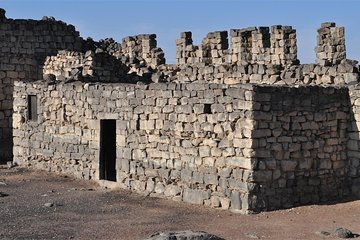
Pull up at Qasr Al-Azraq; a large fortress named after a nearby oasis. Built from black basalt rock, this fortress was once a hunting retreat for the Umayyad rulers and an important military base during the Byzantine period. This imposing castle was used by T.E Lawrence (the 20th-century British soldier and the Arab revolt leader) during the Arab Revolt against the Turks.
2
Stop 2
Move on to Qusayr Amra, a UNESCO-listed World Heritage site. This architectural masterpiece sits in the desert’s heart. It is most notable for the lively frescoes on the ceiling and the inside walls, which depict hunting scenes, pictures of animals and birds, hunting scenes, and portraits. The representation of the zodiac on the domed ceiling of the hot room is one of the earliest surviving portrayals of a map. It is actually a remnant of a larger complex; however, what remains today is a small country cabin without any military function. It is one of the most important and remarkable examples of early Islamic art and architecture.
3
Stop 3
After taking in the beauty of these frescoes and vaulted chambers, travel to Qasr al Kharrana, a picturesque square fortress with rounded turrets and a central courtyard. This castle remains an enigma to historians and archeologists. Some believe it was a defensive fort, while others think it served as a resting place for travelers, a meeting place, or caravanserai. Amazingly still inside, it is one of Jordan’s most beautiful and atmospheric ancient buildings. Admire the architecture and view the rooms fringing the courtyard and their ornamental niches and pilasters.
4
Reconvene with your driver and carry on to the Cave of the Seven Sleepers. According to the age-old legend, this cave (Ahl al Kahf) was a refuge place for 7 Christian men and their dog who were forced to flee their homes after being persecuted by Roman Emperor Trajan for their religious beliefs. They slept there for 309 years, awakening at a time when their spiritual beliefs were no longer a reason for persecution. Nowadays, the cave has become a religious and historic site of great importance. It is surrounded by ruins, and the tombs of men and some remains are still visible inside the cave.
After indulging and experiencing these sites, reconvene with your driver for the return journey, ending with a hotel drop-off in Amman.
What's not included
Gratuities
Lunch
Local Guide
Available languages
Audio guide
AR
EN
Guide guide
AR
EN
Written guide
AR
EN
Reviews breakdown
Viator
4.8
10 reviews
5★
9
4★
0
3★
1
2★
0
1★
0
Tripadvisor
4.9
7 reviews
5★
6
4★
1
3★
0
2★
0
1★
0
Important information
Wheelchair accessible
Infants and small children can ride in a pram or stroller
Suitable for all physical fitness levels
Important notes
* Be sure to provide your supplier with your full name and contact information.
* Let your supplier know the exact address of your hotel or other pickup location.
* Provide your supplier with the date and time of your pickup.
* Please contact us via WhatsApp 24/7 after completing your booking.
About Amman
Amman, Jordan's vibrant capital, is a fascinating blend of ancient history and modern sophistication. Known as the 'White City' for its gleaming limestone buildings, it offers a unique mix of ancient ruins, contemporary art, and a thriving culinary scene.
Top Attractions
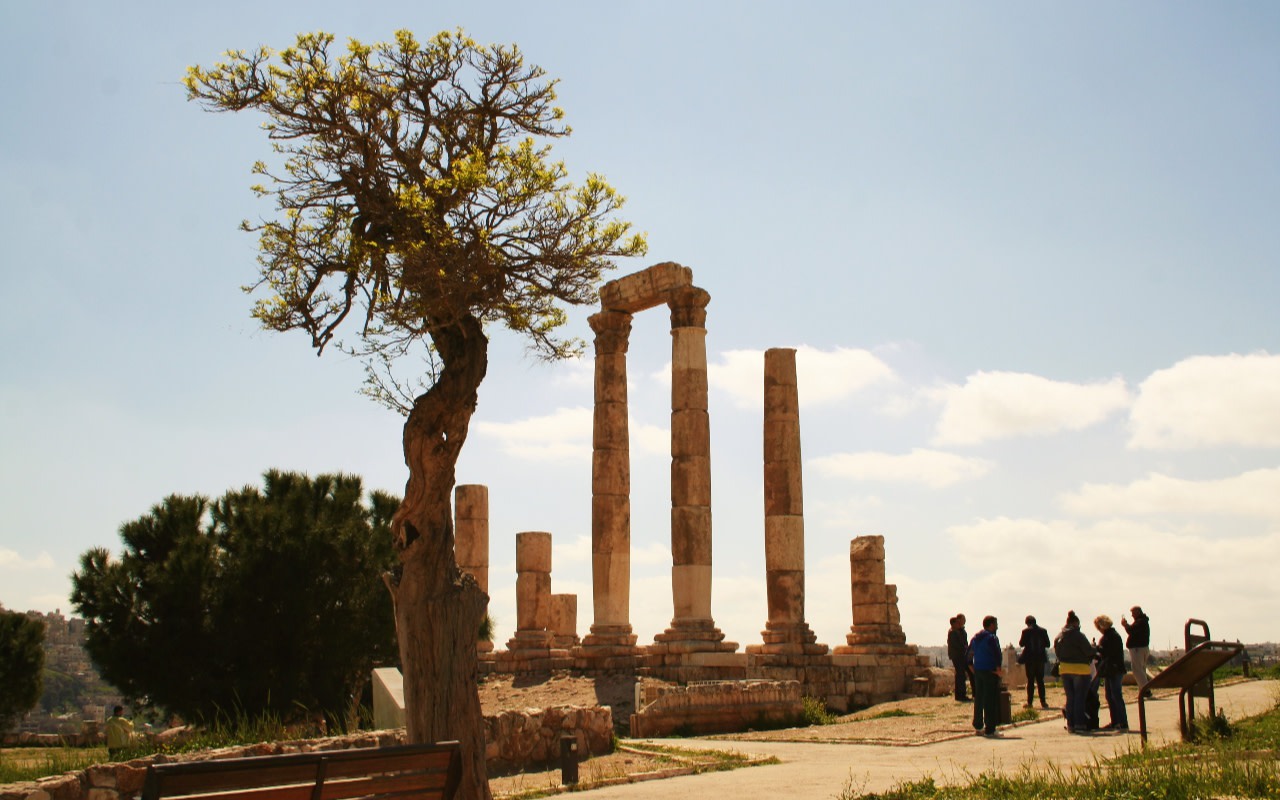
Amman Citadel
The Amman Citadel is an ancient fortress that offers stunning views of the city and a glimpse into its rich history. It houses the Temple of Hercules, the Umayyad Palace, and the Byzantine Church.
Historical
1-2 hours
10 JOD (14 USD)
Roman Theater
This well-preserved 2nd-century Roman theater is a testament to Amman's ancient past. It is still used for cultural events and performances today.
Historical
30-60 minutes
2 JOD (3 USD)
Rainbow Street
Rainbow Street is a vibrant and historic street in Amman known for its cafes, restaurants, and shops. It offers a mix of traditional and modern Jordanian culture.
Cultural
1-2 hours
Free to explore
Darab Alanda
Darab Alanda is a bustling market area with a variety of shops, restaurants, and cafes. It's a great place to experience local culture and cuisine.
Cultural
1-2 hours
Free to explore
Must-Try Local Dishes
Mansaf
Jordan's national dish, consisting of lamb cooked in a yogurt sauce and served with rice and pine nuts.
Main Course
Contains meat and dairy
Falafel
Deep-fried balls made from ground chickpeas, herbs, and spices, often served in pita bread with vegetables and tahini sauce.
Snack
Vegetarian, can be vegan if no dairy added
Hummus
A creamy dip made from chickpeas, tahini, lemon juice, and garlic, often served with pita bread.
Appetizer
Vegetarian, can be vegan if no dairy added
Shawarma
Thinly sliced marinated meat, usually chicken or lamb, cooked on a vertical spit and served in pita bread with vegetables and sauces.
Main Course
Contains meat, can be vegetarian if made with halloumi cheese
Popular Activities
Hiking in Wadi Mujib
ATV tours in the desert
Hot air ballooning
Spa treatments at the Dead Sea
Yoga and meditation retreats
Cultural tours
Visiting museums and historical sites
Attending traditional music and dance performances
Best Time to Visit
Spring (March to May) and Autumn (September to November)
These seasons offer pleasant weather, perfect for exploring the city's historical sites and outdoor activities. The crowds are moderate, and the city is lively with festivals and events.
15-28°C (59-82°F)
59-82°F
Practical Information
Language
- Official: Arabic
- Widely spoken: English
- English: Moderately spoken
Currency
Jordanian Dinar (JOD)
Time Zone
GMT+3
Electricity
230VV, 50HzHz
Safety Information
Overall Safety Rating: Generally safe
Amman is generally safe for travelers, with low crime rates. However, petty crimes like pickpocketing can occur in crowded areas. Exercise caution and stay aware of your surroundings.
Important Precautions:
- • Use licensed taxis or app-based services like Uber or Careem.
- • Keep valuables secure and be cautious in crowded areas.
- • Avoid unlicensed tour guides and always verify their credentials.
Getting there
By air
- Queen Alia International Airport • 35 km (22 miles) south of Amman
By bus
Abdali Bus Terminal, Tabarbour Bus Terminal
Getting around
Public transport
Buses are the most common form of public transport in Amman. They are affordable but can be crowded and confusing for first-time visitors.
Taxis
Available • Apps: Uber, Careem
Rentals
Car, Bike, Scooter
Neighborhoods
Jabal Amman
Downtown Amman
Abdoun
Day trips
Jerash
50 km (31 miles) north of Amman • Half day to full day
Jerash is known for its well-preserved Roman ruins, including the Oval Forum, the Temple of Artemis, and the South Theater. It offers a glimpse into Jordan's ancient past.
Dead Sea
55 km (34 miles) southwest of Amman • Full day
The Dead Sea is the lowest point on Earth and offers unique floating experiences due to its high salt content. It is also known for its mineral-rich mud and spa treatments.
Petra
240 km (150 miles) south of Amman • Overnight
Petra is a historic and archaeological city known for its rock-cut architecture and water conduit system. It is one of the New Seven Wonders of the World.
Festivals
Amman International Film Festival • July
Amman Spring Festival • April
Pro tips
- Learn a few basic Arabic phrases to enhance your experience and connect with locals.
- Try local street food and coffee for an authentic taste of Jordanian culture.
- Visit historical sites early in the morning or late in the afternoon to avoid the heat and crowds.
- Use app-based services like Uber or Careem for fixed prices and English-speaking drivers.
- Dress modestly and respect local customs, especially when visiting religious sites.
From $25
per person
Price varies by option
Secure booking
Free cancellation available
Instant confirmation