The Jewish Heritage in Marrakech
Active
3h
For a full refund, cancel at least 24 hours before the scheduled departure time.
Instant confirmation
Mobile or paper ticket accepted
About this experience
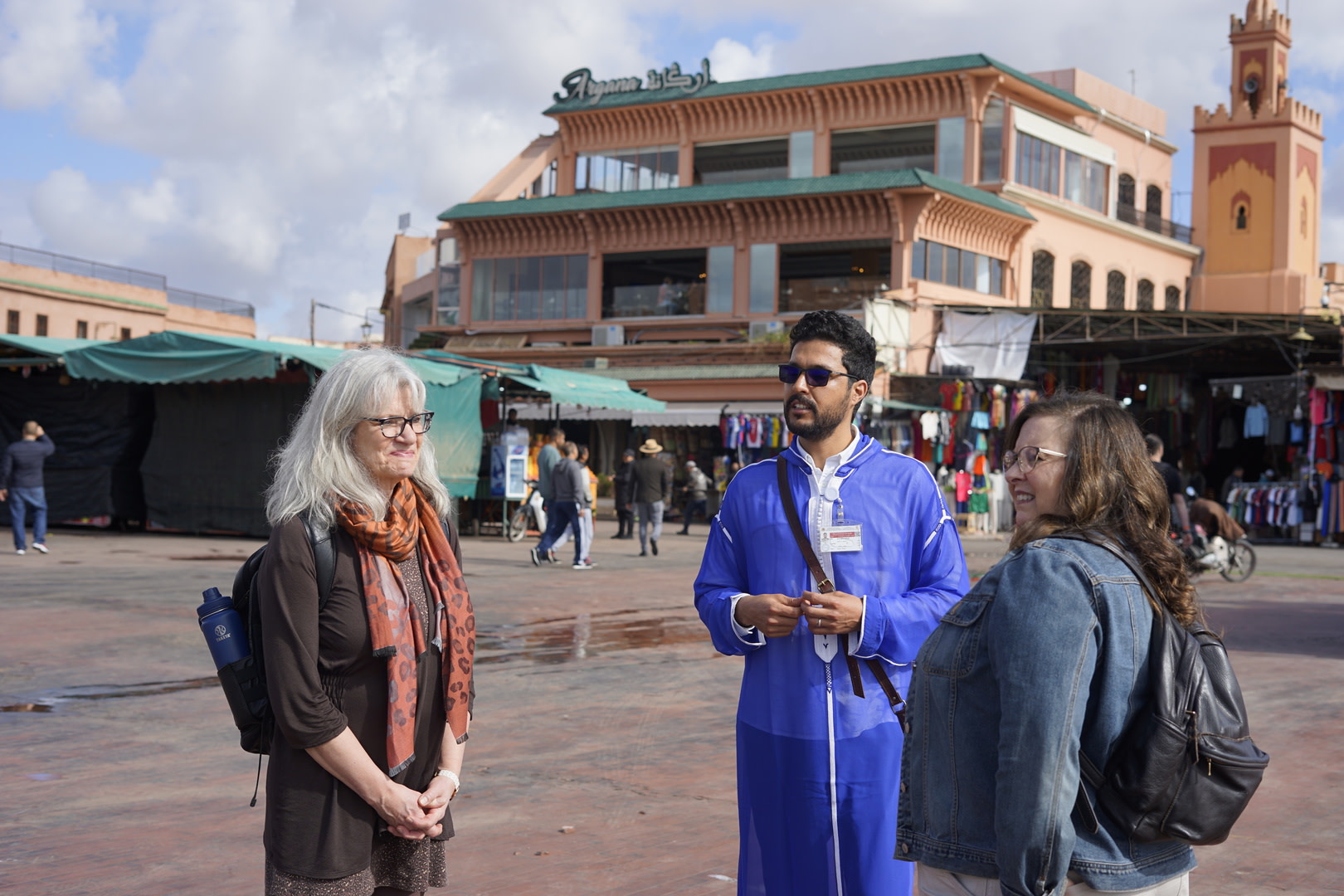
Morocco has existed since ancient times with different civilizations occupying the region because of its critical location. Marrakech used to be the old Capital of Morocco and a major crossroad for Caravans on their way to Europe. The city had trade of herbs, spices. I live in Marrakech and I know the whole city, so I will show you the hidden sites and help you understand the history of this red city. The presence of the Jews in Morocco is about 2000 years , and they were living in quarters called Mellah , In this tour you will discover the different architecture , buildings with balconies , they look like Spanish or European Style , The Jews and the Moors fled persecution from southern of Spain in 1492 and in different periods , you will walk through the quarter , take photos , visit the synagogue, jewish cemetry (no visit on Saturday) , see herbs and spices , learn about the history of the Jews in marrakech and all of Morocco Also visit some other major sites.
Available options
The Jewish Heritage in Marrakech
What's included
Bottled water
Detailed itinerary
1
the Mellah is a term used to describe an area of residents of Jewish origin. It is generally surrounded by high walls to separate them from other population such as Christians and Muslims.
Since 1438, following the great wave of immigration of Jews from Spain fleeing the persecutions of the Reconquista, several urban mellahs were created on the Moroccan territory. From Fez to Meknès, from Essaouira to Taroudant, from Rabat and Sale, and in Marrakech. The Mellah of Marrakech is considered as one of the largest in Morocco. By its history and geography, it surprises and impresses us until its recent renewal wanted by King Mohamed VI.
Even if the presence of Jews has been documented since the 2nd century, the Jewish Mellah of Marrakech has only been recognized as such since 1558, the date of its creation by the authorities.
Throughout the Middle Ages, the population of the Jewish Mellah of Marrakech was estimated at 70,000 person. At the end of the 18th century, a figure of 35,000 was put forward. In 1936, 15,000 Jews were registered. Since the end of the Second World War and the creation of Israel in 1948, the Jewish population has been steadily decreasing. It now stands at 175 persons. Very few of them live in the original Mellah (less than 10 people), they preferred the comfort of the new city of Marrakech, Gueliz.
A quadrilateral of more than 18 hectares, the historic mellah is surrounded by large walls with 2 access doors on the outside (bab in Arabic) : one toward the city itself, the other on the cemetery.
The streets, the parallel or perpendicular internal lanes, with its high houses without windows, thebalcony buildings (some of them), however, gave it a certain regularity and homogeneity.
The Mellah was essentially composed of :
-riads (house of living).
-fondouks (or caravansérail : large house centred on an inner courtyard used as commercial warehouses, animal shelters and accommodation for merchants and travellers).
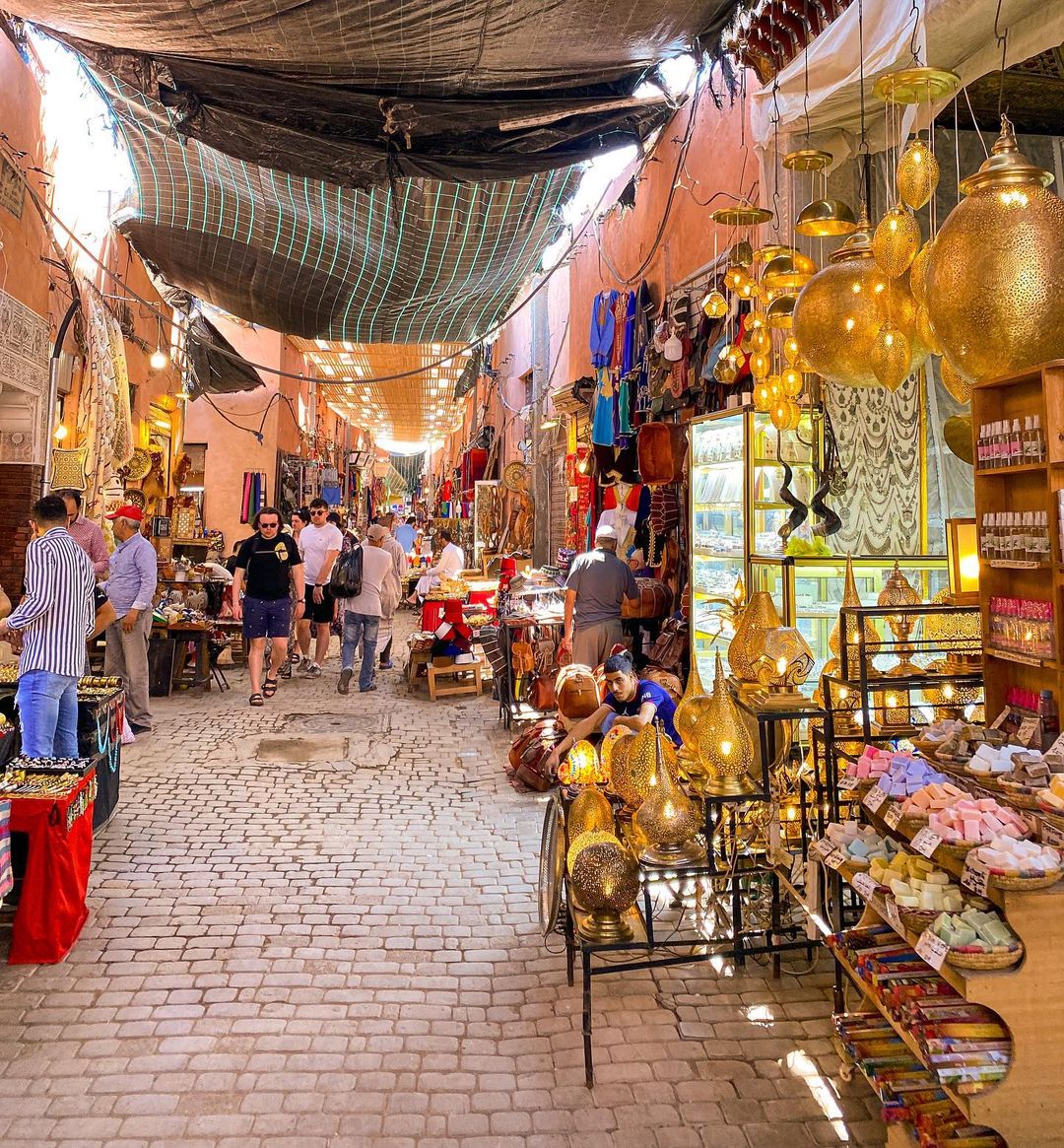
-commercial streets or souk (spices, fabrics, etc.).
-synagogues (up to thirty enumerated).
-places, more or less large.
The Square des Ferblantiers is the nerve centre of the mellah by day, the door toward the city opening into its centre, with Jewish craftsmen working in tinplate. A tradition that has been maintained since then until the Arabs nowdays. The souk of spices and the souk of jewellery were known and frequented by Muslims since the 16th century.
2
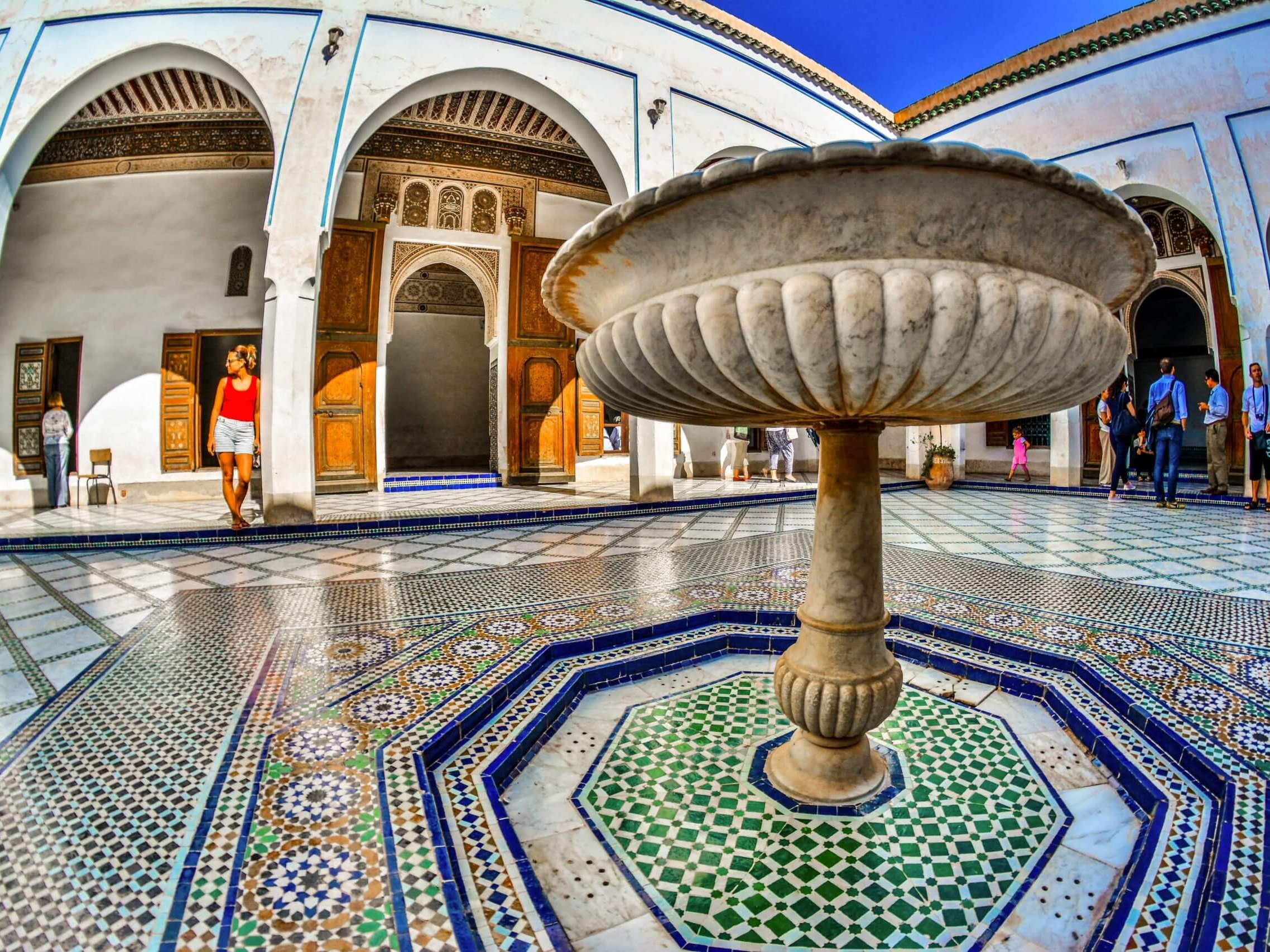
A well-tended courtyard surrounds the Lazama Synagogue. Around the outer edges are curtains offering privacy to the members who live there. Beautiful hand-laid tiles covered many of the walls, often between the curtains.
Colour and patterns reflect the Jewish atmosphere, as does the Hebrew letters along the upper edge of the walls. While mostly blues and white are used in this courtyard.
A mezuzah hangs on the doorframe at the entrance to Lazama Synagogue. A mezuzah is a piece of parchment often in a decorative case. It is inscribed with specified Hebrew verses from the Torah.
Typically, a mezuzah is hung at the door of a Jewish home. In addition, some wear a mezuzah charm around their neck for protection.
3
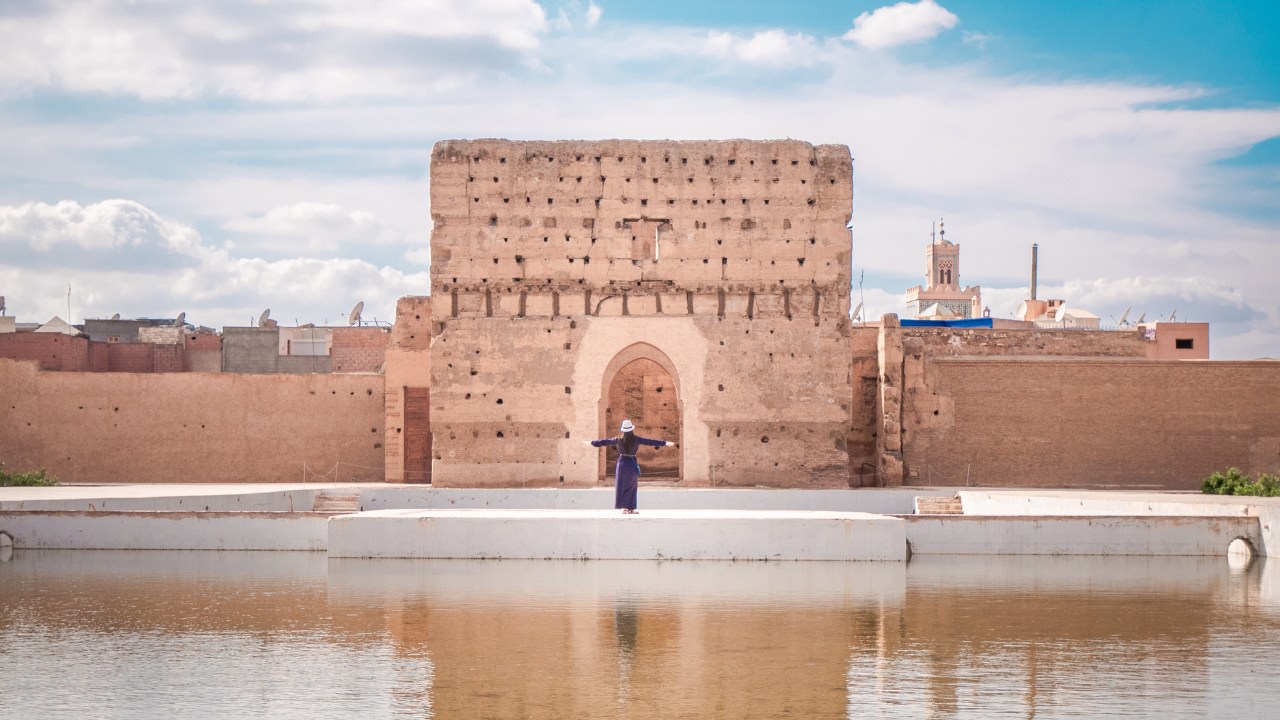
The recently renovated Tinsmiths’ Square (Place des Ferblantiers) overlooks the Badi Palace by an arch, the entrance to the Spice Souk and the Mellah Souk on its left side, and the alley leading to the Bahia Palace. You will find shops, restaurants and snack bars and in a corner some tinsmiths.
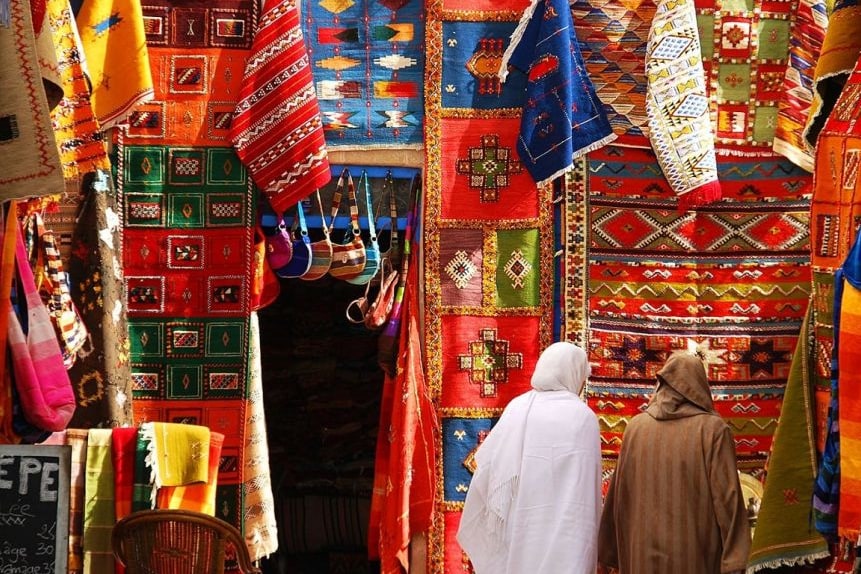
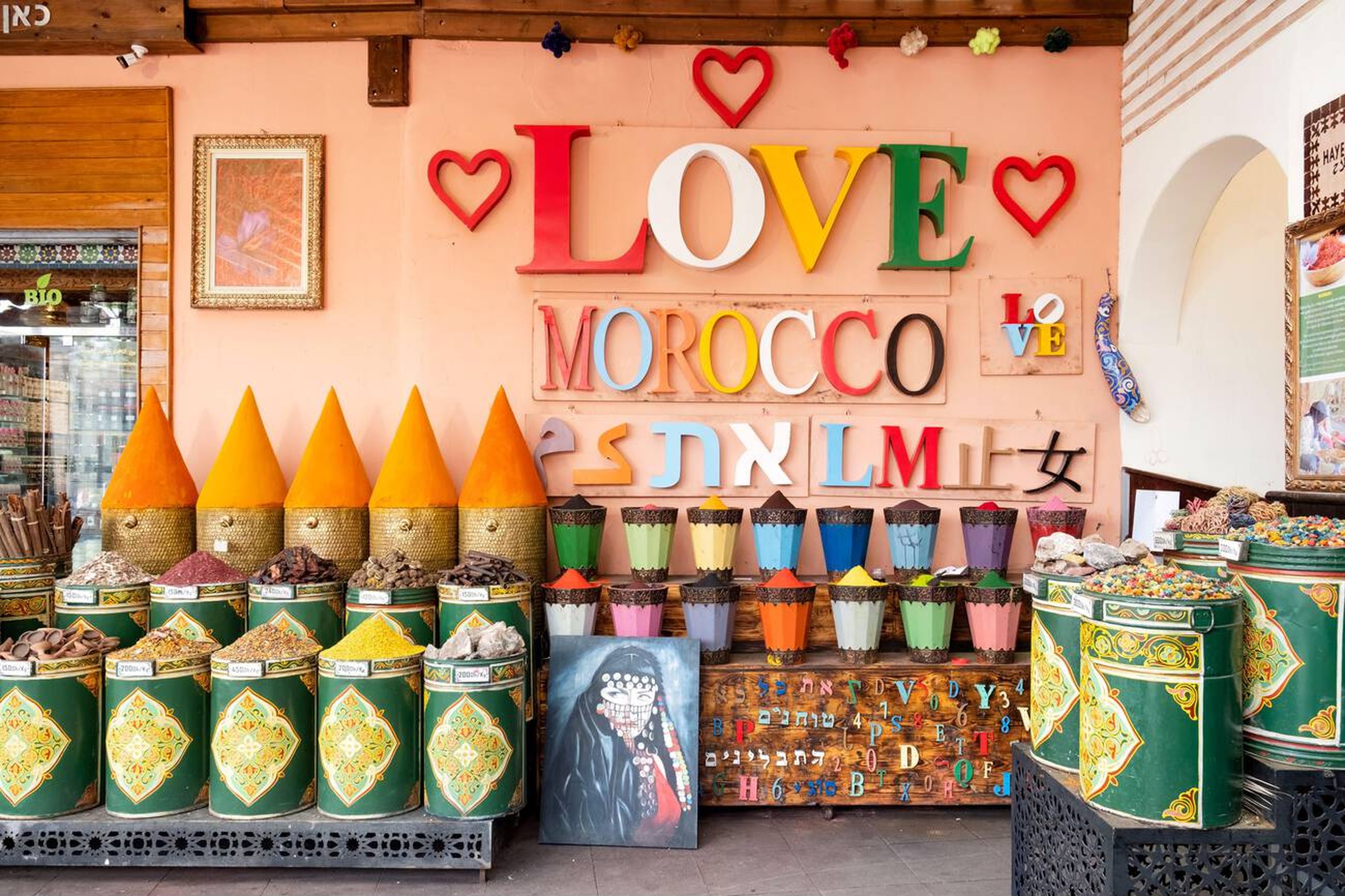
The Spice Souk at the entrance of the great souk of the Mellah. You will find all the Moroccan spices, herb and herbal tea merchants, fabric shops to have you make clothes or decorative objects by local craftsmen.
The Kissaria of jewellers and goldsmiths (at the end of the square of the Tinsmiths’ Square, towards the Bahia Palace). Jewish creation taken over by the Muslim population since then, organized around 2 covered galleries. You can admire gold and silver coins, fibulas, Fatima’s hands and other Berber jewellery.
4
Dating from the 16th century, is the largest Jewish cemetery in Morocco. Divided into 3 distinct edges (men, women, children), it is the only one to be so because of the singular custom (minhaggim) of the Jews of the city of Marrakech.
What's not included
TIPS
Available languages
Guide guide
EN
FR
Reviews breakdown
Viator
2.0
4 reviews
5★
1
4★
0
3★
0
2★
0
1★
3
Tripadvisor
5.0
3 reviews
5★
3
4★
0
3★
0
2★
0
1★
0
Important information
Wheelchair accessible
Infants and small children can ride in a pram or stroller
Public transportation options are available nearby
Infants are required to sit on an adult’s lap
Specialized infant seats are available
All areas and surfaces are wheelchair accessible
Suitable for all physical fitness levels
About Marrakech
Marrakech is a vibrant city known for its rich history, bustling souks, and stunning architecture. It offers a blend of traditional Moroccan culture and modern amenities, making it a captivating destination for travelers.
Top Attractions
Jemaa El-Fnaa
Jemaa El-Fnaa is the heart of Marrakech, a bustling square filled with food stalls, entertainers, and souvenir vendors. It's a must-visit for its vibrant atmosphere and cultural experiences.
Cultural
2-3 hours
Free (food and souvenirs cost extra)
Koutoubia Mosque
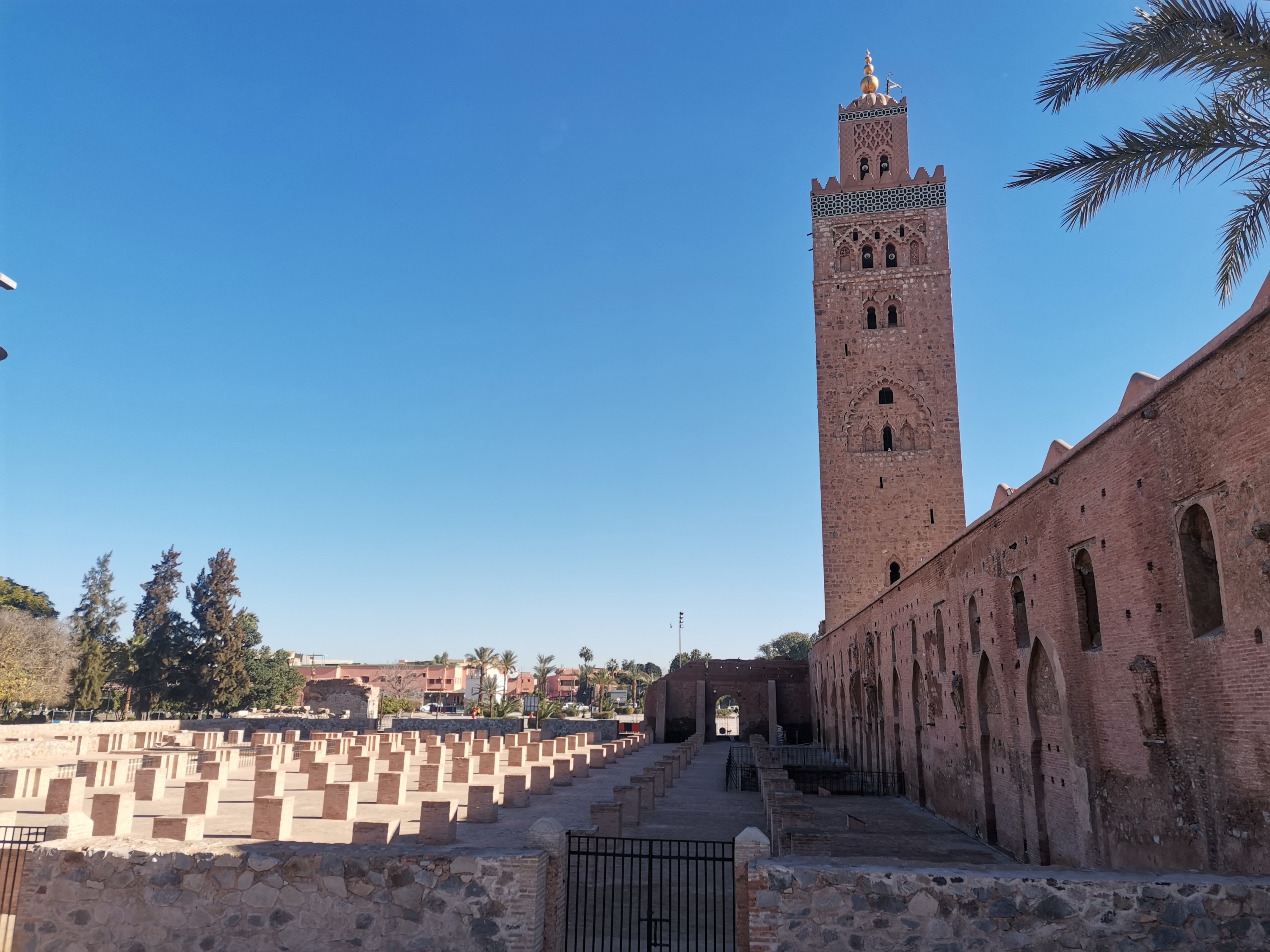
The Koutoubia Mosque is one of the most iconic landmarks in Marrakech. Its minaret is a symbol of the city and can be seen from many parts of the medina.
Historical
1 hour
Free (non-Muslims cannot enter the mosque)
Bahia Palace
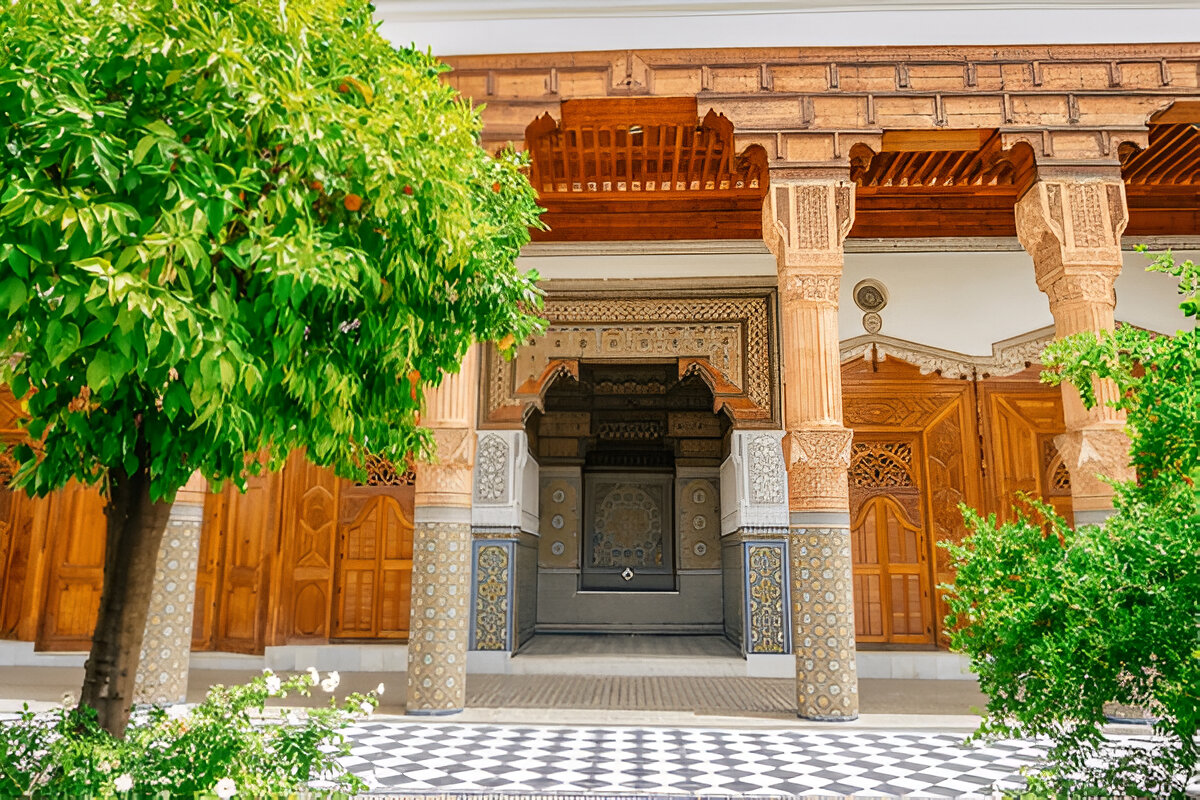
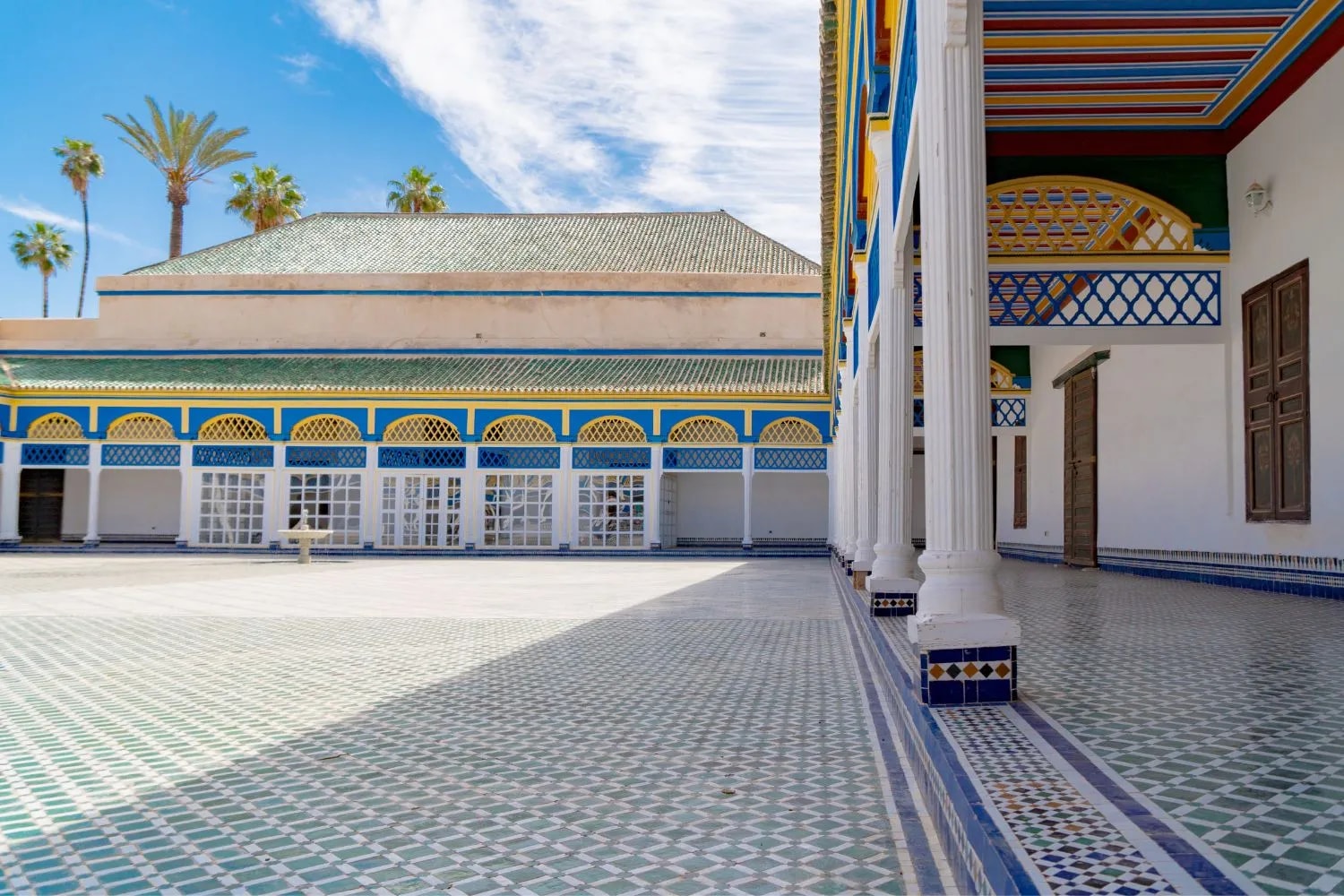
The Bahia Palace is a stunning example of Moroccan architecture, featuring intricate tile work, lush gardens, and beautiful courtyards. It offers a glimpse into the opulent lifestyle of the past.
Historical
1-2 hours
70 MAD
Majorelle Garden
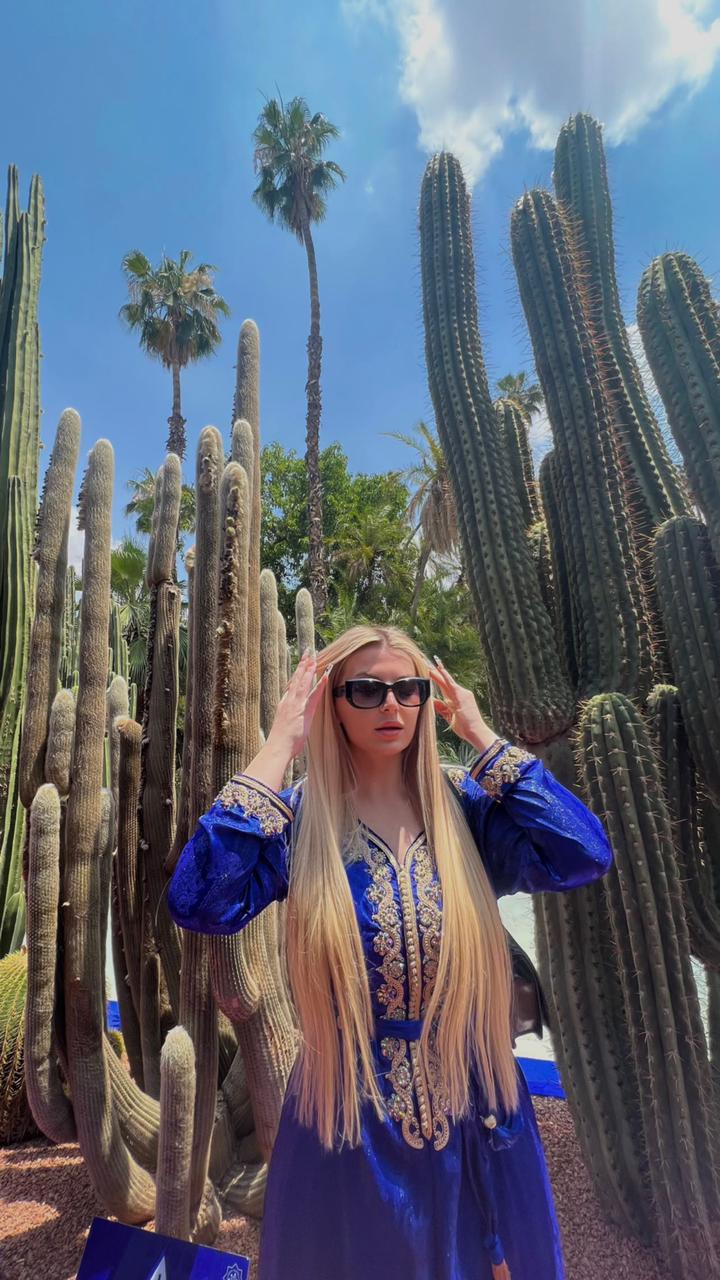
The Majorelle Garden is a beautiful botanical garden designed by French painter Jacques Majorelle. It features a variety of plants, a striking blue villa, and a museum dedicated to Yves Saint Laurent.
Nature
2-3 hours
70 MAD
Saadian Tombs
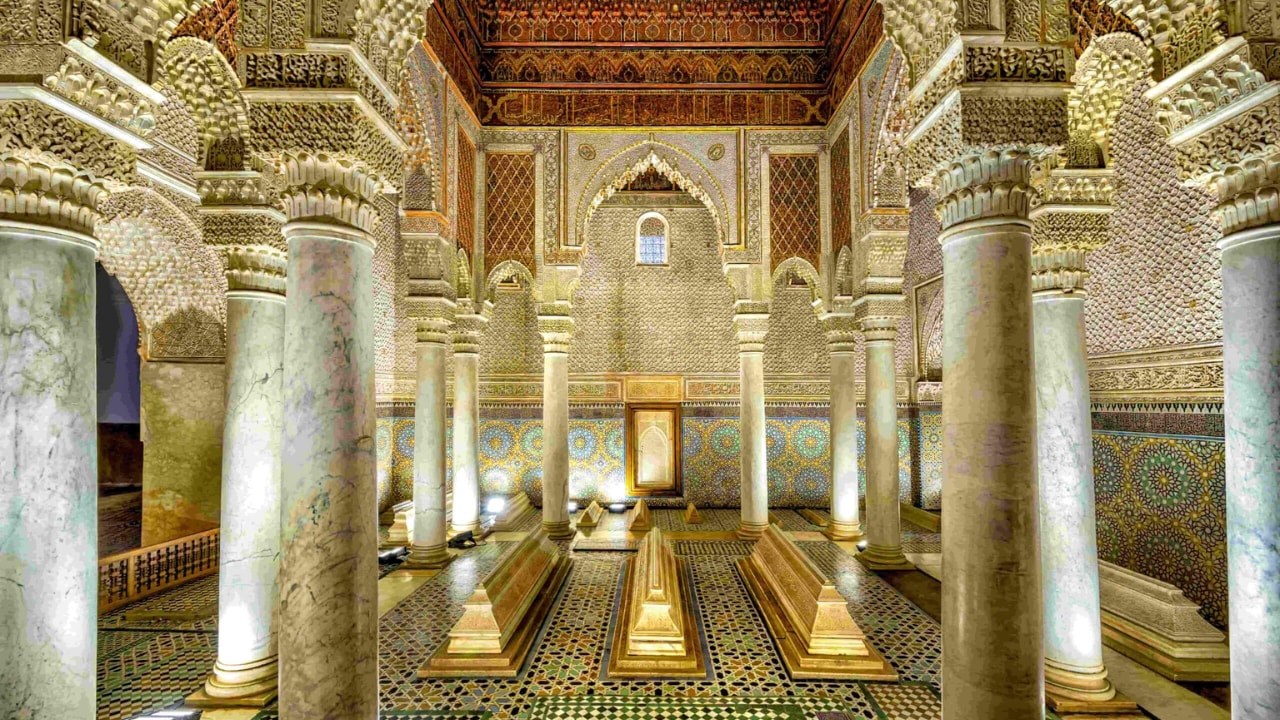
The Saadian Tombs are a collection of mausoleums dating back to the 16th and 17th centuries. They were discovered in 1917 and offer a fascinating look into the history of Marrakech.
Historical
1 hour
70 MAD
Must-Try Local Dishes
Tagine
A slow-cooked stew made with meat, vegetables, and spices, named after the earthenware pot it's cooked in.
Main course
Vegetarian options available
Couscous
A dish made with steamed semolina grains, often served with vegetables and meat.
Main course
Vegetarian options available
Pastilla
A savory-sweet pie made with layers of filo pastry, filled with spiced pigeon or chicken, almonds, and powdered sugar.
Main course
Contains nuts
Mint Tea
A traditional Moroccan tea made with green tea and fresh mint leaves, sweetened with sugar.
Drink
Contains caffeine
Popular Activities
Hiking in the Atlas Mountains
Surfing in Essaouira
Quad biking in the desert
Spa treatments
Yoga retreats
Relaxing in a hammam
Exploring the medina
Visiting museums
Best Time to Visit
Spring (March to May) and Fall (September to November)
The best time to visit Marrakech is during spring and fall when the weather is pleasant and ideal for exploring the city. The temperatures are mild, and the crowds are manageable.
15°C to 25°C
59°F to 77°F
Practical Information
Language
- Official: Arabic
- Widely spoken: French, Berber languages
- English: Moderately spoken in tourist areas
Currency
Moroccan Dirham (MAD)
Time Zone
GMT+0
Electricity
220VV, 50HzHz
Safety Information
Overall Safety Rating: Exercise caution
Marrakech is generally safe for tourists, but petty crime and scams can occur. Be cautious of your surroundings, especially in crowded areas.
Important Precautions:
- • Be cautious of your belongings in crowded areas.
- • Use reputable taxi services and agree on the fare before starting your journey.
- • Avoid walking alone at night in less crowded areas.
Getting there
By air
- Menara International Airport • 4 km from city center
By train
Marrakech Railway Station
By bus
Marrakech Central Bus Station
Getting around
Public transport
Buses are the most common form of public transport in Marrakech. They are affordable and cover most areas of the city.
Taxis
Available • Apps: Careem, Heetch
Rentals
Car, Bike, Scooter
Neighborhoods
Medina
Gueliz
Hivernage
Day trips
Atlas Mountains
60 km from Marrakech • Full day
The Atlas Mountains offer stunning landscapes, hiking trails, and traditional Berber villages. It's a great escape from the city for nature lovers.
Ourika Valley
30 km from Marrakech • Half day to full day
The Ourika Valley is known for its beautiful landscapes, traditional Berber houses, and waterfalls. It's a popular destination for day trips from Marrakech.
Essaouira
180 km from Marrakech • Full day to overnight
Essaouira is a charming coastal town known for its beautiful beaches, historic medina, and vibrant arts scene. It's a popular destination for surfing, windsurfing, and relaxation.
Festivals
Marrakech Popular Arts Festival • Every July
Marrakech International Film Festival • Every November/December
Ramadan • Dates vary (Islamic calendar)
Pro tips
- Hire a local guide for a more immersive and informative experience.
- Learn a few basic phrases in Arabic or French to enhance your interactions with locals.
- Visit the medina early in the morning or late in the afternoon to avoid the heat and crowds.
- Bargain politely when shopping in the souks, as prices are often negotiable.
- Try local street food for an authentic culinary experience, but choose stalls with high turnover.
From $25
per person
Price varies by option
Secure booking
Free cancellation available
Instant confirmation