Explore highlights of enchanting Rome on a private shore sightseeing tour
Active
7h
All sales are final. No refund is available for cancellations.
Instant confirmation
Mobile or paper ticket accepted
About this experience
Visit places that made Rome immortal on this private day trip to Rome from Civitavecchia Harbour. See the great Colosseum and Roman Forum, follow the bright crowds at the Spanish Steps, and learn about Roman history. Don't forget to throw a coin in Fountain Trevi to ensure that someday you will come back.
Available options
Explore highlights of enchanting Rome on a private shore sightseeing tour
Pickup included
What's included
All fees and taxes
Hotel pick up and drop off
Transportation by air-conditioned vehicle
Professional licensed guide
Detailed itinerary
1
Stop 1
Your guide will pick you up from Civitavecchia Cruise Terminal and will drive you to Rome. See all the main sights of Rome and even more on this driving and walking tour with stops. You'll see St. Peter’s Square, The Basilica (outside).
St. Peter’s Basilica, also called New St. Peter’s Basilica, present basilica of St. Peter in Vatican City (an enclave in Rome), begun by Pope Julius II in 1506 and completed in 1615 under Paul V. It is designed as a three-aisled Latin cross with a dome at the crossing, directly above the high altar, which covers the shrine of St. Peter the Apostle. The edifice—the church of the popes—is a major pilgrimage site.
2
Stop 2
The Pantheon, completed in 126AD, was a Roman temple with a surprising oculus that is the building's main source of natural light. The Pantheon of Agrippa, also known as the Roman Pantheon, is one of the architectural masterpieces of the Italian capital. It is the best preserved building from ancient Rome. The construction of the current Pantheon was carried out during the reign of Hadrian, in the year 126 A.D. The name of Agrippa comes from the place in which the current building is built, which was previously occupied by the Pantheon of Agrippa, built in the year 27 B.C and that was destroyed in a fire in the year 80 A.D.
3
Stop 3
One of Rome's most characteristic Baroque squares, Piazza Navona still has the outline of the Roman stadium built here by Emperor Domitian. It was still used for festivals and horse races during the Middle Ages, and was rebuilt in the Baroque style by Borromini, who also designed the magnificent series of palaces and the church of Sant'Agnese, on its west side. Its facade, campanile, and dome highlight the way Baroque architecture weaves convex and concave surfaces, gables, windows, columns, and piers into a unified design. In the crypt of Sant'Agnese are Alessandro Algardi's 1653 The Miracle of St. Agnes and the remains of a Roman mosaic floor. Sant'Agnese provided a model for Baroque and Rococo churches in Italy and elsewhere.
4
Stop 4
The Colosseum or Coliseum, also known as the Flavian Amphitheatre or Colosseo, is an oval amphitheatre in the centre of the city of Rome, Italy. Built of travertine limestone, tuff (volcanic rock), and brick-faced concrete, it was the largest amphitheatre ever built at the time and held 50,000 to 80,000 spectators. The Colosseum is situated just east of the Roman Forum. Construction began under the emperor Vespasian in AD 72 and was completed in AD 80 under his successor and heir, Titus. Further modifications were made during the reign of Domitian (81–96).
5
Stop 5
Roman Forum, Latin Forum Romanum, most important forum in ancient Rome, situated on low ground between the Palatine and Capitoline hills. The Roman Forum was the scene of public meetings, law courts, and gladiatorial combats in republican times and was lined with shops and open-air markets. Under the empire, when it primarily became a center for religious and secular spectacles and ceremonies, it was the site of many of the city’s most imposing temples and monuments.
6
Stop 6
Trevi Fountain is the most beautiful fountain in Rome. Measuring some 20 meters in width by 26 meters in height, Trevi Fountain is also the largest fountain in the city. The origins of the fountain go back to the year 19 B.C., in which period the fountain formed the end of the Aqua Virgo aqueduct. The first fountain was built during the Renaissance, under the direction of Pope Nicholas V. The final appearance of the Trevi Fountain dates from 1762, when after many years of works at the hand of Nicola Salvi, it was finalized by Giuseppe Pannini. Interestingly enough, the name of Trevi derives from Tre Vie (three ways), since the fountain was the meeting point of three streets.
7
Stop 7
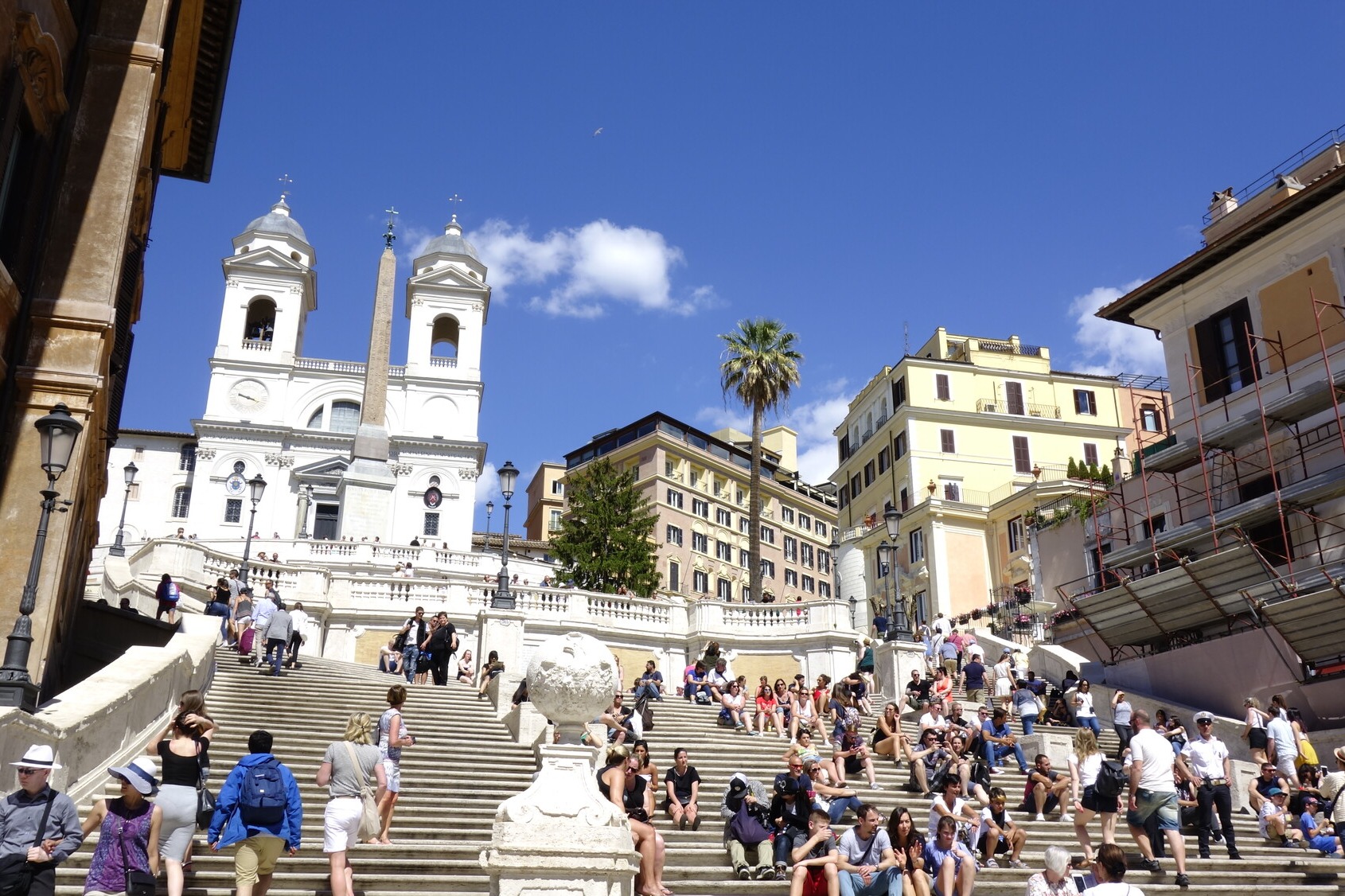
The Spanish Steps are a set of steps in Rome, Italy, climbing a steep slope between the Piazza di Spagna at the base and Piazza Trinità dei Monti, dominated by the Trinità dei Monti church at the top. The monumental stairway of 135 steps (the slightly elevated drainage system is often mistaken for the first step) was built with French diplomat Étienne Gueffier's bequeathed funds of 20,000 scudi, in 1723–1725,[citation needed] linking the Trinità dei Monti church that was under the patronage of the Bourbon kings of France – located above – and the Bourbon Spanish Embassy to the Holy See – located below – in Palazzo Monaldeschi. The stairway was designed by architects Francesco de Sanctis and Alessandro Specchi.
8
Stop 8
The Arch of Constantine is a triumphal arch in Rome dedicated to the emperor Constantine the Great. The arch was commissioned by the Roman Senate to commemorate Constantine’s victory over Maxentius at the Battle of Milvian Bridge in AD 312. Situated between the Colosseum and the Palatine Hill, the arch spans the Via triumphalis, the route taken by victorious military leaders when they entered the city in a triumphal procession. Dedicated in 315, it is the largest Roman triumphal arch, with overall dimensions of 21 m high, 25.9 m wide, and 7.4 m deep. It has three bays, the central one being 11.5 m high and 6.5 m wide and the laterals 7.4 m by 3.4 m each. The arch is constructed of brick-faced concrete revetment in marble. Though dedicated to Constantine, much of the sculptural decoration consists of reliefs and statues removed from earlier triumphal monuments dedicated to Trajan (98–117), Hadrian (117–138), and Marcus Aurelius (161–180).
9
Stop 9
The Basilica di Santa Maria Maggiore is an ancient Catholic basilica that is considered to be the largest of the churches dedicated to the Virgin Mary in Rome. It is one of the city’s four major basilicas.
10
Stop 10
The Cathedral of the Most Holy Savior and of Saints John the Baptist and the Evangelist in the Lateran, also known as the Papal Archbasilica of Saint John [in] Lateran, Saint John Lateran, or the Lateran Basilica, is the cathedral church of the Diocese of Rome in the city of Rome, and serves as the seat of the Roman Pontiff. It is the oldest and highest ranking of the four papal major basilicas, holding the unique title of "archbasilica". It is the oldest public church in the city of Rome, and the oldest basilica of the Western world. It houses the cathedra of the Roman bishop and has the title of the ecumenical mother church of the Catholic faithful.
11
Stop 11
The Baths of Caracalla in Rome, Italy, were the city's second-largest Roman public baths, or thermae, likely built between AD 212 (or 211) and 216/217, during the reigns of emperors Septimius Severus and Caracalla. They were in operation until the 530s and then fell into disuse and ruin.
12
Stop 12
The Galleria Borghese is an art gallery in Rome, Italy, housed in the former Villa Borghese Pinciana. At the outset, the gallery building was integrated with its gardens, but nowadays the Villa Borghese gardens are considered a separate tourist attraction. The Galleria Borghese houses a substantial part of the Borghese collection of paintings, sculpture, and antiquities, begun by Cardinal Scipione Borghese, the nephew of Pope Paul V (reign 1605–1621). The Villa was built by the architect Flaminio Ponzio, developing sketches by Scipione Borghese himself, who used it as a villa suburban, a country villa at the edge of Rome.
13
Stop 13
Located 40 meters above the Roman Forum, the Palatine Hill is the most central of the seven hills of Rome and forms one of the oldest parts of the city. The Palatine Hill is considered to be the birthplace of the Italian capital and is believed to have been inhabited since the year 1000 B.C.
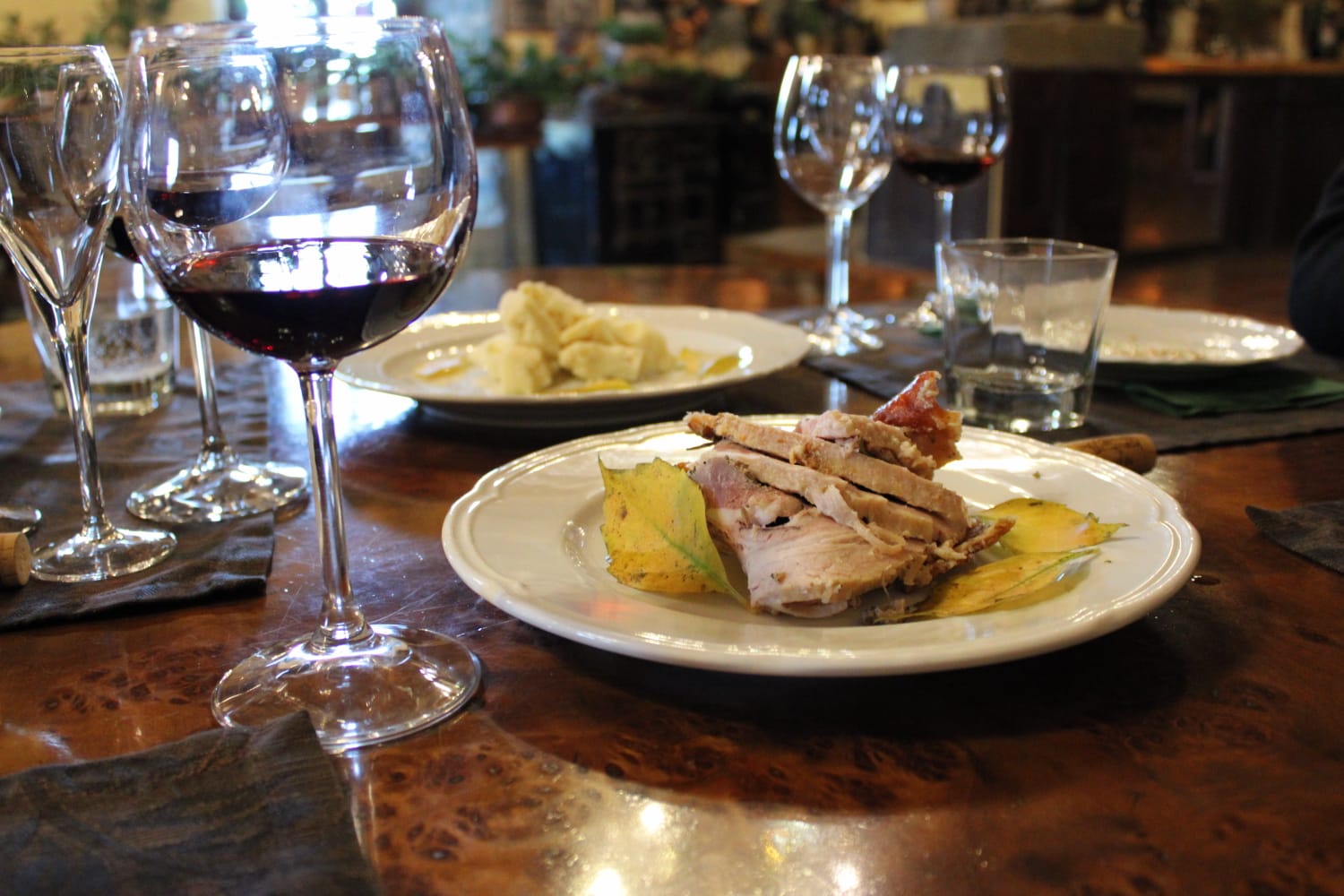
During the tour, you will have time for rest and lunch in a traditional Roman family restaurant.
After the tour concludes you and your guide will be going back to the port of Civitavecchia.
What's not included
Food and drinks (own expense)
Available languages
Guide guide
EN
ES
Reviews breakdown
Tripadvisor
5.0
1 reviews
5★
1
4★
0
3★
0
2★
0
1★
0
Important information
Suitable for all physical fitness levels
About Lake Bracciano
Lake Bracciano is a stunning volcanic lake located in the Lazio region of Italy, just 30 kilometers northwest of Rome. Known for its crystal-clear waters and scenic beauty, it is a popular destination for nature lovers, history enthusiasts, and those seeking a peaceful retreat from the bustling city. The lake is surrounded by picturesque towns and historical sites, offering a perfect blend of relaxation and cultural exploration.
Top Attractions
Castello Orsini-Odescalchi
A stunning medieval castle located on the shores of Lake Bracciano, offering guided tours and beautiful views of the lake.
Historical
2-3 hours
€10-€15
Martignano Nature Reserve
A protected nature reserve with hiking trails, birdwatching opportunities, and beautiful landscapes.
Nature
Half-day to full-day
Free
Sacro Monte di Bracciano
A historic pilgrimage site with a series of chapels and religious artworks, offering stunning views of the lake.
Religious
1-2 hours
Free
Must-Try Local Dishes
Baccalà alla Braccianese
A traditional dish made with salted cod, tomatoes, and potatoes, cooked in a rich tomato sauce.
Main Course
Contains fish
Fettuccine alla Tivernese
A local pasta dish made with fettuccine, pork, and a creamy sauce.
Main Course
Contains pork, not suitable for vegetarians
Crostata di Ricotta
A traditional sweet tart made with ricotta cheese, sugar, and citrus zest.
Dessert
Contains dairy
Popular Activities
Hiking
Cycling
Water sports
Beach lounging
Spa treatments
Picnicking
Historical site visits
Museum tours
Best Time to Visit
June to August
This is the peak tourist season with warm weather and clear skies, perfect for swimming, boating, and outdoor activities. The lake is bustling with tourists, and the surrounding towns are lively with events and festivals.
25°C to 35°C
77°F to 95°F
Practical Information
Language
- Official: Italian
- Widely spoken: English, French, Spanish
- English: Moderately spoken in tourist areas
Currency
Euro (EUR)
Time Zone
GMT+1 (Central European Time)
Electricity
230VV, 50HzHz
Safety Information
Overall Safety Rating: Generally safe
Lake Bracciano is a safe destination with low crime rates. However, as with any travel destination, it's important to be aware of your surroundings and take precautions to protect your belongings.
Important Precautions:
- • Keep valuables secure
- • Be cautious of pickpockets in crowded areas
- • Use reputable taxi services or ride-sharing apps
Getting there
By air
- Rome Fiumicino Airport • 50 km
By train
Bracciano Station
By bus
Bracciano Bus Terminal
Getting around
Public transport
Buses are a convenient way to get around, but schedules can be limited. Check schedules in advance.
Taxis
Available • Apps: FreeNow
Rentals
Car, Bike, Scooter
Neighborhoods
Bracciano
Anguillara Sabazia
Trevignano Romano
Day trips
Rome
30 km • Half-day to full-day
The eternal city offers a wealth of historical sites, including the Colosseum, Roman Forum, and Vatican City.
Tuscania
40 km • Full-day
A charming medieval town with well-preserved Etruscan ruins and beautiful architecture.
Viterbo
30 km • Full-day
A historic town known for its thermal baths, medieval architecture, and beautiful parks.
Festivals
Festa del Lago • July
Sagra del Baccalà • June
Festa di San Rocco • August
Pro tips
- Visit the castle early in the morning to avoid crowds and enjoy the best views.
- Explore the towns around the lake on foot to discover hidden gems and local charm.
- Try local specialties such as Baccalà alla Braccianese and Fettuccine alla Tivernese.
- Bring a camera to capture the stunning landscapes and historical sites.
- Consider renting a bike or electric scooter to explore the area at your own pace.
From $25
per person
Price varies by option
Secure booking
Free cancellation available
Instant confirmation