Rome Capitoline Museums Private Guided Tour and Panoramic Views
Active
2h - 3h
For a full refund, cancel at least 24 hours before the scheduled departure time.
Instant_then_manual confirmation
Mobile or paper ticket accepted
About this experience
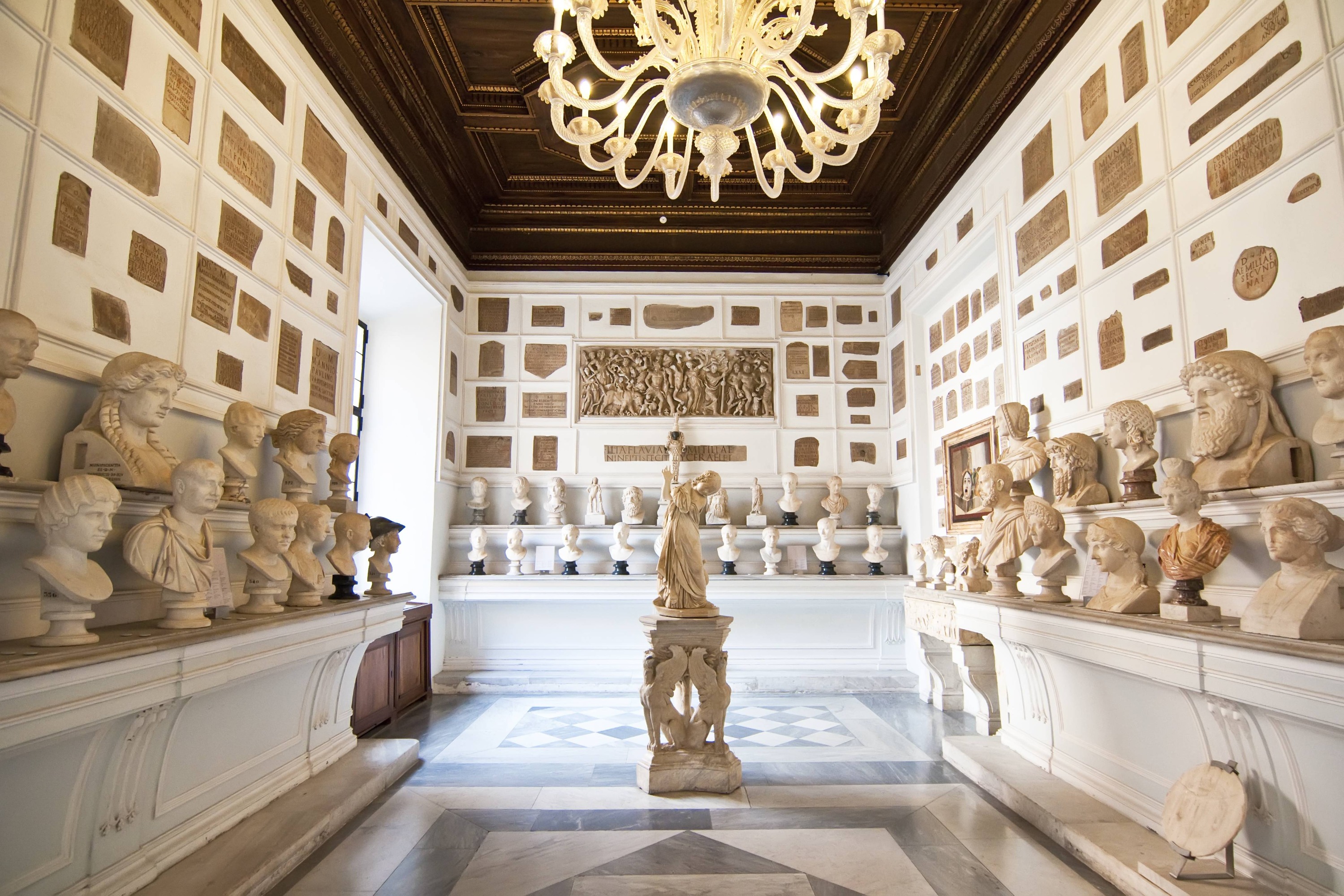
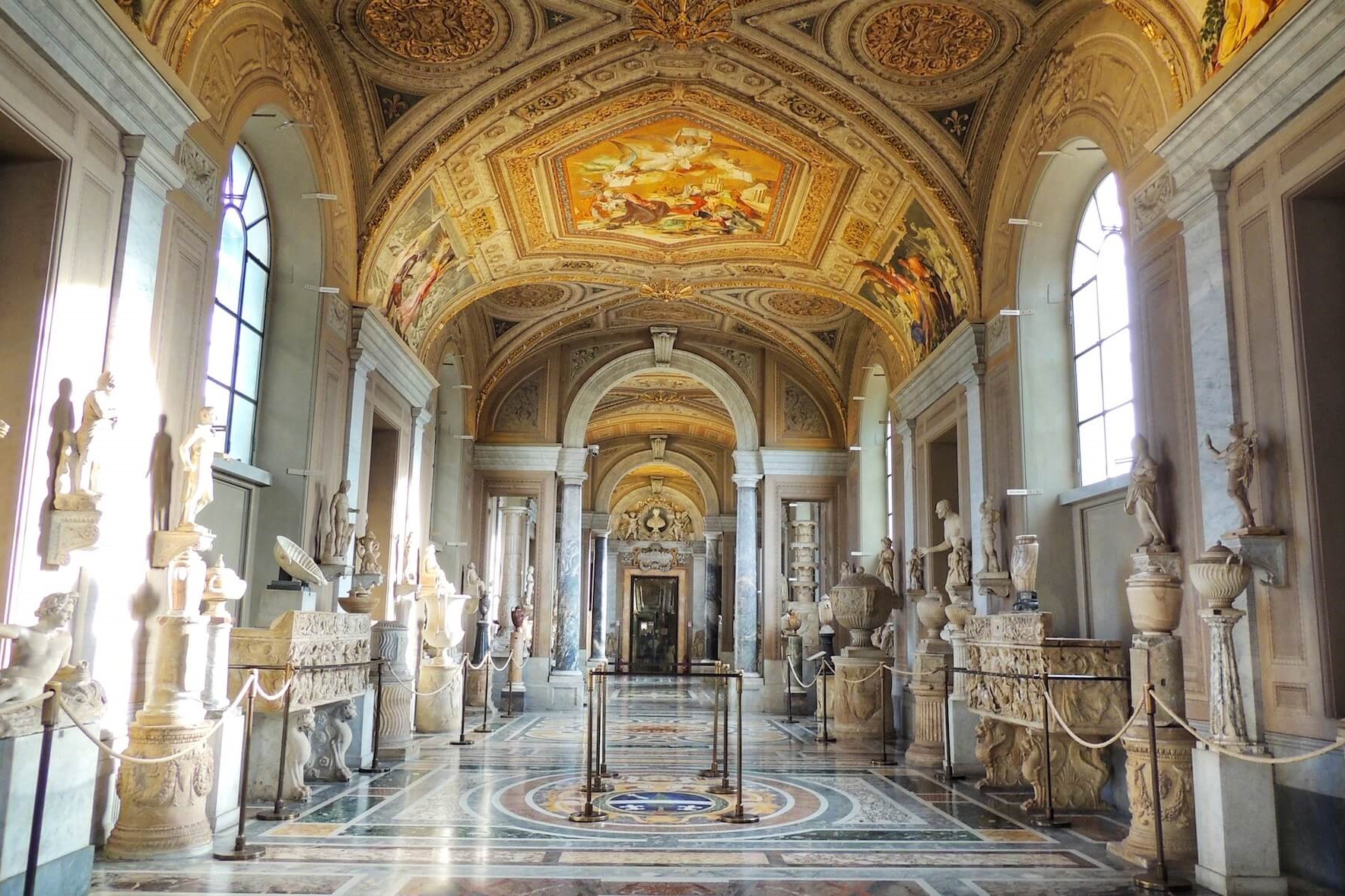
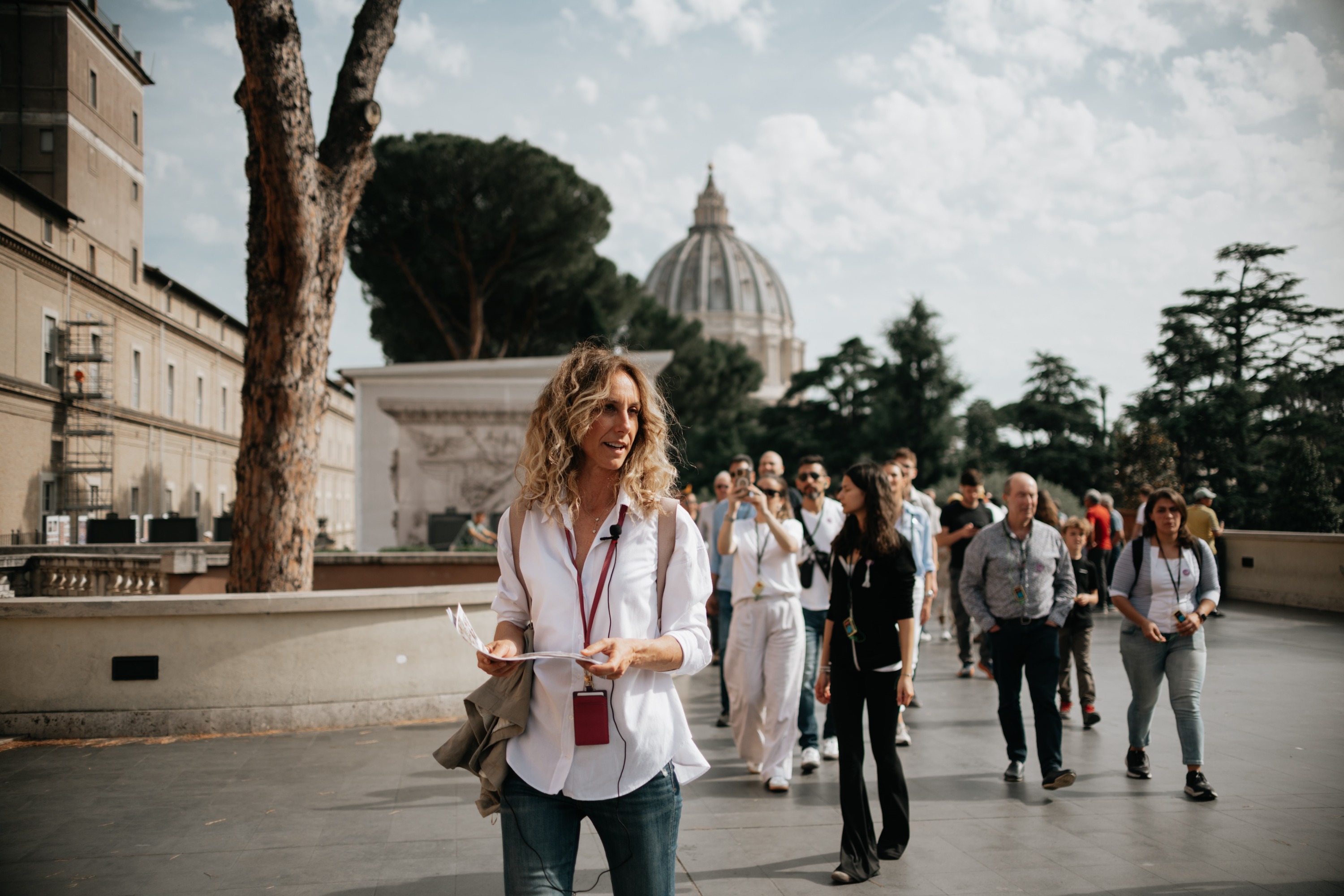
Your private guide will lead you through the Capitoline Museums in Piazza del Campidoglio, with a breathtaking view of Rome. After visiting the beautiful Piazza del Campidoglio, a superb example of Renaissance architecture designed by Michelangelo Buonarroti, enter the Museums. The guide will let you admire the remains of the colossal statue of Constantine and then the collections of the classical era, passing through richly frescoed halls. In the hall with a glass ceiling, see the bronze sculpture of the emperor Marcus Aurelius, the statues of the lion that bites the horse, the Spinario, the head of Constantine, and the Capitoline Wolf, the symbol of Rome. Passed the remains of the Temple of Jupiter, going underground in the gallery of the Tabularium 4th century BC, from whose arcades you can enjoy a panoramic view of the Roman Forum; reach the new wing of the museum to admire the Capitoline Venus, the Dying Gaul, the Red Faun, the group of Cupid and Psyche, and the Marforio.
Available options
Capitoline Museum Private Tour
Duration: 3 hours
What's included
Guaranteed skip the lines Tickets
Private tour
Professional art historian guide
Tax, VAT and insurance
Panoramic Views of Rome
Detailed itinerary
1
Stop 1
Discover the Capitoline Museums and enjoy incredible panoramic views.
Admire bronze sculptures such as the bust of Capitoline Brutus; the Spinario, the Capitoline Wolf who suckles Romulus and Remus, which has become the symbol of the Eternal City; and an extraordinary collection of Greek and Etruscan vases. Moving on to the Pinacoteca, the oldest public collection of paintings, you will be able to enjoy the view of paintings by Caravaggio, Guido Reni, Carracci, Guercino, Domenichino, Veronese, Titian, Tintoretto, Rubens, Pietro da Cortona as well as statues from Renaissance and Baroque Rome. Once you reach the exedra, the spectacular equestrian statue of Emperor Marcus Aurelius stands among the remains of the ancient temples still visible.
Through an underground tunnel among the Tabularium's remains, you can enjoy a magnificent view of the Roman Forum. Among sarcophagi, busts, and mosaics, you will see the statue of Marforio, the Dying Gaul, and the figure of Cupid and Psyche.
2
Stop 2
The first square that modern Rome saw born according to the criteria of a uniform project, due to the genius of Michelangelo, stands on the Capitoline hill (Capitolium), where an ancient village was located and the place chosen to dedicate numerous temples to the Roman deities.
In 1536, on the occasion of the visit to Rome of the Spanish emperor Charles V, Piazza del Campidoglio underwent a series of transformations due to the serious state of abandonment in which the hill found itself. Pope Paul III commissioned Michelangelo to complete the overall layout of the square.
The Florentine architect created an elegant podium for the equestrian statue of Marcus Aurelius, placed in the center of the hill in 1537, so that this became the fulcrum of the new urban project.
Furthermore, Buonarroti designed an imposing staircase with giant steps, allowing knights an easy climb, culminating with the solemn balustrade surmounted by classic marble groups.
3
Since 1997, a copy of the gilded bronze group depicting the emperor Marcus Aurelius on horseback has been placed in Piazza del Campidoglio.
It is an absolutely faithful copy of the original, based on a photogrammetric survey which allowed the design and composition of a model from which, after appropriate additions, the metal reproduction was created.
The original had been removed from Piazza del Campidoglio in 1981, when it was transported to the Central Institute for Restoration, to be subjected to diagnostic tests and restoration interventions to remedy the damage caused by exposure to atmospheric agents and pollution.
4
Built between the mid-12th century and the last quarter of the 13th century on the ruins of the ancient Tabularium, from 1144 it was the seat of the Municipality of Rome and its highest representative: the Senator, responsible for the administration of justice and the interests of the citizens .
The main facade of the thirteenth-century palace opened towards the future Piazza del Campidoglio with a series of loggias with round arches arranged on three levels. In the room on the first floor, where the Senator's court was, the brick arches were punctuated by recovered ancient columns with Ionic capitals from the first quarter of the thirteenth century. A large off-center arch on the right of the facade marked the main entrance from the square.
5
The seventeenth-century Palazzo Nuovo stands in front of the mirrored Palazzo dei Conservatori, on the splendid Piazza del Campidoglio, designed around the mid-sixteenth century by Michelangelo, commissioned by Pope Paul III, and dominated in the background by Palazzo Senatorio.
Construction began in 1603, based on a design by Buonarroti himself, and was completed only in 1654 by Girolamo and Carlo Rainaldi, under Pope Innocent Used to house ancient statues that had no place in the Palazzo dei Conservatori, Palazzo Nuovo officially became a museum in 1734, under the pontificate of Clement XII Corsini; the previous year, the pontiff had acquired the prestigious Albani collection - 418 sculptures - which was added to the works already on display, together with the sculptures that continued to enrich the collection year after year.
6
Located in the monumental Piazza del Campidoglio, on top of the hill of the same name, the palace had been the residence of the Conservators, magistrates elected by the people to administer the city, since its construction in the 13th century.
In view of the Jubilee of 1500, Pope Nicholas V entrusted Michelangelo with the rebuilding and reorganization of the square.
Upon the death of the great artist, the works begun with Pope Paul III Farnese (1534-1549), were continued by Guidetto Guidetti and finished in 1568 by Giacomo della Porta who faithfully followed Michelangelo's designs, except in the construction of a larger room representation on the first floor.
Palazzo dei Conservatori houses the art gallery, tapestries and several bronze sculptures, including the Capitoline Wolf.
Its apartments are decorated with important cycles of frescoes, among whose authors there is also Pietro da Cortona, dating back to between the 16th and 17th centuries, relating to the ancient history of Rome.
What's not included
Food and drinks
Gratuities
Hotel drop-off
Transportation to/from attractions
Hotel pickup
Available languages
Guide guide
EN
IT
Reviews breakdown
Viator
4.8
9 reviews
5★
8
4★
0
3★
1
2★
0
1★
0
Tripadvisor
5.0
3 reviews
5★
3
4★
0
3★
0
2★
0
1★
0
Important information
Infants and small children can ride in a pram or stroller
Public transportation options are available nearby
Suitable for all physical fitness levels
Dress code is smart casual
We kindly inform you that any kind of disability (mobility issues, wheelchair, visual impairment, hearing impairment,... ) or anything that might prevent you to regularly join the tour, MUST BE communicated in advance to our staff. For people with disabilities, the tour route may be different from the one presented.
Pets are not allowed
Every refund request MUST be done within and not later than 48 hours from the day of the tour
Meeting point
Your guide will wait for you outside the entrance of the museum with your name written on a sign!
Important notes
• To best serve you, ensure you attend the meeting point 10 minutes in advance. No-shows or late arrivals are not refundable.
• Dress code is smart casual
• Your guide will hold your tickets for collection on the day of the tour. You will be required to present this voucher. If you have purchased a discounted option, you will be asked to show a photo ID in exchange for your tickets
• We kindly inform you that any disability (mobility issues, wheelchair, visual impairment, hearing impairment, etc. ) or anything that might prevent you from joining the tour regularly MUST BE communicated in advance to our staff.
For people with disabilities, the tour route may be different from the one presented.
Every refund request MUST be made within and not later than 48 hours from the day of the tour date.
For institutional events, the Capitoline Museum can be closed or partially inaccessible. In this case, the tour will be canceled or possibly postponed.
A valid ID card (Passport or Valid Identity card) must be shown at the ticket office to obtain the reduced tickets.
About Rome
Rome, the capital of Italy, is a city of ancient ruins, artistic masterpieces, and vibrant culture. Known as the Eternal City, it is a living museum where every corner tells a story of its rich history spanning over 2,500 years.
Top Attractions
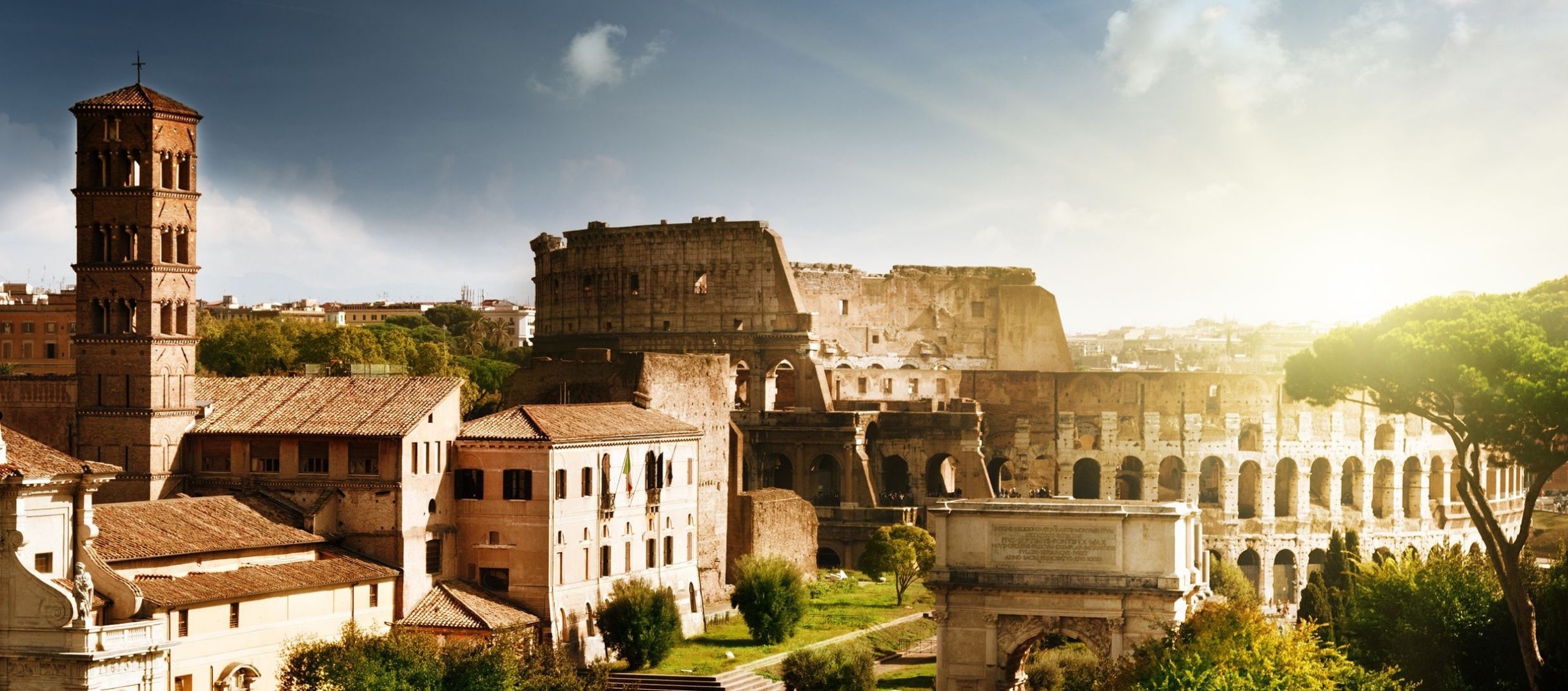
Colosseum
The Colosseum is an iconic symbol of Rome and one of the most famous ancient amphitheaters in the world. It was used for gladiatorial contests and public spectacles.
Historical
1-2 hours
€16 (combined ticket with Roman Forum and Palatine Hill)
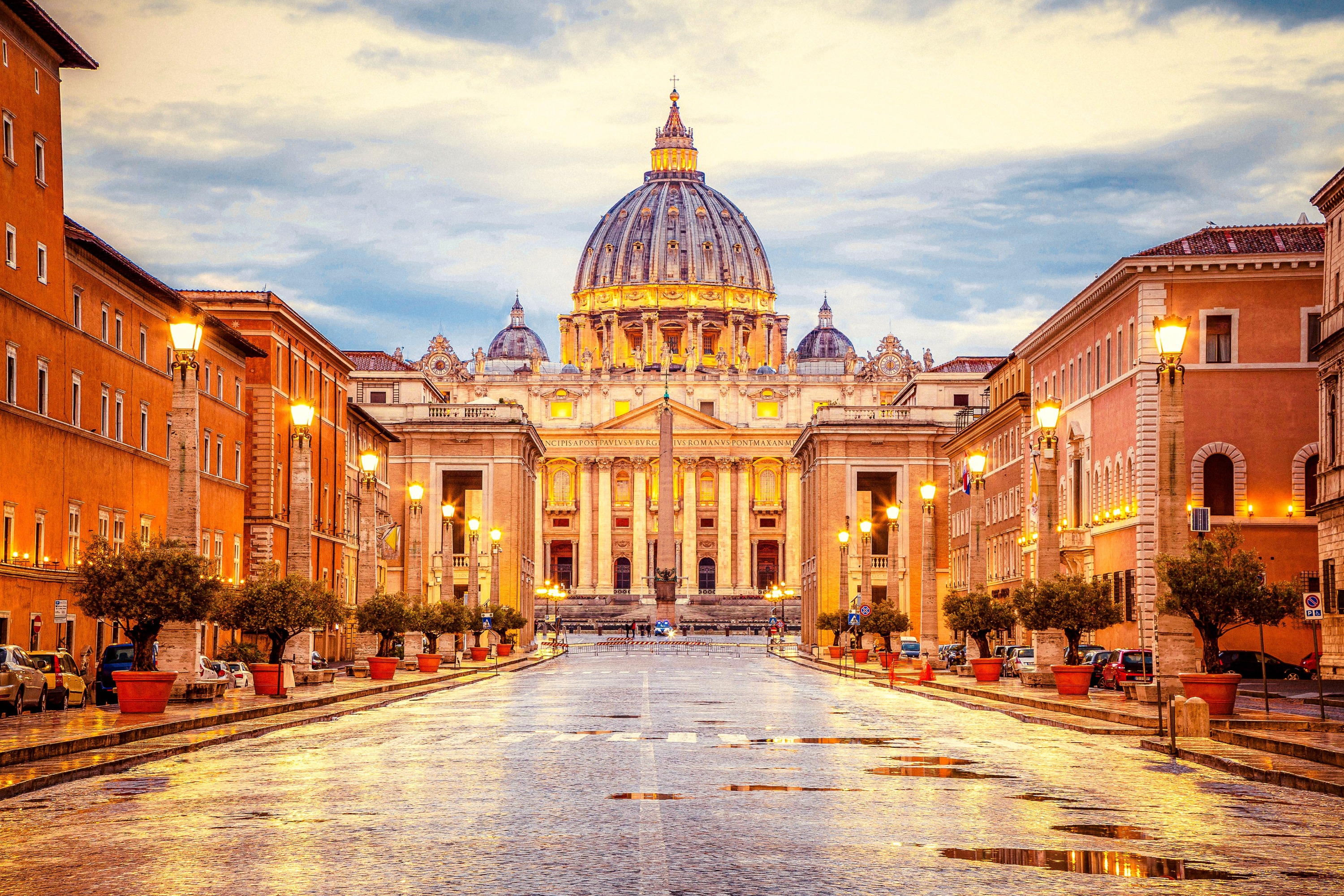
Vatican City
Vatican City is an independent city-state enclaved within Rome. It is the spiritual and administrative center of the Roman Catholic Church.
Religious
Half day
€17 (Vatican Museums and Sistine Chapel), Free (St. Peter's Basilica)
Roman Forum
The Roman Forum was the political, commercial, and legal hub of the Roman Republic and Empire. It is a sprawling ruin of temples, basilicas, and arches.
Historical
1-2 hours
€16 (combined ticket with Colosseum and Palatine Hill)
Pantheon
The Pantheon is a former Roman temple, now a church, known for its large dome and oculus. It is one of the best-preserved ancient buildings in Rome.
Historical
30 minutes to 1 hour
Free
Trevi Fountain
The Trevi Fountain is a Baroque masterpiece and the largest fountain in Rome. It is a popular spot for visitors to throw coins and make wishes.
Architecture
15-30 minutes
Free
Must-Try Local Dishes
Cacio e Pepe
A simple yet delicious pasta dish made with Pecorino Romano cheese and black pepper.
Pasta
Vegetarian
Carbonara
A rich pasta dish made with eggs, Pecorino Romano, guanciale (cured pork cheek), and black pepper.
Pasta
Contains pork and eggs
Supplì
Fried rice balls filled with mozzarella and tomato sauce.
Snack
Vegetarian (some variations may contain meat)
Carciofi alla Romana
Artichokes braised with garlic, mint, and olive oil.
Vegetable
Vegetarian
Popular Activities
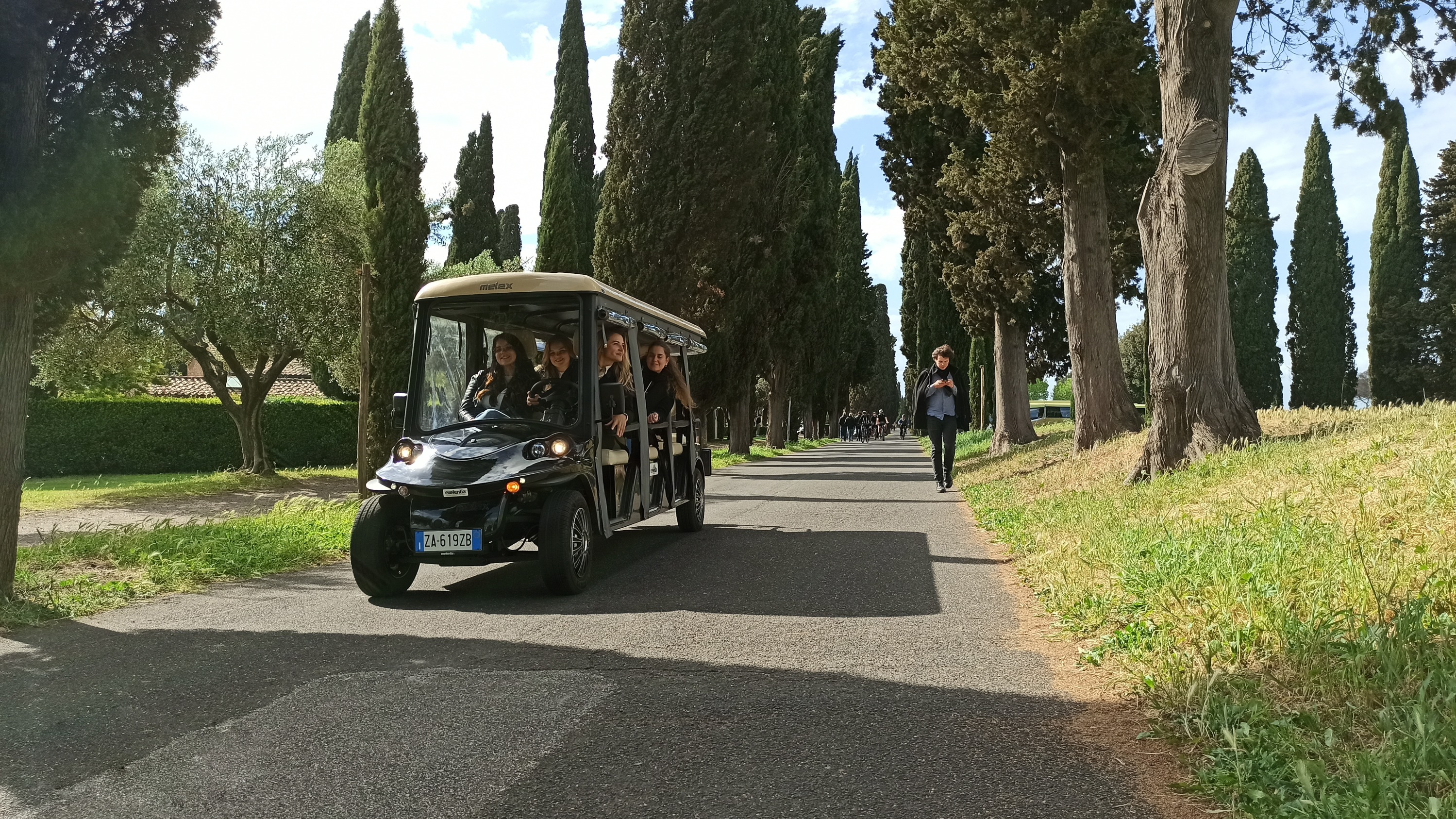
Hiking in the Appian Way Regional Park
Biking along the Tiber River
Rock climbing in the nearby mountains
Picnicking in Villa Borghese Gardens
Boating on Lake Albano
Enjoying a spa day at a luxury hotel
Visiting the Vatican Museums
Attending an opera at the Teatro dell'Opera di Roma
Best Time to Visit
April to June, September to October
Spring and fall offer pleasant weather and fewer crowds compared to the summer peak. Ideal for sightseeing and outdoor activities.
15-30°C
59-86°F
Practical Information
Language
- Official: Italian
- Widely spoken: English, Spanish, French
- English: Moderately spoken
Currency
Euro (EUR)
Time Zone
GMT+1 (CET), GMT+2 (CEST during daylight saving time)
Electricity
230VV, 50HzHz
Safety Information
Overall Safety Rating: Generally safe
Rome is generally safe for tourists, but pickpocketing and scams can be a problem in crowded areas. Be aware of your surroundings and take precautions to protect your belongings.
Important Precautions:
- • Keep valuables secure and out of sight
- • Use official taxis or ride-sharing services
- • Be cautious of strangers approaching you with petitions or bracelets
Getting there
By air
- Leonardo da Vinci International Airport • 35 km from city center
- Ciampino Airport • 15 km from city center
By train
Roma Termini, Roma Tiburtina
By bus
Tiburtina Bus Station, Roma Termini
Getting around
Public transport
The metro system is efficient and covers major tourist areas. It operates from 5:30 AM to 11:30 PM.
Taxis
Available • Apps: Uber, FreeNow
Rentals
Car, Bike, Scooter
Neighborhoods
Trastevere
Monti
Prancipio
Testaccio
Day trips
Ostia Antica
30 km from Rome • Half day
An ancient Roman port city with well-preserved ruins, including a theater, baths, and mosaics. It offers a glimpse into daily life in ancient Rome.
Tivoli
30 km from Rome • Full day
A picturesque town known for its stunning villas and gardens, including the famous Villa d'Este with its elaborate fountains and gardens.
Orvieto
120 km from Rome • Full day
A charming hilltop town known for its stunning cathedral, underground caves, and local wine. It offers a mix of history, culture, and scenic views.
Festivals
Natale di Roma • April 21
Festa de' Noantri • July
Rome Film Festival • October
Pro tips
- Visit major attractions early in the morning or late in the afternoon to avoid crowds
- Use public transport or walk instead of taking taxis to save money and experience the city like a local
- Try local specialties and ask for recommendations from locals and restaurant staff
- Dress modestly when visiting religious sites and be respectful of local customs and traditions
- Be aware of pickpockets and scams, especially in crowded areas and tourist hotspots
From $25
per person
Price varies by option
Secure booking
Free cancellation available