Colosseum, Baths of Caracalla and Circus Maximus Private Tour
Active
3h - 4h
All sales are final. No refund is available for cancellations.
Instant_then_manual confirmation
Mobile or paper ticket accepted
About this experience
EXCLUSIVE Rome Private Guided Tour Colosseum, Baths of Caracalla, and Circus Maximus VIP Entrance
Visit some of the massive archeological sites in Rome on this private, 3/4hr private guided tour of the Colosseum, Caracalla’s Baths, and Circus Maximus.
You will enjoy a private tour inside the Colosseum, learn about ancient gladiator fights, and more. Then you will visit Circus Maximus, site of the Roman chariot races. You will end up at Caracalla’s Baths, a testimony of imperial Rome’s grandeur. This tour is the best way to understand how life was in the Roman Empire. With this tour, you can maximize your time enjoying an awesome experience.
This incredible guided tour can be customized and is suitable for families and small or large groups. An in-depth trip to ancient Rome to learn about its uses and customs.
Available options
Colosseum+Caracalla English
Book this option if you want to have an English-speaking guide
What's included
Colosseum skip the line tickets
Professional art historian guide
Caracalla bath skip the line tickets
Pick-up service only at city centered hotel (only if option chosen)
Detailed itinerary
1
Stop 1
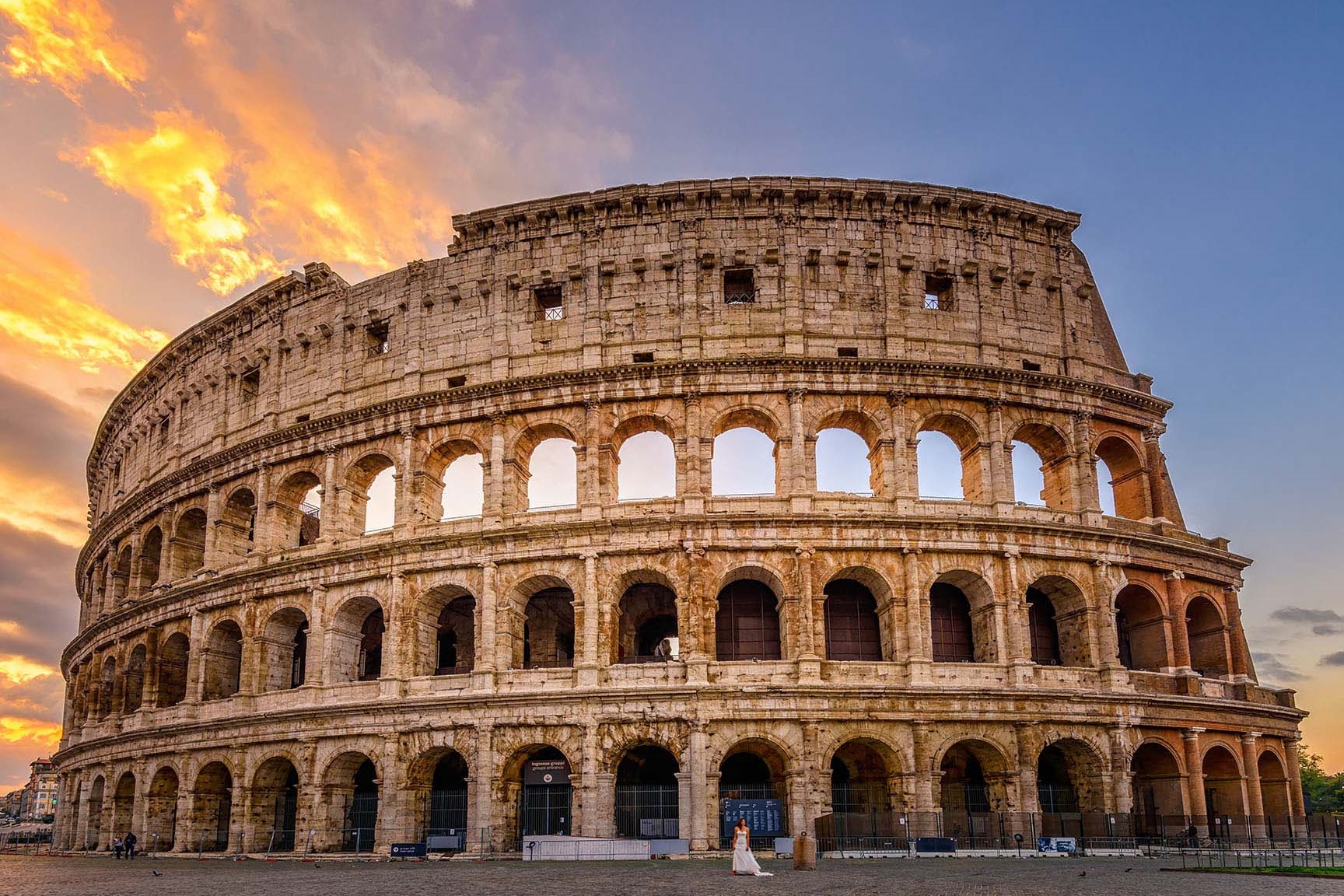
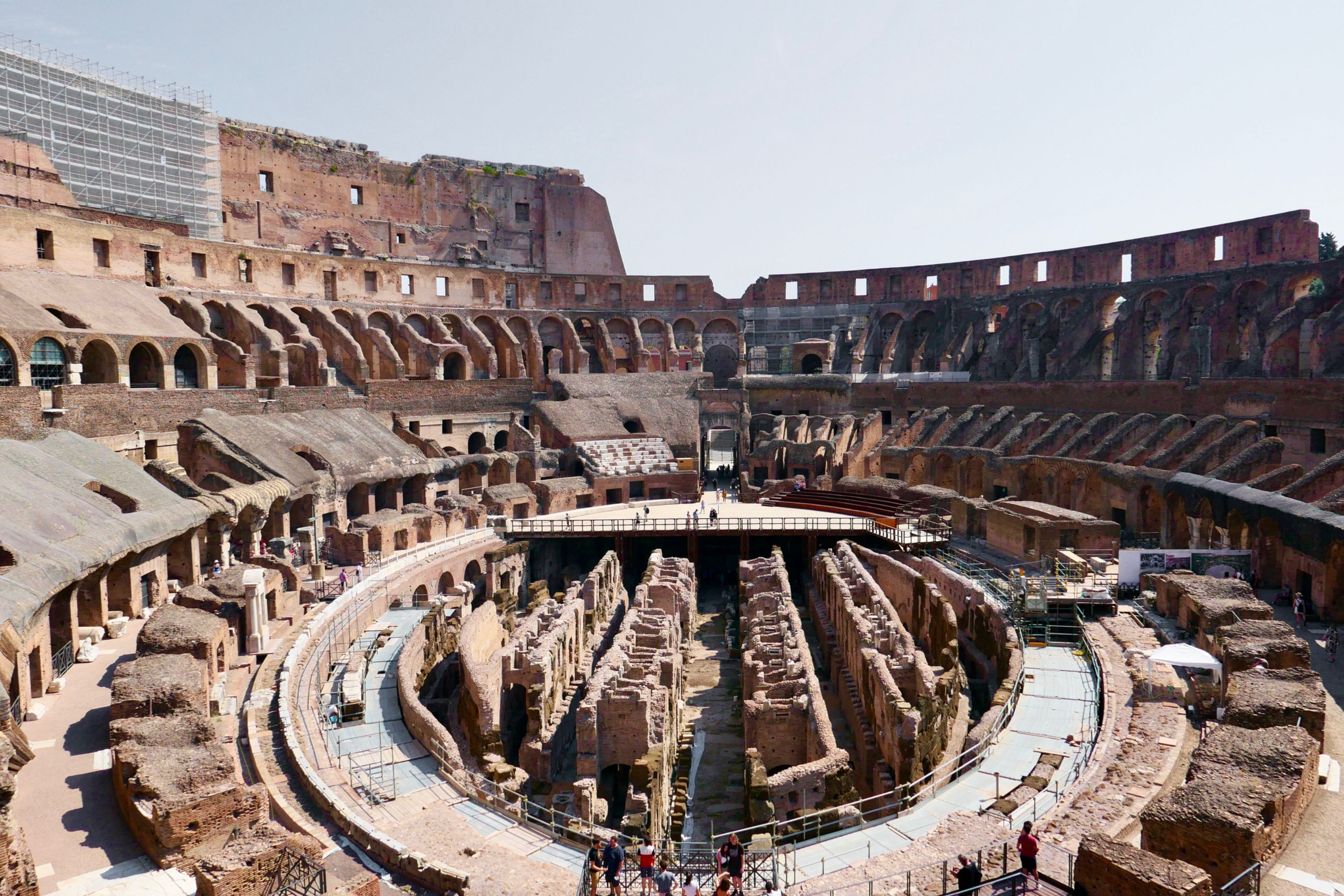
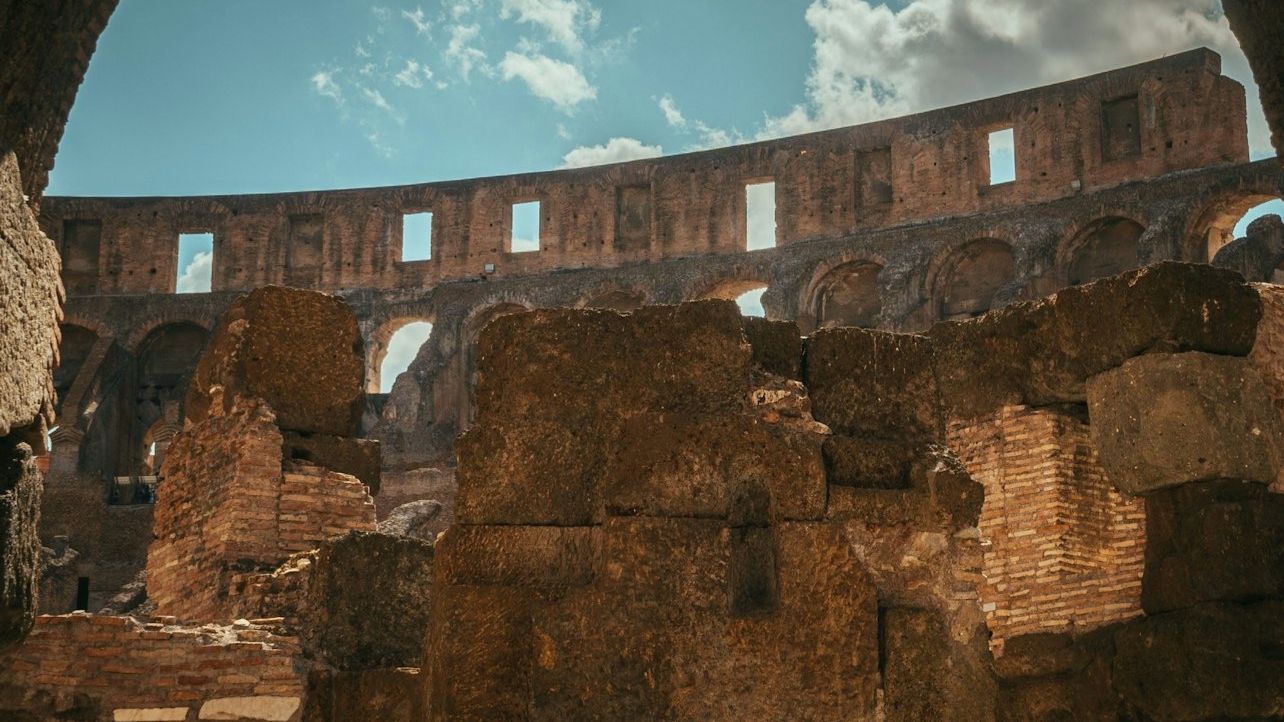
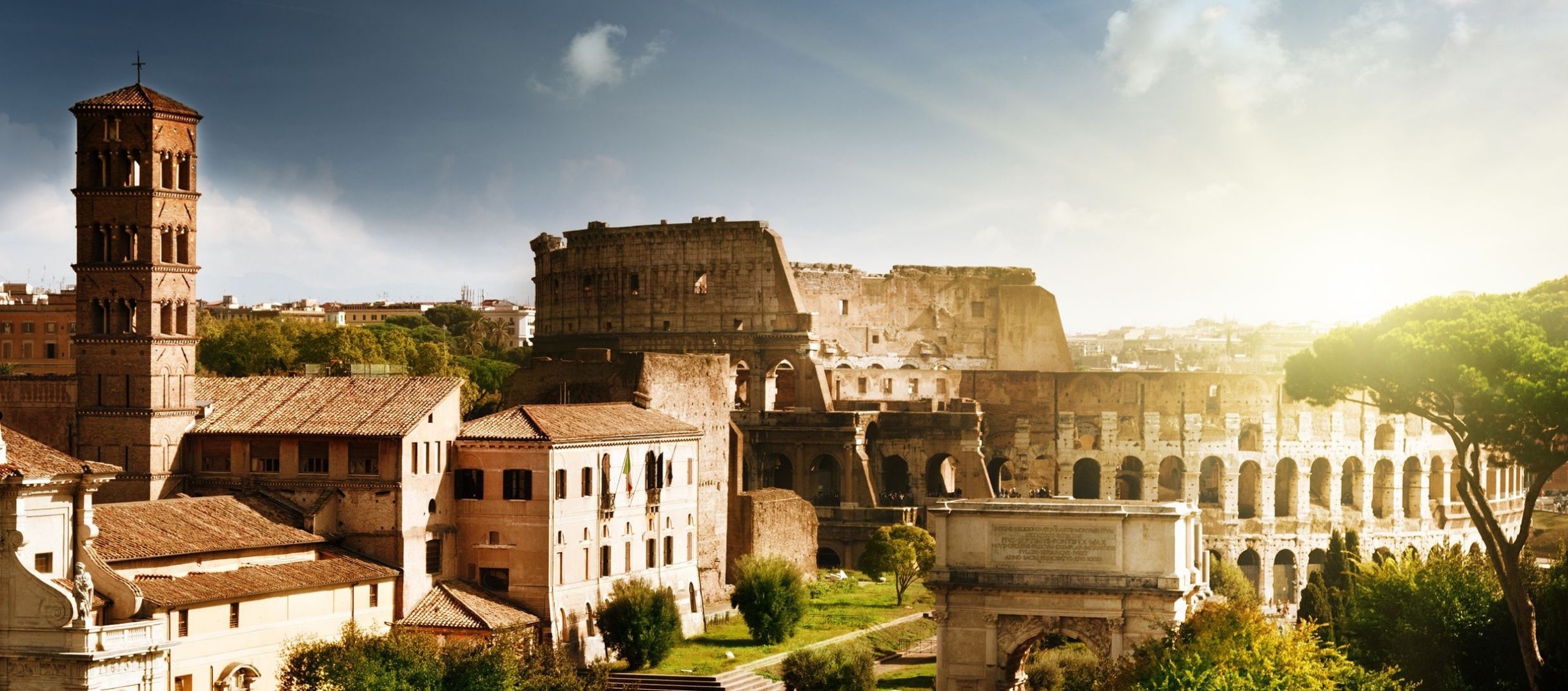
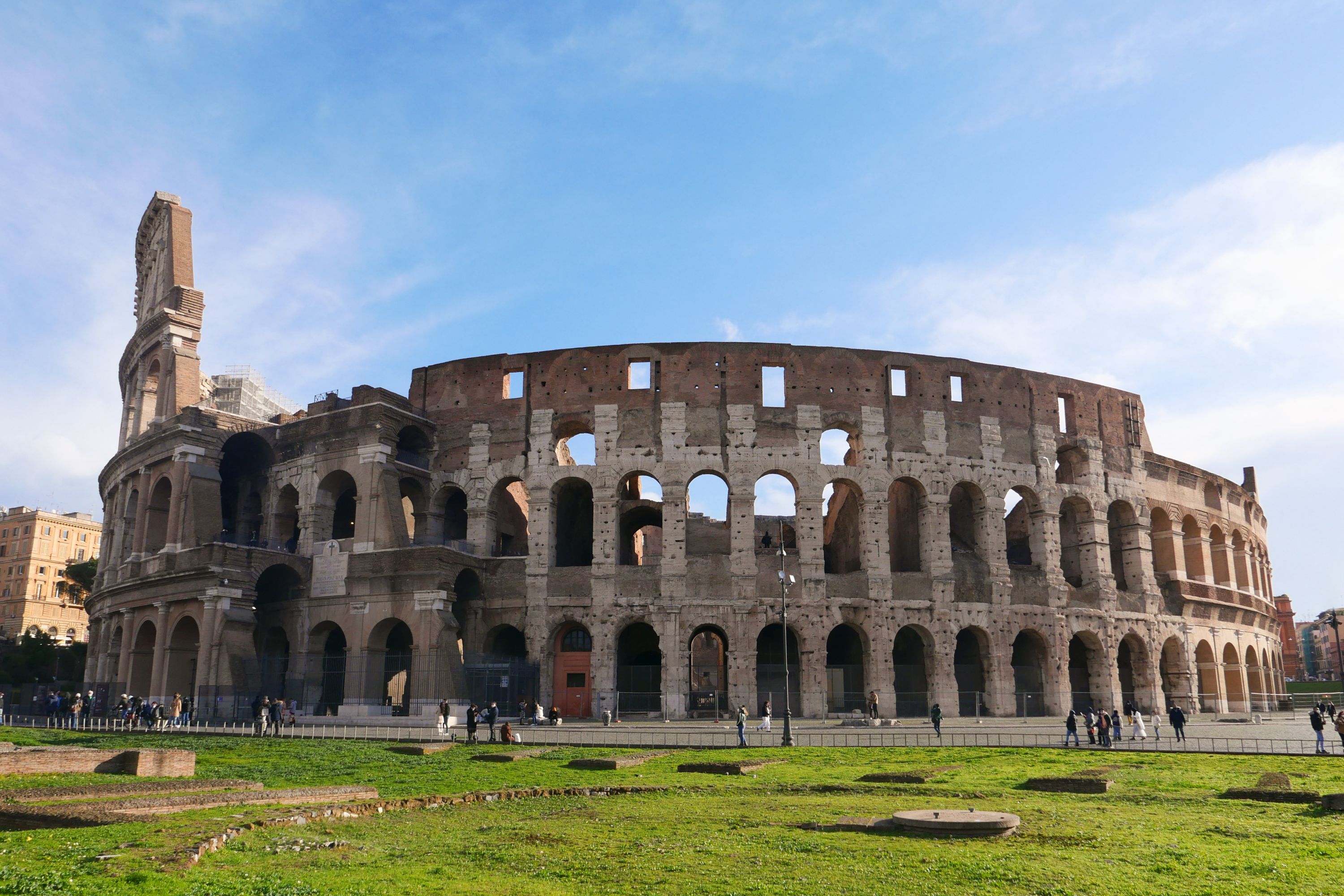
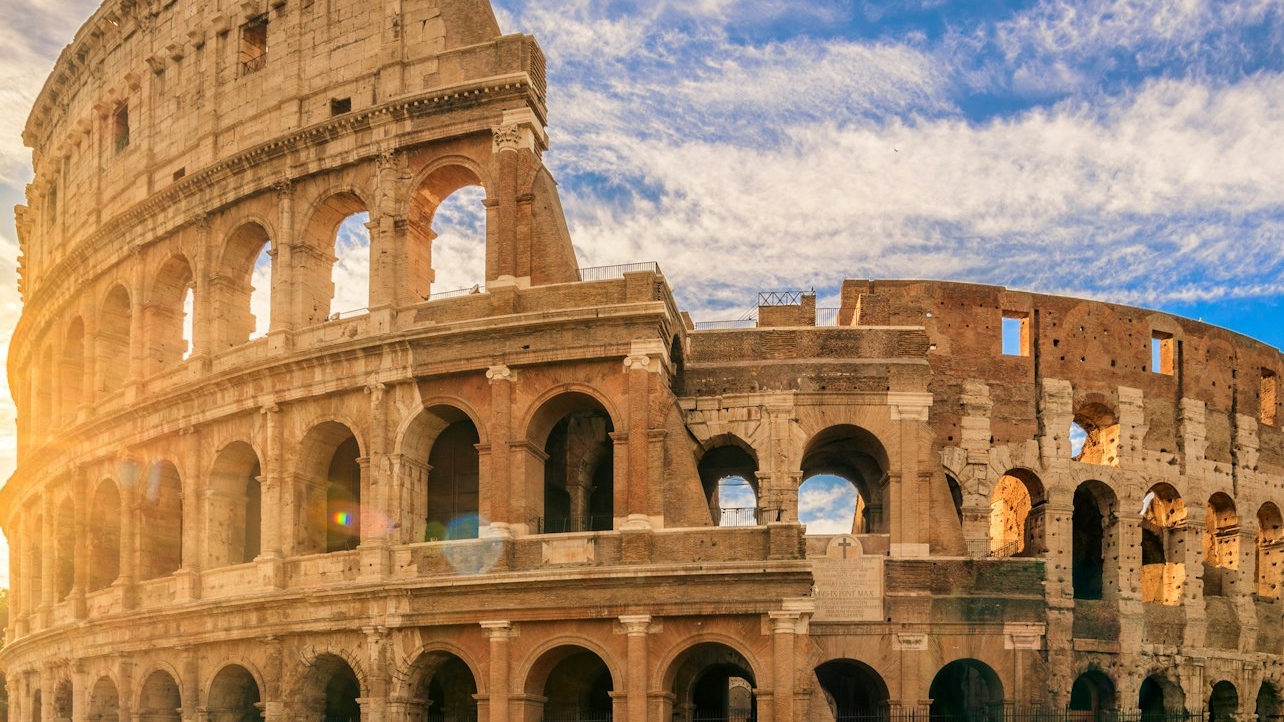
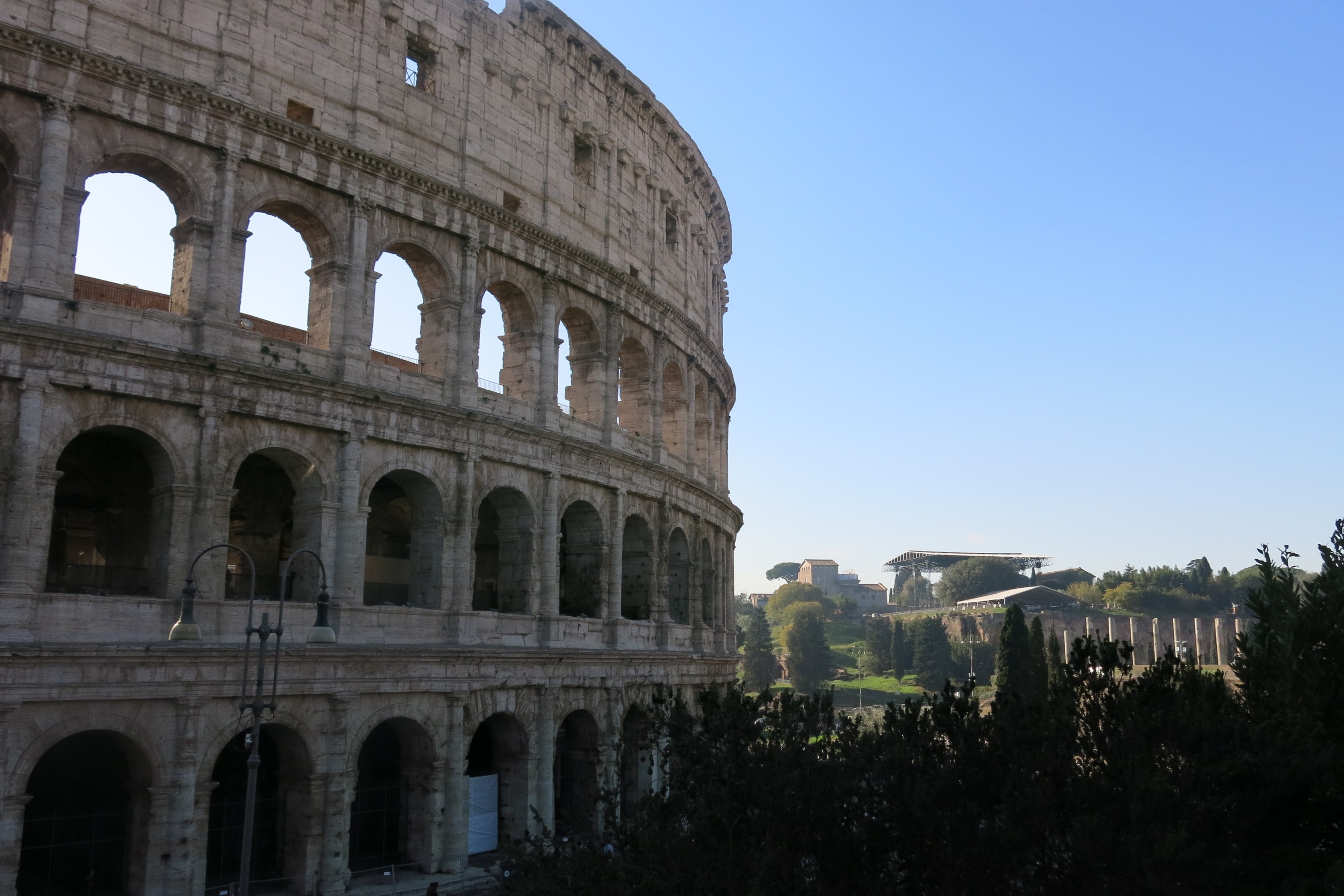
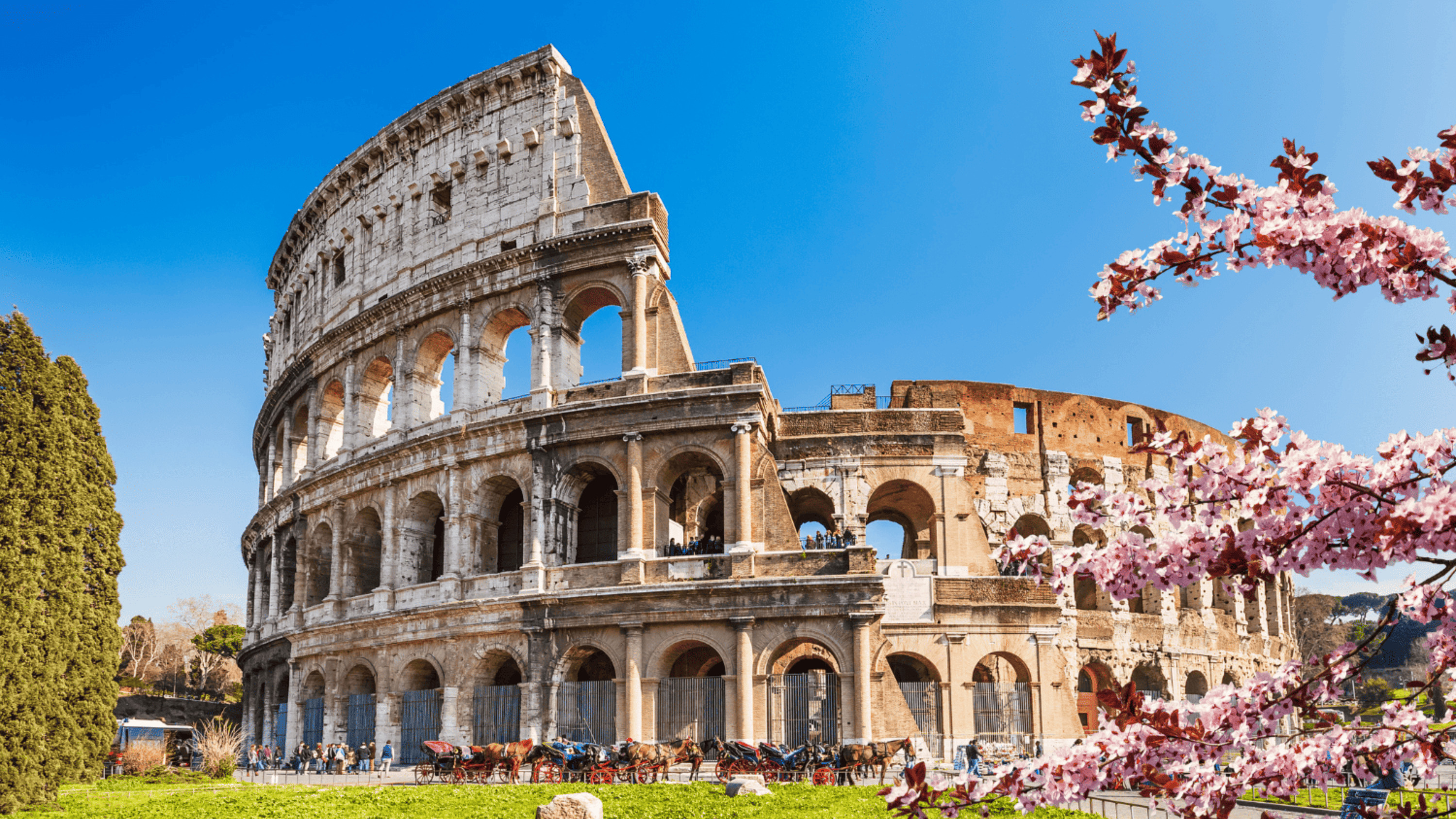
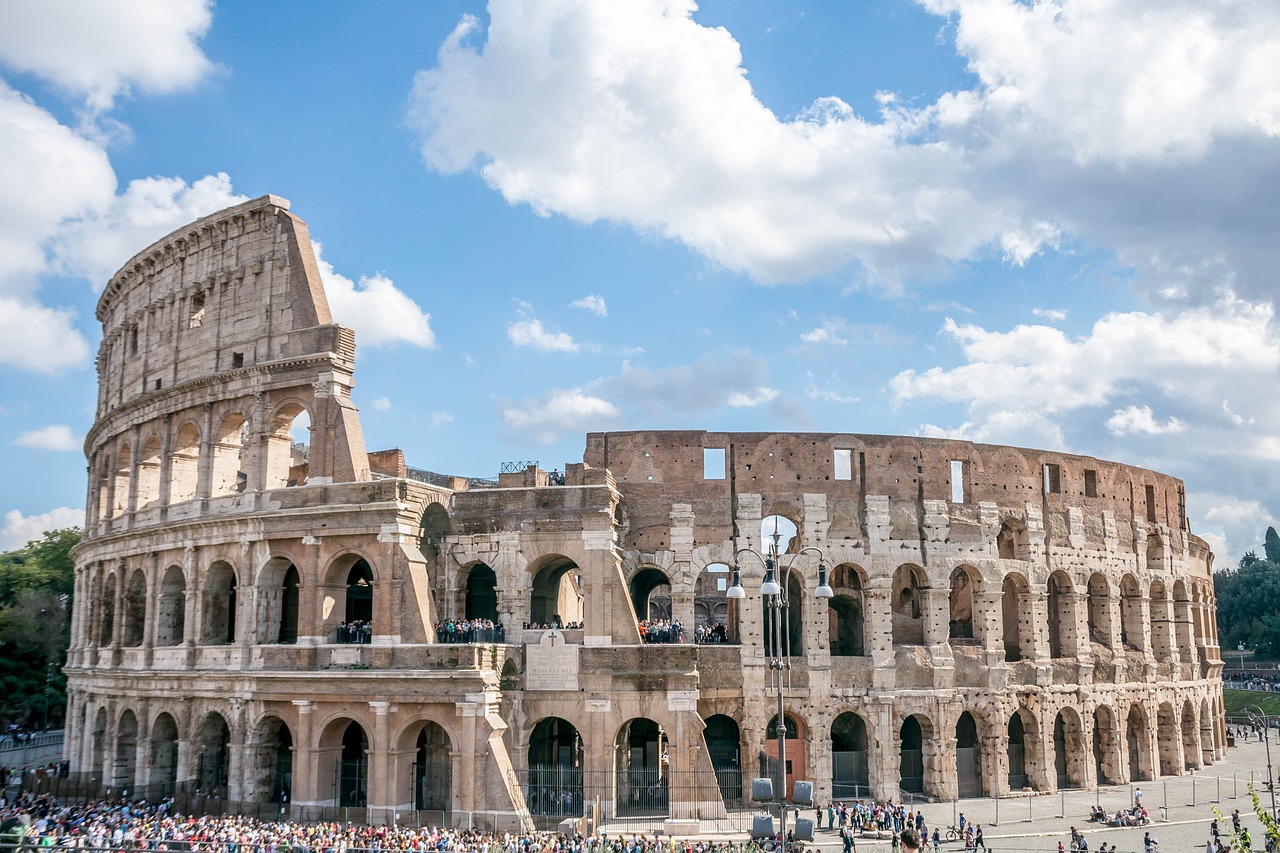
The tour will start from the Colosseum and with a private visit inside one of the largest and famous monuments in the world. The Colosseum preserves the fascination and the air of mystery of Rome’s glory. Inside you will listen about the spectacular and incredible entertainments organized in the Colosseum. Discover the techniques of construction invented by the Romans, the incredible ability of the gladiators, the violent fighting between exotic animals and the high level of technology achieved by Roman engineers to build the Colosseum. You can explore the two main levels for the best inside and outside view over the Colosseum and the Arch of Constantine.
2
Stop 2
With a pleasant walk from the Colosseum you will arrive at the Circus Maximus. This was the site of the Roman chariots races, as probably you saw in “Ben Hur” film. Now you can see it as a large park area but it was the first and largest stadium in ancient Rome, it had an unbelievable capacity of more than 250,000 spectators who sat on long tiers of seats. The noticeable remains showing part of the structure of the curved East end.
3
Stop 3
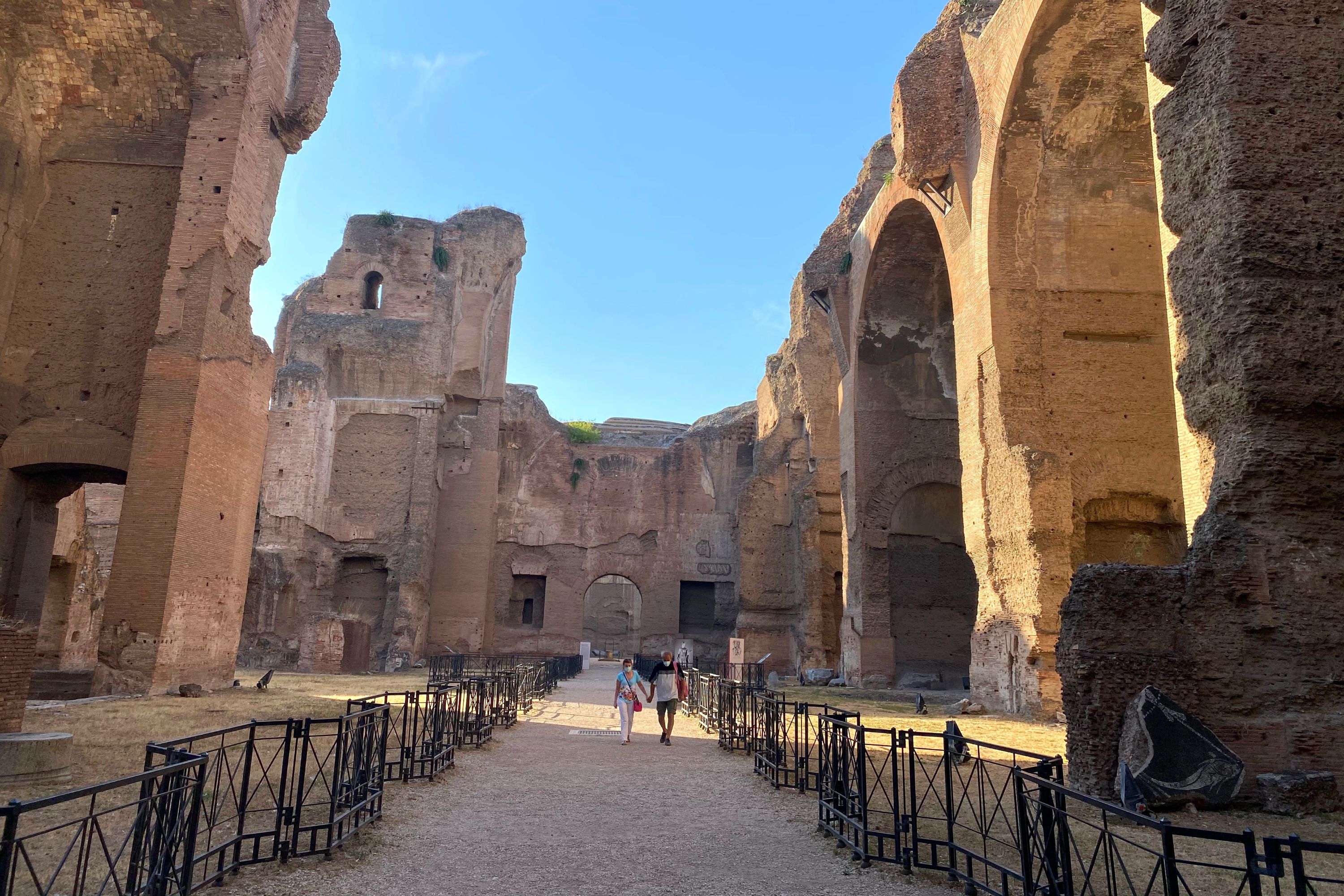
After the Circus Maximus, you will arrive at the Baths of Caracalla; they were the second largest Roman public baths. They were built in Rome between AD 212 and 217, during the reigns of Septimius Severus and Caracalla, and capable of hosting more than 1500 bathers. The baths were more a leisure center than just a series of baths since they contain a library, a gym, and gardens also. They are the best-preserved baths in Rome and a masterpiece of Roman architecture, keeping a halo of charm. Now visitors can see imposing vaulted rooms, domed octagons, porticoes, and parts of the baths heating system along with enormous and remarkable fragments of fine polychrome floor-mosaics.
4
Stop 4
The Baths of Caracalla (Italian: Terme di Caracalla) in Rome, Italy, were the city's second largest Roman public baths, or thermae. The baths were likely built between AD 212 (or 211) and 216/217, during the reigns of emperors Septimius Severus and Caracalla.[2] They were in operation until the 530s and then fell into disuse and ruin.
Both during and since their operation as baths, they served as inspiration for many other notable buildings, ancient and modern, such as the Baths of Diocletian, the Basilica of Maxentius, the original Pennsylvania Station in New York City, Chicago Union Station and the Senate of Canada Building. Artworks recovered from the ruins include famous sculptures such as the Farnese Bull and the Farnese Hercules.
5
Stop 5
The Arch of Constantine (Italian: Arco di Costantino) is a triumphal arch in Rome dedicated to the emperor Constantine the Great. The arch was commissioned by the Roman Senate to commemorate Constantine's victory over Maxentius at the Battle of Milvian Bridge in AD 312. Situated between the Colosseum and the Palatine Hill, the arch spans the Via Triumphalis, the route taken by victorious military leaders when they entered the city in a triumphal procession. [a] Dedicated in 315, it is the largest Roman triumphal arch, with overall dimensions of 21 m (69 ft) high, 25.9 m wide, and 7.4 m deep. It has three bays, the central one being 11.5 m (38 ft) high and 6.5 m (21 ft) wide and the laterals 7.4 m by 3.4 m each. The arch is constructed of brick-faced concrete covered in marble.
The three-bay design with detached columns was first used for the Arch of Septimius Severus in the Roman Forum (which stands at the end of the triumph route) and repeated in several other arches now lost.
6
Stop 6
Pass by
The Palatine Hill (/ˈpælətaɪn/; Latin: Collis Palatium or Mons Palatinus; Italian: Palatino [palaˈtiːno]), which relative to the seven hills of Rome is the centremost, is one of the most ancient parts of the city and has been called "the first nucleus of the Roman Empire."[1] The site is now mainly a large open-air museum while the Palatine Museum houses many finds from the excavations here and from other ancient Italian sites.
Imperial palaces were built here, starting with Augustus. Before imperial times the hill was mostly occupied by the houses of the rich.
The hill originally had two summits separated by depression; the highest part was called Palatium and the other Germalus (or Cermalus). Using the Forma Urbis its perimeter enclosed 63 acres (25 ha); while the Regional Catalogues of the 4th century enclose 131 acres (53 ha).[2]
What's not included
Food and drinks
Gratuities
Hotel pickup (if you chose the tour only option)
Transportation to/from attractions
Hotel Drop-off
Available languages
Guide guide
DE
EN
IT
FR
ES
Reviews breakdown
Viator
5.0
1 reviews
5★
1
4★
0
3★
0
2★
0
1★
0
Tripadvisor
5.0
1 reviews
5★
1
4★
0
3★
0
2★
0
1★
0
Important information
Public transportation options are available nearby
Not recommended for travelers with spinal injuries
Not recommended for travelers with poor cardiovascular health
Suitable for all physical fitness levels
Dress code is smart casual, comfortable walking shoes are recommended
Please provide the full names of all travelers when booking.
Each traveler must present a valid passport or ID document that matches the name provided at the time of booking for successful entry to the Colosseum and Roman Forum.
We kindly inform you that any kind of disability (mobility issues, wheelchair, visual impairment, hearing impairment,... ) or anything that might prevent you to regularly join the tour, MUST BE communicated in advance to our staff at the following email address: tourinthecityrome@gmail.com. For people with disabilities, the tour route may be different from the one presented.
Important: please note that you cannot get in the Colosseum and Caracalla bath with large bags, backpacks, or suitcases. You may bring small bags, but there is no cloakroom service to accommodate large items
We inform you that the management of the Museums or Archaeological sites, or the Ministry of Cultural Heritage may at any time decide to close some sites totally or partially. No refund will be possible.
Standard program could suffer variation, according to availability at the moment or extraordinary events
The itinerary may vary depending on weather conditions (ice, rain, or high temperatures) or other events beyond the travel agency's control.
Suitable for the whole family
Not recommended for travelers with travelers with mobility issues
Meeting point
The meeting point is in front of the "Oppio Caffe" on Via delle Terme di Tito on the corner of Via Nicola Salvi. The guide will have a signboard reporting your name.
Please arrive at the meeting point 10 minutes before departure.
Important notes
READ IT CAREFULLY:
The meeting point is in front of the "Oppio Caffe" on Via delle Terme di Tito on the corner of Via Nicola Salvi. The guide will have a signboard reporting your name.
• You must provide a valid photo ID to enter the Colosseum (ID, Driver's License, Passport). Security will prevent you from entering the site if you fail to provide a valid ID, or if the information provided is not accurate and/or doesn't match the one on your ID.
• Please arrive at the meeting point 10 minutes before the start of the tour. We cannot guarantee you will be able to visit all the sites included in the tour if you fail to arrive at the meeting point on time. On these occasions, we are not responsible for any claim of refund or even partial refund.
• Visitors must pass through metal detectors at the security checkpoint. Please expect to wait 20-30 minutes to clear security.
• Selfie sticks cannot be used inside the Colosseum for security reasons.
• As per Colosseum and Caracalla bath rules, LARGE BAGS - PERFUMES – SPRAY/AEROSOL CANS- WEAPONS – GLASS – ALCOHOL are forbidden. Please note that there is no cloakroom service inside the Colosseum to accommodate the above items.
• We kindly inform you that any kind of disability (mobility issues, wheelchair, visual impairment, hearing impairment, etc. ) or anything that might prevent you from joining the tour regularly MUST BE communicated in advance to our staff at the following email address: tourinthecityrome@gmail.com. For people with disabilities, the tour route may be different from the one presented.
• The order in which the sites are visited during the tour can vary.
• The standard program could suffer variation, according to the availability at the moment or extraordinary events.
• We inform you that the management of the Museums or Archaeological sites, or the Ministry of Cultural Heritage may at any time decide to close some sites totally or partially. No refund will be possible.
About Rome
Rome, the capital of Italy, is a city of ancient ruins, artistic masterpieces, and vibrant culture. Known as the Eternal City, it is a living museum where every corner tells a story of its rich history spanning over 2,500 years.
Top Attractions
Colosseum
The Colosseum is an iconic symbol of Rome and one of the most famous ancient amphitheaters in the world. It was used for gladiatorial contests and public spectacles.
Historical
1-2 hours
€16 (combined ticket with Roman Forum and Palatine Hill)
Vatican City
Vatican City is an independent city-state enclaved within Rome. It is the spiritual and administrative center of the Roman Catholic Church.
Religious
Half day
€17 (Vatican Museums and Sistine Chapel), Free (St. Peter's Basilica)
Roman Forum
The Roman Forum was the political, commercial, and legal hub of the Roman Republic and Empire. It is a sprawling ruin of temples, basilicas, and arches.
Historical
1-2 hours
€16 (combined ticket with Colosseum and Palatine Hill)
Pantheon
The Pantheon is a former Roman temple, now a church, known for its large dome and oculus. It is one of the best-preserved ancient buildings in Rome.
Historical
30 minutes to 1 hour
Free
Trevi Fountain
The Trevi Fountain is a Baroque masterpiece and the largest fountain in Rome. It is a popular spot for visitors to throw coins and make wishes.
Architecture
15-30 minutes
Free
Must-Try Local Dishes
Cacio e Pepe
A simple yet delicious pasta dish made with Pecorino Romano cheese and black pepper.
Pasta
Vegetarian
Carbonara
A rich pasta dish made with eggs, Pecorino Romano, guanciale (cured pork cheek), and black pepper.
Pasta
Contains pork and eggs
Supplì
Fried rice balls filled with mozzarella and tomato sauce.
Snack
Vegetarian (some variations may contain meat)
Carciofi alla Romana
Artichokes braised with garlic, mint, and olive oil.
Vegetable
Vegetarian
Popular Activities
Hiking in the Appian Way Regional Park
Biking along the Tiber River
Rock climbing in the nearby mountains
Picnicking in Villa Borghese Gardens
Boating on Lake Albano
Enjoying a spa day at a luxury hotel
Visiting the Vatican Museums
Attending an opera at the Teatro dell'Opera di Roma
Best Time to Visit
April to June, September to October
Spring and fall offer pleasant weather and fewer crowds compared to the summer peak. Ideal for sightseeing and outdoor activities.
15-30°C
59-86°F
Practical Information
Language
- Official: Italian
- Widely spoken: English, Spanish, French
- English: Moderately spoken
Currency
Euro (EUR)
Time Zone
GMT+1 (CET), GMT+2 (CEST during daylight saving time)
Electricity
230VV, 50HzHz
Safety Information
Overall Safety Rating: Generally safe
Rome is generally safe for tourists, but pickpocketing and scams can be a problem in crowded areas. Be aware of your surroundings and take precautions to protect your belongings.
Important Precautions:
- • Keep valuables secure and out of sight
- • Use official taxis or ride-sharing services
- • Be cautious of strangers approaching you with petitions or bracelets
Getting there
By air
- Leonardo da Vinci International Airport • 35 km from city center
- Ciampino Airport • 15 km from city center
By train
Roma Termini, Roma Tiburtina
By bus
Tiburtina Bus Station, Roma Termini
Getting around
Public transport
The metro system is efficient and covers major tourist areas. It operates from 5:30 AM to 11:30 PM.
Taxis
Available • Apps: Uber, FreeNow
Rentals
Car, Bike, Scooter
Neighborhoods
Trastevere
Monti
Prancipio
Testaccio
Day trips
Ostia Antica
30 km from Rome • Half day
An ancient Roman port city with well-preserved ruins, including a theater, baths, and mosaics. It offers a glimpse into daily life in ancient Rome.
Tivoli
30 km from Rome • Full day
A picturesque town known for its stunning villas and gardens, including the famous Villa d'Este with its elaborate fountains and gardens.
Orvieto
120 km from Rome • Full day
A charming hilltop town known for its stunning cathedral, underground caves, and local wine. It offers a mix of history, culture, and scenic views.
Festivals
Natale di Roma • April 21
Festa de' Noantri • July
Rome Film Festival • October
Pro tips
- Visit major attractions early in the morning or late in the afternoon to avoid crowds
- Use public transport or walk instead of taking taxis to save money and experience the city like a local
- Try local specialties and ask for recommendations from locals and restaurant staff
- Dress modestly when visiting religious sites and be respectful of local customs and traditions
- Be aware of pickpockets and scams, especially in crowded areas and tourist hotspots
From $25
per person
Price varies by option
Secure booking
Free cancellation available